
Knowledge
Process of Production
One fruit, two oils, hundreds of products. How each product is made — from the press at the mill to the fats, confectionery ingredients and oleochemicals the world buys every day. Looking for the full range? Browse our products or start with the trade glossary.
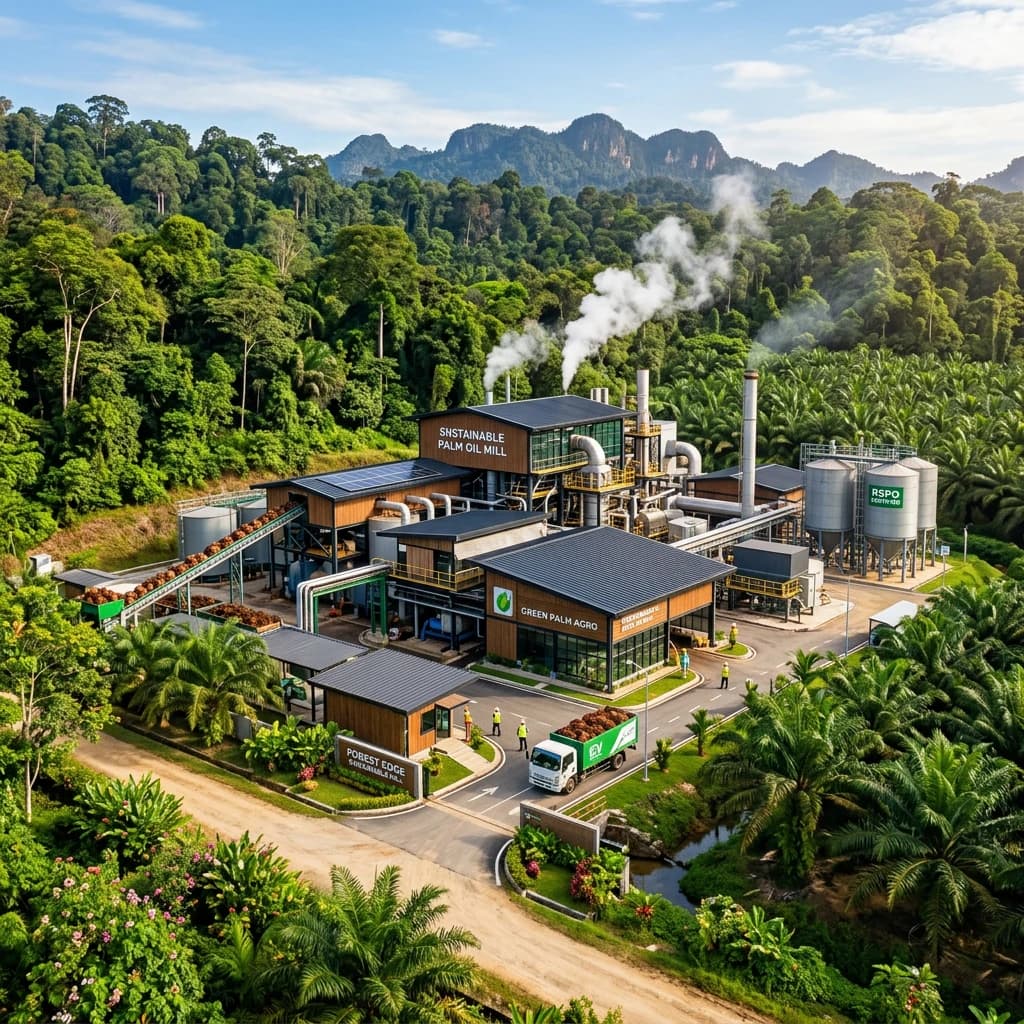
At the mill — from fruit to crude oils
Fresh fruit bunches (FFB) must reach the mill within about 24 hours of harvest. Bunches are sterilised with steam, the fruit stripped and pressed — the orange fibrous flesh (mesocarp) gives crude palm oil, while the nut inside gives the kernel.
Crude Palm Oil (CPO)
Sterilised fruit is pressed; the extracted oil is clarified and dried. Reddish-orange from natural carotenes, semi-solid at room temperature.
The base commodity of the entire trade — refined into food oils and fats, split into oleochemicals, or processed into biofuel feedstocks.
Palm Kernel Oil (PKO / CPKO)
Nuts are cracked, shells separated, and the kernels crushed or solvent-extracted — a different oil from a different part of the same fruit.
A lauric oil (like coconut): confectionery fats, ice-cream coatings, soaps, detergents and cosmetics. The residue (palm kernel expeller) feeds cattle.
Palm Kernel Shell (PKS)
Woody shell fragments left after palm nuts are cracked and kernels removed at the mill.
Dense solid biomass fuel for export (especially to Japan and South Korea for co-firing in power plants), or used as fuel for the mill's boilers.
Palm Kernel Expeller (PKE / PKC)
The fibrous solid residue remaining after oil is mechanically pressed or solvent-extracted from palm kernels.
A protein-rich livestock feed ingredient, highly valued for dairy and beef cattle feed formulations.

At the refinery — RBD oils and PFAD
Crude oils are refined — degummed, bleached with clay, then steam-stripped at high temperature (deodorised) — producing RBD (Refined, Bleached, Deodorised) oil plus a valuable distillate by-product.
RBD Palm Oil
CPO after the full refining sequence: neutral taste, light colour, food-grade.
Cooking and frying oil, food manufacturing, and the starting point for fractionation into olein and stearin.
PFAD (Palm Fatty Acid Distillate)
The free fatty acids stripped out during deodorisation of palm oil, condensed and collected.
Biodiesel feedstock (a pillar of Indonesia's blending programme), soap stock, animal-feed energy, and vitamin-E extraction.
PKFAD (Palm Kernel Fatty Acid Distillate)
The same distillate stream, from refining palm kernel oil instead.
Soap making, oleochemical feedstock and biofuel blending.
Red Palm Oil (RPO)
Palm oil processed gently at lower temperatures to preserve natural carotenoids (provitamin A) and tocotrienols.
Specialty cooking, nutritional supplement fortification, and natural food coloring.
Palm Tocotrienols (Vitamin E)
Recovered and purified from the volatile streams of palm fatty acid distillate (PFAD) via molecular distillation.
High-value active ingredient in nutraceuticals, health supplements, and cosmetics.
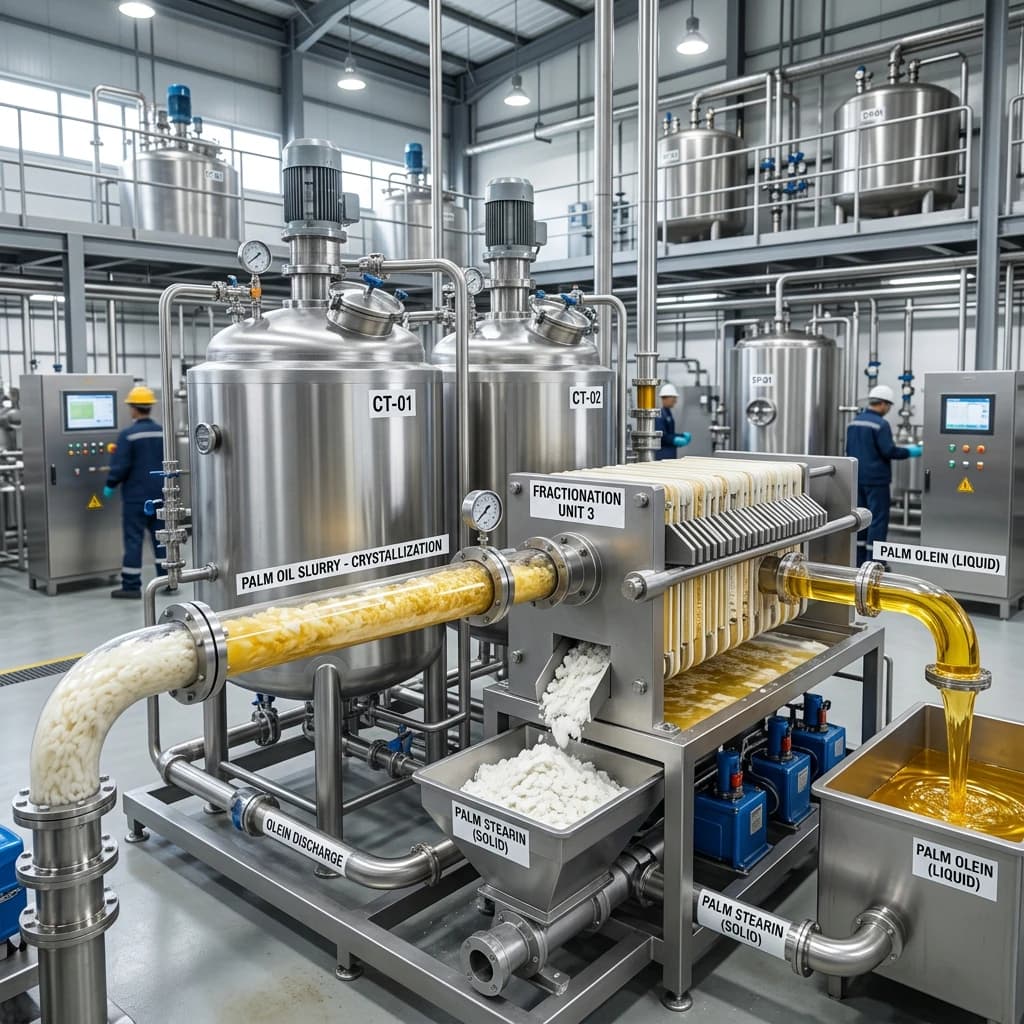
Fractionation — olein and stearin
RBD palm oil is slowly cooled so its harder triglycerides crystallise, then filtered. The liquid fraction is olein; the solid fraction is stearin. The same process applied to palm kernel oil gives PK olein and PK stearin.
Palm Olein
The liquid fraction of fractionated RBD palm oil; stays clear at warm ambient temperatures. Often double-fractionated ("super olein") for cooler climates.
The world's leading frying and cooking oil — household bottles, restaurants and industrial frying.
Palm Stearin
The solid fraction from the same filtration — harder, higher melting point.
Shortenings, margarine and vanaspati; also soaps, candles and lubricant greases on the industrial side.
Palm Kernel Olein
Liquid fraction of fractionated palm kernel oil.
Frying fats, coffee whiteners, filling creams and soap blends.
Palm Kernel Stearin
The solid, sharper-melting fraction of PKO — the most cocoa-butter-like natural palm fraction.
The prime raw material for cocoa butter substitutes in chocolate-style coatings.
Palm Mid-Fraction (PMF)
Specialty fraction produced by double-fractionating palm oil, rich in symmetrical POP triglycerides.
The principal building block for creating cocoa butter equivalents (CBE) for premium chocolate.

Food fats — the shortenings family
Blending, interesterifying and texturising palm fractions produces the tailored bakery and dairy-alternative fats the food industry runs on. These are the grades on our refinery price board.
Biscuit Shortening
Palm oil/stearin blends crystallised to a firm, plastic texture with the right melting profile for dough machinery.
Biscuits, cookies and crackers — crisp bite, clean snap, long shelf life.
Bread & Dough Shortening
Softer palm blends worked into a smooth, aerated plastic fat.
Breads, buns, puff pastry and laminated doughs — volume, softness and layer lift.
Butter Oil Substitute (BOS)
Palm olein/stearin blends flavoured and coloured to mimic anhydrous milk fat.
A cost-effective butterfat replacer in bakery, ice cream and sweets.
Non-Dairy Creamer fat
Hardened palm kernel/palm fractions spray-dried with milk-protein-free emulsifiers onto a carrier.
Coffee whiteners, instant beverage premixes and UHT creamers.
Margarine
A water-in-oil emulsion of palm olein/stearin blends, chilled and worked into a spreadable crystal structure.
Table spreads, bakery margarines and cream fillings.
Vanaspati / Vegetable Ghee
Interesterified or lightly hardened palm blends textured to a grainy, ghee-like consistency.
Traditional cooking fat across South Asia and the Middle East.
Ice Cream Coating Fat
Rapid-crystallising fats derived from palm kernel oil with a sharp melting profile just below body temperature.
Dipping fats that set quickly into a thin, crisp shell on frozen desserts.
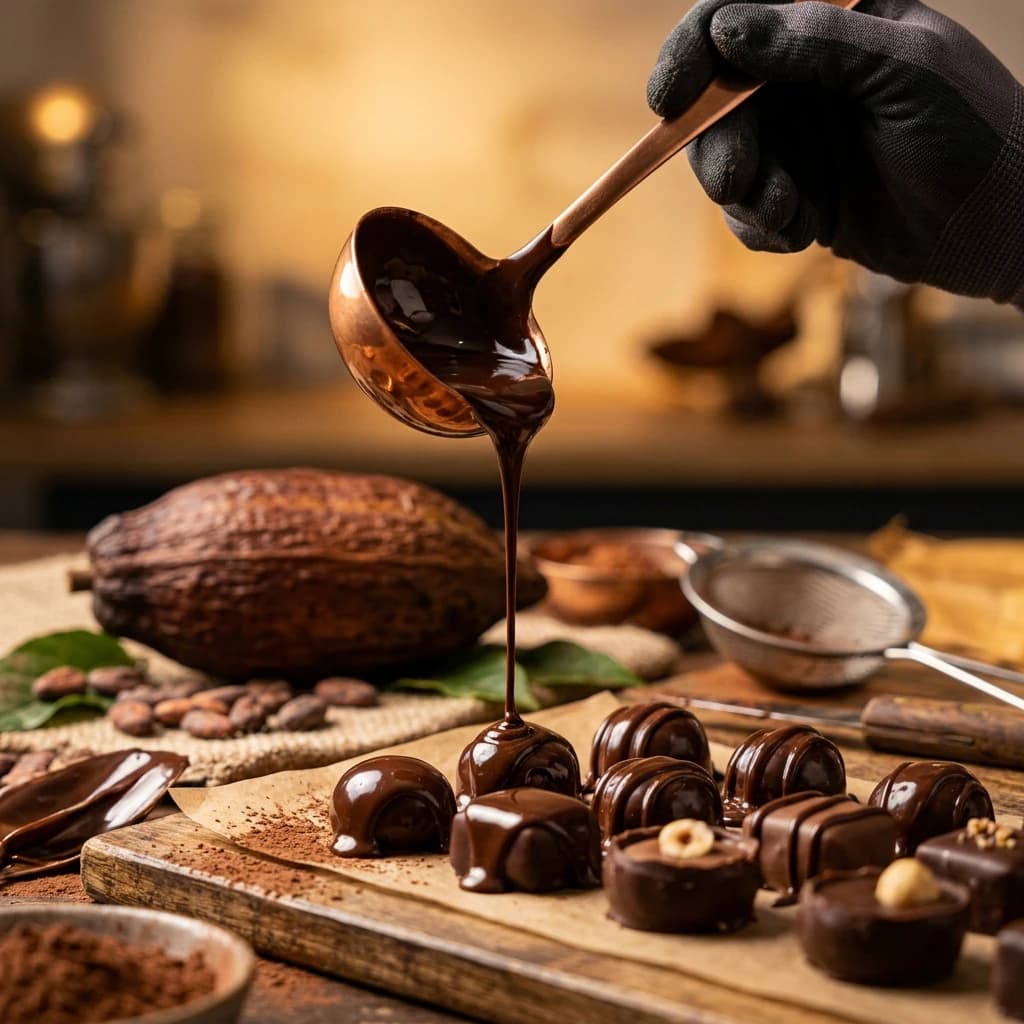
Confectionery & speciality — the lauric line
Palm kernel fractions melt sharply near body temperature — the property chocolate needs. Hydrogenating or fractionating them yields fats that behave like cocoa butter at a fraction of the cost.
Cocoa Butter Substitute (CBS)
Palm kernel stearin (often lightly hydrogenated) refined to a sharp-melting, brittle fat — no tempering required.
Compound chocolate, coatings, wafers and filling creams (HPKO/HPKS grades on our price board).
Hydrogenated Palm Kernel Oil (HPKO)
PKO hardened with hydrogen over a nickel catalyst to raise its melting point and stability.
Coating fats, creamers and centre-fillings.
Cocoa Butter Equivalent (CBE)
A symmetrical fat made by blending palm mid-fraction with exotic fats like shea or sal stearin.
Premium chocolate formulation as a direct, fully compatible cocoa butter extender.
Cocoa Butter Replacer (CBR)
Non-lauric fats made from fractionated and partially hydrogenated palm oil fractions.
Compound coatings that tolerate moderate amounts of cocoa butter without tempering.
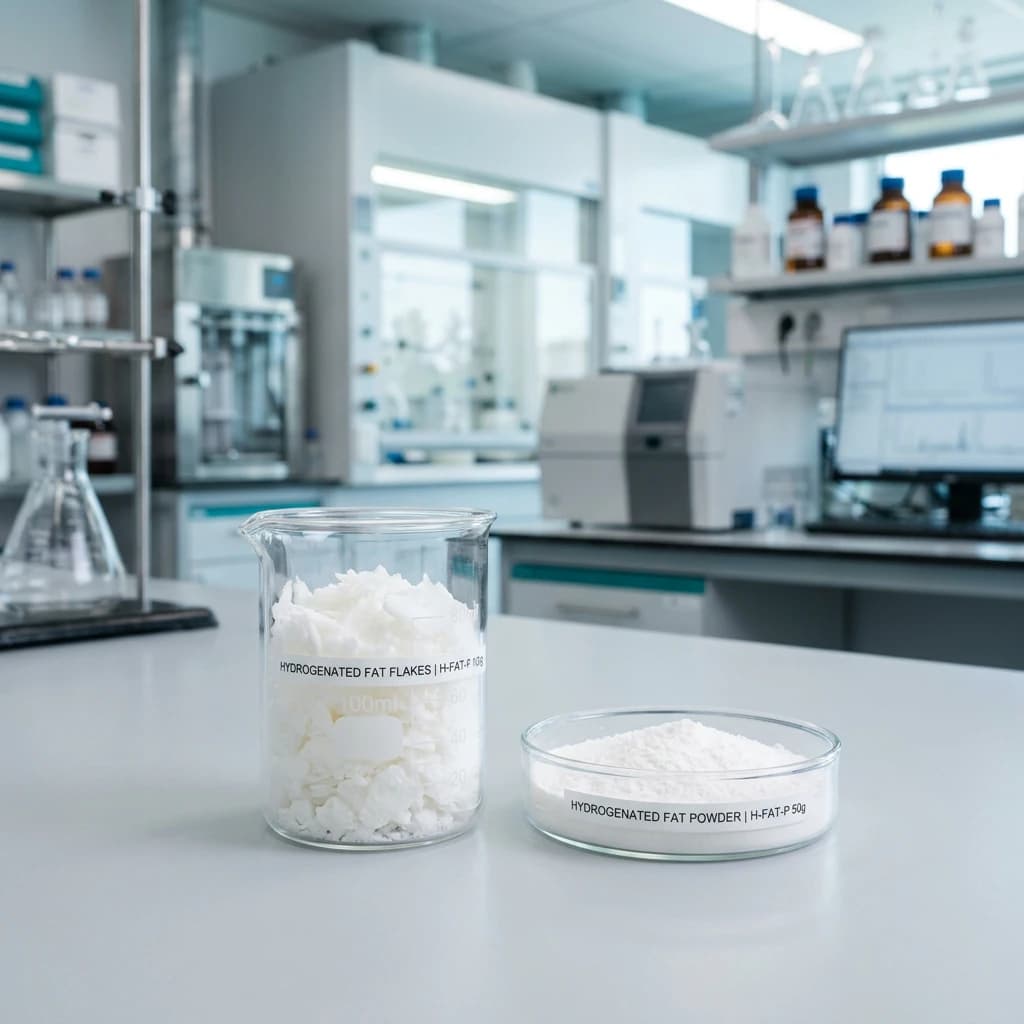
Hydrogenated & energy fats
Full hydrogenation hardens palm fractions into stable, high-melting fats, while chemical conversion transforms palm fractions into clean liquid biofuels.
Hydrogenated Palm Oil (HPO)
RBD palm oil fully hydrogenated — melting point raised, oxidation resistance greatly increased.
Industrial frying blends, coating fats, candles and technical applications.
Hydrogenated Palm Stearin (HPS)
Palm stearin fully hardened — one of the highest-melting vegetable fats; often spray-chilled into powdered fat.
Powdered fats for premixes and instant foods, candle blends, PVC lubricants and greases.
Palm Biodiesel (FAME)
Transesterifying palm oil or its fractions with methanol, yielding fatty acid methyl esters and glycerine.
Renewable fuel blending, underpinning transport mandates like Indonesia's B40/B50 and Malaysia's program.
Palm Wax
Fully hydrogenated palm stearin or stearic acid blends tuned for solid vegetable wax products.
Natural candles, wax melts, paper coatings, and barrier applications.
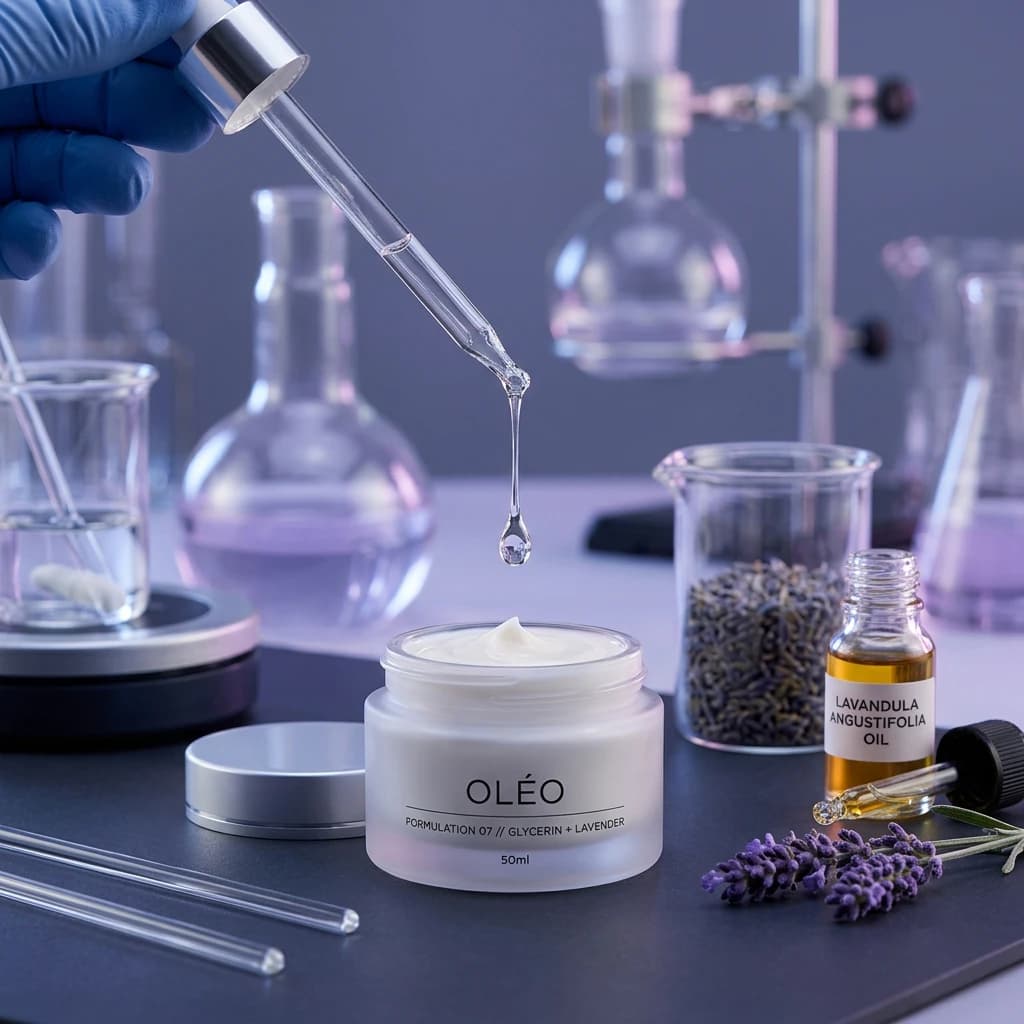
Oleochemicals — where palm meets chemistry
Splitting palm oil or stearin with water under heat and pressure breaks triglycerides into fatty acids and glycerine — the gateway to soaps, cosmetics and hundreds of industrial products.
Lauric & Myristic Acid
Distilled single-cut saturated fatty acids (C12 and C14) separated from split palm kernel oil.
Cosmetics, foaming soaps, personal-cleansers, and raw material for SLES/SLS surfactants.
Stearic Acid
Palm stearin is hydrolysed, and the fatty-acid mix distilled and separated; the C18 (with C16) cut is sold as stearic acid flakes or beads.
Soaps, candles, rubber vulcanisation, cosmetics, crayons, PVC stabilisers and lubricants.
Glycerine (Glycerol)
The sweet by-product of fat splitting (and biodiesel production), purified to pharmaceutical grade.
Pharmaceuticals, toothpaste, cosmetics, food humectants, e-liquids and antifreeze formulations.
Fatty Alcohols
Catalytic hydrogenation of palm-derived fatty acids or methyl esters, usually in the C12-C18 range.
The primary feedstock for modern detergents, surfactants, shampoos, and cosmetic emulsifiers.
Soap Noodles
Ready-to-finish pellets made by saponifying blends of palm oil and palm kernel oil.
Direct feedstock for toilet and laundry bar soap extrusion and finishing.
Buying any of these grades?
Our refinery price board covers shortenings, CBS, RBD fractions and more — and our desk connects you to the producers.