Palm Oil Caught Between MPOB Stock Build and Indonesia B50 Demand Hopes
Malaysia’s benchmark eases to $1,137/MT as August total stocks hit 2.82m tonnes, while biodiesel targets and firm crude limit downside.

A new edition every morning at sunrise over Jakarta (today, 05:47 WIB). Pick a front page to read the full paper — every edition is kept in the archive.
A four-to-two bullish factor balance keeps palm oil's demand and weather premium ahead of August's heavy stock build; our model sees a +0.3% seven-day path.

Malaysian CPO benchmark is trading about $1,137 per tonne, down 0.7% from the previous session and equivalent to RM 4,617 per tonne at USD/MYR 4.08. The World Bank global palm oil benchmark is about $1,117 per tonne, while Indonesia's reference price is about $1,008 per tonne. Brent crude is up 0.2% to about $105 per barrel. The Malaysian benchmark started from a two-day-stale anchor at $1,137, and our model's published seven-day path is +0.3% over seven sessions, implying the pull factors are modestly outweighing the push factors for now.
The widest visible support comes from the soybean oil palm oil spread. The soybean oil premium is about $402 per tonne, leaving palm heavily discounted. A wide BOPO spread makes palm the cheaper cooking and oleochemical input, encouraging buyers to switch into palm and supporting physical CPO demand.
Energy markets add a second bullish mechanism. Brent crude has risen 8.5% over the past seven days to about $104.4 per barrel. Palm's POGO spread is about -$375 per tonne, in the 0th percentile of its range. At that level palm oil is cheaper than diesel on an energy-equivalent basis, which strengthens the case for discretionary biodiesel blending and reinforces Indonesia's policy-driven demand.
Indonesia's B50 mandate is a further demand-side support. Pertamina is targeting 100% B50 distribution by the end of September. Moving from B40 to B50 absorbs an estimated 3-4 million tonnes of palm oil per year, tightening the domestic balance and reducing exportable supply even as production rises.
El Niño adds a weather risk premium. The ONI is at +1.8 degC, a strong El Niño state. Dryness in Kalimantan is notable: about 15 mm of rainfall is expected over the next seven days, while other palm belt areas show 44-66 mm. The yield impact is likely to be lagged by 6-12 months, but the current risk premium supports prices because buyers and sellers worry about future supply losses even while current output is strong.
The heaviest bearish force is the MPOB August stock build. Headline total palm stocks rose 7.48% to 2.82 million tonnes. Official CPO closing stocks rose 15.2% month-on-month to 1,645,570 tonnes, 58% above the five-year average. The stocks-to-use ratio is 14.1%, an ample level. Exports fell 7.5% month-on-month to 1,294,664 tonnes. This combination of rising stocks and weakening exports means more palm is available to the market, pressuring nearby prices.
Peak production season compounds that pressure. July through October is the seasonal peak for Malaysian output. Our model's seasonal path shows production up about 4.5% two months ahead and stocks up about 7.0% one month ahead, with the September monthly average at -0.9%. Strong seasonal supply is arriving before any El Niño yield damage can bite, keeping the physical market well supplied.
Our model's factor balance is four bullish to two bearish, so the upside has the upper hand for now. The bullish side has direct demand mechanisms: the wide BOPO spread, the deeply negative POGO, Indonesia's B50 targets, and the El Niño risk premium. The bearish side is concentrated in the current stock overhang and peak-season production, which are visible in official data but may not fully reflect the lagged weather risk. Technical signals are mixed, with a 5/20 SMA golden cross but a negative MACD histogram and RSI at 52, while CFTC soyoil net longs are crowded but fell 8.1k contracts week-on-week. These are neutral factors in our model and do not tip the balance.
To flip the balance to bearish, two things would need to change. First, the MPOB stock build would need to persist into September with exports staying weak, confirming that demand is not absorbing the seasonal surplus. Second, the B50 mandate would need to be delayed or watered down, and Brent or the BOPO spread would need to narrow, removing the energy and substitution bid. For now, the model's 7-day path of +0.3% reflects a market that is absorbing bearish supply data while retaining a bullish demand and weather layer underneath.
Malaysia’s benchmark eases to $1,137/MT as August total stocks hit 2.82m tonnes, while biodiesel targets and firm crude limit downside.
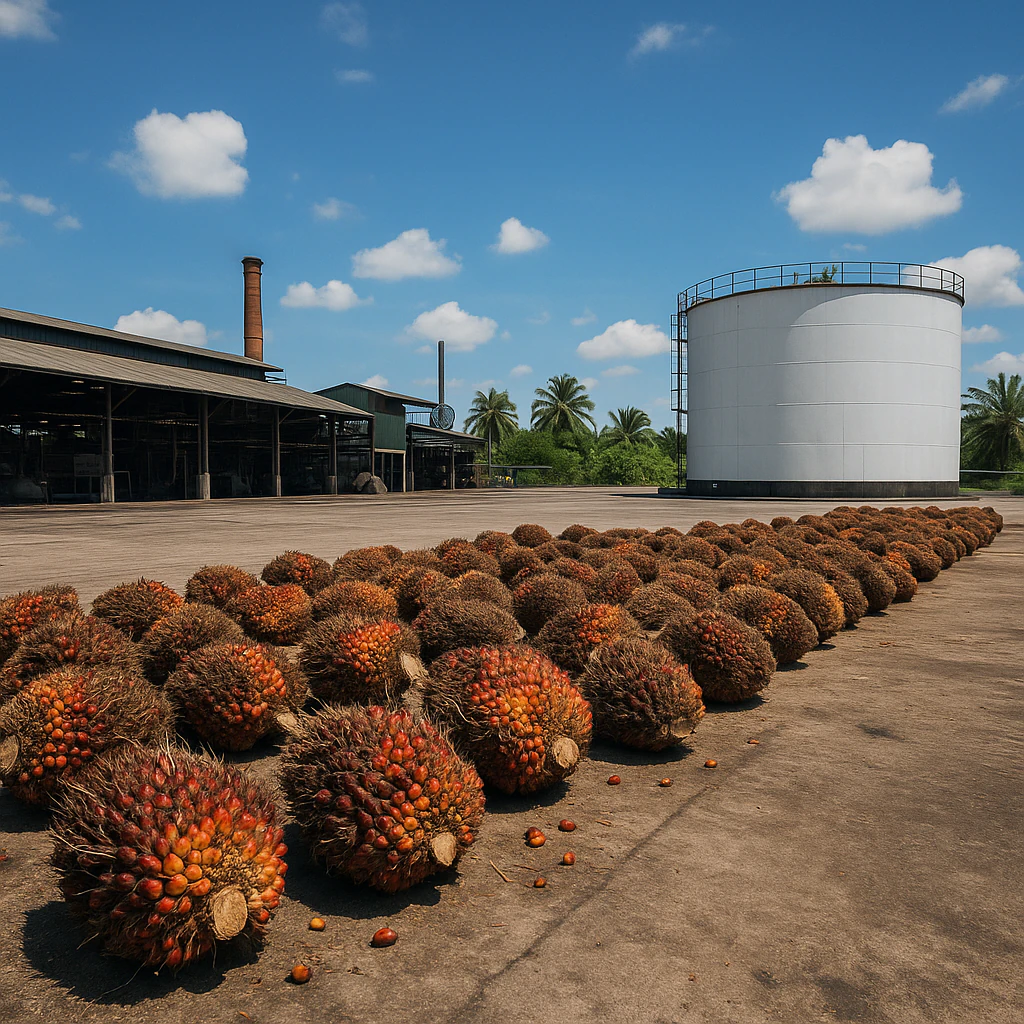
Malaysia’s CPO benchmark slipped 0.7% to about $1,137/MT (RM4,617/MT), while the World Bank global palm benchmark stood at $1,117/MT and Indonesia’s reference price at $1,008/MT. Brent crude firmed 0.2% to around $105/bbl, supporting biodiesel blend economics, and the ringgit traded near 4.08 per dollar.
The MPOB August release showed CPO production at 1,817,499 tonnes, up 1.4% month-on-month, with CPO closing stocks rising 15.2% to 1,645,570 tonnes. Malaysia’s total palm oil stocks increased 7.48% to 2.82 million tonnes, as reported across trade media, reinforcing the bearish supply narrative. Exports declined 7.5% to 1,294,664 tonnes, while imports were little changed at 49,524 tonnes. The stocks-to-use ratio reached 14.1% and the FFB reference price was RM49.76, up 0.5% from the previous month. Futures had also been pressured by weaker export estimates earlier in the week.
Indonesia’s B50 biodiesel program is in focus. Pertamina reportedly aims for 100% distribution by the end of September, and GAPKI has called for B50 to be fixed before any B60 mandate in 2027, while warning about El Niño and smallholder replanting constraints. The September CPO reference price increase pushed Indonesia’s export levy to $148 per tonne, which can affect export competitiveness. Indonesian CPO exports have grown 5.49%, but downstreaming policy remains a swing factor.
El Niño remains active with an ONI value of +1.8 and dry conditions in Kalimantan, which could tighten production later. Brent crude near $105/bbl, supported by Middle East shipping concerns around the Strait of Hormuz and the Red Sea, underpins biodiesel demand and limits losses from weaker rival vegetable oils.
Our model outlook views the next seven sessions as a tug-of-war: bearish MPOB stock build and peak production season against bullish biodiesel demand, a wide palm discount to rival oils, and El Niño risk premium. The published path is +0.3% over seven sessions, but the absence of fresh cargo-surveyor export pace and Bursa FCPO quotes widens near-term uncertainty.
Key signals are the next Malaysian export estimates, confirmation of Indonesia B50 blending rates, and any escalation in dry weather. A continued rise in stocks or slower biodiesel uptake would keep spot offers under pressure, while crude strength and El Niño supply risks could provide support.
Sources: HaiSawit; elaeis.co; Majalah Sawit Indonesia; ANTARA News Sultra; Bernama; BernamaBiz
Malaysia's August build confirmed at a year's high; Indonesia's B50 and B60 plans and firm crude offer the counterweight.
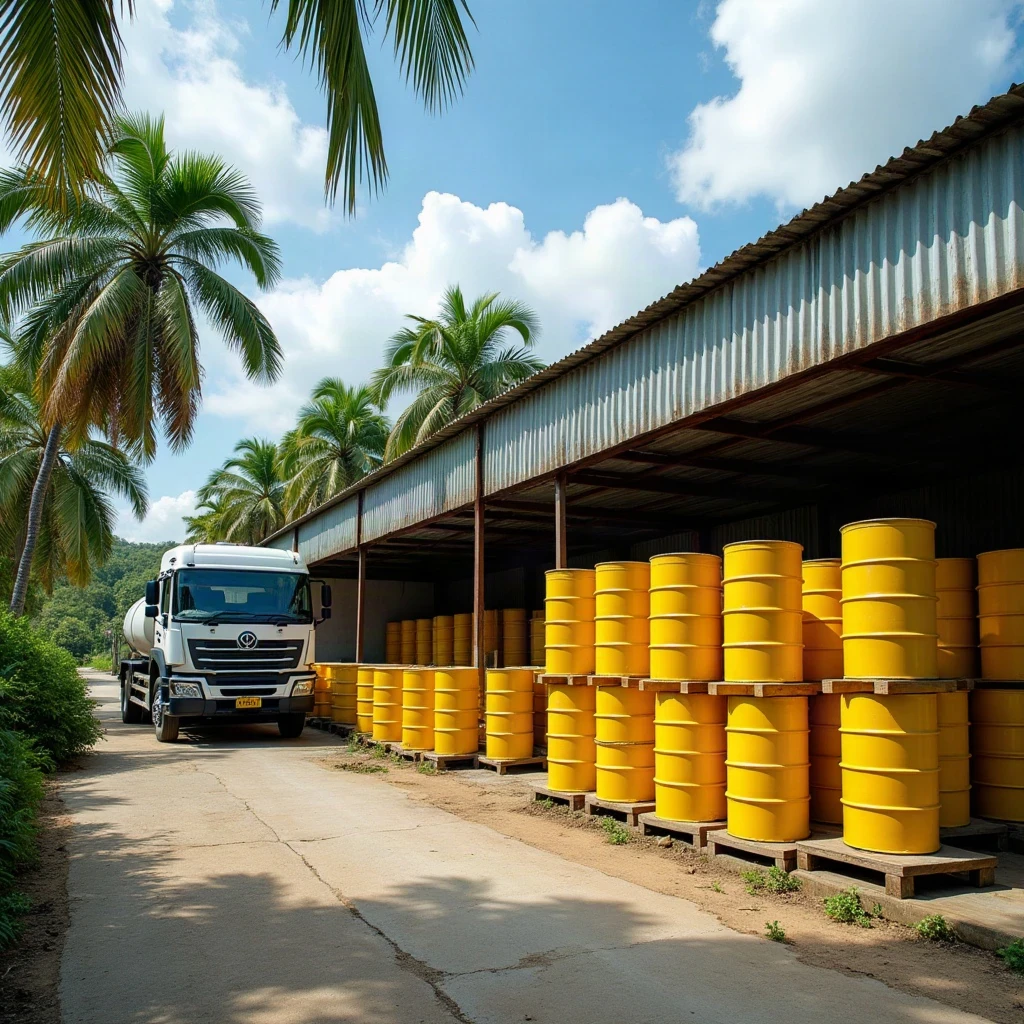
Malaysian crude palm oil futures were quoted around $1,137/MT, down 0.7% from the prior session and equivalent to roughly RM 4,617/MT at a ringgit rate near 4.08. The World Bank palm oil benchmark sat near $1,117/MT, while Indonesia's Kemendag reference price was about $1,008/MT. Brent crude held close to $105/bbl, a touch firmer, keeping biodiesel blend economics broadly intact.
The August MPOB report is now confirmed and remains the dominant fundamental. Total Malaysian palm oil stocks rose 7.48% month-on-month to 2.82 million tonnes, a year's high, with closing stocks reported at 1,645,570 tonnes, up 15.2%. Crude palm oil production reached 1,817,499 tonnes, a modest 1.4% gain, while palm oil exports fell 7.5% to 1,294,664 tonnes. Fresh fruit bunch reference was RM 49.76, up 0.5%. Rising inventories alongside softer offtake have weighed on sentiment, and headline flow through the week reflected that, with futures ending lower on weaker export estimates and following rival vegetable oils down.
Against the bearish stock picture, Indonesia's biodiesel programme remains a supportive theme. The government is targeting full B50 implementation in October 2026, and a B60 mandate is now being discussed that would lift crude palm oil demand to as much as 23 million tonnes. That longer-dated policy signal matters because it points to structurally firmer domestic offtake rather than a one-off blend bump. Industry body GAPKI has pushed for flexible policy while flagging El Niño risk and smallholder replanting challenges, and has argued the B50 groundwork should be tidied up before any move to B60. Regional administrations have voiced support for the rollout. Firm crude oil has also helped cap losses in palm, with sessions earlier in the week ending higher on firmer crude and Dalian palm olein gains, and crude's approach toward the $100 mark has revived an energy-led bid for vegetable oils.
The tension now runs beyond the current report. Inventories sit at a seasonal peak, yet the forward supply picture is less comfortable: production in the second half of 2026 is expected to stay firm, but the market is also watching for a supply squeeze to emerge as the peak passes. ENSO conditions remain El Niño, with the ONI at +1.8, and Kalimantan has seen notably dry rainfall, keeping a risk premium in the background. The wider vegetable oil complex is under pressure from increasing supply, though Chinese oilseed demand and a more positive palm demand outlook have provided some balance. A wide palm discount to rival oils continues to underpin price-sensitive buying interest.
The near-term picture is a tug-of-war: a confirmed Malaysian stock build at a year's high and firm second-half production on one side, biodiesel demand, a wide palm discount and El Niño risk on the other. Our model outlook, anchored two days stale at RM 4,617, projects mild downside with volatility over the next seven sessions, with missing cargo-surveyor export pace and Bursa FCPO quotes widening uncertainty. Buyers should watch Malaysian export pace for signs the stock overhang is clearing, Indonesian B50 and B60 mandate progress, Brent crude for blend economics, and El Niño rainfall patterns in Kalimantan for any production signal.
Pertamina targets full B50 distribution by end-September as GAPKI urges flexible rules and flags dryness risk.

Indonesia's biodiesel programme is moving toward a fuller blend mandate, with Pertamina targeting complete distribution of B50 biodiesel by the end of September, according to the state distributor. The timeline puts the world's largest palm oil producer on course to absorb more of its own output into domestic fuel, a shift that matters well beyond Indonesia's borders.
GAPKI, the Indonesian palm oil association, has urged a flexible approach to B50 implementation while warning about two constraints: the possible impact of El Niño conditions and the slow progress of smallholder replanting. That combination frames the central tension in the market.
Indonesia has also been positioned as an international reference point for B50 development, reflecting the country's ambition to lead on biodiesel policy.
The demand side of the equation is firming. Brent crude around $104/bbl keeps biodiesel blending economics generally workable, and a wide palm discount to competing oils supports both food and fuel uptake. Malaysia's August data showed crude palm oil production at 1,817,499 tonnes, up 1.4% month on month, while closing stocks rose 15.2% to 1,645,570 tonnes and exports fell 7.5% to 1,294,664 tonnes. The stock build is a bearish near-term signal, but peak production season is a familiar seasonal pattern.
Our model outlook frames the next week as a tug-of-war: bearish Malaysian stock build and peak output against bullish biodiesel demand, a wide palm discount and an El Niño risk premium. The published path is +0.3% over seven sessions, with the anchor two days stale at $1,137/MT.
For buyers with sustainability and traceability obligations, the B50 rollout adds a layer of complexity. More domestic absorption in Indonesia can tighten export availability and shift trade flows toward other origins. Buyers should track:
The policy direction is clear, but implementation details and weather will decide how much supply actually reaches the export market.
CPO holds near $1,137/MT as Malaysia's August stock build meets firm Brent and Indonesia's B50 push; our model sees a modest rise.

Palm oil ended the week with the Malaysian crude palm oil benchmark near $1,137/MT, equivalent to about RM 4,617/MT, down roughly 0.7% on the prior session. The global reference tracked close behind at about $1,117/MT, while Indonesia's Kemendag reference sat lower at about $1,008/MT, keeping a wide spread across the three quoted benchmarks.
Brent crude was steady at about $104/bbl, a level that continues to shape biodiesel blending economics and, by extension, the demand floor for vegetable oils. In currency markets, the ringgit traded near 4.08 per dollar and the rupiah near 17,623 per dollar, moves that matter for the dollar-denominated pricing of a crop produced and exported largely from Southeast Asia.
Malaysia's August data showed the sector's near-term pressure point clearly. Crude palm oil production reached 1,817,499 tonnes, up 1.4% month on month, while closing stocks climbed to 1,645,570 tonnes, a 15.2% monthly increase. Exports slipped to 1,294,664 tonnes, down 7.5%, and imports were little changed at 49,524 tonnes, off 0.1%. The fresh fruit bunch reference price edged up 0.5% to RM 49.76. Headlines after our anchor point put total Malaysian palm stocks up 7.48% at 2.82 million tonnes, reinforcing the bearish stock-build narrative.
ENSO conditions remain El Niño, with the ONI at +1.8. Notable rainfall deficits have been observed in Kalimantan, a pattern that keeps a weather risk premium in the market even as near-term supply looks comfortable.
Our model outlook anchors on a price two days stale at $1,137/MT. The seven-session view is a tug-of-war: bearish Malaysian stock build and peak production on one side, against Indonesia's B50 biodiesel push, firm Brent, a wide palm discount to competing oils, and El Niño risk premium on the other. The published path points to a rise of about 0.3% over seven sessions. Missing cargo-surveyor export pace and Bursa FCPO quotes widen the uncertainty around that projection.
Attention turns to the usual monthly cycle of Malaysian Palm Oil Board and export-surveyor releases, which will test whether the August stock build extends into September. Indonesian biodiesel policy milestones around the B50 programme remain a key demand-side watch item, alongside any shift in Brent or the ringgit. Seasonally, production typically peaks in the third quarter before tapering, so the pace of the current stock build will be closely read against that pattern. This is neutral market information, not a recommendation.
A step-by-step look at the chemistry, feedstock economics and sourcing checks behind palm methyl ester production.
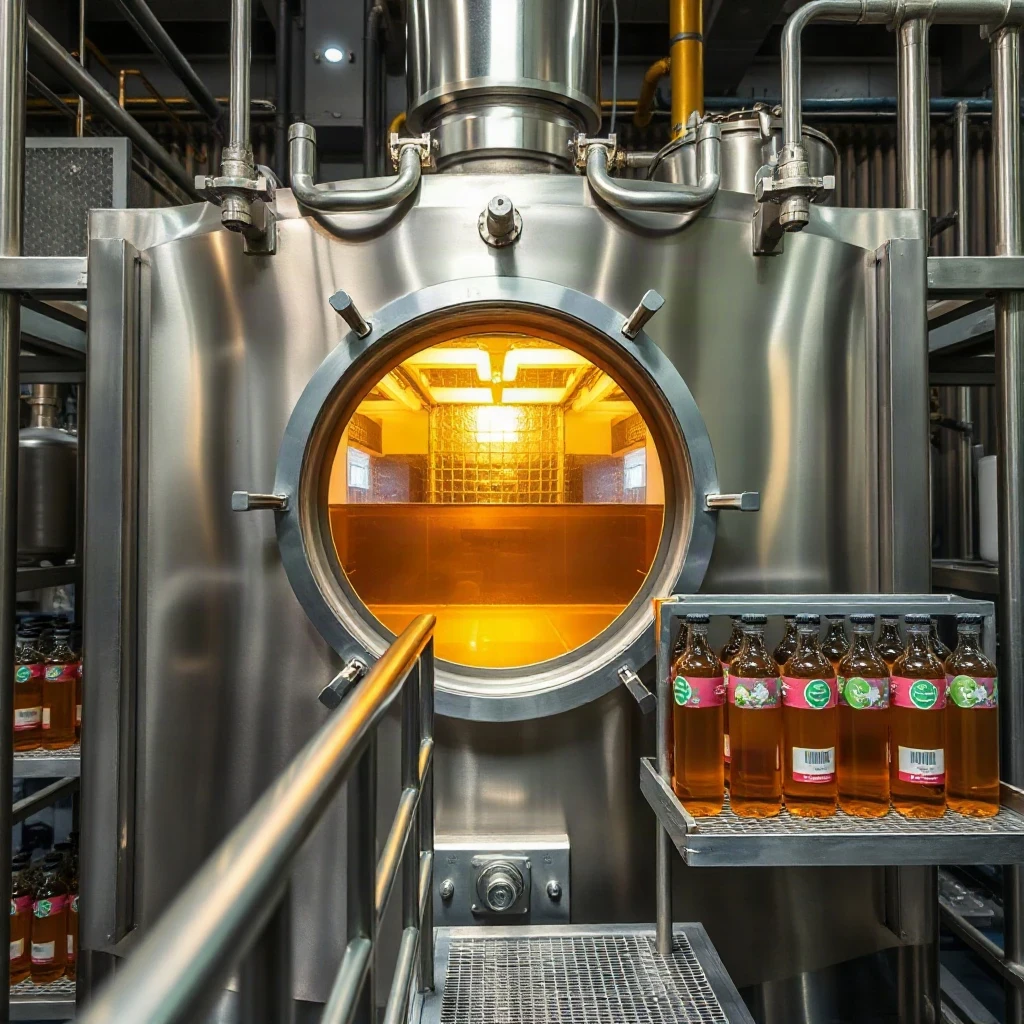
Palm oil does not burn well in a modern diesel engine. Its molecules are too large and too viscous, and its behaviour in cold weather is poor. The fix is a chemical reaction called transesterification, which converts the oil into fatty acid methyl esters - the material sold as palm biodiesel, or palm methyl ester (PME).
A triglyceride is a glycerol backbone carrying three fatty acid chains. In transesterification, methanol reacts with the oil in the presence of a catalyst - typically sodium hydroxide or sodium methoxide - and the glycerol is displaced. Each fatty acid chain is converted into a methyl ester, and glycerol emerges as a dense co-product. The overall reaction is reversible, so industrial plants run with excess methanol to push conversion towards the esters.
Transesterification links two markets. The biodiesel maker competes with food and oleochemical buyers for the same palm oil, so the price of the feedstock usually sets the floor for PME. Glycerol output adds a second revenue stream, and methanol and catalyst costs sit on the other side of the margin. Policy - blending mandates and sustainability rules in importing countries - often drives demand more than engine technology does.
Understanding the reaction helps buyers see why quality, price and policy are so tightly connected in the palm biodiesel chain.
Our market desk connects serious buyers with vetted origin suppliers across Southeast Asia. Indicative pricing, specifications and shipment guidance — free of charge.
Get connected →Malaysia’s benchmark eases to $1,137/MT as August total stocks hit 2.82m tonnes, while biodiesel targets and firm crude limit downside.
Malaysia's August build confirmed at a year's high; Indonesia's B50 and B60 plans and firm crude offer the counterweight.
Pertamina targets full B50 distribution by end-September as GAPKI urges flexible rules and flags dryness risk.
CPO holds near $1,137/MT as Malaysia's August stock build meets firm Brent and Indonesia's B50 push; our model sees a modest rise.
A step-by-step look at the chemistry, feedstock economics and sourcing checks behind palm methyl ester production.
A four-to-two bullish factor balance keeps palm oil's demand and weather premium ahead of August's heavy stock build; our model sees a +0.3% seven-day path.
Malaysian CPO benchmark is trading about $1,137 per tonne, down 0.7% from the previous session and equivalent to RM 4,617 per tonne at USD/MYR 4.08. The World Bank global palm oil benchmark is about $1,117 per tonne, while Indonesia's reference price is about $1,008 per tonne. Brent crude is up 0.2% to about $105 per barrel. The Malaysian benchmark started from a two-day-stale anchor at $1,137, and our model's published seven-day path is +0.3% over seven sessions, implying the pull factors are modestly outweighing the push factors for now.
The widest visible support comes from the soybean oil palm oil spread. The soybean oil premium is about $402 per tonne, leaving palm heavily discounted. A wide BOPO spread makes palm the cheaper cooking and oleochemical input, encouraging buyers to switch into palm and supporting physical CPO demand.
Energy markets add a second bullish mechanism. Brent crude has risen 8.5% over the past seven days to about $104.4 per barrel. Palm's POGO spread is about -$375 per tonne, in the 0th percentile of its range. At that level palm oil is cheaper than diesel on an energy-equivalent basis, which strengthens the case for discretionary biodiesel blending and reinforces Indonesia's policy-driven demand.
Indonesia's B50 mandate is a further demand-side support. Pertamina is targeting 100% B50 distribution by the end of September. Moving from B40 to B50 absorbs an estimated 3-4 million tonnes of palm oil per year, tightening the domestic balance and reducing exportable supply even as production rises.
El Niño adds a weather risk premium. The ONI is at +1.8 degC, a strong El Niño state. Dryness in Kalimantan is notable: about 15 mm of rainfall is expected over the next seven days, while other palm belt areas show 44-66 mm. The yield impact is likely to be lagged by 6-12 months, but the current risk premium supports prices because buyers and sellers worry about future supply losses even while current output is strong.
The heaviest bearish force is the MPOB August stock build. Headline total palm stocks rose 7.48% to 2.82 million tonnes. Official CPO closing stocks rose 15.2% month-on-month to 1,645,570 tonnes, 58% above the five-year average. The stocks-to-use ratio is 14.1%, an ample level. Exports fell 7.5% month-on-month to 1,294,664 tonnes. This combination of rising stocks and weakening exports means more palm is available to the market, pressuring nearby prices.
Peak production season compounds that pressure. July through October is the seasonal peak for Malaysian output. Our model's seasonal path shows production up about 4.5% two months ahead and stocks up about 7.0% one month ahead, with the September monthly average at -0.9%. Strong seasonal supply is arriving before any El Niño yield damage can bite, keeping the physical market well supplied.
Our model's factor balance is four bullish to two bearish, so the upside has the upper hand for now. The bullish side has direct demand mechanisms: the wide BOPO spread, the deeply negative POGO, Indonesia's B50 targets, and the El Niño risk premium. The bearish side is concentrated in the current stock overhang and peak-season production, which are visible in official data but may not fully reflect the lagged weather risk. Technical signals are mixed, with a 5/20 SMA golden cross but a negative MACD histogram and RSI at 52, while CFTC soyoil net longs are crowded but fell 8.1k contracts week-on-week. These are neutral factors in our model and do not tip the balance.
To flip the balance to bearish, two things would need to change. First, the MPOB stock build would need to persist into September with exports staying weak, confirming that demand is not absorbing the seasonal surplus. Second, the B50 mandate would need to be delayed or watered down, and Brent or the BOPO spread would need to narrow, removing the energy and substitution bid. For now, the model's 7-day path of +0.3% reflects a market that is absorbing bearish supply data while retaining a bullish demand and weather layer underneath.
Malaysian benchmark slips 0.9% to about $1,135/MT as a sharp August stock build, weak rupiah selling and crowded speculative longs pressure the market. Wide soy-palm spread and fir

Malaysian CPO benchmark slipped 0.9% to about $1,135/MT, or RM4,609/MT, while the World Bank benchmark is about $1,117/MT and Indonesia's reference price is about $1,008/MT. Brent crude eased 1.4% to about $107/bbl after a seven-day run toward $108.7/bbl. USD/MYR is about 4.06. Palm oil fell for a third session after the August MPOB release.
The widest support is demand switching from soy oil. The CBOT BOPO spread is about $452/t, meaning palm is heavily discounted to soy oil. Price-sensitive buyers have a strong incentive to switch into palm, which underpins physical offtake.
Biodiesel economics remain supportive. Brent is up 6.3% over seven days, and the POGO spread is about -$377/t, at the 0th percentile. A negative POGO spread means discretionary blending of palm biodiesel is economic, which supports CPO as a biodiesel feedstock.
Indonesian export policy is a bullish constraint. The September reference price is $1,008/t, with a $126/t levy plus a separate $148/t export duty, about $274/t in combined export charges. That burden slows Indonesian shipments and leaves more room for Malaysian CPO in global trade. GAPKI has warned against further levy hikes.
El Niño anticipation adds a background risk premium. The ONI is +1.8, consistent with El Niño. Palm yields typically respond with a 6-12 month lag, so current palm-belt rainfall is mixed, with Kalimantan dry, but no immediate disruption. The event supports risk premium for later supply.
Pre-Diwali demand is a neutral buffer. Diwali is 58 days away and the buying window opens in roughly nine days. Festival effects are not reliably directional, but the news flow may stabilize prices.
The dominant bearish driver is the August MPOB stock build. Closing stocks rose 15.2% month on month to 1,645,570 t, about 58% above the five-year average, with a stocks-to-use ratio of 14.1%. Production rose 1.4% to 1,817,499 t while exports fell 7.5% to 1,294,664 t. Headlines called the data bearish, and palm fell for a third session.
Indonesian rupiah weakness adds regional selling pressure. USD/IDR is about 17,535. A weaker rupiah encourages Indonesian exporters to sell aggressively, which is regionally bearish for CPO.
Speculative positioning is vulnerable. CFTC data show managed-money soyoil net longs at 109,912 contracts, up 21,470 week on week and at the 85th percentile. A crowded long position is at risk of liquidation, and the unwind can drag sentiment across the oilseed complex.
Technical momentum is soft. The MACD histogram is negative. Price at $1,135 is below the SMA-5 at $1,145 and the SMA-20 at $1,138. RSI is 51, neutral but consistent with short-term bearish momentum even with a supportive golden cross.
Seasonal supply pressure is building. September has historically averaged -0.9% month on month, while July to October is the peak production season. The seasonal path for stocks points to another 7.0% build next month, suggesting further supply overhang.
The balance is four bullish factors against five bearish factors, and the downside currently has the upper hand. The bearish MPOB stocks, rupiah-driven Indonesian selling, crowded speculative longs, soft technicals and seasonal supply growth outweigh the BOPO switching incentive, biodiesel economics, Indonesian policy burden and El Niño premium.
Our model outlook sees CPO consolidating with a mild downside bias over the next seven trading days after the bearish August MPOB data, but the wide BOPO spread and firm crude oil limit a deeper sell-off. It expects choppy trade around $1,110 to $1,150, with near-term pressure from seasonal output and speculative long liquidation risk. Pre-Diwali buying and Indonesian policy uncertainty provide background support. The published path is +0.1% over seven sessions, essentially flat in a choppy range.
To flip the balance, the bearish drivers would need to fade. A decisive recovery in Malaysian exports and a drawdown in the stocks-to-use ratio would ease the stock overhang. Stabilization of the Indonesian rupiah, or further policy-driven slowdown in Indonesian selling, would reduce regional supply pressure. A reset in speculative longs and a decisive close back above $1,150 would also signal that the technical and positioning drag has cleared. Until then, the downside has the upper hand.
MPOB August stocks rose 7.48% to 2.82m tonnes, exports fell, and CPO eased to about $1,135/t. Firm crude and Indonesian biodiesel push remain support.

Malaysian CPO benchmark slipped to about $1,135 per tonne (RM4,609), down 0.9% from the previous session, with the World Bank global palm oil benchmark near $1,117 and Indonesia's reference price about $1,008. Brent crude fell 1.4% to roughly $107 a barrel; USD/MYR was about 4.06. The KPBN physical auction saw CPO at Rp15,666 per kg and CIF Rotterdam at $1,595 per tonne.
MPOB's August data was the main bearish impulse. Total Malaysian palm oil stocks rose 7.48% month on month to 2.82 million tonnes, while CPO stocks climbed 15.2% to 1.65 million tonnes. Production increased 1.4% to 1.82 million tonnes, exports fell 7.5% to 1.29 million tonnes, and the stocks-to-use ratio reached 14.1%. Rising output against slower exports leaves the market well supplied near term.
Seasonal supply remains firm in the second half of 2026, adding pressure to vegetable oil markets. Meanwhile, El Niño conditions with ONI at +1.8 and dry weather in Kalimantan are risks for future yields, but they have not yet altered the current balance.
Indonesian biodiesel policy remains a two-way influence. B50 is reported nearly available at all fuel stations, and Pertamina has signaled readiness for B60 and potentially B100. But GAPKI has asked the government to delay B60 and focus on optimizing B50 while anticipating a decline in palm oil production. GAPKI also warned against raising the CPO export levy to avoid pressuring farmer FFB prices.
Energy and rival oils add crosscurrents. Brent remains high near $107 a barrel despite a 1.4% dip, and geopolitical risks to Middle East oil routes keep a premium in crude, which supports biodiesel blending margins in mandate markets. However, palm has fallen for three consecutive sessions amid weaker rival oils, and speculative long liquidation is a near-term risk.
Our model outlook sees CPO consolidating with a mild downside bias over the next seven trading days, with choppy trade around $1,110–$1,150. The bearish August stock build argues for pressure, but the wide BOPO spread, firm crude and pre-Diwali buying limit the downside; the published path is +0.1% over seven sessions.
Takeaway for buyers: watch September Malaysian export recovery, Indonesian policy resolution on B-series blending, and whether El Niño dryness deepens in Kalimantan. A choppy range near $1,110–$1,150 is more likely than a sustained breakout in the near term.
Sources: Agricom.id; Majalah Sawit Indonesia; Inilah.com; Bernama; Berita Harian; TradingView
August inventories build to 1.65m tonnes while crude near $100 revives biodiesel demand and analysts flag a narrow global surplus.

Malaysian crude palm oil futures have turned softer after an earlier recovery, with the benchmark trading around $1,135 per tonne, equivalent to roughly RM 4,609 per tonne at a ringgit near 4.06 to the dollar. Firmer crude and gains in Dalian palm olein had lifted the vegetable oil complex, but the market is now weighing a comfortable inventory position against a tightening forward supply picture.
The build is real, but it is the forward picture that is drawing more attention. Commentary in the market points to a narrow global production surplus that could give way to a supply squeeze, with the current stock cushion masking slower forward output growth. That view has been reinforced by analysts who argue the market is not pricing the risk of tighter availability later in the season.
On the demand side, Indonesian biodiesel policy remains in focus. Domestic CPO requirements for biodiesel are seen climbing toward 35 million tonnes as the blend mandate becomes more aggressive, while the industry association GAPKI has asked the government to delay B60 and focus on optimising B50 first. Indian buying ahead of the Diwali festival is a further background support.
Elsewhere, rival oils have been mixed, with soybean oil imports rising in the United States on biofuel demand and Indian edible oil imports continuing to favour palm over soyoil. Indonesia's export levy debate and its wider push on commodity pricing add a layer of policy uncertainty.
Sources: agricom.id; Bernama; TradingView; NST Online; sawitsetara.co; The Star
Biodiesel policy momentum builds in Jakarta, with regional agencies backing B50 and groundwork laid for a B60 mandate in 2027.

Indonesia's biodiesel programme is drawing international attention as the country moves toward wider implementation of its B50 blend, with reporting pointing to interest from Japanese and European observers in how the mandate is being developed and administered.
The headlines sketch a two-track picture: consolidation of the B50 programme now, and preparation for a higher B60 mandate in 2027. Regional agricultural authorities in East Kalimantan have signalled support for B50 implementation, suggesting the blend is being treated as a national programme with sub-national delivery responsibilities rather than a purely central policy exercise.
For the palm oil market, the core mechanic is straightforward. Domestic biodiesel blending absorbs palm oil that would otherwise be exported, tightening the volume available to international buyers. Each step up in the mandated blend ratio raises the domestic call on supply, all else equal.
The sequencing matters. A B50 rollout followed by B60 preparation implies the domestic demand base is being expanded in stages, giving producers and fuel suppliers time to adjust infrastructure and feedstock logistics. For compliance-minded buyers, that points to a structural shift in the export pool rather than a one-off disruption.
Buyers with sustainability or traceability requirements should watch how the mandate is documented and verified, since higher blending volumes can widen the pool of feedstock entering the system. Certification and reporting expectations may evolve alongside the blend ratio.
The policy backdrop sits against softer near-term fundamentals. Malaysia's August data showed a sharp stock build, with closing stocks up 15.2% month-on-month and exports down 7.5%. The Malaysian CPO benchmark was around $1135/MT, down 0.9%, while Brent crude near $108/bbl keeps biodiesel economics broadly supportive.
Our model outlook sees consolidation with a mild downside bias over the next seven trading days, with choppy trade around $1110-$1150, as seasonal output and long liquidation weigh against pre-Diwali buying and Indonesian policy uncertainty.
For now, the signal is directional rather than immediate: policy is steadily enlarging the domestic demand base, and the export market is adjusting to that reality.
Sources: sawitsetara.co; Majalah Sawit Indonesia; ANTARA News; BioEnergy Times
Its yield, stability and versatility explain why palm derivatives appear across packaged food, personal care and household goods.

Walk the aisles of a typical supermarket and palm oil is present in far more products than its label suggests. It rarely appears as "palm oil" alone. Instead it arrives as fractions and derivatives with names like stearin, olein, lauric acid or fatty alcohol, each doing a specific job in a formulation.
The core reason is agronomic. Oil palm produces more oil per hectare than the other major oilseed crops, roughly several times the yield of soy or rapeseed. That efficiency supports a large, dependable supply at a comparatively low cost, which matters to buyers formulating products at scale.
Palm oil is also naturally semi-solid at room temperature. It can be separated into a solid fraction and a liquid fraction, giving manufacturers a range of textures from one raw material. That flexibility reduces the number of separate ingredients a formulator needs.
For procurement managers, the practical point is that palm derivatives are rarely optional line items. Substituting them often means reformulating a product, not simply swapping a supplier. Understanding which derivative a specification actually requires, and at what grade, is usually the first step.
Buyers should also expect to trace the material back through several processing stages. A single finished good may contain palm-derived inputs from more than one supplier, which is why documentation and chain-of-custody arrangements matter as much as price.
Palm oil's place on the shelf is not an accident of marketing. It reflects yield, cost and functional range that few alternatives match at scale. For first-time buyers, treating it as a family of ingredients rather than one commodity is the most useful starting point.
What procurement managers and first-time buyers need to know about due diligence, geolocation data, and supply chain documentation.

Geolocation is mandatory. For larger plots, polygon data covering the entire production area is required; for smaller plots, a single point may be acceptable depending on plot size thresholds. Importers should collect this data from suppliers, not infer it from mill or district locations.
EUDR compliance is an ongoing process, not a one-off check. Importers who start supply chain mapping early, communicate clearly with suppliers, and use risk-based verification will be better positioned to maintain uninterrupted access to the EU market.
Our market desk connects serious buyers with vetted origin suppliers across Southeast Asia. Indicative pricing, specifications and shipment guidance — free of charge.
Get connected →MPOB August stocks rose 7.48% to 2.82m tonnes, exports fell, and CPO eased to about $1,135/t. Firm crude and Indonesian biodiesel push remain support.
Full story — Page 2 ▸August inventories build to 1.65m tonnes while crude near $100 revives biodiesel demand and analysts flag a narrow global surplus.
Full story — Page 2 ▸Biodiesel policy momentum builds in Jakarta, with regional agencies backing B50 and groundwork laid for a B60 mandate in 2027.
Full story — Page 2 ▸Its yield, stability and versatility explain why palm derivatives appear across packaged food, personal care and household goods.
Full story — Page 2 ▸What procurement managers and first-time buyers need to know about due diligence, geolocation data, and supply chain documentation.
Full story — Page 2 ▸Malaysian benchmark slips 0.9% to about $1,135/MT as a sharp August stock build, weak rupiah selling and crowded speculative longs pressure the market. Wide soy-palm spread and fir
Malaysian CPO benchmark slipped 0.9% to about $1,135/MT, or RM4,609/MT, while the World Bank benchmark is about $1,117/MT and Indonesia's reference price is about $1,008/MT. Brent crude eased 1.4% to about $107/bbl after a seven-day run toward $108.7/bbl. USD/MYR is about 4.06. Palm oil fell for a third session after the August MPOB release.
The widest support is demand switching from soy oil. The CBOT BOPO spread is about $452/t, meaning palm is heavily discounted to soy oil. Price-sensitive buyers have a strong incentive to switch into palm, which underpins physical offtake.
Biodiesel economics remain supportive. Brent is up 6.3% over seven days, and the POGO spread is about -$377/t, at the 0th percentile. A negative POGO spread means discretionary blending of palm biodiesel is economic, which supports CPO as a biodiesel feedstock.
Indonesian export policy is a bullish constraint. The September reference price is $1,008/t, with a $126/t levy plus a separate $148/t export duty, about $274/t in combined export charges. That burden slows Indonesian shipments and leaves more room for Malaysian CPO in global trade. GAPKI has warned against further levy hikes.
El Niño anticipation adds a background risk premium. The ONI is +1.8, consistent with El Niño. Palm yields typically respond with a 6-12 month lag, so current palm-belt rainfall is mixed, with Kalimantan dry, but no immediate disruption. The event supports risk premium for later supply.
Pre-Diwali demand is a neutral buffer. Diwali is 58 days away and the buying window opens in roughly nine days. Festival effects are not reliably directional, but the news flow may stabilize prices.
The dominant bearish driver is the August MPOB stock build. Closing stocks rose 15.2% month on month to 1,645,570 t, about 58% above the five-year average, with a stocks-to-use ratio of 14.1%. Production rose 1.4% to 1,817,499 t while exports fell 7.5% to 1,294,664 t. Headlines called the data bearish, and palm fell for a third session.
Indonesian rupiah weakness adds regional selling pressure. USD/IDR is about 17,535. A weaker rupiah encourages Indonesian exporters to sell aggressively, which is regionally bearish for CPO.
Speculative positioning is vulnerable. CFTC data show managed-money soyoil net longs at 109,912 contracts, up 21,470 week on week and at the 85th percentile. A crowded long position is at risk of liquidation, and the unwind can drag sentiment across the oilseed complex.
Technical momentum is soft. The MACD histogram is negative. Price at $1,135 is below the SMA-5 at $1,145 and the SMA-20 at $1,138. RSI is 51, neutral but consistent with short-term bearish momentum even with a supportive golden cross.
Seasonal supply pressure is building. September has historically averaged -0.9% month on month, while July to October is the peak production season. The seasonal path for stocks points to another 7.0% build next month, suggesting further supply overhang.
The balance is four bullish factors against five bearish factors, and the downside currently has the upper hand. The bearish MPOB stocks, rupiah-driven Indonesian selling, crowded speculative longs, soft technicals and seasonal supply growth outweigh the BOPO switching incentive, biodiesel economics, Indonesian policy burden and El Niño premium.
Our model outlook sees CPO consolidating with a mild downside bias over the next seven trading days after the bearish August MPOB data, but the wide BOPO spread and firm crude oil limit a deeper sell-off. It expects choppy trade around $1,110 to $1,150, with near-term pressure from seasonal output and speculative long liquidation risk. Pre-Diwali buying and Indonesian policy uncertainty provide background support. The published path is +0.1% over seven sessions, essentially flat in a choppy range.
To flip the balance, the bearish drivers would need to fade. A decisive recovery in Malaysian exports and a drawdown in the stocks-to-use ratio would ease the stock overhang. Stabilization of the Indonesian rupiah, or further policy-driven slowdown in Indonesian selling, would reduce regional supply pressure. A reset in speculative longs and a decisive close back above $1,150 would also signal that the technical and positioning drag has cleared. Until then, the downside has the upper hand.
Four bullish factors—wide BOPO spread, strong crude, Indonesian export costs, El Niño—meet five bearish ones; our model sees the downside with the upper hand near term.

Strong crude and a negative POGO also help. Brent has gained about 5.8% over seven days to $101.4/bbl, while the POGO spread is -$337/t—meaning palm is cheaper than gasoil. That improves biodiesel blend economics: when palm is priced below diesel, blenders have a stronger incentive to use palm-derived feedstock, pulling demand into the vegetable oil complex.
Indonesian export policy is adding a cost burden. With the reference price at $1,008/MT, the export levy is $126/t and the duty $148/t. GAPKI has warned against further increases. High cumulative export charges can curb Indonesian shipments, tightening global palm supply and providing underlying support to CPO benchmarks.
El Niño provides a lagged structural bid. The ONI is +1.8°C for JJA. Historically, El Niño tends to reduce Southeast Asian yields with a 6–12 month lag, so the current event is likely to tighten palm output later, which the market is partly discounting today.
Seasonal production is peaking. Malaysia is in the Jul–Oct high-output window. September historically averages about -0.9% month-on-month, while the seasonal profile one month ahead shows production up 7.0%. More supply from the seasonal peak tends to pressure prices unless demand keeps pace.
Technical and positioning factors are also negative. A MACD bearish crossover has appeared, which our model associates with inflections over the next 1–3 days, and recent headlines cite profit-taking. In addition, managed money holds a net long in soybean oil of 109,912 contracts, near the 85th percentile. Such crowded positioning is vulnerable to long liquidation, and a sharp unwinding in soyoil would drag on palm prices as well.
A weak rupiah is another bearish supply-side signal. USD/IDR is around 17,557. A weaker rupiah lowers the local-currency cost of Indonesian palm exports, encouraging more shipments onto world markets and adding to global supply.
Our model outlook is for CPO to remain rangebound near 52-week highs but face near-term pressure from the expected bearish MPOB August stock build and the seasonal supply peak. The supportive factors cap downside, but the technical and positioning drag points to a slight net decline over the next seven days, with volatility concentrated around the MPOB release.
To flip the balance, a bearish input would need to weaken materially: the MPOB August stock build could come in below previews, or seasonal production could disappoint. Alternatively, the bullish forces would have to strengthen enough to overwhelm positioning and seasonal drag—for example, a materially wider BOPO spread or a further drop in POGO on stronger crude. Until that happens, our model does not see prices as supported near term.
Malaysian benchmark slips to $1,144/MT as July output and stocks climb; biodiesel demand and firm crude limit downside, with traders eyeing August MPOB data.
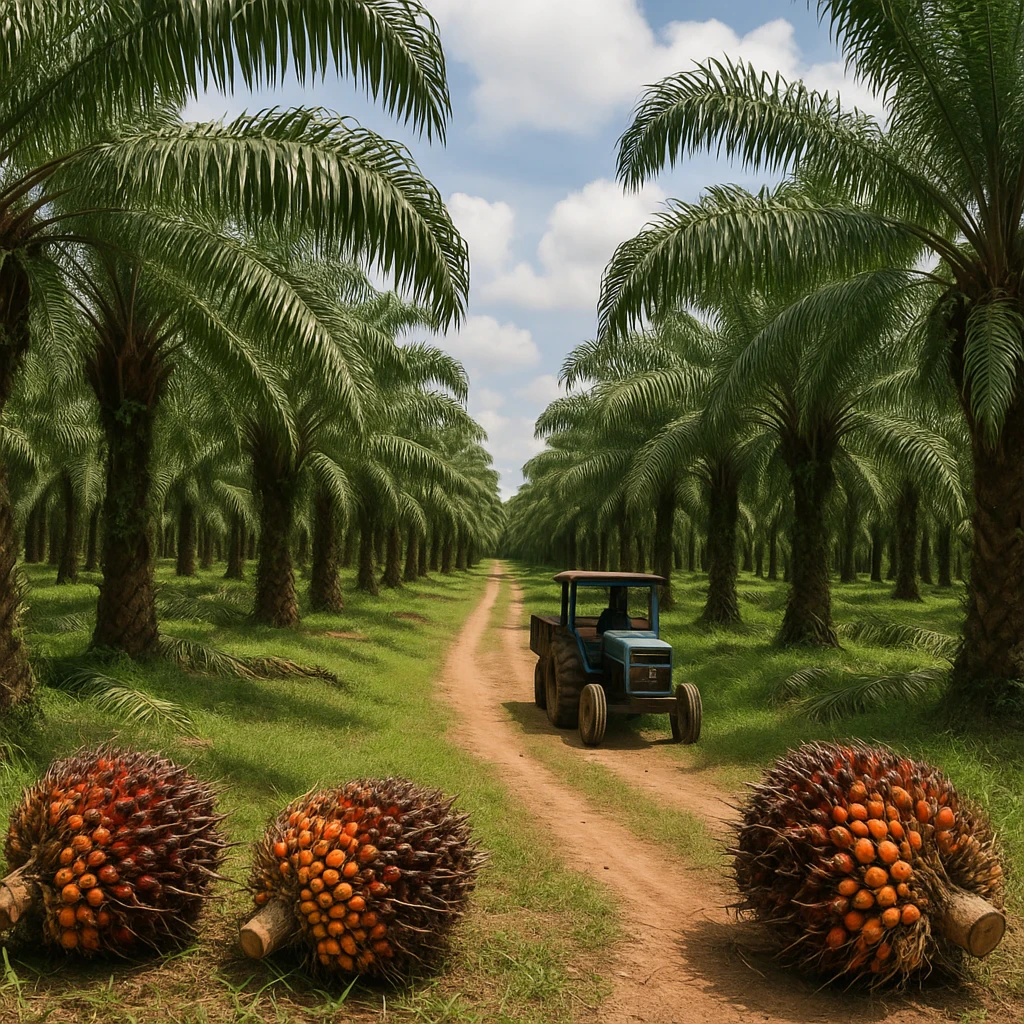
Malaysian crude palm oil softened to about $1,144/MT (RM4,657/MT) on September 10, down 0.6% from the previous session. The World Bank palm oil benchmark stood at $1,117/MT and the Indonesian reference price at $1,008/MT. Brent crude was around $101/bbl, off 0.9%, and the ringgit traded near 4.07 per dollar. The wider weather pattern remains El Niño (ONI +1.8), but rainfall is broadly normal across producing belts.
Malaysia's July MPOB data showed production rising 9.4% month-on-month to 1,792,979 tonnes and closing stocks up 7.2% at 1,429,316 tonnes, the highest in eight months. Exports jumped 15.1% to 1,399,579 tonnes, while imports fell 51.9% to 49,566 tonnes. The stocks-to-use ratio was 12.5% and the FFB reference was RM49.50 per tonne, up 1.2%. Reports indicate second-half 2026 palm output should remain firm, and a seasonal increase in supply is weighing on vegetable oil prices. The upcoming August MPOB report is expected to show another stock build, potentially a seven-month high, making the release a key near-term catalyst.
Indonesia's B50 biodiesel mandate continues to anchor demand. Distribution has reportedly reached 94%, and the energy ministry is preparing administrative sanctions without fines for violators. The policy is framed not just as biodiesel blending but as a broader energy security and industrialization strategy. Meanwhile, Indonesia's CPO exports grew 5.49% year-on-year and officials are urging downstream processing. Domestic food demand is also expected to require around 10 million tonnes of CPO amid rising biodiesel use. Strong crude near $101/bbl helps biodiesel economics, while the Indonesian reference price remains below Malaysian levels, keeping export competitiveness.
Futures ended lower on profit-taking after earlier support from firmer rival oils and crude, with occasional haze concerns in Indonesia. Our model outlook sees CPO rangebound near 52-week highs but facing near-term pressure from the expected bearish August stock build and seasonal supply peak. The wide biodiesel-palm oil (BOPO) spread, strong crude, and negative palm oil-gas oil (POGO) spread are limiting downside, but a MACD bearish crossover and crowded soyoil longs add downside risk. We expect a slight net decline over the next seven days, with volatility around the MPOB release, compared with a published path of +0.1% over the same sessions.
Key items: the MPOB August report for confirmation of stock builds, B50 implementation and any export levy or export governance changes under PP 24/2026, and how BOPO/POGO spreads react to crude and soyoil. A sustained seasonal supply rise could pressure prices, but policy-related biodiesel demand and firm energy may provide a floor.
Sources: vibizmedia.com; Majalah Sawit Indonesia; Finimize; HaiSawit; електронна зернова біржа України; BernamaBiz
MPOB confirms Malaysian inventories rose 7.48% to 2.82 million tonnes in August, with the November contract steady as supply peaks.
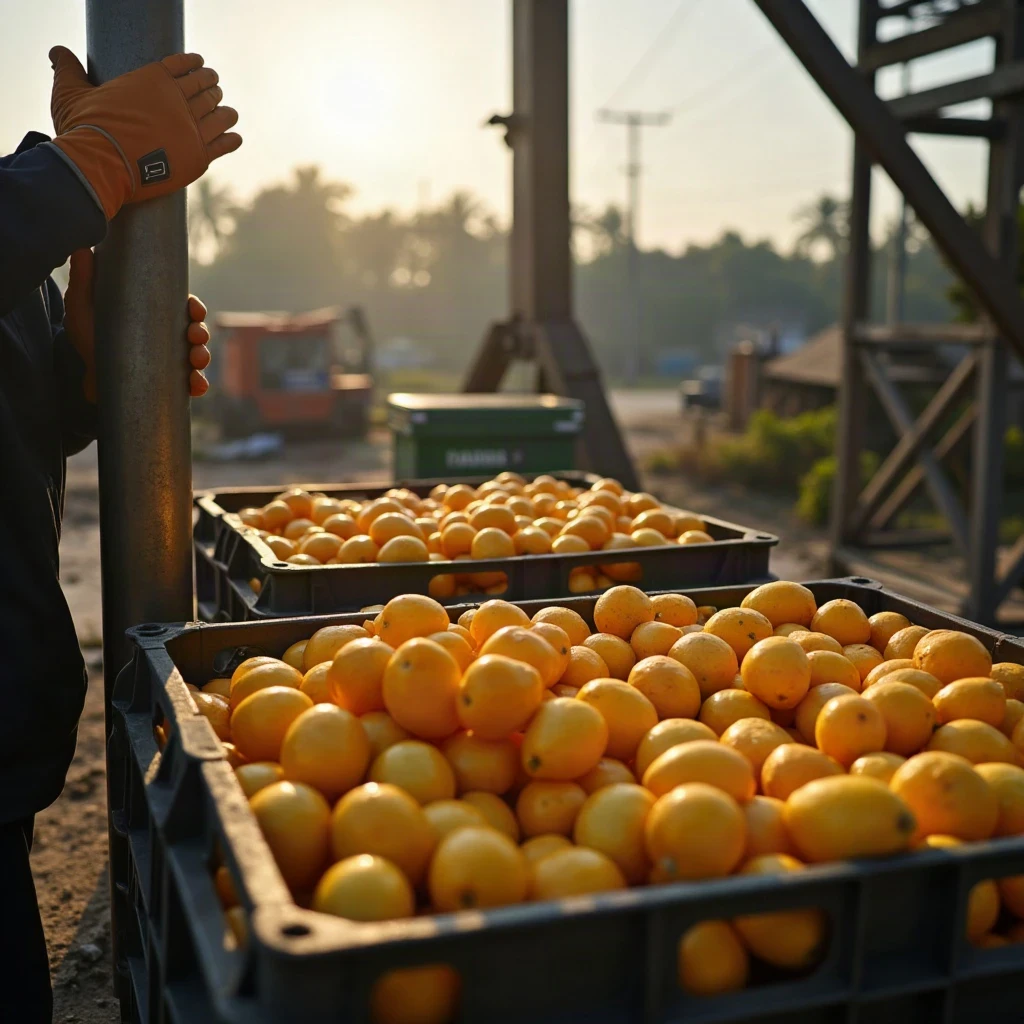
Malaysian crude palm oil futures held firm, with the November contract around RM 4,967 per tonne in the 9 September session, even as the benchmark eased about 0.6% to roughly $1,144 per tonne, equivalent to near RM 4,658 at a ringgit around 4.07 to the dollar. The steadier tone suggests traders have largely absorbed the seasonal supply peak and are now watching demand for the next signal.
The market's focus has shifted from expectation to confirmation on Malaysian inventories. MPOB data show total palm oil stocks rose 7.48% to 2.82 million tonnes in August, validating the build traders had anticipated. The July figures had already pointed the way: crude palm oil production at 1,792,979 tonnes, up 9.4% month on month, with closing stocks at 1,429,316 tonnes, a 7.2% rise. Exports rose 15.1% to 1,399,579 tonnes, while imports fell 51.9% to 49,566 tonnes. The fresh fruit bunch reference price was set at RM 49.50, up 1.2% month on month.
The reaction was telling. Futures ended lower on profit-taking even as crude oil firmed, suggesting the market had largely priced the build and is now looking for the next catalyst. Industry commentary also flags that production in the second half of 2026 is set to remain firm, reinforcing the peak-supply overhang into the final months of the year.
Offsetting the bearish supply picture, demand signals remain supportive. Indonesia's food sector is projected to need around 10 million tonnes of CPO as biodiesel blending expands, and the country is positioning itself as a global reference for B50 development. GAPKI has cautioned against moving to B60 too quickly, arguing that B50 should be bedded in first, while noting that a B60 mandate could absorb as much as 23 million tonnes of CPO and raise questions over export availability.
Indonesia's CPO exports grew 5.49%, and officials continue to push downstreaming. A new export governance regulation, PP 24/2026, is also in focus, alongside industry calls to keep the CPO export levy unchanged so that farmer FFB prices are not squeezed.
Elsewhere, China's oilseed demand is seen supporting the vegetable oil price outlook, though rising global supply is applying pressure. On the policy front, EUDR scrutiny continues.
Brent crude around $101 per barrel, down 1.2%, remains high enough to keep biodiesel blending economics attractive, a factor that has repeatedly capped palm losses this month. ENSO is in an El Niño state with an ONI of +1.8, but rainfall has been broadly normal across the belts, offering little immediate threat to yields.
Our model outlook sees CPO rangebound near 52-week highs but facing near-term pressure from the confirmed bearish MPOB August stock build and the seasonal supply peak. A wide BOPO spread, strong crude and negative POGO limit downside, while a bearish MACD crossover and crowded soyoil longs add risk. We expect a slight net decline over the next seven days, with volatility around the MPOB release.
Watch the pace of Malaysian exports for signs of whether the seasonal build is being absorbed. Keep an eye on Indonesian levy and B50/B60 policy signals, which shape future export availability, and on crude oil, which underpins blending demand. Expect choppy trade around the report.
Sources: HaiSawit; sawitsetara.co; Gabungan Pengusaha Kelapa Sawit Indonesia (GAPKI); sawitsetara.co; nst.com.my; електронна зернова біржа України
Indonesia's B50 rollout is tightening domestic feedstock use, while EU deforestation-rule pushback adds traceability uncertainty for buyers.
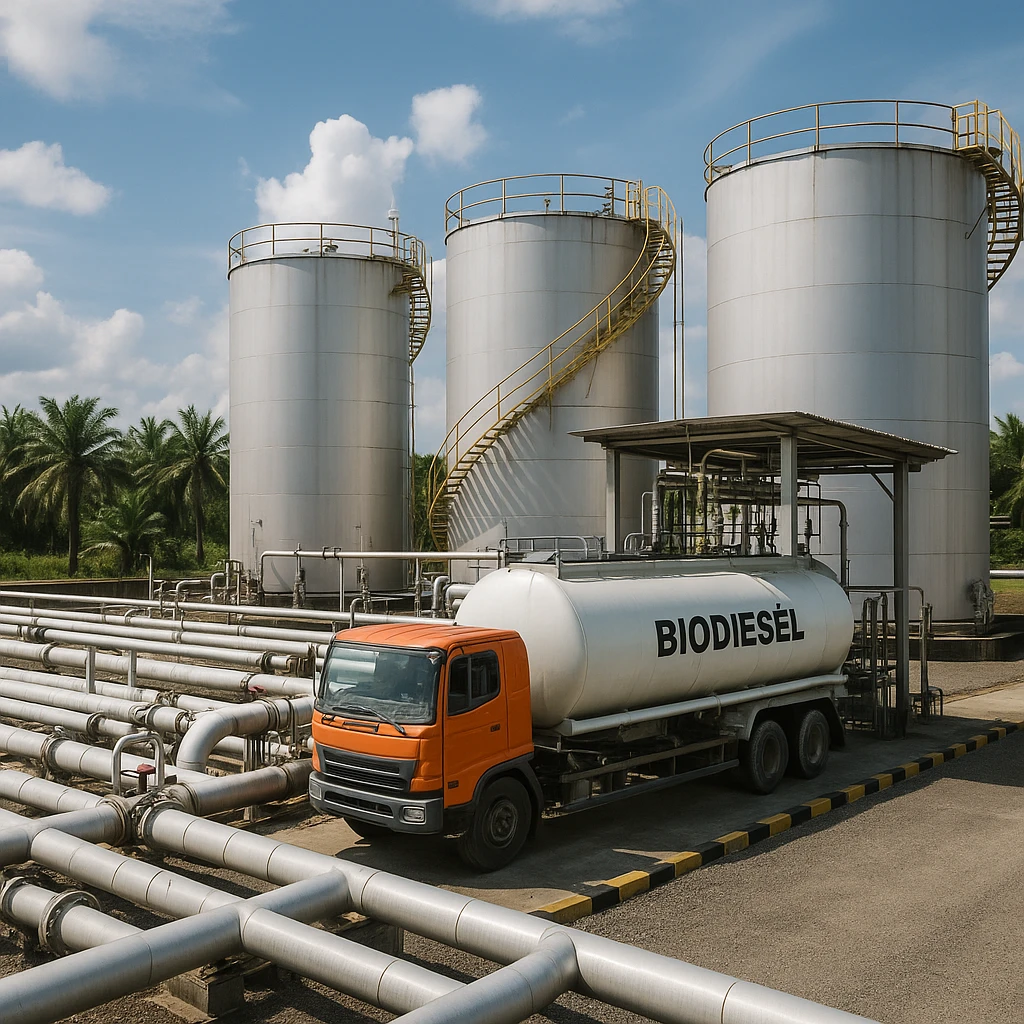
Indonesia's B50 programme is being framed as more than a biodiesel expansion; it is described as a strategy for energy resilience and industrialisation. That positioning signals a structural pull on domestic palm oil use, not a one-off demand spike.
The energy ministry is preparing administrative sanctions without fines for B50 mandate violators, while national distribution is reported at 94 percent. The absence of fines may reduce short-term compliance pressure, but a high distribution rate indicates that the blend is already moving through the supply chain. For palm oil markets, this means a larger share of output is being absorbed into the domestic fuel pool.
Reports that the food sector requires 10 million tons of CPO amid the biodiesel surge underline direct competition between energy and edible uses. Mandated fuel demand is likely to compete with food manufacturers, oleochemical producers and exporters for the same feedstock. That can tighten export availability and may push up premiums for food-grade or certified sustainable volumes.
Global Witness reports that Mondelez is making a last-ditch attempt to weaken the EU deforestation regulation. If EUDR requirements are diluted, demand for traceable, low-risk palm oil in the EU could soften. However, buyers that have already built due-diligence systems may continue to require deforestation-free supply because investor and consumer expectations do not automatically follow regulatory rollback. A divergence between EU rules and Indonesia's domestic policy could also create two-tier traceability and pricing obligations.
Sources: vibizmedia.com; Majalah Sawit Indonesia; HaiSawit; Global Witness
Jakarta's biodiesel escalation meets EU deforestation-law lobbying, with food demand and export compliance in the balance.

Indonesia's biodiesel programme is again the dominant policy signal for palm oil, with officials positioning the country as a global reference point for B50 development and preparing for a B60 mandate in 2027. Industry association GAPKI has cautioned against moving too quickly, arguing that B50 should be bedded in properly before the blend level is raised again.
The economics support the policy push. Brent crude near $101/bbl keeps biodiesel blending attractive relative to diesel, and a wide palm-oil-to-gas-oil spread reinforces the incentive. At the same time, the food-versus-fuel tension is not theoretical: domestic cooking-oil availability and price stability are politically sensitive, and any mandate acceleration has to be squared with that.
The EU deforestation regulation remains a second, slower-moving pressure point. Reporting on confectionery major Mondelez's lobbying against EUDR points to continued industry attempts to weaken or delay the rules. For compliance-minded buyers, the practical implication is unchanged: traceability and due-diligence documentation remain the gate to European market access, regardless of how the political argument resolves.
Malaysian crude palm oil futures traded around $1,144/MT, or RM 4,657/MT, down 0.6% on the session, against a World Bank palm oil benchmark near $1,117/MT and an Indonesian reference of about $1,008/MT. Brent was near $101/bbl, off 1.1%. The ringgit sat around 4.07 per dollar and the rupiah near 17,557.
MPOB July data showed production at 1,792,979 tonnes, up 9.4% month on month, with closing stocks at 1,429,316 tonnes, up 7.2%. Exports rose 15.1% to 1,399,579 tonnes while imports fell 51.9% to 49,566 tonnes. The fresh fruit bunch reference was RM 49.50, up 1.2%.
Our model outlook sees CPO rangebound near 52-week highs, with near-term pressure from an expected bearish August stock build and the seasonal supply peak, partly offset by the wide BOPO spread, firm crude and negative POGO. A bearish MACD crossover and crowded soyoil longs add downside risk. We expect a slight net decline over the next seven sessions, with volatility around the MPOB release; the published path is +0.1% over seven sessions.
Sources: HaiSawit; sawitsetara.co; Gabungan Pengusaha Kelapa Sawit Indonesia (GAPKI); Global Witness; BioEnergy Times
Current ENSO state points to a delayed yield risk, while near-term supply hinges on harvest weather and the coming MPOB stock build.
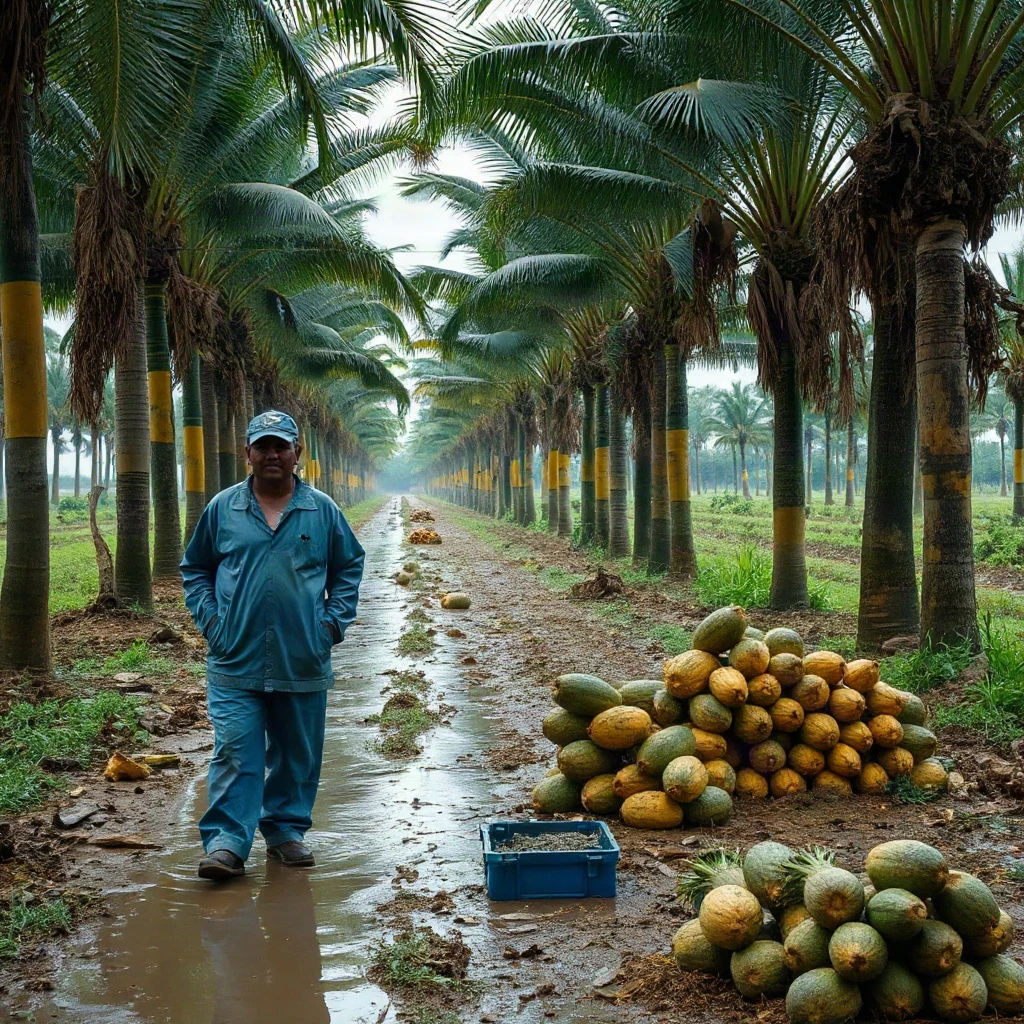
The Pacific remains in an El Niño state, with the ONI reading at +1.8. That is a firm, established event rather than a marginal one, and it matters for the palm belts chiefly through timing rather than through this month's weather.
Rainfall across the Malaysian and Indonesian palm belts is currently reported as broadly normal. For an El Niño of this magnitude, that is the key near-term fact: the tap has not been turned off across the growing regions.
El Niño's classic damage to oil palm is not instantaneous. The mechanism is well established: a moisture deficit stresses the palm, and the effect shows up in fruit bunch development and bunch weight roughly six to twelve months later. On that lag, any drought signal from the current event would land in the 2027 output profile, not in the next few months of production.
What matters now is whether the rainfall pattern actually deteriorates. Normal belt rainfall means that stress is not yet being transmitted into the palms.
Near-term output is driven by harvest conditions rather than by ENSO. Two opposite risks apply:
The July MPOB set showed Malaysian CPO production at 1,792,979 tonnes, up 9.4% month on month, with closing stocks at 1,429,316 tonnes, up 7.2%. Exports rose 15.1% to 1,399,579 tonnes. That combination is consistent with a belt running near its seasonal peak.
Our model outlook sees CPO rangebound near 52-week highs but facing near-term pressure from an expected bearish MPOB August stock build and the seasonal supply peak. Wide BOPO spread, strong crude and negative POGO limit the downside. MACD has crossed bearish and crowded soyoil longs add risk. We expect a slight net decline over the next seven days, with volatility around the MPOB release; the published path is +0.1% over seven sessions.
The benchmark sits near $1,144/MT, with Brent near $101/bbl. Rain, not ENSO, is the variable to watch in the coming week.
Our market desk connects serious buyers with vetted origin suppliers across Southeast Asia. Indicative pricing, specifications and shipment guidance — free of charge.
Get connected →Malaysian benchmark slips to $1,144/MT as July output and stocks climb; biodiesel demand and firm crude limit downside, with traders eyeing August MPOB data.
Full story — Page 2 ▸MPOB confirms Malaysian inventories rose 7.48% to 2.82 million tonnes in August, with the November contract steady as supply peaks.
Full story — Page 2 ▸Indonesia's B50 rollout is tightening domestic feedstock use, while EU deforestation-rule pushback adds traceability uncertainty for buyers.
Full story — Page 2 ▸Jakarta's biodiesel escalation meets EU deforestation-law lobbying, with food demand and export compliance in the balance.
Full story — Page 2 ▸Current ENSO state points to a delayed yield risk, while near-term supply hinges on harvest weather and the coming MPOB stock build.
Full story — Page 2 ▸Four bullish factors—wide BOPO spread, strong crude, Indonesian export costs, El Niño—meet five bearish ones; our model sees the downside with the upper hand near term.
Strong crude and a negative POGO also help. Brent has gained about 5.8% over seven days to $101.4/bbl, while the POGO spread is -$337/t—meaning palm is cheaper than gasoil. That improves biodiesel blend economics: when palm is priced below diesel, blenders have a stronger incentive to use palm-derived feedstock, pulling demand into the vegetable oil complex.
Indonesian export policy is adding a cost burden. With the reference price at $1,008/MT, the export levy is $126/t and the duty $148/t. GAPKI has warned against further increases. High cumulative export charges can curb Indonesian shipments, tightening global palm supply and providing underlying support to CPO benchmarks.
El Niño provides a lagged structural bid. The ONI is +1.8°C for JJA. Historically, El Niño tends to reduce Southeast Asian yields with a 6–12 month lag, so the current event is likely to tighten palm output later, which the market is partly discounting today.
Seasonal production is peaking. Malaysia is in the Jul–Oct high-output window. September historically averages about -0.9% month-on-month, while the seasonal profile one month ahead shows production up 7.0%. More supply from the seasonal peak tends to pressure prices unless demand keeps pace.
Technical and positioning factors are also negative. A MACD bearish crossover has appeared, which our model associates with inflections over the next 1–3 days, and recent headlines cite profit-taking. In addition, managed money holds a net long in soybean oil of 109,912 contracts, near the 85th percentile. Such crowded positioning is vulnerable to long liquidation, and a sharp unwinding in soyoil would drag on palm prices as well.
A weak rupiah is another bearish supply-side signal. USD/IDR is around 17,557. A weaker rupiah lowers the local-currency cost of Indonesian palm exports, encouraging more shipments onto world markets and adding to global supply.
Our model outlook is for CPO to remain rangebound near 52-week highs but face near-term pressure from the expected bearish MPOB August stock build and the seasonal supply peak. The supportive factors cap downside, but the technical and positioning drag points to a slight net decline over the next seven days, with volatility concentrated around the MPOB release.
To flip the balance, a bearish input would need to weaken materially: the MPOB August stock build could come in below previews, or seasonal production could disappoint. Alternatively, the bullish forces would have to strengthen enough to overwhelm positioning and seasonal drag—for example, a materially wider BOPO spread or a further drop in POGO on stronger crude. Until that happens, our model does not see prices as supported near term.
Jakarta's 2027 B60 biodiesel mandate may divert a quarter of output, tightening export supply and underpinning prices.
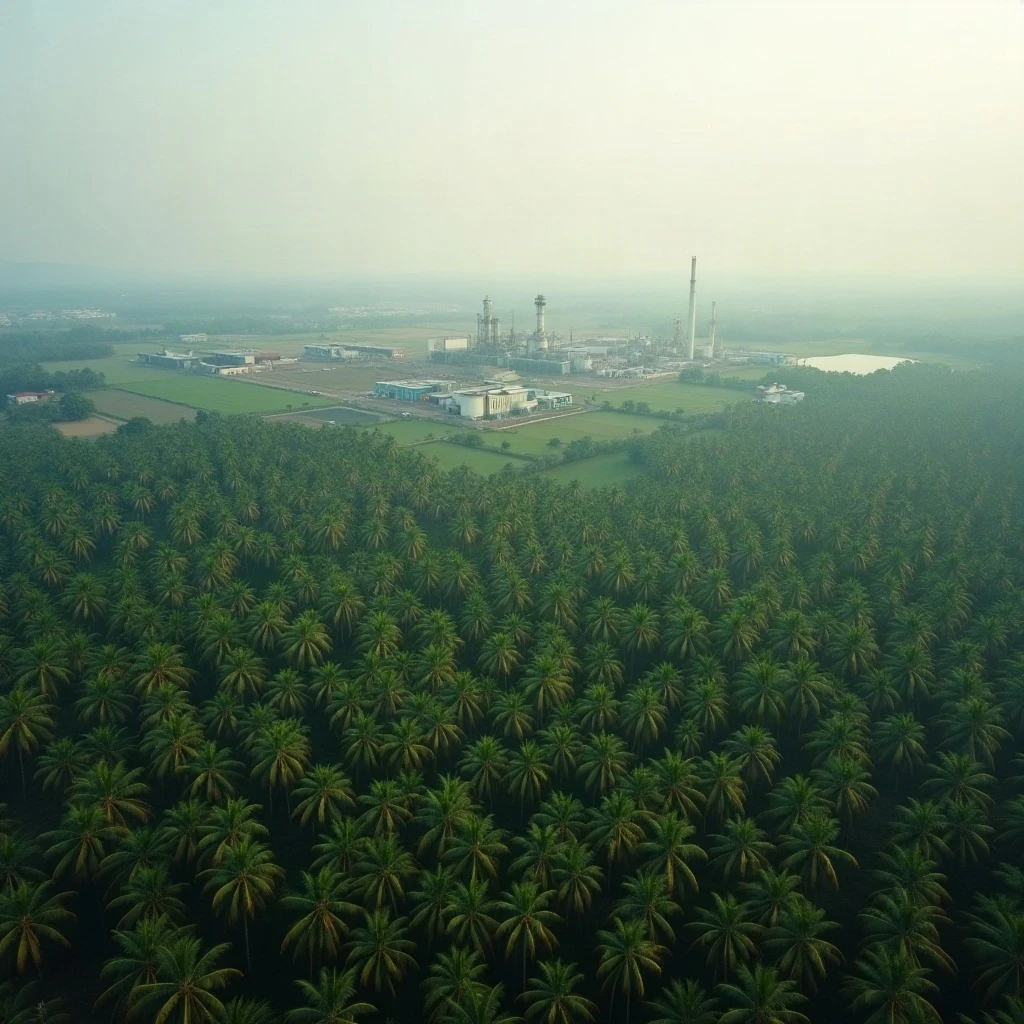
Indonesia's push toward a B60 biodiesel blend by 2027 could absorb up to 23 million tonnes of crude palm oil annually, according to industry reports, a development that raises fresh questions about export availability and global pricing dynamics.
The projection, reported by sawitsetara.co, comes as Jakarta already implements B50 blending and prepares to expand domestic consumption further. If realized, the B60 mandate would represent a significant share of Indonesia's total CPO output, potentially reducing the volume available for export and reinforcing upward pressure on global benchmark prices.
Malaysian crude palm oil futures hovered near $1,151 per tonne (RM 4,670) on Tuesday, up 0.2% from the previous session, while the World Bank's global benchmark stood at about $1,117 per tonne. Indonesia's domestic reference price was set at approximately $1,008 per tonne, reflecting a wide gap between export and domestic values—a spread that already incentivizes producers to prioritize local biodiesel demand.
Brent crude climbed 1.9% to around $101 per barrel, improving the economics of biodiesel blending and supporting the case for higher mandatory palm oil use. The Indonesian rupiah traded near 17,608 per dollar, while the ringgit strengthened to 4.06 per dollar.
Malaysia's July production rose 9.4% month-on-month to 1.79 million tonnes, while exports jumped 15.1% to 1.40 million tonnes, according to MPOB data. Closing stocks increased 7.2% to 1.43 million tonnes, suggesting ample near-term supply. However, the market remains wary of weather risks—El Niño conditions persist with an ONI of +1.8, and parts of Kalimantan are notably dry, which could curb future output.
Our model outlook points to consolidation near current levels with a modest downside bias into the upcoming MPOB August data release. Ample stocks, peak production season, and historically weak September prices argue for selling pressure, but the wide BOPO spread, firm crude, and Indonesia's aggressive biodiesel mandates provide strong support. Expect choppy, range-bound action, with a selloff risk if stocks build as previewed, followed by stabilization from demand switching and biodiesel economics.
The B60 plan underscores Indonesia's strategic shift toward domestic absorption of its palm oil output. If 23 million tonnes are diverted to biodiesel, export availability could tighten significantly, potentially reshaping global trade flows. Buyers may need to compete more aggressively for Malaysian and other origins' supply, while Indonesian producers face a delicate balance between meeting domestic mandates and maintaining export revenues.
Industry observers note that the policy's success hinges on infrastructure readiness, feedstock sustainability, and the evolution of crude prices. For now, the market appears to be pricing in a gradual transition rather than an immediate shock, but the long-term trajectory points to tighter global palm oil supplies as Indonesia prioritizes energy security over export volumes.
This development adds another layer of complexity to an already intricate market, where weather, policy, and energy prices intersect to determine price direction. Traders will be watching for further details on B60 implementation timelines and any adjustments to export levies that might accompany the mandate.
Sources: sawitsetara.co; BioEnergy Times
Export tax and levy base climbs, signaling firmer floor for Indonesian crude palm oil in a steady market.
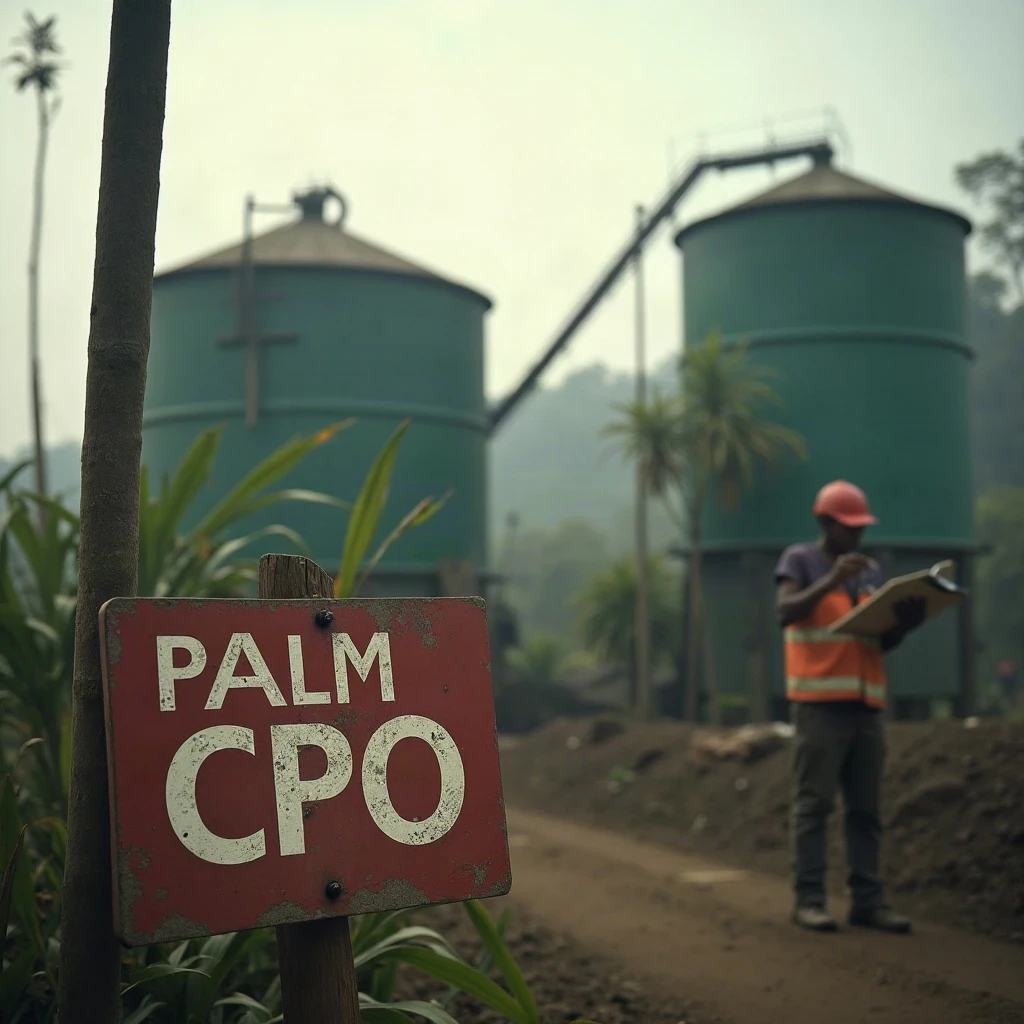
Indonesia's Ministry of Trade set its September crude palm oil reference price at $1,007.51 per metric ton, up 1.1% from the previous month, a move that recalibrates the export tax and levy schedule for one of the world's largest producers. The adjustment, effective for September shipments, gives buyers and sellers a concrete price signal distinct from daily market chatter.
For traders, the reference price is the base for calculating Indonesia's progressive export tax and the mandatory levy that funds biodiesel subsidies. A higher reference price raises the cost of Indonesian CPO for international buyers, potentially narrowing the discount to Malaysian benchmark grades. The new level sits below the global benchmark of about $1,117 per ton and Malaysia's CPO at roughly $1,150, leaving Indonesian material competitive but with less margin for negotiation.
The reference price move comes amid firm but stable palm oil markets. Malaysian benchmark futures edged up 0.1% to about $1,150 per ton (RM 4,665), supported by a strong crude oil complex—Brent near $100 per barrel—which improves the economics of palm-based biodiesel. Indonesia's own reference price of about $1,008 aligns closely with the new September figure, reflecting a steady export environment.
Data from the Malaysian Palm Oil Board for July showed production climbing 9.4% month-on-month to 1.79 million tons, while exports jumped 15.1% to 1.40 million tons. Inventories rose 7.2% to 1.43 million tons, a trend expected to extend into August, with analysts forecasting a seven-month high in Malaysian stocks. That build could pressure prices, but our model outlook suggests any decline will be modest—cushioned by a wide BOPO spread of $406 per ton, a deeply negative POGO of -$331, and Indonesia's push for B50 biodiesel adoption.
El Niño conditions persist (ONI +1.8), with notably dry weather in Kalimantan, a key Indonesian growing region. Dryness raises concerns about production disruptions and haze, which can curb output and support prices. Traders are monitoring these weather patterns as they weigh the impact of higher reference prices and seasonal supply increases.
The new reference price takes effect for September, and market participants will now adjust their pricing models and hedging strategies accordingly. The export tax schedule, which uses the reference price as its base, will determine the final cost for Indonesian CPO shipments, influencing trade flows toward Malaysia and other origins.
Sources: sawitsetara.co; klsescreener.com; The Star; sawitsetara.co; 富途牛牛
Benchmark around $1,152/MT with Brent near $99/bbl; August stock report and Indonesia's B50 policy seen as near-term swing factors.
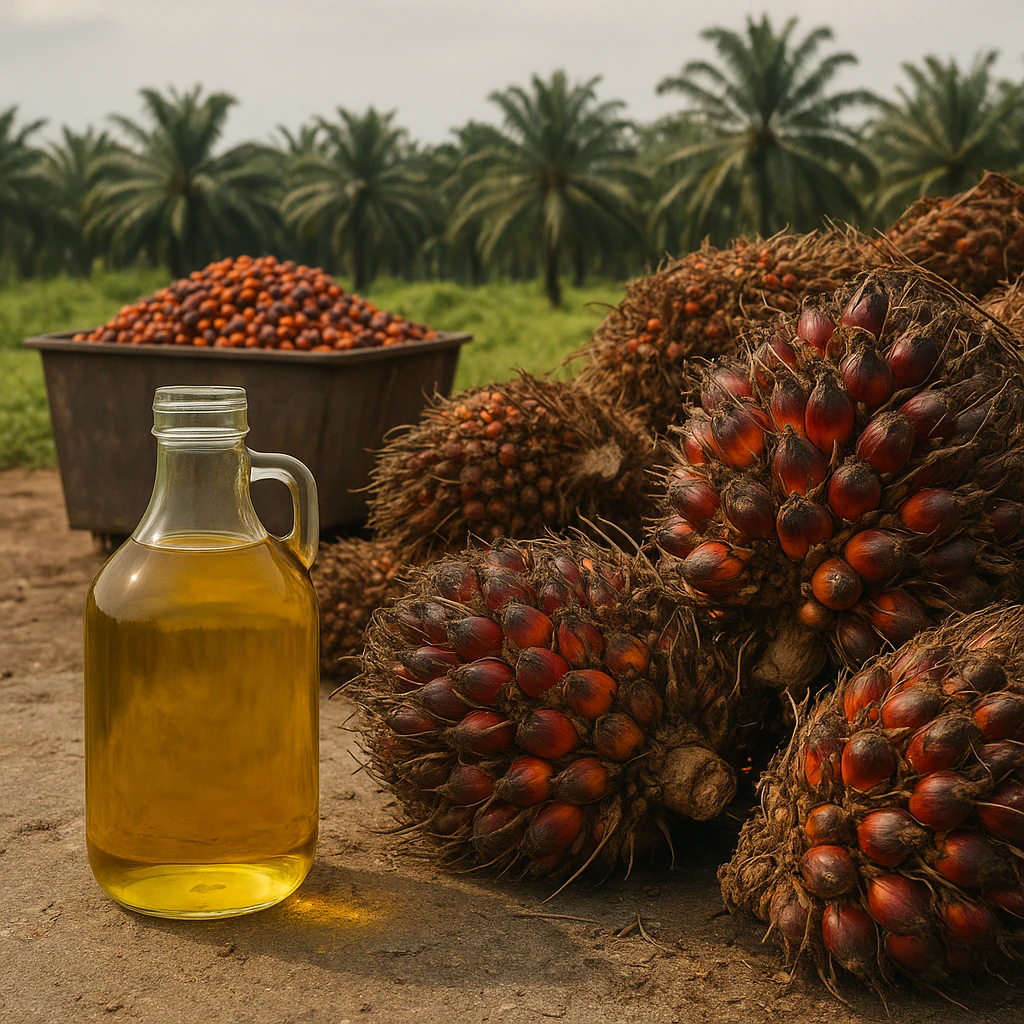
Malaysian CPO benchmark traded around $1,152 per metric tonne (RM4,673 per tonne), up 0.2% from the previous session, while the World Bank global palm oil benchmark stood near $1,117 per tonne. Brent crude was near $99 per barrel, down 0.2%, which still keeps biodiesel blending economics supportive for palm oil. With Indonesia positioning itself as a global reference for B50 biodiesel and reports of interest from Japan and Europe, demand expectations tied to higher blend mandates remain a constructive undercurrent. The ringgit was around 4.06 per dollar, and Indonesia's September reference price stood near $1,008 per tonne with the CPO export levy unchanged at $148 per tonne despite the higher reference.
Malaysia's July MPOB release showed CPO production at 1,792,979 tonnes, up 9.4% month-on-month, while closing stocks rose 7.2% to 1,429,316 tonnes. Exports jumped 15.1% to 1,399,579 tonnes, and imports fell 51.9% to 49,566 tonnes, leaving a stocks-to-use ratio of 12.5%, which is ample. The market is now looking toward the August MPOB report, with previews suggesting inventories could hit a seven-month high. Palm oil production in the second half of 2026 is expected to remain firm, adding to seasonal pressure. At the same time, an El Niño event with an ONI of +1.8 and dry conditions in Kalimantan are being monitored because they may tighten supply later in 2027.
Indonesian CPO exports grew 5.49%, and GAPKI has cautioned against raising CPO export levies to avoid pressuring smallholder fresh fruit bunch prices. The B50 mandate for 2027 is seen as needing flexibility, with palm oil supply a key challenge. Meanwhile, rival edible oil moves have been mixed, but firmer crude oil and DCE palm olein gains have supported CPO futures. Our model outlook notes that despite ample MPOB stocks and peak-season pressure, CPO is holding near 52-week highs thanks to a wide soy-palm spread, firmer crude, and the B50 ramp. However, the imminent August stock report and seasonal September softness argue for caution. We see a choppy week with a slight downward tilt of roughly -0.1% over seven trading days, compared with a published path of +0.4%.
Watch the upcoming MPOB August stock and export figures, Indonesia's B50 implementation details and any levy adjustments, crude oil price moves around $99 per barrel, and weather updates for Kalimantan. The balance between peak-season supply and biodiesel-driven demand will likely set the near-term tone.
Sources: sawitsetara.co; Majalah Sawit Indonesia; KLSE Screener; The Star; NST Online; Bernama
CPO steadies near 52-week highs; ample stocks and El Niño weather vie with biodiesel demand and firm crude.

Malaysian crude palm oil futures settled around $1,152/MT (RM 4,673), up 0.2% on the session, holding near 52-week highs even as supply-side data points to comfortable near-term availability. The global benchmark sits at about $1,117/MT, while Indonesia's reference price is set near $1,008/MT for September, with export levies unchanged at $148/MT.
Malaysia's July MPOB report showed CPO output at 1,792,979 tonnes, up 9.4% month-on-month, while closing stocks rose 7.2% to 1,429,316 tonnes. Exports climbed a stronger 15.1% to 1,399,579 tonnes, but imports fell sharply, down 51.9% to 49,566 tonnes. The market now awaits the August MPOB release, widely expected to show inventories at a seven-month high as seasonal peak production continues.
Our model outlook sees prices holding near recent highs despite this ample stock picture and peak-season pressure. The imminent August data and typical September softness argue for a cautious near-term bias, with a choppy week expected and a slight downward tilt of roughly -0.1% over seven trading days.
Indonesia's B50 biodiesel implementation continues to draw international interest from Japan and Europe, with regional governments in East Kalimantan backing the program. Industry projections for a future B60 mandate suggest potential absorption of 23 million tonnes of CPO, underscoring growing energy-linked demand. Firmer crude oil, with Brent near $100/bbl, supports biodiesel blend economics and keeps palm competitive as a fuel feedstock.
The wide soy-palm spread and a record month for US soybean oil use in biofuels are lending additional support to the broader vegetable oil complex. Palm extended gains on stronger rival oils and crude in recent sessions, though traders remain cautious ahead of the MPOB data.
El Niño conditions persist, with the ONI at +1.8, and notable dryness in Kalimantan raises production risk concerns for 2027. The ringgit opened higher against the dollar amid rate-hike expectations, trading near 4.06 per dollar, while the rupiah held around 17,608. A firmer ringgit can temper Malaysian export competitiveness, though the currency's path remains tied to Fed policy signals.
Watch the upcoming MPOB August inventory data as the key near-term catalyst; a seven-month high stock figure could pressure prices despite firm crude and biodiesel demand. Monitor El Niño-driven dryness in Kalimantan and any B50/B60 policy updates from Jakarta for signals on 2027 supply tightness.
Sources: Majalah Sawit Indonesia; The Star; ANTARA News; Gabungan Pengusaha Kelapa Sawit Indonesia (GAPKI); NST Online; Bernama
Jakarta's biodiesel ramp-up tightens domestic supply outlook as buyers watch compliance signals.
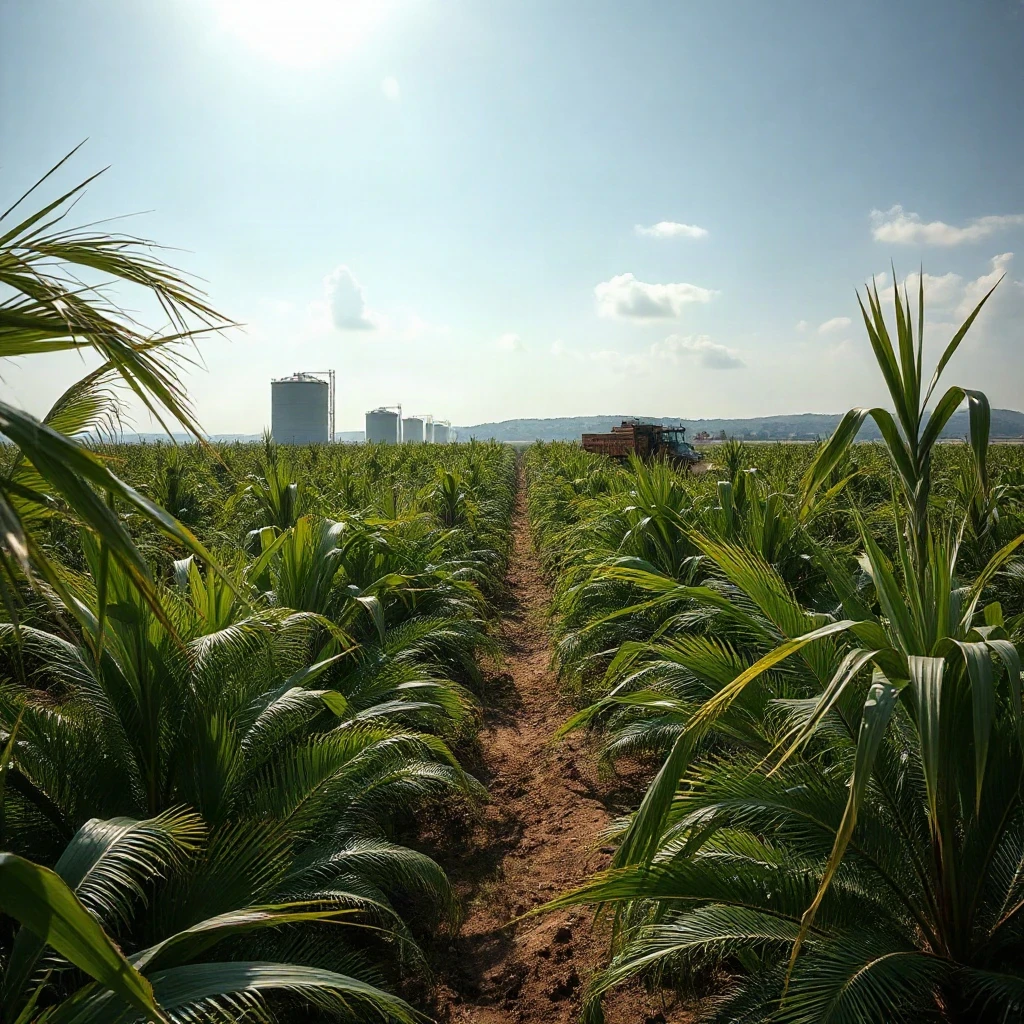
Indonesia's push to expand its biodiesel mandate is drawing attention from Japanese and European parties, according to local industry reports, signaling broader international engagement with the country's biofuel program. The reports, published this week, highlight Indonesia's claim as a global pioneer in implementing the B50 blend, a mix of 50% palm oil-based biodiesel and 50% diesel.
Separately, the East Kalimantan plantation agency has voiced support for the B50 rollout, underscoring regional alignment with the national policy. These developments come as Indonesia prepares for an even more ambitious B60 mandate, slated for 2027, according to industry trade media.
The policy push arrives as global palm oil benchmarks remain elevated. Malaysian crude palm oil futures traded near $1,152 per metric ton, up slightly from the prior session, with the ringgit at 4.06 per dollar. The Indonesian reference price stood at about $1,008 per metric ton, while the World Bank's global palm oil benchmark was around $1,117. Brent crude held near $100 per barrel, a level that improves the economic case for biodiesel blending.
For palm oil supply, the biodiesel ramp-up is a key demand-side factor. Each step higher in the blend rate—from B35 to B50 and eventually B60—locks in a larger share of domestic palm oil for fuel use, reducing the volume available for export. This dynamic is particularly relevant as Indonesia's domestic consumption grows alongside its mandate schedule.
For compliance-minded buyers, the developments signal tighter supply conditions ahead. The B50 program's expansion, supported by regional agencies, suggests a coordinated implementation effort. Meanwhile, the early groundwork for B60 indicates a long-term policy trajectory that could keep Indonesian export availability constrained.
Buyers tracking sustainability and regulatory compliance should note that Indonesia's biodiesel policy is becoming a structural feature of the palm oil market, not a temporary measure. The interest from Japan and Europe—markets with stringent fuel standards—may add pressure for verified, traceable palm oil feedstocks.
Our model outlook suggests crude palm oil holds near 52-week highs despite ample Malaysian stocks and peak-season pressure. The wide soy-palm spread, firmer crude, and Indonesia's B50 ramp provide support, but the imminent MPOB release—expected to show a seven-month high in August stocks—and seasonal September softness argue for a cautious near-term bias. We see a choppy week with a slight downward tilt, roughly -0.1% over seven trading days.
As the B50 rollout gains traction and B60 preparations advance, market participants will watch for policy announcements, export permit changes, and any signals on domestic supply allocation. These factors are set to remain central to palm oil pricing and trade flows in the coming months.
Sources: Majalah Sawit Indonesia; ANTARA News
China's palm oil import appetite faces seasonal stockpiling, soy oil substitution, and currency headwinds amid firm global prices.

China, the world's second-largest palm oil buyer, is navigating a complex demand landscape as the fourth-quarter stockpiling season approaches. Importers are balancing the need to build inventories ahead of year-end festivals against a narrowing price advantage over soybean oil, which could cap palm oil's share of the vegetable oil complex.
Port inventories in key Chinese hubs have been trending within typical ranges, but the approaching Mid-Autumn Festival and National Day holidays typically spur restocking activity. Traders note that recent arrivals have been steady, yet the pace of new purchases may slow if Malaysian and Indonesian offer prices remain elevated relative to alternative oils.
The palm-soy spread has narrowed, making palm oil less attractive for discretionary blending in food processing and catering. With Dalian soybean oil futures firm on robust oilseed demand, any further squeeze in the spread could prompt refiners to favor soy oil, particularly in northern China where palm oil's cold-stability limitations are a factor. However, in southern regions, palm oil's cost advantage in frying and noodle production remains intact.
China's import duty structure for palm oil remains unchanged, with no new tariff adjustments reported. The yuan's stability against the dollar has kept import costs predictable, though a softer currency would raise landed costs and potentially dampen buying interest. Macro demand signals from the food service sector are mixed, with recovery in restaurant traffic offset by cautious consumer spending.
Our model outlook suggests that palm oil prices are likely to ease modestly over the next seven days, pressured by expected inventory builds in Malaysia and seasonal supply increases. However, losses are cushioned by a wide BOPO spread and deeply negative POGO, which support biodiesel blending economics and keep palm oil competitive in energy markets. For China, this implies that importers may wait for slight price dips before committing to large volumes, but underlying demand for edible oils remains structurally firm.
China's palm oil imports are expected to remain substantial, driven by its vast food processing industry and the need to replenish stocks ahead of peak consumption periods. The interplay between substitution economics, currency movements, and global supply will dictate the timing and volume of purchases in the coming weeks.
Sources: Investment Guru India
Our market desk connects serious buyers with vetted origin suppliers across Southeast Asia. Indicative pricing, specifications and shipment guidance — free of charge.
Get connected →Export tax and levy base climbs, signaling firmer floor for Indonesian crude palm oil in a steady market.
Full story — Page 2 ▸Benchmark around $1,152/MT with Brent near $99/bbl; August stock report and Indonesia's B50 policy seen as near-term swing factors.
Full story — Page 2 ▸CPO steadies near 52-week highs; ample stocks and El Niño weather vie with biodiesel demand and firm crude.
Full story — Page 2 ▸Jakarta's biodiesel ramp-up tightens domestic supply outlook as buyers watch compliance signals.
Full story — Page 2 ▸China's palm oil import appetite faces seasonal stockpiling, soy oil substitution, and currency headwinds amid firm global prices.
Full story — Page 2 ▸Jakarta's 2027 B60 biodiesel mandate may divert a quarter of output, tightening export supply and underpinning prices.
Indonesia's push toward a B60 biodiesel blend by 2027 could absorb up to 23 million tonnes of crude palm oil annually, according to industry reports, a development that raises fresh questions about export availability and global pricing dynamics.
The projection, reported by sawitsetara.co, comes as Jakarta already implements B50 blending and prepares to expand domestic consumption further. If realized, the B60 mandate would represent a significant share of Indonesia's total CPO output, potentially reducing the volume available for export and reinforcing upward pressure on global benchmark prices.
Malaysian crude palm oil futures hovered near $1,151 per tonne (RM 4,670) on Tuesday, up 0.2% from the previous session, while the World Bank's global benchmark stood at about $1,117 per tonne. Indonesia's domestic reference price was set at approximately $1,008 per tonne, reflecting a wide gap between export and domestic values—a spread that already incentivizes producers to prioritize local biodiesel demand.
Brent crude climbed 1.9% to around $101 per barrel, improving the economics of biodiesel blending and supporting the case for higher mandatory palm oil use. The Indonesian rupiah traded near 17,608 per dollar, while the ringgit strengthened to 4.06 per dollar.
Malaysia's July production rose 9.4% month-on-month to 1.79 million tonnes, while exports jumped 15.1% to 1.40 million tonnes, according to MPOB data. Closing stocks increased 7.2% to 1.43 million tonnes, suggesting ample near-term supply. However, the market remains wary of weather risks—El Niño conditions persist with an ONI of +1.8, and parts of Kalimantan are notably dry, which could curb future output.
Our model outlook points to consolidation near current levels with a modest downside bias into the upcoming MPOB August data release. Ample stocks, peak production season, and historically weak September prices argue for selling pressure, but the wide BOPO spread, firm crude, and Indonesia's aggressive biodiesel mandates provide strong support. Expect choppy, range-bound action, with a selloff risk if stocks build as previewed, followed by stabilization from demand switching and biodiesel economics.
The B60 plan underscores Indonesia's strategic shift toward domestic absorption of its palm oil output. If 23 million tonnes are diverted to biodiesel, export availability could tighten significantly, potentially reshaping global trade flows. Buyers may need to compete more aggressively for Malaysian and other origins' supply, while Indonesian producers face a delicate balance between meeting domestic mandates and maintaining export revenues.
Industry observers note that the policy's success hinges on infrastructure readiness, feedstock sustainability, and the evolution of crude prices. For now, the market appears to be pricing in a gradual transition rather than an immediate shock, but the long-term trajectory points to tighter global palm oil supplies as Indonesia prioritizes energy security over export volumes.
This development adds another layer of complexity to an already intricate market, where weather, policy, and energy prices intersect to determine price direction. Traders will be watching for further details on B60 implementation timelines and any adjustments to export levies that might accompany the mandate.
CPO sits near 52-week highs as a wide BOPO spread, biodiesel economics and El Niño supply risks offset a seasonal stock build and crowded speculative positioning.
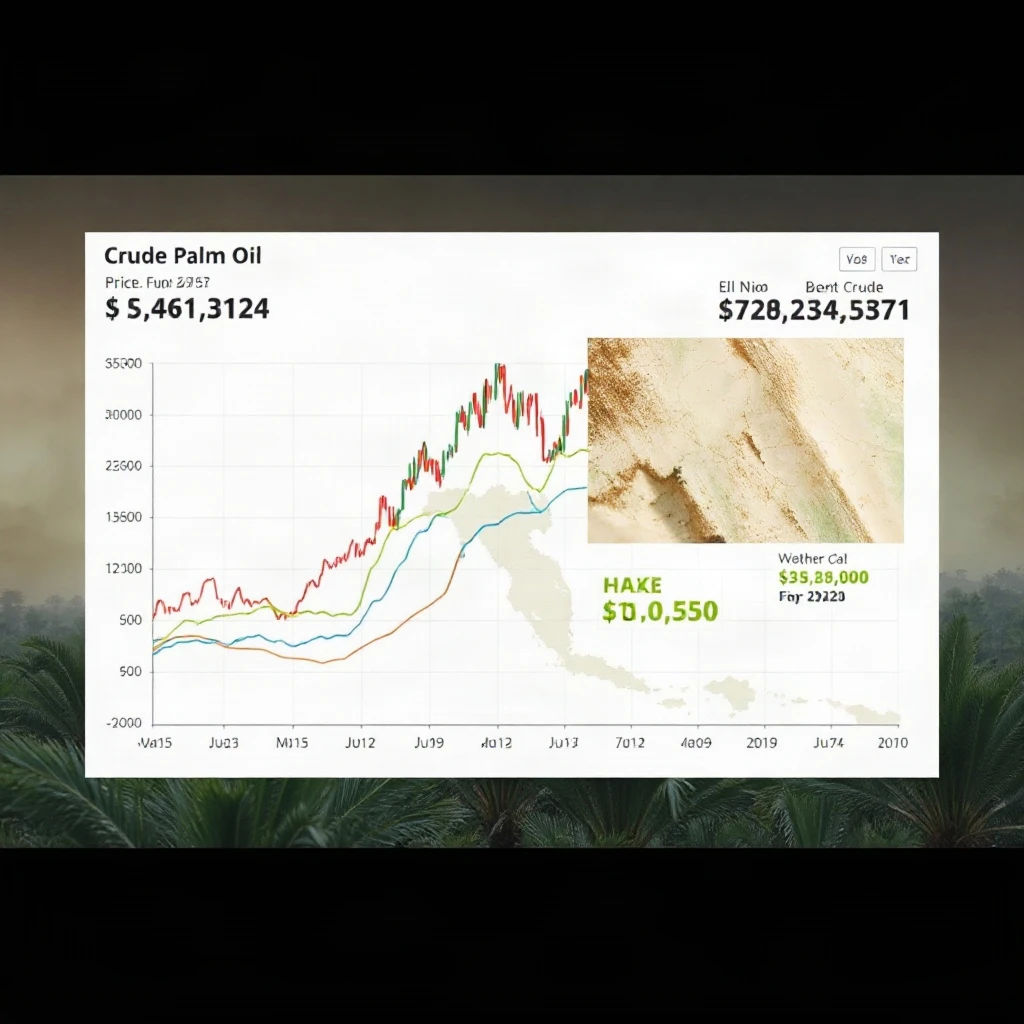
Malaysian CPO benchmark is about $1,152/MT (RM 4,664/MT), up 0.7% on the session. That leaves the contract near 52-week highs, above the World Bank benchmark at $1,117/MT and the Indonesian reference at $1,008/MT. Brent crude is about $98/bbl, up 0.5% on the day and 1.1% over the past week, while USD/MYR is about 4.05.
The widest demand-switching lever is the BOPO spread at $385/MT. Daily CBOT soybean oil at $1,538/MT versus CPO at $1,153/MT means palm trades at a heavy discount to soybean oil. When that gap is wide, food and industrial buyers can save money by switching formulations from soyoil to palm, pulling extra demand into the palm market and putting a cushion under prices even when spot supply is ample.
El Niño remains in play at ONI +1.8°C, and Kalimantan rainfall over the next seven days is only about 10 mm. Dry conditions and haze risk—already cited in a September 7 headline on smoke-haze fears disrupting Indonesian production—raise the chance of lower yields and difficult harvesting/transport. Buyers respond to that supply threat by bidding for current and forward cargoes, supporting the curve.
Brent near $98/bbl keeps biofuel blending unusually attractive. The POGO spread is around -$328/t, in the 1st percentile, meaning palm is cheap relative to gasoil. That makes discretionary biodiesel blending economic before any mandate forces it, creating an additional demand channel for CPO. Indonesia's B50 mandate, in force since July 1 and absorbing an estimated 3–4 million tonnes a year, adds medium-term demand even if near-term El Niño supply questions remain.
The price structure is also positive: MACD histogram positive, a 5/20 SMA golden cross, price above the 5-, 20- and 50-day SMAs, and RSI at 63—not yet overbought—leaving room toward the upper Bollinger band around $1,173/MT.
The heaviest near-term weight is the upcoming MPOB August data, due in about three days. Preview headlines from September 4 already flag a likely seven-month high in inventories. July closing stocks were 1,429,316 tonnes, up 7.2% month on month and 61% above the five-year average, with a stocks-to-use ratio of 12.5%. If the August print confirms that seasonal surplus, it tells buyers there is no immediate shortage; traders may lighten positions before the release rather than chase prices.
September itself is historically weak—averaging -0.9% month on month—and the production seasonal path points about +7.0% one month ahead. Malaysian output is in the July–October peak window. More supply coming to market reduces urgency, so buyers can wait for better offers, pressuring spot CPO.
The veg-oil complex is holding a crowded speculative long. CFTC soybean oil managed-money net length sits at the 85th percentile and rose 21,470 contracts week over week. That positioning is vulnerable to long liquidation if MPOB data or soybean oil disappoints; a liquidation cascade would amplify any bearish news.
The scorecard in our model is five bullish factors against three bearish. The upside currently has the upper hand. Demand-switching via the wide BOPO spread, biodiesel economics, El Niño/haze supply risk, and positive technicals are outweighing the known seasonal stock build. Our model outlook is for a choppy, slightly positive drift, with a likely data-driven dip when the August MPOB release lands; the published path is +1.2% over seven sessions.
To flip the balance, the bearish factors would need to dominate: an August stocks number well above the expected seven-month high, a rapid unwind of the crowded managed-money long in soybean oil, a narrowing BOPO spread that removes the demand-switching cushion, or a rise in the POGO spread that makes discretionary biodiesel blending less economic. If the El Niño/haze supply threat fades or Indonesian export policy materially changes levy burdens, the bull case would also lose some support.
Two neutral factors are worth noting. Indonesia's export reference price is about $1,008/MT, with a $126 levy and $148 export duty; GAPKI has warned against further increases, and if levies are capped, Indonesian exports may not slow enough to redirect demand toward Malaysia. Separately, India's Diwali stocking window opens in about 12 days, but our model finds the pre-Diwali effect historically indistinguishable from zero, so it is calendar context rather than a directional signal.
Malaysian CPO benchmark rose to RM4,664/MT, with Brent near $98/bbl supporting biodiesel demand, while July stocks climbed 7.2% and August may set a seven-month high.
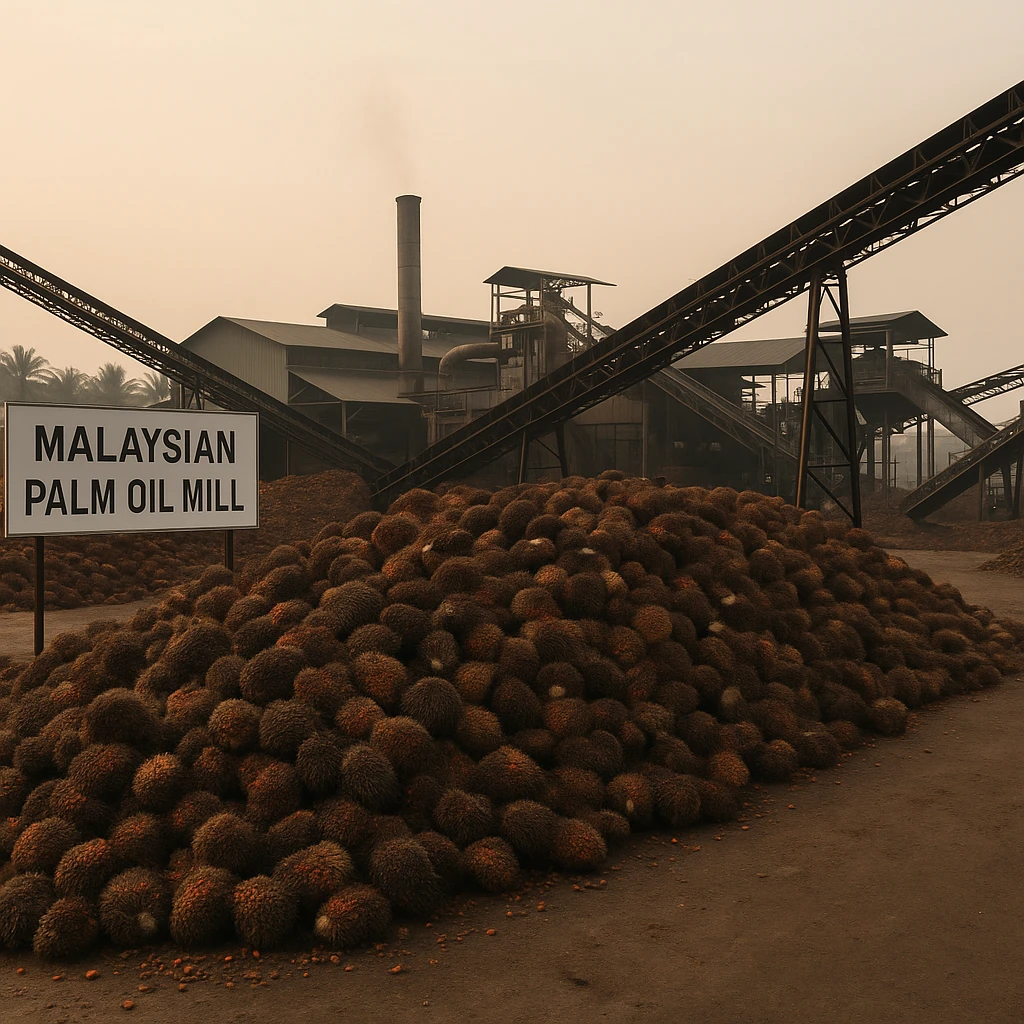
Benchmark Malaysian CPO traded around $1,152 per tonne, up 0.7% from the previous session, equivalent to RM4,664 per tonne. Global palm oil was quoted near $1,117 per tonne, while Indonesia's reference price sat around $1,008 per tonne. Brent crude firmed about 0.5% to near $98 per barrel, a level that keeps biodiesel blending economics relevant for palm oil demand. The ringgit was around 4.05 to the US dollar.
July Malaysian data showed a clear seasonal build. CPO production rose 9.4% month-on-month to 1,792,979 tonnes, and closing stocks increased 7.2% to 1,429,316 tonnes. Exports were the bright spot, up 14.5% to 1,392,178 tonnes, which helped keep the stocks-to-use ratio at 12.5%. Imports fell 51.9% to 49,566 tonnes, while the FFB reference price firmed 1.2% to RM49.50 per tonne.
The near-term supply picture is mixed. August Malaysian inventories are expected to reach a seven-month high, and seasonal peak output adds headwinds. At the same time, El Niño conditions (ONI +1.8) and dry weather in Kalimantan raise concerns about haze-related disruptions to Indonesian production. Recent market action has also responded to stronger rival vegetable oils and firmer crude.
On the policy side, Indonesia's September CPO reference price was reported at $1,007.51 per tonne, while the CPO export levy was kept at $148 per tonne. Industry commentary has highlighted the need for flexibility in the planned B50 biodiesel mandate for 2027, citing feedstock supply challenges. Our model outlook puts CPO near 52-week highs, supported by demand substitution (BOPO spread around $385/MT), elevated crude and biodiesel demand, and El Niño/haze risks, but expects a choppy, slightly positive drift with a likely pullback when August MPOB data lands. The published path is +1.2% over seven sessions.
For buyers: The market is balancing rising Malaysian stocks against genuine weather and biodiesel demand support. Watch the upcoming MPOB August release for confirmation of the seven-month inventory peak, any fresh haze signals from Kalimantan, and whether Brent crude holds near $98/bbl, as these will set the near-term direction for replacement costs.
Sources: NST Online; sawitsetara.co; Bernama; news.futunn.com; Gabungan Pengusaha Kelapa Sawit Indonesia (GAPKI); IDNFinancials
CPO holds above $1,150/MT on crude strength and supply risks, but looming MPOB data and peak output may cap gains.
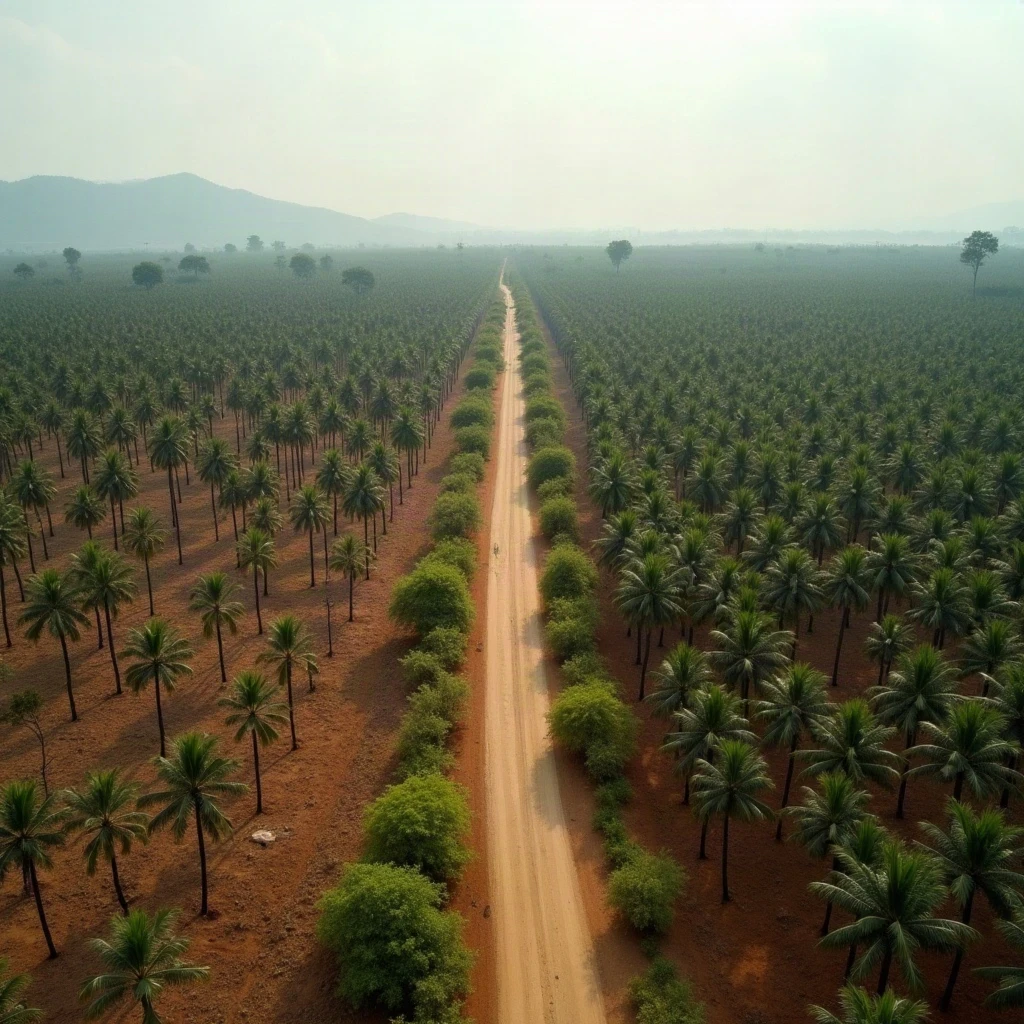
Malaysian crude palm oil futures settled around $1,152/MT on 8 September, up 0.7% on the session, tracking firmer rival vegetable oils and stronger crude prices. Brent crude hovered near $97/bbl, underpinning biodiesel blending economics and supporting palm's energy-linked demand. The global benchmark stood at about $1,117/MT, while Indonesia's reference price for September was set at roughly $1,008/MT, with export levies unchanged at $148/MT despite the higher reference.
Malaysia's July MPOB data showed CPO production at 1,792,979 tonnes, up 9.4% month-on-month, while closing stocks rose 7.2% to 1,429,316 tonnes. Exports jumped 14.5% to 1,392,178 tonnes, reflecting robust buying ahead of seasonal demand. Imports fell sharply to 49,566 tonnes, down 51.9%. The market now awaits August data, which is expected to show stocks at a seven-month high as peak production continues.
Weather remains a key risk. El Niño conditions (ONI +1.8) are still in force, with notably dry weather in Kalimantan raising concerns about output and haze-related disruptions in Indonesia. These worries have supported prices despite the near-term supply build.
Indonesian biodiesel policy continues to underpin demand. The B50 mandate is set to expand in 2027, and the government is preparing for B60 trials. Industry groups warn that palm supply may be a constraint, with 2027 output projected to fall 2.9%. Export growth from Indonesia was reported at 5.49%, and the government is pushing downstream processing. Meanwhile, Malaysia's MPOB has launched PALMS 2030 to boost digitalization and traceability, and a used cooking oil price portal to support circular economy initiatives.
Crude oil strength is a direct support for biodiesel economics, making palm-based fuel more competitive. The spread between palm and gasoil (BOPO) stands at $385, favoring biodiesel blending.
Our model outlook sees CPO near 52-week highs with bullish demand-switching, high crude/biodiesel support, and El Niño/haze supply risks. However, upcoming MPOB August data (expected to show a seven-month high in stocks) and seasonal peak output create near-term headwinds. We expect a choppy, slightly positive drift with a likely data-driven dip. The published path is +1.2% over the next seven sessions.
Watch the MPOB August report for stock levels and export trends, as well as any weather updates from Kalimantan. Also monitor Indonesian biodiesel policy announcements and crude oil movements, as these will drive price direction in the near term.
Sources: HaiSawit; NST Online; sawitsetara.co; Bernama; pontianakpost.jawapos.com; NST Online
Policy signals on higher biodiesel mandates add to bullish palm oil fundamentals despite seasonal output risks.
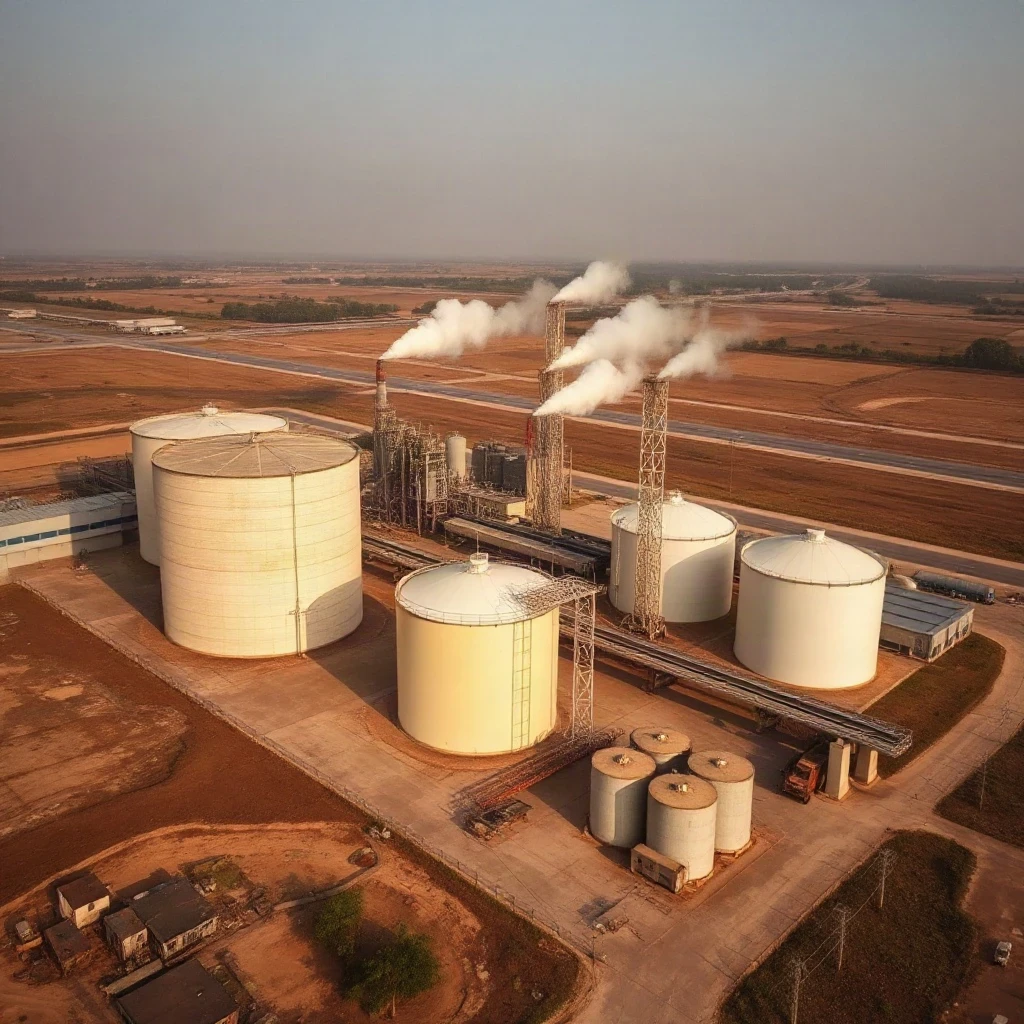
Indonesia's biodiesel policy trajectory is emerging as a key supply-side factor for global palm oil markets, with industry and government signals pointing toward higher blend mandates in the near term. The latest developments reinforce expectations of stronger domestic absorption of crude palm oil, a dynamic that could tighten export availability and support benchmark prices.
Industry statements from the Indonesian Palm Oil Association (GAPKI) highlight that implementing a B50 mandate in 2027 will require supply-chain flexibility, with feedstock availability flagged as a key challenge. Separately, reports indicate Indonesia is stepping up preparations for a B60 mandate in the same year, suggesting policy momentum is building beyond the current B50 phase.
These signals align with recent commentary that Indonesian crude palm oil prices could rise amid growing biodiesel demand. The policy direction points to a sustained increase in domestic offtake, which would reduce the volume of palm oil available for export markets.
For compliance-minded buyers, the policy backdrop adds a layer of uncertainty to supply planning. Stronger domestic absorption in Indonesia—the world's largest palm oil producer—could tighten global availability, particularly if production growth lags mandate-driven demand.
Our model outlook already factors in bullish demand-switching dynamics, with the gasoil-palm oil spread at $385 supporting biodiesel economics. High crude prices near $97 per barrel further improve the competitiveness of palm-based fuel blends, reinforcing the incentive for Indonesia to push ahead with higher mandates.
El Niño conditions, with an ONI of +1.8, continue to pose a supply risk, particularly with dry weather reported in Kalimantan. Reduced rainfall in key producing regions could weigh on future output, compounding the tightening effect of stronger domestic demand.
Malaysian data for July showed production rising 9.4% month-on-month to 1.79 million tonnes, with exports up 14.5%. However, the market is now looking toward upcoming August data from the Malaysian Palm Oil Board, which is expected to show stocks at a seven-month high. Seasonal peak output may provide some near-term relief, but the structural pull from Indonesian biodiesel policy remains a dominant theme.
Expect choppy, slightly positive price drift in the near term, with a possible data-driven dip as August stock figures emerge. Beyond that, the combination of Indonesian mandate implementation, El Niño-related supply risks, and firm energy prices points to a constructive medium-term outlook for palm oil prices.
Buyers should monitor policy announcements closely, as any acceleration in the B60 timeline or tightening of feedstock rules could prompt further upward pressure on prices. The balance between seasonal supply peaks and policy-driven demand will be the key variable in the coming months.
Sources: Majalah Sawit Indonesia; Gabungan Pengusaha Kelapa Sawit Indonesia (GAPKI); UkrAgroConsult; BioEnergy Times
Dry conditions in Indonesia's Kalimantan belt contrast with wetter forecasts elsewhere, adding to El Nino's delayed impact on fruit bunch weights.

The palm oil complex enters the final quarter of 2026 with the ENSO state firmly in El Nino territory, as the ONI index holds at +1.8. For the crop-weather desk, the immediate concern is not the current dryness alone but the lagged effect on yields that typically emerges six to twelve months after the peak of the anomaly. Reduced fruit bunch weights, rather than a collapse in bunch counts, are the hallmark of this lagged stress, and the current dry spell in Indonesia's Kalimantan region is the most visible manifestation of that pattern.
Rainfall over the past seven days has been notably below normal across large parts of Kalimantan, the heart of Indonesia's palm production. This is not yet a crisis for the trees, but it is a yellow flag. Soil moisture deficits in the region can translate into lower pollination success and smaller average bunch weights in the first half of 2027, even if the wet season returns on schedule. Our model outlook incorporates this risk, though it remains secondary to the more immediate logistics issues.
While Kalimantan dries, other parts of the Malaysian and Indonesian belts are seeing the opposite problem. Seasonal convection is bringing heavy rain to parts of Sabah, Sarawak and Sumatra, where downpours are disrupting harvesting schedules and slowing the movement of fruit to mills. Wet ground conditions also raise the risk of crop loss from bunch rot and make field access for fertiliser application more difficult. These are now-crop effects, not lagged ones, and they are a key reason why the market is bracing for a possible dip in the upcoming MPOB August data release.
Malaysia's July MPOB figures showed production at 1.79 million tonnes, up 9.4% month-on-month, with exports rising 14.5%. That strong output is consistent with the seasonal peak that typically runs through the third quarter. However, the output is still being supported by trees that were pollinated before the El Nino's full force was felt. The August data, due shortly, is expected to show stocks at a seven-month high, a reflection of the current peak production cycle rather than a sign that the weather risk has passed.
The weather story is also intersecting with the energy complex. Brent crude is hovering near $97 per barrel, which keeps biodiesel blending economics attractive and supports demand for palm oil as a feedstock. This demand-side cushion is one reason our model outlook sees only a modest, choppy drift higher over the next seven sessions, with a likely data-driven dip when the August MPOB numbers land. The El Nino risk, however, remains a structural overhang for the 2027 crop.
For now, the market is caught between the seasonal peak in output and the lingering threat of El Nino's lagged impact. The dry Kalimantan weather is the clearest signal that the current ENSO state is not merely a historical footnote. Producers in the region will be watching the weekly rainfall anomalies closely, as any extension of the dry spell would harden the case for tighter supply later in 2027.
Practical guidance on booking windows, transit times and planning buffers for palm oil and palm kernel shipments from Indonesia and Malaysia.
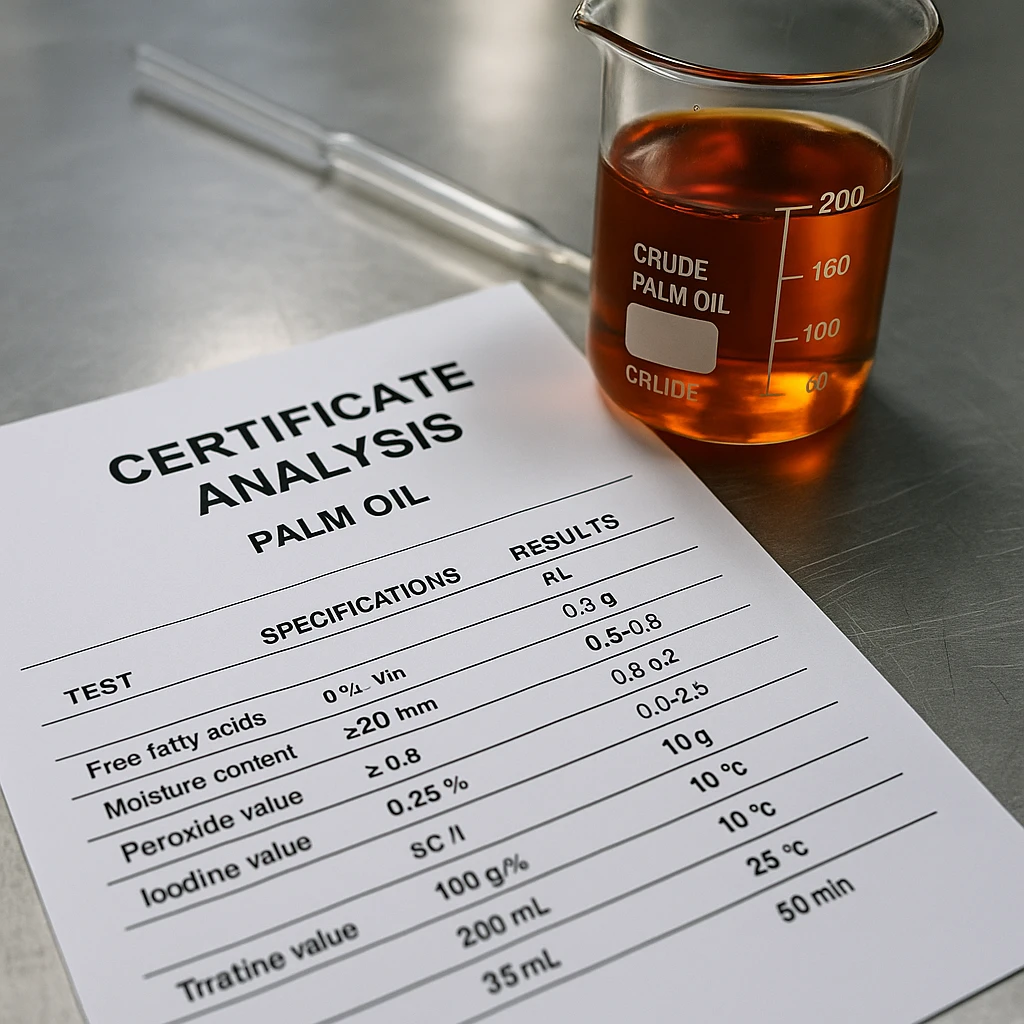
Crude palm oil (CPO) and crude palm kernel oil most often move in bulk vessels, flexitanks or ISO tanks. For prompt positions, the time from a confirmed contract to loading at origin is typically about two to four weeks. Forward bookings can be arranged one to three months ahead, which is common for regular buyers who want to lock in vessel space.
Refined products such as RBD palm olein, RBD palm stearin and palm fatty acid distillate are frequently shipped in flexibags or drums, or in bulk for large parcels. Packaged and drummed orders usually require extra production and stuffing time, often adding roughly one to two weeks to the lead time.
Specialty fractions like RBD palm kernel oil, palm mid-fraction and double-fractionated products may have longer lead times because they are produced in smaller campaigns and sometimes require segregated storage or dedicated tanks.
A typical shipment plan follows this sequence:
Transit times vary by destination and routing. Approximate sailing times from Malaysia or Indonesia are:
Containerised flexibag shipments follow liner schedules and often include transshipment, so door-to-door times may be similar to or longer than bulk voyages.
Plan for at least two to three weeks of buffer beyond the nominal transit time. Weather delays, port congestion, berth availability and documentation corrections are regular risks, not rare exceptions. For first-time buyers, add time for supplier onboarding, sample approval and bank instrument setup.
A realistic order-to-delivery cycle for a new buyer should include: production and stuffing lead time, booking window, survey and documentation, ocean transit, customs clearance and inland delivery. Keeping safety stock equal to about one full lead time cycle is a common planning rule of thumb, but each buyer should align stock levels with their own demand variability and storage constraints.
This space reaches palm oil buyers, traders and industry readers every day. Sponsorship and advertising enquiries are welcome — get in touch:
Malaysian CPO benchmark rose to RM4,664/MT, with Brent near $98/bbl supporting biodiesel demand, while July stocks climbed 7.2% and August may set a seven-month high.
Full story — Page 2 ▸CPO holds above $1,150/MT on crude strength and supply risks, but looming MPOB data and peak output may cap gains.
Full story — Page 2 ▸Policy signals on higher biodiesel mandates add to bullish palm oil fundamentals despite seasonal output risks.
Full story — Page 2 ▸Dry conditions in Indonesia's Kalimantan belt contrast with wetter forecasts elsewhere, adding to El Nino's delayed impact on fruit bunch weights.
Full story — Page 2 ▸Practical guidance on booking windows, transit times and planning buffers for palm oil and palm kernel shipments from Indonesia and Malaysia.
Full story — Page 2 ▸CPO sits near 52-week highs as a wide BOPO spread, biodiesel economics and El Niño supply risks offset a seasonal stock build and crowded speculative positioning.
Malaysian CPO benchmark is about $1,152/MT (RM 4,664/MT), up 0.7% on the session. That leaves the contract near 52-week highs, above the World Bank benchmark at $1,117/MT and the Indonesian reference at $1,008/MT. Brent crude is about $98/bbl, up 0.5% on the day and 1.1% over the past week, while USD/MYR is about 4.05.
The widest demand-switching lever is the BOPO spread at $385/MT. Daily CBOT soybean oil at $1,538/MT versus CPO at $1,153/MT means palm trades at a heavy discount to soybean oil. When that gap is wide, food and industrial buyers can save money by switching formulations from soyoil to palm, pulling extra demand into the palm market and putting a cushion under prices even when spot supply is ample.
El Niño remains in play at ONI +1.8°C, and Kalimantan rainfall over the next seven days is only about 10 mm. Dry conditions and haze risk—already cited in a September 7 headline on smoke-haze fears disrupting Indonesian production—raise the chance of lower yields and difficult harvesting/transport. Buyers respond to that supply threat by bidding for current and forward cargoes, supporting the curve.
Brent near $98/bbl keeps biofuel blending unusually attractive. The POGO spread is around -$328/t, in the 1st percentile, meaning palm is cheap relative to gasoil. That makes discretionary biodiesel blending economic before any mandate forces it, creating an additional demand channel for CPO. Indonesia's B50 mandate, in force since July 1 and absorbing an estimated 3–4 million tonnes a year, adds medium-term demand even if near-term El Niño supply questions remain.
The price structure is also positive: MACD histogram positive, a 5/20 SMA golden cross, price above the 5-, 20- and 50-day SMAs, and RSI at 63—not yet overbought—leaving room toward the upper Bollinger band around $1,173/MT.
The heaviest near-term weight is the upcoming MPOB August data, due in about three days. Preview headlines from September 4 already flag a likely seven-month high in inventories. July closing stocks were 1,429,316 tonnes, up 7.2% month on month and 61% above the five-year average, with a stocks-to-use ratio of 12.5%. If the August print confirms that seasonal surplus, it tells buyers there is no immediate shortage; traders may lighten positions before the release rather than chase prices.
September itself is historically weak—averaging -0.9% month on month—and the production seasonal path points about +7.0% one month ahead. Malaysian output is in the July–October peak window. More supply coming to market reduces urgency, so buyers can wait for better offers, pressuring spot CPO.
The veg-oil complex is holding a crowded speculative long. CFTC soybean oil managed-money net length sits at the 85th percentile and rose 21,470 contracts week over week. That positioning is vulnerable to long liquidation if MPOB data or soybean oil disappoints; a liquidation cascade would amplify any bearish news.
The scorecard in our model is five bullish factors against three bearish. The upside currently has the upper hand. Demand-switching via the wide BOPO spread, biodiesel economics, El Niño/haze supply risk, and positive technicals are outweighing the known seasonal stock build. Our model outlook is for a choppy, slightly positive drift, with a likely data-driven dip when the August MPOB release lands; the published path is +1.2% over seven sessions.
To flip the balance, the bearish factors would need to dominate: an August stocks number well above the expected seven-month high, a rapid unwind of the crowded managed-money long in soybean oil, a narrowing BOPO spread that removes the demand-switching cushion, or a rise in the POGO spread that makes discretionary biodiesel blending less economic. If the El Niño/haze supply threat fades or Indonesian export policy materially changes levy burdens, the bull case would also lose some support.
Two neutral factors are worth noting. Indonesia's export reference price is about $1,008/MT, with a $126 levy and $148 export duty; GAPKI has warned against further increases, and if levies are capped, Indonesian exports may not slow enough to redirect demand toward Malaysia. Separately, India's Diwali stocking window opens in about 12 days, but our model finds the pre-Diwali effect historically indistinguishable from zero, so it is calendar context rather than a directional signal.
Projected decline adds to bullish supply narrative amid strong biodiesel demand and firm crude.

Indonesia's palm oil output is projected to fall 2.9% in 2027, according to the Indonesian Palm Oil Association (GAPKI), a signal that longer-term supply constraints could tighten global CPO balances beyond current biodiesel policy coverage. The projection points to persistent structural headwinds for the world's top producer, with implications for pricing and trade flows that extend well past the current B50/B60 blending mandates.
The anticipated decline comes as the industry grapples with aging trees, limited new planting, and the lingering effects of previous weather stress. While rainfall across the main belts is currently broadly normal, the market remains sensitive to any disruption—especially with an active El Niño (ONI +1.8) still in play. Haze-related concerns have already lent some support to prices, as traders weigh potential output losses in Indonesia and neighboring Malaysia.
GAPKI's projection adds a medium-term bearish supply signal that contrasts with the more immediate, mixed data flow. In Malaysia, the latest MPOB report showed July CPO production up 9.4% month-on-month to 1.79 million tonnes, while closing stocks rose 7.2% to 1.43 million tonnes—about 61% above the five-year average. Exports, however, jumped 14.5% month-on-month, offering some counterweight to the bearish stock build.
For buyers and traders, the Indonesian supply outlook is a key variable in a market already caught between conflicting forces. On one hand, ample Malaysian stocks and a looming August inventory build—forecast to reach a seven-month high—weigh on sentiment. On the other, firm Brent crude near $96 per barrel supports biodiesel blend economics, and the wide BOPO spread (around $383 per tonne) makes palm oil attractive relative to gasoil.
Our model outlook sees near-term CPO trading in a choppy range with a modest net decline over the next seven sessions, though confidence is low given the absence of cargo-surveyor export data and a stale price anchor. The next MPOB release, due in roughly six days, is the key event risk for the market.
GAPKI's warning also carries a policy dimension. The association has cautioned against raising export levies on CPO, arguing that higher charges would pressure fresh fruit bunch (FFB) prices received by smallholders. With domestic biodiesel mandates expanding, any squeeze on output could intensify competition between local processing needs and export demand, potentially reshaping trade flows in the region.
The projected decline in Indonesian output, if realized, would mark a notable shift for a market that has long relied on the country's expanding production to meet global demand. For now, the immediate focus remains on near-term inventory and weather developments, but the 2027 outlook adds a longer-term layer of supply uncertainty that traders will likely keep in mind.
Sources: Pontianak Post; HaiSawit; sawitsetara.co
Malaysian CPO is down 0.8% on the day, but our model's factor balance shows five bullish drivers against four bearish ones, with the upcoming MPOB inventory report the near-term pi

Malaysian benchmark slips 0.8% while traders weigh August stock expectations against El Niño and Indonesian biodiesel support.

Malaysian benchmark CPO slipped to about $1,143 per tonne, down 0.8% from the previous session and equivalent to RM4,626 per tonne at an exchange rate around 4.05 ringgit per dollar. The World Bank palm oil benchmark stood near $1,117 per tonne, while Indonesia’s September reference price was about $1,008 per tonne. Brent crude was flat at about $96 per barrel, keeping biodiesel blending economics broadly stable. Futures weakness reflected softer soybean oil and expectations of higher Malaysian inventories.
July MPOB data showed Malaysia’s CPO production rose 9.4% month on month to 1,792,979 tonnes, while closing stocks climbed 7.2% to 1,429,316 tonnes. Exports also expanded 14.5% to 1,392,178 tonnes, and imports fell 51.9% to 49,566 tonnes. The stocks-to-use ratio was 12.5%, and the FFB reference price rose 1.2% to RM49.50. With the upcoming MPOB report widely expected to show August inventories at a seven-month high, the near-term supply picture looks comfortable. El Niño conditions persist, with an ONI of +1.8, but rainfall has been broadly normal across growing belts, tempering immediate production worries while keeping longer-term weather risk on the radar.
Indonesia’s policy settings continue to shape demand and trade flow. The September CPO reference price rose 1.1% to US$1,007.51 per tonne, keeping the export levy unchanged at US$148 per tonne. B50 biodiesel has been officially implemented and is reported to have reached 90% of Pertamina fuel stations. GAPKI has cautioned that the 2027 mandate will need flexibility and that Indonesian palm oil output could drop 2.9% next year, highlighting supply challenges. Export levy concerns are also in focus because higher charges could pressure farm-gate FFB prices. Indonesian CPO exports grew 5.49%, and officials continue to promote downstream use, including B50 and ethanol E20 in South Sumatra. A used cooking oil price portal launched by MPOB adds another feedstock signal for circular-economy biodiesel supply.
Our model outlook sees a tug-of-war between the upcoming MPOB report’s expected seven-month high in August inventories and rising El Niño/B50 demand. We expect choppy trade around $1,140–$1,160, with a slight downward bias into the data, followed by a rebound on supportive biodiesel and weather headlines. The model’s anchor is three days stale, widening uncertainty, and the published path implies a 0.6% move over seven sessions.
What to watch: the MPOB August report for confirmation of stock builds, Indonesian export levy and reference price updates, B50 implementation rates, and any shift in El Niño rainfall patterns. Buyers may want to track these triggers rather than chase near-term price dips.
Sources: Kantor Berita Sawit; Pontianak Post; BernamaBiz; HaiSawit; gapki.id; 富途牛牛
Biodiesel mandates lift domestic absorption, squeeze exportable supply and keep policy risk elevated
Indonesia's biodiesel policy is moving to the centre of palm oil market calculations this week, with the B50 mandate now in force and authorities already laying groundwork for a possible B60 blend in 2027. For traders and compliance-minded buyers, the key takeaway is that domestic absorption will keep tightening the pool of exportable crude palm oil, even as Malaysian production data points to rising stocks.
Industry statements from GAPKI and separate reports on the B50 rollout indicate that the higher blend is now being applied, with supply of palm oil feedstock flagged as a key constraint for the next stage. One report notes that the 2027 B60 mandate would require flexibility, while another says Indonesia is stepping up preparations for the higher blend. The policy direction is clear: the government is pushing further into biodiesel, and feedstock availability is the binding constraint.
Indonesia's reference price for CPO stands at around $1008/MT, well below the Malaysian benchmark of about $1143/MT, reflecting the domestic market's structure and export levies. The widening gap between the two benchmarks is partly a function of the biodiesel mandate, which diverts more crude into domestic processing and reduces the volume available for export at the margin.
Any further increase in the blend rate to B60 would raise the amount of palm oil required for fuel, tightening export availability further. GAPKI's caution about supply challenges suggests the industry is not uniformly confident that feedstock can keep pace with mandated demand, especially if yields come under pressure from the ongoing El Niño.
Crude prices near $96/bbl keep biodiesel economics broadly workable, supporting the incentive for Indonesian authorities to sustain and expand the programme. On the demand side, the B50 mandate creates a structural floor under domestic palm oil consumption, which in turn supports global prices even when Malaysian inventories are building.
MPOB data for July showed Malaysian CPO production up 9.4% month-on-month and closing stocks up 7.2%, a bearish signal that has capped gains. But the Indonesian policy backdrop provides a counterweight, as any shortfall in export supply from the world's largest producer would quickly feed into benchmark prices.
For buyers, the main risk is policy-driven supply disruption rather than weather or seasonal factors. Key items to monitor are the pace of B60 implementation, any changes to export levies or domestic market obligations, and how the Indonesian industry balances feedstock between fuel and food. Our model outlook sees CPO consolidating with a mild downside bias over the next seven days as the market digests likely bearish August MPOB data, but the structural support from Indonesian biodiesel policy remains firmly in place.
Sources: Kantor Berita Sawit; Gabungan Pengusaha Kelapa Sawit Indonesia (GAPKI); UkrAgroConsult; BioEnergy Times
Parliamentary support for B50 and E20, GAPKI’s flexibility warning, and Pertamina’s coverage milestone reshape demand and compliance risks for palm oil buyers.
Indonesia’s biofuel policy signals are moving on multiple fronts at once. Parliamentary discussion around optimizing the RU III Plaju refinery and making the Sumbagsel region energy self-sufficient through B50 biodiesel and E20 ethanol suggests that blending ambitions are now being discussed at a regional level, not just as a national fuel standard. At the same time, industry association GAPKI has cautioned that the B50 mandate planned for 2027 will need flexibility because palm oil supply remains a core challenge. These signals arrive as Jakarta reports that B50 biodiesel has reached 90% of Pertamina fuel stations. Industry commentary is already assessing the mandate’s impact on palm oil producers and processors.
The expansion of B50 blending directly raises the volume of palm oil absorbed by the domestic fuel pool. When a state-owned distributor reports that B50 is available at 90% of its stations, the implication is that physical blending infrastructure and fuel distribution are maturing quickly. For palm oil markets, that means a growing share of crude palm oil output is being locked into domestic energy use, reducing the quantity available for food processing and export. Regional initiatives such as the Sumbagsel self-sufficiency push could create additional localized demand if provinces or refining hubs pursue their own blending targets.
The ethanol component adds a different layer. E20 focuses on sugar- or starch-based feedstocks rather than palm oil, but it signals a broader political willingness to raise biofuel mandates across feedstocks. If biodiesel and ethanol targets advance together, the overall bioenergy policy environment becomes more interventionist, which can influence how palm oil flows are prioritized between fuel, food and export markets.
GAPKI’s public caution that the 2027 B50 mandate needs flexibility points to real feedstock constraints. Palm oil production does not expand instantly; replanting cycles, weather variability, smallholder yields and competing export demand all limit how much additional oil can be directed to biodiesel without squeezing other users. Flexibility could take the form of phase-in periods, temporary blending adjustments or differentiated treatment for certain regions. From a market perspective, the debate itself is important: it acknowledges that a mandate on paper may not translate into stable physical supply unless feedstock availability and logistics keep pace.
For buyers who need to manage supply-chain compliance and secure palm oil or palm-based derivatives, the current developments suggest several watchpoints. First, the reported 90% coverage at Pertamina stations shows that the transition from announced mandate to physical blending is already underway; buyers may want to monitor whether that coverage stabilizes or expands. Second, regional political support for B50 and E20 could produce new local demand centers around refineries such as RU III Plaju, potentially altering regional trade flows. Third, the flexibility discussion for 2027 signals that official blending levels may be adjusted if palm supply tightens, which would affect both domestic availability and exportable volumes. Finally, the overlap between biodiesel and ethanol policy means compliance teams may need to track a wider set of feedstocks and fuel standards, even when their direct interest is palm oil.
In sum, Indonesia’s B50 rollout and regional biofuel ambitions are reinforcing the structural shift of palm oil toward domestic energy use, while supply-side warnings highlight the risk that mandates outrun feedstock availability. The policy mix is still evolving, and the degree of flexibility granted in the coming months will be a key signal for how much palm oil remains available for non-fuel buyers.
Sources: Kantor Berita Sawit; gapki.id; HaiSawit; Jakarta Globe
World's top buyer keeps buying pace despite duty talk; El Niño and currency add background risk
India, the world's largest palm oil importer, remains the key swing factor for a Malaysian benchmark that is consolidating around USD 1,143 per tonne (MYR 4,626) after pulling back from a recent high of USD 1,162. With the global palm oil benchmark near USD 1,117 and Indonesia's reference price around USD 1,008, Indian buyers are watching the spread between crude palm oil and other soft oils closely.
Trade patterns point to steady Indian offtake through the third quarter, supported by firm demand for both crude and refined palm oil. Malaysia's July export figures showed a strong monthly rebound, with palm oil exports up 14.5% month-on-month to 1.39 million tonnes, a signal that top destinations, led by India, are absorbing supply ahead of the festival season.
India's reliance on palm oil is structural: domestic mustard and soybean oil production cover only part of annual edible oil needs, leaving the country dependent on imports from Indonesia and Malaysia. The wide spread between palm oil and other vegetable oils continues to favor palm for price-sensitive buyers, particularly in the food-service and industrial segments.
Import duties remain a central variable for Indian demand. Any change in the duty structure for crude versus refined palm oil can quickly shift the mix of what Indian refiners and traders buy. Market participants are also tracking government stock-building programs, which can add a layer of state-driven demand beyond normal commercial flows.
Policy signals from Jakarta on export levies and domestic market obligations also feed into the price Indian buyers pay, as Indonesia supplies a large share of India's crude palm oil. Firm crude oil prices near USD 96 per barrel support biodiesel blending economics, which in turn underpins overall palm oil demand in the region.
Festival demand, particularly ahead of Diwali, typically lifts Indian edible oil purchases in the third and fourth quarters. Ramadan-related buying adds another seasonal pulse later in the year. The rupee's movement against the dollar and the ringgit affects landed costs for Indian importers, making currency swings a near-term demand lever.
Our model outlook sees choppy trade with a mild downside bias over the next seven days as the market digests likely bearish August MPOB data, with a published path of +0.3% over seven sessions. El Niño conditions (ONI +1.8) remain a background supply risk, though rainfall across major growing belts is broadly normal.
For the demand desk, India's import appetite is the single biggest source of upside surprise potential. If festival buying accelerates and duties stay unchanged, Indian purchases could help absorb rising Malaysian stocks. Conversely, any duty hike or a sharp rupee depreciation would quickly cool buying interest and cap price gains.
Palm Oil Economics will continue to track Indian import data, duty announcements, and festival-season buying patterns as the market heads into the final quarter.
Sources: Univest; Grand View Research
Our market desk connects serious buyers with vetted origin suppliers across Southeast Asia. Indicative pricing, specifications and shipment guidance — free of charge.
Get connected →Malaysian CPO is down 0.8% on the day, but our model's factor balance shows five bullish drivers against four bearish ones, with the upcoming MPOB inventory report the near-term pi
Full story — Page 2 ▸Malaysian benchmark slips 0.8% while traders weigh August stock expectations against El Niño and Indonesian biodiesel support.
Full story — Page 2 ▸Biodiesel mandates lift domestic absorption, squeeze exportable supply and keep policy risk elevated
Full story — Page 2 ▸Parliamentary support for B50 and E20, GAPKI’s flexibility warning, and Pertamina’s coverage milestone reshape demand and compliance risks for palm oil buyers.
Full story — Page 2 ▸World's top buyer keeps buying pace despite duty talk; El Niño and currency add background risk
Full story — Page 2 ▸Projected decline adds to bullish supply narrative amid strong biodiesel demand and firm crude.
Indonesia's palm oil output is projected to fall 2.9% in 2027, according to the Indonesian Palm Oil Association (GAPKI), a signal that longer-term supply constraints could tighten global CPO balances beyond current biodiesel policy coverage. The projection points to persistent structural headwinds for the world's top producer, with implications for pricing and trade flows that extend well past the current B50/B60 blending mandates.
The anticipated decline comes as the industry grapples with aging trees, limited new planting, and the lingering effects of previous weather stress. While rainfall across the main belts is currently broadly normal, the market remains sensitive to any disruption—especially with an active El Niño (ONI +1.8) still in play. Haze-related concerns have already lent some support to prices, as traders weigh potential output losses in Indonesia and neighboring Malaysia.
GAPKI's projection adds a medium-term bearish supply signal that contrasts with the more immediate, mixed data flow. In Malaysia, the latest MPOB report showed July CPO production up 9.4% month-on-month to 1.79 million tonnes, while closing stocks rose 7.2% to 1.43 million tonnes—about 61% above the five-year average. Exports, however, jumped 14.5% month-on-month, offering some counterweight to the bearish stock build.
For buyers and traders, the Indonesian supply outlook is a key variable in a market already caught between conflicting forces. On one hand, ample Malaysian stocks and a looming August inventory build—forecast to reach a seven-month high—weigh on sentiment. On the other, firm Brent crude near $96 per barrel supports biodiesel blend economics, and the wide BOPO spread (around $383 per tonne) makes palm oil attractive relative to gasoil.
Our model outlook sees near-term CPO trading in a choppy range with a modest net decline over the next seven sessions, though confidence is low given the absence of cargo-surveyor export data and a stale price anchor. The next MPOB release, due in roughly six days, is the key event risk for the market.
GAPKI's warning also carries a policy dimension. The association has cautioned against raising export levies on CPO, arguing that higher charges would pressure fresh fruit bunch (FFB) prices received by smallholders. With domestic biodiesel mandates expanding, any squeeze on output could intensify competition between local processing needs and export demand, potentially reshaping trade flows in the region.
The projected decline in Indonesian output, if realized, would mark a notable shift for a market that has long relied on the country's expanding production to meet global demand. For now, the immediate focus remains on near-term inventory and weather developments, but the 2027 outlook adds a longer-term layer of supply uncertainty that traders will likely keep in mind.
Five bullish factors—El Niño, B50, a wide BOPO spread, Brent and trend—keep the upside in charge, but front-loaded MPOB inventory fears and weak soyoil temper the near-term tape.
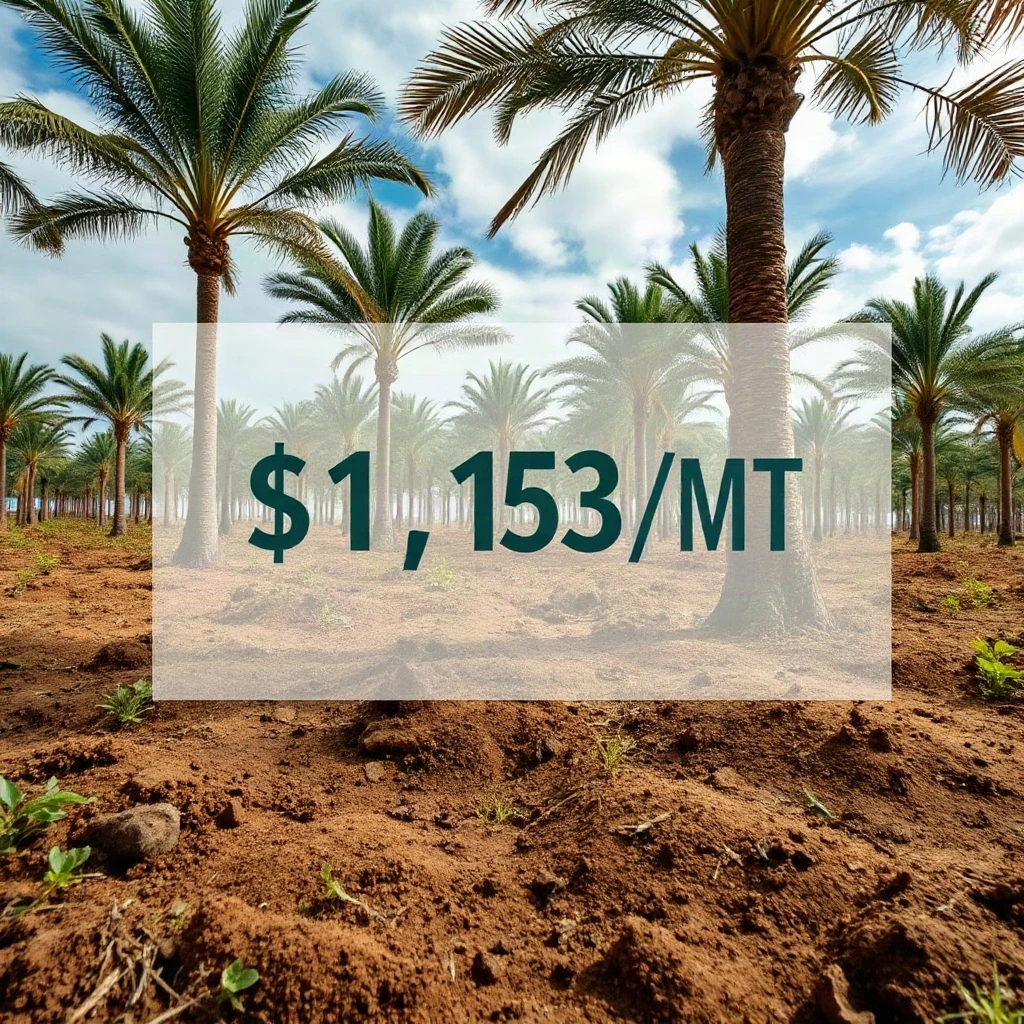
On supply, the strong El Niño is the dominant medium-term story. The ONI is +1.8°C for JJA 2026, well into strong El Niño territory, and Sarawak and Kalimantan are already dry. Palm yields react with a six-to-twelve-month lag, so the market is pricing the risk of lower 2027 production now rather than waiting for the damage to appear in the data.
Indonesia's B50 mandate adds another supply-side pull. Full B50 implementation is targeted for 1 October 2026, with distribution already at 80% and covering 90% of Pertamina stations. Each additional tonne consumed in domestic biodiesel is a tonne less available for export, tightening regional supply and supporting Malaysian CPO.
Brent at $96/bbl also helps. The POGO spread is -$328/MT, meaning palm oil is cheaper than gasoil on an energy basis; discretionary biodiesel blending is economic, which supports demand for palm as a feedstock. Technically, the chart remains in an uptrend: a golden cross is in place, MACD is positive, RSI is 66, and price is above the 5-, 20- and 50-day simple moving averages.
September seasonality adds to that pressure. Historically September averages -0.9% month-over-month, and production is in its seasonal peak from July through October; the seasonal stock path implies a further +6.7% increase next month. That is a mechanical drag on price as more oil comes to market.
Speculative positioning is another vulnerability. CFTC soybean oil managed money net longs are +109,912 contracts, in the 85th percentile. A crowded long is exposed to liquidation if soybean oil breaks lower, and that is exactly the risk highlighted by the 2026-09-03 decline in CBOT soy oil. Weakness in soy oil spills over into palm even when the BOPO spread remains wide, because the two oils trade as a complex.
To flip the balance to bearish, the market would need the MPOB August stocks to come in well above the seven-month high, a cascade of soyoil long liquidation, or a delay or dilution of Indonesia's B50 rollout. To extend the bullish case, the market would need a smaller-than-expected stock build, fresh cargo-surveyor data showing strong exports, or further El Niño intensification. The Indonesian export policy is the swing factor: the Kemendag reference price rose 1.1% to $1,008/MT but the September export duty was held at $148/MT, and GAPKI has warned against raising export levies. A levy change in either direction could shift export supply quickly, but there is no immediate change priced in today.
Benchmark Malaysian palm oil edges up 0.1% to $1,153/MT, but mixed signals from August MPOB stock expectations, Indonesia’s B50 rollout and El Niño keep the near-term bias soft.

Policy news is mixed. Indonesia’s full B50 biodiesel mandate is targeted for 1 October 2026, with national distribution already reaching 80% and covering 90% of Pertamina stations. The September CPO export levy remains at US$148/MT. GAPKI is also cautioning against raising CPO export levies, saying it could pressure farmer FFB prices. New export governance rules under PP 24/2026 and calls from Indonesia’s DPR for a single-door export system add to the regulatory watchlist.
Sources: HaiSawit; 富途牛牛; HaiSawit; HaiSawit; Sarawak Tribune; Kantor Berita Sawit
CPO holds near $1,153/MT; Malaysia stocks seen at seven-month high, but Gapki's 2027 output warning, B50 and crude support floor.

Malaysian crude palm oil futures settled little changed at about $1,153/MT (RM 4,663), up 0.1% on the session, as the market balanced pre-report caution against supportive energy and weather fundamentals. The global World Bank benchmark stood near $1,117/MT, while Indonesia's September reference price was set at about $1,008/MT, keeping export levies unchanged at $148/MT.
The market is bracing for the Malaysian Palm Oil Board's August report, widely expected to show inventories at a seven-month high. July data already pointed to a build: closing stocks rose 7.2% month-on-month to 1,429,316 t, while production increased 9.4% to 1,792,979 t. Exports were firmer, up 14.5% to 1,392,178 t, though imports fell sharply by 51.9% to 49,566 t.
Seasonally, September typically brings further output gains, which could weigh on prices in the near term. Yet the supply outlook beyond this year is less comforting. El Niño conditions remain firmly in place (ONI +1.8), with dry weather reported in Sarawak and Kalimantan. Industry association Gapki has now forecast that Indonesia's 2027 palm oil output could drop by 2.9%, citing El Niño risks and urging accelerated replanting of aging trees. This adds weight to the existing narrative of tighter supply ahead, supporting the price floor. Our model outlook sees near-term bias as mixed-to-soft, with a base case of modest negative drift before a possible post-report relief bounce.
Energy markets are providing a solid floor. Brent crude held near $96/bbl, flat on the session, which improves the economics of palm-based biodiesel. Indonesia is pushing ahead with full B50 implementation targeted for October 1, with national distribution reportedly above 80% and coverage at 90% of Pertamina stations. Beyond that, preparations for a B60 mandate in 2027 are already being discussed, although industry groups caution that feedstock supply flexibility will be a key challenge.
Soybean oil has been a drag, with weakness in that market pressuring palm values recently. However, a fresh rally in US soybean oil and rising crude have lent support. The wide BOPO spread and firm crude keep palm's energy-linked demand attractive.
Indonesia's new export governance rules (PP 24/2026) are drawing attention, with producers urging that export levies not be raised to avoid pressuring fresh fruit bunch prices. Lawmakers have also pushed for a single-gate export system that prioritizes domestic industry needs over foreign-exchange earnings. Separately, Malaysia's MPOB has launched its PALMS 2030 agenda, focusing on digitalization and expanding global market reach.
The ringgit slipped to about 4.04 per dollar, providing some local-currency support for exporters, while the rupiah traded near 17,636 per dollar.
Watch the August MPOB report for confirmation of the stock build, but weigh it against the tightening 2027 supply narrative driven by El Niño, slower replanting, and now Gapki's explicit 2.9% output cut forecast. The October 1 B50 start and crude oil direction will likely set the near-term price tone more than the monthly inventory print.
Sources: 富途牛牛; Sarawak Tribune; Portal Berita RTM; malaysiagazette.com; HaiSawit; Gabungan Pengusaha Kelapa Sawit Indonesia (GAPKI)
Recent coverage shows national B50 distribution at 80% and 90% of Pertamina stations, while GAPKI flags feedstock supply challenges.

Indonesia’s move to B50 biodiesel has moved from announcement to active rollout. Recent reports indicate the blend is now officially applied, with national distribution reaching 80 percent and coverage extending to around 90 percent of Pertamina fuel stations. A full implementation target is set for the beginning of October 2026. These milestones matter because biodiesel blending in Indonesia is almost entirely palm-based, so each percentage point of blend directly affects how much palm oil stays in the domestic energy system rather than entering export markets.
Palm oil is the primary feedstock for Indonesia’s biodiesel mandate. A rising blend rate increases the volume of crude palm oil absorbed by the energy sector. GAPKI, the national palm oil producers’ association, has called for flexibility around the B50 mandatory program, pointing to palm oil supply as a challenge for the 2027 horizon. That warning suggests the domestic market may face tighter feedstock availability as the blend scales up. For buyers in food, oleochemical and specialty fat segments, more palm oil being reserved for biodiesel can reduce the exportable surplus and make feedstock procurement more competitive.
The expansion to B50 shifts demand from the export market to domestic energy use. When distribution reaches a wide share of retail fuel outlets, the effective consumption of palm-based biodiesel becomes more predictable and harder to reverse quickly. This creates a structural demand floor for palm oil within Indonesia. Compliance-minded buyers may see less spot availability of certain grades, longer lead times, or firmer domestic prices as the blending requirement absorbs more supply. The reports of 80 percent distribution and 90 percent Pertamina station coverage suggest the rollout is well underway, which can reduce uncertainty about whether the mandate will be enforced, but it also locks in significant feedstock demand.
For companies buying palm oil or palm derivatives, several policy signals are worth monitoring. The targeted full implementation date of 1 October 2026 will show whether the government maintains the schedule or adjusts for supply constraints. GAPKI’s call for flexibility for a 2027 mandate may indicate ongoing discussions about blend rates, export levies, or feedstock availability. Buyers should also track whether distribution gains continue beyond 80 percent and whether any adjustments are made to domestic market obligations or export policies. A key question is whether non-energy palm users will face increased competition for certified or traceable supply, as the biodiesel sector typically draws on large volumes of crude palm oil.
Overall, Indonesia’s B50 policy is reshaping the palm oil demand picture. The policy desk notes that the blend is no longer a distant proposal; it is being distributed across the fuel network. With supply flexibility flagged by producers and full implementation approaching, the main watch items are feedstock availability, exportable surplus, and any policy fine-tuning.
Sources: Gabungan Pengusaha Kelapa Sawit Indonesia (GAPKI); HaiSawit; Kantor Berita Sawit; Quantum Commodity Intelligence
Full B50 implementation targets Oct 1; GAPKI flags feedstock flexibility needs ahead of B60 work

Indonesian biodiesel policy is entering a critical phase as the full B50 mandate is slated to take effect on Oct. 1, with national distribution already reported at 80 percent. Industry association GAPKI has stressed the need for flexibility in the 2027 B50 mandate, pointing to palm oil supply as a key constraint as the country simultaneously steps up preparations for a B60 blend in 2027.
The push toward higher blend rates comes at a time when feedstock availability is under scrutiny. GAPKI's call for flexibility suggests that even the current B50 path may strain domestic supply chains, particularly if production growth lags the pace of fuel demand. A B60 mandate would raise the bar further, requiring either a significant increase in crude palm oil output or a reallocation of exports toward domestic consumption.
For compliance-minded buyers, the implication is straightforward: more Indonesian palm oil diverted into biodiesel means less available for the export market. This dynamic is already visible in the reference price gap, with Indonesia's official palm oil reference at about $1008 per metric ton versus a global benchmark near $1117 and the Malaysian CPO contract around $1153.
These policy signals land against a mixed fundamental backdrop. Malaysian July data showed production up 9.4 percent month on month at 1.79 million tons, with stocks climbing 7.2 percent to 1.43 million tons. Exports rose a stronger 14.5 percent to 1.39 million tons, but imports fell sharply. The market is now bracing for an August MPOB report expected to show a seven-month high in stock builds.
Our model outlook sees near-term bias as mixed-to-soft, with September seasonality and weak soybean oil adding pressure. Yet the wide BOPO spread, persistent El Niño concerns, and rising Brent crude at about $96 per barrel all offer support to the downside. Technicals remain bullish, though crowded soyoil longs and the absence of fresh cargo-surveyor data widen the uncertainty band.
For buyers, the policy trajectory points to a structurally tighter Indonesian export balance over the medium term. The base case in our model sees modest negative drift before a possible post-report relief bounce, with medium confidence, but policy-driven supply diversion is a factor that could shift that path.
Indonesian domestic consumption is becoming a more powerful price-setting force with each blend-rate increase. The transition from B35 to B50 and the early groundwork for B60 signal that this is not a temporary measure but a structural shift in how the world's largest palm oil producer allocates its output.
Sources: Gabungan Pengusaha Kelapa Sawit Indonesia (GAPKI); HaiSawit; Kantor Berita Sawit
As Malaysia's stocks climb, the global stocks-to-use ratio nears a pivot; history says levels above 15% soften prices.
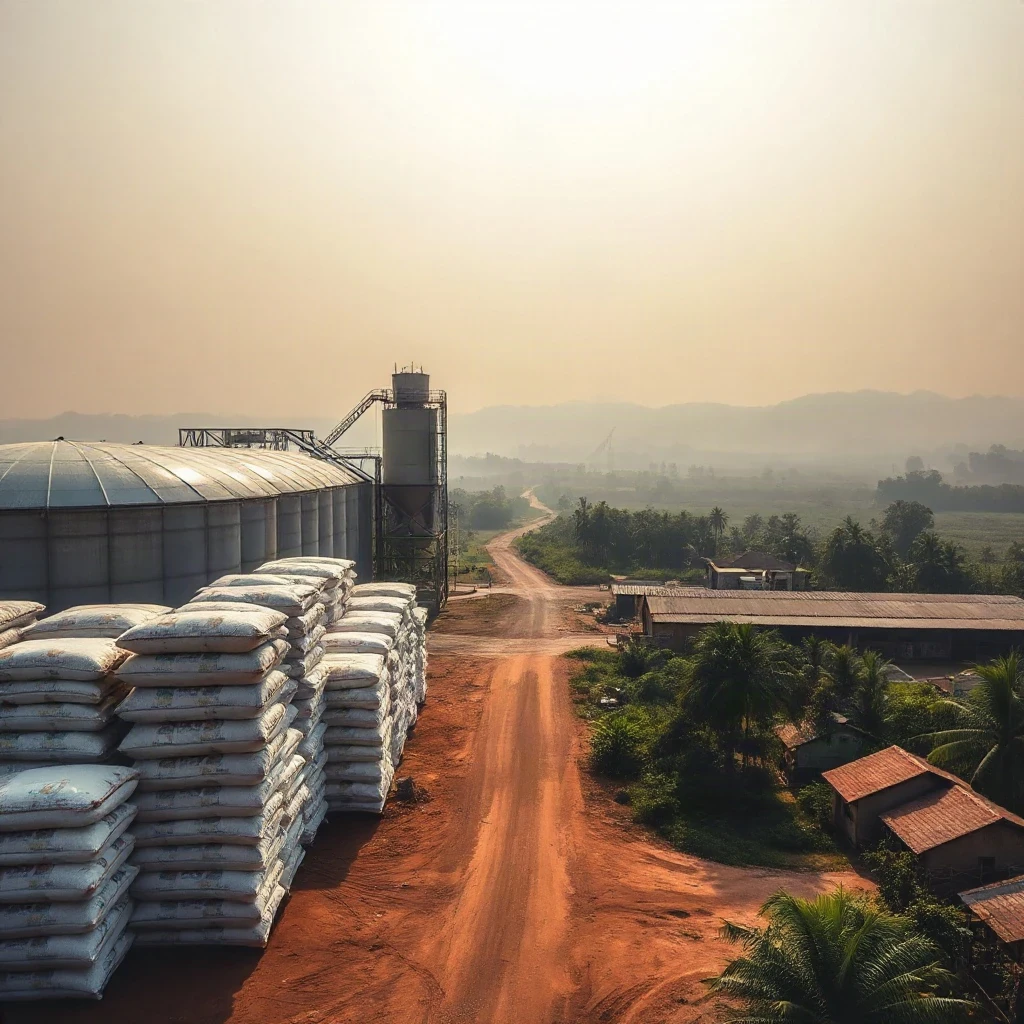
The global palm oil market is fixated on inventory benchmarks this week, with Malaysia's July data showing a 7.2% month-on-month rise in closing stocks to 1,429,316 tonnes. That build, alongside a 9.4% jump in production to 1,792,979 tonnes, has refocused attention on the stocks-to-use ratio as the clearest single gauge of supply-demand tightness.
Stocks-to-use divides ending inventories by total consumption for a given marketing year. It is a forward-looking pressure valve: high ratios signal ample supply relative to demand, typically capping price rallies; low ratios imply scarcity, leaving the market vulnerable to weather or policy shocks. For palm oil, the ratio is usually calculated on global combined stocks of crude and refined product, with consumption proxied by disappearance.
Historically, readings above roughly 15% have coincided with bearish price phases, while sustained levels near 10% or below have marked bull markets. The current global ratio sits in a middle band—estimates cluster around 12-13% on the order of recent years—but the direction of travel matters more than the static level.
Malaysia's July stocks-to-use trajectory is climbing: exports rose 14.5% month-on-month to 1,392,178 tonnes, yet production outpaced offtake, and imports fell sharply to 49,566 tonnes. The market braces for the August MPOB report, expected by our model outlook to show a seven-month high stock build, which would push the ratio further upward.
Weather adds a counterweight. El Niño conditions (ONI +1.8) have left Sarawak and Kalimantan dry, threatening future production in Indonesia and Malaysia alike. That dryness is not yet visible in current stocks but raises the risk of a downward revision to 2026/27 output forecasts, which would tighten the ratio later.
At $1,153/MT for Malaysian CPO, prices have held firm despite the stock build, supported by a wide BOPO spread, full B50 biodiesel implementation from 1 October, and Brent crude near $96/bbl. The ratio's signal is mixed-to-soft near term, but the structural support from energy policy and weather keeps a floor under valuations.
For the ratio to signal sustained bearishness, August and September production would need to keep growing despite dry weather, and biodiesel uptake would have to disappoint. Conversely, a meaningful El Niño-driven output shortfall in early 2027, or a surge in export demand ahead of B50, would pull the ratio back toward scarcity territory.
Buyers should watch three things: the August MPOB report for confirmation of stock builds, cargo-surveyor data for export momentum, and rainfall forecasts for Kalimantan and Sarawak. A break below 11% global stocks-to-use would likely precede a renewed price push; a move above 15% would open the door to a sustained correction. Until then, expect sideways-to-soft trading with a post-report relief bounce possible.
Our market desk connects serious buyers with vetted origin suppliers across Southeast Asia. Indicative pricing, specifications and shipment guidance — free of charge.
Get connected →Benchmark Malaysian palm oil edges up 0.1% to $1,153/MT, but mixed signals from August MPOB stock expectations, Indonesia’s B50 rollout and El Niño keep the near-term bias soft.
Full story — Page 2 ▸CPO holds near $1,153/MT; Malaysia stocks seen at seven-month high, but Gapki's 2027 output warning, B50 and crude support floor.
Full story — Page 2 ▸Recent coverage shows national B50 distribution at 80% and 90% of Pertamina stations, while GAPKI flags feedstock supply challenges.
Full story — Page 2 ▸Full B50 implementation targets Oct 1; GAPKI flags feedstock flexibility needs ahead of B60 work
Full story — Page 2 ▸As Malaysia's stocks climb, the global stocks-to-use ratio nears a pivot; history says levels above 15% soften prices.
Full story — Page 2 ▸Five bullish factors—El Niño, B50, a wide BOPO spread, Brent and trend—keep the upside in charge, but front-loaded MPOB inventory fears and weak soyoil temper the near-term tape.
On supply, the strong El Niño is the dominant medium-term story. The ONI is +1.8°C for JJA 2026, well into strong El Niño territory, and Sarawak and Kalimantan are already dry. Palm yields react with a six-to-twelve-month lag, so the market is pricing the risk of lower 2027 production now rather than waiting for the damage to appear in the data.
Indonesia's B50 mandate adds another supply-side pull. Full B50 implementation is targeted for 1 October 2026, with distribution already at 80% and covering 90% of Pertamina stations. Each additional tonne consumed in domestic biodiesel is a tonne less available for export, tightening regional supply and supporting Malaysian CPO.
Brent at $96/bbl also helps. The POGO spread is -$328/MT, meaning palm oil is cheaper than gasoil on an energy basis; discretionary biodiesel blending is economic, which supports demand for palm as a feedstock. Technically, the chart remains in an uptrend: a golden cross is in place, MACD is positive, RSI is 66, and price is above the 5-, 20- and 50-day simple moving averages.
September seasonality adds to that pressure. Historically September averages -0.9% month-over-month, and production is in its seasonal peak from July through October; the seasonal stock path implies a further +6.7% increase next month. That is a mechanical drag on price as more oil comes to market.
Speculative positioning is another vulnerability. CFTC soybean oil managed money net longs are +109,912 contracts, in the 85th percentile. A crowded long is exposed to liquidation if soybean oil breaks lower, and that is exactly the risk highlighted by the 2026-09-03 decline in CBOT soy oil. Weakness in soy oil spills over into palm even when the BOPO spread remains wide, because the two oils trade as a complex.
To flip the balance to bearish, the market would need the MPOB August stocks to come in well above the seven-month high, a cascade of soyoil long liquidation, or a delay or dilution of Indonesia's B50 rollout. To extend the bullish case, the market would need a smaller-than-expected stock build, fresh cargo-surveyor data showing strong exports, or further El Niño intensification. The Indonesian export policy is the swing factor: the Kemendag reference price rose 1.1% to $1,008/MT but the September export duty was held at $148/MT, and GAPKI has warned against raising export levies. A levy change in either direction could shift export supply quickly, but there is no immediate change priced in today.
Five bullish factors hold the upper hand over three bearish ones, but our model sees choppy trade with a slight downside bias into the upcoming MPOB data.
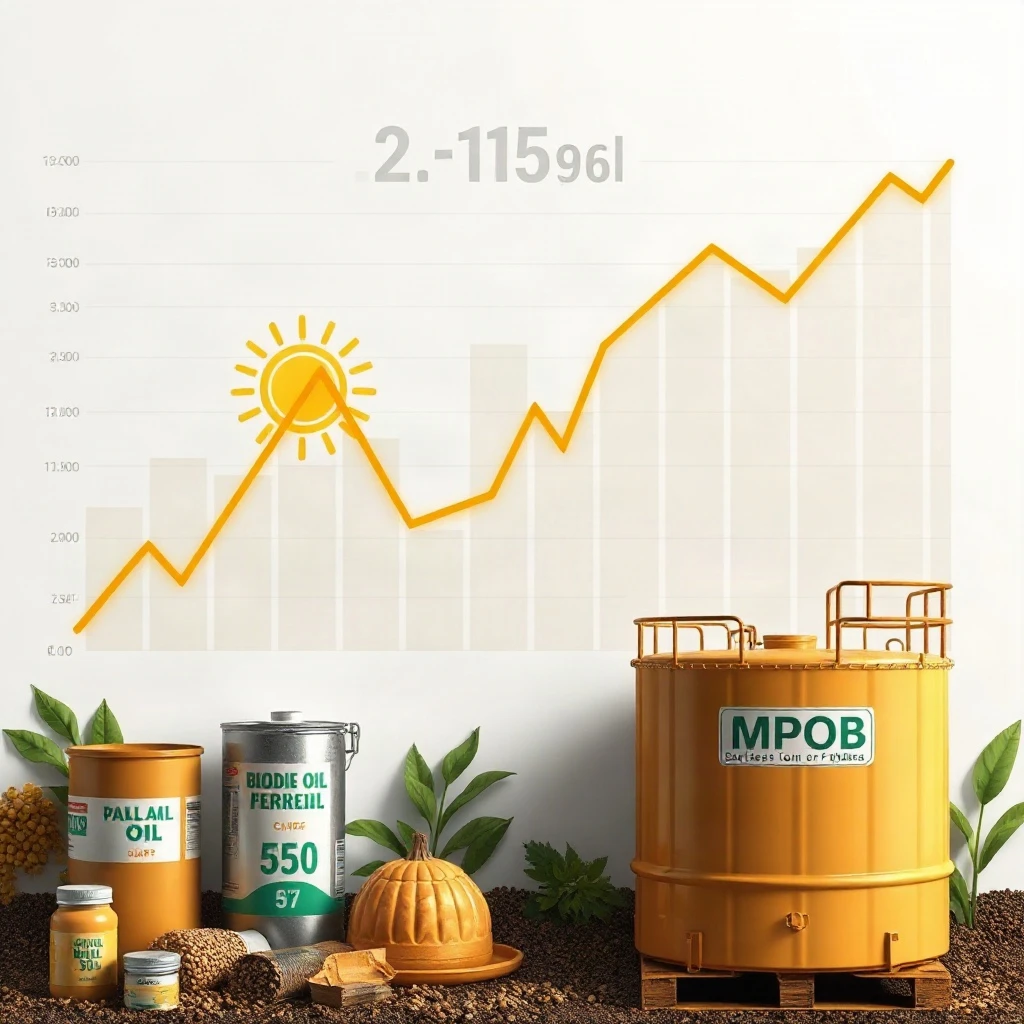
The Malaysian CPO benchmark is holding around $1,153/MT (RM4,663/MT), up 0.1% from the previous session and near 52-week highs. For context, the World Bank palm oil benchmark is about $1,117/MT and Indonesia’s Kemendag reference is about $1,008/MT. USD/MYR is about 4.04; our model holds FX constant, so currency effect is neutral. Technically, our model sees a bullish structure—golden cross and positive MACD—but the contract is stretched near the upper Bollinger band at about $1,170, with RSI at 66, so the rally is not unconstrained.
Start with the BOPO spread. At $372/MT, palm oil is heavily discounted to soybean oil. That is a demand-switching mechanism: importers and biodiesel blenders with flexibility will choose the cheaper feedstock, and a wide spread pulls demand toward palm. Live CBOT soyoil keeps this as a daily lead.
Indonesia’s B50 rollout is another structural bid. Distribution now reaches 80% of the country and 90% of Pertamina stations. The mandate absorbs an estimated 3–4 million tonnes per year, consuming domestic supply and leaving less Indonesian palm for export, which supports Malaysian CPO.
Brent crude is reinforcing the biodiesel leg. Brent is at $95.8/bbl, up 8.8% over seven days. The POGO spread is at -$328/t, at the 0th percentile, meaning palm is cheaper than gasoil. That improves discretionary blending economics and adds demand.
Indonesia’s export policy is also bullish for Malaysian CPO. The reference price rose 1.1% to $1,008/MT, with a $126/MT levy and $148/MT duty. A high total export burden can slow Indonesian shipments and redirect demand to Malaysia, although GAPKI warns against further levy hikes.
Finally, El Niño is building a lagged supply story. The ONI is +1.8°C and GAPKI headlines warn Indonesian output could fall 2.9% in 2027. That is forward-looking, but it keeps buyers cautious about future tightness.
Near-term supply data is the main drag. The upcoming MPOB release is about seven days away. The market is still digesting July figures: production rose 9.4% month-on-month to 1,792,979 t, and closing stocks rose 7.2% to 1,429,316 t. Even with exports at 1,392,178 t (+14.5% MoM), stocks are 61% above the five-year average. A September 3 headline cited higher stock expectations as a weight, and a seasonal production path of +7% next month adds bearish pressure.
September seasonality is also working against price. September has historically averaged -0.9% month-on-month, and the production peak runs from July to October. Heavy current output keeps supply pressure on the market.
Positioning is a third risk. CFTC managed-money soyoil is net long 109,912 contracts, up 21,470 week-on-week and at the 85th percentile of its two-year range. A crowded long is vulnerable to liquidation, and a soyoil selloff would narrow the BOPO spread and pull palm lower.
On balance, five bullish factors outweigh three bearish ones. Our model sees the upside with the upper hand: demand-side support from the BOPO discount, B50, Brent and Indonesian export burdens is stronger than the seasonal supply drag. Still, the next seven days are likely to be choppy with a slight downside bias into the MPOB data, while demand-side support limits losses. The published path is +0.3% over seven sessions, but missing cargo-surveyor export pace and Bursa FCPO quotes widen uncertainty.
What would have to change for the balance to flip: the MPOB release would need to confirm a much larger-than-expected stock build and slower export pace, the BOPO spread would need to narrow sharply, or Brent would need to reverse so discretionary blending fades. If CFTC soyoil longs liquidate, that would also spill across the vegoil complex. Conversely, strong cargo-surveyor exports and continued B50 progress would keep the bearish forces contained.
Malaysian CPO near $1,153/MT with bearish stock preview offset by B50 distribution and El Niño supply worry; buyers await MPOB data.

Malaysian CPO benchmark held around $1,153/MT (RM4,663/MT), a 0.1% advance on the previous session, but the contract is near 52-week highs and stretched against the upper Bollinger band. The World Bank palm oil benchmark was about $1,117/MT, while Indonesia's September reference price rose 1.1% to $1,007.51/MT, with the CPO export duty unchanged at $148/MT. Brent crude added 0.5% to roughly $96/bbl, and the palm-to-soyoil discount implied by a BOPO spread of $372/MT remains supportive for discretionary palm demand. The ringgit traded near 4.04 per dollar, influencing local export conversion.
MPOB's July release showed production up 9.4% month-on-month to 1,792,979 t, exports up 14.5% to 1,392,178 t, and closing stocks up 7.2% to 1,429,316 t. Our model outlook notes these July stocks are 61% above the five-year average, and the next MPOB release in about seven days is widely expected to show another inventory build; a market preview flags August inventories hitting a seven-month high. Weak soybean oil and higher stock expectations already pulled CPO futures lower in a recent session.
Offsetting that, Indonesia's B50 biodiesel mandate is now officially in effect, with distribution reaching 80% and covering 90% of Pertamina stations. Brent's weekly gain of 8.8% improves blend economics. At the same time, El Niño conditions (ONI +1.8) and dry conditions in Sarawak are raising 2027 supply worries; Gapki projects Indonesia's 2027 palm oil output could decline 2.9%. Policy concerns add another layer: Gapki has cautioned against raising CPO export levies because that could pressure farmer fresh fruit bunch prices. Separately, news reports pointed to improved Indonesian palm oil export performance, a potential sign of healthy shipments.
Our model outlook sees choppy trade over the next week, with a slight downside bias into the MPOB data but demand-side support limiting losses. September seasonality averages a 0.9% month-on-month decline, and crowded CFTC soyoil longs are vulnerable to liquidation. Missing cargo-surveyor export pace and Bursa FCPO quotes widen uncertainty, though the published path is a 0.3% gain over seven sessions.
For buyers, the critical watchpoints are the MPOB stock and export figures, daily cargo-surveyor shipments, B50 blending progress, and any shift in El Niño or biodiesel policy signals.
Sources: HaiSawit; news.futunn.com; Sarawak Tribune; HaiSawit; Astro Awani; The Edge Malaysia
Malaysian CPO benchmark holds near $1,153/MT as August inventories are expected to hit a seven-month high; El Niño risks persist.
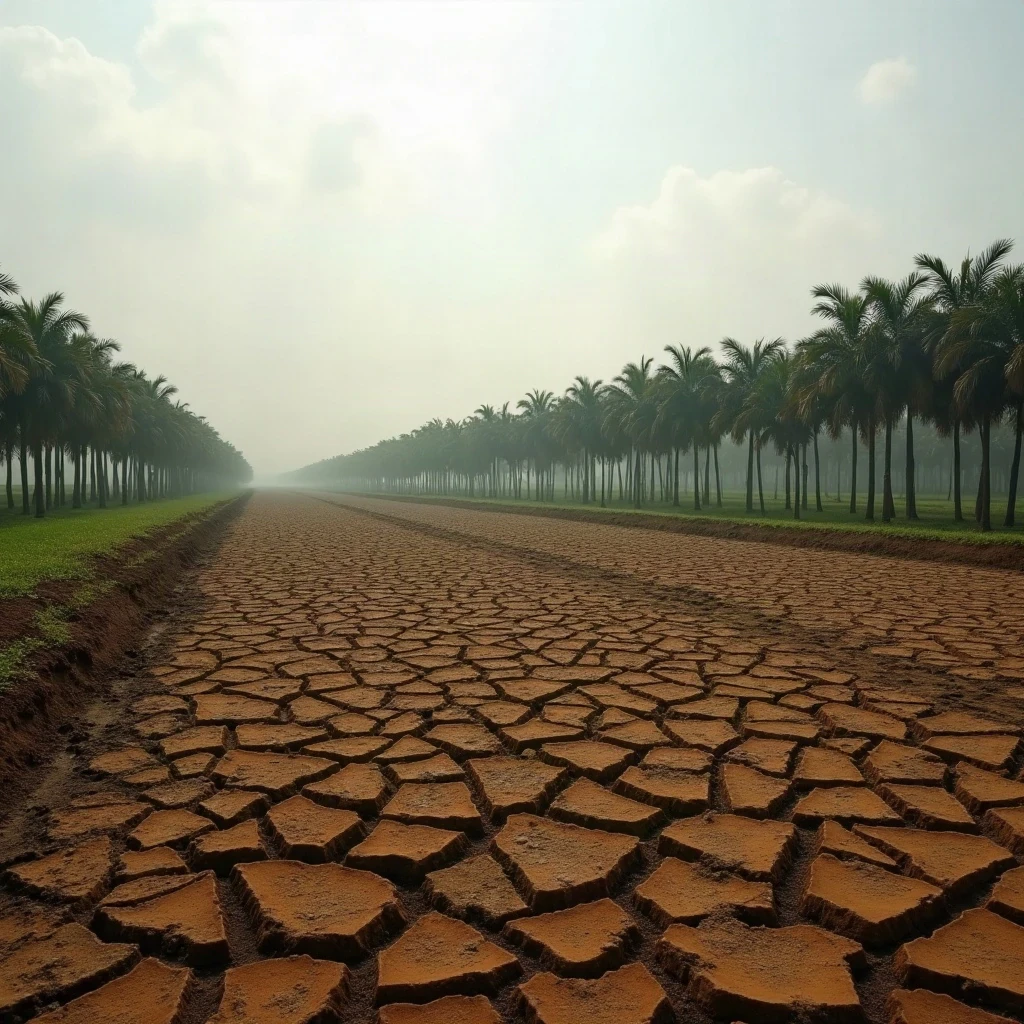
Malaysian crude palm oil futures were little changed, with the benchmark hovering around $1,153/MT (RM 4,663), up 0.1% from the previous session. The market remains near 52-week highs, supported by a bullish technical structure, but faces near-term headwinds from rising stock expectations and softening external cues.
MPOB's July data showed Malaysian CPO production at 1,792,979 tonnes, up 9.4% month-on-month, while closing stocks climbed 7.2% to 1,429,316 tonnes. That puts inventories about 61% above the five-year average. Market previews for the upcoming MPOB monthly report indicate August inventories are expected to hit a seven-month high, reinforcing the bearish supply narrative.
Exports were robust at 1,392,178 tonnes (+14.5% MoM), but imports fell sharply to 49,566 tonnes (-51.9% MoM), reflecting ample domestic supply. September seasonality historically sees output ease by about 0.9% month-on-month, which could temper the stock build, but the projected August rise keeps pressure on prices.
Indonesia's B50 biodiesel program has reached 80% national distribution, covering 90% of Pertamina stations, with full implementation targeted for October 1, 2026. That supports domestic palm oil consumption, but also tightens export availability. Industry group GAPKI has warned that the 2027 B50 mandate requires flexibility in supply, and has called for accelerated replanting to counter an expected 2.9% drop in output next year.
Export policy is also under scrutiny. GAPKI has urged the government not to raise the CPO export levy, fearing it would pressure fresh fruit bunch prices paid to farmers. Meanwhile, a new export governance regulation (PP 24/2026) is set to affect palm oil trade flows, with lawmakers pushing to prioritize domestic industry needs over export revenue.
El Niño conditions persist (ONI +1.8), with notable dryness in Sarawak raising concerns about 2027 production. GAPKI and other bodies have flagged the risk of lower output, and Malaysian agencies are offering support to smallholders to mitigate the impact. These weather worries are a key bullish undercurrent, even as near-term stocks remain comfortable.
Brent crude held near $96/bbl, flat on the session but up 8.8% on the week, underpinning biodiesel economics. The palm-olein spread over gasoil (BOPO) is wide at $372/MT, making palm-based biodiesel less competitive without mandates. A firmer ringgit (USD/MYR at 4.05) adds headwinds for Malaysian exports, while Indonesian reference prices have climbed above $1,000/MT, with export taxes unchanged at $148/MT for September.
Our model outlook sees the next seven days as choppy with a slight downside bias into the MPOB data, given high stock expectations and crowded long positions in soybean oil. However, strong demand-side support from B50 and weather-driven supply concerns should limit losses. The published path is -0.6% over the next seven sessions.
Takeaway for buyers: Watch the upcoming MPOB release for confirmation of the seven-month-high stock build, and monitor Indonesian export policy and B50 implementation progress. El Niño's impact on 2027 supply remains a key price driver, but near-term volatility is likely as the market digests inventory data.
Sources: HaiSawit; Gabungan Pengusaha Kelapa Sawit Indonesia (GAPKI); Kantor Berita Sawit; HaiSawit; Sarawak Tribune; HaiSawit
B50 biodiesel blending advances as distribution reaches 80% of Pertamina stations, while GAPKI flags 2027 supply and flexibility challenges.

Recent reporting indicates that Indonesia's B50 biodiesel blending programme has been officially implemented, with distribution reported at 80% and coverage of 90% of Pertamina fuelling stations. This marks a further step in the country's effort to absorb more palm oil into the domestic energy mix.
At the same time, the Indonesian Palm Oil Association (GAPKI) has cautioned that the planned B50 mandate for 2027 will require flexibility, pointing to palm oil supply as a key challenge. This suggests that feedstock volumes, logistics and blending economics may need careful management as the higher blend rate approaches.
Regional reporting from East Kalimantan highlights both opportunity and friction: B50 is seen as opening a new market for the province's palm oil, but infrastructure and efficiency remain unresolved homework for producers and distributors.
These factors point to a tighter palm oil balance in Indonesia, which can support domestic prices and widen the premium over competing edible oils if export volumes are constrained.
For buyers with sustainability or regulatory obligations, the B50 rollout raises several watch items. First, actual distribution coverage is not uniform; even at 90% of Pertamina stations, the remaining gap and non-Pertamina distribution matter for compliance claims. Second, a larger share of palm oil diverted into biodiesel can shift feedstock availability for food and oleochemical buyers, affecting contract performance and traceability. Third, companies relying on Indonesian palm oil for renewable energy mandates in other jurisdictions may need to verify that domestic B50 compliance does not disrupt their supply chains.
In summary, B50 is progressing but remains a balancing act between domestic energy policy ambition and the palm oil supply base. Official implementation and early distribution data show momentum, while producer warnings and regional infrastructure gaps suggest compliance-minded buyers should track flexibility measures and regional capacity carefully.
Sources: Gabungan Pengusaha Kelapa Sawit Indonesia (GAPKI); Nomor Satu Kaltim; HaiSawit; qcintel.com
B50 distribution hits 80% ahead of full mandate; GAPKI flags supply and flexibility needs for 2027 B60.
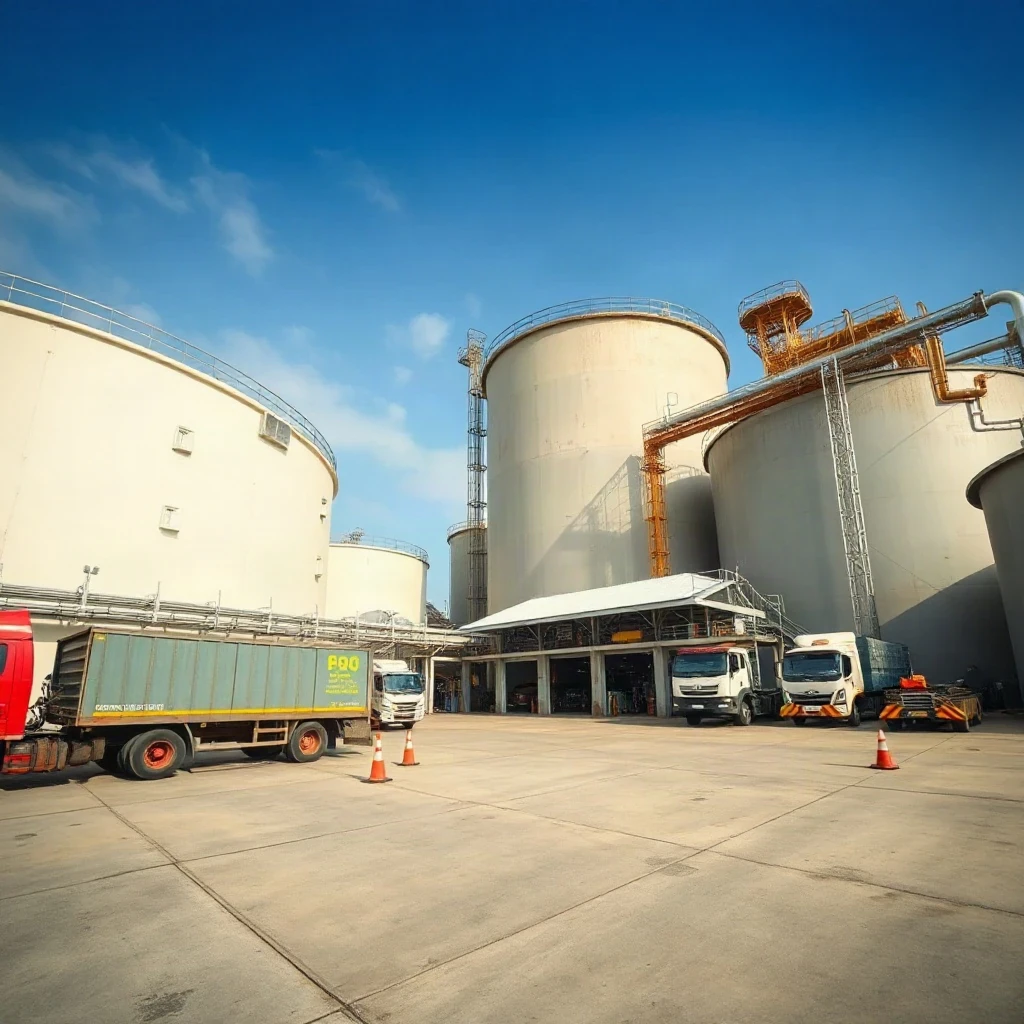
Indonesia’s B50 biodiesel program is approaching full implementation, with distribution reaching 80% of the national target and covering 90% of Pertamina stations, according to industry reports. The milestone comes about a month before the mandate is due for complete rollout, signaling that logistics and blending capacity are largely in place. For palm oil markets, the key question is how much additional crude palm oil (CPO) demand this creates and whether feedstock supply can keep pace.
The Indonesian Palm Oil Association (GAPKI) has cautioned that the 2027 B50 mandate will require flexibility, with palm oil supply emerging as a key challenge. The statement underscores growing tension between ambitious biodiesel targets and the availability of feedstock, especially as the industry also eyes a B60 mandate in 2027. If CPO supply tightens, biodiesel blenders may need to adjust procurement strategies or rely on carry-over stocks, which could affect export availability.
For compliance-minded buyers, the policy direction reinforces that a larger share of Indonesian palm oil will be diverted to domestic fuel use. That structural demand is a supportive factor for global CPO prices, but it also raises the risk of supply disruptions if the mandate outpaces plantation output growth.
Malaysian CPO futures are trading near $1,153 per tonne, close to 52-week highs, with a bullish technical structure but stretched momentum. Our model outlook suggests choppy trading with a slight downside bias into the upcoming MPOB data release, though demand-side support from biodiesel mandates limits losses. The BOPO spread—the gap between CPO and gasoil—stands at $372 per tonne, making palm oil attractive for biodiesel production. Brent crude at about $96 per barrel further improves blending economics.
Buyers should monitor Indonesia’s biodiesel distribution pace and any policy adjustments, as these directly influence export supply. GAPKI’s call for flexibility could lead to regulatory tweaks, such as relaxed blending ratios or import allowances for feedstocks, which would alter CPO demand forecasts. With El Niño warnings for 2027 supply, the interaction between weather risk and biodiesel demand will be critical for price direction. For now, the market is balancing robust policy-driven demand against near-term stock builds and seasonal headwinds.
Sources: Gabungan Pengusaha Kelapa Sawit Indonesia (GAPKI); Kantor Berita Sawit; Quantum Commodity Intelligence; BioEnergy Times
Malaysian CPO holds near $1,153/MT as market eyes MPOB stocks, El Niño, and biodiesel demand.
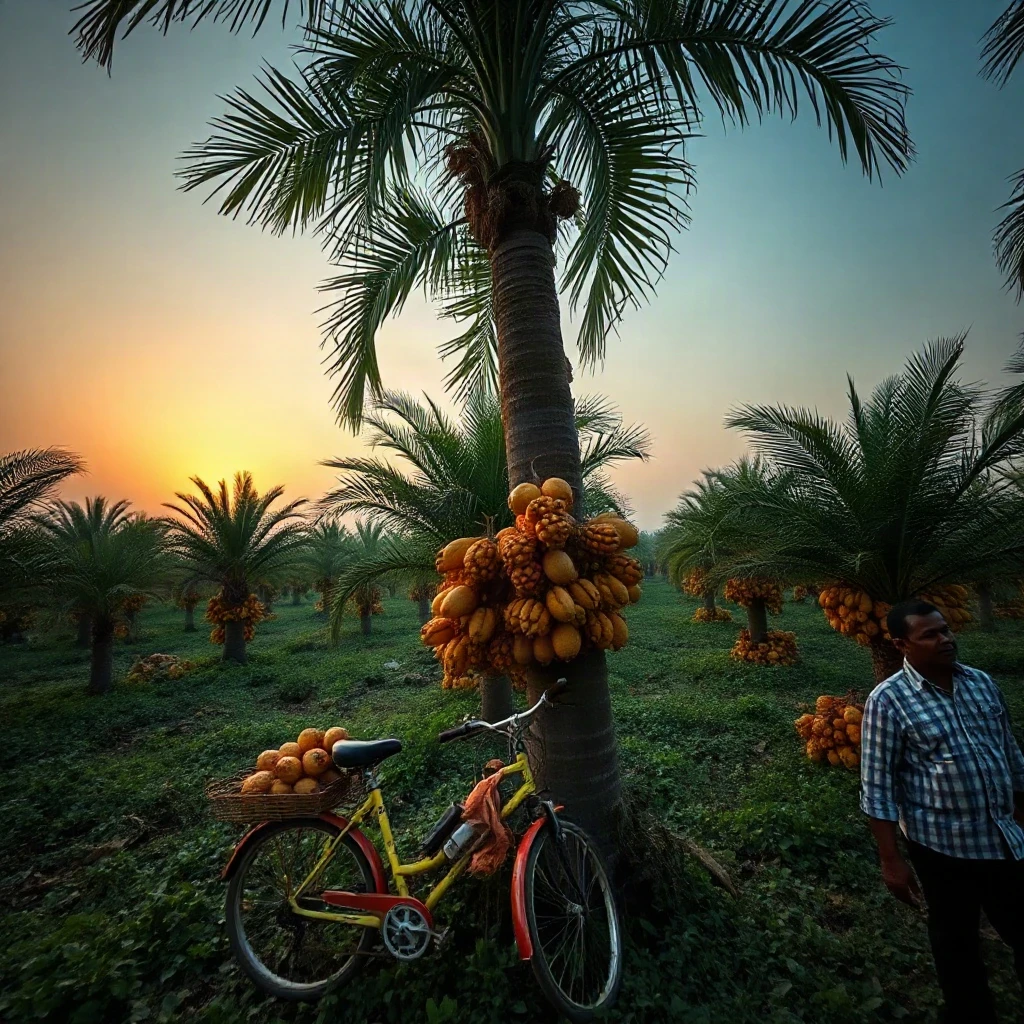
Malaysian crude palm oil futures ended the week at about $1,153 per metric ton (RM 4,663), up a marginal 0.1% on the session and hovering near 52-week highs. The global benchmark, as tracked by the World Bank, stood at roughly $1,117/MT, while Indonesia's official reference price was set at about $1,008/MT. The ringgit traded near 4.05 per U.S. dollar, and the rupiah around 17,637 per dollar.
Brent crude held near $96 per barrel, flat on the session but up 8.8% on the week, underpinning biodiesel blend economics. The gasoil–palm oil spread (BOPO) widened to $372/MT, keeping vegetable oil competitive as a fuel feedstock. Indonesia's B50 biodiesel distribution is reportedly at 80% of target, sustaining demand-side support for palm oil.
Malaysia's July 2026 MPOB data, released this week, showed CPO production at 1,792,979 tonnes, up 9.4% month-on-month. Closing stocks rose 7.2% to 1,429,316 tonnes, while exports jumped 14.5% to 1,392,178 tonnes. Imports fell sharply to 49,566 tonnes, down 51.9% from the prior month. The fresh fruit bunch reference price edged up 1.2% to RM 49.50.
Despite the export uptick, July stocks remain about 61% above the five-year average, a bearish overhang ahead of the next MPOB release due in roughly seven days. Weather-wise, ENSO is in an El Niño phase (ONI +1.8), with notable dryness reported in Sarawak, raising supply concerns for 2027.
Our model outlook describes the technical structure as bullish—marked by a golden cross and positive MACD—but stretched near the upper Bollinger band. Near-term downside risks include seasonality (September typically sees a 0.9% month-on-month decline), elevated stock expectations, and crowded soyoil longs on CFTC that could liquidate. Bullish drivers remain firm: Brent's weekly gain, the wide BOPO spread, Indonesia's biodiesel progress, and El Niño warnings. The model projects a choppy week ahead with a slight downside bias into the MPOB data, but demand-side support should limit losses. The published 7-session path is +0.3%.
Traders will focus on the upcoming MPOB supply-demand report, due in about seven days, for confirmation of stock trends. Missing cargo-surveyor export data and Bursa FCPO quotes add uncertainty. Watch for any updates on Indonesia's biodiesel mandate rollout, fresh weather forecasts for Sarawak, and crude oil price direction as key swing factors.
Our market desk connects serious buyers with vetted origin suppliers across Southeast Asia. Indicative pricing, specifications and shipment guidance — free of charge.
Get connected →Malaysian CPO near $1,153/MT with bearish stock preview offset by B50 distribution and El Niño supply worry; buyers await MPOB data.
Full story — Page 2 ▸Malaysian CPO benchmark holds near $1,153/MT as August inventories are expected to hit a seven-month high; El Niño risks persist.
Full story — Page 2 ▸B50 biodiesel blending advances as distribution reaches 80% of Pertamina stations, while GAPKI flags 2027 supply and flexibility challenges.
Full story — Page 2 ▸B50 distribution hits 80% ahead of full mandate; GAPKI flags supply and flexibility needs for 2027 B60.
Full story — Page 2 ▸Malaysian CPO holds near $1,153/MT as market eyes MPOB stocks, El Niño, and biodiesel demand.
Full story — Page 2 ▸Five bullish factors hold the upper hand over three bearish ones, but our model sees choppy trade with a slight downside bias into the upcoming MPOB data.
The Malaysian CPO benchmark is holding around $1,153/MT (RM4,663/MT), up 0.1% from the previous session and near 52-week highs. For context, the World Bank palm oil benchmark is about $1,117/MT and Indonesia’s Kemendag reference is about $1,008/MT. USD/MYR is about 4.04; our model holds FX constant, so currency effect is neutral. Technically, our model sees a bullish structure—golden cross and positive MACD—but the contract is stretched near the upper Bollinger band at about $1,170, with RSI at 66, so the rally is not unconstrained.
Start with the BOPO spread. At $372/MT, palm oil is heavily discounted to soybean oil. That is a demand-switching mechanism: importers and biodiesel blenders with flexibility will choose the cheaper feedstock, and a wide spread pulls demand toward palm. Live CBOT soyoil keeps this as a daily lead.
Indonesia’s B50 rollout is another structural bid. Distribution now reaches 80% of the country and 90% of Pertamina stations. The mandate absorbs an estimated 3–4 million tonnes per year, consuming domestic supply and leaving less Indonesian palm for export, which supports Malaysian CPO.
Brent crude is reinforcing the biodiesel leg. Brent is at $95.8/bbl, up 8.8% over seven days. The POGO spread is at -$328/t, at the 0th percentile, meaning palm is cheaper than gasoil. That improves discretionary blending economics and adds demand.
Indonesia’s export policy is also bullish for Malaysian CPO. The reference price rose 1.1% to $1,008/MT, with a $126/MT levy and $148/MT duty. A high total export burden can slow Indonesian shipments and redirect demand to Malaysia, although GAPKI warns against further levy hikes.
Finally, El Niño is building a lagged supply story. The ONI is +1.8°C and GAPKI headlines warn Indonesian output could fall 2.9% in 2027. That is forward-looking, but it keeps buyers cautious about future tightness.
Near-term supply data is the main drag. The upcoming MPOB release is about seven days away. The market is still digesting July figures: production rose 9.4% month-on-month to 1,792,979 t, and closing stocks rose 7.2% to 1,429,316 t. Even with exports at 1,392,178 t (+14.5% MoM), stocks are 61% above the five-year average. A September 3 headline cited higher stock expectations as a weight, and a seasonal production path of +7% next month adds bearish pressure.
September seasonality is also working against price. September has historically averaged -0.9% month-on-month, and the production peak runs from July to October. Heavy current output keeps supply pressure on the market.
Positioning is a third risk. CFTC managed-money soyoil is net long 109,912 contracts, up 21,470 week-on-week and at the 85th percentile of its two-year range. A crowded long is vulnerable to liquidation, and a soyoil selloff would narrow the BOPO spread and pull palm lower.
On balance, five bullish factors outweigh three bearish ones. Our model sees the upside with the upper hand: demand-side support from the BOPO discount, B50, Brent and Indonesian export burdens is stronger than the seasonal supply drag. Still, the next seven days are likely to be choppy with a slight downside bias into the MPOB data, while demand-side support limits losses. The published path is +0.3% over seven sessions, but missing cargo-surveyor export pace and Bursa FCPO quotes widen uncertainty.
What would have to change for the balance to flip: the MPOB release would need to confirm a much larger-than-expected stock build and slower export pace, the BOPO spread would need to narrow sharply, or Brent would need to reverse so discretionary blending fades. If CFTC soyoil longs liquidate, that would also spill across the vegoil complex. Conversely, strong cargo-surveyor exports and continued B50 progress would keep the bearish forces contained.
Malaysian CPO is steady at RM4,664/MT, with BOPO discounts, El Niño supply fears, and Indonesia’s B50 rollout offsetting high July stocks and technical resistance.
Malaysian CPO benchmark trades about $1,154/MT (RM4,664/MT) on 4 September 2026, up 0.1% from the previous session. The World Bank global benchmark sits near $1,117/MT and Indonesia’s reference price is about $1,008/MT. Brent crude is around $96/bbl, down 0.3% on the session, with USD/MYR at about 4.04. The market is holding near the upper end of its recent range, and our model’s published path is roughly flat at +0.1% over seven sessions.
The widest demand-switch lever is the soy-palm spread. At $384/MT, palm oil is heavily discounted to soybean oil, making it the cheapest major edible oil for price-sensitive buyers. Even though weak CBOT soy tempers immediate spillover, the discount is wide enough to keep palm demand sticky and discourages substitution away from palm.
El Niño is intensifying supply concerns. The ONI is at +1.8°C, Kalimantan rainfall is notably dry, and headline warnings such as GAPKI’s Indonesian output-drop warning are underpinning bullish sentiment. The yield impact is lagged, but the fear of future tightness can trigger forward buying and discourage aggressive selling.
Indonesia’s B40-to-B50 rollout is the largest single demand variable. Full B50 is targeted for 1 October 2026, with national distribution reported at 80%. This absorbs roughly 3–4 million tonnes per year. By diverting Indonesian palm oil into domestic biodiesel, it reduces exportable supply and supports Malaysian CPO.
Indonesian export charges are also shifting demand toward Malaysia. The September reference price of $1,008/MT gives a $126 levy plus a separate $148 export duty. Those high total charges squeeze Indonesian exporter margins, making Malaysian cargoes more competitive and potentially shifting demand to Malaysia.
Brent strength and a negative POGO add support. Brent is up 6.4% over seven sessions at about $95.5–96/bbl. With POGO at -$327/t, palm is cheaper than gasoil, which supports discretionary biodiesel blending and keeps palm anchored to energy markets.
The biggest bearish force is peak production and high stocks into the next MPOB release. July CPO production was 1,792,979 tonnes, up 9.4% month-on-month, and closing stocks reached 1,429,316 tonnes, up 7.2% month-on-month. Stocks are 61% above the five-year average and the stocks-to-use ratio is 12.5%, which is ample. The August seasonal path adds another 7% production and 6.7% stocks, and the next MPOB release in about seven days creates downside positioning risk if the data confirm the build.
September seasonal softness is a known headwind. Historically, September averages -0.9% month-on-month because the Malaysian production cycle peaks from July to October. That seasonal pattern makes rallies harder to sustain without a fresh demand surprise.
Technical resistance is also limiting upside. RSI is 67, near overbought, and price is near the $1,170 upper Bollinger band. Momentum z-score is -0.39, suggesting consolidation or pullback risk rather than a clean breakout.
Speculative long crowding in the soyoil complex adds liquidation risk. CFTC managed-money net long is at the 79th percentile, but it fell 9,795 contracts. Crowded longs are vulnerable if soybean oil weakens further, which could spill into palm via fund flows.
Our model outlook is not outright bullish: the near-term path is roughly flat at +0.1% over seven sessions, with missing cargo-surveyor export pace and Bursa FCPO quotes widening uncertainty. But the factor balance is 5 bullish versus 4 bearish, so the upside currently has the upper hand. Supply-side headlines keep a lid on prices, but the demand-side levers—BOPO discount, El Niño, Indonesian B50 uptake, export burden and negative POGO—are strong enough to absorb dips and prevent a sharp breakdown.
For the balance to flip decisively bearish, the next MPOB release would need to show an August stock build above the seasonal +6.7% path, a clear break below the recent Bursa FCPO consolidation range, or a sharp CBOT soy decline that forces speculative long liquidation. To extend the upside, we would need confirmation of faster Indonesian B50 uptake, stronger export pace, or a further widening of the BOPO spread.
Malaysia’s July stocks rose 7.2%, but El Niño and Indonesia’s B50 rollout are supporting the market near $1,154/MT.

Malaysian crude palm oil opened the session near $1,154/MT, a small 0.1% gain from the previous session and equivalent to RM4,664/MT at an exchange rate of 4.04 ringgit per dollar. The World Bank global palm oil benchmark was lower at around $1,117/MT, while Indonesia’s September reference price sat near $1,008/MT. Brent crude was steady at about $96/bbl, up 0.2%, supporting biodiesel blend margins.
For buyers, the key watch items are Malaysia’s export pace in the first half of September, any signs of El Niño-related yield stress in Kalimantan, and whether Indonesia’s B50 implementation stays on schedule. High stocks create a buffer, while biodiesel and weather risks could tighten the market quickly.
Sources: sawitindonesia.com; Sarawak Tribune; The Edge Malaysia; IDNFinancials; news.ddtc.co.id; Gabungan Pengusaha Kelapa Sawit Indonesia (GAPKI)
Malaysian CPO benchmark holds near flat as August export data shows softer Indian buying, while El Niño risks and Indonesia's B50 rollout offset peak supply.
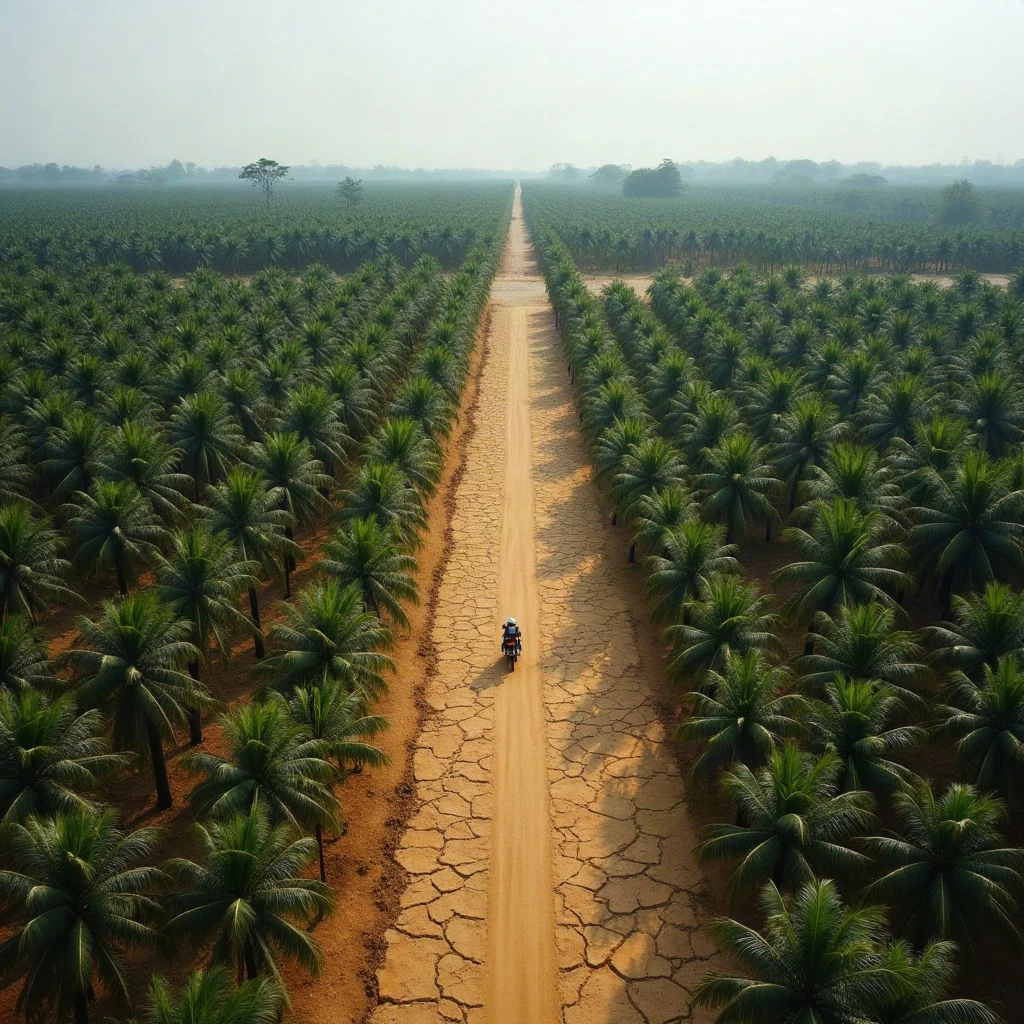
Malaysian crude palm oil futures held steady, with the benchmark at about $1,153/MT (RM 4,663), up 0.1% from the previous session. The market is balancing bearish fundamentals—peak Malaysian production and larger inventories—against weather-driven supply concerns and firm energy prices.
Malaysia's July MPOB data confirmed seasonal pressure: CPO output rose 9.4% month-on-month to 1,792,979 tonnes, while closing stocks climbed 7.2% to 1,429,316 tonnes. Exports were a bright spot, up 14.5% to 1,392,178 tonnes, though imports slumped 51.9%. However, August export data now shows a decline, attributed to weak demand from India, a key buyer. This softness tempers the earlier export optimism and adds to the near-term supply-demand overhang.
Weather remains the key swing factor. ENSO is in El Niño territory (ONI +1.8), with notable dryness in Kalimantan. This has fueled supply concerns across the region, supporting prices despite the near-term glut. Malaysian authorities have offered help to smallholders to mitigate El Niño impacts, while Indonesian producers are bracing for potential output losses.
Gapki projects Indonesia's 2027 palm oil output to drop 2.9%, adding to longer-term supply tightness narratives.
Indonesia's biodiesel push is a major demand pillar. Full implementation of B50 is targeted for October 1, 2026, with national distribution reportedly reaching 80%. The program is projected to save Rp157 trillion in diesel imports. The government is also assessing feedstock supply for a B60 mandate in 2027, and state-linked entities are preparing to supply large volumes of palm oil for biodiesel. However, Gapki has flagged that feedstock supply remains a challenge, and experts emphasize the need for sustainable production and long-term testing to ensure B50's success.
Brent crude held near $95/bbl, keeping biodiesel blending economics broadly supportive. A wide BOPO spread (palm vs. gasoil) further underpins the incentive for biodiesel use.
Indonesia's September reference price rose 1.1% to about $1,008/MT, keeping the export levy at $148/MT. The global benchmark sits at about $1,117/MT, while the Malaysian CPO price trades at a premium.
Weak soybean oil and expectations of higher stocks pressured futures midweek, but El Niño concerns and biodiesel demand have limited downside. The ringgit held near 4.05 per dollar, a factor in export competitiveness.
Our model outlook is balanced-to-slightly-bullish for the near term: CPO is near 52-week highs with a strong BOPO discount, El Niño concerns, and Indonesia's B50 demand providing support, but ample Malaysian stocks, peak production, and a weak rupiah create headwinds. The next MPOB release in about seven days is key event risk; the base case sees modest gains with volatility around the data. The published path shows +1.2% over seven sessions.
Buyers should monitor final August export data from cargo surveyors, any updates on Indonesia's B50 implementation timeline, and weather forecasts for Kalimantan. A deepening El Niño could quickly shift the balance from surplus to scarcity, while any delay in biodiesel uptake would remove a key price floor.
Sources: PASBANA; HaiSawit; Kantor Berita Sawit; Bloomberg Technoz; sarawaktribune.com; SuaraGarut.ID
Full B50 implementation on 1 October 2026 and 80% distribution progress arrive as El Niño debate splits supply views.

Indonesia has scheduled the full B50 biodiesel mandate to begin on 1 October 2026, with reported national distribution already at 80 percent. This gives downstream users and feedstock suppliers a firm date for the next step-up in blending intensity. The distribution figure suggests that much of the logistics and blending infrastructure is already in place, although the final push to full implementation may still require adjustments in procurement and fuel allocation.
Recent reports highlight two strands on crude palm oil availability. On one side, El Niño has been cited as a factor affecting CPO production, and some stakeholders are calling for changes to the existing B50 funding mechanism to address cost or supply pressure. On the other side, the Indonesian Palm Oil Association describes the weather impact as contained and expresses optimism about the industry's ability to manage the 2026 policy. This divergence means buyers should not assume a single supply scenario; they need to track both production estimates and any policy changes on levy or subsidy support.
A specific supply anchor comes from Agrinas, which manages one million hectares of oil palm and states it is ready to deliver 1.5 million tonnes of biodiesel. That volume can help cover part of the incremental feedstock demand created by B50, but it is not a substitute for clear rules around funding and eligibility.
For buyers with renewable fuel obligations, the 1 October 2026 date removes some uncertainty around timing. The distribution milestone of 80 percent also indicates that blending is already happening at scale, which can reduce the risk of sudden supply gaps. However, buyers should monitor several policy and market signposts:
From a compliance perspective, the key question is not just whether B50 starts on schedule but whether feedstock pricing and funding support remain stable enough to avoid last-minute waivers or delays. The industry view is cautiously optimistic, but the funding debate and weather-related CPO concerns suggest that buyers should keep contingency plans for price volatility and potential changes in blending ratios or subsidy structures.
Sources: sawitindonesia.com; Bloomberg Technoz; Bloomberg Technoz; Gabungan Pengusaha Kelapa Sawit Indonesia (GAPKI)
Full B50 implementation targeted Oct 1; B60 assessments underway—policy signals tighten domestic CPO use.
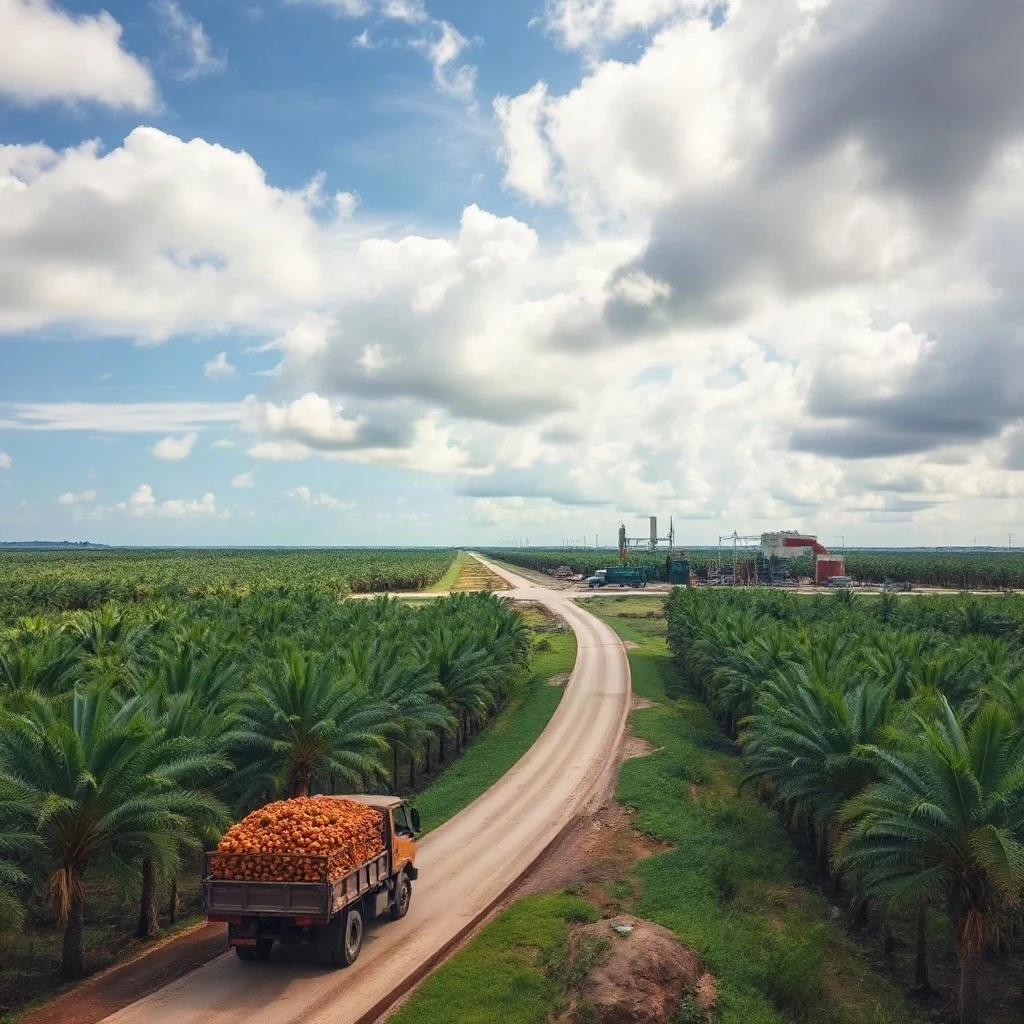
Indonesia is pressing ahead with its biodiesel agenda, with full implementation of the B50 mandate now targeted to begin on October 1, 2026. Reports indicate national distribution has already reached 80 percent, signaling that the government sees the blending program as operationally viable ahead of the formal start date. The move aligns with projections that B50 will save around Rp157 trillion in diesel imports, underscoring the fiscal rationale behind the policy.
The timing of the full B50 rollout coincides with peak Malaysian production and elevated stocks in July, which have kept near-term CPO prices under mild pressure. However, Indonesia's expanding domestic absorption of palm oil for biodiesel is a key counterweight. With the mandate set to consume a growing share of Indonesian supply, export availability from the world's largest producer could tighten, supporting global prices over the medium term.
Market participants are also watching the government's push toward B60, with preparations reportedly underway for a 2027 rollout. Authorities are assessing CPO supply adequacy to ensure feedstock availability for higher blend rates. This forward policy commitment reinforces the structural demand story for palm oil, even as near-term fundamentals remain soft.
Despite the ambitious timeline, questions persist over the funding mechanism for B50. Some policymakers and industry voices have urged a revision of the current financing scheme, particularly as El Niño conditions—with an ONI of +1.8—raise concerns about production shortfalls. Dry weather in parts of Kalimantan could curb output, potentially straining the domestic supply pool needed to meet both food and fuel demand.
A separate development involves Agrinas, which is reported to manage one million hectares of oil palm and is poised to supply 1.5 million tons of biodiesel feedstock. This could ease some supply pressure, though the scale of the B50 and eventual B60 mandates will require sustained investment in both upstream and downstream capacity.
For buyers sourcing palm oil from Indonesia, the policy trajectory means export volumes may face periodic constraints as domestic blending obligations take priority. Compliance-minded purchasers should monitor the October 1 rollout date and any adjustments to the funding scheme, as these will directly influence export availability and pricing. The widening BOPO spread—the gap between biodiesel and diesel prices—also remains a factor, as it affects the economics of blending and the government's willingness to sustain subsidies.
Our model outlook remains mildly negative for near-term CPO, but the structural support from Indonesia's biodiesel push, combined with a strengthening El Niño, could limit downside. With cargo-surveyor export data and Bursa FCPO quotes yet to confirm pace, uncertainty persists. Policy clarity from Jakarta will be key in shaping the next phase of price direction.
Sources: HaiSawit; Kantor Berita Sawit; Bloomberg Technoz; Bloomberg Technoz; BioEnergy Times
A practical guide for procurement managers and first-time buyers separating fact from fiction.
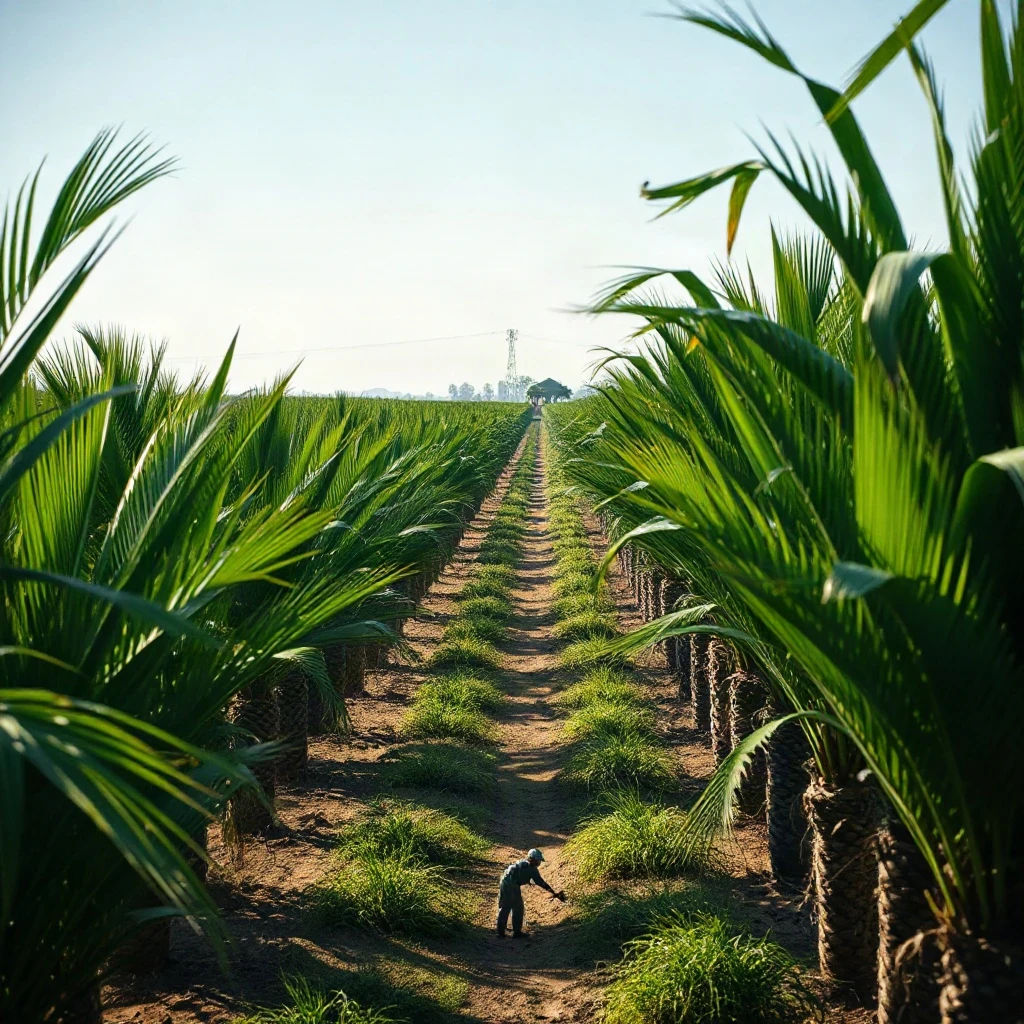
Palm oil is one of the most widely used vegetable oils in the world, yet it is also one of the most misunderstood. For procurement managers and first-time buyers, separating fact from fiction is essential. Here are five common myths, debunked with industry knowledge.
Palm oil is often lumped together with trans fats, but the two are very different. Naturally refined palm oil contains no trans fats. It is rich in vitamin A precursors and tocotrienols, a form of vitamin E. Like all oils, it is high in saturated fat, but its fatty acid profile is balanced, making it a common ingredient in food products worldwide. Moderation is key, as with any dietary fat.
While palm oil is famous for its use in cooking and processed foods, its derivatives appear in a wide range of non-food products. You will find palm-based ingredients in soaps, detergents, cosmetics, candles, and even biofuels. Its versatility and functional properties, such as stability at high temperatures and a smooth texture, make it a preferred choice across many industries.
There is no single "palm oil." The industry produces different types: crude palm oil from the fruit, palm kernel oil from the seed, and various refined, bleached, and deodorized (RBD) products. Each has distinct characteristics and uses. Furthermore, palm oil is grown in different regions, each with its own environmental and social contexts. Buyers can choose from certified sustainable options, which adhere to strict environmental and social criteria.
Palm oil has been linked to deforestation, but it is not the sole or even the primary driver globally. Other commodities like beef, soy, and timber contribute significantly to forest loss. The palm oil industry has made progress in recent years, with many producers committing to zero-deforestation policies. Certification schemes, such as those from the Roundtable on Sustainable Palm Oil (RSPO), help buyers source responsibly. However, challenges remain, and buyers should verify their supply chains.
Critics argue that sustainable palm oil is an oxymoron. Yet, the industry has developed robust standards that address environmental and social issues. Certified sustainable palm oil is produced under strict guidelines that protect high-conservation-value areas, respect workers' rights, and ensure transparency. While no system is perfect, certified sustainable palm oil offers a practical path for buyers to support responsible production.
For procurement professionals, understanding these nuances is critical. By looking beyond the myths, buyers can make informed decisions that balance cost, quality, and sustainability.
Our market desk connects serious buyers with vetted origin suppliers across Southeast Asia. Indicative pricing, specifications and shipment guidance — free of charge.
Get connected →Malaysia’s July stocks rose 7.2%, but El Niño and Indonesia’s B50 rollout are supporting the market near $1,154/MT.
Full story — Page 2 ▸Malaysian CPO benchmark holds near flat as August export data shows softer Indian buying, while El Niño risks and Indonesia's B50 rollout offset peak supply.
Full story — Page 2 ▸Full B50 implementation on 1 October 2026 and 80% distribution progress arrive as El Niño debate splits supply views.
Full story — Page 2 ▸Full B50 implementation targeted Oct 1; B60 assessments underway—policy signals tighten domestic CPO use.
Full story — Page 2 ▸A practical guide for procurement managers and first-time buyers separating fact from fiction.
Full story — Page 2 ▸Malaysian CPO is steady at RM4,664/MT, with BOPO discounts, El Niño supply fears, and Indonesia’s B50 rollout offsetting high July stocks and technical resistance.
Malaysian CPO benchmark trades about $1,154/MT (RM4,664/MT) on 4 September 2026, up 0.1% from the previous session. The World Bank global benchmark sits near $1,117/MT and Indonesia’s reference price is about $1,008/MT. Brent crude is around $96/bbl, down 0.3% on the session, with USD/MYR at about 4.04. The market is holding near the upper end of its recent range, and our model’s published path is roughly flat at +0.1% over seven sessions.
The widest demand-switch lever is the soy-palm spread. At $384/MT, palm oil is heavily discounted to soybean oil, making it the cheapest major edible oil for price-sensitive buyers. Even though weak CBOT soy tempers immediate spillover, the discount is wide enough to keep palm demand sticky and discourages substitution away from palm.
El Niño is intensifying supply concerns. The ONI is at +1.8°C, Kalimantan rainfall is notably dry, and headline warnings such as GAPKI’s Indonesian output-drop warning are underpinning bullish sentiment. The yield impact is lagged, but the fear of future tightness can trigger forward buying and discourage aggressive selling.
Indonesia’s B40-to-B50 rollout is the largest single demand variable. Full B50 is targeted for 1 October 2026, with national distribution reported at 80%. This absorbs roughly 3–4 million tonnes per year. By diverting Indonesian palm oil into domestic biodiesel, it reduces exportable supply and supports Malaysian CPO.
Indonesian export charges are also shifting demand toward Malaysia. The September reference price of $1,008/MT gives a $126 levy plus a separate $148 export duty. Those high total charges squeeze Indonesian exporter margins, making Malaysian cargoes more competitive and potentially shifting demand to Malaysia.
Brent strength and a negative POGO add support. Brent is up 6.4% over seven sessions at about $95.5–96/bbl. With POGO at -$327/t, palm is cheaper than gasoil, which supports discretionary biodiesel blending and keeps palm anchored to energy markets.
The biggest bearish force is peak production and high stocks into the next MPOB release. July CPO production was 1,792,979 tonnes, up 9.4% month-on-month, and closing stocks reached 1,429,316 tonnes, up 7.2% month-on-month. Stocks are 61% above the five-year average and the stocks-to-use ratio is 12.5%, which is ample. The August seasonal path adds another 7% production and 6.7% stocks, and the next MPOB release in about seven days creates downside positioning risk if the data confirm the build.
September seasonal softness is a known headwind. Historically, September averages -0.9% month-on-month because the Malaysian production cycle peaks from July to October. That seasonal pattern makes rallies harder to sustain without a fresh demand surprise.
Technical resistance is also limiting upside. RSI is 67, near overbought, and price is near the $1,170 upper Bollinger band. Momentum z-score is -0.39, suggesting consolidation or pullback risk rather than a clean breakout.
Speculative long crowding in the soyoil complex adds liquidation risk. CFTC managed-money net long is at the 79th percentile, but it fell 9,795 contracts. Crowded longs are vulnerable if soybean oil weakens further, which could spill into palm via fund flows.
Our model outlook is not outright bullish: the near-term path is roughly flat at +0.1% over seven sessions, with missing cargo-surveyor export pace and Bursa FCPO quotes widening uncertainty. But the factor balance is 5 bullish versus 4 bearish, so the upside currently has the upper hand. Supply-side headlines keep a lid on prices, but the demand-side levers—BOPO discount, El Niño, Indonesian B50 uptake, export burden and negative POGO—are strong enough to absorb dips and prevent a sharp breakdown.
For the balance to flip decisively bearish, the next MPOB release would need to show an August stock build above the seasonal +6.7% path, a clear break below the recent Bursa FCPO consolidation range, or a sharp CBOT soy decline that forces speculative long liquidation. To extend the upside, we would need confirmation of faster Indonesian B50 uptake, stronger export pace, or a further widening of the BOPO spread.
Bullish biodiesel economics and a wide soy-palm spread support buyers, but September seasonality and the coming MPOB print cap the rally. Our model sees five bullish factors outwei
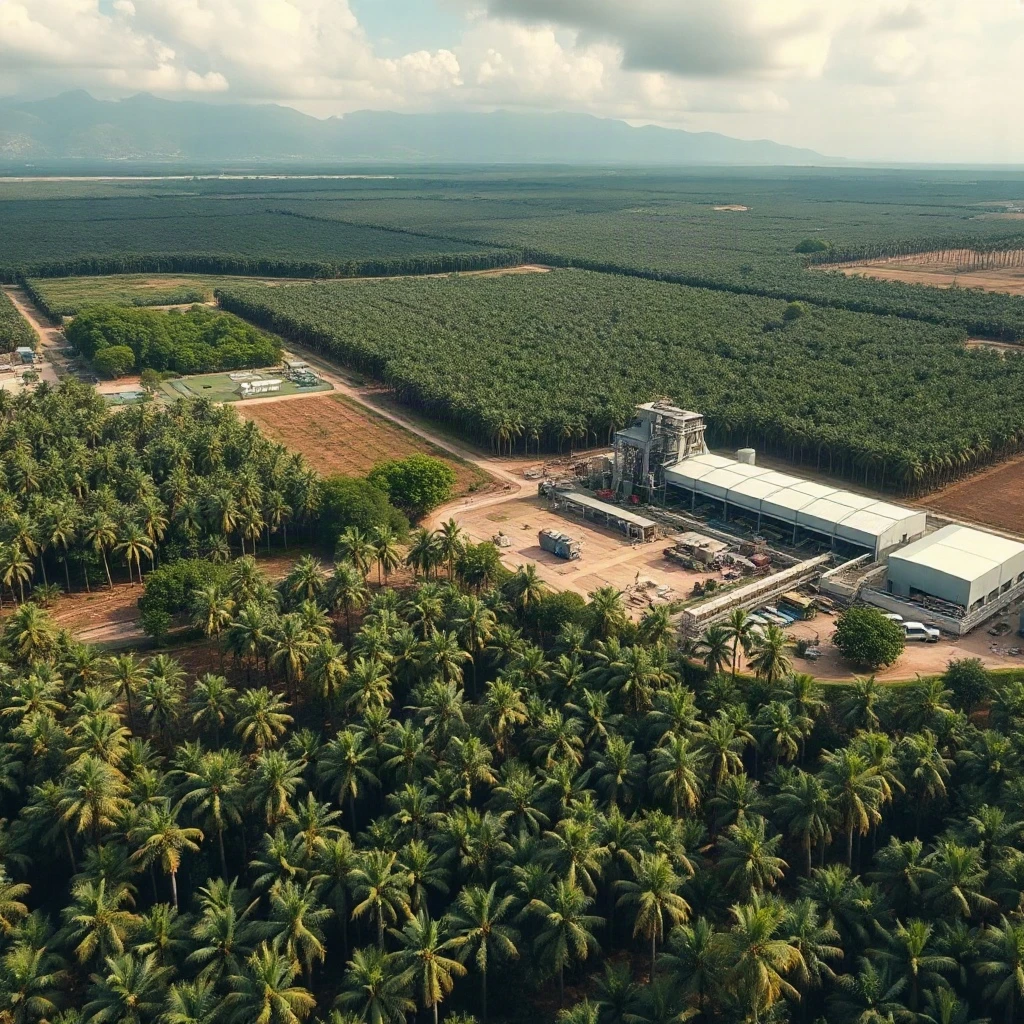
The second is El Niño supply risk. The ONI is +1.4°C, and GAPKI expects 2027 output to fall by up to 3 million tonnes, or 2.9%. Palm has a lagged supply response of 6-12 months, so current El Niño conditions are not a spot supply shortage but a forward supply risk; the market is adding a weather premium now.
The third is the wide soy-palm spread. CBOT soybean oil is around $1,555/MT against CPO at $1,152/MT, leaving the BOPO spread at about $404/MT. Palm is heavily discounted, which encourages buyers to substitute palm for soybean oil and supports demand.
The fourth is biodiesel economics. Brent crude strength, with a seven-day gain of 5.6%, keeps the palm oil-gas oil spread at about -$329/MT, at the 0th percentile. Blending palm-based biodiesel is economic before mandates, and Indonesia's B40 program, with B50 phasing in, adds a structural demand pull on palm oil.
The fifth is technical momentum. RSI is 65, MACD is positive, the 5-day and 20-day SMAs have formed a golden cross, and price is above the 5, 20 and 50-day SMAs. The upper Bollinger band near $1,167 is near resistance, but the trend remains up.
The second is September seasonality and the next MPOB release. September historically averages a 0.9% month-on-month decline in CPO, and the production path one month ahead is +7.0%. With the August MPOB release about eight days away, traders have an event risk that could confirm another stock build.
The third is Indonesian selling pressure tied to the rupiah. USD/IDR is around 17,770. A weaker rupiah lowers Indonesian exporters' costs in dollar terms and makes selling into export markets more attractive, increasing near-term supply and weighing on price. Extreme weakness could eventually trigger export-curbing policy, but for now it is a bearish flow.
The balance would flip if the August MPOB report shows a larger-than-seasonal production ramp or another stock build, if crude and soybean oil reverse lower while BOPO narrows, or if funds begin liquidating the crowded soyoil long at the same time Indonesian export selling intensifies.
Malaysian CPO holds around $1,153/MT as Indonesia's B60 acceleration and El Niño concerns meet higher July MPOB production and stocks.
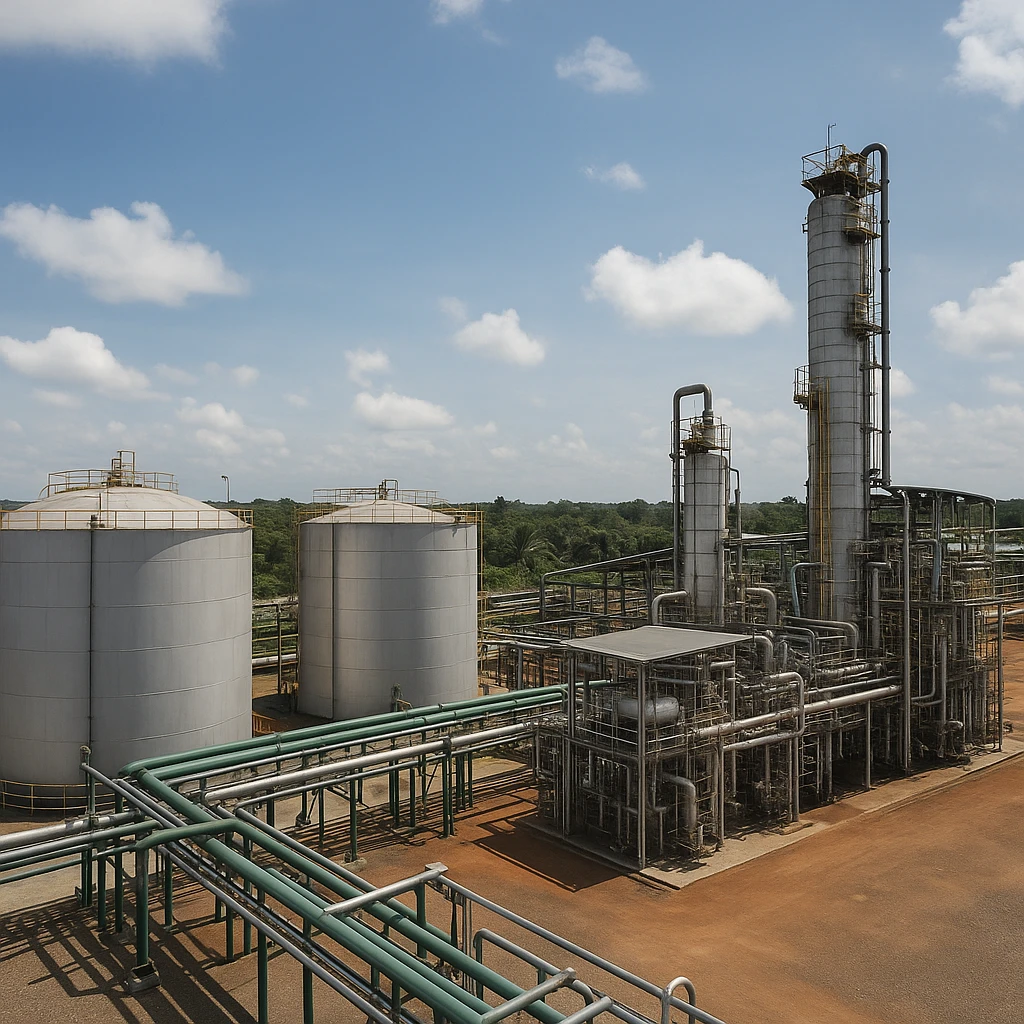
Malaysian CPO benchmark is about $1,153/MT, down 0.2% from the previous session, or RM4,661/MT at USD/MYR around 4.04. The World Bank palm oil benchmark is about $1,117/MT and Indonesia's Kemendag reference is about $1,008/MT. Brent crude is about $95/bbl, down 0.3%, which matters for biodiesel blend economics.
MPOB July 2026 data show Malaysian CPO production at 1,792,979 tonnes, up 9.4% month-on-month, while closing stocks rose 7.2% to 1,429,316 tonnes. Exports grew 14.5% to 1,392,178 tonnes, but imports fell 51.9% to 49,566 tonnes. The stocks-to-use ratio is 12.5%, and the FFB reference rose 1.2% to RM49.50. These are ample July numbers and one reason the market is not surging despite bullish policy signals.
Weather remains a supply-side risk. ENSO is El Niño with ONI +1.4, though rainfall is broadly normal across the belts. GAPKI headlines say El Niño is estimated to press Indonesian production by up to 3 million tonnes, and Indonesia's 2027 palm oil output is projected to drop 2.9% to 56.8 million tonnes. GAPKI also framed El Niño impact as manageable and expressed industry optimism on B50 implementation in 2026. At the same time, Indonesia is consolidating raw materials and technical specifications for accelerated B60 in 2027, while the September CPO reference price and export duty were set higher, with duty at USD148 per MT. MPOC expects CPO prices to stay above MYR4,600 in September amid tightening supply and geopolitical disruptions.
Brent near $95/bbl supports biodiesel blending economics, and Indonesian policy signals add medium-term demand for palm oil. However, the ample July MPOB stocks and soft September seasonality argue against a sharp move. Our model outlook anchors CPO at $1,152/MT (MYR4,658), near a 52-week high, and sees choppy consolidation with modest upside into the August MPOB release; missing cargo-survey and Bursa data widen uncertainty. The published path is +1.2% over seven sessions. That anchors the range near the 52-week high, so buyers should note upside may be gradual rather than abrupt.
Sources: Kantor Berita Sawit; IDX Channel; Gabungan Pengusaha Kelapa Sawit Indonesia (GAPKI); business-standard.com; Pontianak Post; Pontianak Post
Malaysian benchmark holds above $1,150/MT; September reference price up, MPOC sees support above MYR4,600 despite weaker soybean oil.

Malaysian crude palm oil futures held near 52-week highs on Wednesday, with the benchmark contract at about $1,152/MT (MYR 4,660), down 0.2% from the previous session. The global benchmark was around $1,117/MT, while Indonesia's reference price for September 2026 rose to $1,007.51/ton, reflecting tighter supply expectations amid El Niño and the country's B50 biodiesel policy. The ringgit traded near 4.04 per dollar, and Brent crude was about $95/bbl, lending support to biodiesel economics.
Malaysia's July MPOB data showed production at 1.79 million tonnes, up 9.4% month-on-month, while closing stocks rose 7.2% to 1.43 million tonnes. Exports jumped 14.5% to 1.39 million tonnes, but imports fell sharply by 51.9% to just under 50,000 tonnes. The stock build was larger than some expected, yet the market shrugged off the bearish signal as forward supply concerns dominate.
El Niño conditions persist, with the ONI index at +1.4, and rainfall across key belts is broadly normal for now. However, Indonesian producer group GAPKI warns that El Niño could cut output, with 2027 production potentially declining by 2.9% to 56.8 million tonnes. GAPKI is urging accelerated replanting (PSR) to avoid a supply deficit next year, and Malaysian authorities, including KPK and MPOB, are helping smallholders mitigate El Niño impacts.
Indonesia's September 2026 CPO reference price rose to $1,007.51/ton, up from the prior month, aligning with tighter supply expectations driven by El Niño and the B50 biodiesel mandate. The government is also assessing crude palm oil supply for a B60 rollout slated for 2027, consolidating feedstock and technical specifications. Acceleration of biodiesel mandates is seen as a structural demand boost, though some analysts warn of higher costs and potential upward pressure on domestic cooking-oil prices.
CPO futures closed lower today, tracking weaker soybean oil futures in the broader oils complex. Despite this, the Malaysian Palm Oil Council (MPOC) expects prices to stay above MYR 4,600 in September, citing tightening supply and geopolitical disruptions. Crude oil strength above $95/bbl improves the competitiveness of palm-based biodiesel versus fossil diesel, underpinning the bullish policy narrative. Palm oil's discount to soybean oil remains attractive, supporting import demand from key buyers.
Our model outlook sees CPO anchored near $1,152/MT (MYR 4,658) and expects choppy consolidation with modest upside into the August MPOB release. The published path is +0.5% over seven sessions. Missing cargo-survey data and Bursa Malaysia trading updates are widening uncertainty, and the market is sensitive to any shift in weather forecasts or biodiesel policy details.
Takeaway for buyers: The market is balancing near-term ample stocks against a tightening supply outlook and firm energy prices. Watch for August MPOB data, Indonesia's B50/B60 implementation timelines, and any renewed El Niño dryness in the coming weeks—these will set the tone for price direction into Q4.
Sources: sawitindonesia.com; Bloomberg Technoz; Agricom.id; Pontianak Post; Astro Awani; Astro Awani
Indonesian biodiesel mandates and El Niño output risks weigh on supply, lifting CPO price outlook.
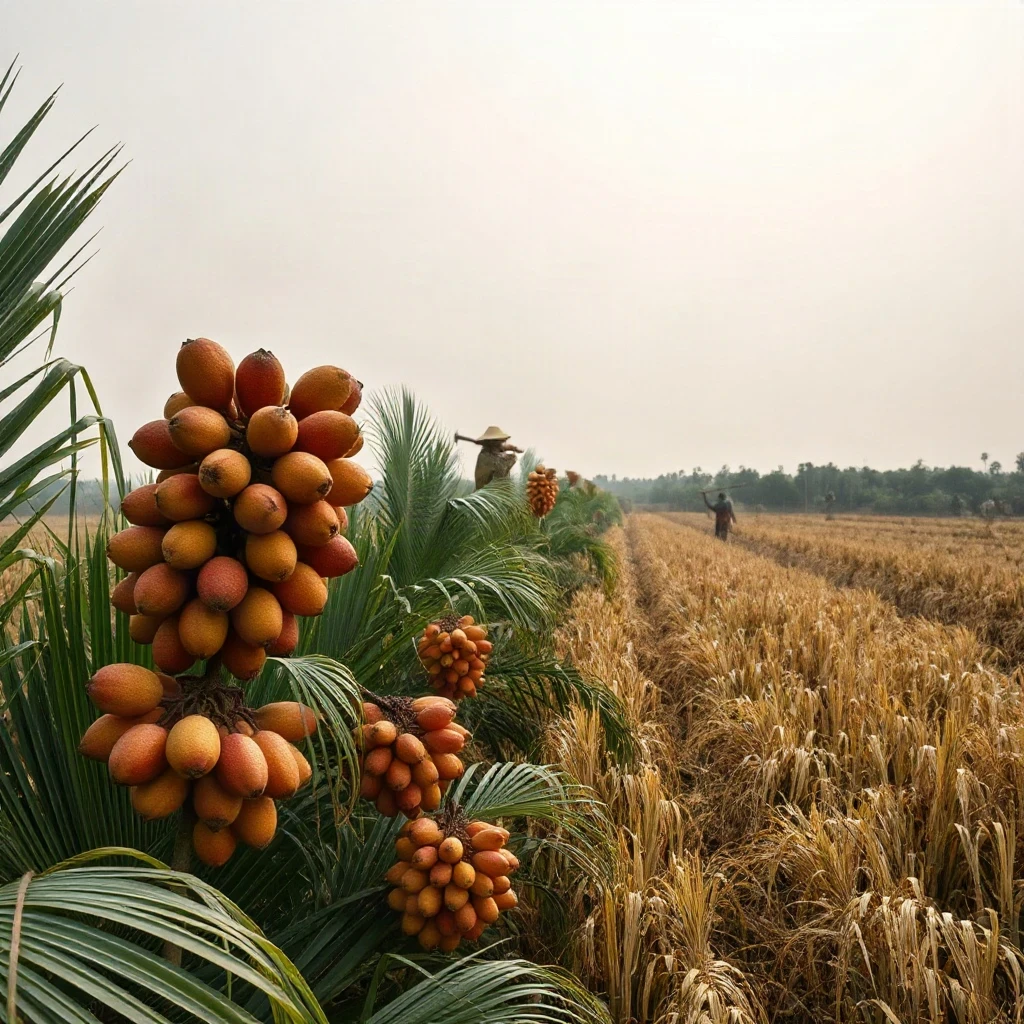
Market attention is shifting to Indonesia's biodiesel policy trajectory and the lingering El Niño, both of which are expected to keep palm oil supply under pressure through 2026 and into 2027. Industry observers in Jakarta and Kuala Lumpur are weighing the impact of these factors on global CPO benchmarks, which have already climbed to near 52-week highs.
The El Niño episode, with an ONI of +1.4, is seen as a key supply-side constraint. According to a report from Pontianak Post, the Indonesian Palm Oil Association (Gapki) estimates that the current El Niño could cut national production by up to 3 million tonnes. While rainfall across the main belts is broadly normal for now, the lagged effect of dry conditions on fruit yields is a primary concern for the second half of 2026.
Gapki remains optimistic that the B50 biodiesel mandate can proceed despite these output risks. However, Bloomberg Technoz notes that higher crude palm oil prices, driven by the El Niño, could raise the cost of the B50 blend and potentially push up domestic fuel prices. This creates a delicate balance for policymakers between supporting the biodiesel program and managing inflation.
Adding to the policy mix, Indonesia is assessing CPO supply availability for a potential B60 biodiesel rollout in 2027, as reported by ANTARA News. A higher blend would significantly increase domestic palm oil consumption, tightening export availability. Industry analysts suggest that the feasibility of B60 will depend on the pace of production recovery and the government's ability to secure adequate feedstock.
For compliance-minded buyers, the combination of El Niño-related supply losses and rising biodiesel mandates signals a structurally tighter market. A report from ICICI Direct expects palm oil prices to remain elevated, citing tight supply and robust biodiesel demand, with potential margin pressure for fast-moving consumer goods companies that rely on palm oil as a key input.
Our model outlook sees CPO anchored near $1,152 per tonne (MYR 4,658), close to its 52-week high. While bullish El Niño and policy signals support prices, ample July MPOB stocks and soft seasonal demand in September could temper gains. We expect choppy consolidation with modest upside into the August MPOB release. Missing cargo-survey and Bursa data add to near-term uncertainty. The published path points to a +1.2% gain over the next seven sessions.
With Indonesia's biodiesel ambitions and El Niño risks converging, market participants should brace for sustained supply-side tightness. The next MPOB data release will be crucial in confirming the production trend and shaping price direction.
Sources: Pontianak Post; Bloomberg Technoz; ANTARA News
ENSO warmth persists with ONI +1.4, yet rainfall is broadly normal across Malaysia and Indonesia; output outlook hinges on lagged yield effects and near-term logistics.
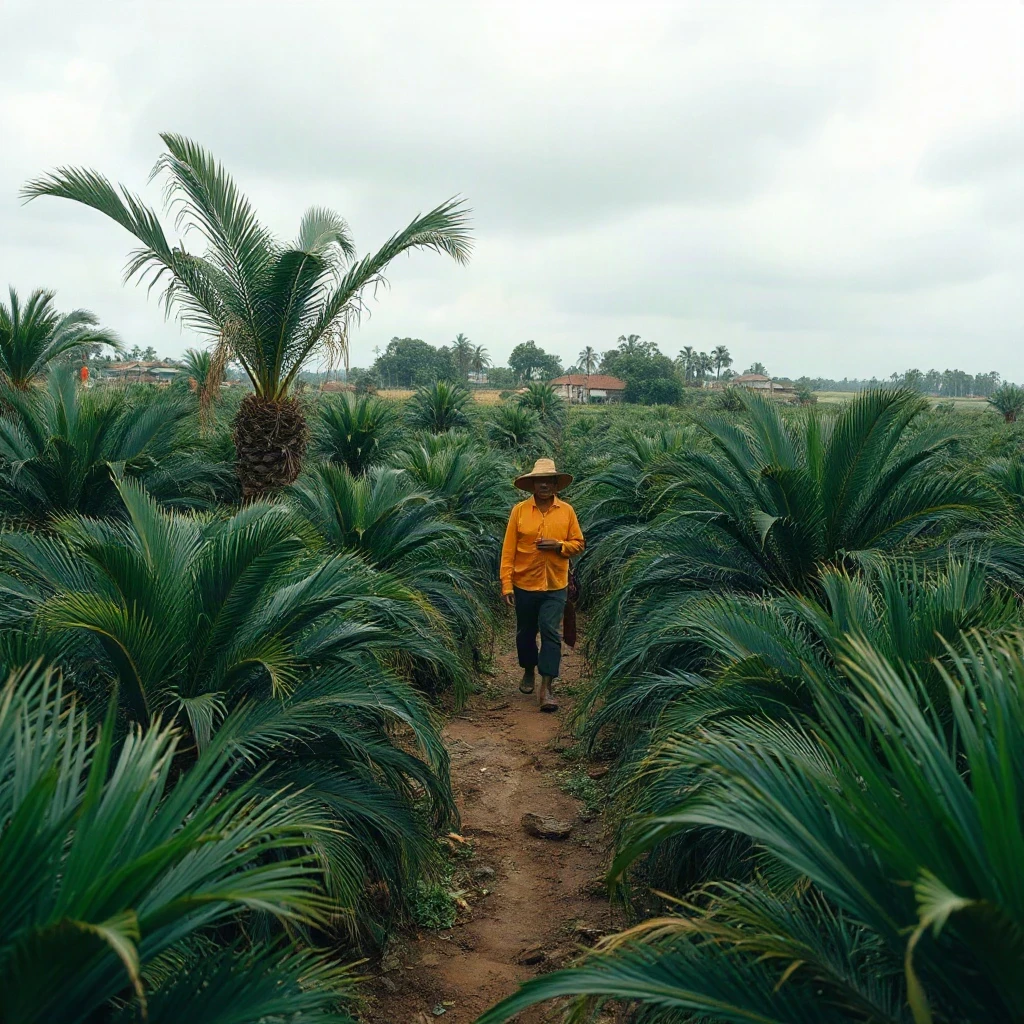
The palm belt enters September with El Niño still firmly in place — the ONI index sits at +1.4 — but seven-day rainfall is broadly normal across both Malaysia and Indonesia. That combination keeps the market's attention split between two very different time horizons: the lagged yield drag from the warm phase and the immediate logistics risk from any heavy rain events.
El Niño's main impact on oil palm is not instantaneous. Drought stress typically shows up in fruit bunch weight and overall FFB output with a six-to-twelve month delay. With ONI at +1.4, the current warm episode has been running long enough that its effects are now feeding through to trees that experienced dry conditions earlier in the cycle. Our model outlook reflects this: CPO is anchored near $1,152/MT, close to a 52-week high, with bullish El Niño signals still supporting prices even as other factors cap gains.
For Malaysia, the July MPOB data already showed production climbing 9.4% month-on-month to 1.79 million tonnes, and closing stocks up 7.2% to 1.43 million tonnes. Those figures capture the current harvest, but they do not yet fully price in the El Niño lag. The months ahead could see lighter fruit bunches as the stress effect matures, even if rainfall now looks adequate.
The seven-day outlook shows no extreme dry or wet anomalies across the main producing regions. That is supportive for ongoing harvest work — workers can access fields, and fruit can move to mills without weather-related delays. But the market is also watching for any shift toward heavier rain. La Niña, which often follows El Niño and brings wetter conditions to Southeast Asia, remains a background risk. Should rains intensify, the immediate effect would be on harvesting and logistics: flooded roads, slower collection, and temporary mill bottlenecks. That kind of disruption hits current supply rather than future yields.
Indonesia's reference price is set at about $1,008/MT, below the global benchmark of roughly $1,117/MT and Malaysia's CPO level near $1,153/MT. The discount partly reflects export levy structures and domestic market obligations. Weather-wise, the Indonesian belt mirrors Malaysia: normal rainfall over the next week, with the same El Niño lagged-yield concern hanging over late-2026 output. Biodiesel economics also matter here — Brent crude near $96/bbl keeps blending incentives relatively firm, which supports domestic absorption and can tighten export availability if policy leans that way.
For the next few weeks, the market's own data points — the August MPOB release, cargo survey numbers, and Bursa Malaysia trades — will matter more than weather. Our model outlook sees choppy consolidation with modest upside into that release, with a published path of +1.2% over seven sessions. Rainfall is not the binding constraint right now. The bigger question is how much of the El Niño yield penalty is already in the price and how much is still to come. Ample July stocks in Malaysia and soft September seasonality argue for caution, while the lagged drought effect and policy signals from Jakarta keep a floor under sentiment. For producers, the near term is about logistics and harvest efficiency; for the market, it is about waiting to see how the dry-season legacy translates into actual bunch weights over the coming months.
A practical look at the agronomic and harvest factors behind palm oil's unmatched land efficiency for procurement teams.
Palm oil's land efficiency is not a marketing claim; it stems from how the oil palm grows, flowers and stores energy. For buyers comparing vegetable oils on a cost-per-tonne or land-footprint basis, understanding this yield advantage helps in sourcing decisions and sustainability conversations.
Mature oil palm plantations in the humid tropics can produce roughly 3 to 5 tonnes of crude palm oil per hectare per year, depending on management, climate and planting material. By contrast, annual oilseed crops typically yield much less oil per hectare: soybeans around 0.4 to 0.5 tonnes, rapeseed about 0.7 to 1.0 tonnes, and sunflower about 0.6 to 0.8 tonnes per hectare per year in average commercial production. This means oil palm often delivers four to ten times more oil from the same land area.
For a procurement manager, the hectare-for-hectare yield gap translates into a smaller land footprint per tonne of oil purchased. This can be a relevant data point when comparing the land-use component of sustainability metrics, though it does not replace due diligence on deforestation, peat or labour practices. It also underpins palm oil's long-run price competitiveness: even with lower prices per tonne, the high output per hectare keeps supply volumes large.
A practical approach is to evaluate oils on an oil-yield-per-hectare basis, not just on raw seed or fruit tonnage. When suppliers quote yields, check whether the figure refers to fresh fruit bunches, crude palm oil or refined oil, because conversion ratios matter. Palm kernel oil is a separate, smaller stream, so asking for the split can clarify total oil output.
Understanding why oil palm out-yields other oil crops helps buyers have more informed conversations with suppliers and sustainability teams about land efficiency, supply reliability and cost structure.
Our market desk connects serious buyers with vetted origin suppliers across Southeast Asia. Indicative pricing, specifications and shipment guidance — free of charge.
Get connected →Malaysian CPO holds around $1,153/MT as Indonesia's B60 acceleration and El Niño concerns meet higher July MPOB production and stocks.
Full story — Page 2 ▸Malaysian benchmark holds above $1,150/MT; September reference price up, MPOC sees support above MYR4,600 despite weaker soybean oil.
Full story — Page 2 ▸Indonesian biodiesel mandates and El Niño output risks weigh on supply, lifting CPO price outlook.
Full story — Page 2 ▸ENSO warmth persists with ONI +1.4, yet rainfall is broadly normal across Malaysia and Indonesia; output outlook hinges on lagged yield effects and near-term logistics.
Full story — Page 2 ▸A practical look at the agronomic and harvest factors behind palm oil's unmatched land efficiency for procurement teams.
Full story — Page 2 ▸Bullish biodiesel economics and a wide soy-palm spread support buyers, but September seasonality and the coming MPOB print cap the rally. Our model sees five bullish factors outwei
The second is El Niño supply risk. The ONI is +1.4°C, and GAPKI expects 2027 output to fall by up to 3 million tonnes, or 2.9%. Palm has a lagged supply response of 6-12 months, so current El Niño conditions are not a spot supply shortage but a forward supply risk; the market is adding a weather premium now.
The third is the wide soy-palm spread. CBOT soybean oil is around $1,555/MT against CPO at $1,152/MT, leaving the BOPO spread at about $404/MT. Palm is heavily discounted, which encourages buyers to substitute palm for soybean oil and supports demand.
The fourth is biodiesel economics. Brent crude strength, with a seven-day gain of 5.6%, keeps the palm oil-gas oil spread at about -$329/MT, at the 0th percentile. Blending palm-based biodiesel is economic before mandates, and Indonesia's B40 program, with B50 phasing in, adds a structural demand pull on palm oil.
The fifth is technical momentum. RSI is 65, MACD is positive, the 5-day and 20-day SMAs have formed a golden cross, and price is above the 5, 20 and 50-day SMAs. The upper Bollinger band near $1,167 is near resistance, but the trend remains up.
The second is September seasonality and the next MPOB release. September historically averages a 0.9% month-on-month decline in CPO, and the production path one month ahead is +7.0%. With the August MPOB release about eight days away, traders have an event risk that could confirm another stock build.
The third is Indonesian selling pressure tied to the rupiah. USD/IDR is around 17,770. A weaker rupiah lowers Indonesian exporters' costs in dollar terms and makes selling into export markets more attractive, increasing near-term supply and weighing on price. Extreme weakness could eventually trigger export-curbing policy, but for now it is a bearish flow.
The balance would flip if the August MPOB report shows a larger-than-seasonal production ramp or another stock build, if crude and soybean oil reverse lower while BOPO narrows, or if funds begin liquidating the crowded soyoil long at the same time Indonesian export selling intensifies.