Palm Oil Holds Near $1,155 as El Niño, B50 Costs Weigh on Outlook
CPO benchmark steadies; MPOC sees prices above MYR 4,600 in September as supply tightens and geopolitical risks persist.
Full story — Page 2 ▸
A new edition every morning at sunrise over Jakarta (today, 05:47 WIB). Pick a front page to read the full paper — every edition is kept in the archive.
Malaysian CPO edges higher, Indonesian reference holds above $1,000, while dry weather and biodiesel policy support prices against a seasonal stock build.
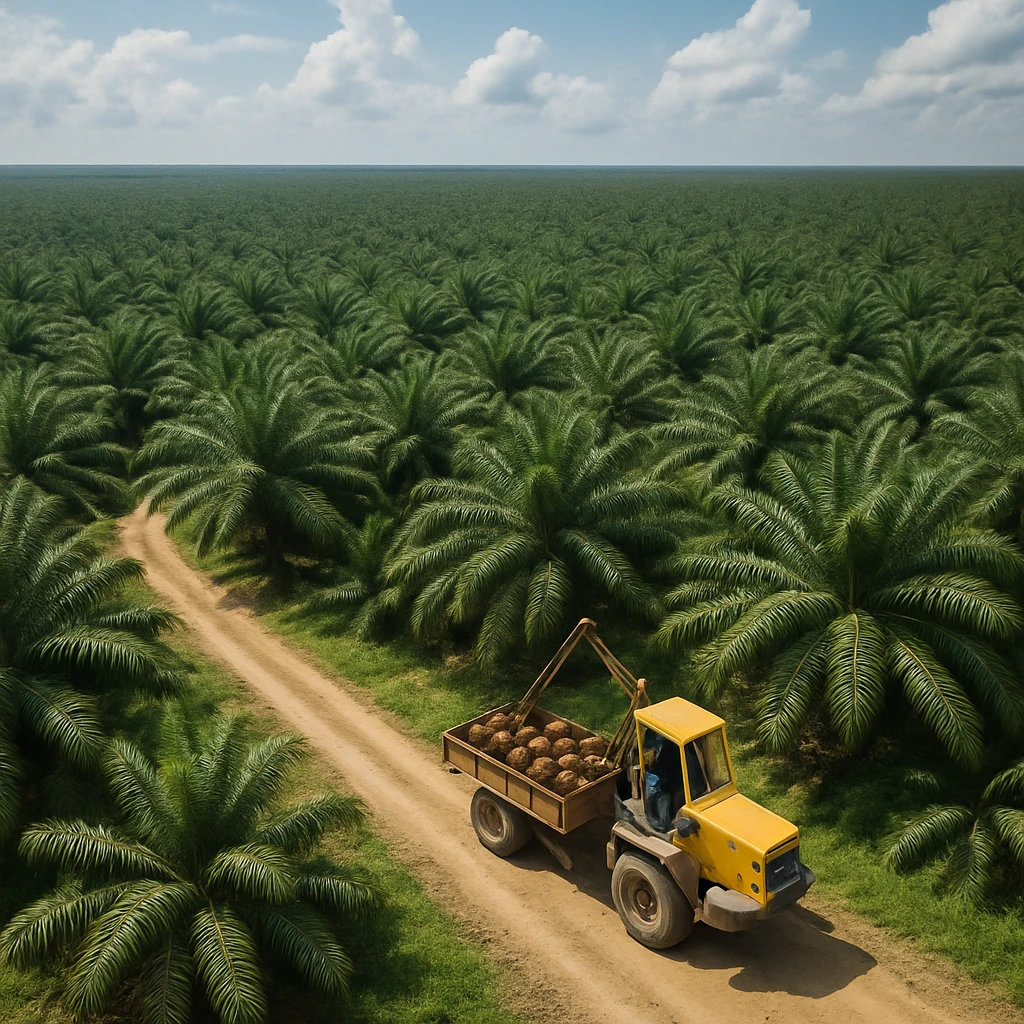
Malaysian benchmark crude palm oil was quoted near $1,146/MT, or about RM4,608/MT, a modest 0.1% rise on the previous session. The World Bank global palm oil benchmark was about $1,101/MT, while Indonesia's September reference price rose by around 1.1% to about $1,008/MT, according to local reports. Brent crude gained 0.2% to roughly $95/bbl, and the ringgit traded near 4.04 per dollar. Indonesia kept its CPO export levy at $148/MT for September.
Malaysia's July production rose 9.4% month-on-month to 1,792,979 tonnes, while closing stocks increased 7.2% to 1,429,316 tonnes. Exports climbed 14.5% to 1,392,178 tonnes and imports fell 51.9% to 49,566 tonnes. The stocks-to-use ratio reached 12.5%, indicating a seasonal supply buffer.
Nevertheless, weather risks are intensifying. The ENSO indicator is at +1.4, consistent with El Niño, and key growing areas in Sumatra/Riau and Kalimantan are described as dry. Industry groups have warned that a severe El Niño could shrink CPO output, and a producer association said Indonesian production may be crimped. Malaysian authorities and MPOB have indicated readiness to help smallholders mitigate the impact.
Indonesia's B50 biodiesel program remains a central demand story. Higher Brent prices improve the financial case for palm-based biodiesel blending. At the same time, experts caution that B50 faces challenges in the upstream plantation sector if production declines. One report cautioned that CPO production could fall to 47.6 million tonnes in 2027, potentially threatening B50. GAPKI reported Indonesian palm oil exports jumped 64% in June 2026, with production and consumption also higher, reflecting firm export interest. Meanwhile, the Malaysian Palm Oil Council was cited as expecting CPO to stay above MYR4,600 in September on tightening supply and geopolitical disruptions.
Our model outlook indicates a modestly bullish near-term bias from a stale anchor and positive El Niño/B50 headlines. Ample July MPOB stocks, typical September seasonal weakness, and a crowded soyoil long position are seen capping upside. The projected path is for CPO to consolidate with an upward drift over the next 7 trading days, with daily volatility near 0.7%. Key risks include faster-than-expected B50 uptake or severe dry weather pushing prices toward $1,180, while profit-taking or weak export demand could test $1,120 support.
Watch Indonesia's B50 implementation pace and rainfall in Sumatra/Riau and Kalimantan. A quicker biodiesel ramp or worsening dryness would tighten supply sentiment, while weak export demand or profit-taking could pressure prices toward support. Track the next Malaysian production and export data and any changes to Indonesian export reference prices or levies.
Sources: DDTCNews; Bisnis.com - Market; bloombergtechnoz.com; Kantor Berita Sawit; Kantor Berita Sawit; BernamaBiz
CPO benchmark steadies; MPOC sees prices above MYR 4,600 in September as supply tightens and geopolitical risks persist.
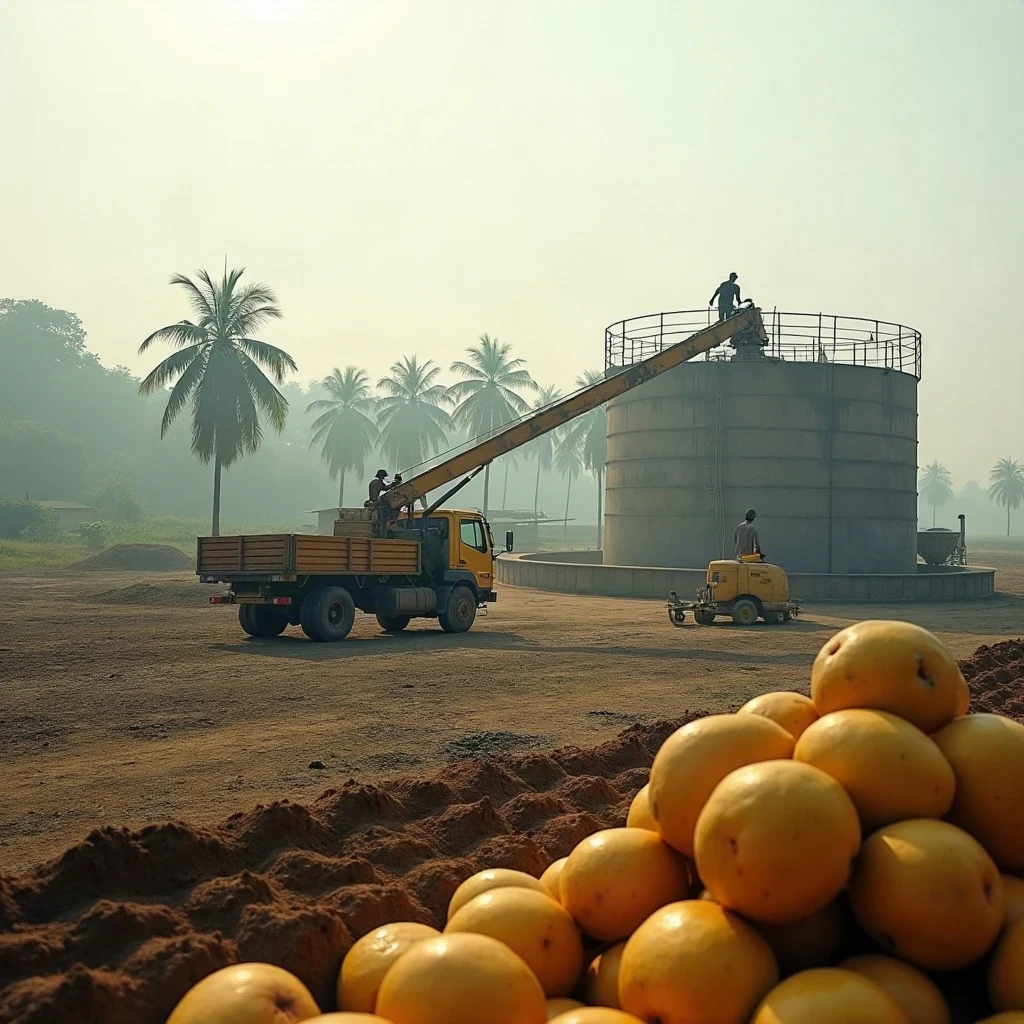
Malaysian crude palm oil futures edged higher on 2 September 2026, with the benchmark contract at about $1,155/MT (RM 4,662), up 0.8% from the previous session. The global World Bank benchmark stood at $1,101/MT, while Indonesia's reference price was around $1,008/MT. Brent crude slipped 0.5% to about $95/bbl, though levels remain supportive of biodiesel blend economics.
MPOB data for July 2026 showed Malaysian CPO production at 1,792,979 tonnes, up 9.4% month-on-month, while closing stocks rose 7.2% to 1,429,316 tonnes. Exports jumped 14.5% to 1,392,178 tonnes, and imports plunged 51.9% to 49,566 tonnes. The FFB reference price edged up 1.2% to RM 49.50.
Despite the stock build, market attention is firmly on the weather. ENSO is in El Niño territory (ONI +1.4), with Sumatra/Riau and Kalimantan experiencing dry conditions. Indonesia's producer group has warned that El Niño will crimp output, adding to concerns over feedstock availability for the country's B50 biodiesel program. Malaysian authorities have offered support to smallholders to mitigate El Niño impacts.
Indonesia's B50 mandate remains a key demand driver, though upstream challenges persist. The country's June export surge of 64% year-on-year, reported by GAPKI, underscores strong overseas demand. Meanwhile, Indonesia's September export levy remains at $148/MT despite a higher reference price, a move that could support farmer margins.
The Malaysian Palm Oil Council (MPOC) expects CPO prices to stay above MYR 4,600 in September, citing tightening supply and geopolitical disruptions. Crude oil strength, rival vegetable oil gains, and geopolitical supply disruptions are providing a floor under palm prices. However, ample July stocks, seasonal September production weakness, and a crowded soyoil long position could limit upside.
Our model outlook suggests a modestly bullish near-term bias, with CPO expected to consolidate and drift upward over the next 7 trading days, with daily volatility around 0.7%. The published path is +2.1% over that period. Risks: faster B50 uptake or severe dry weather could push prices higher; profit-taking or weak export demand could test support levels.
Watch Indonesian weather updates and B50 implementation speed — both are swing factors that could push prices beyond the current range. Also monitor Malaysian export data and China's vegetable oil stocks, as they could cap rallies.
Sources: DDTCNews; Bloomberg Technoz; investor.id; Kantor Berita Sawit; CNBC Indonesia; Astro Awani
Policy watch: Indonesia's B50 mandate collides with El Niño-driven output risks and strong export demand.

Indonesian palm oil policy is entering a critical stretch as the government pushes its B50 biodiesel mandate against a backdrop of El Niño-related dryness in key growing regions. Recent headlines from Indonesian media and industry groups highlight a growing tension: the upstream sector may struggle to supply both the higher biodiesel blend and robust export demand.
El Niño conditions, with an ONI of +1.4, have brought notably dry weather to Sumatra and Kalimantan, the country's main producing islands. Industry reports cited this week warn that crude palm oil production could fall to around 47.6 million tonnes in 2027, a level that would strain domestic commitments. The dry spell raises the risk of lower yields in the coming months, even as Malaysia's July data showed a seasonal uptick in output.
Industry experts, including those from the Indonesian palm oil association ASPEBINDO, have pointed to upstream challenges in meeting B50 targets. These include aging trees, limited replanting, and the logistical complexity of distributing a higher-blend fuel across the archipelago. The mandate, if fully implemented, would redirect a significant share of domestic CPO supply away from export markets.
For compliance-minded buyers, the policy signals are mixed. On one hand, higher biodiesel uptake in Indonesia reduces the volume of palm oil available for export, supporting global prices. On the other, any shortfall in meeting B50 could lead to policy reversals or delays, creating uncertainty for long-term supply contracts.
Our model outlook suggests a modestly bullish near-term bias, driven by the El Niño narrative and positive B50 headlines. However, ample Malaysian stocks and seasonal weakness in September could cap gains. The model expects CPO to consolidate with an upward drift over the next seven trading days, with volatility around 0.7%. Key risks include faster-than-expected B50 uptake or severe dry weather pushing prices toward $1,180 per tonne, while profit-taking or weak export demand could test support at $1,120.
Malaysian benchmark CPO futures traded at about $1,146 per tonne, roughly unchanged from the previous session. The global World Bank benchmark stood at $1,101, while Indonesia's reference price was about $1,008. Brent crude held near $95 per barrel, making biodiesel blends more competitive against fossil diesel and reinforcing the economic case for B50.
For buyers, the immediate takeaway is to monitor Indonesian policy implementation closely. Any slippage in B50 uptake could ease supply tightness, while a faster rollout would tighten the export balance further. The interplay between weather, policy, and global demand will remain the key driver for palm oil prices in the weeks ahead.
Sources: Bloomberg Technoz; CNBC Indonesia; Kantor Berita Sawit; Diskursus Network; ICICI Direct
Malaysian production and stocks rose in July, but dry Sumatra, Kalimantan and El Niño conditions cloud the supply path.

Malaysian crude palm oil futures held near $1,146 per tonne, up 0.1% on the session, with the ringgit at 4.04 per dollar. The market is balancing a firm near-term tone against a supply picture that is more nuanced than headline strength suggests.
Malaysia's July data from MPOB showed CPO output at 1,792,979 tonnes, up 9.4% month-on-month, while closing stocks rose 7.2% to 1,429,316 tonnes. Exports climbed 14.5% to 1,392,178 tonnes, a strong month that helped absorb some of the added supply. Imports fell sharply to 49,566 tonnes, down 51.9% month-on-month, reflecting reduced inter-country flows.
The stock build is notable. Even with robust export demand, inventories expanded, pointing to a market that is not yet tight at the Malaysian level. The FFB reference price rose 1.2% to RM 49.50, a modest gain that suggests upstream returns are improving but not accelerating.
ENSO conditions are firmly in El Niño territory, with an ONI of +1.4. Rainfall anomalies are already visible: Sumatra and Kalimantan are dry, and both are core production zones for Indonesia, the world's largest palm oil producer. Malaysian growing areas are less directly flagged in the current data, but regional dryness tends to spill over.
Dry weather typically curbs yields with a lag of several months. The current trajectory implies that Indonesian output growth could slow into late 2026 and early 2027, while Malaysian production may face similar pressure if dryness persists into the seasonal peak. For now, Malaysia's July numbers show no immediate damage, but the risk is forward-looking.
World palm oil supply remains concentrated. Indonesia and Malaysia together account for roughly 85% of global output. Indonesia's reference price, at about $1,008 per tonne, sits below the Malaysian benchmark and the World Bank's global indicator of around $1,101, reflecting different domestic pricing and export levy structures.
Biodiesel policy is the other major constraint. With Brent crude near $95 per barrel, biodiesel blending economics are more favorable, and Indonesia's push toward higher blends—B50 in particular—could divert more domestic supply away from export markets. That would tighten global availability even if production holds up.
For the supply outlook to turn decisively bearish, Malaysia would need to sustain or beat July's production pace through the seasonal peak, and Indonesia would need normal rains to return quickly. Neither is guaranteed. For a bullish shift, faster B50 implementation or a deepening of dry conditions in Sumatra and Kalimantan could push prices toward $1,180, while profit-taking or weak export demand could test $1,120 support.
Buyers should watch three things: monthly rainfall data for Sumatra and Kalimantan, MPOB's August stocks and production prints, and any official announcements on Indonesian biodiesel mandate timing. Our model outlook sees CPO consolidating with an upward drift over the next seven sessions, with daily volatility near 0.7% and a published path of +1.5% over that period.
A neutral look at the pathogen, detection limits and resistance breeding for oil palm's most costly disease.
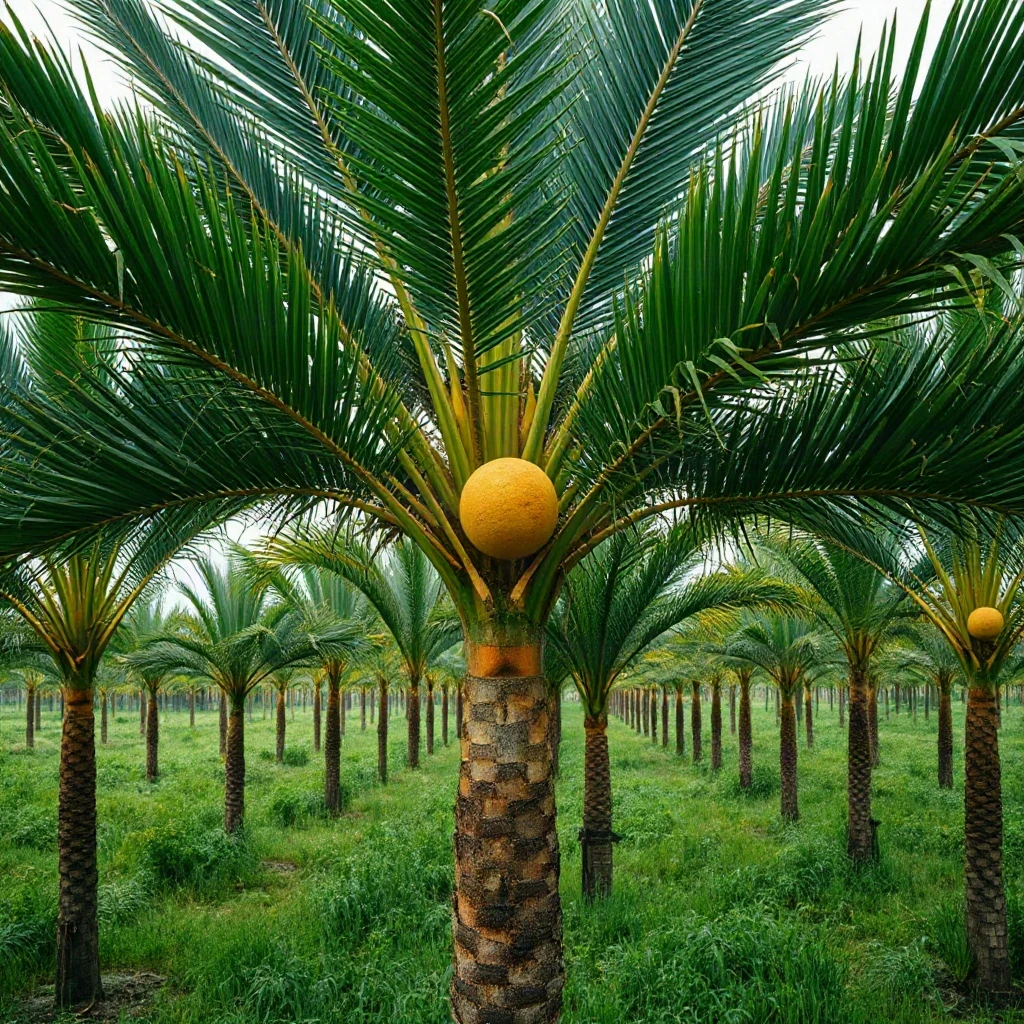
Ganoderma basal stem rot is caused by white-rot fungi of the *Ganoderma* genus, most commonly associated with *Ganoderma boninense* in Southeast Asian oil palm plantings. The fungus is a wood-decayer that colonises the palm's internal tissues, degrading lignin and cellulose and eventually disrupting the vascular system. Infected palms show no reliable external symptoms until the disease is advanced, which is a central problem for management.
Well-established evidence confirms that the pathogen spreads through root-to-root contact between adjacent palms and persists in old palm stumps and root debris left after replanting. Inoculum can remain viable in the soil for years, which explains why disease pressure often rises in second- and third-generation plantings. Beyond that, much of the pathogen's epidemiology is less certain: the relative importance of basidiospore dispersal versus soilborne spread, and the role of different *Ganoderma* species in mixed infections, remain active research questions.
Field detection still relies heavily on visual inspection for symptoms such as unopened spear leaves, yellowing fronds and the formation of fruiting bodies at the palm base. These signs appear late, typically when the internal rot is already extensive, so visual surveys systematically undercount early infections.
Molecular detection methods, including DNA-based assays, can identify the fungus in tissue or soil samples with high sensitivity. However, their practical use is constrained by sampling difficulty: the fungus is unevenly distributed within the palm and in the soil, so a negative sample does not rule out infection. Remote sensing and drone-based imaging are being tested to detect canopy stress, but these methods detect physiological changes that can have many causes, so they are not yet a definitive diagnostic. The state of the art is a combination of visual scouting, targeted molecular testing and spatial mapping of known hotspots, with the honest caveat that no current method reliably finds early infections in a standing crop.
Resistance breeding has produced material with partial tolerance, but no commercially available variety is fully resistant to Ganoderma. Screening trials typically involve artificial inoculation of seedlings, and results from these trials do not always translate to field performance, where inoculum pressure, soil conditions and fungal strain variation interact. There is evidence that some progenies consistently show lower disease incidence, which suggests a genetic component, but the heritability of resistance is not well quantified and the underlying mechanisms are not fully understood.
Industry claims of "Ganoderma-resistant" planting material generally outrun the evidence. What is more accurate is that some crosses show reduced susceptibility under specific conditions, and that tolerance is likely polygenic. No single gene or marker has been validated for reliable marker-assisted selection, and progress is slow because the disease takes years to express in field trials.
For producers, the practical takeaway is that prevention and hygiene remain the most defensible strategy: removing and destroying old stumps, maintaining good drainage and using fallow periods to reduce inoculum. Detection programs should be treated as a tool for slowing spread, not for eliminating the disease, and budgets should reflect that.
For refiners and buyers, the relevance is indirect but real. Ganoderma reduces yield per hectare over a plantation's life and shortens the economic lifespan of affected blocks, which can tighten supply in mature regions. Sustainability certifications increasingly ask about disease management, so credible evidence of monitoring and replanting hygiene matters for market access. The honest summary is that research has clarified the pathogen's basic biology and the limits of current tools, but the gap between what is known and what is needed for reliable early detection and durable resistance remains wide. ---
*This article reflects the position as of 2 September 2026. Research moves on, and later work may revise or supersede what is described here. Please verify the current position, and any changes made after this date, before relying on it.*
A look at the policy-driven shift that reshaped Malaysian agriculture and built the modern palm oil sector.
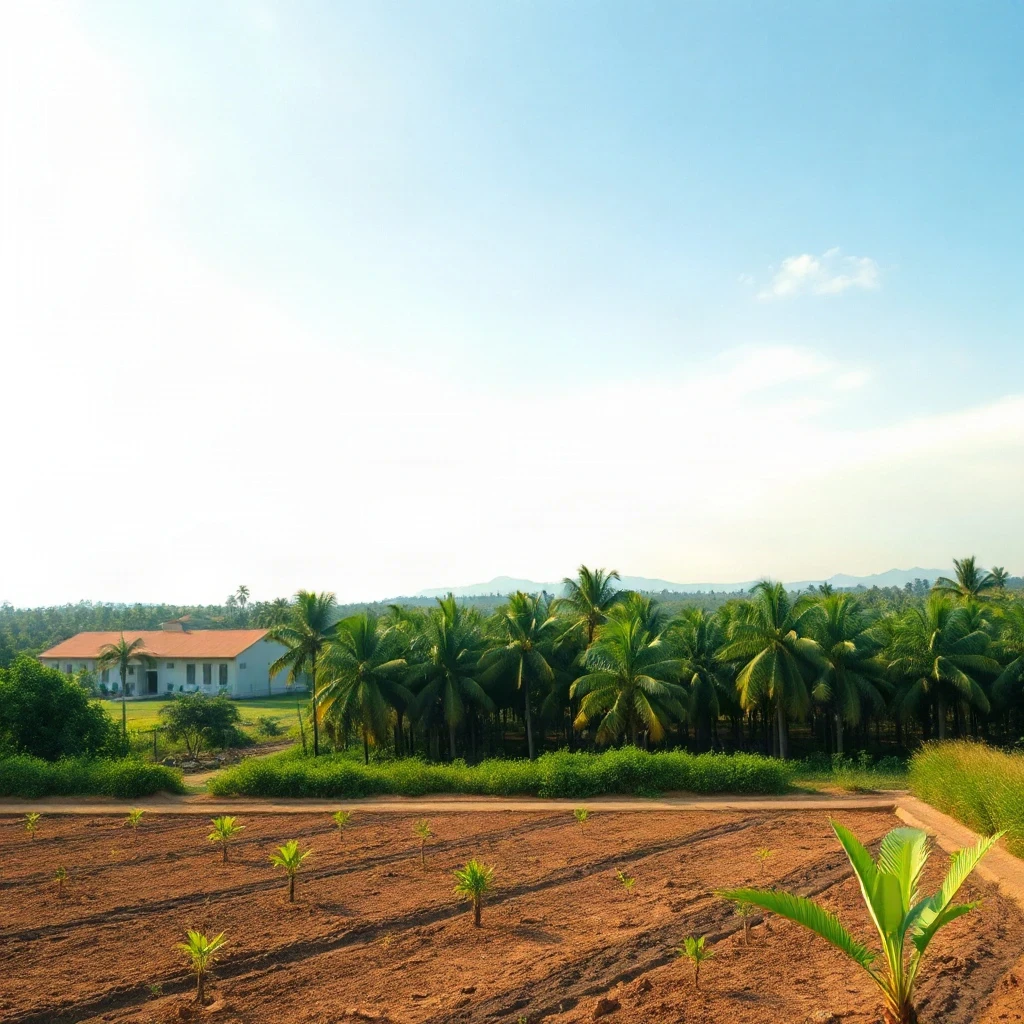
For much of the first half of the 20th century, the Malayan landscape was defined by rubber. The great estates that stretched across the peninsula were planted almost exclusively with Hevea brasiliensis, feeding a global tyre and industrial demand that seemed insatiable. But by the 1960s, that model was showing strain. Low rubber prices, rising production costs, and competition from synthetic rubber and new natural-rubber producers began to erode the economics of the old estate system.
The Malaysian government's response was a deliberate, state-led diversification programme. The key instruments were the Federal Land Development Authority (FELDA) and, later, the Federal Land Consolidation and Rehabilitation Authority (FELCRA). These agencies were tasked with opening new land for smallholder settlement, and crucially, they chose oil palm as the primary crop for many of these schemes. The logic was straightforward: oil palm offered higher and more stable returns per hectare than rubber, and it suited the tropical lowland conditions of the peninsula.
The policy was not merely about replacing one crop with another. It was about restructuring rural society. FELDA schemes were designed to settle landless families on newly cleared land, giving them title to smallholdings within a centrally managed plantation framework. The state provided the capital for land clearing, planting, and the construction of palm oil mills, and the settlers repaid these costs over time from their harvests. This model effectively created a new class of smallholder-planters, integrated into a modern supply chain from the outset.
On the existing private estates, the shift was more gradual but equally profound. As rubber trees aged and became less productive, many estates chose not to replant with rubber but to convert directly to oil palm. This was a commercial decision, encouraged by government incentives and by the demonstrated success of the FELDA schemes. By the late 1970s, oil palm had overtaken rubber as the dominant planted area in Malaysia, a historic reversal that had taken barely two decades to achieve.
This conversion was not without friction. The infrastructure of the rubber industry—smoking sheds, latex collection centres, and the skilled tapping workforce—was not directly transferable. Oil palm required different harvesting techniques, a more intensive use of labour for fruit collection, and the construction of new milling capacity. The transition therefore involved a significant re-skilling of the rural labour force and a major investment in processing facilities.
The policy pivot of the 1960s and 70s did more than change the crop mix. It created the structural template for the modern Malaysian palm oil industry. The FELDA and FELCRA schemes became the backbone of the smallholder sector, which today accounts for a substantial share of national production. The emphasis on integrated plantation-mill complexes, pioneered in those early settlement schemes, remains the standard model for efficient production. And the institutional capacity built to manage land settlement and crop diversification evolved into the regulatory and research bodies that still govern the industry.
In short, the Malaysian palm oil industry is not a natural resource accident. It is the product of a specific, state-directed historical process that converted a struggling rubber economy into a highly productive oil palm economy. Understanding that origin helps explain the industry's structure, its land tenure patterns, and the central role of government-linked agencies—all of which remain defining features of the trade today.
Our market desk connects serious buyers with vetted origin suppliers across Southeast Asia. Indicative pricing, specifications and shipment guidance — free of charge.
Get connected →CPO benchmark steadies; MPOC sees prices above MYR 4,600 in September as supply tightens and geopolitical risks persist.
Full story — Page 2 ▸Policy watch: Indonesia's B50 mandate collides with El Niño-driven output risks and strong export demand.
Full story — Page 2 ▸Malaysian production and stocks rose in July, but dry Sumatra, Kalimantan and El Niño conditions cloud the supply path.
Full story — Page 2 ▸A neutral look at the pathogen, detection limits and resistance breeding for oil palm's most costly disease.
Full story — Page 2 ▸A look at the policy-driven shift that reshaped Malaysian agriculture and built the modern palm oil sector.
Full story — Page 2 ▸Malaysian CPO edges higher, Indonesian reference holds above $1,000, while dry weather and biodiesel policy support prices against a seasonal stock build.
Malaysian benchmark crude palm oil was quoted near $1,146/MT, or about RM4,608/MT, a modest 0.1% rise on the previous session. The World Bank global palm oil benchmark was about $1,101/MT, while Indonesia's September reference price rose by around 1.1% to about $1,008/MT, according to local reports. Brent crude gained 0.2% to roughly $95/bbl, and the ringgit traded near 4.04 per dollar. Indonesia kept its CPO export levy at $148/MT for September.
Malaysia's July production rose 9.4% month-on-month to 1,792,979 tonnes, while closing stocks increased 7.2% to 1,429,316 tonnes. Exports climbed 14.5% to 1,392,178 tonnes and imports fell 51.9% to 49,566 tonnes. The stocks-to-use ratio reached 12.5%, indicating a seasonal supply buffer.
Nevertheless, weather risks are intensifying. The ENSO indicator is at +1.4, consistent with El Niño, and key growing areas in Sumatra/Riau and Kalimantan are described as dry. Industry groups have warned that a severe El Niño could shrink CPO output, and a producer association said Indonesian production may be crimped. Malaysian authorities and MPOB have indicated readiness to help smallholders mitigate the impact.
Indonesia's B50 biodiesel program remains a central demand story. Higher Brent prices improve the financial case for palm-based biodiesel blending. At the same time, experts caution that B50 faces challenges in the upstream plantation sector if production declines. One report cautioned that CPO production could fall to 47.6 million tonnes in 2027, potentially threatening B50. GAPKI reported Indonesian palm oil exports jumped 64% in June 2026, with production and consumption also higher, reflecting firm export interest. Meanwhile, the Malaysian Palm Oil Council was cited as expecting CPO to stay above MYR4,600 in September on tightening supply and geopolitical disruptions.
Our model outlook indicates a modestly bullish near-term bias from a stale anchor and positive El Niño/B50 headlines. Ample July MPOB stocks, typical September seasonal weakness, and a crowded soyoil long position are seen capping upside. The projected path is for CPO to consolidate with an upward drift over the next 7 trading days, with daily volatility near 0.7%. Key risks include faster-than-expected B50 uptake or severe dry weather pushing prices toward $1,180, while profit-taking or weak export demand could test $1,120 support.
Watch Indonesia's B50 implementation pace and rainfall in Sumatra/Riau and Kalimantan. A quicker biodiesel ramp or worsening dryness would tighten supply sentiment, while weak export demand or profit-taking could pressure prices toward support. Track the next Malaysian production and export data and any changes to Indonesian export reference prices or levies.
Malaysian CPO benchmark holds at RM 4,613/MT with weather and biodiesel support battling stock builds and crowded positioning.

Malaysian crude palm oil futures settled near $1,144/MT (RM 4,613) on Sep 1, up a marginal 0.2% from the prior session, as the market digested a mixed fundamental picture. The global World Bank benchmark stood at about $1,101/MT, while Indonesia's Kemendag reference price was set at roughly $997/MT for the month, slightly below the $1,007.51/MT figure flagged in late-August headlines.
The dominant supply narrative remains the strengthening El Niño, with the ONI at +1.4 and notable dryness across Sarawak, Sumatra/Riau and Kalimantan. Producer groups in Indonesia have warned of output crimps, and Malaysian authorities have offered smallholder assistance programs to mitigate the impact. This weather premium helped CPO futures rebound on Aug 28 after a dip on weaker soybean markets the prior day.
However, the latest MPOB data for July 2026 showed Malaysian CPO production at 1,792,979 tonnes, up 9.4% month-on-month, while closing stocks rose 7.2% to 1,429,316 tonnes. Exports were robust at 1,392,178 tonnes (+14.5% MoM), but imports fell sharply to 49,566 tonnes (-51.9% MoM). The FFB reference price edged up 1.2% to RM 49.50. The stock build tempers some of the bullish weather narrative, and the market is watching for August data due in roughly two weeks, which may show another increase.
Indonesia's B50 biodiesel program continues to underpin demand. Headlines indicate the blend has reached 90% of Pertamina fuel stations, and the country is developing D100, a 100% palm-based diesel, as a new energy security tool. This comes alongside projections that CPO prices could average $1,650–1,720/tonne in 2027 as biodiesel uptake rises. Brent crude's 3.6% jump to about $92/bbl strengthens the economics of palm-based fuels, widening the BOPO spread and supporting price floors.
Our model outlook notes the anchor is five days stale (Aug 27 close at $1,143/MT), and the Aug 28 rebound on El Niño concerns suggests current prices may be higher than that reference. The near-term mix is balanced: strengthening El Niño, Indonesian B50 demand, a wide BOPO spread, and MPOC's upbeat September outlook (prices above RM 4,600) are supportive. On the bearish side, ample July stocks, a potential August build, crowded CFTC net long positioning, and weak September seasonality could trigger profit-taking. The base case is mild bullish drift with a range of roughly $1,140–$1,165, with a published path of +1.5% over seven sessions.
Watch the August MPOB data (due ~mid-September) for stock confirmation, monitor El Niño rainfall updates in Sarawak and Kalimantan, and track B50 implementation milestones. A break above $1,165 would signal renewed weather premium; a weak stock report could pressure prices toward the lower end of the range.
Sources: Kantor Berita Sawit; sawitsetara.co; Kantor Berita Sawit; CNBC Indonesia; Astro Awani; Bernama
Indonesian producer group warns El Niño will crimp output; B50 biodiesel now covers 90% of Pertamina stations, reinforcing supply-tightening narrative.

Palm oil markets are firming as El Niño conditions tighten supply expectations, with benchmark Malaysian crude palm oil (CPO) futures closing higher on renewed concerns over dry weather in key growing regions. The Malaysian benchmark settled near $1,144 per metric ton, up 0.2% from the previous session, equivalent to MYR 4,613. Global benchmarks hovered around $1,101, while Indonesia’s reference price stood at about $997.
An Indonesian producer group has warned that El Niño will crimp output, adding to market anxiety as dry conditions persist across Sumatra, Riau, and Kalimantan. These regions are critical to global supply, and any shortfall could tighten availability for buyers, especially as biodiesel blending mandates—such as Indonesia’s B50 program—are expected to increase domestic consumption.
Malaysian authorities, including the Malaysian Palm Oil Board (MPOB) and the Commodities and Plantations Ministry, have signaled readiness to assist smallholders in mitigating El Niño impacts, according to statements reported by Bernama and Astro Awani. This support is seen as a buffer against production losses, though the full effect of the dry spell remains uncertain.
Indonesia’s B50 biodiesel program now reaches 90% of Pertamina fuel stations, according to Jakarta Globe. This expansion underscores the growing domestic appetite for palm oil as a fuel feedstock, which could divert supply away from export markets. With Brent crude near $89 per barrel, higher energy prices also support biodiesel economics, potentially making palm oil more attractive for fuel use.
Industry body MPOC projects CPO prices will stay above MYR 4,600 in September, citing tightening supply and geopolitical disruptions. The recent rebound in CPO futures aligns with that view, as traders price in reduced output expectations.
However, the supply picture is not uniformly tight. MPOB data for July 2026 showed Malaysian CPO production rose 9.4% month-on-month to 1.79 million tons, while closing stocks increased 7.2% to 1.43 million tons. Exports jumped 14.5% to 1.39 million tons, but imports fell sharply by 51.9% to just under 50,000 tons. The stock build offers some cushion against price spikes.
Our model outlook sees CPO consolidating near $1,144 after a late-August pullback, with an upside bias supported by El Niño fears and a wide soy-palm spread. Yet ample Malaysian stocks, peak production, and seasonally soft September demand could limit gains. We expect choppy trade with a slight net gain over the next seven sessions, but confidence is low due to missing cargo-survey data and palm futures figures.
For buyers and traders, the key watchpoint is whether dry weather in Indonesia translates into actual output declines. With Brent crude near $89 per barrel, higher energy prices also support biodiesel economics, potentially diverting more palm oil into fuel use. The market remains sensitive to any news on production or policy shifts.
Sources: cnbcindonesia.com; Astro Awani; BernamaBiz; Bernama; The Edge Singapore; Oils & Fats International
Wide soy-palm discount and biodiesel demand support nearby CPO, but July stock build and peak production cap gains; our model sees a slight net rise over seven sessions.
Malaysian CPO benchmark is consolidating near $1,144/MT, up 0.2% from the previous session and equivalent to about RM4,613/MT. The global World Bank palm oil benchmark sits near $1,101/MT, while Indonesia's reference price is around $997/MT. Brent crude is about $89/bbl, up 0.6%, which matters for biodiesel blend economics. The market is digesting a late-August pullback—Indonesian CPO fell 1.9% in the last week of August—but has not broken down.
El Niño remains the main supply-side support. With ONI at +1.4 and dry conditions reported in Sarawak, Sumatra/Riau and Kalimantan, the market is pricing an eventual 6-12 month yield lag. Repeated GAPKI/MPOC warnings of lower Indonesian output reinforce this, and futures rebounded on El Niño headlines on Aug 28. The demand-side cushion is also real. A soy-palm spread of $454/MT keeps palm heavily discounted to soy oil, encouraging price-sensitive buyers to switch into palm. Indonesia's export policy adds further friction: the August reference price near $997/MT implies a $125/MT levy plus $148/MT progressive duty, and any further rise would curb Indonesian export margins and tighten Malaysian CPO availability. Meanwhile, Brent crude near $89/bbl and POGO at -$175/t, around the 6th percentile, make palm-based biodiesel blending highly economic before mandates, supporting discretionary demand with B40 in force. Technicals have not rolled over: MACD histogram is positive, the 5/20 SMA golden cross is intact, price is above the SMA-5/20/50, and RSI at 63 is not yet overbought.
The most direct weight is Malaysia's July stock build. Closing stocks rose 7.2% MoM to 1,429,316 tonnes, about 61% above the five-year average, while stocks-to-use at 12.5% signals ample cover. July CPO production also rose 9.4% MoM to 1,792,979 tonnes against a 14.5% MoM rise in exports and a 51.9% MoM drop in imports. That build comes as the market enters the Jul-Oct seasonal production peak, and the next MPOB release in roughly 14 days could confirm further inventory accumulation. September is historically a softer month, averaging -0.9% MoM. Speculative positioning adds vulnerability: CFTC soyoil managed-money net long remains elevated at +88,442 contracts but fell 9,795 contracts week-on-week, so crowded long liquidation can ripple through the complex. Finally, the late-August correction—Indonesian CPO down 1.9% in the final week of August—could carry into early September before stabilizing.
Our model's factor balance currently has five bullish factors against four bearish factors, so the upside has the upper hand, but only modestly. The bullish supply threat from El Niño and the wide soy-palm discount are offset by ample Malaysian stocks, peak production, and seasonally soft September. Currency cross-currents are broadly neutral: a weak rupiah around 17,748 per dollar could encourage aggressive Indonesian export selling, while a stronger ringgit near 4.04 lifts USD-quoted CPO but is not a direct input for MYR-denominated physical. Our model outlook expects choppy trade with a slight net gain of about +1.1% over the next seven sessions, but the stale anchor and missing cargo-survey/palm futures data keep confidence low. The balance would flip more clearly bearish if the next cargo survey or MPOB release confirms faster stock accumulation, or if speculative long liquidation extends the late-August correction. It would flip more clearly bullish if Indonesian export policy tightens further or El Niño damage becomes more concrete.
Malaysian CPO benchmark edges up 0.2% to $1,144/MT; MPOB July stocks rise 7.2% MoM to 1.43m tonnes, while El Niño and B50 demand keep upside risk alive.

Malaysian CPO benchmark traded around $1,144 per tonne, equivalent to RM4,613 per tonne, up 0.2% from the previous session. The World Bank palm oil benchmark stood near $1,101 per tonne, and Indonesia's Kemendag reference price was about $997 per tonne. Brent crude rose 0.6% to about $89 per barrel, which matters for biodiesel blending economics, while USD/MYR held near 4.04.
MPOB's July 2026 release shows Malaysian CPO production at 1,792,979 tonnes, up 9.4% month on month, and closing stocks at 1,429,316 tonnes, up 7.2% month on month. Exports rose 14.5% month on month to 1,392,178 tonnes, but imports fell 51.9% to 49,566 tonnes. The stocks-to-use ratio sits at 12.5%. FFB reference price rose 1.2% to RM49.50. This points to peak production and comfortable inventories in Malaysia, even with strong export demand.
El Niño conditions, with ONI at +1.4, have left Sarawak, Sumatra/Riau, and Kalimantan dry. Industry sources warn that severe El Niño conditions could lower Indonesian output and, without faster replanting, Indonesia could face supply shortages next year. GAPKI reported Indonesian palm exports jumped 64% in June 2026, while production and consumption also rose. Indonesia's B50 biodiesel mandate is projected to increase domestic palm oil absorption, changing demand patterns. CPO futures rebounded on El Niño concerns after earlier pressure from weaker soybean futures.
MPOC has said CPO prices should stay above MYR4,600 in September amid tightening supply and geopolitical disruptions. A separate 2027 forecast sees world CPO around $1,650–1,720 per tonne, with B50 projected to increase. Our model outlook has CPO consolidating near $1,144 after the late-August pullback. El Niño supply fears and a wide soy-palm spread support an upside bias, but ample Malaysian stocks, peak production and seasonally soft September limit gains. We expect choppy trade with a slight net gain over the next seven sessions; the published path is +1.1%, but missing cargo-survey and palm futures data keep confidence low.
For buyers, the near-term setup is mixed: ample Malaysian stocks can cap rallies, but El Niño supply fears and rising biodiesel demand may keep the market supported. Watch for early signals of September export weakness or Indonesian policy shifts that could tilt the balance.
Sources: Kantor Berita Sawit; cnbcindonesia.com; Kantor Berita Sawit; Bernama; The Edge Singapore; Oils & Fats International
How Malaysia's progressive CPO export duty and Sabah-Sarawak sales taxes layer onto an exporter's landed cost, and what buyers should track.

For procurement managers sourcing crude palm oil (CPO) from Malaysia, the headline FOB price is only the start. Two layers of producing-country policy—the federal export duty and the state-level sales tax in Sabah and Sarawak—can materially shift the cost of cargoes before they leave port. Understanding how these mechanisms are structured, rather than relying on a single quoted number, is essential to forecasting landed costs.
Malaysia applies an export duty on CPO that is not fixed but moves with the reference price. The duty is calculated on a sliding scale: as the official reference price rises, the duty rate steps up in tranches. Below a certain reference price threshold, the duty is zero—this is the duty-free floor. Above that floor, each band of price triggers a higher percentage rate, up to a maximum cap.
The exact thresholds and rates are set by policy and can be revised, so what matters for a trader is not memorizing today's figures but understanding the shape of the curve. The duty is assessed on the FOB price, and the effective duty per tonne rises as the market price climbs. For an exporter, this means that a rising CPO market automatically increases the tax burden per tonne, narrowing the net margin unless the buyer absorbs the increase.
The process is straightforward: the exporter declares the shipment, the reference price is determined (typically a monthly average of relevant benchmarks), and the applicable duty rate is applied to the FOB value. The duty is paid before export clearance. Because the scale is progressive, a small move in the reference price can push a cargo into a higher band, creating a step-change in duty per tonne—a factor that can catch buyers who only track the flat price.
Beyond the federal duty, the East Malaysian states of Sabah and Sarawak impose their own sales tax on crude palm oil. This is a state-level levy, separate from the federal export duty, and it applies to CPO produced and sold within those states. The rate is set by each state and can vary; it is typically a percentage of the sale price or a fixed amount per tonne.
For an exporter sourcing from Sabah or Sarawak, this state tax is an additional cost that must be factored into the FOB price. It is not always visible in the headline CPO price quoted for Peninsular Malaysia, so a buyer comparing offers from different origins must adjust for the state tax to make an apples-to-apples comparison.
Three things matter for landed cost:
For a trader, the practical implication is that landed cost is a function of three variables: the market price, the federal duty band, and the state tax. A buyer who only watches the CPO futures price can be surprised by a step-up in duty or a state tax hike. Building these policy layers into cost models—and monitoring the reference price and state announcements—reduces that risk.
In short, Malaysia's export tax system is designed to be responsive to price, but that responsiveness cuts both ways: it protects domestic supply when prices are high, but it also means that a rising market carries a rising tax bill for the exporter—and ultimately for the buyer. ---
*This article reflects the position as of 1 September 2026. Duty structures, levies and mandates change often, sometimes at short notice. Please verify the current position, and any changes made after this date, before relying on it.*
Indonesia's B50 expansion and dry weather reshape palm oil balances, pressuring compliance buyers.
Indonesian biodiesel policy and a strengthening El Niño are tightening the near-term palm oil supply-demand picture, with implications for buyers navigating compliance and procurement.
Indonesia's B50 program has reached 90% of Pertamina fuel stations, according to a Jakarta Globe report from Aug 31. The rapid distribution of the higher biodiesel blend supports domestic palm oil consumption and reduces export availability. Market participants expect B50 demand to increase further, with one forecast from Kantor Berita Sawit projecting world CPO prices in 2027 at $1,650–1,720 per tonne, partly on the back of stronger biodiesel uptake.
For compliance-minded buyers, the expansion signals sustained demand from the Indonesian mandate, which may tighten export supplies even as production grows seasonally.
El Niño conditions (ONI +1.4) are bringing dry weather to major producing areas in Indonesia and Malaysia, including Sarawak, Sumatra, Riau, and Kalimantan. Dryness during the current production window can curb yields in the coming months. CNBC Indonesia reported on Aug 31 that El Niño is hitting Indonesian palm oil, though stocks remain adequate for now.
Our model outlook notes that the market has already rebounded on El Niño concerns, and the dry spell reinforces a mildly bullish base case with a range of roughly $1,140–$1,165 per tonne over the near term.
Malaysia's July MPOB data showed CPO production at 1,792,979 tonnes (+9.4% MoM) and closing stocks at 1,429,316 tonnes (+7.2% MoM), indicating ample supply. Exports rose 14.5% to 1,392,178 tonnes, while imports plunged 51.9% to 49,566 tonnes. The stock build may temper price gains, but August data due in about two weeks could show further builds as production peaks.
ICICI Direct (Aug 28) expects prices to rise amid tight supply and biodiesel demand, while flagging margin risks for FMCG companies that rely on palm oil inputs.
Compliance-driven buyers should watch for:
With Brent crude at about $92/bbl (+3.6%), biodiesel economics remain favorable, reinforcing the demand pull. The wide BOPO spread and MPOC's upbeat September outlook add to the bullish sentiment, though crowded net long positions and weak seasonal patterns could trigger profit-taking.
Overall, the market is set for a mild upward drift, with B50 policy and El Niño as key bullish drivers.
Sources: Kantor Berita Sawit; CNBC Indonesia; Jakarta Globe
Our market desk connects serious buyers with vetted origin suppliers across Southeast Asia. Indicative pricing, specifications and shipment guidance — free of charge.
Get connected →Indonesian producer group warns El Niño will crimp output; B50 biodiesel now covers 90% of Pertamina stations, reinforcing supply-tightening narrative.
Full story — Page 2 ▸Wide soy-palm discount and biodiesel demand support nearby CPO, but July stock build and peak production cap gains; our model sees a slight net rise over seven sessions.
Full story — Page 2 ▸Malaysian CPO benchmark edges up 0.2% to $1,144/MT; MPOB July stocks rise 7.2% MoM to 1.43m tonnes, while El Niño and B50 demand keep upside risk alive.
Full story — Page 2 ▸How Malaysia's progressive CPO export duty and Sabah-Sarawak sales taxes layer onto an exporter's landed cost, and what buyers should track.
Full story — Page 2 ▸Indonesia's B50 expansion and dry weather reshape palm oil balances, pressuring compliance buyers.
Full story — Page 2 ▸Malaysian CPO benchmark holds at RM 4,613/MT with weather and biodiesel support battling stock builds and crowded positioning.
Malaysian crude palm oil futures settled near $1,144/MT (RM 4,613) on Sep 1, up a marginal 0.2% from the prior session, as the market digested a mixed fundamental picture. The global World Bank benchmark stood at about $1,101/MT, while Indonesia's Kemendag reference price was set at roughly $997/MT for the month, slightly below the $1,007.51/MT figure flagged in late-August headlines.
The dominant supply narrative remains the strengthening El Niño, with the ONI at +1.4 and notable dryness across Sarawak, Sumatra/Riau and Kalimantan. Producer groups in Indonesia have warned of output crimps, and Malaysian authorities have offered smallholder assistance programs to mitigate the impact. This weather premium helped CPO futures rebound on Aug 28 after a dip on weaker soybean markets the prior day.
However, the latest MPOB data for July 2026 showed Malaysian CPO production at 1,792,979 tonnes, up 9.4% month-on-month, while closing stocks rose 7.2% to 1,429,316 tonnes. Exports were robust at 1,392,178 tonnes (+14.5% MoM), but imports fell sharply to 49,566 tonnes (-51.9% MoM). The FFB reference price edged up 1.2% to RM 49.50. The stock build tempers some of the bullish weather narrative, and the market is watching for August data due in roughly two weeks, which may show another increase.
Indonesia's B50 biodiesel program continues to underpin demand. Headlines indicate the blend has reached 90% of Pertamina fuel stations, and the country is developing D100, a 100% palm-based diesel, as a new energy security tool. This comes alongside projections that CPO prices could average $1,650–1,720/tonne in 2027 as biodiesel uptake rises. Brent crude's 3.6% jump to about $92/bbl strengthens the economics of palm-based fuels, widening the BOPO spread and supporting price floors.
Our model outlook notes the anchor is five days stale (Aug 27 close at $1,143/MT), and the Aug 28 rebound on El Niño concerns suggests current prices may be higher than that reference. The near-term mix is balanced: strengthening El Niño, Indonesian B50 demand, a wide BOPO spread, and MPOC's upbeat September outlook (prices above RM 4,600) are supportive. On the bearish side, ample July stocks, a potential August build, crowded CFTC net long positioning, and weak September seasonality could trigger profit-taking. The base case is mild bullish drift with a range of roughly $1,140–$1,165, with a published path of +1.5% over seven sessions.
Watch the August MPOB data (due ~mid-September) for stock confirmation, monitor El Niño rainfall updates in Sarawak and Kalimantan, and track B50 implementation milestones. A break above $1,165 would signal renewed weather premium; a weak stock report could pressure prices toward the lower end of the range.
Five bullish factors outweigh four bearish in our model, yet July MPOB stocks and peak production keep the upside choppy and capped.

Malaysian CPO is trading near $1,143/MT (RM4,613/MT), up 0.4% from the previous session. Brent is also firmer at about $91/bbl (+0.8%). Malaysia's benchmark remains above the World Bank marker near $1,101/MT and Indonesia's reference near $997/MT. Our model's anchor is four days stale at $1,145/MT, and post-anchor headlines have emphasized El Niño, so the model's base path starts with mild gains. Missing cargo-surveyor and Bursa FCPO data means the daily range is less certain; our model expects choppy moves within about ±0.8%.
The strongest near-term bid is El Niño supply concern. With ONI at +1.4 and producer-group warnings on Aug 28 that Indonesian output will be crimped, buyers are discounting future tightness even though the full oil-palm production impact has a 6–12 month lag. Dry conditions in Sarawak, Sumatra/Riau and Kalimantan reinforce the concern, so headlines are moving daily prices even before actual output damage shows up.
The soy-to-palm spread is the clearest demand mechanism. Soybean oil at $1,564/MT against CPO at $1,143/MT gives palm a $419/MT discount, the widest in recent weeks. That rewards buyers who can substitute palm for bean oil and supports demand switching at the margin.
Technical positioning is also constructive: price is above the 5-, 20- and 50-day moving averages, with a golden cross and a positive MACD histogram, while RSI near 62 is neutral-to-supportive. Biodiesel economics add demand support: the POGO spread is about -$176/MT, in the 6th percentile, meaning palm is cheaper than gasoil and discretionary blending is attractive, especially with Brent near $91/bbl and Indonesia's B40/B50 program in the background. Festival demand is not immediate but building: Diwali is 69 days away and the Indian buying window opens in roughly 20 days, with cooking-oil imports already reported higher for the festive season.
Ample Malaysian supply is the main brake. MPOB July closing stocks rose 7.2% to 1,429,316 tonnes, about 61% above the five-year average, and stocks-to-use sits at 12.5%. That is a comfortable nearby buffer and makes the next MPOB release a bearish risk rather than a bullish one.
Production seasonality compounds the stock build. Malaysia is in its Jul–Oct peak period; July output rose 9.4% month-on-month to 1,792,979 tonnes and the seasonal path implies a further +7.0% one month ahead, so August and September are likely to keep supply pressure on prices.
The weak rupiah adds supply. At USD/IDR 17,735, Indonesian exports are cheaper in dollar terms, which encourages selling and brings more regional palm into the global market. Speculative positioning is another vulnerability: CFTC soyoil managed-money net length remains elevated at +0.8σ, 79th percentile, and fell 9,795 contracts week-on-week; crowded longs are exposed to liquidation risk that can drag the whole vegetable-oil complex lower.
Our model counts five bullish drivers against four bearish ones, so the upside has the upper hand today. It is not an open-ended rally: the market is near its 52-week high and upper Bollinger band, and the ample MPOB stock cover caps the near-term extension. The published path is +1.2% over seven sessions, but the missing cargo-surveyor and FCPO inputs mean the path could be noisier than normal.
For the balance to flip bearish, we would need to see the stock buffer become overwhelming—for example, August production exceeding the +7% seasonal path and stocks building further—and/or a sharp liquidation of the crowded soyoil long position. A rapid narrowing of the palm discount to soybean oil would also remove a key demand pillar. Indonesia's export policy remains a wild card: the August reference price near $997 implies a $125 levy plus $148 export duty, and a higher September reference would lift the levy proportionally and could slow exports, but the weak rupiah is currently offsetting that drag.
Malaysian benchmark CPO trades around RM4,613/MT, up 0.4%, while July MPOB stocks climb 7.2% MoM; El Niño supply risks and Indonesia's B50 mandate keep two-sided pressure.

Malaysia’s benchmark crude palm oil ended the latest session at RM4,613/MT, equivalent to about $1,143/MT and up 0.4% from the previous close. The World Bank global palm benchmark was $1,101/MT, while Indonesia’s Kemendag reference price stood at $997/MT. With USD/MYR around 4.03 and Brent crude near $90/bbl (+0.6%), the vegetable oil complex retains an energy-linked floor.
The July MPOB release showed Malaysia’s CPO production rose 9.4% month on month to 1,792,979 tonnes, with closing stocks up 7.2% to 1,429,316 tonnes. Exports grew 14.5% to 1,392,178 tonnes, but imports dropped 51.9% to 49,566 tonnes. The stocks-to-use ratio reached 12.5%, and the FFB reference price was RM49.50, up 1.2% month on month. The stock build is consistent with seasonal peak output and keeps near-term supply comfortable.
Weather remains the largest wildcard. El Niño conditions continue with an ONI of +1.4, and dry areas are reported in Sarawak, Sumatra/Riau, and Kalimantan. Indonesian producer groups have flagged that El Niño could reduce output, while one projection puts Indonesia’s 2026 production at 50.31 million tonnes. June Indonesian production was 5.28 million tonnes, an 8.59% month-on-month rise, and June exports surged 64% according to GAPKI.
Demand-side support comes from Indonesia’s B50 biodiesel mandate, which is framed by officials as part of energy independence, and from a wide palm–soy discount of $414/MT on BOPO. MPOC reportedly expects Malaysian CPO to hold above MYR4,600 in September on tighter supply and geopolitical disruptions. However, the Indonesian rupiah has weakened despite high rates and a softer US dollar, which may dent some importers’ purchasing power.
Our model outlook sees two-sided risk. The base case is modest upward drift with consolidation around $1,140–$1,180. El Niño supply fears, B50, and the wide discount support CPO near 52-week highs. But July Malaysian stocks sit 61% above the five-year average, seasonal production is peaking, speculative soyoil longs are crowded, and the weak rupiah adds pressure. Confidence is low because the anchor is four days stale and key inputs—Bursa futures, cargo-surveyor export pace, palm-specific positioning—are unavailable. The published path is +1.7% over seven sessions.
For buyers, the near-term signal is mixed: rising Malaysian inventories and peak output point to ample supply, while El Niño damage and Indonesia’s domestic biodiesel demand could tighten availability later. Watch the next export pace, Bursa positioning, and rainfall developments in the dry zones before adjusting coverage.
Sources: Kantor Berita Sawit; InfoSAWIT; HaiSawit; bernama; The Edge Singapore; Oils & Fats International
New reference price supports export levy outlook, while B50 mandate and dry weather tighten supply narrative.

Malaysian crude palm oil futures closed higher on Monday, rebounding on renewed El Niño supply fears, with the benchmark contract trading around $1,143/MT (RM 4,613), up 0.4% from the previous session. Global benchmarks and Indonesia's reference price lag at $1,101/MT and $997/MT respectively, reflecting regional differentials and export taxes. Brent crude eased 1.1% to about $89/bbl, trimming biodiesel blending economics, while the ringgit held near 4.03 per dollar and the rupiah weakened past 17,735 per dollar.
The market remains caught between opposing forces. On the supply side, El Niño conditions (ONI +1.4) have brought dry weather to key growing regions — Sarawak, Sumatra/Riau and Kalimantan — raising concerns about output in the coming months. Indonesia's palm oil producer group GAPKI now predicts domestic CPO production will decline due to El Niño, reinforcing the supply-tightening narrative. The group is urging faster implementation of the smallholder replanting program (PSR, or peremajaan sawit rakyat) to address structural supply challenges and mitigate the impact of adverse weather.
Official data from MPOB for July 2026 shows Malaysian CPO production rose 9.4% month-on-month to 1,792,979 tonnes, while closing stocks climbed 7.2% to 1,429,316 tonnes — a level well above the five-year average. Exports jumped 14.5% to 1,392,178 tonnes, but imports fell sharply by 51.9% to 49,566 tonnes. The stock buildup suggests near-term supply is ample, even as forward-looking weather risks loom.
Demand-side support comes from Indonesia's B50 biodiesel mandate, which is expected to absorb more palm oil domestically, tightening export availability. This policy, combined with El Niño-driven output concerns, strengthens the case for sustained price firmness. Tight supply and robust biodiesel demand are keeping prices elevated, according to market participants. Additionally, the palm–soybean oil discount remains wide, making palm attractive for price-sensitive buyers, particularly in Asia and Africa. However, soybean oil futures fell last week after the U.S. EPA extended the RFS compliance deadline, which could soften competitive pressure on palm.
Indonesia has set its September CPO reference price at $1,007.51 per ton, a key benchmark for export levy calculations. This level, while below the Malaysian benchmark, supports the firm price outlook above MYR 4,600 and may influence levy rates, potentially affecting export competitiveness. The reference price reflects current market dynamics, including tight supply expectations.
Global palm oil prices are expected to surge on a narrow production surplus, with analysts warning of potential food inflation implications for buyers. Wheat, sugar and palm oil prices have all been rising, adding to food inflation concerns. Geopolitical disruptions to vegetable oil supply chains are adding a risk premium, though rising vegetable oil stocks in China and a weak rupiah are bearish counterweights.
The Malaysian Palm Oil Council (MPOC) forecasts CPO prices will stay above MYR 4,600 in September amid tightening supply and geopolitical disruptions. GAPKI's production decline forecast reinforces this outlook. Our model outlook sees modest upward drift with consolidation in the $1,140–$1,180 range, but confidence is low. The anchor is four days stale, and key data such as Bursa futures positioning, cargo-surveyor export pace, and palm-specific speculative flows are unavailable. The market is balancing El Niño supply fears and biodiesel demand against a seasonal production peak and a stock overhang. The published path suggests a +2.1% gain over seven sessions, but the risk is two-sided.
Buyers should monitor upcoming cargo-surveyor export data for August, any further El Niño updates from meteorological agencies, and the pace of Indonesia's B50 implementation and PSR progress. A break above $1,180 could signal a renewed rally, while a failure to hold $1,140 might trigger profit-taking. Also watch the rupiah — further weakness could pressure Indonesian sellers to discount.
Sources: Kantor Berita Sawit; RIAU1.COM; HaiSawit; Astro Awani; BernamaBiz; RiauAktual.com
Sarawak, Sumatra/Riau and Kalimantan stay dry as ONI sits at +1.4; near-term harvest access may hold, but 6–12 month drought stress looms.
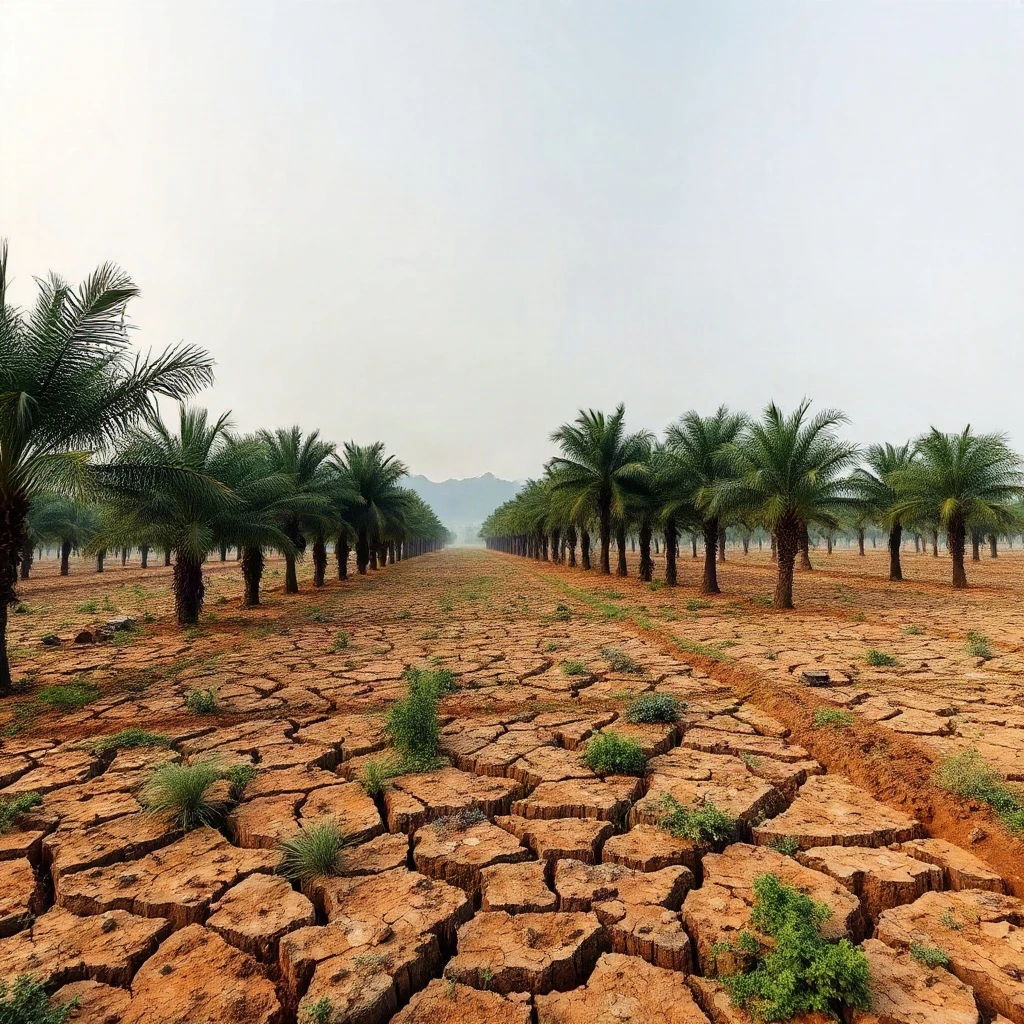
Current ENSO conditions point to El Niño, with the Oceanic Niño Index at +1.4. The notable weather signal is dry: Sarawak, Sumatra/Riau, and Kalimantan are all reported dry. These are core oil palm zones, so the balance between short-term field access and longer-term tree stress matters for the production outlook.
July MPOB data showed CPO production of 1,792,979 tonnes, up 9.4% month-on-month, and palm oil exports of 1,392,178 tonnes, up 14.5% month-on-month, with a stocks-to-use ratio of 12.5%. The published path implies a 1.7% gain over 7 sessions, and our base case sees modest upward drift with consolidation roughly in the $1140–$1180 range, though confidence is low because the anchor is four days stale and key data are unavailable.
Dry conditions persist in Sarawak, Sumatra, Riau and Kalimantan, with El Niño's yield impact still unfolding even as seasonal production peaks.
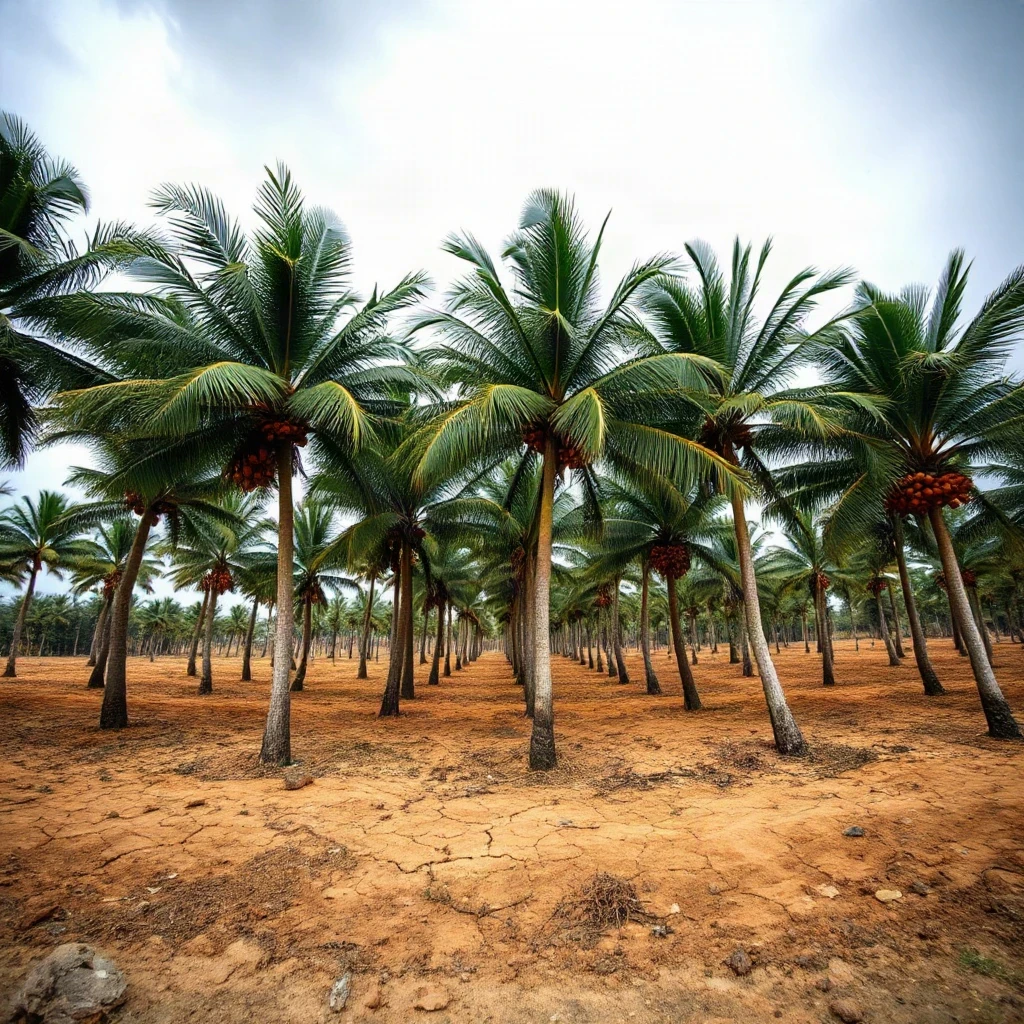
As of late August 2026, the ENSO state remains a firm El Niño, with the Oceanic Niño Index at +1.4. That places the region firmly in a warm-phase pattern that historically brings drier-than-normal conditions to much of maritime Southeast Asia during the current season.
Seven-day rainfall outlooks point to continued dryness across key producing zones. Sarawak on Malaysian Borneo is dry, as are Sumatra's and Riau's growing areas in Indonesia and much of Kalimantan. For estates, the immediate effect is less about moisture stress on trees and more about the absence of rain-related disruption to harvesting and logistics. Dry weather supports field access, fruit collection and mill throughput in the near term.
The more consequential impact is the lagged response to drought. El Niño-driven water stress typically reduces palm fruit bunch weight and overall yield with a six-to-twelve month delay. That means the dry signal embedded in the current ONI reading is not yet fully reflected in fresh fruit bunch output; the pain is likely to show up in late 2026 and into early 2027, depending on how long the current warm phase persists.
For Malaysia, the July 2026 MPOB data show CPO production at 1,792,979 tonnes, up 9.4% month-on-month, and closing stocks at 1,429,316 tonnes, up 7.2%. That suggests the immediate supply picture is still one of seasonal expansion, with output climbing toward its typical peak. The dryness in Sarawak, however, raises the risk that the current upswing is not fully sustained into the final quarter of the year.
In Indonesia, the dry belt across Sumatra, Riau and Kalimantan is a concern for the same lagged reason. These are core producing regions, and prolonged moisture deficits now can trim bunch weights later, even if current harvests remain adequate.
Our model outlook notes that El Niño supply fears, a wide palm–soy discount and Indonesia's B50 biodiesel mandate are supporting prices near 52-week highs. But July stocks rose 7.2% month-on-month to 1.43 million tonnes, about 61% above the five-year average, and seasonal production is still climbing. That creates a two-sided risk: weather-driven supply anxiety versus a well-stocked near-term pipeline.
A transition toward La Niña, which typically brings wetter conditions to Southeast Asia, would ease drought stress but could also disrupt harvesting and logistics through heavy rain. For now, the dry signal dominates, and the market is left weighing immediate output strength against a delayed yield penalty that has yet to materialize in the data.
The current ENSO state points to a tightening supply outlook on a 6-12 month horizon, even as near-term production peaks. Dry weather in Sarawak, Sumatra, Riau and Kalimantan supports field operations now but sets up a potential yield drag later. Traders and millers will watch for any shift in rainfall patterns or ENSO forecasts as the key swing factor for the coming quarters.
How hydrogenation changes palm oil and palm stearin into hard fats and free-flowing powders, and what procurement teams should check.

Hydrogenation is a standard fat-modification process. It adds hydrogen to unsaturated double bonds in vegetable oils using a metal catalyst, heat and pressure. The result is a more saturated fat with a higher melting point and longer oxidative shelf life. Palm oil and its solid fraction, palm stearin, are common feedstocks because they already have a high proportion of saturated fatty acids and need relatively mild hydrogenation to reach hard-fat specifications.
Partial hydrogenation leaves some double bonds but can form trans isomers. Full hydrogenation converts nearly all double bonds and produces a very hard, stable fat with negligible trans content. Buyers should always ask whether a product is fully or partially hydrogenated and request a trans fatty acid value on the certificate of analysis.
Hydrogenated palm oil (HPO) is made from refined, bleached and deodorized palm oil. The process raises its slip melting point and solid fat content, turning the oil into a hard, waxy solid at room temperature. HPO is used as a hardstock in bakery shortenings, margarine blends, non-dairy creamer fats and coating fats. Key purchasing specifications include: - iodine value (low, indicating high saturation) - slip melting point and solid fat content at relevant temperatures - free fatty acids and peroxide value - trans fatty acid content if the product is partially hydrogenated - moisture and impurities
Palm stearin is the solid fraction obtained by fractionating palm oil. It already has a high melting point and high solid fat content. Hydrogenating palm stearin produces an even harder, lower-iodine-value fat with excellent heat stability and a steep melting curve. HPS is often chosen for confectionery coatings, compound chocolate, cookie fillings and hard fats for industrial bakery lines where a crisp snap and resistance to softening are needed.
Because HPS is harder than HPO, substitution is not always direct. A buyer should compare melting profiles and solid fat content curves before replacing one with the other.
Powdered fats are produced by spray chilling or spray cooling molten hydrogenated fat into small, uniform particles. The powder is free-flowing, easy to dose and blends well with dry ingredients. Common uses include cake and bakery premixes, instant soup and sauce bases, non-dairy creamer powders, and dry seasoning blends. Typical checks for powdered fats include: - particle size distribution and bulk density - flowability and resistance to caking - fat content and moisture content - melting point of the fat component - free fatty acid and peroxide values
Request a full certificate of analysis from the supplier and keep retained samples. Store hydrogenated palm products in a cool, dry area away from strong odors and direct sunlight. Powdered fats are sensitive to temperature cycling; repeated melting and resolidifying can cause clumping and uneven performance. Compare packaging options such as cartons, bags or bulk containers based on your handling equipment and usage rate.
Hydrogenated palm products remain workhorse fats where hardness and oxidative stability matter. Asking the right specification questions helps first-time buyers avoid mismatches in melting behaviour, powder flow and trans fat requirements.
Our market desk connects serious buyers with vetted origin suppliers across Southeast Asia. Indicative pricing, specifications and shipment guidance — free of charge.
Get connected →Malaysian benchmark CPO trades around RM4,613/MT, up 0.4%, while July MPOB stocks climb 7.2% MoM; El Niño supply risks and Indonesia's B50 mandate keep two-sided pressure.
Full story — Page 2 ▸New reference price supports export levy outlook, while B50 mandate and dry weather tighten supply narrative.
Full story — Page 2 ▸Sarawak, Sumatra/Riau and Kalimantan stay dry as ONI sits at +1.4; near-term harvest access may hold, but 6–12 month drought stress looms.
Full story — Page 2 ▸Dry conditions persist in Sarawak, Sumatra, Riau and Kalimantan, with El Niño's yield impact still unfolding even as seasonal production peaks.
Full story — Page 2 ▸How hydrogenation changes palm oil and palm stearin into hard fats and free-flowing powders, and what procurement teams should check.
Full story — Page 2 ▸Five bullish factors outweigh four bearish in our model, yet July MPOB stocks and peak production keep the upside choppy and capped.
Malaysian CPO is trading near $1,143/MT (RM4,613/MT), up 0.4% from the previous session. Brent is also firmer at about $91/bbl (+0.8%). Malaysia's benchmark remains above the World Bank marker near $1,101/MT and Indonesia's reference near $997/MT. Our model's anchor is four days stale at $1,145/MT, and post-anchor headlines have emphasized El Niño, so the model's base path starts with mild gains. Missing cargo-surveyor and Bursa FCPO data means the daily range is less certain; our model expects choppy moves within about ±0.8%.
The strongest near-term bid is El Niño supply concern. With ONI at +1.4 and producer-group warnings on Aug 28 that Indonesian output will be crimped, buyers are discounting future tightness even though the full oil-palm production impact has a 6–12 month lag. Dry conditions in Sarawak, Sumatra/Riau and Kalimantan reinforce the concern, so headlines are moving daily prices even before actual output damage shows up.
The soy-to-palm spread is the clearest demand mechanism. Soybean oil at $1,564/MT against CPO at $1,143/MT gives palm a $419/MT discount, the widest in recent weeks. That rewards buyers who can substitute palm for bean oil and supports demand switching at the margin.
Technical positioning is also constructive: price is above the 5-, 20- and 50-day moving averages, with a golden cross and a positive MACD histogram, while RSI near 62 is neutral-to-supportive. Biodiesel economics add demand support: the POGO spread is about -$176/MT, in the 6th percentile, meaning palm is cheaper than gasoil and discretionary blending is attractive, especially with Brent near $91/bbl and Indonesia's B40/B50 program in the background. Festival demand is not immediate but building: Diwali is 69 days away and the Indian buying window opens in roughly 20 days, with cooking-oil imports already reported higher for the festive season.
Ample Malaysian supply is the main brake. MPOB July closing stocks rose 7.2% to 1,429,316 tonnes, about 61% above the five-year average, and stocks-to-use sits at 12.5%. That is a comfortable nearby buffer and makes the next MPOB release a bearish risk rather than a bullish one.
Production seasonality compounds the stock build. Malaysia is in its Jul–Oct peak period; July output rose 9.4% month-on-month to 1,792,979 tonnes and the seasonal path implies a further +7.0% one month ahead, so August and September are likely to keep supply pressure on prices.
The weak rupiah adds supply. At USD/IDR 17,735, Indonesian exports are cheaper in dollar terms, which encourages selling and brings more regional palm into the global market. Speculative positioning is another vulnerability: CFTC soyoil managed-money net length remains elevated at +0.8σ, 79th percentile, and fell 9,795 contracts week-on-week; crowded longs are exposed to liquidation risk that can drag the whole vegetable-oil complex lower.
Our model counts five bullish drivers against four bearish ones, so the upside has the upper hand today. It is not an open-ended rally: the market is near its 52-week high and upper Bollinger band, and the ample MPOB stock cover caps the near-term extension. The published path is +1.2% over seven sessions, but the missing cargo-surveyor and FCPO inputs mean the path could be noisier than normal.
For the balance to flip bearish, we would need to see the stock buffer become overwhelming—for example, August production exceeding the +7% seasonal path and stocks building further—and/or a sharp liquidation of the crowded soyoil long position. A rapid narrowing of the palm discount to soybean oil would also remove a key demand pillar. Indonesia's export policy remains a wild card: the August reference price near $997 implies a $125 levy plus $148 export duty, and a higher September reference would lift the levy proportionally and could slow exports, but the weak rupiah is currently offsetting that drag.
Malaysian CPO edges higher, but our model's balance of factors tilts lower: 4 bullish drivers face 6 bearish ones, with El Niño, B50 and the BOPO spread offset by July stockbuild,
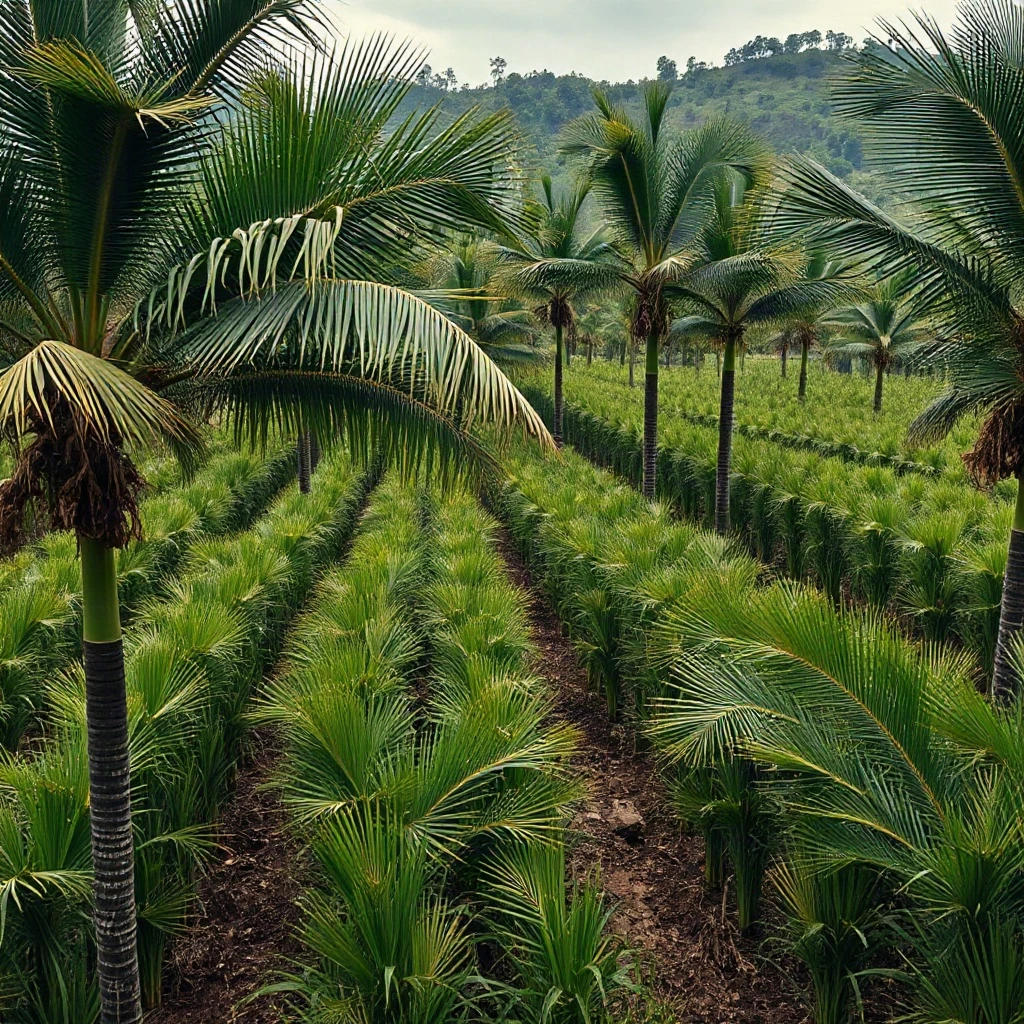
The Indonesia B50 mandate is also a structural demand support. The B40-to-B50 rollout is running smoothly and storage expansion is underway. By absorbing an estimated 3-4 million tonnes per year of palm oil for biodiesel, the policy reduces the amount available for export and food, supporting prices through a tighter supply-demand balance.
The wide BOPO spread keeps palm cheap. Soybean oil trades at a $422/MT premium over palm. That discount encourages buyers to switch from soybean oil to palm in both food and industrial uses, cushioning palm even when supply data are soft.
Finally, the technical uptrend remains intact. The 5/20 SMA golden cross, positive MACD and RSI at 62 keep trend-following flows in the market. Price is above rising SMAs but near the upper Bollinger band, which supports momentum in the short term while leaving it stretched.
September seasonal softness is another drag. Historically September averages minus 0.9% month on month, and Malaysian production usually peaks between July and October. With peak output still arriving, buyers know more supply is coming and tend to hold off, reducing near-term demand.
Crowded speculative longs in soybean oil add a complex-wide risk. CFTC managed money net long positioning is at the 79th percentile but fell by 9,795 contracts week on week. When a complex is crowded long, a small negative catalyst can trigger liquidation; because soybean oil and palm oil are substitutes, selling in soyoil spills over into palm.
Brent crude's decline also matters. Brent fell 5.8% over the last seven days to $88.1/bbl, leaving the energy z-score at about -0.95. Lower petroleum diesel prices weaken the relative economics of biodiesel blending, softening one demand pillar for vegetable oils.
A weak Indonesian rupiah, at USD/IDR 17,696, adds regional supply pressure. A weak rupiah makes Indonesian CPO cheaper in dollar terms, encouraging Indonesian exporters to sell aggressively and compete with Malaysian cargoes.
Finally, the market is positioning for the next MPOB release, due in about 14 days. With traders expecting a continued August stockbuild, buying is cautious and rallies tend to be capped.
For the balance to flip back to bullish, the bearish factors would need to weaken. The clearest trigger would be August MPOB data showing a smaller stockbuild or a draw, rather than another build. A normalization of speculative soyoil positioning after liquidation would reduce cross-market risk. A recovery in Brent crude, a stronger Indonesian rupiah, or a slowdown in Indonesian export selling would each remove a bearish input. On the bullish side, fresh evidence that El Niño is actually cutting Indonesian output, or a larger-than-expected B50 demand pull, would strengthen the supply-tightening case. Until then, our model says the downside has the upper hand.
Malaysian CPO edges to $1,143/MT; MPOB July stocks and production rise, but dry weather and B50 demand keep bias slightly positive.
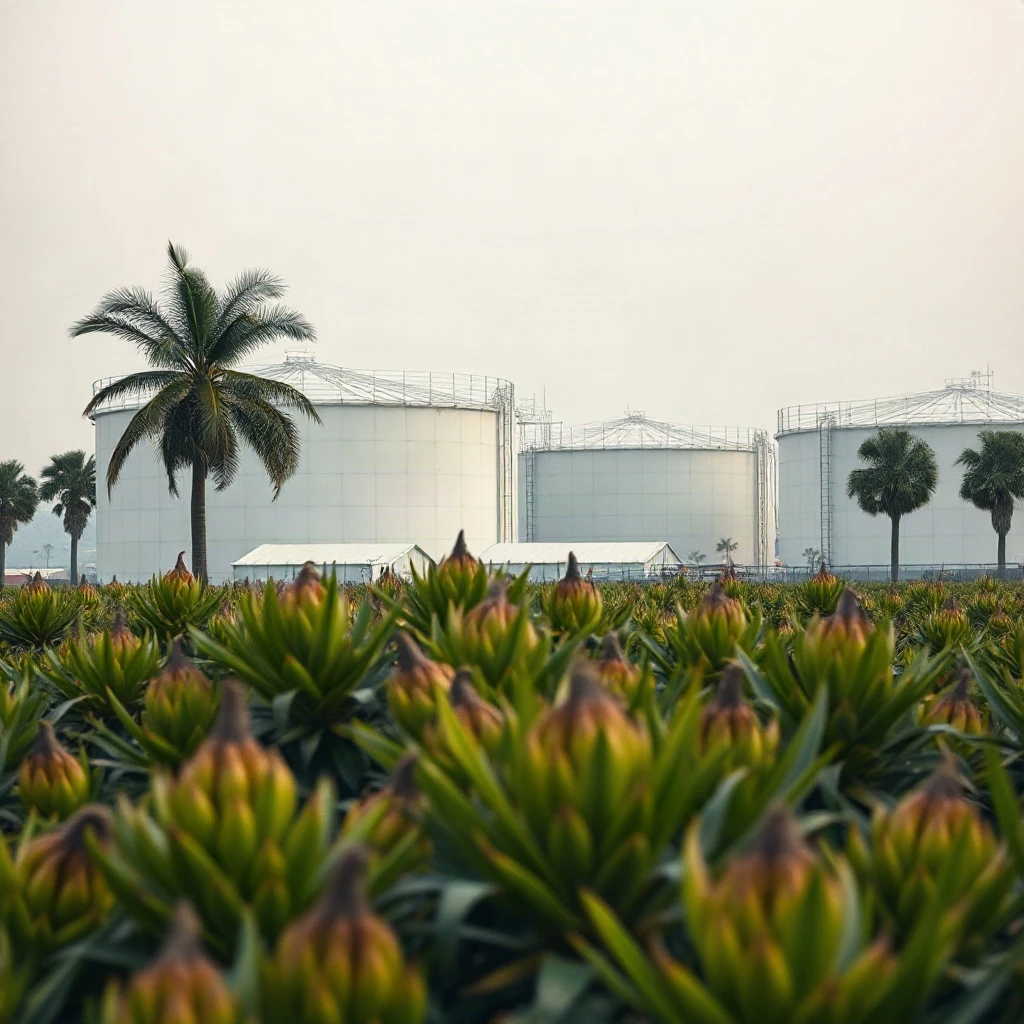
Malaysian CPO benchmark edged up 0.4% to about $1,143 per tonne, or RM4,613 per tonne, keeping its premium over the World Bank palm oil benchmark near $1,101 and Indonesia’s Kemendag reference around $997. Brent crude was flat at roughly $88 a barrel, while the ringgit hovered near 4.03 to the dollar. That leaves the biodiesel feedstock spread wide enough to support discretionary demand from Indonesian and Malaysian blenders, although soy oil positioning is crowded and could trigger spillover selling.
The latest MPOB July data lean bearish on the surface. Malaysian production climbed 9.4% month-on-month to 1,792,979 tonnes, closing stocks rose 7.2% to 1,429,316 tonnes, and exports jumped 14.5% to 1,392,178 tonnes while imports dropped 51.9% to 49,566 tonnes. FFB reference price ticked up 1.2% to RM49.50 per tonne and the stocks-to-use ratio printed at 12.5%. Indonesian June output also rose 8.59% to 5.28 million tonnes, and GAPKI reported that Indonesian palm exports surged 64% in June, adding to near-term availability. Yet the market is looking beyond this seasonal stockbuild.
That forward view is dominated by El Niño. With ONI at +1.4 and dry conditions reported in Sarawak and Kalimantan, producer groups caution that 2027 output could be clipped. GAPKI is urging faster replanting of smallholder areas, while MPOC has said prices should remain above RM4,600 in September because of tightening supply and geopolitical disruptions. On the demand side, B50 biodiesel promotion continues to widen the domestic offtake story in Indonesia, and CPO futures have reacted positively to these weather-related supply worries even as soybean futures occasionally drag the complex lower. A rebound in CPO futures on El Niño concerns underscores the market’s sensitivity to rainfall headlines.
Our model outlook sees a choppy, slightly positive bias over the next seven days, with a published path of +1.4%. The technical uptrend is intact but CPO sits near its upper Bollinger band, and crowded soyoil positioning raises the risk of a short-term correction. A wide BOPO spread and repeated supply warnings should limit downside, while the July stockbuild and seasonal September softness cap the upside. In that range, pullbacks are likely to be shallow but not completely absent.
For buyers, the near-term triggers are rainfall updates in Sarawak and Kalimantan, any escalation or delay in B50 implementation, movements in soybean oil and Brent, and whether CPO can hold above the RM4,600 area without a corrective flush.
Sources: HaiSawit; RiauAktual.com; VOI.ID; bernama; The Edge Malaysia; Oils & Fats International
Malaysian CPO edges up 0.4% to $1,143/MT; authorities ready smallholder help, industry warns severe El Niño could shrink output.
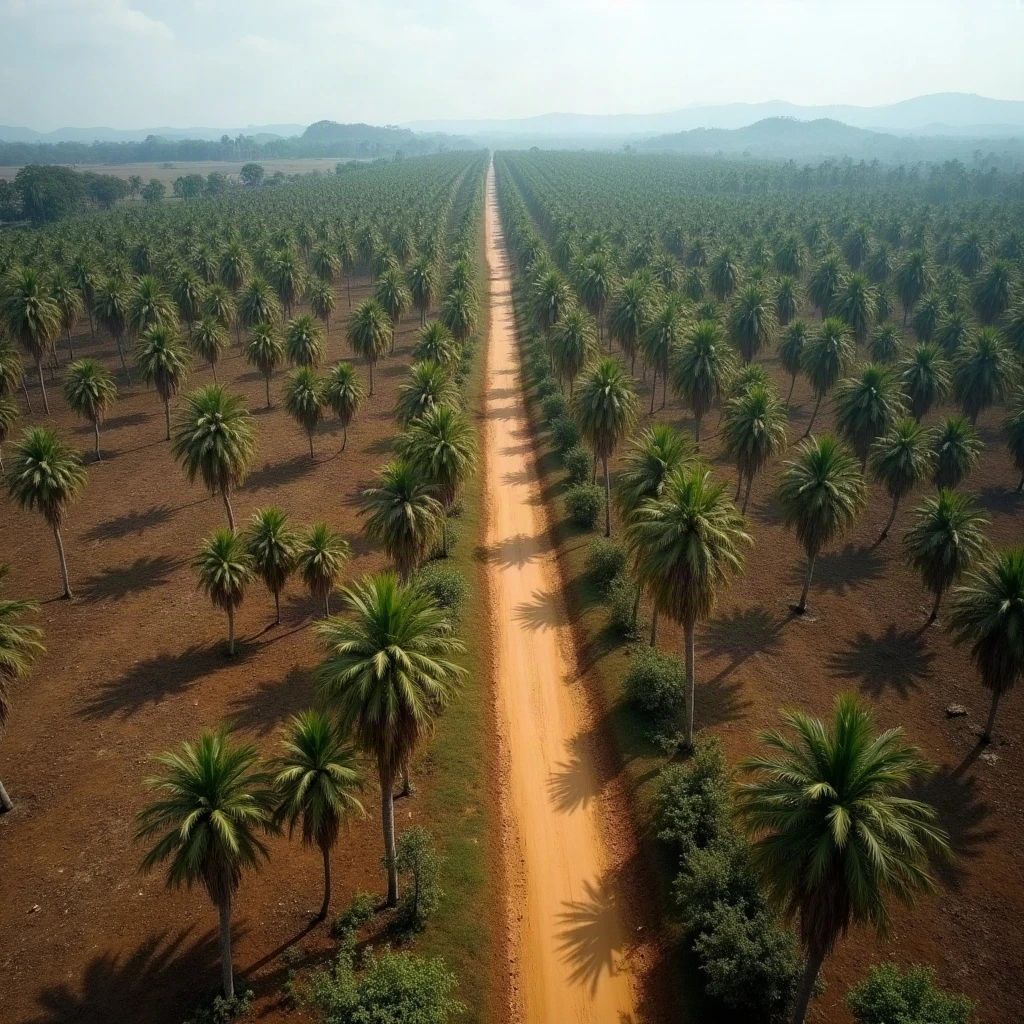
Malaysian crude palm oil futures edged up 0.4% to about $1,143/MT (RM 4,613) on Friday, holding near recent highs as El Niño-driven supply concerns and biodiesel demand offset fresh bearish stock data. The global benchmark sits near $1,101/MT, while Indonesia's reference price is $997/MT. Brent crude held at $88/bbl, keeping biodiesel blending economics supportive.
Indonesian and Malaysian authorities are stepping up support for smallholders facing El Niño. The Malaysian Palm Oil Board (MPOB) and the Malaysian Anti-Corruption Commission (KPK) are ready to help smallholders mitigate the impact, according to Plantation and Commodities Minister Noraini. This follows an industry warning that a severe El Niño could shrink crude palm oil output, adding concrete supply-side confirmation to the fears underpinning today's gains.
The current El Niño (ONI +1.4) is curtailing rainfall in key growing regions of Sarawak and Kalimantan, where dryness persists. The authorities' assistance programs—likely including replanting support and best-practice guidance—aim to buffer production losses. This aligns with earlier statements about the risk of a production deficit next year if replanting is not accelerated.
Malaysia's MPOB data for July 2026 showed stockpiles rose 7.2% month-on-month to 1,429,316 tonnes, a modest build that nonetheless adds to near-term bearish pressure. Production climbed 9.4% month-on-month to 1,792,979 tonnes, while exports jumped 14.5% to 1,392,178 tonnes. Imports fell sharply by 51.9% to 49,566 tonnes. The stock increase is a headwind, but the market is looking past it toward tightening supply.
Indonesia's B50 biodiesel program continues to expand, with recent outreach efforts highlighting its role in the energy transition. This is a structural demand boost for palm oil, as is the wider shift of palm oil into energy markets. The program is seen as a potential game-changer, reshaping Indonesia's energy and palm oil landscape.
However, demand signals are mixed. CPO futures closed lower in some sessions amid weaker soybean futures, and China's vegetable oil stocks are rising, pressuring prices. Soybean oil futures fell 7% after the EPA extended the RFS compliance deadline. These factors could cap gains, but the wide BOPO spread and supply warnings may limit pullbacks.
Our model outlook expects a choppy, slightly positive bias over the next 7 days, with a published path of +1.3%. The uptrend is technically intact, but price is near the upper Bollinger band and soyoil positioning is crowded, raising correction risk. Prices are expected to rise on tight supply and biodiesel demand, with MPOC projecting CPO to stay above RM 4,600 in September amid geopolitical disruptions.
Watch El Niño's impact on Southeast Asian rainfall and any policy moves on Indonesia's B50 mandate. The market is balancing near-term stock builds against longer-term supply concerns, so expect volatility with a mild upward bias. Keep an eye on the USD/IDR rate (17,756) and export taxes, as they affect Indonesian competitiveness.
Sources: Kantor Berita Sawit; RiauAktual.com; HaiSawit; bernama; The Edge Malaysia; Oils & Fats International
Indonesia's B50 mandate advances with storage build-out, tightening supply outlook and pressuring buyers.
Indonesia's B50 biodiesel program is advancing smoothly, with the upstream regulator BPH Migas pushing to expand FAME storage facilities. The move signals a maturing logistics chain for higher biodiesel blends, which directly raises domestic palm oil consumption and reduces the volume available for export.
B50 mandates a 50% palm-based FAME blend in diesel, a step up from previous blend levels. Each percentage-point increase in the blend rate adds roughly several hundred thousand tonnes of annual palm oil demand, depending on diesel consumption. With B50 running without major hiccups, the market is pricing in sustained domestic absorption, which tightens the balance for overseas buyers.
The push for more FAME storage is a practical response to the logistical demands of higher blends. It reduces bottlenecks at blending facilities and allows refiners to hold larger inventories, smoothing supply during seasonal or price-driven disruptions. For compliance-minded buyers, this means more predictable domestic offtake and less flexibility in Indonesian export availability during peak demand periods.
Supply fundamentals remain tight. Malaysia's July data showed a 9.4% month-on-month rise in CPO production to 1.79 million tonnes, but stocks still climbed only 7.2% to 1.43 million tonnes, reflecting strong export demand. Exports surged 14.5% to 1.39 million tonnes, outpacing the production increase. Imports fell sharply, down 51.9%.
Meanwhile, El Niño conditions persist with an ONI of +1.4, and dry weather in Sarawak and Kalimantan is raising concerns about 2027 output. Dry spells during flowering stages can cut yields months later, adding a forward-looking bullish element to prices.
Malaysian CPO futures settled near $1,143 per tonne, up 0.4%, while the World Bank benchmark is at $1,101 and Indonesia's reference price is $997. The wide spread between Indonesian and Malaysian prices reflects export levy structures and domestic market obligations, but it also limits downside for Malaysian futures.
Our model outlook sees a choppy, slightly positive bias over the next seven days, with a projected gain of 1.4%. The uptrend is intact, but prices are near the upper Bollinger band and soyoil positioning is crowded, raising correction risk. Pullbacks are likely to be limited by the wide BOPO spread and supply warnings.
For buyers, the key takeaway is that Indonesian policy is now a structural demand driver, not just a cyclical one. Compliance with B50 is tightening the market, and supply-side weather risks are adding a premium. Those sourcing palm oil should factor in reduced export flexibility from Indonesia and monitor storage build-out as a signal of how much domestic demand will absorb in coming months.
Sources: Kantor Berita Sawit; Diskursus Network
Edible oil demand growth from population and income gains implies sustained supply expansion, set against El Niño risks and current stockbuilds.
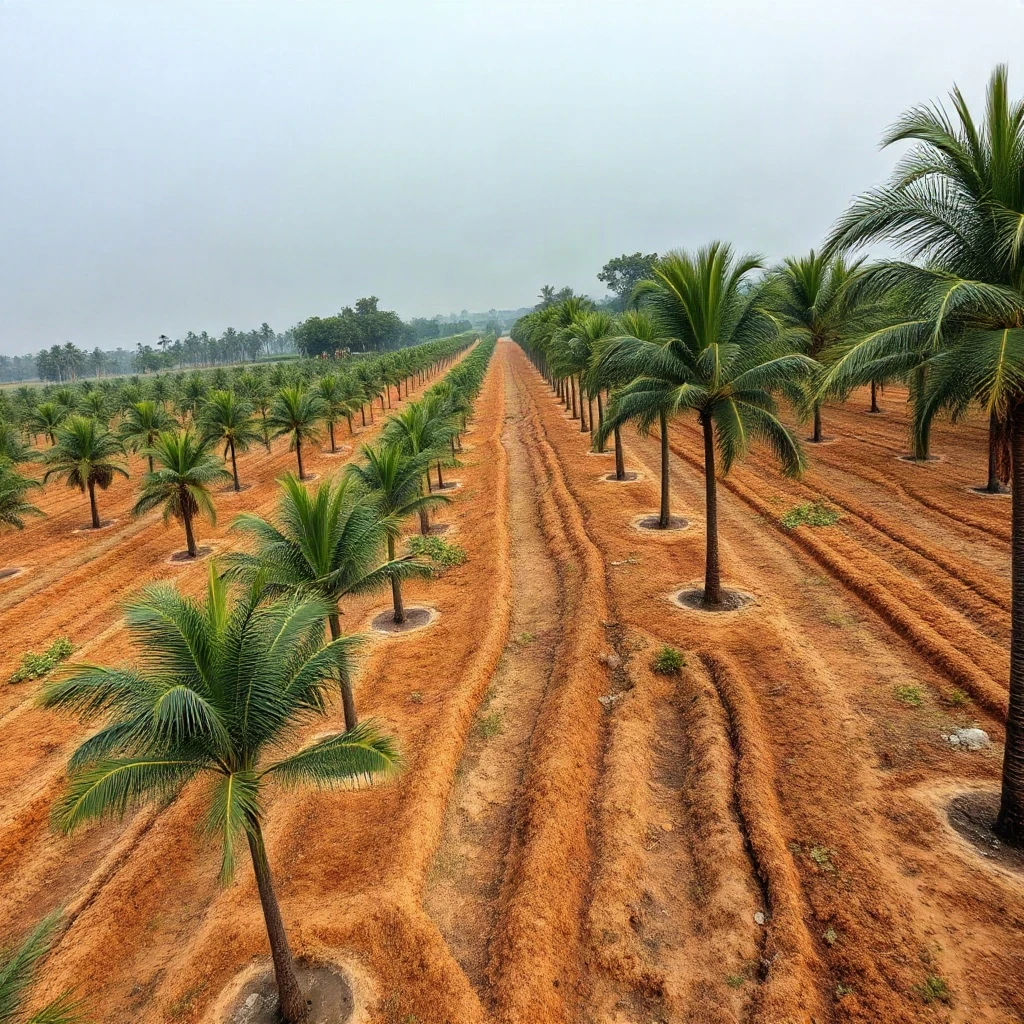
The palm oil market's daily tape is dominated by weather, policy and inventory swings, but the structural question for buyers is simpler and larger: how much new supply must the industry bring to market each year just to keep pace with demand growth from population and rising incomes?
Global population growth adds on the order of 70-80 million people per year, and per-capita edible oil consumption rises with income, particularly in developing Asia and Africa. Palm oil, as the lowest-cost major vegetable oil, captures a disproportionate share of that incremental demand. Industry trackers generally estimate world vegetable oil demand grows by roughly 3-4 million tonnes per year, with palm oil's share of that increment on the order of 40-50%.
Malaysia's July 2026 data show the system can still respond when weather cooperates: CPO production rose 9.4% month-on-month to 1.79 million tonnes, and exports jumped 14.5% to 1.39 million tonnes. But closing stocks of 1.43 million tonnes, up 7.2% from June, are a reminder that near-term supply is adequate — a bearish counterweight to the forward-looking demand story.
The weather picture complicates the supply outlook. The current El Niño (ONI +1.4) has left Sarawak and Kalimantan dry, and dry conditions during the current growing window typically feed through to weaker output nine to twelve months later. That points to a tighter 2027 supply profile, even as the market digests the current stockbuild.
At about $1,143/MT for Malaysian CPO (RM 4,613), the benchmark sits above the World Bank global reference of roughly $1,101/MT and well above Indonesia's $997/MT reference price. The wide gap between palm and other vegetable oils — the BOPO spread — keeps palm competitive in price-sensitive markets, which is exactly where income-driven demand growth is strongest.
Biodiesel policy adds another demand layer. With Brent near $88/bbl, palm-based biodiesel remains economically attractive in producer countries, and Indonesia's B50 programme represents a structural, policy-backed demand source that is largely insensitive to food-market prices.
For the long-run demand story to weaken, one would need to see a sustained slowdown in population growth, a shift in dietary patterns away from vegetable oils, or a structural rise in palm's price relative to competing oils that would push buyers toward rapeseed, soybean or sunflower oil. None of those are visible in current data.
For supply to keep up, the industry needs yield improvements, area expansion in suitable regions, and normal weather. A prolonged El Niño extending into 2027 would tighten the market significantly.
Our model outlook sees the market caught between these forces: choppy with a slightly positive bias over the next seven sessions, with pullbacks limited by supply warnings and the wide spread. The long-run arithmetic, however, remains firmly on the demand side.
A neutral comparison of RBD and crude palm oil across yield, cost, properties, applications, and sustainability.

Crude palm oil (CPO) is the unprocessed oil pressed from the mesocarp of the oil palm fruit. It retains free fatty acids, moisture, and impurities, giving it a deep orange-red color and a characteristic odor. Refined, bleached, and deodorized (RBD) palm oil is CPO that has undergone physical or chemical refining to strip out free fatty acids, pigments, and volatile compounds, yielding a neutral-tasting, pale oil with a longer shelf life.
Refining reduces the total volume of oil available. The refining process removes roughly 3–5% of the crude oil's mass as free fatty acids, gums, and other by-products, which are often sold separately as palm fatty acid distillate (PFAD). On a per-tonne basis, RBD palm oil commands a premium over CPO, reflecting the additional processing steps and the loss of volume. However, the price gap is not fixed; it widens when crude oil quality is poor and narrows when CPO is exceptionally clean.
CPO's high free fatty acid content and strong color make it unsuitable for direct human consumption in most refined food products. It is primarily used as a feedstock for further processing into oleochemicals, biodiesel, and industrial products, or as a raw material for refining. RBD palm oil, with its neutral taste and light color, is the standard form for food manufacturing—used in frying oils, margarines, shortenings, and confectionery. RBD palm olein, the liquid fraction, is particularly prized for frying due to its oxidative stability.
Both forms carry the same environmental footprint at the plantation level, but refining can improve traceability and quality control. Some buyers prefer CPO to maintain full control over the refining process and to capture the value of by-products like PFAD. Others prefer RBD to simplify their supply chain and ensure consistent quality. Sustainability certifications, such as RSPO, can apply to either form, though certified RBD is more common in retail-facing food products.
Choose CPO when you have refining capacity or when your end-use tolerates high free fatty acids—for example, in biodiesel or industrial applications where cost per tonne is the primary driver. Choose RBD when you need a ready-to-use, stable oil for food production, or when your customers require a neutral flavor and consistent color. The decision ultimately hinges on your processing capabilities, end-market requirements, and whether you can monetize the by-products of refining.
Our market desk connects serious buyers with vetted origin suppliers across Southeast Asia. Indicative pricing, specifications and shipment guidance — free of charge.
Get connected →Malaysian CPO edges to $1,143/MT; MPOB July stocks and production rise, but dry weather and B50 demand keep bias slightly positive.
Full story — Page 2 ▸Malaysian CPO edges up 0.4% to $1,143/MT; authorities ready smallholder help, industry warns severe El Niño could shrink output.
Full story — Page 2 ▸Indonesia's B50 mandate advances with storage build-out, tightening supply outlook and pressuring buyers.
Full story — Page 2 ▸Edible oil demand growth from population and income gains implies sustained supply expansion, set against El Niño risks and current stockbuilds.
Full story — Page 2 ▸A neutral comparison of RBD and crude palm oil across yield, cost, properties, applications, and sustainability.
Full story — Page 2 ▸Malaysian CPO edges higher, but our model's balance of factors tilts lower: 4 bullish drivers face 6 bearish ones, with El Niño, B50 and the BOPO spread offset by July stockbuild,
The Indonesia B50 mandate is also a structural demand support. The B40-to-B50 rollout is running smoothly and storage expansion is underway. By absorbing an estimated 3-4 million tonnes per year of palm oil for biodiesel, the policy reduces the amount available for export and food, supporting prices through a tighter supply-demand balance.
The wide BOPO spread keeps palm cheap. Soybean oil trades at a $422/MT premium over palm. That discount encourages buyers to switch from soybean oil to palm in both food and industrial uses, cushioning palm even when supply data are soft.
Finally, the technical uptrend remains intact. The 5/20 SMA golden cross, positive MACD and RSI at 62 keep trend-following flows in the market. Price is above rising SMAs but near the upper Bollinger band, which supports momentum in the short term while leaving it stretched.
September seasonal softness is another drag. Historically September averages minus 0.9% month on month, and Malaysian production usually peaks between July and October. With peak output still arriving, buyers know more supply is coming and tend to hold off, reducing near-term demand.
Crowded speculative longs in soybean oil add a complex-wide risk. CFTC managed money net long positioning is at the 79th percentile but fell by 9,795 contracts week on week. When a complex is crowded long, a small negative catalyst can trigger liquidation; because soybean oil and palm oil are substitutes, selling in soyoil spills over into palm.
Brent crude's decline also matters. Brent fell 5.8% over the last seven days to $88.1/bbl, leaving the energy z-score at about -0.95. Lower petroleum diesel prices weaken the relative economics of biodiesel blending, softening one demand pillar for vegetable oils.
A weak Indonesian rupiah, at USD/IDR 17,696, adds regional supply pressure. A weak rupiah makes Indonesian CPO cheaper in dollar terms, encouraging Indonesian exporters to sell aggressively and compete with Malaysian cargoes.
Finally, the market is positioning for the next MPOB release, due in about 14 days. With traders expecting a continued August stockbuild, buying is cautious and rallies tend to be capped.
For the balance to flip back to bullish, the bearish factors would need to weaken. The clearest trigger would be August MPOB data showing a smaller stockbuild or a draw, rather than another build. A normalization of speculative soyoil positioning after liquidation would reduce cross-market risk. A recovery in Brent crude, a stronger Indonesian rupiah, or a slowdown in Indonesian export selling would each remove a bearish input. On the bullish side, fresh evidence that El Niño is actually cutting Indonesian output, or a larger-than-expected B50 demand pull, would strengthen the supply-tightening case. Until then, our model says the downside has the upper hand.
Malaysian CPO edges up 0.4% to $1,143/MT, but our model outlook sees three bullish forces losing ground to five bearish ones—keeping the near-term bias tilted lower.
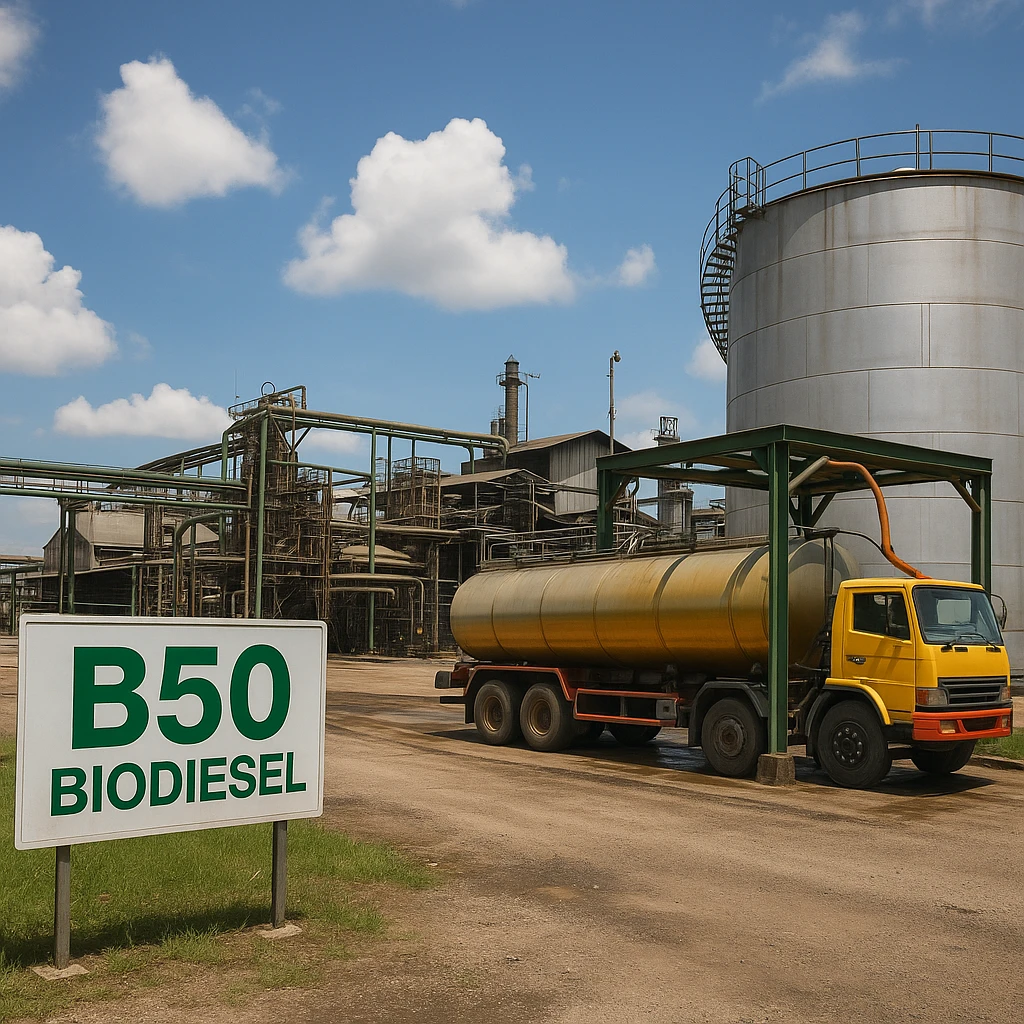
Wide BOPO spread: Soybean oil is around $1,565 per metric ton versus palm at $1,143, leaving a $419 per metric ton discount for palm. That gap strongly favors demand switching from soybean oil to palm in food and industrial uses, funneling incremental orders toward palm and providing a demand-side floor.
Indonesia B50 mandate: The transition from B40 to B50 is progressing and is expected to absorb 3–4 million tonnes per year of new demand. This is the largest structural demand variable in the market and underpins medium-term consumption, although it does not remove near-term supply pressure.
Peak production seasonality: September historically averages a 0.9% monthly decline in price, and the seasonal production path points to a 7.0% rise next month. Higher output during the peak crop period typically outpaces demand growth, adding seasonal bearish pressure.
Weak Brent crude: Brent fell 6.5% over seven days to $88.3 per barrel, lowering the valuation of palm oil as a biodiesel feedstock. Even though POGO remains negative and technically supportive, the decline in the energy complex weakens a key demand anchor and makes biodiesel blending less compelling at the margin.
Weak Indonesian rupiah: USD/IDR at 17,759 makes Indonesian palm cheaper in dollar terms, prompting aggressive export selling by Indonesian producers. That increases regional supply and undercuts Malaysian CPO prices, adding a bearish regional dynamic.
Crowded speculative long: Managed money in soybean oil sits at the 79th percentile of its net-long positioning, down 9,795 contracts. If sentiment shifts, this crowded position is vulnerable to long liquidation, which could spill over into palm oil and amplify downside moves.
For the balance to flip, we would need to see confirmation that El Niño is actually reducing output, a sustained recovery in Brent to restore biodiesel feedstock valuation, or evidence that the BOPO discount is triggering stronger palm demand in export data. A reset in speculative positioning—either via long liquidation or fresh short cover after a washout—would also help. Key watchpoints are the upcoming MPOB August release in about 14 days and the missing cargo-surveyor export pace; a bearish August stock build or weak exports would reinforce the downside, while a bullish production miss or export surprise could begin to shift the balance.
Malaysian CPO firms near $1,143/MT while B50 demand and dry weather support prices after MPOB reported larger output and inventories.
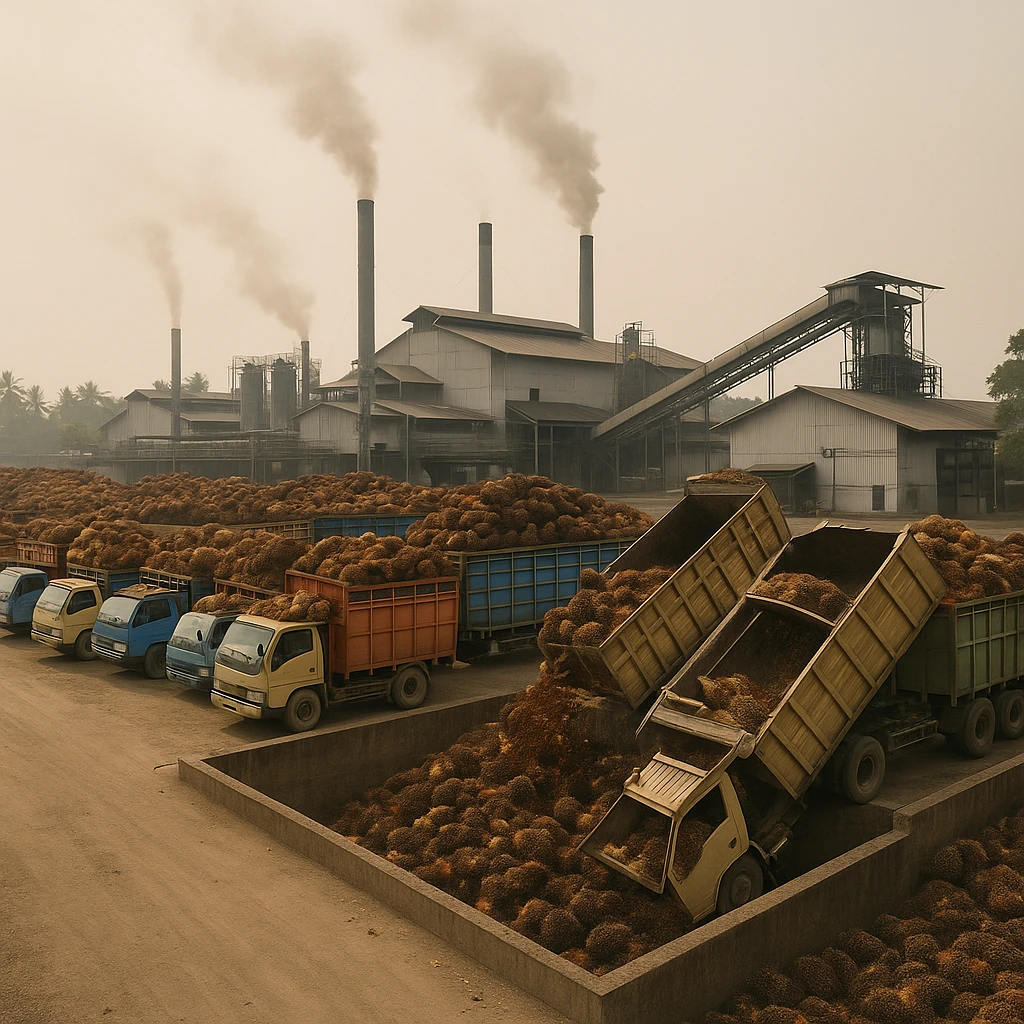
Malaysian CPO futures firmed on Friday, with the benchmark near $1,143 per tonne, or RM4,613, up 0.4% from the previous session. The World Bank palm oil reference was around $1,101 per tonne, while Indonesia's Kemendag reference price was about $997 per tonne. Brent crude slipped 0.2% to around $88 per barrel, and the ringgit traded at about 4.03 to the dollar. Our model outlook sees CPO consolidating near $1,146 with a mild upward bias, supported by El Niño supply concerns and a wide $419 BOPO discount, while ample July MPOB stocks, peak seasonality and weak Brent crude limit gains.
Malaysian supply data for July showed a seasonal build. CPO production rose 9.4% month on month to 1,792,979 tonnes, while closing stocks climbed 7.2% to 1,429,316 tonnes. Exports jumped 14.5% to 1,392,178 tonnes, helping absorb some of the larger crop. Imports fell 51.9% to 49,566 tonnes, and the stocks-to-use ratio stood at 12.5%. The fresh fruit bunch reference price rose 1.2% to RM49.50 per tonne. Despite the heavier inventory, traders focused on weather risks. El Niño conditions are in place with an ONI of +1.4, and reports describe dry conditions in Sarawak and Kalimantan. Producer groups have warned that El Niño could cut Indonesian output, and some industry voices cautioned that without faster replanting, Indonesia could face a production shortage next year.
Demand signals remain mixed. Indonesia's B50 biodiesel programme is reportedly running smoothly, with authorities encouraging more FAME storage capacity. Indonesian palm oil exports jumped 64% in June, while production rose 8.59% and biodiesel consumption reached 1.13 million tonnes that month. The Malaysian Palm Oil Council said it expects CPO prices to hold above RM4,600 in September, citing tightening supply and geopolitical disruptions. However, projections of a bigger stockpile have kept prices steady at times, and weaker soybean futures contributed to an earlier decline in CPO.
Our model outlook points to choppy near-term trade. The published path is +1.1% over seven sessions. Key watchpoints are the upcoming MPOB August release and any missing cargo-surveyor export pace, as well as how El Niño dryness affects harvesting and how Brent crude moves shape biodiesel blend economics.
For buyers, the near-term picture balances a rising tide of Malaysian supply with dry-weather risks and policy-driven domestic demand in Indonesia. Monitor the August MPOB production and inventory report, Indonesian export and biodiesel consumption data, and rainfall updates for Sarawak and Kalimantan. A sustained drop in Brent crude or a surprise build in Malaysian stocks could test the current floor, while worsening dryness or stronger B50 uptake would add upside pressure.
Sources: Kantor Berita Sawit; Gabungan Pengusaha Kelapa Sawit Indonesia (GAPKI); Kantor Berita Sawit; Bernama; The Edge Malaysia; Oils & Fats International
Malaysian CPO edges up 0.4% to $1,143/MT; July stocks rise 7.2%, but El Niño supply worries and B50 biodiesel demand underpin prices.
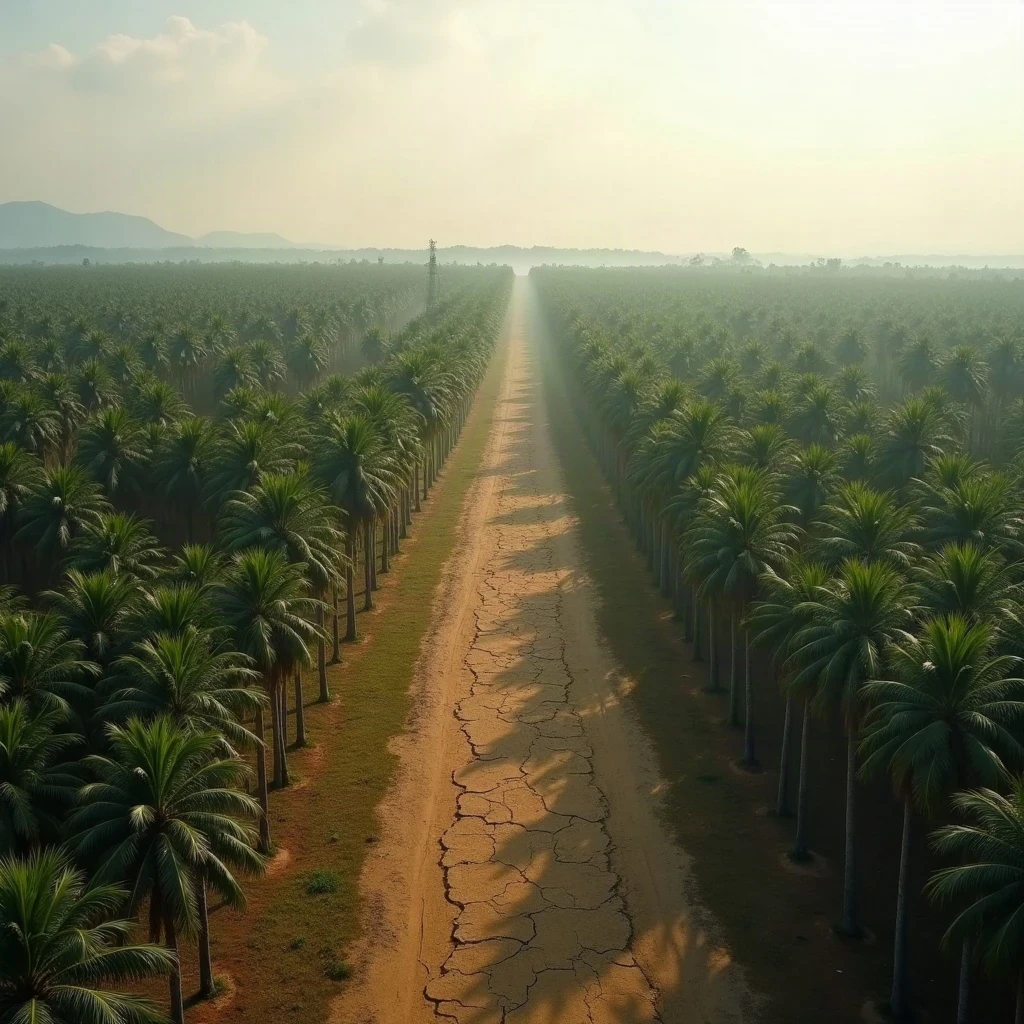
Malaysian crude palm oil futures settled around $1,143 per tonne (RM 4,613), up 0.4% from the previous session, as the market balanced fresh El Niño-driven supply concerns against a larger-than-expected build in Malaysian inventories. The global benchmark, as tracked by the World Bank, stood at about $1,101 per tonne, while Indonesia's reference price was $997 per tonne, underscoring the wide discount for Indonesian product.
The Malaysian Palm Oil Board's July data showed production at 1,792,979 tonnes, up 9.4% month-on-month, while closing stocks rose 7.2% to 1,429,316 tonnes. Exports jumped 14.5% to 1,392,178 tonnes, a sign of robust buying ahead of peak demand. However, imports fell sharply by 51.9% to 49,566 tonnes, reflecting reduced inter-country flows.
Weather remains a key risk. The El Niño episode (ONI +1.4) is causing dry conditions in key growing regions of Sarawak and Kalimantan. Producer group GAPKI has warned of a potential CPO deficit next year if the plantation replanting program (PSR) is not accelerated, while industry voices caution that a severe El Niño could shrink output. These concerns helped lift futures in the latest session, with Bernama reporting a rebound on El Niño worries. Our model outlook sees CPO consolidating near $1,146 with a mild upward bias, supported by El Niño fears and the wide $419 gap between Malaysian and Indonesian prices, but capped by ample stocks and peak seasonality.
Indonesia's push toward B50 biodiesel remains a structural demand driver. Recent news highlights that B50 is reshaping the energy and industrial landscape, with domestic consumption of palm oil for biodiesel reaching 1.13 million tonnes in June. This, combined with a 64% surge in Indonesia's palm oil exports in June, points to strong overall demand.
Geopolitical disruptions and tighter supply are expected to keep prices above MYR 4,600 in September, according to MPOC. However, weak Brent crude at $88 per barrel (down 0.2%) limits the appeal of biodiesel blends on pure economics, and rising vegetable oil stocks in China are adding pressure.
The Malaysian ringgit traded at 4.03 per dollar, while the rupiah weakened to 17,696 per dollar, affecting competitiveness. Palm oil's price relationship with soybean oil remains in focus; soybean oil futures fell 7% after the EPA extended the RFS compliance deadline, which could indirectly weigh on palm oil.
Expect choppy trade in the near term. Watch the upcoming MPOB August release and cargo-surveyor export data for direction. The El Niño supply narrative and B50 demand provide a floor, but ample stocks and soft energy prices cap upside. Buyers should monitor the spread between Malaysian and Indonesian offers, as the wide discount may present opportunities.
Sources: VOI.ID; Gabungan Pengusaha Kelapa Sawit Indonesia (GAPKI); Kantor Berita Sawit; The Edge Malaysia; Oils & Fats International; Diskursus Network
Expanding FAME capacity and strong biodiesel uptake point to higher domestic palm consumption and new compliance considerations.

Indonesia's higher biodiesel blend continues to advance with operational smoothness and regulatory signals that point toward more infrastructure. Reports indicate the B50 program is running without major disruption, and the downstream regulator is urging additional storage capacity for fatty acid methyl ester. This suggests the supply chain is being asked to handle larger volumes of palm-based fuel component.
From the demand side, the biodiesel producers association has taken steps to familiarise a broad public audience with B50, indicating efforts to build social acceptance as the mandate matures. At a large national scout gathering, the association reached 5,000 participants with information about B50. This kind of outreach suggests that public understanding and acceptance are being treated as prerequisites for the higher blend to remain stable. Policymakers and industry groups describe the shift as more than a fuel change: it reframes the national energy map and the role of the palm oil sector.
The latest production and consumption figures add context. Indonesian palm oil output in June 2026 rose by 8.59 percent compared with the prior period. At the same time, biodiesel consumption reached 1.13 million tonnes in that month. When combined with the push for more FAME storage, these numbers suggest that a growing share of domestic palm supply is being absorbed by the fuel market rather than exported.
For compliance-minded buyers, the implications are twofold. First, higher domestic biodiesel blending increases competition for feedstock, potentially reducing the volume of palm oil available for international buyers of refined products or oleochemicals. Second, the expansion of storage and educational campaigns signals that the policy direction is likely to persist, meaning buyers should track updates to blending rates, sustainability certification schemes and export levies that may accompany the mandate.
The current development pattern leans toward a tighter domestic market for palm oil. For international buyers, this may require broader supplier diversification, more flexible contract terms and closer attention to Indonesian policy signals. The emphasis on storage indicates that authorities are not treating B50 as a temporary measure but are building long-term capacity to make higher blends a permanent feature of the energy system.
Sources: Kantor Berita Sawit; VOI.ID; Diskursus Network; InfoSAWIT
Biodiesel mandate advances and El Niño dryness color near-term CPO trade as buyers weigh supply.
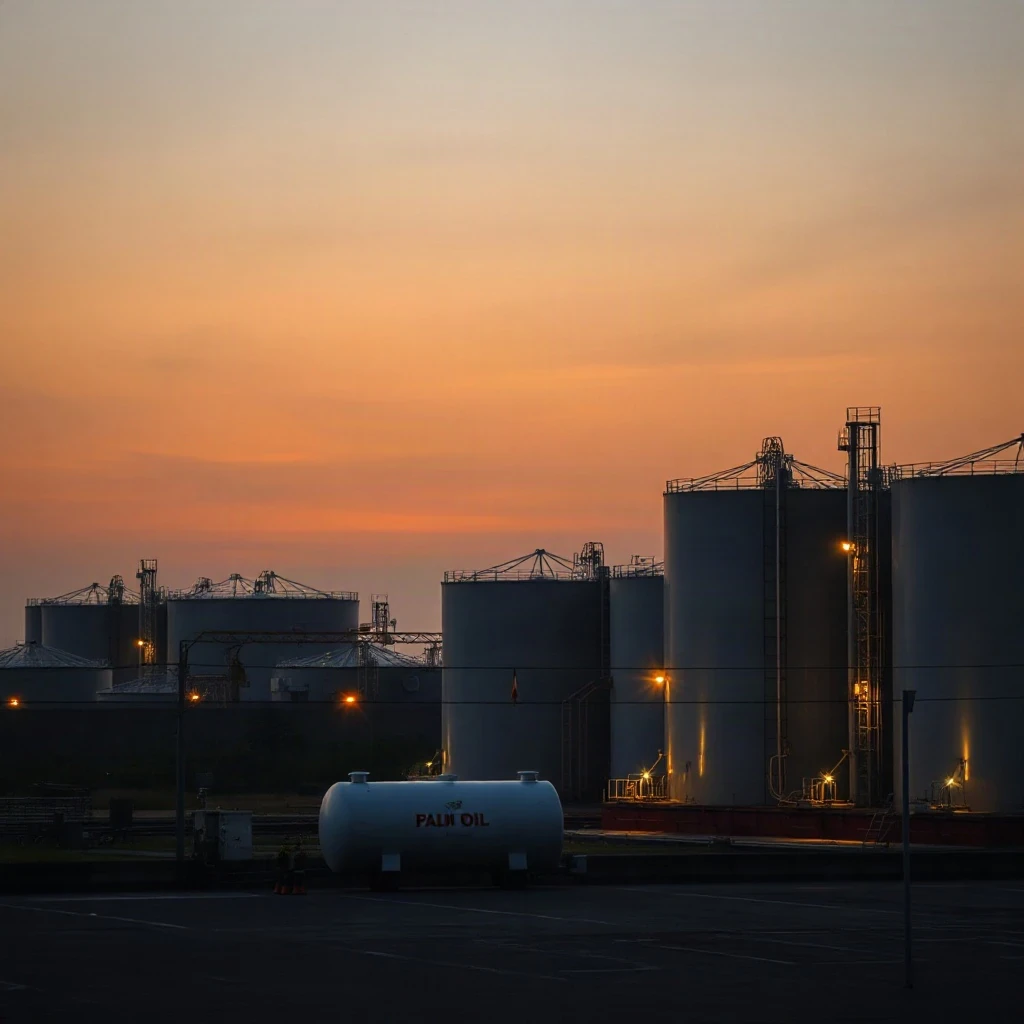
Indonesia’s push toward the B50 biodiesel mandate is moving beyond technical trials and into public outreach, with the industry association APROBI recently introducing the program to thousands of Scouts at a national gathering. The move signals a broader campaign to build social acceptance for higher palm-oil-based fuel blends, even as the policy’s industrial implications continue to reshape domestic supply and demand math.
The B50 agenda is not just a fuel policy; it is increasingly framed as a strategic shift in Indonesia’s energy and palm oil industry landscape. Analysts note that higher blend rates would lock in a larger share of domestic crude palm oil for fuel use, tightening export availability over time. Industry data for June 2026 already showed a rise in palm oil production alongside record biodiesel consumption of 1.13 million tonnes, underscoring how quickly the mandate is absorbing new supply.
For compliance-minded buyers, the key takeaway is that Indonesian export flows may become more sensitive to biodiesel policy announcements. Any delay or acceleration in B50 implementation could swing the volume of palm oil available to international markets, especially as the country’s reference price sits well below global benchmarks.
Separately, the current El Niño episode is keeping supply concerns alive. Dry conditions in Sarawak and Kalimantan have raised worries about near-term yields, even as Malaysia’s July production and stocks came in higher than the previous month. Our model outlook sees prices consolidating near $1,146 per tonne with a mild upward bias, supported by El Niño fears and a wide discount in Indonesia’s export levy reference price, but capped by ample stocks, peak seasonal output, and weak crude oil prices.
Brent crude holding near $88 per barrel offers little tailwind for biodiesel economics, which could temper the pace of mandate expansion if fuel margins tighten. Still, Jakarta’s policy momentum appears politically strong, and market participants will watch for the next MPOB data release and cargo surveyor export figures to gauge whether supply fears are justified.
For those sourcing palm oil, the near-term path looks choppy. The combination of policy-driven domestic absorption in Indonesia and weather-related production risks in Malaysia means export availability could tighten faster than headline stock numbers suggest. Buyers with sustainability commitments should also note that zero-deforestation pledges have had limited measurable impact on forest cover, a reminder that compliance expectations may shift as scrutiny grows.
Overall, the policy and energy landscape is increasingly intertwined with physical market dynamics. The B50 rollout, El Niño dryness, and soft crude prices are all factors that could move the balance between supply and demand in the coming weeks.
Sources: VOI.ID; Diskursus Network; InfoSAWIT; Mongabay; Oils & Fats International
Malaysian CPO benchmark edges up 0.4% on supply fears, but ample stocks and soft Brent cap gains.

Malaysian crude palm oil futures held firm this week, with the benchmark contract settling near $1,143 per metric ton, up 0.4% from the previous session. In ringgit terms, the contract closed at RM 4,613. The global benchmark, as tracked by the World Bank, stood at about $1,101 per ton, while Indonesia's reference price was set at approximately $997 per ton.
Brent crude was flat at around $88 per barrel, offering little directional push for biodiesel blending economics. A weaker ringgit, trading near 4.03 per dollar, provided some support to Malaysian export competitiveness, while the Indonesian rupiah held around 17,696 per dollar.
Malaysia's July supply-demand report, released during the week, showed a 9.4% month-on-month rise in crude palm oil production to 1,792,979 tons, while closing stocks increased 7.2% to 1,429,316 tons. Exports jumped 14.5% to 1,392,178 tons, and imports fell sharply by 51.9% to 49,566 tons. The FFB reference price edged up 1.2% to RM 49.50.
El Niño conditions persisted, with the ONI index at +1.4. Dry weather was noted in Sarawak and Kalimantan, raising concerns about future yields. These supply fears have been a key price driver.
Our model outlook sees CPO consolidating near $1,146 with a mild upward bias. Support comes from El Niño supply fears and a wide $419 discount to gasoil (BOPO), while ample July stocks, peak seasonal production, and weak crude oil cap gains. Near-term trade is expected to be choppy, with a projected path of +1.1% over the next seven sessions.
Market participants will watch for the upcoming MPOB August supply-demand report, due in mid-September, and any cargo-surveyor export data for the first half of August. Seasonal production patterns and weather updates in key growing regions will also be closely monitored. Policy announcements from Indonesia regarding export levies or biodiesel mandates could influence price direction.
This space reaches palm oil buyers, traders and industry readers every day. Sponsorship and advertising enquiries are welcome — get in touch:
Malaysian CPO firms near $1,143/MT while B50 demand and dry weather support prices after MPOB reported larger output and inventories.
Full story — Page 2 ▸Malaysian CPO edges up 0.4% to $1,143/MT; July stocks rise 7.2%, but El Niño supply worries and B50 biodiesel demand underpin prices.
Full story — Page 2 ▸Expanding FAME capacity and strong biodiesel uptake point to higher domestic palm consumption and new compliance considerations.
Full story — Page 2 ▸Biodiesel mandate advances and El Niño dryness color near-term CPO trade as buyers weigh supply.
Full story — Page 2 ▸Malaysian CPO benchmark edges up 0.4% on supply fears, but ample stocks and soft Brent cap gains.
Full story — Page 2 ▸Malaysian CPO edges up 0.4% to $1,143/MT, but our model outlook sees three bullish forces losing ground to five bearish ones—keeping the near-term bias tilted lower.
Wide BOPO spread: Soybean oil is around $1,565 per metric ton versus palm at $1,143, leaving a $419 per metric ton discount for palm. That gap strongly favors demand switching from soybean oil to palm in food and industrial uses, funneling incremental orders toward palm and providing a demand-side floor.
Indonesia B50 mandate: The transition from B40 to B50 is progressing and is expected to absorb 3–4 million tonnes per year of new demand. This is the largest structural demand variable in the market and underpins medium-term consumption, although it does not remove near-term supply pressure.
Peak production seasonality: September historically averages a 0.9% monthly decline in price, and the seasonal production path points to a 7.0% rise next month. Higher output during the peak crop period typically outpaces demand growth, adding seasonal bearish pressure.
Weak Brent crude: Brent fell 6.5% over seven days to $88.3 per barrel, lowering the valuation of palm oil as a biodiesel feedstock. Even though POGO remains negative and technically supportive, the decline in the energy complex weakens a key demand anchor and makes biodiesel blending less compelling at the margin.
Weak Indonesian rupiah: USD/IDR at 17,759 makes Indonesian palm cheaper in dollar terms, prompting aggressive export selling by Indonesian producers. That increases regional supply and undercuts Malaysian CPO prices, adding a bearish regional dynamic.
Crowded speculative long: Managed money in soybean oil sits at the 79th percentile of its net-long positioning, down 9,795 contracts. If sentiment shifts, this crowded position is vulnerable to long liquidation, which could spill over into palm oil and amplify downside moves.
For the balance to flip, we would need to see confirmation that El Niño is actually reducing output, a sustained recovery in Brent to restore biodiesel feedstock valuation, or evidence that the BOPO discount is triggering stronger palm demand in export data. A reset in speculative positioning—either via long liquidation or fresh short cover after a washout—would also help. Key watchpoints are the upcoming MPOB August release in about 14 days and the missing cargo-surveyor export pace; a bearish August stock build or weak exports would reinforce the downside, while a bullish production miss or export surprise could begin to shift the balance.
Ample July stocks and peak output face off against El Niño, B50 and wide soyoil spreads; our model gives the downside a slight edge.
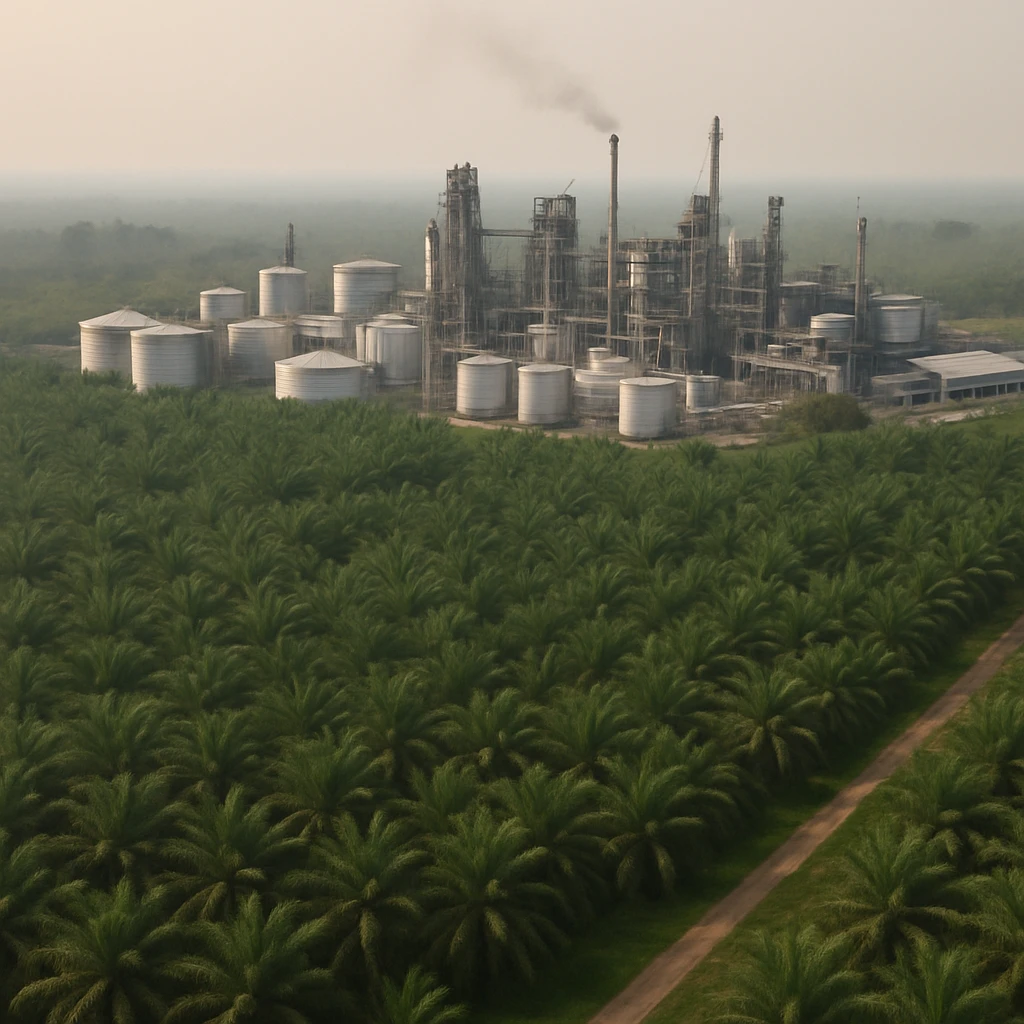
Malaysian CPO benchmark sits near $1,146/MT, up 0.6% from the previous session and about RM4,623/MT. The global benchmark is around $1,101/MT and Indonesia's reference price is around $997/MT. The day's small gain masks a choppy tape: Brent's slide and crowded positioning are keeping the market near highs but with little sustained momentum.
El Niño remains the main medium-term support. The ONI reading of +1.4 and GAPKI's warning of an 8–10% 2027 output drop feed anticipation buying: because palm output damage shows up with a 6–12 month lag, importers and forward buyers are pricing the risk now rather than waiting for visible tree stress. A wide soyoil premium of $401/MT is also supporting palm demand. At that spread, edible-oil buyers have a strong incentive to switch from soyoil to palm, lifting CPO offtake. Indonesia's B50 mandate adds another demand channel by absorbing an estimated 3–4 million tonnes per year domestically, which would reduce export availability. The export levy of $125 plus duty of $148 raise the cost of Indonesian exports, so a larger share of that policy cost is passed into landed prices. Technically, CPO is above its 5-, 20- and 50-day moving averages with a positive MACD and a golden cross, though it is near the upper Bollinger band at $1,156 and the RSI at 63 is neutral rather than overbought.
The near-term supply picture is ample. Malaysia's July closing stocks rose 7.2% month-on-month to 1,429,316 tonnes, about 61% above the five-year average, and the stocks-to-use ratio of 12.5% signals comfortable cover. The broader stockpile number of 2.63 million tonnes, up 3.32%, reinforces the same point: buyers are not being forced to chase cargoes. Production is also at its seasonal peak, up 9.4% month-on-month to 1,792,979 tonnes, and the seasonal path adds another 7.0% next month; the July-to-October high-output window is weighing on nearby prices. The energy complex is a second drag. Brent crude has fallen about 8.8% over the past seven sessions to around $88.4 a barrel, which weakens biodiesel feedstock demand because palm-based biodiesel becomes less attractive when energy prices slide; our model's energy z-score sits at -1.23. The rupiah is another regional headwind: at USD/IDR 17,689, Indonesian exporters earn more rupiah per dollar of palm sold, which encourages selling and can cap dollar prices. Finally, CFTC soyoil net length is in the 82nd percentile after a 17,000-contract weekly increase, making the complex vulnerable to liquidation if the wider oilseed or energy trade wobbles.
Our model's balance currently has 4 bullish factors against 5 bearish factors, with the weather signal mixed: Peninsular Malaysia's recent 242mm of rain and another 47mm expected over the next seven days may disrupt harvest, while Kalimantan's 0mm dry phase adds lagged stress. The bearish factors have a slight upper hand. Ample July stocks, peak production, Brent's slide, rupiah weakness and crowded speculative longs are outweighing the bullish El Niño, B50 and wide soyoil-spread story. Our model expects choppy consolidation near highs with a slight downward bias over the next seven days, and its published path is just +0.1% over those seven sessions—implying any pullback is likely modest. The balance would flip further bearish if Brent continues falling, speculative longs unwind, and monthly stocks keep rising while El Niño evidence stays weak. It would flip bullish if Indonesian B50 implementation is confirmed without delay, the soyoil premium widens further, or El Niño stress starts appearing in official production or export data.
Malaysian benchmark rises to $1,146/MT while MPOB data show July output up 9.4% and stocks up 7.2%; weather and biodiesel policy keep medium-term risk premium alive.
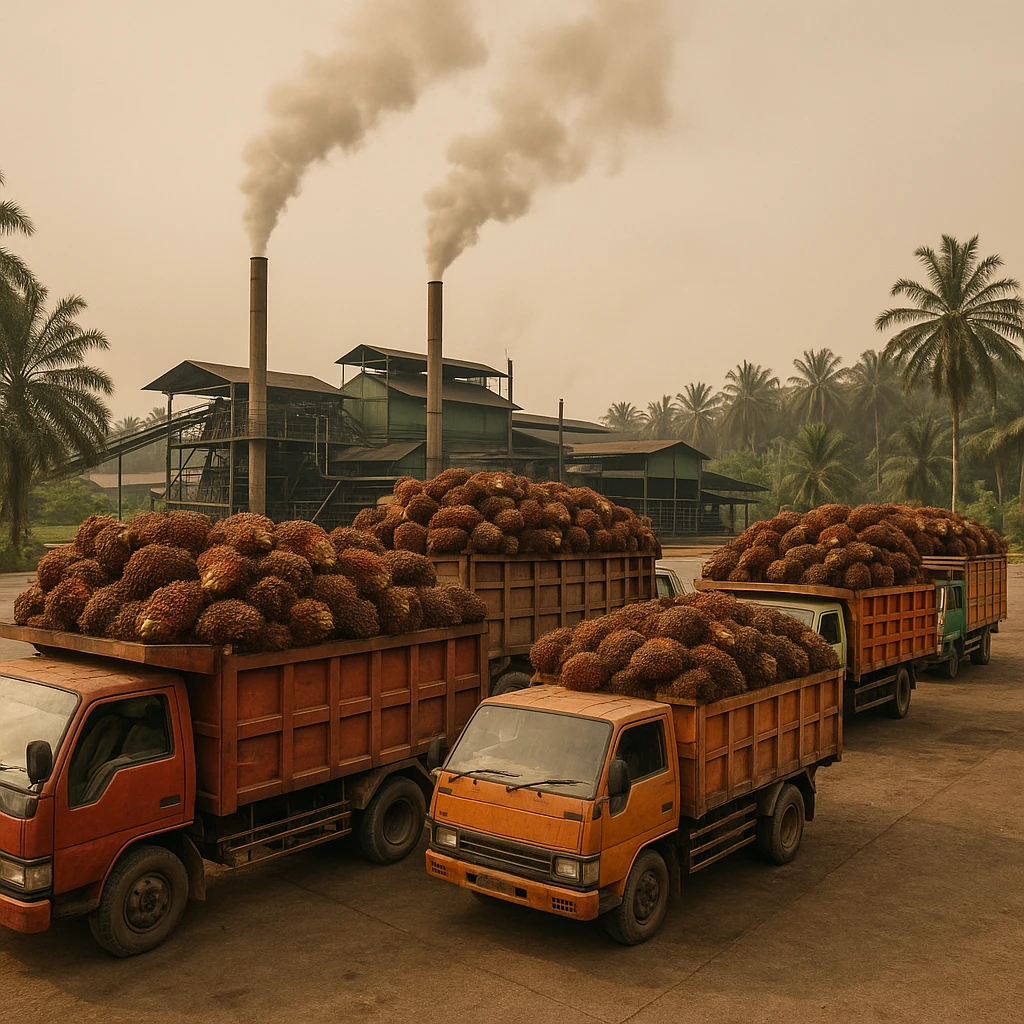
Malaysian CPO benchmark firmed to about $1,146 per metric tonne, up 0.6% from the previous session, or RM4,623 per tonne at a dollar-ringgit rate of 4.03. That leaves it above the World Bank global benchmark of around $1,101 and well above Indonesia's reference price near $997, keeping the Malaysian contract at a premium. Brent crude slipped 0.3% to about $88 per barrel, which matters for biodiesel blend economics across the region.
MPOB July data show CPO production of 1,792,979 tonnes, a 9.4% month-on-month rise, while closing CPO stocks increased 7.2% to 1,429,316 tonnes. Exports rose 14.5% to 1,392,178 tonnes, but imports fell 51.9% to 49,566 tonnes. The stocks-to-use ratio of 12.5% and a 1.2% rise in the FFB reference price to RM49.50 point to a well-supplied market near seasonal peak output. At the same time, weather gauges show El Niño conditions with an ONI of +1.4, and reports highlight dry conditions in Sarawak and Kalimantan. Industry warnings, including from Gapki, flag sharp production losses if the dry spell deepens.
On the demand side, trade reports put Indonesia's June palm exports around 64% higher than a year earlier, with domestic consumption also rising. That strength has been cited as pressure on national stocks. Indonesia's moves toward B50 biodiesel are framed as more than a blending mandate—they reshape energy and industrial use of palm oil. A weaker Brent price complicates the biodiesel premium, but the policy direction remains supportive for palm oil absorption.
Futures closed lower earlier in the week on profit-taking, weaker soybean oil and soft crude, while some commentary expects a bullish tone next week. Steady trading recently reflected projections of bigger stockpiles, but the pricing debate between Malaysia and Indonesia continues to influence differentials. Our model outlook sees CPO caught between ample near-term supply—July stocks high, output at peak—and bullish medium-term factors: El Niño, B50 and a wide biodiesel-to-diesel spread. Brent's sharp drop and crowded long positioning tilt risk to a modest pullback over the next seven days, but downside is limited by demand switching and production worries. The published path is a small 0.1% gain over seven sessions.
For buyers, the key watch points are whether Indonesian export strength holds and absorbs the large near-term supply, whether dry weather starts to show in production data, and whether Brent stabilizes. Near-term supply is ample, but the medium-term risk premium from weather and biodiesel policy has not disappeared.
Sources: Kantor Berita Sawit; sawitsetara.co; Diskursus Network; BernamaBiz; The Star; The Jakarta Post
Malaysian CPO futures ease on profit-taking, but GAPKI's El Niño output warning reinforces the bullish medium-term outlook.

Malaysian crude palm oil futures closed lower on the session, easing from recent highs as profit-taking set in and weaker soybean and crude oil futures weighed on the vegetable oil complex. The benchmark settled around $1,143/MT (RM 4,613), down from the previous session's close, with the global benchmark near $1,101/MT and Indonesia's reference price at about $997/MT. The ringgit held near 4.03 per dollar, and the rupiah at about 17,759, keeping export competitiveness in focus.
Malaysia's July data, confirmed by the Malaysian Palm Oil Board, showed stockpiles rose 7.2% month-on-month to 1,429,316 tonnes, with CPO production up 9.4% to 1,792,979 tonnes and exports jumping 14.5% to 1,392,178 tonnes. Imports tumbled 51.9% to just 49,566 tonnes. The stock increase aligns with the seasonal peak-output period, but the medium-term outlook remains tight.
With El Niño conditions firmly in place (ONI +1.4), dryness is spreading across key growing regions—notably Sarawak and Kalimantan. The Indonesian Palm Oil Association (GAPKI) has warned that El Niño could crimp Indonesian palm oil output, with production at risk of decline into 2027. This reinforces the market's existing concern about supply tightness, even as near-term supply remains ample.
Indonesia's push toward B50 biodiesel remains a structural demand pillar. Reports indicate the mandate is not hurting exports, and export levy revenue is projected to rise 31% this year, with total collections seen at Rp 41.22 trillion. This suggests the government can sustain aggressive biodiesel blending without sacrificing export earnings—at least for now.
However, softer crude prices are a headwind for biodiesel economics. Brent slipped about 0.5% to near $88/bbl, narrowing the incentive for blending. Weaker soybean oil futures, partly due to an extended U.S. RFS compliance deadline, also dragged on the vegetable oil complex sentiment. Chinese vegetable oil stocks are reportedly building, adding another bearish factor.
Our model outlook sees CPO caught between ample near-term supply (high July stocks, peak output) and bullish medium-term factors (El Niño, B50, wide BOPO). The recent drop in Brent and crowded long positioning tilt risk to a modest pullback over the next seven days, but downside is limited by demand switching and production worries. We expect choppy consolidation near highs with a slight downward bias, and our published path shows +0.4% over the next seven sessions.
Despite the session's decline, traders expect CPO futures to stay bullish next week, supported by lingering El Niño supply risks—now underscored by GAPKI's warning—and steady biodiesel demand. The next MPOB release in about 14 days is a key risk event.
Watch the weather in Sarawak and Kalimantan, as any intensification of dryness could quickly shift sentiment from stock-driven to supply-driven. Also monitor Indonesian export levy policy and B50 implementation pace, as well as crude oil's direction—all are key swing factors in the near-term price path.
Sources: Stockbit Snips; SuaraGarut.ID; The Star; The Jakarta Post; Gabungan Pengusaha Kelapa Sawit Indonesia (GAPKI); Berita Harian
Policy watch: B50 mandate, export levy revenue gains, and deforestation pledge scrutiny frame palm oil's supply-demand balance.

Indonesia's accelerated push toward the B50 biodiesel mandate continues to reshape the policy landscape for palm oil, with recent reports indicating the program is advancing without curtailing crude palm oil exports. The mandate, which raises the required palm-oil-based biodiesel blend to 50 percent, is expected to increase domestic absorption of palm oil, tightening availability for export markets over time. Industry observers note that the policy's success hinges on sustained feedstock supply and blending infrastructure, while also supporting domestic energy security goals.
Indonesia's trade ministry projects export levy revenue to climb 31 percent, a development attributed to higher palm oil prices and steady export volumes. The levy, which funds biodiesel subsidies and smallholder programs, is seen as a key financing mechanism for the B50 rollout. Higher levy collections could ease fiscal pressure on the biodiesel subsidy scheme, potentially allowing the government to maintain or expand blending targets without straining state budgets. For buyers, this implies continued policy support for domestic palm oil demand, which may keep export supplies tighter than in previous years.
A separate report finds that zero-deforestation pledges by major palm oil firms have yielded limited additional forest protection benefits. This raises questions about the effectiveness of voluntary commitments in meeting buyer sustainability requirements. Compliance-minded buyers, particularly those in Europe and North America, face increasing pressure to verify deforestation-free supply chains, yet the study suggests that pledges alone may not suffice. This could accelerate demand for certified sustainable palm oil and drive closer scrutiny of supply chain traceability, potentially adding a premium to compliant volumes.
Our model outlook sees palm oil caught between ample near-term supply—with Malaysian stocks at 1.43 million tonnes in July and production rising—and bullish medium-term factors including El Niño-driven dryness in key growing regions and Indonesia's B50 mandate. Brent's recent decline to around $88 per barrel has narrowed the price advantage of biodiesel over fossil diesel, but strong policy backing in Indonesia keeps domestic demand resilient. The combination of high stocks and peak output may limit upside in the short term, while production concerns and demand switching provide a floor under prices.
For market participants, the policy signals point to a structurally tighter palm oil market over the medium term, even as near-term supply remains comfortable. The rising levy revenue and robust export figures suggest Indonesia's palm oil sector is adapting to the B50 transition without major disruptions, but the deforestation findings may complicate access to premium markets. Traders and end-users should monitor policy announcements and compliance developments closely, as these factors are likely to influence price spreads and supply availability in coming months.
Sources: Diskursus Network; UkrAgroConsult; Mongabay; Quantum Commodity Intelligence; Oils & Fats International
A practical look at palm oil's natural semi-solid state and its advantages for food and oleochemical buyers.

For buyers new to palm oil, its semi-solid consistency at room temperature can be surprising. Unlike liquid vegetable oils such as soybean or rapeseed, palm oil holds a thick, butter-like texture. This is not a defect—it is a natural property rooted in the oil's chemical makeup.
Palm oil is roughly balanced between saturated and unsaturated fatty acids. About half of its fatty acids are saturated, primarily palmitic acid. Saturated fatty acids pack tightly together, giving the oil a higher melting point than most other vegetable oils. As a result, palm oil is semi-solid at typical indoor temperatures—around 20–25°C (68–77°F).
This balance is what makes palm oil versatile. It can be fractionated into different components: a liquid olein for frying and a solid stearin for margarine and shortening. The natural semi-solid state means less energy is needed to modify it for various applications.
For food producers, semi-solid palm oil provides structure and stability. It gives baked goods their flaky texture, keeps spreads spreadable, and resists oxidation better than highly unsaturated oils, extending shelf life. In confectionery, it helps maintain a firm yet melt-in-the-mouth feel.
In the oleochemical industry, palm oil's saturated nature makes it a preferred feedstock for producing fatty acids, soaps, and cosmetics. The solid fraction is ideal for candles and personal-care products that need to hold shape at room temperature.
For procurement managers, the semi-solid state has practical implications. Palm oil must be stored in heated tanks—typically around 30–40°C (86–104°F)—to keep it fluid for pumping and transport. Buyers need to ensure their facilities can maintain these temperatures, especially in cooler climates.
When receiving deliveries, it is common to see a cloudy or partially solid appearance. This is normal and does not indicate quality issues. Gentle heating with agitation will restore a uniform liquid state without harming the oil's properties.
Palm oil's semi-solid nature also contributes to its cost-effectiveness. Because less processing is required to achieve desired textures compared to fully hydrogenated liquid oils, manufacturers save on energy and equipment. Moreover, the oil's natural stability reduces the need for added antioxidants in many applications.
For first-time buyers, understanding this characteristic helps in planning storage, handling, and formulation. Palm oil's semi-solid state is not a complication—it is a feature that has made it a staple in global food and industrial supply chains.
A practical guide to the plot-level coordinates, polygons, and supplier records that EUDR due diligence expects for palm purchases.
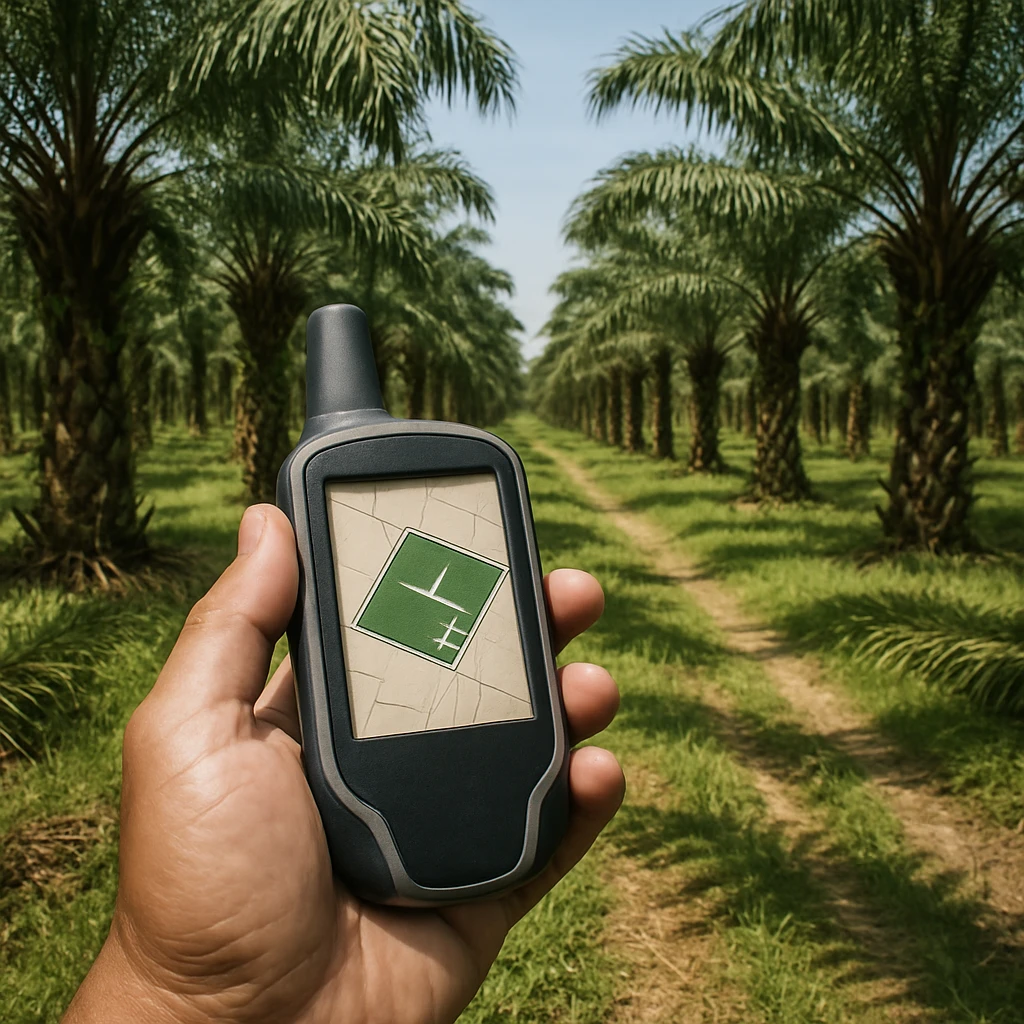
The European Union Deforestation Regulation requires businesses placing palm oil on the EU market to collect and submit geolocation data for every plot of land where the palm fruit was grown. This is not the location of the mill, refinery, or supplier head office; it is the plantation plot itself. For procurement teams, this means asking suppliers for plot-level coordinates before or at the time of purchase, and ensuring that this data can be linked to each consignment.
Suppliers should provide coordinate data in a standard geospatial format, typically latitude and longitude. Larger plots require a polygon boundary, which is a set of connected coordinates outlining the perimeter of the plantation. Smaller plots may be identified by a single central point under the regulation's threshold rules. The key point is that the data must identify the land area with enough precision to allow verification against deforestation and legality checks.
For a first-time buyer, the practical request to a supplier is: "Please provide the geolocation file for all plots that contributed to this shipment, including polygon boundaries where applicable." Avoid accepting only a mill address or a supplier name; that will not meet the due diligence requirement.
Geolocation alone is not enough. The due diligence statement must include contextual records that tie the product to the plot. These include:
The traceability chain should allow a procurer to trace back from the purchased batch, through the mill and intermediary, to the exact plots where the fresh fruit bunches were harvested. If a shipment aggregates palm fruit from many smallholders, the supplier must have a system to collect and pass along geolocation for each contributing plot.
Before accepting a shipment, confirm that the geolocation file is complete and usable. Look for closed polygons, coordinates that fall on land rather than water, and consistent plot identifiers across the invoice, bill of lading, and geodata file. If data is missing for part of a consignment, request a corrected file before completing the purchase.
Because EUDR places the legal obligation on the EU operator or trader, procurement managers should treat geolocation and traceability data as a non-negotiable part of the supplier onboarding process. Building clear data requirements into purchase contracts and supplier questionnaires reduces the risk of shipments being rejected or delayed at the EU border.
Our market desk connects serious buyers with vetted origin suppliers across Southeast Asia. Indicative pricing, specifications and shipment guidance — free of charge.
Get connected →Malaysian benchmark rises to $1,146/MT while MPOB data show July output up 9.4% and stocks up 7.2%; weather and biodiesel policy keep medium-term risk premium alive.
Full story — Page 2 ▸Malaysian CPO futures ease on profit-taking, but GAPKI's El Niño output warning reinforces the bullish medium-term outlook.
Full story — Page 2 ▸Policy watch: B50 mandate, export levy revenue gains, and deforestation pledge scrutiny frame palm oil's supply-demand balance.
Full story — Page 2 ▸A practical look at palm oil's natural semi-solid state and its advantages for food and oleochemical buyers.
Full story — Page 2 ▸A practical guide to the plot-level coordinates, polygons, and supplier records that EUDR due diligence expects for palm purchases.
Full story — Page 2 ▸Ample July stocks and peak output face off against El Niño, B50 and wide soyoil spreads; our model gives the downside a slight edge.
Malaysian CPO benchmark sits near $1,146/MT, up 0.6% from the previous session and about RM4,623/MT. The global benchmark is around $1,101/MT and Indonesia's reference price is around $997/MT. The day's small gain masks a choppy tape: Brent's slide and crowded positioning are keeping the market near highs but with little sustained momentum.
El Niño remains the main medium-term support. The ONI reading of +1.4 and GAPKI's warning of an 8–10% 2027 output drop feed anticipation buying: because palm output damage shows up with a 6–12 month lag, importers and forward buyers are pricing the risk now rather than waiting for visible tree stress. A wide soyoil premium of $401/MT is also supporting palm demand. At that spread, edible-oil buyers have a strong incentive to switch from soyoil to palm, lifting CPO offtake. Indonesia's B50 mandate adds another demand channel by absorbing an estimated 3–4 million tonnes per year domestically, which would reduce export availability. The export levy of $125 plus duty of $148 raise the cost of Indonesian exports, so a larger share of that policy cost is passed into landed prices. Technically, CPO is above its 5-, 20- and 50-day moving averages with a positive MACD and a golden cross, though it is near the upper Bollinger band at $1,156 and the RSI at 63 is neutral rather than overbought.
The near-term supply picture is ample. Malaysia's July closing stocks rose 7.2% month-on-month to 1,429,316 tonnes, about 61% above the five-year average, and the stocks-to-use ratio of 12.5% signals comfortable cover. The broader stockpile number of 2.63 million tonnes, up 3.32%, reinforces the same point: buyers are not being forced to chase cargoes. Production is also at its seasonal peak, up 9.4% month-on-month to 1,792,979 tonnes, and the seasonal path adds another 7.0% next month; the July-to-October high-output window is weighing on nearby prices. The energy complex is a second drag. Brent crude has fallen about 8.8% over the past seven sessions to around $88.4 a barrel, which weakens biodiesel feedstock demand because palm-based biodiesel becomes less attractive when energy prices slide; our model's energy z-score sits at -1.23. The rupiah is another regional headwind: at USD/IDR 17,689, Indonesian exporters earn more rupiah per dollar of palm sold, which encourages selling and can cap dollar prices. Finally, CFTC soyoil net length is in the 82nd percentile after a 17,000-contract weekly increase, making the complex vulnerable to liquidation if the wider oilseed or energy trade wobbles.
Our model's balance currently has 4 bullish factors against 5 bearish factors, with the weather signal mixed: Peninsular Malaysia's recent 242mm of rain and another 47mm expected over the next seven days may disrupt harvest, while Kalimantan's 0mm dry phase adds lagged stress. The bearish factors have a slight upper hand. Ample July stocks, peak production, Brent's slide, rupiah weakness and crowded speculative longs are outweighing the bullish El Niño, B50 and wide soyoil-spread story. Our model expects choppy consolidation near highs with a slight downward bias over the next seven days, and its published path is just +0.1% over those seven sessions—implying any pullback is likely modest. The balance would flip further bearish if Brent continues falling, speculative longs unwind, and monthly stocks keep rising while El Niño evidence stays weak. It would flip bullish if Indonesian B50 implementation is confirmed without delay, the soyoil premium widens further, or El Niño stress starts appearing in official production or export data.
Bullish and bearish factors are evenly matched; our model sees mild gains with consolidation into month-end.

Malaysian CPO benchmark traded around $1,138/MT, down 1.1% from the previous session, equivalent to RM4,591/MT. The World Bank global palm benchmark sat at about $1,101/MT, while Indonesia's Kemendag reference was about $997/MT. Brent crude was little changed at about $87/bbl, and USD/MYR was about 4.04. Our model notes the contract is around $1,140 after pulling back from the $1,162 high.
El Niño yield concerns are the clearest bullish supply story. With ONI at +1.4°C, the market is already pricing lagged yield stress: headlines note TBS output down 20% due to El Niño and warn a severe El Niño could shrink CPO output. Futures respond to expected future shortages, not just current harvests, so buyers are bidding now rather than waiting for confirmed crop damage.
The BOPO spread is providing demand-side support. At $326/MT, palm oil is heavily discounted to soybean oil. Importers and refiners can switch to palm when that discount is wide, which supports palm exports and consumption even if overall edible oil demand is unchanged.
Indonesia's B40-to-B50 mandate is the largest single demand variable. B50 became effective July 1 and is expected to absorb 3–4 million tonnes per year of new palm demand. By diverting more palm oil into domestic biodiesel, Indonesia reduces the volume available for export, tightening the global balance.
Technical indicators also point upward. The MACD histogram is positive, the 5/20 SMA has a golden cross, and price is above the 20- and 50-day SMAs. RSI at 62 is neutral, not overbought. A pullback from the 5-day SMA may find technical support.
India festival demand adds a near-term tailwind. Indian edible oil imports hit a 10-month high in July, and the pre-Diwali buying window opens in about 24 days. That restocking tends to support palm's competitiveness, especially with the current wide discount.
High Malaysian stocks are the main domestic bearish weight. MPOB July data showed CPO production up 9.4% month-on-month to 1,792,979 tonnes and closing stocks up 7.2% to 1,429,316 tonnes, about 61% above the five-year average. A stocks-to-use ratio of 12.5% is ample, and peak production season is still underway. Buyers face little urgency, and the next MPOB release is about 15 days away, leaving the market to digest high inventory.
Weak crude oil is undermining biodiesel economics. Brent fell 8.1% over seven days to around $86.4/bbl. Lower energy prices reduce the discretionary margin for biodiesel blending and weigh on the broader vegetable oil complex, including palm.
A weak Indonesian rupiah is regionally bearish. At USD/IDR 17,689, Indonesian exporters earn more rupiah for each dollar sale, so they have room to discount dollar-denominated CPO prices to move volume. That aggressive selling undercuts Malaysian CPO. The weakness has not yet reached the point of triggering export-curbing policy.
Crowded speculative longs add liquidation risk. CFTC data show soyoil managed-money net long rose 17,315 contracts to 98,237, at the 82nd percentile and +0.98 standard deviations from trend. When a long is this crowded, even a modest shift in sentiment can trigger profit-taking across the veg-oil complex.
Seasonality into September is a headwind. August has historically gained 0.7% month-on-month, but September has historically fallen 0.9%. The seven-day forecast crosses the month boundary, so the later part of the window faces a seasonal drag.
The factors are genuinely balanced: five bullish and five bearish, so neither side has a decisive upper hand. Our model outlook still points to mild gains over the next seven sessions—up about 1.9%—with consolidation around month-end, but that is an upward bias rather than a confident rally. High Malaysian stocks, weak crude, the weak rupiah, and crowded longs cap the upside, while El Niño fears, the wide BOPO discount, B50 demand, and technical support keep prices from breaking down.
To flip the balance more decisively bullish, we would need confirmation of El Niño yield losses in upcoming Malaysian or Indonesian production data, or a further widening of the BOPO discount. To flip it bearish, a sharper decline in crude oil, an acceleration in Indonesian export selling, or a liquidation of speculative longs would need to overwhelm the supply and technical supports.
Malaysian CPO eases 1.1% to $1,138/tonne; MPOB July output and stocks rise, while dry weather and Indonesia B50 demand keep upside bias.

Malaysian palm oil benchmark CPO settled at about $1,138 per tonne on 27 August, down 1.1% from the previous session, equivalent to RM 4,591 per tonne at a USD/MYR rate of 4.04. The World Bank benchmark stood near $1,101 per tonne and Indonesia's reference price around $997 per tonne, keeping the Malaysian contract at a premium to regional markers. Brent crude was flat at about $87 per barrel.
The latest MPOB release for July showed CPO production at 1,792,979 tonnes, a 9.4% month-on-month rise. Closing stocks climbed 7.2% to 1,429,316 tonnes, while palm oil exports surged 14.5% to 1,392,178 tonnes. Imports fell 51.9% to 49,566 tonnes. The stocks-to-use ratio printed at 12.5%, and the FFB reference was RM 49.50, up 1.2% on the month. Rising output and inventories are a near-term headwind, but the strong export pace suggests demand is absorbing much of the extra supply.
Indonesia's June data reinforced the region's output recovery. GAPKI reported exports jumped 64% in June, with production and consumption also higher. Separate figures showed June production up 8.59% and biodiesel consumption reaching 1.13 million tonnes. Cumulative production through June reached 30.28 million tonnes. However, industry warnings tie severe El Niño to a possible contraction in CPO output, and Indonesian reports link forest fires and dry weather to lower production. The wet-season deficits in Sarawak, Sumatra/Riau and Kalimantan are consistent with an El Niño ONI of +1.4.
Indonesia's B50 biodiesel mandate remains a key support. Reports note that the programme may need review because of El Niño supply concerns, but for now the blend target underpins domestic palm oil use. Export levy revenue is projected at Rp41.22 trillion through end-2026, with expectations for a 31% rise, which could affect export economics. Meanwhile, the Indonesian rupiah has weakened despite high rates and a softer US dollar, adding to cost pressures.
Futures had closed lower earlier in the week on profit-taking and weaker crude oil, but technicals remain bullish. Our model outlook sees CPO consolidating around $1,140 after pulling back from the $1,162 high. El Niño supply fears, a wide BOPO discount and Indonesia B50 demand support an upward bias over the next seven days. The path published is +1.9% over seven sessions, with mild gains and consolidation expected around month-end as high Malaysian stocks and weak crude/rupiah cap upside.
Buyers will be watching rainfall deficits across Sumatra, Riau and Kalimantan, the pace of Malaysian stock drawdowns, and any updates on Indonesia's B50 timeline. Brent crude stability near $87 per barrel and the USD/MYR rate will also shape near-term price floors. The combination of high current stocks and El Niño supply risk leaves the market poised between consolidation and renewed upside, with month-end positioning likely to set the tone.
Sources: Kompas.com; sawitsetara.co; Gabungan Pengusaha Kelapa Sawit Indonesia (GAPKI); The Jakarta Post; InfoSAWIT; Kantor Berita Sawit
Malaysian CPO slips 1.0% to $1,139/MT as July stockpiles rise 3.32%; bullish next-week outlook holds on B50 and weather risks.

Malaysian crude palm oil futures ended lower on profit-taking and weaker crude oil, with the benchmark easing 1.0% to about $1,139 per metric ton (RM 4,596) in the previous session. The move tracked softer vegetable oil markets and a pullback from recent highs, while Brent crude held near $87 per barrel, offering little support to biodiesel blend economics.
The global benchmark stands near $1,101/MT, and Indonesia's reference price is about $997/MT. Our model outlook sees near-term rangebound trade with mild upside, as ample Malaysian stocks and peak production pressure offset a wide BOPO discount, El Niño warnings, and B50 demand. The published path suggests a +1.5% move over seven sessions, though missing cargo-surveyor and Bursa FCPO data widens uncertainty.
New MPOB data for July 2026 shows Malaysian palm oil stockpiles rose 3.32% to 2.63 million tonnes, confirming high inventories that temper El Niño-driven supply fears. This aligns with earlier figures showing CPO production up 9.4% month-on-month to 1,792,979 tonnes and closing stocks up 7.2% to 1,429,316 tonnes. Exports jumped 14.5% to 1,392,178 tonnes, while imports fell sharply by 51.9% to 49,566 tonnes. The FFB reference price edged up 1.2% to RM 49.50.
Dry weather across key growing regions keeps supply worries alive. Sarawak, Sumatra/Riau, and Kalimantan are all experiencing dry conditions, consistent with an El Niño (ONI +1.4). Indonesian smallholder fresh fruit bunch production has reportedly dropped up to 20%, and industry warns that severe El Niño could shrink output. These weather risks are prompting calls to review Indonesia's B50 program, as land and forest fires (karhutla) compound production losses.
Indonesia's push toward B50 biodiesel remains a key demand pillar, with June 2026 consumption reaching 1.13 million tonnes. GAPKI data show Indonesian palm oil exports surged 64% in June, while production rose 8.59%. Export levy revenue is projected at Rp 41.22 trillion for 2026, up 31%, reflecting strong trade flows. However, a softer rupiah (around 17,689 per dollar) and sluggish recent export demand may temper enthusiasm.
Pricing authority is also in focus. Indonesia's trade ministry has clarified it lacks authority to set reference export prices for CPO and coal, while a broader pricing battle with Malaysia continues over benchmark mechanisms. These policy dynamics add another layer of uncertainty for traders.
Despite Monday's profit-taking, market participants expect CPO futures to stay bullish next week, supported by El Niño supply concerns, B50 demand, and a wide BOPO discount. High Malaysian stocks and weak crude oil may cap gains, but the overall bias remains constructive. Watch for further weather-related production downgrades and any policy shifts on Indonesian export levies or B50 implementation, alongside rupiah and crude trends.
Sources: sawitsetara.co; Bisnis.com - Market; kontan.co.id; The Jakarta Post; BernamaBiz; Gabungan Pengusaha Kelapa Sawit Indonesia (GAPKI)
Indonesian policy signals point to supply risks from fires and El Niño while domestic biodiesel demand and levy expectations shape market tone.

The Indonesian palm oil policy picture is being pulled in two directions. On one side, reports of land fires and El Niño-related stress are blamed for lower production and have triggered calls to reassess the B50 biodiesel programme. On the other, data for June 2026 show a monthly production rise of 8.59% and biodiesel consumption reaching 1.13 million tonnes, suggesting domestic demand remains solid. The result is a market watching both weather-linked supply risks and policy tools designed to absorb more palm oil into fuel.
Neutral market watchers will likely monitor three things: weather and fire developments that affect yields and compliance, monthly biodiesel consumption along with any B50 timetable changes, and actual levy revenue outcomes versus the 31% expectation. These elements will shape both physical availability and the policy risk premium attached to Indonesian palm oil.
Sources: Kompas.com; InfoSAWIT; UkrAgroConsult; METRORIAU.COM
Industry and Gapki warn El Niño could cut 2027 CPO output by 8-10%, reinforcing supply-tightening outlook.
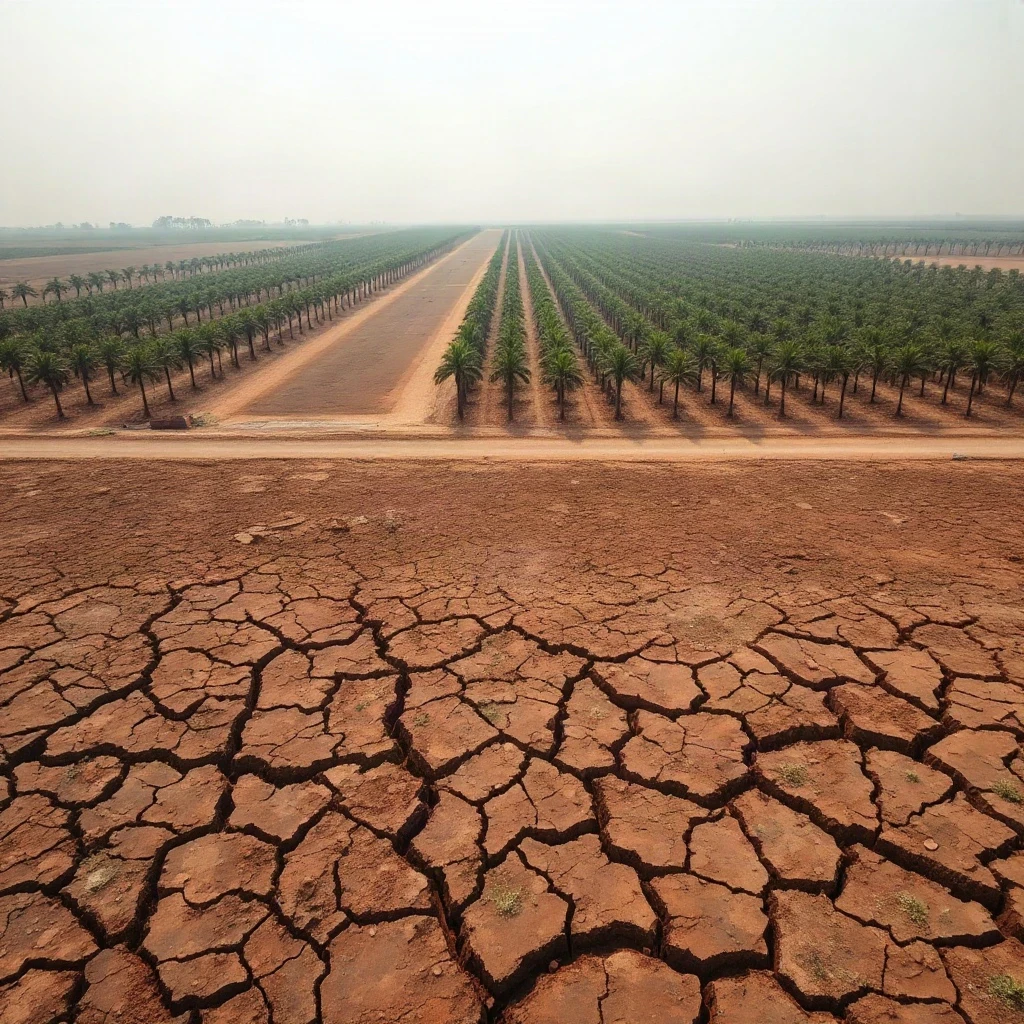
Palm oil markets are consolidating near recent highs, with the Malaysian benchmark CPO contract settling around $1,139 per metric ton, down 1.0% on the session. Our model outlook sees choppy consolidation with modest upside into early September, projecting a path of +1.8% over seven sessions, though profit-taking risks remain if Brent slides further.
The supply narrative has sharpened: industry reports and Gapki now warn that severe El Niño conditions could cut 2027 CPO output by 8-10%. This goes beyond the current dryness already affecting key regions in Sarawak, Sumatra, Riau, and Kalimantan, and points to a more prolonged supply squeeze. The Jakarta Post and Gapki reports underscore that the market's medium-term support is increasingly weather-driven.
While Malaysian July data showed production up 9.4% month-on-month to 1.79 million tons, the forward-looking concern is the potential yield drag from dry conditions. Closing stocks rose 7.2% to 1.43 million tons, a bearish factor capping upside, but exports jumped 14.5% to 1.39 million tons, reflecting robust demand. Imports fell sharply by 51.9% to 49,566 tons.
Indonesia's B50 biodiesel mandate remains a central demand pillar. Reports indicate the mandate is not hurting CPO exports, while levy revenue is rising—signals that domestic absorption and export volumes can coexist, at least for now. The levy increase implies higher costs for Indonesian exporters, potentially firming FOB offers, and funds biodiesel subsidies that reinforce domestic demand.
Palm oil's wide discount to gasoil (BOPO spread of $327/MT) keeps it attractive for biodiesel blending, but weak crude prices (Brent around $87 per barrel, up 0.5%) and a softer ringgit (4.04 per dollar) temper the appeal of holding long positions. The rupiah's weakness (17,689 per dollar) raises import costs for Indonesian buyers, potentially dampening domestic consumption growth.
Our model outlook expects CPO to trade around $1,140, with consolidation near month-end as high Malaysian stocks and weak crude/rupiah temper gains. The upward bias remains supported by the El Niño-driven supply cut warnings, strong biodiesel demand, and the wide BOPO discount. Policy-driven demand from Indonesia's B50 program will likely keep a floor under prices, while weather developments in key dry regions bear close watching.
Sources: Bisnis.com - Market; InfoSAWIT; UkrAgroConsult; Oils & Fats International
Dry conditions in key Indonesian and Malaysian regions, with El Niño still active, point to lagged yield risks even as current output rises.
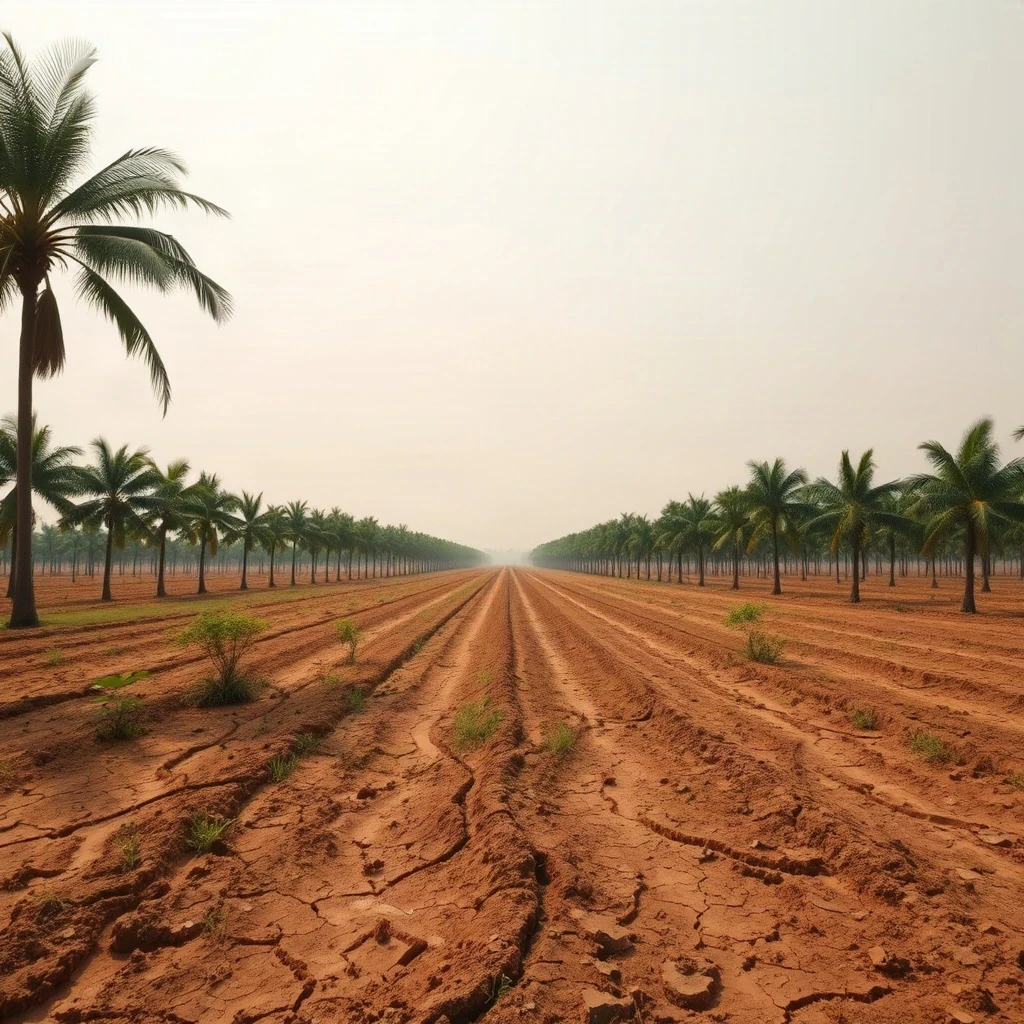
The palm oil belt is still under an active El Niño, with the ONI at +1.4, and the latest 7-day rainfall outlook shows notable dryness across Sumatra, Kalimantan and Sarawak. For the near term, the main impact is on harvesting and logistics: dry weather generally supports field access and fruit collection, but the lack of moisture now will feed through to yields with a 6-12 month lag, mainly via lower fruit bunch weights.
Malaysia’s July production data already reflect a strong seasonal uptick, with CPO output at 1,792,979 tonnes, up 9.4% from June. Closing stocks rose 7.2% to 1,429,316 tonnes, while exports jumped 14.5% to 1,392,178 tonnes. These figures suggest the market is still enjoying the tail-end of a decent crop cycle.
However, the persistence of El Niño into August and the dry conditions across Sarawak, Sumatra and Kalimantan point to a different picture for early 2027. The lagged effect means that the stress on fruit development now will show up in reduced bunch weights and lower yields several months down the line. Our model outlook also notes that the market is already pricing in some of this risk, with CPO benchmark at about $1,138 per tonne, down 1.1% on the session, but with an upward bias over the next seven days.
In Indonesia, the dry conditions in Sumatra and Kalimantan are particularly significant because these regions account for a large share of national output. The government’s reference price is about $997 per tonne, and the wide discount to the global benchmark (around $1,101) partly reflects concerns over supply availability. If the dryness persists, it could tighten supplies later in the year and into 2027.
While dry weather is generally favourable for harvesting and transport, the risk of sudden heavy rain remains. In contrast to El Niño, La Niña typically brings wetter conditions to Southeast Asia, which can disrupt harvesting and logistics immediately. For now, the dry spell is more of a slow-burn threat to yields, but any shift to intense rainfall would create short-term bottlenecks at mills and ports.
Our model outlook suggests mild gains over the next week, with consolidation around month-end as high Malaysian stocks and weak crude oil (Brent at about $86 per barrel) and a soft rupiah cap upside. The BOPO discount and Indonesia’s B50 biodiesel mandate provide underlying demand support. But the weather remains the key variable to watch: a continuation of the dry spell in the main producing regions would reinforce the case for tighter supply later in the crop year.
For now, the market is balancing strong current output against a drier-than-normal outlook. The next few months will be critical in determining whether the El Niño effect translates into a more pronounced production shortfall.
Our market desk connects serious buyers with vetted origin suppliers across Southeast Asia. Indicative pricing, specifications and shipment guidance — free of charge.
Get connected →Malaysian CPO eases 1.1% to $1,138/tonne; MPOB July output and stocks rise, while dry weather and Indonesia B50 demand keep upside bias.
Full story — Page 2 ▸Malaysian CPO slips 1.0% to $1,139/MT as July stockpiles rise 3.32%; bullish next-week outlook holds on B50 and weather risks.
Full story — Page 2 ▸Indonesian policy signals point to supply risks from fires and El Niño while domestic biodiesel demand and levy expectations shape market tone.
Full story — Page 2 ▸Industry and Gapki warn El Niño could cut 2027 CPO output by 8-10%, reinforcing supply-tightening outlook.
Full story — Page 2 ▸Dry conditions in key Indonesian and Malaysian regions, with El Niño still active, point to lagged yield risks even as current output rises.
Full story — Page 2 ▸Bullish and bearish factors are evenly matched; our model sees mild gains with consolidation into month-end.
Malaysian CPO benchmark traded around $1,138/MT, down 1.1% from the previous session, equivalent to RM4,591/MT. The World Bank global palm benchmark sat at about $1,101/MT, while Indonesia's Kemendag reference was about $997/MT. Brent crude was little changed at about $87/bbl, and USD/MYR was about 4.04. Our model notes the contract is around $1,140 after pulling back from the $1,162 high.
El Niño yield concerns are the clearest bullish supply story. With ONI at +1.4°C, the market is already pricing lagged yield stress: headlines note TBS output down 20% due to El Niño and warn a severe El Niño could shrink CPO output. Futures respond to expected future shortages, not just current harvests, so buyers are bidding now rather than waiting for confirmed crop damage.
The BOPO spread is providing demand-side support. At $326/MT, palm oil is heavily discounted to soybean oil. Importers and refiners can switch to palm when that discount is wide, which supports palm exports and consumption even if overall edible oil demand is unchanged.
Indonesia's B40-to-B50 mandate is the largest single demand variable. B50 became effective July 1 and is expected to absorb 3–4 million tonnes per year of new palm demand. By diverting more palm oil into domestic biodiesel, Indonesia reduces the volume available for export, tightening the global balance.
Technical indicators also point upward. The MACD histogram is positive, the 5/20 SMA has a golden cross, and price is above the 20- and 50-day SMAs. RSI at 62 is neutral, not overbought. A pullback from the 5-day SMA may find technical support.
India festival demand adds a near-term tailwind. Indian edible oil imports hit a 10-month high in July, and the pre-Diwali buying window opens in about 24 days. That restocking tends to support palm's competitiveness, especially with the current wide discount.
High Malaysian stocks are the main domestic bearish weight. MPOB July data showed CPO production up 9.4% month-on-month to 1,792,979 tonnes and closing stocks up 7.2% to 1,429,316 tonnes, about 61% above the five-year average. A stocks-to-use ratio of 12.5% is ample, and peak production season is still underway. Buyers face little urgency, and the next MPOB release is about 15 days away, leaving the market to digest high inventory.
Weak crude oil is undermining biodiesel economics. Brent fell 8.1% over seven days to around $86.4/bbl. Lower energy prices reduce the discretionary margin for biodiesel blending and weigh on the broader vegetable oil complex, including palm.
A weak Indonesian rupiah is regionally bearish. At USD/IDR 17,689, Indonesian exporters earn more rupiah for each dollar sale, so they have room to discount dollar-denominated CPO prices to move volume. That aggressive selling undercuts Malaysian CPO. The weakness has not yet reached the point of triggering export-curbing policy.
Crowded speculative longs add liquidation risk. CFTC data show soyoil managed-money net long rose 17,315 contracts to 98,237, at the 82nd percentile and +0.98 standard deviations from trend. When a long is this crowded, even a modest shift in sentiment can trigger profit-taking across the veg-oil complex.
Seasonality into September is a headwind. August has historically gained 0.7% month-on-month, but September has historically fallen 0.9%. The seven-day forecast crosses the month boundary, so the later part of the window faces a seasonal drag.
The factors are genuinely balanced: five bullish and five bearish, so neither side has a decisive upper hand. Our model outlook still points to mild gains over the next seven sessions—up about 1.9%—with consolidation around month-end, but that is an upward bias rather than a confident rally. High Malaysian stocks, weak crude, the weak rupiah, and crowded longs cap the upside, while El Niño fears, the wide BOPO discount, B50 demand, and technical support keep prices from breaking down.
To flip the balance more decisively bullish, we would need confirmation of El Niño yield losses in upcoming Malaysian or Indonesian production data, or a further widening of the BOPO discount. To flip it bearish, a sharper decline in crude oil, an acceleration in Indonesian export selling, or a liquidation of speculative longs would need to overwhelm the supply and technical supports.
Industry warns severe El Niño could cut output by up to 5 million tonnes, raising supply risks for palm oil buyers.

Industry warnings that a severe El Niño could shrink crude palm oil (CPO) output by up to 5 million tonnes are sharpening supply-side concerns for buyers and traders, even as current market data points to ample near-term stocks.
The alert, reported by Indonesian media, comes as the El Niño episode (ONI +1.4) continues to dry key growing regions, including Sarawak and Kalimantan. The potential production loss would be significant against Malaysia’s July CPO output of 1,792,979 tonnes, which rose 9.4% month-on-month. A 5-million-tonne shortfall would represent a major swing in global supply, likely tightening availability and supporting prices over the medium term.
The warning has also put Indonesia’s B50 biodiesel blending mandate in the spotlight. Higher blending rates increase domestic palm oil consumption, which could reduce exportable surplus if production falters. With Brent crude near $85 per barrel, weak crude prices already pressure biodiesel economics, and a supply shortfall could amplify competition between food, fuel, and export demand.
Traders are now weighing the near-term bearish signals—such as Malaysia’s July stocks building 7.2% month-on-month to 1,429,316 tonnes, and total stockpiles up 3.32% to 2.63 million tonnes—against the longer-term risk of El Niño-driven production losses. The market’s five-session rally to resistance has stalled, with the Malaysian benchmark easing about 1.0% to $1,150 per tonne (RM 4,647).
Our model outlook suggests CPO is consolidating near $1,152 after the recent run-up. While the wide discount to soyoil, Indonesia’s B50 mandate, and the El Niño risk premium remain supportive, overbought technicals and peak production season argue for a pullback in the next seven days. The published path points to a 0.4% decline over that period.
For buyers, the key question is whether current ample stocks will be enough to buffer against a potential El Niño-driven output shock. The industry warning underscores that supply risks are building, even as today’s data show comfortable inventories. Traders will be watching weather patterns and policy decisions in Jakarta closely.
Sources: The Jakarta Post; kontan.co.id; Finimize
Jakarta challenges Kuala Lumpur's export reference price role, a move that could reshape palm oil pricing and trade dynamics.

Indonesia's trade ministry has clarified it holds no authority to set export reference prices for crude palm oil (CPO) and other commodities, a statement that underscores a widening policy rift with Malaysia over who controls the benchmark pricing mechanism for the world's most-traded vegetable oil.
The clarification, reported by Indonesian media, comes amid a broader dispute between the two top producers. Malaysia's own reference price, set by its Palm Oil Board (MPOB), is the basis for its export duty structure and is closely watched by global traders. Indonesia, which uses a separate reference price from its trade ministry (Kemendag), has been pushing for a more unified or competitive pricing framework, a move that could alter how CPO is priced for buyers across Asia, Europe, and Africa.
For palm oil buyers and traders, the stakes are high. A shift in reference price authority — or a divergence between Indonesian and Malaysian benchmarks — could create arbitrage opportunities or widen the discount between the two origins. Currently, Indonesia's reference price sits at about $997 per metric ton, well below the Malaysian benchmark of roughly $1,150 and the global World Bank average of about $1,101. That gap already makes Indonesian product cheaper for some buyers, and any policy change could deepen that differential.
Malaysia's July data shows the market is well supplied: CPO production rose 9.4% month-on-month to 1.79 million tons, while exports jumped 14.5% to 1.39 million tons. Yet closing stocks still grew 7.2% to 1.43 million tons, and total Malaysian stockpiles were reported at 2.63 million tons, up 3.32% from June. That ample supply, combined with peak production season and weak crude oil prices, is pressuring prices despite a five-session rally that pushed futures to their highest since 2024.
Indonesia's B50 biodiesel mandate — requiring 50% palm oil blend — remains a structural demand pillar, while El Niño conditions (ONI +1.4) have left parts of Sarawak and Kalimantan unusually dry, raising the risk of future supply disruptions. Our model outlook sees CPO consolidating near $1,152, with a likely pullback of about 0.4% over the next seven sessions as overbought technicals and ample stocks weigh on sentiment.
But the pricing dispute adds a layer of uncertainty that pure supply-demand models cannot capture. If Indonesia moves to assert more control over reference pricing — or if Malaysia retaliates — the result could be a more fragmented market, with buyers facing two distinct price signals. For now, traders are watching Jakarta's next move closely, as any formal policy shift could ripple through global palm oil trade flows and reshape the competitive balance between the two producers.
Sources: RCTI+; Bisnis.com - Market; BernamaBiz; South China Morning Post; BernamaBiz
Malaysian CPO trades around $1,150/MT after a 7-day rally, but bullish BOPO and Indonesian policy are offset by peak production and profit-taking, keeping near-term risks tilted lo

Malaysian CPO slipped 1.0% to about $1,150/MT as MPOB July stocks rose 7.2%, while Indonesia’s B50 push and dry weather keep a floor under prices.

Malaysian CPO benchmark eased 1.0% to about $1,150/MT, equivalent to RM4,647/MT, after a seven-day 3.1% rally took prices to the upper Bollinger Band. The World Bank benchmark was about $1,101/MT and Indonesia’s reference about $997/MT; the wide spread keeps Malaysian cargoes competitive in some destinations.
For buyers, the key watch items are whether Malaysian export pace can absorb rising production, how Indonesia’s levy and B50 implementation affect available supply, and any crude oil reversal. Dry weather across Sarawak and Kalimantan adds upside risk to forward pricing if it persists into the peak production season.
Sources: RCTI+; Bisnis.com - Ekonomi; sawitsetara.co; METRORIAU.COM; UkrAgroConsult; South China Morning Post
Malaysian CPO slips 1% on profit-taking; MPOB July stocks up 7.2% MoM; El Niño dry weather in Sarawak and Kalimantan supports prices.
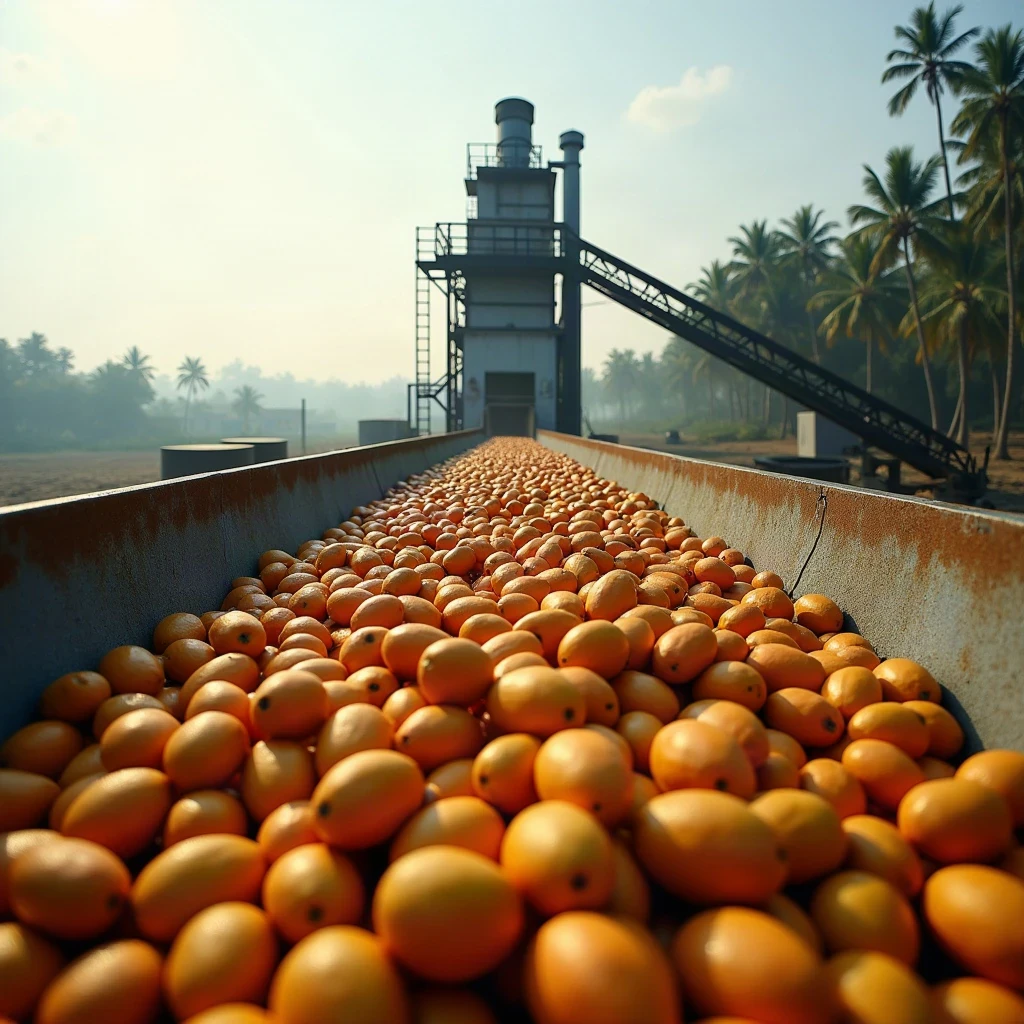
Malaysian crude palm oil futures eased about 1.0% on the day to near $1,150/MT (RM 4,645/MT), snapping a five-session winning streak that had lifted prices more than 3% last week. The pullback came as traders booked profits and crude oil weakened 0.8% to about $85/bbl, trimming the appeal of palm-based biodiesel. The global benchmark stood near $1,101/MT, while Indonesia's reference price was around $997/MT, underscoring a wide spread between the two key producers.
Malaysia's MPOB July report showed crude palm oil production at 1,792,979 tonnes, up 9.4% month-on-month, while closing stocks rose 7.2% to 1,429,316 tonnes. Exports jumped 14.5% to 1,392,178 tonnes, but imports fell sharply by 51.9% to 49,566 tonnes. The stock build, though moderate, adds a bearish note. The fresh fruit bunch reference price edged up 1.2% to RM 49.50, reflecting still-firm grower returns.
Weather remains a key swing factor. The El Niño episode (ONI +1.4) continues to bring dry conditions to Sarawak and Kalimantan, raising concerns about future output. Our model outlook notes that a two-day stale anchor (Aug 24) and missing cargo surveyor and FCPO data widen uncertainty. The base case expects modest consolidation after the recent rally, with a wide BOPO spread ($330/MT) and Indonesian policy support underpinning prices, but the MPOB stock build and weaker crude capping upside.
Indonesia's biodiesel mandate remains a central pillar. Reports indicate the B50 program is accelerating, which supports domestic CPO absorption and helps sustain farmer-level TBS prices. Export levy revenue is projected to reach Rp 41.22 trillion this year, up 31%, according to multiple sources. This revenue is earmarked for replanting and downstream initiatives. However, a potential production shortfall of up to 5 million tonnes in 2027 looms, which could pressure export volumes.
Pricing power is also in the spotlight: Indonesia and Malaysia are jostling over benchmark mechanisms, with Indonesia clarifying that its trade ministry does not set export reference prices for CPO or coal. This regulatory ambiguity adds another layer of uncertainty for buyers.
Technical indicators are bullish but overbought near the upper Bollinger band, suggesting mixed daily moves with a slight upward drift. Our model path projects +1.3% over the next seven sessions. For buyers, the key variables are the pace of Malaysian stock accumulation, the intensity of El Niño dryness in Borneo, and any further policy signals from Jakarta on biodiesel and export levies. A break above recent highs could extend gains, but profit-taking and softer crude remain headwinds.
Sources: IDX Channel; NST Online; Bisnis.com - Ekonomi; sawitsetara.co; METRORIAU.COM; UkrAgroConsult
A practical guide to MSPO, its divergence from RSPO, and the compliance documents traders must track.

For procurement managers sourcing from Malaysia, the Malaysian Sustainable Palm Oil (MSPO) certification is a fixture of the paperwork. Unlike voluntary schemes, MSPO is mandatory under national law. This explainer unpacks what the scheme requires, how it differs from RSPO, and why it matters for your landed cost.
MSPO is a national certification framework covering the entire supply chain, from independent smallholders to plantations, mills, and downstream processors. It sets standards for legal compliance, environmental management, worker welfare, and social responsibility. Crucially, it requires traceability—each certified entity must document the origin of its crop or product, enabling a chain of custody from palm fruit to refinery.
For producers, certification involves audits against these criteria. The process includes gap assessments, corrective action plans, and annual surveillance audits. Smallholders often receive support to meet the standards, but they too must comply.
The Roundtable on Sustainable Palm Oil (RSPO) is a global, multi-stakeholder initiative. Its certification is voluntary, driven by market demand, and includes a trademark for consumer goods. MSPO, in contrast, is a national regulatory scheme, enforced by Malaysian authorities. While both share goals like deforestation-free supply chains and fair labor practices, they differ in scope and governance.
MSPO focuses on compliance with Malaysian laws and policies, whereas RSPO sets international standards that may exceed national requirements. For example, RSPO includes specific criteria on peatland management and High Conservation Value assessment, which MSPO may not fully mirror. Additionally, RSPO offers credits and segregated supply chains, while MSPO primarily certifies mass-balance or identity-preserved flows.
For buyers, the distinction matters: RSPO certification is often demanded by Western retailers, while MSPO satisfies domestic regulations and may be accepted as proof of sustainable sourcing in regional markets.
When you purchase from a certified MSPO supplier, you should expect a certificate of conformity, an audit summary, and a delivery order that references the certification number. These documents must align with the volume you receive. For each shipment, you may need to verify that the supplier's certificate is valid and covers the product type.
If you blend MSPO and non-MSPO palm oil, you must maintain records that demonstrate the mass balance—the proportion of certified material in your final product. This requires a robust traceability system, often involving third-party software or manual logs.
MSPO certification costs are embedded in the producer's price, so changes in audit fees or enforcement can shift your landed cost. Government policies that adjust smallholder compliance deadlines or strengthen audit requirements can also affect supply availability. Watch for announcements from the Malaysian Palm Oil Board (MPOB) regarding MSPO implementation, as they signal potential paperwork changes.
Moreover, divergence between MSPO and RSPO standards means you may need dual certifications to serve different customers. This can increase administrative burden and cost. Stay informed on equivalence agreements—if MSPO is recognized as equivalent to RSPO, your paperwork could simplify.
In short, MSPO is not a mere label; it is a regulatory layer that influences your supplier relationships, your compliance burden, and ultimately, your bottom line. ---
*This article reflects the position as of 26 August 2026. Duty structures, levies and mandates change often, sometimes at short notice. Please verify the current position, and any changes made after this date, before relying on it.*
Our market desk connects serious buyers with vetted origin suppliers across Southeast Asia. Indicative pricing, specifications and shipment guidance — free of charge.
Get connected →Jakarta challenges Kuala Lumpur's export reference price role, a move that could reshape palm oil pricing and trade dynamics.
Full story — Page 2 ▸Malaysian CPO trades around $1,150/MT after a 7-day rally, but bullish BOPO and Indonesian policy are offset by peak production and profit-taking, keeping near-term risks tilted lo
Full story — Page 2 ▸Malaysian CPO slipped 1.0% to about $1,150/MT as MPOB July stocks rose 7.2%, while Indonesia’s B50 push and dry weather keep a floor under prices.
Full story — Page 2 ▸Malaysian CPO slips 1% on profit-taking; MPOB July stocks up 7.2% MoM; El Niño dry weather in Sarawak and Kalimantan supports prices.
Full story — Page 2 ▸A practical guide to MSPO, its divergence from RSPO, and the compliance documents traders must track.
Full story — Page 2 ▸Industry warns severe El Niño could cut output by up to 5 million tonnes, raising supply risks for palm oil buyers.
Industry warnings that a severe El Niño could shrink crude palm oil (CPO) output by up to 5 million tonnes are sharpening supply-side concerns for buyers and traders, even as current market data points to ample near-term stocks.
The alert, reported by Indonesian media, comes as the El Niño episode (ONI +1.4) continues to dry key growing regions, including Sarawak and Kalimantan. The potential production loss would be significant against Malaysia’s July CPO output of 1,792,979 tonnes, which rose 9.4% month-on-month. A 5-million-tonne shortfall would represent a major swing in global supply, likely tightening availability and supporting prices over the medium term.
The warning has also put Indonesia’s B50 biodiesel blending mandate in the spotlight. Higher blending rates increase domestic palm oil consumption, which could reduce exportable surplus if production falters. With Brent crude near $85 per barrel, weak crude prices already pressure biodiesel economics, and a supply shortfall could amplify competition between food, fuel, and export demand.
Traders are now weighing the near-term bearish signals—such as Malaysia’s July stocks building 7.2% month-on-month to 1,429,316 tonnes, and total stockpiles up 3.32% to 2.63 million tonnes—against the longer-term risk of El Niño-driven production losses. The market’s five-session rally to resistance has stalled, with the Malaysian benchmark easing about 1.0% to $1,150 per tonne (RM 4,647).
Our model outlook suggests CPO is consolidating near $1,152 after the recent run-up. While the wide discount to soyoil, Indonesia’s B50 mandate, and the El Niño risk premium remain supportive, overbought technicals and peak production season argue for a pullback in the next seven days. The published path points to a 0.4% decline over that period.
For buyers, the key question is whether current ample stocks will be enough to buffer against a potential El Niño-driven output shock. The industry warning underscores that supply risks are building, even as today’s data show comfortable inventories. Traders will be watching weather patterns and policy decisions in Jakarta closely.
Correction: the bourse was announced for a January 2027 launch, not launched. Jakarta targets greater influence over benchmark palm oil trade.

> Correction (25 Aug 2026): An earlier version of this brief reported that Indonesia had *launched* a national commodity exchange. That was wrong. President Prabowo announced the exchange on 14 August 2026, with a target launch of 1 January 2027; OJK rules are due by mid-September 2026 and the commodity list will be set by presidential decree. The analysis below has been corrected accordingly. We publish our errors rather than erase them.
Indonesia has announced plans for a national commodity exchange targeting a 1 January 2027 launch — a move that would directly challenge Malaysia's long-standing role as the reference point for global palm oil pricing. If delivered, it would mark a structural shift in how palm oil prices are discovered and benchmarked, with implications for buyers, sellers and traders who currently anchor contracts to Malaysian benchmarks.
The launch comes at a time when the global palm complex is navigating a mixed demand-and-supply backdrop. Malaysian crude palm oil futures settled around $1,162 per tonne, up 1.5% on the previous session, while the global World Bank benchmark stood near $1,101 and Indonesia's own reference price was around $997 per tonne. The wide spread between the Malaysian and Indonesian reference levels—roughly $309 per tonne—highlights the pricing tension the new exchange may seek to address.
For decades, Malaysia's Bursa Malaysia has served as the primary price-discovery venue for palm oil, with its CPO futures widely used as a hedging and settlement tool. Indonesia, the world's largest producer and exporter of palm oil, has long sought greater influence over the pricing of its own commodity. The national exchange is the clearest attempt yet to shift that balance, potentially offering an alternative venue for price formation that reflects Indonesian supply and demand dynamics more directly.
The implications for traders are significant. A credible Indonesian benchmark could alter contract pricing, basis calculations and hedging strategies, particularly for those with exposure to Indonesian-origin product. The move also carries geopolitical weight, as it positions Jakarta to compete with Kuala Lumpur not just in volume but in market infrastructure.
Traders are absorbing this news against a mixed technical and fundamental picture. Recent headlines point to profit-taking and weaker crude oil pressuring CPO futures, with Brent crude down 0.8% on the session and sliding 4.1% over the past seven days. Our model outlook notes overbought technicals—RSI at 78—and expects a modest consolidation with a 0.3% gain over the next seven sessions, or a net drift of -0.4% under the base case.
Fundamentals offer some support. Malaysian July production rose 9.4% month-on-month to 1.79 million tonnes, while exports jumped 14.5% to 1.39 million tonnes. Closing stocks were ample at 1.43 million tonnes, up 7.2%. The deeply negative palm-oil-to-gas-oil spread of -$222 per tonne keeps palm attractive for biodiesel blending, and El Niño conditions—with dry weather in Sarawak and Kalimantan—could tighten supply later in the season.
The exchange launch adds a new variable to an already complex pricing environment. Market participants will be watching whether the Indonesian bourse gains liquidity and traction, and whether it can meaningfully compete with Malaysia's established benchmark. For now, the structural shift is underway, and traders are recalibrating.
Sources: finance.biggo.com; BernamaBiz; Bernama; The Edge Malaysia; Bisnis.com - Market
Malaysian CPO at $1,162/MT after five sessions, yet RSI 78 and ample July stocks put downside pressure on the market.

Malaysian CPO benchmark sits at about $1,162 per metric tonne (RM4,688/MT), up 1.5% from the previous session and at 52-week highs after five straight sessions. The World Bank global benchmark is about $1,101/MT, and Indonesia's Kemendag reference is about $997/MT. Brent crude is around $92/bbl.
The BOPO spread of $314/MT makes palm oil heavily discounted against soybean oil. This wide discount encourages edible-oil buyers to switch demand from soy to palm, providing direct purchasing support even at elevated nominal prices.
Indonesia's B50 biodiesel mandate is phasing in and is expected to absorb roughly 3 to 4 million tonnes of palm oil per year. The policy also lifts Indonesia's export levy revenue, projected to rise 31%, which supports medium-term demand for palm feedstock and tightens export availability over time.
A strengthening El Niño, with ONI at +1.4 and dry conditions in Sarawak and Kalimantan, creates a lagged yield risk. Although current output is still high, the market is beginning to price in potential future supply tightening, adding a bullish undercurrent.
India's Diwali buying window opens in about 26 days, and Indian imports are historically strong during the festival season. This seasonal demand flow is providing near-term demand support, even though the festival effect on prices has historically been neutral overall.
Technical signals are stretched. The price is above its upper Bollinger Band with RSI at 78, which signals reversal risk within three to five days. Profit-taking headlines already appeared in the August 24 session, and this overbought condition is the most immediate downside driver.
Malaysian July closing stocks are ample at 1,429,316 tonnes, up 7.2% month-on-month and 61% above the five-year average. The stocks-to-use ratio of 12.5% indicates comfortable supply coverage, which caps upside even as exports rose 14.5% to 1,392,178 tonnes.
Malaysia is in its peak production season from July to October. July CPO production jumped 9.4% month-on-month to 1,792,979 tonnes, and this high-output period exerts seasonal downward pressure on prices.
Crude oil is weak, with Brent down 3.5% over the past seven days. Monday's CPO decline was linked to weaker crude oil, because lower crude prices dampen the relative economics of biodiesel blending and reduce the incentive to use palm oil for fuel.
Indonesia's weak rupiah, at USD/IDR 17,691, and the launch of Indonesia's own commodity exchange are challenging Malaysian pricing. A weaker rupiah can make Indonesian exports more competitive in dollar terms, potentially diverting demand away from Malaysian CPO.
Speculative positioning in soybean oil is crowded. CFTC managed-money net long sits at the 82nd percentile, which makes the broader vegetable-oil complex vulnerable to long liquidation. Any unwinding in soyoil could spill over into palm oil futures.
The balance of our model's factors is four bullish against six bearish, so the downside has the upper hand right now. Our model outlook expects a modest net decline over the next seven days. The published path shows +0.4% over seven sessions, reflecting the tug-of-war between strong demand factors and overbought technicals plus ample stocks.
For the balance to flip to bullish, the market would need to see a decisive reset in overbought conditions—such as RSI falling below 70 and the price closing back inside the Bollinger Band—along with fundamentals that reduce supply comfort. That could come from a sharp drop in Malaysian closing stocks, clearer evidence that El Niño is damaging future yields, a rebound in crude oil, or a successful unwinding of the crowded soyoil long without contagion. Until those signals appear, the combination of ample July stocks, peak seasonal output, weak crude, and Indonesian price competition is likely to keep near-term upside limited.
Malaysian CPO holds near $1,162/MT; ample July stocks and peak output cap upside, while B50 mandates and El Niño risks cushion downside.

Malaysian crude palm oil was quoted at about $1,162/MT (RM4,688/MT) on 25 August, up 1.5% from the prior session, while the World Bank benchmark for palm oil stood at $1,101/MT and Indonesia’s Kemendag reference at $997/MT. The gap between Malaysian and Indonesian markers remains wide, and reports of Indonesia’s push to establish a national commodity exchange highlight the ongoing competition over pricing influence in the region.
On the supply side, MPOB’s July data showed Malaysian production at 1,792,979 tonnes, up 9.4% month-on-month, and closing stocks at 1,429,316 tonnes, up 7.2% month-on-month. Exports rose 14.5% to 1,392,178 tonnes and imports fell 51.9% to 49,566 tonnes. The stocks-to-use ratio printed at 12.5%. These figures indicate ample near-term availability at a time when output is still in its seasonal peak, which tends to cap upside despite strong export volumes.
Meanwhile, weather fundamentals point to a more uncertain second half. El Niño conditions remain in place with an ONI of +1.4, and dry conditions have been noted in Sarawak and Kalimantan. That has revived concern about longer-run production losses, with some reporting the worst impact may only show up in 2027. For now, the market is balancing current ample stocks against future supply risk.
Demand is supported by Indonesia’s B50 biodiesel rollout. Reports suggest the mandate is helping to keep farmer fresh fruit bunch prices supported, and Indonesia’s palm export levy receipts are projected at Rp41.22 trillion this year, with one industry body saying the B50 programme has not squeezed exports and levy collections have risen sharply. Additional demand-side support comes from India’s festival-season cooking oil imports, though broader edible oil dependence also matters.
Price action is where buyers need closest attention. After five consecutive sessions of gains, profit-taking emerged and crude oil was a factor. Brent was about $92/bbl, unchanged from the previous session, but profit-taking headlines came through to stall momentum. Our model outlook puts CPO at 52-week highs with an RSI of 78, suggesting near-term pullback or consolidation is likely. The wide BOPO spread, the B50 mandate and El Niño supply risks limit downside, while ample July stocks and peak production cap upside. We expect a modest net decline over the next seven days; our published path is +0.4% over seven sessions.
Takeaway for buyers: watch August export and production prints, Indonesian B50 implementation and levy flows, and any weather-driven revisions to 2027 supply. A technical pullback could widen near-term buying windows, but structural demand and dry weather may limit the downside.
Sources: Agricom.id; METRORIAU.COM; South China Morning Post; BernamaBiz; finance.biggo.com; Ikatan Konsultan Pajak Indonesia
Malaysian CPO benchmark up 1.5% to $1162/MT; profit-taking and ample stocks seen capping gains, while biodiesel mandates and dry weather support.

Malaysian crude palm oil futures extended their rally on Monday, with the benchmark contract settling about 1.5% higher at approximately $1162/MT (RM 4688/MT), according to market data. The gain came despite a late-session dip as traders took profits after five consecutive sessions of advances, which had pushed prices to 52-week highs. The global benchmark, as tracked by the World Bank, stood at about $1101/MT, while Indonesia's reference price was set at roughly $997/MT.
The latest MPOB data for July 2026 showed Malaysian CPO production rose 9.4% month-on-month to 1,792,979 tonnes, while closing stocks climbed 7.2% to 1,429,316 tonnes. Exports jumped 14.5% to 1,392,178 tonnes, but imports fell sharply by 51.9% to 49,566 tonnes. The build in stocks and peak production season are typically bearish factors, yet prices have remained resilient, supported by strong biodiesel demand and weather concerns.
El Niño conditions persist, with the ONI index at +1.4. Notable rainfall deficits are reported in Sarawak and Kalimantan, key producing regions in Malaysia and Indonesia. Dry weather raises concerns about future yields, and some analysts warn of a more pronounced impact on Indonesian production by 2027. This supply risk is a key reason why many market participants expect prices to stay above RM4,600/tonne in September, as highlighted by MPOC and other forecasters.
Indonesia's push for a B50 biodiesel mandate continues to underpin demand for palm oil as a feedstock. The country's export levy revenue is projected to reach Rp 41.22 trillion this year, a 31% increase, according to industry reports. Strong biodiesel consumption helps support farmer-level fresh fruit bunch prices, as noted in recent commentary. Meanwhile, India, the world's largest palm oil importer, has been increasing imports ahead of the festival season, though sunflower oil imports have been affected by war-related disruptions.
Indonesia has launched a national commodity exchange, challenging Malaysia's long-standing pricing dominance for palm oil. This could shift how benchmark prices are determined in the future. Currency movements also play a role: the Indonesian rupiah weakened to about 17,691 per dollar, while the ringgit traded at around 4.04 per dollar. A weaker rupiah can make Indonesian exports more competitive, but it also raises the cost of imported inputs.
Our model outlook indicates that while CPO is at 52-week highs, the RSI at 78 and the prevalence of profit-taking headlines suggest a near-term pullback or consolidation. The wide BOPO spread, strong B50 mandate, and El Niño supply risks limit downside, while ample July stocks and peak production cap upside. We expect a modest net decline over the next 7 days, with a published path of +0.4% over 7 sessions.
Watch for profit-taking momentum and any shift in the Indonesia-Malaysia pricing dynamics. Also monitor weather updates in Sarawak and Kalimantan, as well as crude oil prices, which influence biodiesel blending economics. A break below key support could signal a deeper correction, but the structural demand from biodiesel and supply risks should keep the market supported in the medium term.
Sources: Agricom.id; sawitsetara.co; METRORIAU.COM; UkrAgroConsult; UkrAgroConsult; South China Morning Post
A step-by-step look at how a producing country's export restriction reaches your landed cost, and what it taught buyers about supply concentration.

For procurement managers and traders, an export ban is not just a headline—it is a mechanical shock to the price discovery process. When a major producer restricts shipments, the global market must reprice supply in a matter of days. Understanding that mechanism is essential, because the same policy tool can be redeployed at any time, and its effects are not symmetrical across buyers.
An export ban works in three stages. First, the producing government halts or restricts outbound shipments, either across the board or for specific products. This immediately removes a large share of available global supply from the tradable pool. Second, buyers who relied on that supply must scramble for alternatives—shifting to other origins, drawing down inventories, or paying premiums for prompt cargoes. Third, the price discovery process reprices the entire complex: benchmark futures, physical differentials, freight, and ultimately the landed cost for end-users.
The key point is that the ban does not just raise the price of the banned origin's product. It raises the price of all substitute supply, because demand does not disappear—it redirects. Buyers bid up alternative origins, and those origins' sellers, knowing they now hold scarce supply, raise offers. The result is a broad-based price spike that persists until the ban is lifted or until demand destruction brings the market back into balance.
The 2022 ban was a stress test for global supply chains. It demonstrated that a single policy decision in one country could move world prices within days, regardless of what other producers did. The episode also revealed the limits of diversification: when the largest exporter restricts supply, even buyers with multiple origins face higher costs, because the marginal barrel of supply is now more expensive everywhere.
For buyers, the lesson was not just about price levels but about volatility. The ban created a period of extreme uncertainty, with cargoes delayed, contracts renegotiated, and risk premiums widening. Those who had flexible sourcing arrangements and buffer inventories fared better than those locked into single-origin contracts.
For a buyer, the practical takeaway is to monitor the structural drivers that make a ban more or less likely. Watch domestic price levels relative to international prices—a wide gap creates political pressure to restrict exports. Watch inventory levels in the producing country; low domestic stocks make bans more tempting. And watch the policy calendar, including election cycles and changes in trade or agriculture ministries, because these shift the political calculus.
Commercially, the lesson is to build resilience into your supply chain: maintain diversified origin exposure, hold strategic inventory where possible, and build contract flexibility that allows you to shift volumes quickly. The 2022 episode showed that export bans are not a one-off event but a recurring tool in the policy toolkit. Buyers who price that risk into their procurement strategy will be better positioned when the next one comes.
Illustrative example: If a ban removes 10% of global supply, the price impact is not 10%—it can be far larger, because the remaining supply must be rationed through price. The exact magnitude depends on demand elasticity, inventory levels, and how quickly alternative supply can respond. ---
*This article reflects the position as of 25 August 2026. Duty structures, levies and mandates change often, sometimes at short notice. Please verify the current position, and any changes made after this date, before relying on it.*
Firm biodiesel demand and a higher export levy point to more palm oil staying in domestic tanks, while outreach prepares stakeholders for B50.
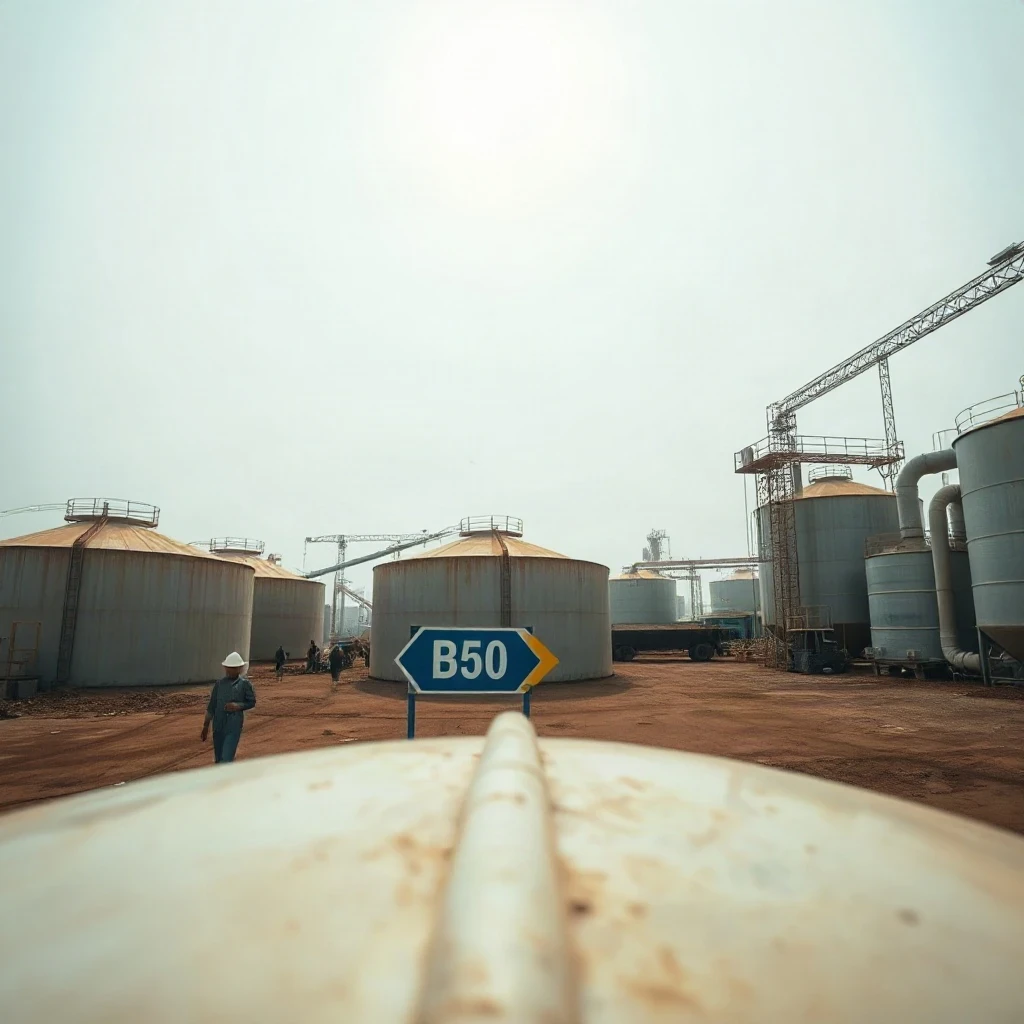
Indonesia's latest policy signals point to a domestic biodiesel pull that could reshape palm oil trade flows. Reports say the stronger biodiesel mandate is being credited with supporting fresh fruit bunch prices for smallholders, giving growers a clearer link between energy policy and farmgate returns.
A research note cited in regional media sees firm biodiesel demand lifting palm oil prices, with a potential move above RM4,300 per tonne. That price level, if realized, reflects both tightness in vegetable oil supply and the additional demand from biofuel blending. For physical buyers, the message is that palm oil is no longer being priced purely on food or oleochemical demand.
On the supply side, Indonesia's estate crop fund agency says the move toward B50 has not suppressed palm oil exports, even as export levies rise by 73%. The higher levy is the policy lever that funds biodiesel subsidies and other programs. It raises the cost of shipping palm products out of Indonesia, which in practice encourages more feedstock to remain in the domestic market. That supports the mandate but narrows the pool of freely traded export volumes.
Overall, these developments reinforce the view that Indonesian energy policy is becoming a primary driver of palm oil balances. A buyer that treats biodiesel mandates as a side issue risks misreading both price direction and shipment timing. Monitoring levy changes, actual blending rates, and export data will be essential for supply planning.
Sources: METRORIAU.COM; DagangNews; Validnews; achmadnurhidayat.id; Oils & Fats International
Our market desk connects serious buyers with vetted origin suppliers across Southeast Asia. Indicative pricing, specifications and shipment guidance — free of charge.
Get connected →Malaysian CPO at $1,162/MT after five sessions, yet RSI 78 and ample July stocks put downside pressure on the market.
Full story — Page 2 ▸Malaysian CPO holds near $1,162/MT; ample July stocks and peak output cap upside, while B50 mandates and El Niño risks cushion downside.
Full story — Page 2 ▸Malaysian CPO benchmark up 1.5% to $1162/MT; profit-taking and ample stocks seen capping gains, while biodiesel mandates and dry weather support.
Full story — Page 2 ▸A step-by-step look at how a producing country's export restriction reaches your landed cost, and what it taught buyers about supply concentration.
Full story — Page 2 ▸Firm biodiesel demand and a higher export levy point to more palm oil staying in domestic tanks, while outreach prepares stakeholders for B50.
Full story — Page 2 ▸Correction: the bourse was announced for a January 2027 launch, not launched. Jakarta targets greater influence over benchmark palm oil trade.
> Correction (25 Aug 2026): An earlier version of this brief reported that Indonesia had *launched* a national commodity exchange. That was wrong. President Prabowo announced the exchange on 14 August 2026, with a target launch of 1 January 2027; OJK rules are due by mid-September 2026 and the commodity list will be set by presidential decree. The analysis below has been corrected accordingly. We publish our errors rather than erase them.
Indonesia has announced plans for a national commodity exchange targeting a 1 January 2027 launch — a move that would directly challenge Malaysia's long-standing role as the reference point for global palm oil pricing. If delivered, it would mark a structural shift in how palm oil prices are discovered and benchmarked, with implications for buyers, sellers and traders who currently anchor contracts to Malaysian benchmarks.
The launch comes at a time when the global palm complex is navigating a mixed demand-and-supply backdrop. Malaysian crude palm oil futures settled around $1,162 per tonne, up 1.5% on the previous session, while the global World Bank benchmark stood near $1,101 and Indonesia's own reference price was around $997 per tonne. The wide spread between the Malaysian and Indonesian reference levels—roughly $309 per tonne—highlights the pricing tension the new exchange may seek to address.
For decades, Malaysia's Bursa Malaysia has served as the primary price-discovery venue for palm oil, with its CPO futures widely used as a hedging and settlement tool. Indonesia, the world's largest producer and exporter of palm oil, has long sought greater influence over the pricing of its own commodity. The national exchange is the clearest attempt yet to shift that balance, potentially offering an alternative venue for price formation that reflects Indonesian supply and demand dynamics more directly.
The implications for traders are significant. A credible Indonesian benchmark could alter contract pricing, basis calculations and hedging strategies, particularly for those with exposure to Indonesian-origin product. The move also carries geopolitical weight, as it positions Jakarta to compete with Kuala Lumpur not just in volume but in market infrastructure.
Traders are absorbing this news against a mixed technical and fundamental picture. Recent headlines point to profit-taking and weaker crude oil pressuring CPO futures, with Brent crude down 0.8% on the session and sliding 4.1% over the past seven days. Our model outlook notes overbought technicals—RSI at 78—and expects a modest consolidation with a 0.3% gain over the next seven sessions, or a net drift of -0.4% under the base case.
Fundamentals offer some support. Malaysian July production rose 9.4% month-on-month to 1.79 million tonnes, while exports jumped 14.5% to 1.39 million tonnes. Closing stocks were ample at 1.43 million tonnes, up 7.2%. The deeply negative palm-oil-to-gas-oil spread of -$222 per tonne keeps palm attractive for biodiesel blending, and El Niño conditions—with dry weather in Sarawak and Kalimantan—could tighten supply later in the season.
The exchange launch adds a new variable to an already complex pricing environment. Market participants will be watching whether the Indonesian bourse gains liquidity and traction, and whether it can meaningfully compete with Malaysia's established benchmark. For now, the structural shift is underway, and traders are recalibrating.
Malaysian CPO is up 4.6% in seven days and near its 52-week high, but our model’s balance of factors gives the downside a 5-4 edge.

Malaysian crude palm oil benchmark is about $1,158/MT, or roughly RM4,684/MT, up 1.2% from the previous session. The wider market remains elevated: the World Bank palm oil benchmark is about $1,101/MT and Indonesia’s Kemendag reference price is about $997/MT. Against a softer Brent crude price of about $93/bbl and a USD/MYR rate of about 4.04, the Malaysian contract is near the top of its 52-week range after a 4.6% gain over the past seven days.
The largest structural support is the soy-palm spread. Soybean oil is quoted at about $1,506/MT, leaving palm at a discount of about $346/MT. That discount is wide enough to encourage price-sensitive buyers to switch demand into palm oil for food and industrial use, which keeps physical offtake active even as prices rise.
Indonesian export policy is also squeezing trade. The August reference price of $997/MT triggers a $125/MT export levy plus a $148/MT export duty, a combined $273/MT charge on Indonesian shipments. That makes Indonesian cargoes relatively less competitive and shifts marginal demand toward Malaysian supply, tightening the pool of cheaper exportable oil and supporting the Malaysian benchmark.
Biodiesel mandates continue to provide a demand floor. Indonesia’s B40 program is in force and B50 is being phased in, absorbing an estimated 3–4 million tonnes of palm oil per year that would otherwise compete for export demand. Weather adds a forward-looking risk premium: El Niño is strong at an ONI of +1.4, with dry conditions in Sarawak and Kalimantan. The anticipated 6–12 month lag to yield losses has not yet hit current supply, but it underpins sentiment for later in the crop year.
Technical indicators now point to exhaustion risk. RSI is at 78 and the price is above the upper Bollinger Band of about $1,144 after five consecutive higher sessions. That extension after a 4.6% seven-day rally and a 5.2% thirty-day gain near the 52-week high makes profit-taking more likely than fresh buying at these levels.
Fundamental supply is also building. July MPOB closing stocks rose 7.2% month on month to 1,429,316 tonnes, 61% above the five-year average, with a stocks-to-use ratio of 12.5%. Production rose 9.4% month on month to 1,792,979 tonnes, and the seasonal path points to another 7.0% increase next month. July exports did rise 14.5% month on month, but that was not enough to stop inventories from accumulating. The July-to-October peak output window means more fresh supply is entering the market at exactly the time the rally is technically overbought.
Speculative positioning adds downside asymmetry. CFTC soyoil net length is +98,237 contracts, in the 82nd percentile historically, leaving the broader vegetable oil complex vulnerable to long liquidation. Brent crude’s 0.5% dip to about $93/bbl does not reinforce the biodiesel demand story, and India’s festival imports at a 10-month high remain a neutral factor because the pre-Diwali window has historically shown no reliable price lift.
Our model’s factor balance is four bullish against five bearish, so the downside currently has the upper hand. The bullish supports—soy discount, Indonesian export taxes, biodiesel demand, and El Niño—are real but are being outweighed by overbought technicals, ample Malaysian stocks, peak production, and crowded speculative length. We expect the next seven days to consolidate with a modest pullback as profit-taking and September softness offset bullish headlines. Our published path is for a flat move over seven sessions, effectively a pause in the rally.
For the balance to flip, the market would need evidence that the supply side is tightening despite peak season. A surprise drawdown in Malaysian closing stocks, an abrupt disruption to July-to-October production, or faster confirmation of El Niño yield damage would remove the bearish edge. Alternatively, a further widening of the soy-palm spread, a new Indonesian export restriction, or a stronger biodiesel demand shock could overcome the current overbought setup. Until one of those shifts appears, the pullback risk is the dominant story.
Malaysian benchmark $1,158/MT with ample July stocks and El Niño dryness; biodiesel levies and soy spread support, but RSI 78 hints consolidation.

Malaysian benchmark crude palm oil traded around $1,158 per tonne, or RM4,684 at 4.04 ringgit per dollar, up 1.2% from the previous session. That puts it above the World Bank global palm benchmark of about $1,101 and Indonesia’s export reference of about $997, a gap that partly reflects Indonesia’s higher export levies and duties. Brent crude slipped 0.5% to about $93/bbl, keeping biodiesel blend math relevant.
MPOB July data show Malaysian CPO production rising 9.4% month on month to 1,792,979 tonnes, while closing stocks reached 1,429,316 tonnes, up 7.2%. Exports grew 14.5% to 1,392,178 tonnes, absorbing much of the extra output. Imports fell 51.9% to 49,566 tonnes. The stocks-to-use ratio sits at 12.5%, and the FFB reference price rose 1.2% to RM49.50. El Niño conditions with an ONI of +1.4 and dryness in Sarawak and Kalimantan are a watch item for forward supply, even as peak production season continues.
Indonesian export levy receipts are projected to reach Rp41.22 trillion this year, with B50 biodiesel acceleration cited as a demand driver. The B50 transition and related downstream investment continue to make headlines, while Indonesia and Malaysia are fighting over palm oil pricing benchmarks. India’s festival-season buying is reported as active, and the wide soy-palm spread remains supportive for palm’s share of edible oil demand. Futures just finished higher for a fifth straight session, and local reports expect the bullish tone to continue; some analysts see prices staying above RM4,600 into September. BMI lifted its 2026 average CPO forecast to RM4,453 on tight supply.
Our model outlook shows CPO has surged to $1,160/MT or MYR4,685, up 4.6% over seven days and near the top of its 52-week range. Support comes from the wide soy-palm spread, high Indonesian export levies and duties, and biodiesel demand optimism. However, RSI at 78 and price above the upper Bollinger Band signal overbought conditions, while July MPOB stocks are ample and peak production season is underway. We expect the next seven days to consolidate with a modest pullback as profit-taking and September softness offset bullish headlines; our published path is -0.0% over seven sessions.
For buyers, the key is to watch whether the benchmark holds near RM4,684/$1,158 or gives back some of the recent gain. Overbought technicals and rising Malaysian stocks argue for patience, but export demand, biodiesel policy support, and El Niño dryness could keep floors firm. Track September export data, Indonesian levy and B50 announcements, and rainfall in Sarawak and Kalimantan.
Sources: sawitsetara.co; South China Morning Post; NST Online; bernama; BernamaBiz; Portal Berita RTM
Malaysian CPO ends week up for fifth straight session; MPOC sees prices above RM4,600 in September on tight supply.
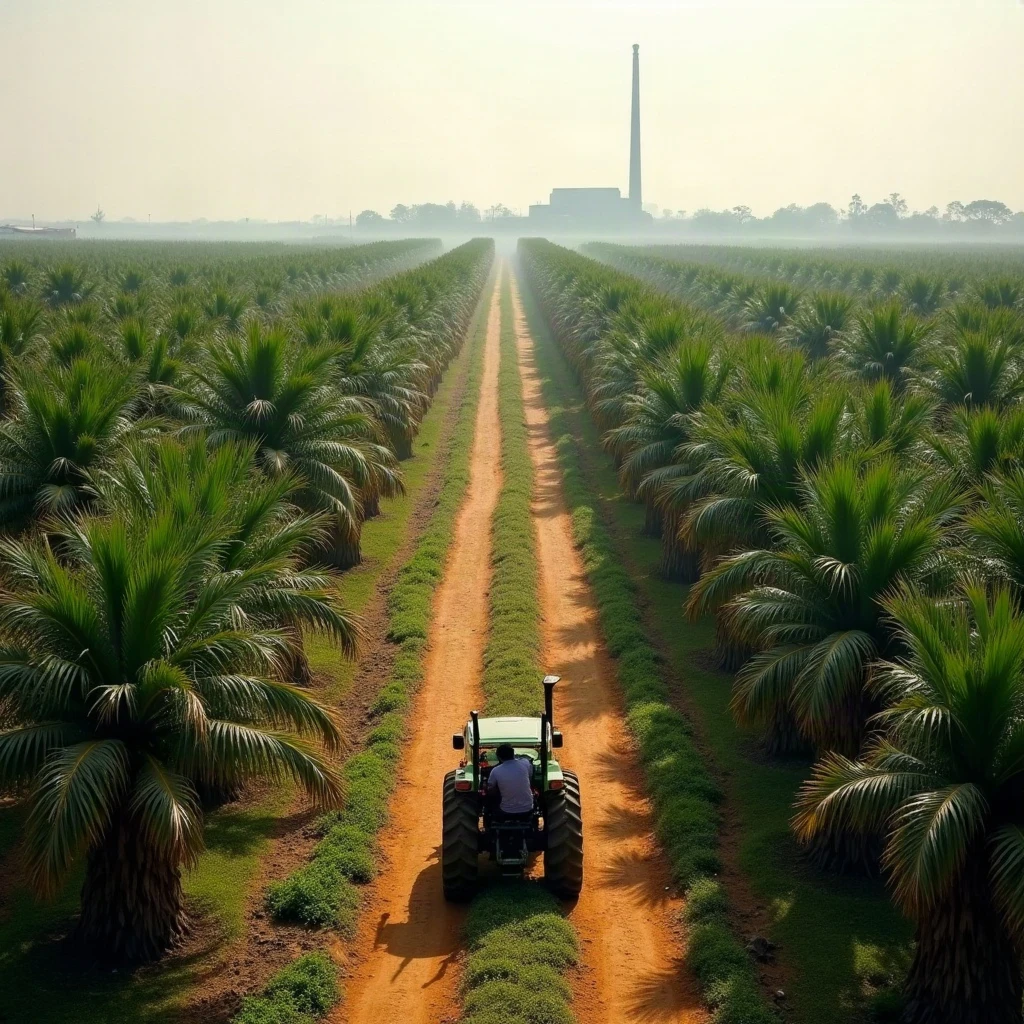
Malaysian crude palm oil futures capped a fifth consecutive weekly gain, with the benchmark contract climbing to a 20-month high near RM4,977 per tonne. The latest session saw prices settle about 1.2% higher at approximately $1,158 per tonne (RM 4,684), according to market data. The sustained advance is being driven by Indonesia's push toward the B50 biodiesel mandate and persistent El Niño-related supply risks across key growing regions.
The global benchmark, as tracked by the World Bank, stands near $1,101 per tonne, while Indonesia's reference price is around $997 per tonne.
Data from the Malaysian Palm Oil Board for July show production rose 9.4% month-on-month to 1,792,979 tonnes, while closing stocks increased 7.2% to 1,429,316 tonnes. Exports jumped 14.5% to 1,392,178 tonnes, a sign of robust buying interest, though imports fell sharply by 51.9% to 49,566 tonnes. The FFB reference price edged up 1.2% to RM 49.50.
Despite the stock build, market attention is fixed on the weather. The El Niño episode, with an ONI of +1.4, is bringing dry conditions to key growing areas in Sarawak and Kalimantan, raising concerns about output in the coming months. The Malaysian Palm Oil Council (MPOC) projects that CPO prices will stay above RM4,600 in September on tightening supply and geopolitical disruptions. BMI has also raised its 2026 average CPO price forecast to RM4,453 on tight supply.
Our model outlook notes that the recent surge has pushed prices above the upper Bollinger Band, with RSI at 77 indicating overbought conditions. The model expects modest net gains over the next seven sessions, with intermittent profit-taking and elevated volatility, and a published path of +1.6%.
Indonesia's push toward the B50 biodiesel mandate remains a key demand driver. News flow highlights continued development of Caterpillar equipment for B50 use and educational campaigns by industry groups. Export levy collections are projected at Rp 41.22 trillion this year, reflecting both higher volumes and elevated prices. India, the world's largest palm oil importer, continues to show active demand for edible oils ahead of the festival season, though sunflower imports have been affected by the war in Ukraine. Soybean oil exports from Argentina and Brazil hit a record high, which could provide competition, but the soy-palm spread remains wide enough to keep palm attractive.
Brent crude is trading around $93 per barrel, down 0.8% on the session. Firm crude prices support biodiesel blending economics, making palm oil more competitive as a fuel feedstock. The ringgit is at about 4.04 per dollar, while the rupiah is around 17,667 per dollar. A weaker ringgit makes Malaysian exports more affordable, but the impact is muted by the strong price rally.
Market participants are weighing bullish headlines—including BMI's raised 2026 average CPO forecast and MPOC's September projection—against technical signals of overbought conditions and ample July stocks. The next week is likely to see consolidation, with profit-taking potentially capping gains. Buyers should watch for any shift in Indonesia's export levy policy, the pace of B50 implementation, and weather updates from Sarawak and Kalimantan. A break above the recent high could signal further upside, while a failure to hold support near RM4,600 may invite a sharper correction.
Sources: Kabar SDGs; South China Morning Post; Ikatan Konsultan Pajak Indonesia; NST Online; achmadnurhidayat.id; DagangNews
Indonesia’s B50 push, export levy forecasts and equipment readiness point to tighter palm supply and firmer prices, nudging buyers to track compliance.
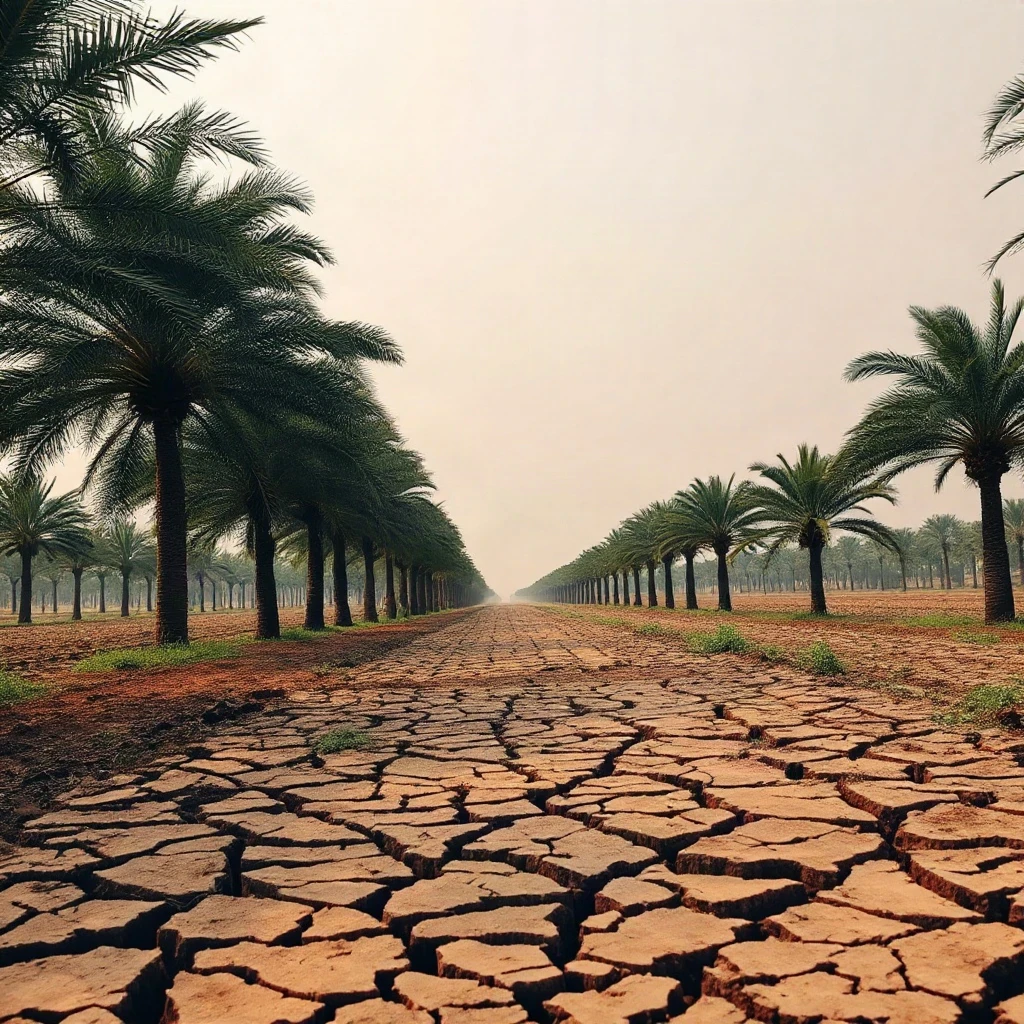
Indonesia’s biodiesel policy framework is signalling a structural pull on palm oil. Domestic trade reporting projects palm oil export levy receipts at Rp41.22 trillion, while linking the B50 mandate to faster smallholder replanting. Higher levy collection reflects both export volumes and the policy machinery used to fund downstream programmes, but it also points to a system in which more palm is steered toward domestic energy use. International coverage has also framed the country’s B50 transition as a projected policy shift, reinforcing that this is not a short-term pilot.
On the equipment side, heavy machinery distributor Trakindo is reported to be developing Caterpillar units compatible with B50 biodiesel. Engine warranties and original equipment manufacturer approvals are often the practical bottleneck for higher biodiesel blends. When heavy equipment and genset suppliers signal readiness, it lowers operational risk for mining, plantation and construction operators that rely on diesel and may be required to consume B50.
Analysts are already reflecting the demand side in price views. Research from TA Research points to firm biodiesel demand and the potential for palm oil prices to exceed RM4,300. That price signal, if realised, would tighten input costs for food and oleochemical buyers while improving feedstock economics for biodiesel producers.
Socialisation is also moving downstream. Aprobi is undertaking an educational programme for 5,000 scouts on palm-based B50. While a scouting programme does not immediately change physical supply, it is part of broader policy communication that can reduce resistance to higher blend rates.
Sources: sawitsetara.co; Kabar SDGs; DagangNews; achmadnurhidayat.id; Oils & Fats International
Biodiesel mandates and El Niño dry spells underpin prices, but ample stocks may temper gains.
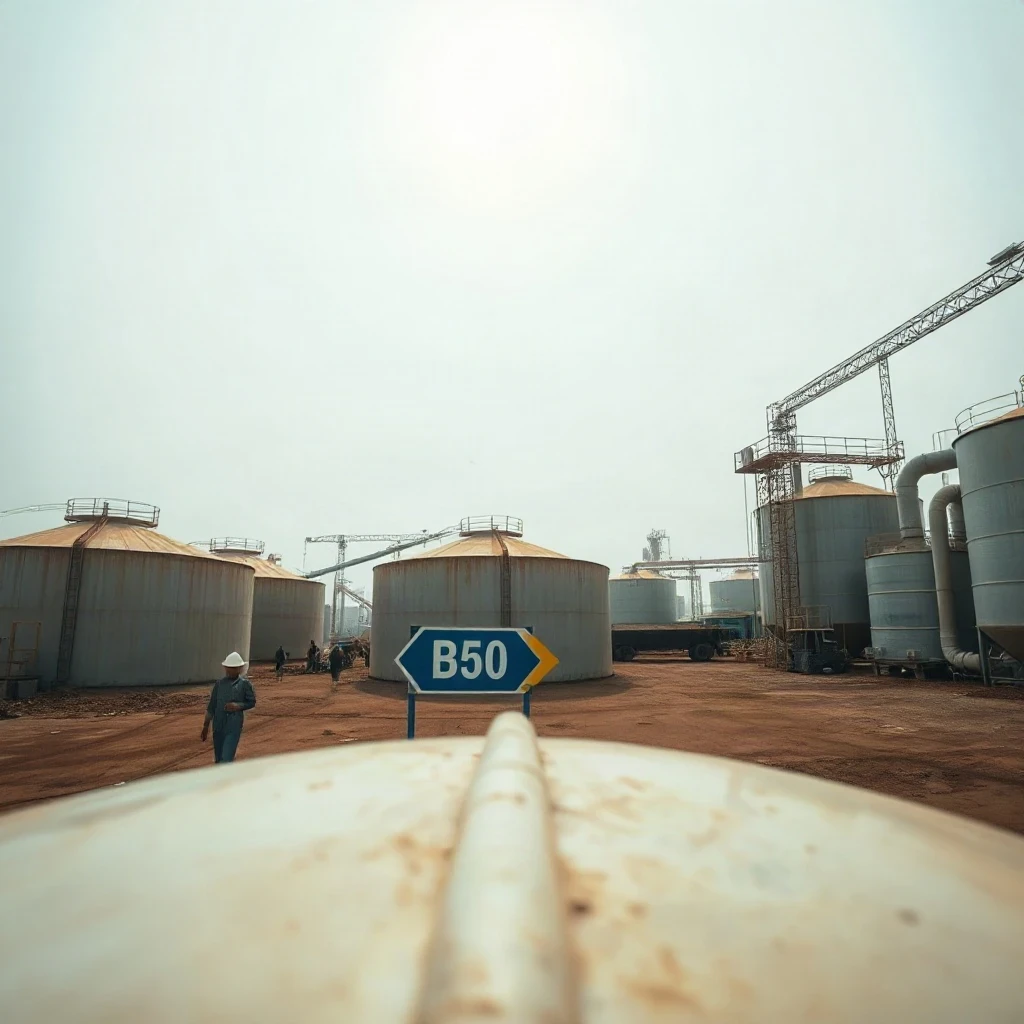
Indonesia's stepped-up promotion of its B50 biodiesel program is drawing fresh attention from market participants, with industry groups and equipment suppliers signaling readiness for higher blend rates. Recent outreach efforts, including educational campaigns and the development of Caterpillar machinery for B50 use, point to a coordinated push toward implementation. For palm oil traders, the key question is how quickly mandatory blending translates into additional domestic consumption, a factor that could tighten export availability.
Analysts remain broadly constructive on crude palm oil (CPO) prices, citing firm biodiesel demand as a key support. Malaysian benchmark futures traded around $1,158 per metric ton on August 24, up 1.2% on the session, while our model outlook flags a 4.6% gain over the past seven days, placing prices near the top of their 52-week range. The wide spread between soybean oil and palm oil, combined with high Indonesian export levies and duties, continues to make palm an attractive feedstock for biodiesel producers.
However, supply-side fundamentals may temper runaway gains. Malaysia's July data showed CPO production rising 9.4% month-on-month to 1.79 million tons, with closing stocks up 7.2% to 1.43 million tons. Peak production season is underway, and export volumes did climb 14.5% month-on-month to 1.39 million tons, but the inventory build suggests ample near-term availability.
El Niño conditions, with an ONI of +1.4, are bringing dry weather to key growing regions in Sarawak and Kalimantan. This could pressure yields in coming months, potentially tightening supply later in the year. For now, though, the market appears well supplied, and our model outlook anticipates a modest pullback over the next seven sessions as profit-taking and seasonal softness offset bullish headlines. The RSI at 78 and price above the upper Bollinger Band underscore overbought conditions.
Compliance-minded buyers should monitor Indonesia's B50 implementation timeline closely. Any acceleration in blending mandates would increase domestic palm oil absorption, reducing exportable surplus and potentially lifting global prices. Conversely, delays could ease supply concerns. With Brent crude around $93 per barrel, biodiesel economics remain favorable, supporting the case for higher blend rates. As always, the interplay between policy signals and weather patterns will be critical in shaping price direction over the next quarter.
Sources: Kabar SDGs; achmadnurhidayat.id; DagangNews; Oils & Fats International
Import appetite stays steady as peak production weighs on prices; currency and duty factors shape near-term buying.

China, the world's second-largest palm oil importer, remains a steady buyer even as global supply dynamics shift. The latest Malaysian data for July 2026 shows exports rising 14.5% month-on-month to 1.39 million tonnes, a sign that key Asian destinations, including China, are absorbing shipments ahead of seasonal demand peaks. Port inventories in China are reportedly sufficient for near-term needs, but traders note that restocking ahead of major festivals typically supports import flows into the fourth quarter.
Benchmark Malaysian crude palm oil (CPO) settled around $1,158 per tonne, up 1.2% on the session, while the global World Bank benchmark sits near $1,101. The wide spread between palm and soybean oil remains a key factor for Chinese refiners, who often switch between the two based on relative value. With soybean oil futures on the Dalian exchange under their own supply pressures, palm's discount keeps it attractive in food and industrial applications. That spread is expected to underpin import demand even if outright prices pull back.
The ringgit's level near 4.04 per dollar influences the landed cost of Malaysian palm for Chinese buyers. A softer ringgit makes Malaysian product more competitive versus Indonesian offers, though Indonesia's export levies and duties remain elevated, narrowing the gap. China's own import duty regime for palm oil is stable, with no new policy signals in the recent headlines. Macro demand signals, including food service and processed food output, remain moderate, consistent with a cautious but not contracting import appetite.
El Niño conditions (ONI +1.4) have brought dry weather to parts of Sarawak and Kalimantan, raising concerns about future production in Indonesia and parts of Malaysia. However, July MPOB data shows Malaysian CPO production rose 9.4% month-on-month, and closing stocks increased 7.2% to 1.43 million tonnes. Peak production season is underway, which could ease supply tightness in the near term. For China, this means ample availability for spot purchases, but weather risks into 2027 could prompt buyers to secure forward coverage.
Our model outlook suggests CPO has risen 4.6% over seven days and sits near the top of its 52-week range, with overbought signals (RSI 78, price above the upper Bollinger Band). We expect consolidation over the next seven sessions, with a modest pullback as profit-taking emerges. For China, that would offer a more attractive entry point for restocking. The key watch items are Dalian soybean oil futures, port inventory levels, and any policy moves on vegetable oil imports. China's demand is likely to remain resilient, driven by competitive pricing relative to soy oil and steady food-sector consumption.
Sources: South China Morning Post
Our market desk connects serious buyers with vetted origin suppliers across Southeast Asia. Indicative pricing, specifications and shipment guidance — free of charge.
Get connected →Malaysian benchmark $1,158/MT with ample July stocks and El Niño dryness; biodiesel levies and soy spread support, but RSI 78 hints consolidation.
Full story — Page 2 ▸Malaysian CPO ends week up for fifth straight session; MPOC sees prices above RM4,600 in September on tight supply.
Full story — Page 2 ▸Indonesia’s B50 push, export levy forecasts and equipment readiness point to tighter palm supply and firmer prices, nudging buyers to track compliance.
Full story — Page 2 ▸Biodiesel mandates and El Niño dry spells underpin prices, but ample stocks may temper gains.
Full story — Page 2 ▸Import appetite stays steady as peak production weighs on prices; currency and duty factors shape near-term buying.
Full story — Page 2 ▸Malaysian CPO is up 4.6% in seven days and near its 52-week high, but our model’s balance of factors gives the downside a 5-4 edge.
Malaysian crude palm oil benchmark is about $1,158/MT, or roughly RM4,684/MT, up 1.2% from the previous session. The wider market remains elevated: the World Bank palm oil benchmark is about $1,101/MT and Indonesia’s Kemendag reference price is about $997/MT. Against a softer Brent crude price of about $93/bbl and a USD/MYR rate of about 4.04, the Malaysian contract is near the top of its 52-week range after a 4.6% gain over the past seven days.
The largest structural support is the soy-palm spread. Soybean oil is quoted at about $1,506/MT, leaving palm at a discount of about $346/MT. That discount is wide enough to encourage price-sensitive buyers to switch demand into palm oil for food and industrial use, which keeps physical offtake active even as prices rise.
Indonesian export policy is also squeezing trade. The August reference price of $997/MT triggers a $125/MT export levy plus a $148/MT export duty, a combined $273/MT charge on Indonesian shipments. That makes Indonesian cargoes relatively less competitive and shifts marginal demand toward Malaysian supply, tightening the pool of cheaper exportable oil and supporting the Malaysian benchmark.
Biodiesel mandates continue to provide a demand floor. Indonesia’s B40 program is in force and B50 is being phased in, absorbing an estimated 3–4 million tonnes of palm oil per year that would otherwise compete for export demand. Weather adds a forward-looking risk premium: El Niño is strong at an ONI of +1.4, with dry conditions in Sarawak and Kalimantan. The anticipated 6–12 month lag to yield losses has not yet hit current supply, but it underpins sentiment for later in the crop year.
Technical indicators now point to exhaustion risk. RSI is at 78 and the price is above the upper Bollinger Band of about $1,144 after five consecutive higher sessions. That extension after a 4.6% seven-day rally and a 5.2% thirty-day gain near the 52-week high makes profit-taking more likely than fresh buying at these levels.
Fundamental supply is also building. July MPOB closing stocks rose 7.2% month on month to 1,429,316 tonnes, 61% above the five-year average, with a stocks-to-use ratio of 12.5%. Production rose 9.4% month on month to 1,792,979 tonnes, and the seasonal path points to another 7.0% increase next month. July exports did rise 14.5% month on month, but that was not enough to stop inventories from accumulating. The July-to-October peak output window means more fresh supply is entering the market at exactly the time the rally is technically overbought.
Speculative positioning adds downside asymmetry. CFTC soyoil net length is +98,237 contracts, in the 82nd percentile historically, leaving the broader vegetable oil complex vulnerable to long liquidation. Brent crude’s 0.5% dip to about $93/bbl does not reinforce the biodiesel demand story, and India’s festival imports at a 10-month high remain a neutral factor because the pre-Diwali window has historically shown no reliable price lift.
Our model’s factor balance is four bullish against five bearish, so the downside currently has the upper hand. The bullish supports—soy discount, Indonesian export taxes, biodiesel demand, and El Niño—are real but are being outweighed by overbought technicals, ample Malaysian stocks, peak production, and crowded speculative length. We expect the next seven days to consolidate with a modest pullback as profit-taking and September softness offset bullish headlines. Our published path is for a flat move over seven sessions, effectively a pause in the rally.
For the balance to flip, the market would need evidence that the supply side is tightening despite peak season. A surprise drawdown in Malaysian closing stocks, an abrupt disruption to July-to-October production, or faster confirmation of El Niño yield damage would remove the bearish edge. Alternatively, a further widening of the soy-palm spread, a new Indonesian export restriction, or a stronger biodiesel demand shock could overcome the current overbought setup. Until one of those shifts appears, the pullback risk is the dominant story.