Indonesia-Malaysia Pricing Spat Risks Shifting CPO Trade Flows
Jakarta challenges Kuala Lumpur's export reference price role, a move that could reshape palm oil pricing and trade dynamics.

Industry warns severe El Niño could cut output by up to 5 million tonnes, raising supply risks for palm oil buyers.

Industry warnings that a severe El Niño could shrink crude palm oil (CPO) output by up to 5 million tonnes are sharpening supply-side concerns for buyers and traders, even as current market data points to ample near-term stocks.
The alert, reported by Indonesian media, comes as the El Niño episode (ONI +1.4) continues to dry key growing regions, including Sarawak and Kalimantan. The potential production loss would be significant against Malaysia’s July CPO output of 1,792,979 tonnes, which rose 9.4% month-on-month. A 5-million-tonne shortfall would represent a major swing in global supply, likely tightening availability and supporting prices over the medium term.
The warning has also put Indonesia’s B50 biodiesel blending mandate in the spotlight. Higher blending rates increase domestic palm oil consumption, which could reduce exportable surplus if production falters. With Brent crude near $85 per barrel, weak crude prices already pressure biodiesel economics, and a supply shortfall could amplify competition between food, fuel, and export demand.
Traders are now weighing the near-term bearish signals—such as Malaysia’s July stocks building 7.2% month-on-month to 1,429,316 tonnes, and total stockpiles up 3.32% to 2.63 million tonnes—against the longer-term risk of El Niño-driven production losses. The market’s five-session rally to resistance has stalled, with the Malaysian benchmark easing about 1.0% to $1,150 per tonne (RM 4,647).
Our model outlook suggests CPO is consolidating near $1,152 after the recent run-up. While the wide discount to soyoil, Indonesia’s B50 mandate, and the El Niño risk premium remain supportive, overbought technicals and peak production season argue for a pullback in the next seven days. The published path points to a 0.4% decline over that period.
For buyers, the key question is whether current ample stocks will be enough to buffer against a potential El Niño-driven output shock. The industry warning underscores that supply risks are building, even as today’s data show comfortable inventories. Traders will be watching weather patterns and policy decisions in Jakarta closely.
Sources: The Jakarta Post; kontan.co.id; Finimize
Jakarta challenges Kuala Lumpur's export reference price role, a move that could reshape palm oil pricing and trade dynamics.

Indonesia's trade ministry has clarified it holds no authority to set export reference prices for crude palm oil (CPO) and other commodities, a statement that underscores a widening policy rift with Malaysia over who controls the benchmark pricing mechanism for the world's most-traded vegetable oil.
The clarification, reported by Indonesian media, comes amid a broader dispute between the two top producers. Malaysia's own reference price, set by its Palm Oil Board (MPOB), is the basis for its export duty structure and is closely watched by global traders. Indonesia, which uses a separate reference price from its trade ministry (Kemendag), has been pushing for a more unified or competitive pricing framework, a move that could alter how CPO is priced for buyers across Asia, Europe, and Africa.
For palm oil buyers and traders, the stakes are high. A shift in reference price authority — or a divergence between Indonesian and Malaysian benchmarks — could create arbitrage opportunities or widen the discount between the two origins. Currently, Indonesia's reference price sits at about $997 per metric ton, well below the Malaysian benchmark of roughly $1,150 and the global World Bank average of about $1,101. That gap already makes Indonesian product cheaper for some buyers, and any policy change could deepen that differential.
Malaysia's July data shows the market is well supplied: CPO production rose 9.4% month-on-month to 1.79 million tons, while exports jumped 14.5% to 1.39 million tons. Yet closing stocks still grew 7.2% to 1.43 million tons, and total Malaysian stockpiles were reported at 2.63 million tons, up 3.32% from June. That ample supply, combined with peak production season and weak crude oil prices, is pressuring prices despite a five-session rally that pushed futures to their highest since 2024.
Indonesia's B50 biodiesel mandate — requiring 50% palm oil blend — remains a structural demand pillar, while El Niño conditions (ONI +1.4) have left parts of Sarawak and Kalimantan unusually dry, raising the risk of future supply disruptions. Our model outlook sees CPO consolidating near $1,152, with a likely pullback of about 0.4% over the next seven sessions as overbought technicals and ample stocks weigh on sentiment.
But the pricing dispute adds a layer of uncertainty that pure supply-demand models cannot capture. If Indonesia moves to assert more control over reference pricing — or if Malaysia retaliates — the result could be a more fragmented market, with buyers facing two distinct price signals. For now, traders are watching Jakarta's next move closely, as any formal policy shift could ripple through global palm oil trade flows and reshape the competitive balance between the two producers.
Sources: RCTI+; Bisnis.com - Market; BernamaBiz; South China Morning Post; BernamaBiz
Malaysian CPO trades around $1,150/MT after a 7-day rally, but bullish BOPO and Indonesian policy are offset by peak production and profit-taking, keeping near-term risks tilted lo

Malaysian CPO slipped 1.0% to about $1,150/MT as MPOB July stocks rose 7.2%, while Indonesia’s B50 push and dry weather keep a floor under prices.

Malaysian CPO benchmark eased 1.0% to about $1,150/MT, equivalent to RM4,647/MT, after a seven-day 3.1% rally took prices to the upper Bollinger Band. The World Bank benchmark was about $1,101/MT and Indonesia’s reference about $997/MT; the wide spread keeps Malaysian cargoes competitive in some destinations.
For buyers, the key watch items are whether Malaysian export pace can absorb rising production, how Indonesia’s levy and B50 implementation affect available supply, and any crude oil reversal. Dry weather across Sarawak and Kalimantan adds upside risk to forward pricing if it persists into the peak production season.
Sources: RCTI+; Bisnis.com - Ekonomi; sawitsetara.co; METRORIAU.COM; UkrAgroConsult; South China Morning Post
Malaysian CPO slips 1% on profit-taking; MPOB July stocks up 7.2% MoM; El Niño dry weather in Sarawak and Kalimantan supports prices.
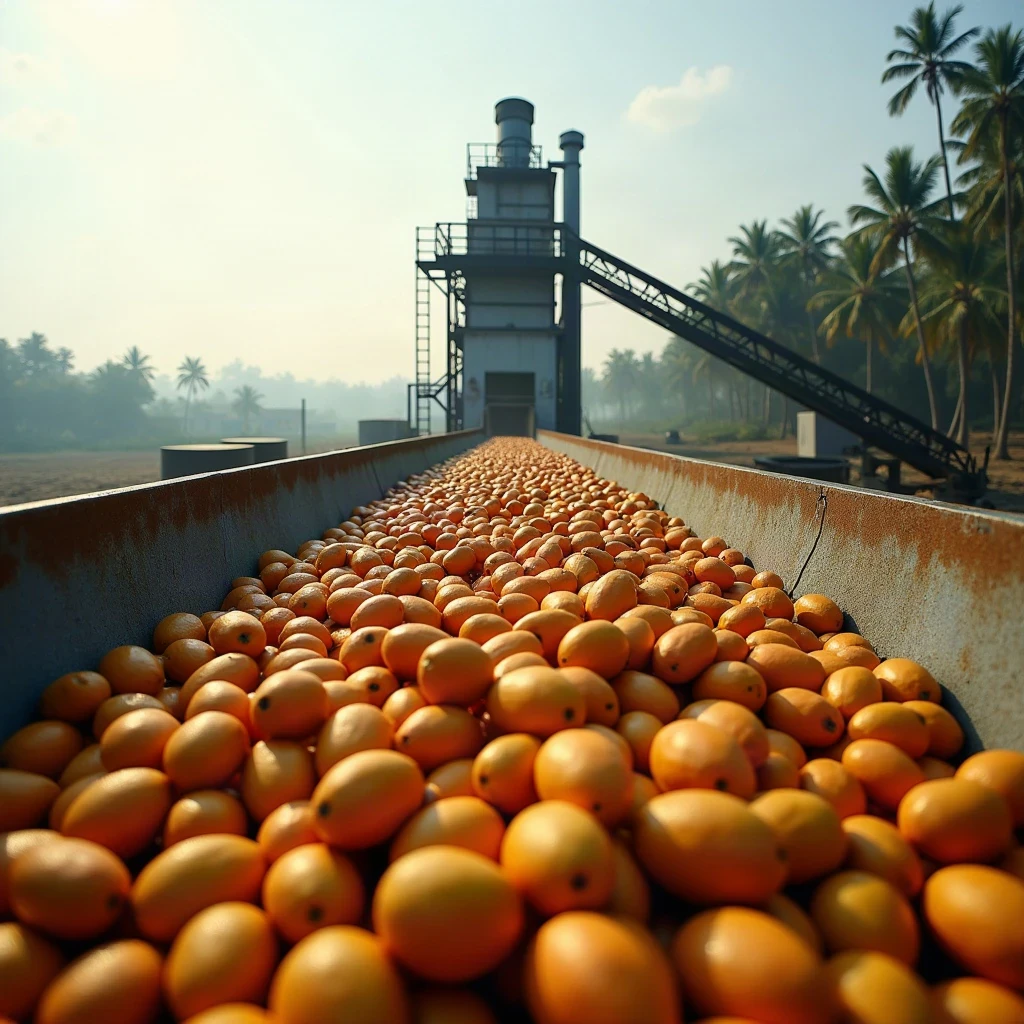
Malaysian crude palm oil futures eased about 1.0% on the day to near $1,150/MT (RM 4,645/MT), snapping a five-session winning streak that had lifted prices more than 3% last week. The pullback came as traders booked profits and crude oil weakened 0.8% to about $85/bbl, trimming the appeal of palm-based biodiesel. The global benchmark stood near $1,101/MT, while Indonesia's reference price was around $997/MT, underscoring a wide spread between the two key producers.
Malaysia's MPOB July report showed crude palm oil production at 1,792,979 tonnes, up 9.4% month-on-month, while closing stocks rose 7.2% to 1,429,316 tonnes. Exports jumped 14.5% to 1,392,178 tonnes, but imports fell sharply by 51.9% to 49,566 tonnes. The stock build, though moderate, adds a bearish note. The fresh fruit bunch reference price edged up 1.2% to RM 49.50, reflecting still-firm grower returns.
Weather remains a key swing factor. The El Niño episode (ONI +1.4) continues to bring dry conditions to Sarawak and Kalimantan, raising concerns about future output. Our model outlook notes that a two-day stale anchor (Aug 24) and missing cargo surveyor and FCPO data widen uncertainty. The base case expects modest consolidation after the recent rally, with a wide BOPO spread ($330/MT) and Indonesian policy support underpinning prices, but the MPOB stock build and weaker crude capping upside.
Indonesia's biodiesel mandate remains a central pillar. Reports indicate the B50 program is accelerating, which supports domestic CPO absorption and helps sustain farmer-level TBS prices. Export levy revenue is projected to reach Rp 41.22 trillion this year, up 31%, according to multiple sources. This revenue is earmarked for replanting and downstream initiatives. However, a potential production shortfall of up to 5 million tonnes in 2027 looms, which could pressure export volumes.
Pricing power is also in the spotlight: Indonesia and Malaysia are jostling over benchmark mechanisms, with Indonesia clarifying that its trade ministry does not set export reference prices for CPO or coal. This regulatory ambiguity adds another layer of uncertainty for buyers.
Technical indicators are bullish but overbought near the upper Bollinger band, suggesting mixed daily moves with a slight upward drift. Our model path projects +1.3% over the next seven sessions. For buyers, the key variables are the pace of Malaysian stock accumulation, the intensity of El Niño dryness in Borneo, and any further policy signals from Jakarta on biodiesel and export levies. A break above recent highs could extend gains, but profit-taking and softer crude remain headwinds.
Sources: IDX Channel; NST Online; Bisnis.com - Ekonomi; sawitsetara.co; METRORIAU.COM; UkrAgroConsult
A practical guide to MSPO, its divergence from RSPO, and the compliance documents traders must track.

For procurement managers sourcing from Malaysia, the Malaysian Sustainable Palm Oil (MSPO) certification is a fixture of the paperwork. Unlike voluntary schemes, MSPO is mandatory under national law. This explainer unpacks what the scheme requires, how it differs from RSPO, and why it matters for your landed cost.
MSPO is a national certification framework covering the entire supply chain, from independent smallholders to plantations, mills, and downstream processors. It sets standards for legal compliance, environmental management, worker welfare, and social responsibility. Crucially, it requires traceability—each certified entity must document the origin of its crop or product, enabling a chain of custody from palm fruit to refinery.
For producers, certification involves audits against these criteria. The process includes gap assessments, corrective action plans, and annual surveillance audits. Smallholders often receive support to meet the standards, but they too must comply.
The Roundtable on Sustainable Palm Oil (RSPO) is a global, multi-stakeholder initiative. Its certification is voluntary, driven by market demand, and includes a trademark for consumer goods. MSPO, in contrast, is a national regulatory scheme, enforced by Malaysian authorities. While both share goals like deforestation-free supply chains and fair labor practices, they differ in scope and governance.
MSPO focuses on compliance with Malaysian laws and policies, whereas RSPO sets international standards that may exceed national requirements. For example, RSPO includes specific criteria on peatland management and High Conservation Value assessment, which MSPO may not fully mirror. Additionally, RSPO offers credits and segregated supply chains, while MSPO primarily certifies mass-balance or identity-preserved flows.
For buyers, the distinction matters: RSPO certification is often demanded by Western retailers, while MSPO satisfies domestic regulations and may be accepted as proof of sustainable sourcing in regional markets.
When you purchase from a certified MSPO supplier, you should expect a certificate of conformity, an audit summary, and a delivery order that references the certification number. These documents must align with the volume you receive. For each shipment, you may need to verify that the supplier's certificate is valid and covers the product type.
If you blend MSPO and non-MSPO palm oil, you must maintain records that demonstrate the mass balance—the proportion of certified material in your final product. This requires a robust traceability system, often involving third-party software or manual logs.
MSPO certification costs are embedded in the producer's price, so changes in audit fees or enforcement can shift your landed cost. Government policies that adjust smallholder compliance deadlines or strengthen audit requirements can also affect supply availability. Watch for announcements from the Malaysian Palm Oil Board (MPOB) regarding MSPO implementation, as they signal potential paperwork changes.
Moreover, divergence between MSPO and RSPO standards means you may need dual certifications to serve different customers. This can increase administrative burden and cost. Stay informed on equivalence agreements—if MSPO is recognized as equivalent to RSPO, your paperwork could simplify.
In short, MSPO is not a mere label; it is a regulatory layer that influences your supplier relationships, your compliance burden, and ultimately, your bottom line. ---
*This article reflects the position as of 26 August 2026. Duty structures, levies and mandates change often, sometimes at short notice. Please verify the current position, and any changes made after this date, before relying on it.*
Our market desk connects serious buyers with vetted origin suppliers across Southeast Asia. Indicative pricing, specifications and shipment guidance — free of charge.
Get connected →Jakarta challenges Kuala Lumpur's export reference price role, a move that could reshape palm oil pricing and trade dynamics.
Malaysian CPO trades around $1,150/MT after a 7-day rally, but bullish BOPO and Indonesian policy are offset by peak production and profit-taking, keeping near-term risks tilted lo
Malaysian CPO slipped 1.0% to about $1,150/MT as MPOB July stocks rose 7.2%, while Indonesia’s B50 push and dry weather keep a floor under prices.
Malaysian CPO slips 1% on profit-taking; MPOB July stocks up 7.2% MoM; El Niño dry weather in Sarawak and Kalimantan supports prices.
A practical guide to MSPO, its divergence from RSPO, and the compliance documents traders must track.
Industry warns severe El Niño could cut output by up to 5 million tonnes, raising supply risks for palm oil buyers.
Industry warnings that a severe El Niño could shrink crude palm oil (CPO) output by up to 5 million tonnes are sharpening supply-side concerns for buyers and traders, even as current market data points to ample near-term stocks.
The alert, reported by Indonesian media, comes as the El Niño episode (ONI +1.4) continues to dry key growing regions, including Sarawak and Kalimantan. The potential production loss would be significant against Malaysia’s July CPO output of 1,792,979 tonnes, which rose 9.4% month-on-month. A 5-million-tonne shortfall would represent a major swing in global supply, likely tightening availability and supporting prices over the medium term.
The warning has also put Indonesia’s B50 biodiesel blending mandate in the spotlight. Higher blending rates increase domestic palm oil consumption, which could reduce exportable surplus if production falters. With Brent crude near $85 per barrel, weak crude prices already pressure biodiesel economics, and a supply shortfall could amplify competition between food, fuel, and export demand.
Traders are now weighing the near-term bearish signals—such as Malaysia’s July stocks building 7.2% month-on-month to 1,429,316 tonnes, and total stockpiles up 3.32% to 2.63 million tonnes—against the longer-term risk of El Niño-driven production losses. The market’s five-session rally to resistance has stalled, with the Malaysian benchmark easing about 1.0% to $1,150 per tonne (RM 4,647).
Our model outlook suggests CPO is consolidating near $1,152 after the recent run-up. While the wide discount to soyoil, Indonesia’s B50 mandate, and the El Niño risk premium remain supportive, overbought technicals and peak production season argue for a pullback in the next seven days. The published path points to a 0.4% decline over that period.
For buyers, the key question is whether current ample stocks will be enough to buffer against a potential El Niño-driven output shock. The industry warning underscores that supply risks are building, even as today’s data show comfortable inventories. Traders will be watching weather patterns and policy decisions in Jakarta closely.