El Niño, B50 Demand Bolster CPO; Indonesia Output Warning Adds to Bullish View
Indonesian producer group warns El Niño will crimp output; B50 biodiesel now covers 90% of Pertamina stations, reinforcing supply-tightening narrative.

Malaysian CPO benchmark holds at RM 4,613/MT with weather and biodiesel support battling stock builds and crowded positioning.

Malaysian crude palm oil futures settled near $1,144/MT (RM 4,613) on Sep 1, up a marginal 0.2% from the prior session, as the market digested a mixed fundamental picture. The global World Bank benchmark stood at about $1,101/MT, while Indonesia's Kemendag reference price was set at roughly $997/MT for the month, slightly below the $1,007.51/MT figure flagged in late-August headlines.
The dominant supply narrative remains the strengthening El Niño, with the ONI at +1.4 and notable dryness across Sarawak, Sumatra/Riau and Kalimantan. Producer groups in Indonesia have warned of output crimps, and Malaysian authorities have offered smallholder assistance programs to mitigate the impact. This weather premium helped CPO futures rebound on Aug 28 after a dip on weaker soybean markets the prior day.
However, the latest MPOB data for July 2026 showed Malaysian CPO production at 1,792,979 tonnes, up 9.4% month-on-month, while closing stocks rose 7.2% to 1,429,316 tonnes. Exports were robust at 1,392,178 tonnes (+14.5% MoM), but imports fell sharply to 49,566 tonnes (-51.9% MoM). The FFB reference price edged up 1.2% to RM 49.50. The stock build tempers some of the bullish weather narrative, and the market is watching for August data due in roughly two weeks, which may show another increase.
Indonesia's B50 biodiesel program continues to underpin demand. Headlines indicate the blend has reached 90% of Pertamina fuel stations, and the country is developing D100, a 100% palm-based diesel, as a new energy security tool. This comes alongside projections that CPO prices could average $1,650–1,720/tonne in 2027 as biodiesel uptake rises. Brent crude's 3.6% jump to about $92/bbl strengthens the economics of palm-based fuels, widening the BOPO spread and supporting price floors.
Our model outlook notes the anchor is five days stale (Aug 27 close at $1,143/MT), and the Aug 28 rebound on El Niño concerns suggests current prices may be higher than that reference. The near-term mix is balanced: strengthening El Niño, Indonesian B50 demand, a wide BOPO spread, and MPOC's upbeat September outlook (prices above RM 4,600) are supportive. On the bearish side, ample July stocks, a potential August build, crowded CFTC net long positioning, and weak September seasonality could trigger profit-taking. The base case is mild bullish drift with a range of roughly $1,140–$1,165, with a published path of +1.5% over seven sessions.
Watch the August MPOB data (due ~mid-September) for stock confirmation, monitor El Niño rainfall updates in Sarawak and Kalimantan, and track B50 implementation milestones. A break above $1,165 would signal renewed weather premium; a weak stock report could pressure prices toward the lower end of the range.
Sources: Kantor Berita Sawit; sawitsetara.co; Kantor Berita Sawit; CNBC Indonesia; Astro Awani; Bernama
Indonesian producer group warns El Niño will crimp output; B50 biodiesel now covers 90% of Pertamina stations, reinforcing supply-tightening narrative.

Palm oil markets are firming as El Niño conditions tighten supply expectations, with benchmark Malaysian crude palm oil (CPO) futures closing higher on renewed concerns over dry weather in key growing regions. The Malaysian benchmark settled near $1,144 per metric ton, up 0.2% from the previous session, equivalent to MYR 4,613. Global benchmarks hovered around $1,101, while Indonesia’s reference price stood at about $997.
An Indonesian producer group has warned that El Niño will crimp output, adding to market anxiety as dry conditions persist across Sumatra, Riau, and Kalimantan. These regions are critical to global supply, and any shortfall could tighten availability for buyers, especially as biodiesel blending mandates—such as Indonesia’s B50 program—are expected to increase domestic consumption.
Malaysian authorities, including the Malaysian Palm Oil Board (MPOB) and the Commodities and Plantations Ministry, have signaled readiness to assist smallholders in mitigating El Niño impacts, according to statements reported by Bernama and Astro Awani. This support is seen as a buffer against production losses, though the full effect of the dry spell remains uncertain.
Indonesia’s B50 biodiesel program now reaches 90% of Pertamina fuel stations, according to Jakarta Globe. This expansion underscores the growing domestic appetite for palm oil as a fuel feedstock, which could divert supply away from export markets. With Brent crude near $89 per barrel, higher energy prices also support biodiesel economics, potentially making palm oil more attractive for fuel use.
Industry body MPOC projects CPO prices will stay above MYR 4,600 in September, citing tightening supply and geopolitical disruptions. The recent rebound in CPO futures aligns with that view, as traders price in reduced output expectations.
However, the supply picture is not uniformly tight. MPOB data for July 2026 showed Malaysian CPO production rose 9.4% month-on-month to 1.79 million tons, while closing stocks increased 7.2% to 1.43 million tons. Exports jumped 14.5% to 1.39 million tons, but imports fell sharply by 51.9% to just under 50,000 tons. The stock build offers some cushion against price spikes.
Our model outlook sees CPO consolidating near $1,144 after a late-August pullback, with an upside bias supported by El Niño fears and a wide soy-palm spread. Yet ample Malaysian stocks, peak production, and seasonally soft September demand could limit gains. We expect choppy trade with a slight net gain over the next seven sessions, but confidence is low due to missing cargo-survey data and palm futures figures.
For buyers and traders, the key watchpoint is whether dry weather in Indonesia translates into actual output declines. With Brent crude near $89 per barrel, higher energy prices also support biodiesel economics, potentially diverting more palm oil into fuel use. The market remains sensitive to any news on production or policy shifts.
Sources: cnbcindonesia.com; Astro Awani; BernamaBiz; Bernama; The Edge Singapore; Oils & Fats International
Wide soy-palm discount and biodiesel demand support nearby CPO, but July stock build and peak production cap gains; our model sees a slight net rise over seven sessions.
Malaysian CPO benchmark is consolidating near $1,144/MT, up 0.2% from the previous session and equivalent to about RM4,613/MT. The global World Bank palm oil benchmark sits near $1,101/MT, while Indonesia's reference price is around $997/MT. Brent crude is about $89/bbl, up 0.6%, which matters for biodiesel blend economics. The market is digesting a late-August pullback—Indonesian CPO fell 1.9% in the last week of August—but has not broken down.
El Niño remains the main supply-side support. With ONI at +1.4 and dry conditions reported in Sarawak, Sumatra/Riau and Kalimantan, the market is pricing an eventual 6-12 month yield lag. Repeated GAPKI/MPOC warnings of lower Indonesian output reinforce this, and futures rebounded on El Niño headlines on Aug 28. The demand-side cushion is also real. A soy-palm spread of $454/MT keeps palm heavily discounted to soy oil, encouraging price-sensitive buyers to switch into palm. Indonesia's export policy adds further friction: the August reference price near $997/MT implies a $125/MT levy plus $148/MT progressive duty, and any further rise would curb Indonesian export margins and tighten Malaysian CPO availability. Meanwhile, Brent crude near $89/bbl and POGO at -$175/t, around the 6th percentile, make palm-based biodiesel blending highly economic before mandates, supporting discretionary demand with B40 in force. Technicals have not rolled over: MACD histogram is positive, the 5/20 SMA golden cross is intact, price is above the SMA-5/20/50, and RSI at 63 is not yet overbought.
The most direct weight is Malaysia's July stock build. Closing stocks rose 7.2% MoM to 1,429,316 tonnes, about 61% above the five-year average, while stocks-to-use at 12.5% signals ample cover. July CPO production also rose 9.4% MoM to 1,792,979 tonnes against a 14.5% MoM rise in exports and a 51.9% MoM drop in imports. That build comes as the market enters the Jul-Oct seasonal production peak, and the next MPOB release in roughly 14 days could confirm further inventory accumulation. September is historically a softer month, averaging -0.9% MoM. Speculative positioning adds vulnerability: CFTC soyoil managed-money net long remains elevated at +88,442 contracts but fell 9,795 contracts week-on-week, so crowded long liquidation can ripple through the complex. Finally, the late-August correction—Indonesian CPO down 1.9% in the final week of August—could carry into early September before stabilizing.
Our model's factor balance currently has five bullish factors against four bearish factors, so the upside has the upper hand, but only modestly. The bullish supply threat from El Niño and the wide soy-palm discount are offset by ample Malaysian stocks, peak production, and seasonally soft September. Currency cross-currents are broadly neutral: a weak rupiah around 17,748 per dollar could encourage aggressive Indonesian export selling, while a stronger ringgit near 4.04 lifts USD-quoted CPO but is not a direct input for MYR-denominated physical. Our model outlook expects choppy trade with a slight net gain of about +1.1% over the next seven sessions, but the stale anchor and missing cargo-survey/palm futures data keep confidence low. The balance would flip more clearly bearish if the next cargo survey or MPOB release confirms faster stock accumulation, or if speculative long liquidation extends the late-August correction. It would flip more clearly bullish if Indonesian export policy tightens further or El Niño damage becomes more concrete.
Malaysian CPO benchmark edges up 0.2% to $1,144/MT; MPOB July stocks rise 7.2% MoM to 1.43m tonnes, while El Niño and B50 demand keep upside risk alive.

Malaysian CPO benchmark traded around $1,144 per tonne, equivalent to RM4,613 per tonne, up 0.2% from the previous session. The World Bank palm oil benchmark stood near $1,101 per tonne, and Indonesia's Kemendag reference price was about $997 per tonne. Brent crude rose 0.6% to about $89 per barrel, which matters for biodiesel blending economics, while USD/MYR held near 4.04.
MPOB's July 2026 release shows Malaysian CPO production at 1,792,979 tonnes, up 9.4% month on month, and closing stocks at 1,429,316 tonnes, up 7.2% month on month. Exports rose 14.5% month on month to 1,392,178 tonnes, but imports fell 51.9% to 49,566 tonnes. The stocks-to-use ratio sits at 12.5%. FFB reference price rose 1.2% to RM49.50. This points to peak production and comfortable inventories in Malaysia, even with strong export demand.
El Niño conditions, with ONI at +1.4, have left Sarawak, Sumatra/Riau, and Kalimantan dry. Industry sources warn that severe El Niño conditions could lower Indonesian output and, without faster replanting, Indonesia could face supply shortages next year. GAPKI reported Indonesian palm exports jumped 64% in June 2026, while production and consumption also rose. Indonesia's B50 biodiesel mandate is projected to increase domestic palm oil absorption, changing demand patterns. CPO futures rebounded on El Niño concerns after earlier pressure from weaker soybean futures.
MPOC has said CPO prices should stay above MYR4,600 in September amid tightening supply and geopolitical disruptions. A separate 2027 forecast sees world CPO around $1,650–1,720 per tonne, with B50 projected to increase. Our model outlook has CPO consolidating near $1,144 after the late-August pullback. El Niño supply fears and a wide soy-palm spread support an upside bias, but ample Malaysian stocks, peak production and seasonally soft September limit gains. We expect choppy trade with a slight net gain over the next seven sessions; the published path is +1.1%, but missing cargo-survey and palm futures data keep confidence low.
For buyers, the near-term setup is mixed: ample Malaysian stocks can cap rallies, but El Niño supply fears and rising biodiesel demand may keep the market supported. Watch for early signals of September export weakness or Indonesian policy shifts that could tilt the balance.
Sources: Kantor Berita Sawit; cnbcindonesia.com; Kantor Berita Sawit; Bernama; The Edge Singapore; Oils & Fats International
How Malaysia's progressive CPO export duty and Sabah-Sarawak sales taxes layer onto an exporter's landed cost, and what buyers should track.

For procurement managers sourcing crude palm oil (CPO) from Malaysia, the headline FOB price is only the start. Two layers of producing-country policy—the federal export duty and the state-level sales tax in Sabah and Sarawak—can materially shift the cost of cargoes before they leave port. Understanding how these mechanisms are structured, rather than relying on a single quoted number, is essential to forecasting landed costs.
Malaysia applies an export duty on CPO that is not fixed but moves with the reference price. The duty is calculated on a sliding scale: as the official reference price rises, the duty rate steps up in tranches. Below a certain reference price threshold, the duty is zero—this is the duty-free floor. Above that floor, each band of price triggers a higher percentage rate, up to a maximum cap.
The exact thresholds and rates are set by policy and can be revised, so what matters for a trader is not memorizing today's figures but understanding the shape of the curve. The duty is assessed on the FOB price, and the effective duty per tonne rises as the market price climbs. For an exporter, this means that a rising CPO market automatically increases the tax burden per tonne, narrowing the net margin unless the buyer absorbs the increase.
The process is straightforward: the exporter declares the shipment, the reference price is determined (typically a monthly average of relevant benchmarks), and the applicable duty rate is applied to the FOB value. The duty is paid before export clearance. Because the scale is progressive, a small move in the reference price can push a cargo into a higher band, creating a step-change in duty per tonne—a factor that can catch buyers who only track the flat price.
Beyond the federal duty, the East Malaysian states of Sabah and Sarawak impose their own sales tax on crude palm oil. This is a state-level levy, separate from the federal export duty, and it applies to CPO produced and sold within those states. The rate is set by each state and can vary; it is typically a percentage of the sale price or a fixed amount per tonne.
For an exporter sourcing from Sabah or Sarawak, this state tax is an additional cost that must be factored into the FOB price. It is not always visible in the headline CPO price quoted for Peninsular Malaysia, so a buyer comparing offers from different origins must adjust for the state tax to make an apples-to-apples comparison.
Three things matter for landed cost:
For a trader, the practical implication is that landed cost is a function of three variables: the market price, the federal duty band, and the state tax. A buyer who only watches the CPO futures price can be surprised by a step-up in duty or a state tax hike. Building these policy layers into cost models—and monitoring the reference price and state announcements—reduces that risk.
In short, Malaysia's export tax system is designed to be responsive to price, but that responsiveness cuts both ways: it protects domestic supply when prices are high, but it also means that a rising market carries a rising tax bill for the exporter—and ultimately for the buyer. ---
*This article reflects the position as of 1 September 2026. Duty structures, levies and mandates change often, sometimes at short notice. Please verify the current position, and any changes made after this date, before relying on it.*
Indonesia's B50 expansion and dry weather reshape palm oil balances, pressuring compliance buyers.
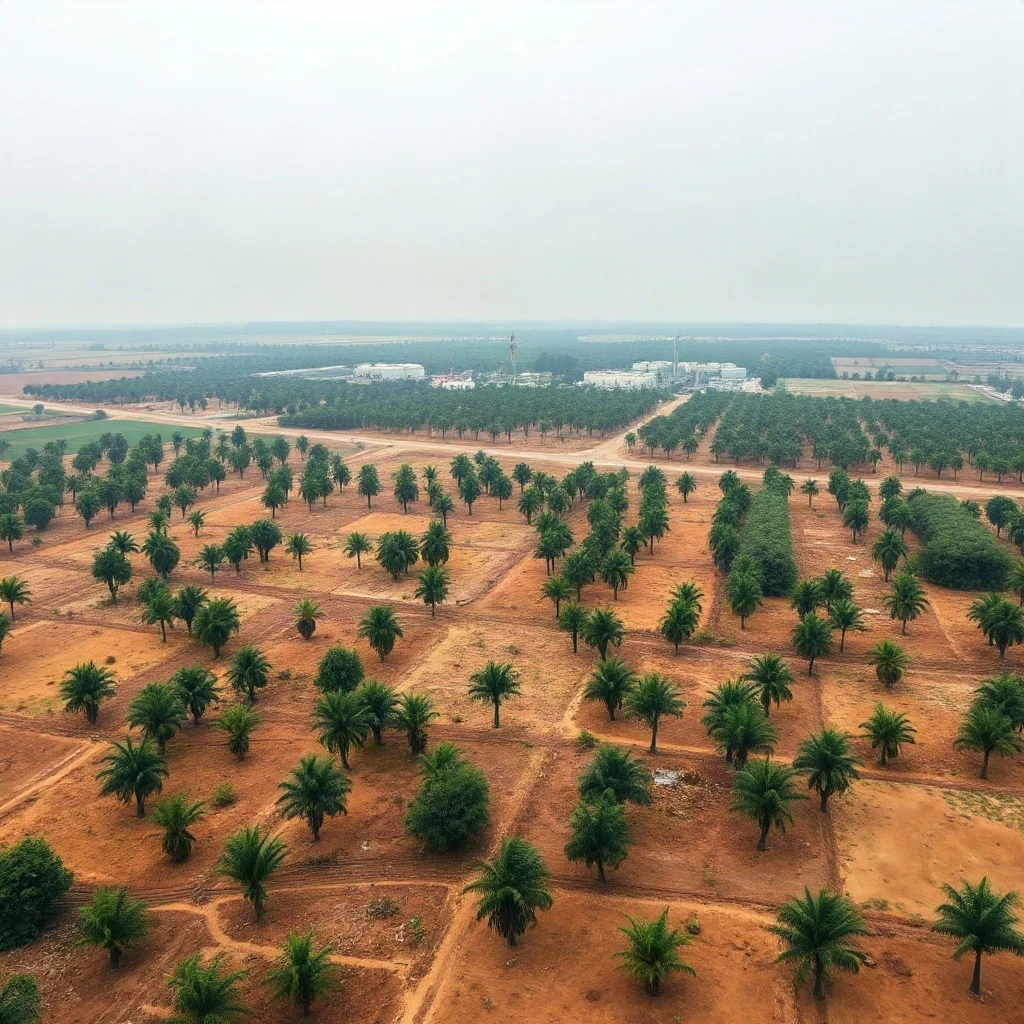
Indonesian biodiesel policy and a strengthening El Niño are tightening the near-term palm oil supply-demand picture, with implications for buyers navigating compliance and procurement.
Indonesia's B50 program has reached 90% of Pertamina fuel stations, according to a Jakarta Globe report from Aug 31. The rapid distribution of the higher biodiesel blend supports domestic palm oil consumption and reduces export availability. Market participants expect B50 demand to increase further, with one forecast from Kantor Berita Sawit projecting world CPO prices in 2027 at $1,650–1,720 per tonne, partly on the back of stronger biodiesel uptake.
For compliance-minded buyers, the expansion signals sustained demand from the Indonesian mandate, which may tighten export supplies even as production grows seasonally.
El Niño conditions (ONI +1.4) are bringing dry weather to major producing areas in Indonesia and Malaysia, including Sarawak, Sumatra, Riau, and Kalimantan. Dryness during the current production window can curb yields in the coming months. CNBC Indonesia reported on Aug 31 that El Niño is hitting Indonesian palm oil, though stocks remain adequate for now.
Our model outlook notes that the market has already rebounded on El Niño concerns, and the dry spell reinforces a mildly bullish base case with a range of roughly $1,140–$1,165 per tonne over the near term.
Malaysia's July MPOB data showed CPO production at 1,792,979 tonnes (+9.4% MoM) and closing stocks at 1,429,316 tonnes (+7.2% MoM), indicating ample supply. Exports rose 14.5% to 1,392,178 tonnes, while imports plunged 51.9% to 49,566 tonnes. The stock build may temper price gains, but August data due in about two weeks could show further builds as production peaks.
ICICI Direct (Aug 28) expects prices to rise amid tight supply and biodiesel demand, while flagging margin risks for FMCG companies that rely on palm oil inputs.
Compliance-driven buyers should watch for:
With Brent crude at about $92/bbl (+3.6%), biodiesel economics remain favorable, reinforcing the demand pull. The wide BOPO spread and MPOC's upbeat September outlook add to the bullish sentiment, though crowded net long positions and weak seasonal patterns could trigger profit-taking.
Overall, the market is set for a mild upward drift, with B50 policy and El Niño as key bullish drivers.
Sources: Kantor Berita Sawit; CNBC Indonesia; Jakarta Globe
Our market desk connects serious buyers with vetted origin suppliers across Southeast Asia. Indicative pricing, specifications and shipment guidance — free of charge.
Get connected →Indonesian producer group warns El Niño will crimp output; B50 biodiesel now covers 90% of Pertamina stations, reinforcing supply-tightening narrative.
Wide soy-palm discount and biodiesel demand support nearby CPO, but July stock build and peak production cap gains; our model sees a slight net rise over seven sessions.
Malaysian CPO benchmark edges up 0.2% to $1,144/MT; MPOB July stocks rise 7.2% MoM to 1.43m tonnes, while El Niño and B50 demand keep upside risk alive.
How Malaysia's progressive CPO export duty and Sabah-Sarawak sales taxes layer onto an exporter's landed cost, and what buyers should track.
Indonesia's B50 expansion and dry weather reshape palm oil balances, pressuring compliance buyers.
Malaysian CPO benchmark holds at RM 4,613/MT with weather and biodiesel support battling stock builds and crowded positioning.
Malaysian crude palm oil futures settled near $1,144/MT (RM 4,613) on Sep 1, up a marginal 0.2% from the prior session, as the market digested a mixed fundamental picture. The global World Bank benchmark stood at about $1,101/MT, while Indonesia's Kemendag reference price was set at roughly $997/MT for the month, slightly below the $1,007.51/MT figure flagged in late-August headlines.
The dominant supply narrative remains the strengthening El Niño, with the ONI at +1.4 and notable dryness across Sarawak, Sumatra/Riau and Kalimantan. Producer groups in Indonesia have warned of output crimps, and Malaysian authorities have offered smallholder assistance programs to mitigate the impact. This weather premium helped CPO futures rebound on Aug 28 after a dip on weaker soybean markets the prior day.
However, the latest MPOB data for July 2026 showed Malaysian CPO production at 1,792,979 tonnes, up 9.4% month-on-month, while closing stocks rose 7.2% to 1,429,316 tonnes. Exports were robust at 1,392,178 tonnes (+14.5% MoM), but imports fell sharply to 49,566 tonnes (-51.9% MoM). The FFB reference price edged up 1.2% to RM 49.50. The stock build tempers some of the bullish weather narrative, and the market is watching for August data due in roughly two weeks, which may show another increase.
Indonesia's B50 biodiesel program continues to underpin demand. Headlines indicate the blend has reached 90% of Pertamina fuel stations, and the country is developing D100, a 100% palm-based diesel, as a new energy security tool. This comes alongside projections that CPO prices could average $1,650–1,720/tonne in 2027 as biodiesel uptake rises. Brent crude's 3.6% jump to about $92/bbl strengthens the economics of palm-based fuels, widening the BOPO spread and supporting price floors.
Our model outlook notes the anchor is five days stale (Aug 27 close at $1,143/MT), and the Aug 28 rebound on El Niño concerns suggests current prices may be higher than that reference. The near-term mix is balanced: strengthening El Niño, Indonesian B50 demand, a wide BOPO spread, and MPOC's upbeat September outlook (prices above RM 4,600) are supportive. On the bearish side, ample July stocks, a potential August build, crowded CFTC net long positioning, and weak September seasonality could trigger profit-taking. The base case is mild bullish drift with a range of roughly $1,140–$1,165, with a published path of +1.5% over seven sessions.
Watch the August MPOB data (due ~mid-September) for stock confirmation, monitor El Niño rainfall updates in Sarawak and Kalimantan, and track B50 implementation milestones. A break above $1,165 would signal renewed weather premium; a weak stock report could pressure prices toward the lower end of the range.