El Niño and B50 keep palm oil supported despite July stock build
Malaysian CPO at RM4,626/MT; MPOB July stocks rise 7.2% but dry weather and Indonesian biodiesel demand underpin prices.
Full story — Page 2 ▸
A new edition every morning at sunrise over Jakarta (today, 05:47 WIB). Pick a front page to read the full paper — every edition is kept in the archive.
Malaysian CPO gains 1.2% to RM4,626 as BOPO, crude and El Niño support prices while RSI and July stocks keep the market balanced.
On 23 August 2026, Malaysian CPO benchmark sits around $1,144/MT, up 1.2% from the prior session, or RM4,626/MT. The World Bank global palm oil benchmark is about $1,101/MT and Indonesia's Kemendag reference price is about $997/MT. USD/MYR is about 4.04.
The strongest bullish driver is the BOPO spread. Soybean oil trades around $1,534 per tonne, a spread of roughly $389/MT over CPO, leaving palm heavily discounted. That discount encourages buyers to switch from soy to palm in food and oleochemical demand, supporting physical offtake and futures. Brent crude has risen 6.4% over the past seven days to about $94/bbl; higher crude improves biodiesel blending economics and the POGO relationship, making CPO more attractive as a feedstock for biodiesel. A developing El Niño with ONI at +1.4°C and dry conditions in Sarawak and Kalimantan threatens Indonesian and Malaysian yields on a 6–12 month lag, so buyers are adding risk premium now rather than waiting for actual output losses. Indonesia's export policy adds further support: the Kemendag reference price at $997/MT carries a levy of $125/MT plus a separate export duty of $148/MT, raising the cost of Indonesian shipments and shifting marginal demand toward Malaysian CPO. Recent news flow has also leaned bullish, including MPOC expectations for CPO above RM4,600 in September, tight supply commentary, and festival demand from India.
The most immediate bearish signal is technical: RSI at 73, above the upper Bollinger band, indicates the market is overbought and vulnerable to a pullback or consolidation within the next 3–5 days despite the bullish momentum. On the supply side, MPOB's July data showed closing stocks of 1,429,316 tonnes, up 7.2% month-on-month and 61% above the five-year average, with a stocks-to-use ratio of 12.5%. The data is about 50 days old and may not reflect current tightness, but the sheer build is bearish. Seasonal peak production also runs from July to October, and July production of 1,792,979 tonnes was up 9.4% month-on-month and about 4% above the five-year average, so near-term supply pressure remains. In the broader vegetable oil complex, CFTC managed money is net long soyoil by 98,237 contracts, a level 0.98 standard deviations above the two-year range; such a crowded long is vulnerable to long liquidation, which could spill over into palm. Finally, a weak rupiah at 17,666 per US dollar can encourage aggressive Indonesian export selling, which is regionally bearish for CPO, though extreme weakness could eventually trigger a policy reversal.
The driver set is exactly split: five bullish drivers and five bearish drivers. Our model outlook describes CPO as being in a bullish trend but stretched short-term: wide BOPO, Brent rally, El Niño and Indonesian policy support prices, while overbought RSI and peak season/large July stocks create pullback risk. The base case is a modest upward drift with consolidation, with a published path of +1.6% over the next seven sessions. That is not a decisive directional call; the market is genuinely balanced. For the bullish side to gain the upper hand, we would need confirmation of El Niño damage to palm yields, sustained Brent strength, or further widening of the BOPO spread. For the bearish side to take control, we would need the RSI to unwind with price falling below the upper band, August data showing another stock build, or soyoil long liquidation and a stronger rupiah. Until one of those shifts occurs, consolidation is the likeliest near-term path.
Malaysian CPO at RM4,626/MT; MPOB July stocks rise 7.2% but dry weather and Indonesian biodiesel demand underpin prices.
El Niño conditions, with an ONI of +1.4, have left Sarawak and Kalimantan dry. This dryness is feeding concerns about a later yield hit, with some commentary warning of a severe El Niño and the worst impact possibly arriving in 2027. Indonesia's CPO production outlook is also being trimmed.
Indonesia's B50 mandate continues to support domestic demand. Export levy collections are projected at Rp41.22 trillion this year, and BPDP argues the blend is not pressuring exports, with levies up 73%. That dynamic removes more palm oil from export availability and underpins prices. At the same time, there are warnings that El Niño could erode B50 feedstock stocks and export levy revenue.
Our model outlook sees a bullish trend but stretched short-term conditions: wide BOPO, the Brent rally, El Niño and Indonesian policy support prices, while overbought RSI and peak-season/large July stocks create pullback risk. The base case is a modest upward drift with consolidation, with a published path of +1.6% over seven sessions.
Sources: AFU.id; bernama; kontan.co.id; Validnews; BernamaBiz; daily-sun.com
Malaysian CPO settles near $1,144/MT, up 1.2%, as El Niño and biodiesel demand underpin; MPOC sees RM4,600+ in September.

Malaysian crude palm oil futures closed the week higher for a fifth consecutive session, with the benchmark contract settling around $1,144 per metric ton, up 1.2% from the previous day. In ringgit terms, that is approximately RM 4,626/MT, a level not seen in about 20 months. The global benchmark, tracked by the World Bank, stands at roughly $1,101/MT, while Indonesia's reference price is lower at about $997/MT, reflecting differing supply and policy dynamics across the two major producers.
The supply picture remains tight. Malaysia's MPOB data for July shows production at 1,792,979 tonnes, up 9.4% month-on-month, but that increase is being offset by strong export demand. Exports surged 14.5% to 1,392,178 tonnes, helping keep closing stocks at 1,429,316 tonnes, up only 7.2% despite the production jump. Imports fell sharply to 49,566 tonnes, down 51.9%.
Weather remains a key risk. The current El Niño (ONI +1.4) is bringing dry conditions to Sarawak and Kalimantan, raising concerns about future yields. Several reports warn that the impact could extend into 2027, with the worst effects yet to come. The Malaysian Palm Oil Council (MPOC) has projected prices staying above RM 4,600 in September, citing tightening supply and geopolitical disruptions. BMI, a research unit, has raised its 2026 average CPO price forecast to RM 4,453 on tight supply.
Indonesia's aggressive biodiesel mandate, B50, continues to underpin demand. The country's export levy is projected to reach Rp 41.22 trillion this year, up 73%, according to reports, as the government funds the program. However, analysts warn that El Niño could erode feedstock supply, putting strain on biodiesel stocks. State plantation companies are reportedly seeking higher yields to support the program.
India, the world's largest palm oil importer, is boosting purchases ahead of the festival season, adding to demand pressure. The country's overall cooking-oil imports have jumped, although sunflower oil imports are lagging due to war-related disruptions. This active buying from India is providing support to palm and soybean oil quotes, as noted in market reports.
Brent crude held steady at about $94 per barrel, which supports biodiesel blending economics and keeps vegetable oil prices competitive as fuel. The weaker ringgit (around 4.04 per dollar) also makes Malaysian exports more attractive.
Our model outlook sees a bullish trend but warns of short-term pullback risk. The market is stretched, with wide BOPO (basis over palm oil), a Brent rally, El Niño, and Indonesian policy all supporting prices, while overbought RSI and peak-season stocks suggest consolidation. The base case is a modest upward drift, with a published path of +1.0% over seven sessions.
Buyers should monitor weather developments in Sarawak and Kalimantan, as any intensification of dryness could tighten supply further. Also watch Indonesia's biodiesel policy updates and the pace of Indian imports. The market is likely to consolidate near current levels, but any supply shock could push prices higher.
Sources: AFU.id; bernama; kontan.co.id; Validnews; BernamaBiz; BernamaBiz
A practical guide to how export taxes, import tariffs and local content rules in three key producers affect your landed cost.
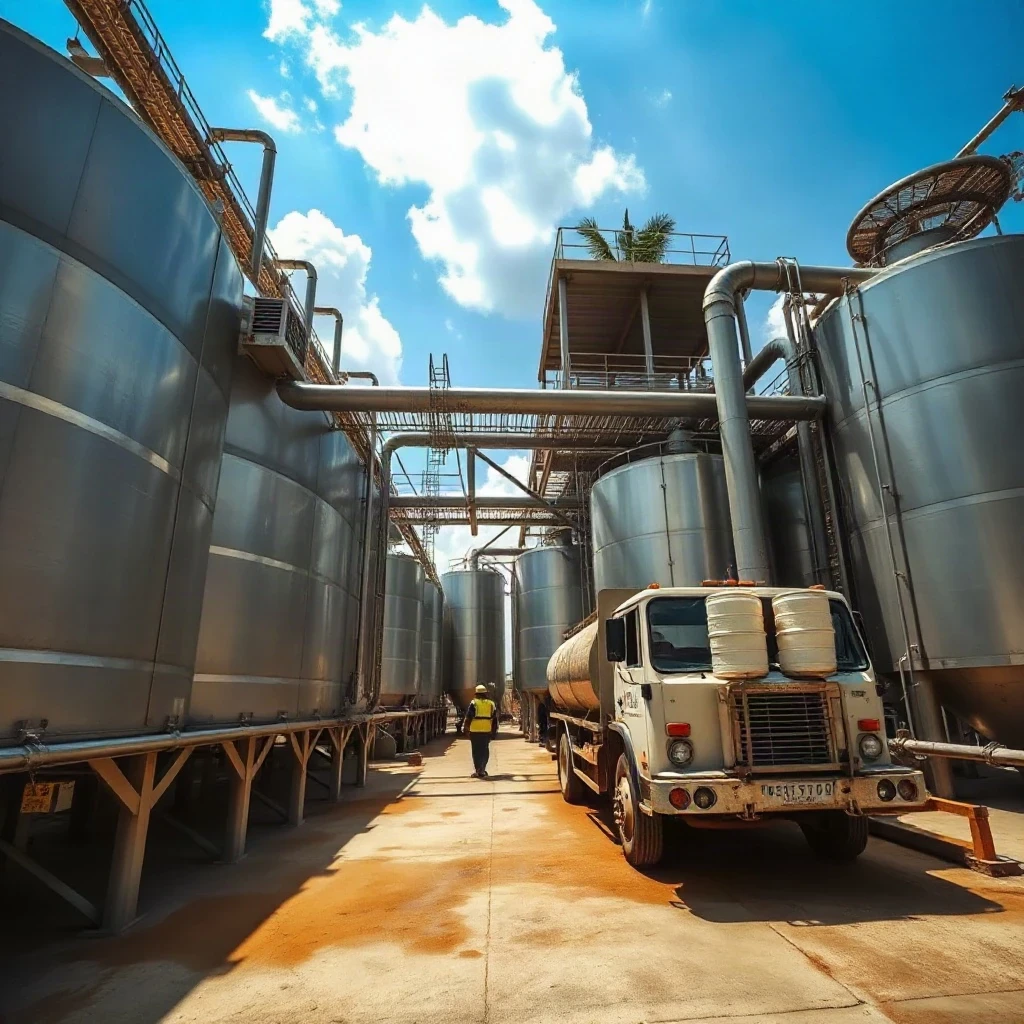
For buyers sourcing palm oil from West Africa, the policy mix in Ghana, Côte d'Ivoire and Cameroon can be as influential as weather or shipping rates. Each country structures its trade regime to balance export earnings, domestic food security and the growth of local refining capacity. Understanding the mechanics helps you anticipate cost movements before they hit your cargo.
All three countries use export duties or levies on crude palm oil (CPO) that are typically lower than those on refined products. The logic is simple: keep more of the value-added processing at home. When global CPO prices rise, these duties often adjust automatically, making it relatively more attractive to ship refined oil than crude. For a buyer, that means the premium for refined product can widen or narrow based on the producer's fiscal triggers.
On imports, the structure is the mirror image. Tariffs on refined palm oil entering these markets are set higher than on crude, creating a price gap that supports domestic crushers and refiners. In some cases, there are also non-tariff measures—licensing requirements, quality standards or local content rules—that effectively raise the cost of imported finished goods. The exact percentages vary and are reviewed periodically, but the principle is consistent: the tariff structure is designed to shift processing margins to local facilities.
Beyond border measures, each government uses fiscal incentives to encourage refining. These can include tax holidays for new mills, reduced excise duties on machinery, or preferential access to foreign exchange for importing inputs like bleaching earth or fractionation equipment. Some countries also mandate a minimum blend of local crude in refined products sold domestically. Such rules tie the domestic market to local supply, which can tighten export availability during seasonal peaks.
For procurement managers, the key is to track not just the headline duty rate, but the policy signals around it. Watch for:
Each of these factors can change the effective cost of your palm oil before you even book freight. A move to raise export duties on CPO, for instance, could compress the discount you currently enjoy on crude, while a tariff cut on refined product might open a cheaper alternative to local processing.
In practice, the structure is not static. It responds to global price swings, domestic harvests and political priorities. Staying informed on the mechanism—not just the current number—gives you a clearer view of where landed costs are heading. For traders, that is the difference between reacting to a policy change and anticipating it. ---
*This article reflects the position as of 23 August 2026. Duty structures, levies and mandates change often, sometimes at short notice. Please verify the current position, and any changes made after this date, before relying on it.*
Indonesia's B50 push raises domestic feedstock use as a higher export levy and flat CPO output test biodiesel funding and compliance planning.
Indonesia’s push to raise the biodiesel blend to B50 is tightening the link between palm oil policy and trade flows. BPDP has stated that B50 does not pressure palm oil exports, even as export levies rise by 73%. That claim will be tested by how much crude palm oil is redirected into the domestic fuel market.
The higher levy is intended to support biodiesel incentives. For exporters, it increases the cost of moving palm oil abroad. For compliance-minded buyers, it means the effective supply of exportable palm oil depends on both the levy level and domestic consumption. A 73% increase in export levies can change sourcing economics even if physical export volumes remain unchanged.
El Niño adds another layer. Reports indicate that El Niño could erode B50 stocks and CPO export levy revenue. If weather reduces output, the pool of palm oil available for both biodiesel blending and exports shrinks. That would pressure domestic supply security and the funding mechanism behind the mandate. Buyers seeking reliable shipments may face more competition from Indonesia’s own biodiesel sector.
A flat outlook for CPO production compounds these concerns. When output is forecast to be flat while B50 increases domestic use, the residual volume for export can narrow. This does not necessarily mean exports fall in absolute terms, but it can make export availability more volatile. It also puts the biodiesel fund under strain if levy revenue weakens at the same time that payout obligations rise.
Outside direct price and volume effects, Aprobi has been educating 5,000 scouts about B50 biodiesel. That points to continued political and social support for the mandate. For market participants, this suggests the B50 transition is unlikely to be reversed quickly, even if feedstock economics become more difficult.
Taken together, the B50 rollout is not just a demand-side shift. It interlocks with export levies, weather-driven output risks and flat production expectations. Compliance-minded buyers should track whether BPDP’s claim that exports are unaffected holds as B50 allocation grows. They should also monitor CPO output data and El Niño updates, because any shortfall in production would intensify competition between domestic biodiesel and export markets.
For palm oil supply, the binding constraint is the share of CPO directed to biodiesel. B50 raises that share. For demand, higher domestic use can leave less for international buyers, although price signals may ration exports. For compliance-minded buyers, the combination of a 73% export levy increase, El Niño risk and flat CPO output suggests the cost of securing compliant, traceable palm oil may become more sensitive to policy changes than to ordinary seasonal patterns. Monitoring BPDP updates and export levy collections will be important for adjusting sourcing strategies.
Sources: Validnews; achmadnurhidayat.id; Bloomberg Technoz; Bloomberg Technoz
Jakarta's B50 mandate and El Niño dry weather tighten supply, while export levy revenue rises.
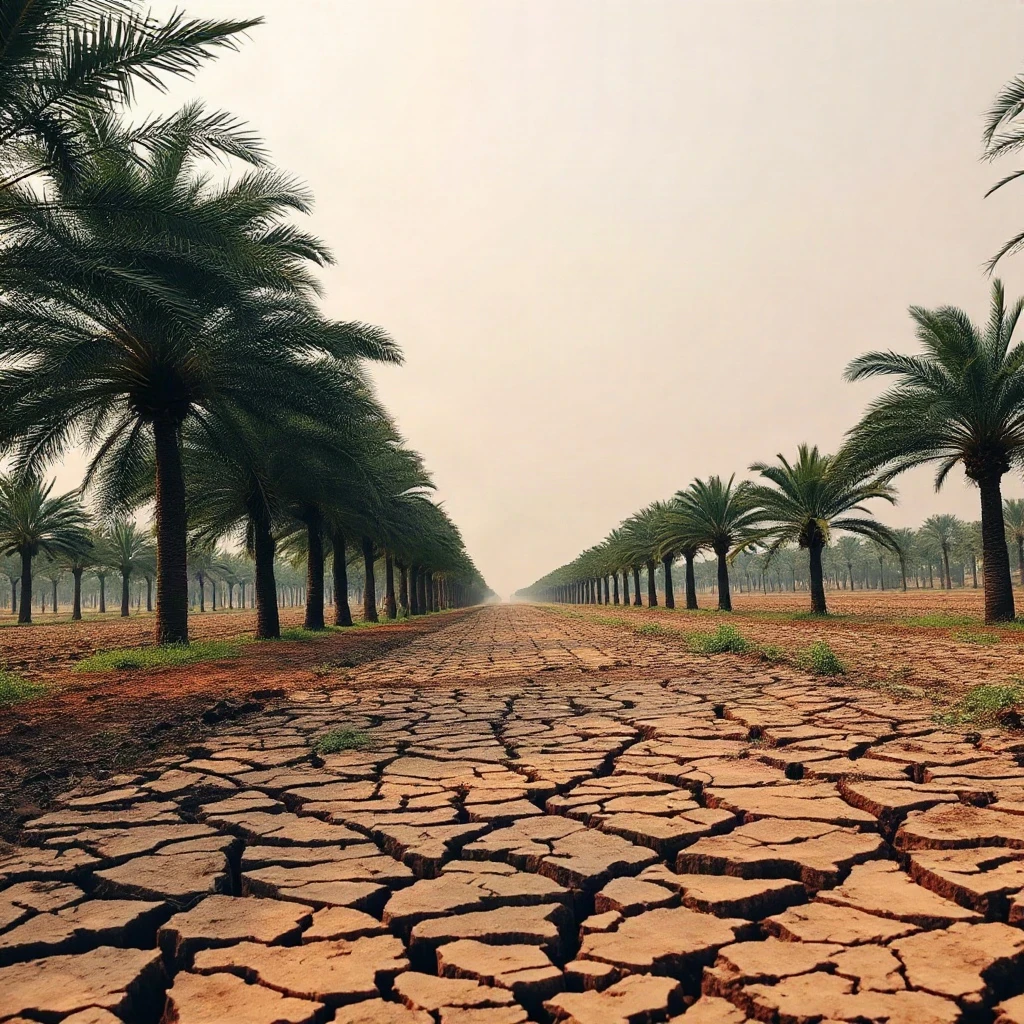
Indonesia's push to implement the B50 biodiesel mandate is taking center stage in regional palm oil policy, with fresh signals that the program will not curb export volumes even as the government raises its export levy. The state fund manager, BPDP, has said the higher levy—up 73%—will not pressure shipments, a claim that comes as the country’s reference price for crude palm oil sits near $997 per metric ton.
Weather remains a key swing factor. The current El Niño episode, with an ONI of +1.4, is bringing dry conditions to key growing areas in both Indonesia and Malaysia, particularly Sarawak and Kalimantan. This has raised concerns about palm fruit yields and, by extension, the availability of feedstock for both food and fuel use. Our model outlook notes that while the broader price trend is bullish, the market is stretched short-term, with overbought conditions and peak-season supply creating pullback risk.
The B50 program—which blends 50% palm-based biodiesel into diesel—is projected to absorb a growing share of Indonesia's crude palm oil output. Industry groups are actively promoting the fuel's benefits, including educational campaigns targeting youth organizations. State plantation companies are also reportedly seeking higher yields to meet the mandate's feedstock needs without diverting too much from export markets.
The combination of higher export levies and robust crude prices is intended to keep the biodiesel subsidy fund solvent. However, analysts warn that if El Niño curbs production, the fund could face pressure as it competes with export demand for limited supply. Malaysia's July data showed production at 1.79 million tons, up 9.4% month-on-month, with stocks climbing to 1.43 million tons—ample for now, but dry weather could tighten balances ahead.
For compliance-minded buyers, the key takeaway is that Indonesian policy is increasingly prioritizing domestic fuel security. The higher levy raises the cost of Indonesian exports, while the B50 mandate could reduce the volume available for overseas buyers during peak demand. Malaysian benchmark prices, near $1,144 per metric ton, reflect these tightening fundamentals, though a strong dollar and high stocks may temper gains.
Our model outlook sees a modest upward drift with consolidation over the next seven sessions, with the base case projecting a 1.6% gain. Buyers should monitor weather forecasts and Indonesian policy announcements closely, as these remain the primary drivers of price direction in the near term.
Sources: Validnews; achmadnurhidayat.id; Oils & Fats International; Bloomberg Technoz; Bloomberg Technoz; Oils & Fats International
Our market desk connects serious buyers with vetted origin suppliers across Southeast Asia. Indicative pricing, specifications and shipment guidance — free of charge.
Get connected →Malaysian CPO at RM4,626/MT; MPOB July stocks rise 7.2% but dry weather and Indonesian biodiesel demand underpin prices.
Full story — Page 2 ▸Malaysian CPO settles near $1,144/MT, up 1.2%, as El Niño and biodiesel demand underpin; MPOC sees RM4,600+ in September.
Full story — Page 2 ▸A practical guide to how export taxes, import tariffs and local content rules in three key producers affect your landed cost.
Full story — Page 2 ▸Indonesia's B50 push raises domestic feedstock use as a higher export levy and flat CPO output test biodiesel funding and compliance planning.
Full story — Page 2 ▸Jakarta's B50 mandate and El Niño dry weather tighten supply, while export levy revenue rises.
Full story — Page 2 ▸Malaysian CPO benchmark edges up 1.2% to $1,144/MT; MPOB July stocks rise but El Niño and biodiesel demand underpin bullish view.

Malaysian crude palm oil futures extended their winning streak, with the benchmark contract closing about 1.2% higher at $1,144/MT (RM 4,626). This marks the fifth consecutive weekly gain, according to Bernama, pushing prices to levels not seen since 2024. The global benchmark, as tracked by the World Bank, stands at $1,101/MT, while Indonesia's reference price is set at $997/MT. Brent crude's 0.6% rise to $94/bbl adds further support, improving the economics of palm-based biodiesel blends.
MPOB data for July shows Malaysian CPO production rose 9.4% month-on-month to 1,792,979 tonnes, while exports jumped 14.5% to 1,392,178 tonnes. Closing stocks increased 7.2% to 1,429,316 tonnes, still ample but below market expectations. Notably, imports plunged 51.9% to 49,566 tonnes, reflecting tight regional supply. The FFB reference price edged up 1.2% to RM 49.50.
However, the supply outlook is clouded by a strengthening El Niño (ONI +1.4), with Kalimantan experiencing dry conditions. Indonesian producers are bracing for potential output losses, with some projections pointing to severe impacts in 2027. The Malaysian Palm Oil Council (MPOC) expects prices to stay above RM 4,600/tonne in September, citing tightening supply and geopolitical disruptions.
Indonesia's push for B50 biodiesel remains a key demand driver. The country's export levy collections are projected to reach Rp 41.22 trillion this year, a 73% increase, as the government funds the mandate. BPDP claims B50 is not hurting export volumes, while plantation companies are seeking higher yields to meet feedstock needs. The campaign to educate stakeholders, including scouts, underscores the policy's strategic importance.
Global vegetable oil demand stays robust, with India's imports rising ahead of the festival season and the FAO vegetable oil price index hitting its highest since June 2022. However, competition from record South American soybean oil exports and rising rapeseed prices could temper gains.
Our model outlook indicates a strong uptrend driven by B50, a wide BOPO spread, and El Niño risk premium. However, technicals are overbought (RSI 73, above upper Bollinger), and July stocks are ample. The near-term base case is a mild pullback or consolidation followed by renewed buying, with net modest gains over 7 days. The published path is +1.1% over seven sessions, but uncertainty is elevated due to stale anchor data and lack of cargo surveyor figures.
Watch for consolidation in the near term, but keep an eye on El Niño developments in Kalimantan and Indonesia's biodiesel policy execution. Any supply disruption could reignite the uptrend, while a correction may offer buying opportunities.
Sources: investor.id; kontan.co.id; Validnews; bernama; NST Online; BernamaBiz
Analyst revises average Malaysian palm oil price forecast higher for 2026, citing tightening global supply conditions.
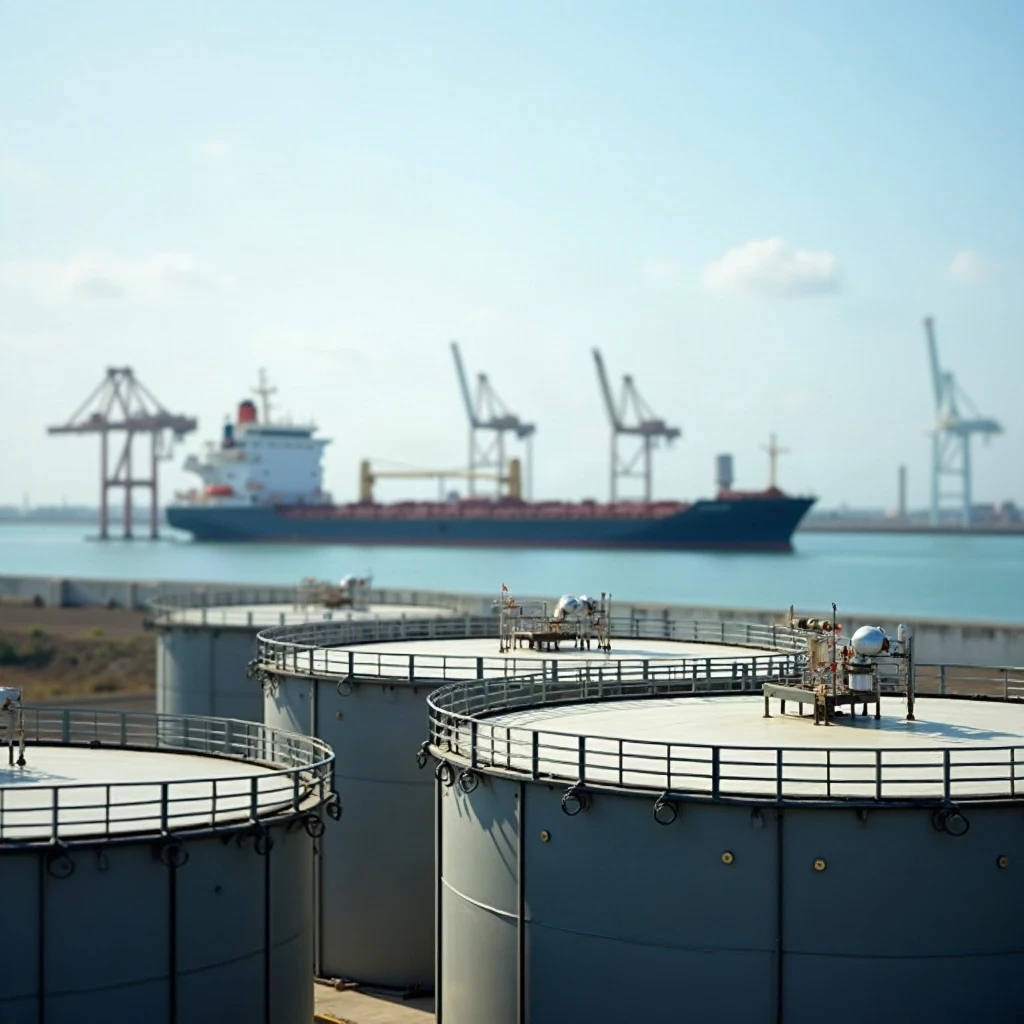
BMI, a unit of Fitch Solutions, has raised its 2026 average crude palm oil (CPO) price forecast to RM4,453 per tonne, up from a prior estimate, on expectations of tighter global supply. The revision, reported today, marks a fresh analyst outlook that diverges from the more bullish near-term calls circulating in the market.
The new forecast sits below the current Malaysian benchmark, which closed around RM4,626 per tonne (about $1,144/MT), up 1.2% on the session. The gap between the analyst's full-year average and spot prices suggests BMI sees room for prices to moderate from current levels over the remainder of the year, even as supply concerns persist.
BMI attributed the upgrade to tightening supply dynamics, a theme echoed across recent market commentary. Malaysia's July output data from MPOB showed production at 1.79 million tonnes, up 9.4% month-on-month, while closing stocks rose 7.2% to 1.43 million tonnes. Despite the monthly build, stocks remain below year-ago levels, and export demand has been robust, with July palm oil exports jumping 14.5% month-on-month to 1.39 million tonnes.
Weather remains a key risk factor. The current El Niño episode (ONI +1.4) has brought dry conditions to parts of Kalimantan, raising concerns about Indonesian production into 2027. BMI's revised forecast appears to factor in some of this weather-related supply risk, though the house view remains below the most bullish market projections.
Other forecasters have been more aggressive. The Malaysian Palm Oil Council (MPOC) has said prices should stay above RM4,600 in September on tightening supply and geopolitical disruptions. BMI's RM4,453 average implies a softer trajectory for the rest of 2026.
Global benchmarks tell a similar story of elevated prices. The World Bank's palm oil reference stands at about $1,101/MT, while Indonesia's Kemendag reference price is around $997/MT. The wide spread between Malaysian and Indonesian benchmarks reflects differing export tax regimes and supply conditions.
Our model outlook notes that CPO is near 20-month highs, with bullish momentum from recent headlines and strong biodiesel demand expectations. However, technical indicators are stretched: the RSI sits at 73, above the overbought threshold, and prices are trading above the upper Bollinger Band. This suggests a possible near-term pullback after the recent run.
MPOB's ample July stocks and historically soft September seasonality could weigh on prices in the coming weeks. Our base case sees modest upside with a likely 3-5 day technical correction, though missing Bursa quotes and a stale anchor widen the uncertainty around this path.
For buyers and traders, BMI's revision adds to a mixed picture: supply concerns support prices structurally, but technical overbought conditions and ample near-term stocks argue for caution in chasing the rally.
Sources: NST Online; BernamaBiz; The Edge Malaysia
Malaysian CPO rises to $1,144/MT after five straight sessions, but RSI 73, upper Bollinger Band and ample July stocks signal a likely 3-5 day technical pullback before any extensio
Malaysian CPO benchmark is trading around $1,144/MT, up 1.2% from the previous session and equivalent to RM4,626/MT at a USD/MYR rate of 4.04. The benchmark sits near 20-month highs after five straight up sessions, while the World Bank palm benchmark is at $1,101/MT and Indonesia's Kemendag reference is at $997/MT. Brent crude is around $94/bbl, up 0.6% on the session and about 6% higher over seven days.
Wide BOPO spread supports demand switching. Soyoil at $1,533/MT versus CPO at $1,144/MT leaves palm trading at a $390/MT discount. That discount makes palm the cheaper vegetable oil for price-sensitive buyers, drawing demand away from soyoil and supporting CPO.
Indonesia's B50 biodiesel mandate is the structural anchor. The move from B40 to B50, in force since July 2026, absorbs roughly 3-4 million tonnes of palm oil per year. That domestic absorption reduces the export surplus available to global buyers and is structurally bullish for Malaysian CPO.
Brent crude is reinforcing biodiesel economics. With Brent around $94/bbl, higher fossil fuel prices improve the blending economics for biodiesel and make palm-based feedstock more competitive, supporting demand.
El Niño keeps a supply risk premium in the market. ONI is at +1.4°C, with Kalimantan dry. The El Niño state supports lagged supply fears for Southeast Asia; headlines warning of an 'El Niño Godzilla' impact on 2027 production keep buyers nervous.
Indonesia's export policy is adding friction. The high levy of $125 plus export duty of $148, with export revenue up 73%, may slow Indonesian exports. Higher export costs can shift demand toward Malaysian CPO and tighten the global exportable supply.
A bullish post-anchor news flow is also supporting sentiment, though our model treats these headlines as a sentiment factor rather than new fundamental data.
Technical overbought signals are flashing. RSI is at 73 and the price is above the upper Bollinger Band after five straight up sessions. These conditions have historically raised the risk of a reversal or consolidation within three to five days as short-term buyers take profit.
MPOB July stocks are ample. Closing stocks of 1,429,316 tonnes rose 7.2% month on month and are 61% above the five-year average, with a stocks-to-use ratio of 12.5%. Production of 1,792,979 tonnes rose 9.4% month on month, and exports of 1,392,178 tonnes rose 14.5%, but the build in stocks caps near-term upside.
Seasonality is soft. Late August into September has historically been a softer period for CPO, with September averaging -0.9% month on month. Production is in its seasonal peak, which adds to supply pressure.
Speculative positioning is crowded. CFTC soyoil net long is 98,237 contracts at the 82nd percentile. That crowded long is vulnerable to liquidation, and a sharp unwind in soyoil can spill over into the palm complex.
The Diwali demand calendar is not a directional signal. The buying window opens in roughly 29 days, but there is no reliable pre-festival run-up. Our model treats this as news flow rather than a bullish driver.
Our model counts five bullish factors against four bearish factors: the upside currently has the upper hand. The B50 mandate, the BOPO discount, Brent strength, El Niño supply risk and Indonesia's export friction outweigh the overbought technicals, ample July stocks, soft seasonality and crowded speculative positioning.
The balance would flip if the technical overbought signal resolves into a deeper pullback, if MPOB August stocks rise again or speculative long liquidation accelerates. Conversely, if the BOPO spread narrows sharply or Indonesian export policy loosens, the bullish support would weaken. Our model outlook is for modest near-term upside with a likely 3-5 day technical pullback, and a published path of +0.9% over seven sessions. Missing Bursa quotes and a stale anchor widen the uncertainty around that path.
Malaysian CPO benchmark is RM4,626/MT, Brent crude $94/bbl, and Kalimantan dry; ample July stocks of 1.43m tonnes temper the bullish supply story.
Malaysian CPO settled around $1,144/MT (RM4,626/MT), up 1.2 percent from the previous session. The World Bank benchmark for palm oil is about $1,101/MT, while Indonesia's reference price is roughly $997/MT. Brent crude rose 0.6 percent to about $94/bbl, supporting biodiesel blending economics. The ringgit is around 4.04 per dollar. CPO futures ended the week higher for a fifth straight session.
MPOB data for July show Malaysian CPO production at 1,792,979 tonnes, up 9.4 percent month on month. Closing stocks rose 7.2 percent to 1,429,316 tonnes, while exports climbed 14.5 percent to 1,392,178 tonnes. Imports dropped 51.9 percent to 49,566 tonnes. The FFB reference price increased 1.2 percent to RM49.50, and the stocks-to-use ratio stands at 12.5 percent. Ample inventories are a counterweight to the tightness narrative.
News flow remains tilted bullish. B50 and El Niño are cited as key catalysts. Indonesia's transition to the B50 mandate is expected to lift CPO demand, with government efforts to accelerate smallholder replanting. Indonesian export levy collections are projected to reach Rp41.22 trillion this year, and the palm oil fund agency says B50 has not suppressed exports while levies rose 73 percent. Weather remains a concern: ENSO is El Niño with an ONI of +1.4, and Kalimantan is dry. Analysts warn the El Niño could threaten Indonesian CPO output, while B50 stocks and export levies are vulnerable.
BMI has raised its 2026 average CPO price forecast to RM4,453 on tight supply. MPOC expects CPO to stay above RM4,600 in September on tightening supply and geopolitical disruptions. Our model outlook sees CPO near 20-month highs with bullish post-anchor headlines, B50 demand and a wide BOPO spread. But RSI at 73 and price above the upper Bollinger Band flag overbought risk; MPOB July stocks are ample and September seasonality is soft. The base case is modest near-term upside with a likely 3-5 day technical pullback. Missing Bursa quotes and a stale anchor widen uncertainty, with a published path of +0.9 percent over seven sessions.
Watch whether Malaysian CPO can hold above RM4,600 against overbought momentum, how quickly Indonesia's B50 procurement translates into physical offtake, and any confirmation of El Niño dryness in Kalimantan. Ample July stocks and soft September seasonality could cushion sudden upside, but a close above current levels would test the model's 3-5 day pullback base case.
Sources: investor.id; Kompas.com; kontan.co.id; Validnews; bernama; NST Online
Indonesia’s higher biodiesel blend and weather risks tighten CPO balances, while levy changes and outreach add compliance signals.
As Indonesia advances its B50 biodiesel mandate, palm oil markets are absorbing a mix of supply constraints, demand-side targets and outreach efforts. Reports point to rising CPO prices with B50 and El Niño cited as catalysts. These overlapping signals matter for buyers that need to track both feedstock availability and policy implementation.
In short, B50 is tightening the structural pull on Indonesian CPO, while weather and plantation renewal create uncertainty around supply. Buyers monitoring these developments may need to weigh stronger domestic demand against official assurances that export volumes will remain sufficient.
Sources: investor.id; Kompas.com; Validnews; achmadnurhidayat.id; investor.id
Policy watch: B50 mandate, El Nino dry spell and rising export levies shape palm oil supply, demand and compliance.
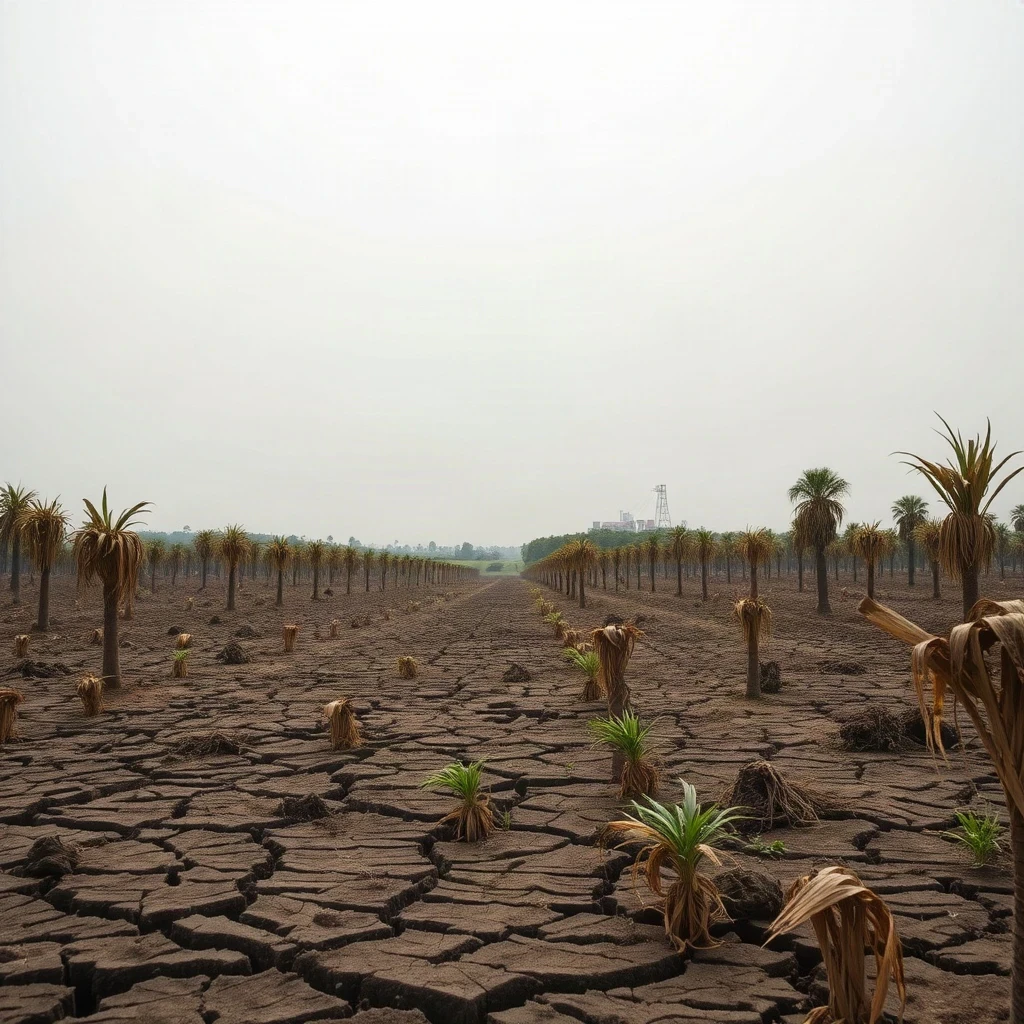
Indonesia's push to expand the B50 biodiesel mandate is colliding with El Nino-driven dry weather, tightening feedstock availability and reshaping export levy dynamics. The policy drive, backed by industry bodies and state plantation efforts to lift yields, signals sustained domestic demand for crude palm oil (CPO) at a time when global benchmarks hover near 20-month highs.
The B50 program, which requires 50% palm oil blending in biodiesel, remains a central pillar of Indonesia's energy policy. Recent campaigns by the Indonesian Biofuel Producers Association (Aprobi) and the Oil Palm Plantation Fund Management Agency (BPDP) aim to educate thousands of Scouts about the mandate, underscoring the government's commitment to socialize the program. State plantation companies are also focusing on higher yields to support feedstock needs, according to state media.
These efforts come as the mandate's implementation is projected to significantly increase domestic CPO consumption. While the exact figures are not specified here, the policy direction is clear: more palm oil will be diverted to fuel, potentially reducing export availability.
El Nino conditions, with an ONI of +1.4, have brought notably dry weather to Kalimantan, a key production region. This raises concerns about palm fruit yields in the coming months, potentially tightening supply. The market is already reacting: Malaysian CPO futures rose 1.2% to about $1144/MT, while Indonesia's reference price stands at about $997/MT.
Despite a strong July production report from MPOB—showing a 9.4% month-on-month increase in CPO output and a 7.2% rise in stocks—the market's focus is on forward supply risks from El Nino. The potential for reduced yields could offset current ample inventories.
The government has raised export levies by 73%, and expects collection to jump about 31% this year, according to reports. This levy is used to fund biodiesel subsidies, but higher rates may discourage exports, especially if global prices soften. The BPDP claims that B50 does not hurt palm oil exports, but analysts note that the levy increase adds to the cost burden for shippers.
With Brent crude steady at $94/bbl, biodiesel blending remains economically viable, but any drop in crude prices could widen the gap between diesel and biodiesel costs, pressuring the levy fund.
Our model outlook suggests modest near-term upside for CPO prices, with a possible technical pullback given overbought conditions. For compliance-minded buyers, the key watchpoints are: the pace of B50 implementation, El Nino's impact on yields, and levy adjustments. Buyers should monitor Indonesian export availability and policy announcements, as these will directly affect supply contracts and pricing.
In summary, the B50 mandate is a structural demand driver, but El Nino and levy hikes introduce supply and cost uncertainties. The market remains sensitive to policy shifts and weather updates.
Sources: investor.id; jurnas.com; Validnews; achmadnurhidayat.id; investor.id; Oils & Fats International
Our market desk connects serious buyers with vetted origin suppliers across Southeast Asia. Indicative pricing, specifications and shipment guidance — free of charge.
Get connected →Analyst revises average Malaysian palm oil price forecast higher for 2026, citing tightening global supply conditions.
Full story — Page 2 ▸Malaysian CPO rises to $1,144/MT after five straight sessions, but RSI 73, upper Bollinger Band and ample July stocks signal a likely 3-5 day technical pullback before any extensio
Full story — Page 2 ▸Malaysian CPO benchmark is RM4,626/MT, Brent crude $94/bbl, and Kalimantan dry; ample July stocks of 1.43m tonnes temper the bullish supply story.
Full story — Page 2 ▸Indonesia’s higher biodiesel blend and weather risks tighten CPO balances, while levy changes and outreach add compliance signals.
Full story — Page 2 ▸Policy watch: B50 mandate, El Nino dry spell and rising export levies shape palm oil supply, demand and compliance.
Full story — Page 2 ▸Malaysian CPO benchmark edges up 1.2% to $1,144/MT; MPOB July stocks rise but El Niño and biodiesel demand underpin bullish view.
Malaysian crude palm oil futures extended their winning streak, with the benchmark contract closing about 1.2% higher at $1,144/MT (RM 4,626). This marks the fifth consecutive weekly gain, according to Bernama, pushing prices to levels not seen since 2024. The global benchmark, as tracked by the World Bank, stands at $1,101/MT, while Indonesia's reference price is set at $997/MT. Brent crude's 0.6% rise to $94/bbl adds further support, improving the economics of palm-based biodiesel blends.
MPOB data for July shows Malaysian CPO production rose 9.4% month-on-month to 1,792,979 tonnes, while exports jumped 14.5% to 1,392,178 tonnes. Closing stocks increased 7.2% to 1,429,316 tonnes, still ample but below market expectations. Notably, imports plunged 51.9% to 49,566 tonnes, reflecting tight regional supply. The FFB reference price edged up 1.2% to RM 49.50.
However, the supply outlook is clouded by a strengthening El Niño (ONI +1.4), with Kalimantan experiencing dry conditions. Indonesian producers are bracing for potential output losses, with some projections pointing to severe impacts in 2027. The Malaysian Palm Oil Council (MPOC) expects prices to stay above RM 4,600/tonne in September, citing tightening supply and geopolitical disruptions.
Indonesia's push for B50 biodiesel remains a key demand driver. The country's export levy collections are projected to reach Rp 41.22 trillion this year, a 73% increase, as the government funds the mandate. BPDP claims B50 is not hurting export volumes, while plantation companies are seeking higher yields to meet feedstock needs. The campaign to educate stakeholders, including scouts, underscores the policy's strategic importance.
Global vegetable oil demand stays robust, with India's imports rising ahead of the festival season and the FAO vegetable oil price index hitting its highest since June 2022. However, competition from record South American soybean oil exports and rising rapeseed prices could temper gains.
Our model outlook indicates a strong uptrend driven by B50, a wide BOPO spread, and El Niño risk premium. However, technicals are overbought (RSI 73, above upper Bollinger), and July stocks are ample. The near-term base case is a mild pullback or consolidation followed by renewed buying, with net modest gains over 7 days. The published path is +1.1% over seven sessions, but uncertainty is elevated due to stale anchor data and lack of cargo surveyor figures.
Watch for consolidation in the near term, but keep an eye on El Niño developments in Kalimantan and Indonesia's biodiesel policy execution. Any supply disruption could reignite the uptrend, while a correction may offer buying opportunities.
Malaysian CPO trades near $1,143/MT after a 3.7% weekly jump. Dry Kalimantan weather, firm crude and a wide discount to soybean oil keep the bias higher, but building stocks and ov
The Malaysian crude palm oil benchmark is trading around $1,143 per tonne on 21 August 2026, up 1.1% from the previous session and equal to RM4,619 per tonne at a USD/MYR rate of 4.04. The move extends a 3.7% rise over the past week and leaves the World Bank palm oil benchmark at about $1,101 per tonne, with Indonesia’s reference price near $997 per tonne. The ringgit exchange rate at 4.04 is a neutral influence, affecting dollar pricing but not driving direction today. Our model outlook is held flat at $1,148 per tonne from the 2026-08-20 close because no model view was available for this run, so we are not signalling a direction beyond that reference.
The most immediate support is price momentum. Because the benchmark has already gained 3.7% over the past week, trend-following buying tends to reinforce the advance in the near term. Behind the move, bullish supply concerns are being priced in from El Niño conditions. With the Oceanic Niño Index at +1.4, palm-producing regions face elevated drought risk, and historical El Niño episodes affect yields with a six- to twelve-month lag. The current dry spell in Kalimantan, which recorded 0 mm of rainfall, is an early signal that fruit formation could be reduced in the months ahead. The seasonal production cycle adds to that argument: after a firmer August, September has historically softened by about 0.9%, so the market is looking past current high output toward a less burdensome supply period.
Energy markets are also helping. Brent crude is trading around $93 per barrel, up 1.5% over seven days despite a 0.1% slip today. Firmer oil raises the economic case for biodiesel blending, and palm oil is a key biodiesel feedstock. When crude stays elevated, biodiesel margins can draw more palm into energy use, tightening food and fuel competition. Finally, the vegetable oil spread is wide: palm oil trades at a $416 per tonne discount to soybean oil. That discount encourages price-sensitive buyers to switch to palm, supporting cash demand.
The main drag is the realised supply picture in Malaysia. MPOB data for July showed CPO production up 9.4% month on month to 1,792,979 tonnes, about 4% above the five-year average. That output helped lift closing stocks by 7.2% to 1,429,316 tonnes, putting the stocks-to-use ratio at 12.5%, roughly 1.5 months of cover and above the usual range. Although July exports rose 14.5% month on month, it was not enough to prevent the stock build. More inventory available to buyers makes it harder for the market to sustain a sharp price premium. The technical picture also looks stretched. The 14-day RSI is at 74.2, above the typical overbought threshold, and the price is near the upper Bollinger band while the MACD histogram remains positive. That combination suggests the rally may be vulnerable to profit-taking or a corrective pullback, even if the broader bias is still positive.
On our factor balance, six drivers are bullish and three are bearish, so the upside currently has the upper hand. The bullish supply-risk story from El Niño and dry Kalimantan weather, combined with firm energy substitution and the deep discount to soybean oil, outweighs the bearish signals from high MPOB inventories, strong production and overbought technicals. For the balance to flip, the next supply data would need to show production accelerating further and stocks rising again without a matching export response, while the technical overbought signal would likely need to trigger a momentum break. A sustained pullback in Brent or a narrowing of the palm-soybean oil discount would also remove some of the supportive energy and demand arguments. Our model outlook remains flat at $1,148 per tonne, pending a fresh model run.
Malaysian CPO near RM4,619, July stocks rise but El Niño and biodiesel demand keep the market supported.
Malaysian CPO benchmark firmed to about $1,143 per tonne (RM4,619) on 21 August, up 1.1% from the prior session, while global and Indonesian reference prices stood at roughly $1,101 and $997 respectively. Brent crude was near $93 a barrel, and the ringgit traded around 4.04 per dollar. Reports noted that Bursa Malaysia CPO touched its highest level in 20 months, with futures finishing higher for a fourth consecutive session on supply concerns and gains in soybean oil.
Malaysia’s July MPOB data showed production rising 9.4% month-on-month to 1,792,979 tonnes, closing stocks up 7.2% to 1,429,316 tonnes, and exports up 14.5% to 1,392,178 tonnes. Imports fell sharply, by 51.9%, to 49,566 tonnes. The stocks-to-use ratio edged to 12.5%. Although the inventory build is seasonally typical, the market is looking beyond current output to supply risks ahead.
El Niño conditions are firmly in place, with an ONI of +1.4 and notably dry weather reported in Kalimantan. Some commentary describes the current event as a Godzilla El Niño and warns the worst impact on Indonesian CPO production may arrive in 2027. That forward supply worry supports prices even as Malaysian output grows.
Indonesia’s push toward a B50 biodiesel mandate remains a central demand pillar. Reports indicate the country may raise export levies by 73% to fund the programme, which could reduce palm oil available for export while increasing domestic absorption. Smallholder replanting assistance has reportedly been lifted to Rp60 million per hectare as part of the same supply-security effort. An Indonesian association has argued B50 would not suppress exports, but export levy and B50 stock dynamics are seen as vulnerable during El Niño.
Analysts and MPOC see prices staying firm above RM4,600 a tonne in September on tightening supply and geopolitical disruptions, with Malaysian research pointing to resilient biodiesel demand. India’s cooking-oil imports are rising for the festival season, though sunflower shipments remain constrained by war-related issues, potentially supporting palm demand.
With Brent near $93, biodiesel blend economics remain supportive, especially for palm-heavy mandates. Indonesian CPO reference at $997 remains cheaper than Malaysian and global benchmarks, but a larger export levy could narrow that discount for overseas buyers.
Our model outlook is held flat at the 2026-08-20 close of $1148 a tonne because no model view was available for this run; we are not signalling a direction we cannot support.
Sources: Validnews; Agricom.id; Suara.com; sawitsetara.co; DagangNews; BernamaBiz
Malaysian CPO benchmark rises 1.1% to $1,143/MT; MPOB data shows output up but stocks still lean; El Niño and biodiesel policy keep market supported.
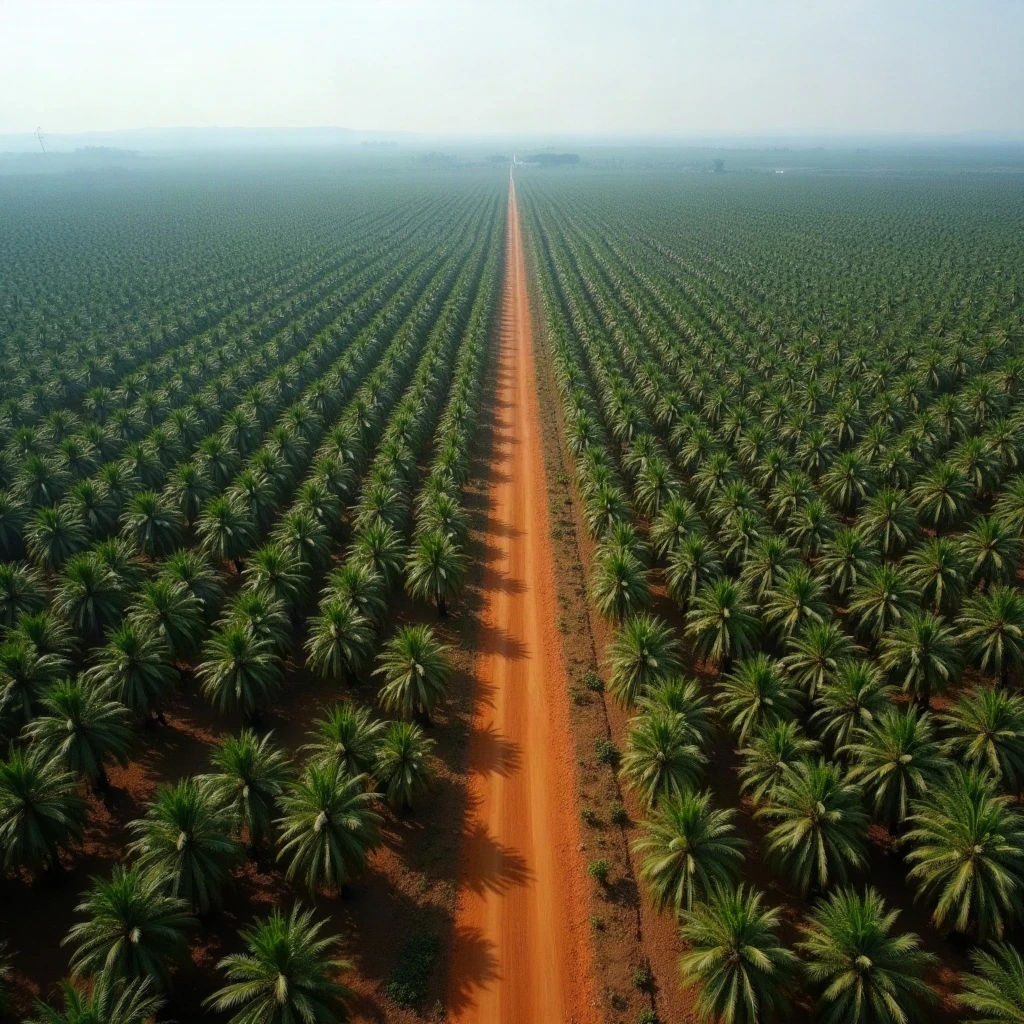
Malaysian crude palm oil futures extended gains for a fourth straight session, with the benchmark contract closing about 1.1% higher at approximately $1,143 per metric ton (RM 4,619). That puts prices near the highest levels in 20 months, supported by supply concerns and firm energy values. Brent crude edged up 0.3% to around $94 per barrel, underpinning biodiesel blending economics and adding a cost floor to vegetable oil markets.
MPOB's July report showed Malaysian CPO production at 1,792,979 tonnes, up 9.4% month-on-month, while exports surged 14.5% to 1,392,178 tonnes. Closing stocks rose 7.2% to 1,429,316 tonnes—still historically tight relative to demand. Imports fell sharply, down 51.9% to 49,566 tonnes. The FFB reference price edged up 1.2% to RM 49.50, reflecting firmer ex-mill values.
Weather remains a key risk. ENSO is in El Niño territory (ONI +1.4), with notable dryness across Kalimantan. Industry voices, including Malaysia's SD Guthrie, warn that El Niño could dent output into 2027-28. Indonesia's own production outlook is also seen as flat, raising concerns about feedstock availability for the B50 biodiesel program.
Indonesia's push to B50 biodiesel is a central theme. The country's export levy rose 73%, according to BPDP, and the replanting subsidy was increased to Rp 60 million per hectare. However, analysts at Bloomberg Technoz caution that El Niño and flat production could erode the biodiesel fund's buffer, potentially straining subsidy payouts. Indonesia's state plantation company is looking to raise yields to secure feedstock.
On the demand side, India's cooking-oil imports are climbing ahead of the festival season, though sunflower oil imports have been hit by war-related disruptions. Soybean oil exports from Argentina and Brazil hit a record high, offering competition but also reflecting strong global vegetable oil appetite.
Multiple Malaysian sources, including MPOC, expect CPO to hold above RM 4,600 per tonne in September, citing tightening supply and geopolitical disruptions. BMI raised its 2026 average CPO price forecast to RM 4,453. Our model outlook holds flat at the 2026-08-20 close of $1,148, as no directional view was available for this run.
Watch Indonesia's biodiesel fund sustainability and weather updates in Kalimantan—both could trigger sharp price moves. With stocks lean and El Niño still in play, the market's risk premium is unlikely to fade quickly.
Sources: Validnews; Agricom.id; Bernama; BernamaBiz; The Star; The Edge Malaysia
Indonesia’s B50 mandate, higher export levies, replanting support and El Niño risk shape a tighter palm oil supply-demand balance for buyers.
Indonesia’s B50 biodiesel mandate is no longer a distant policy target; it is now shaping export levies, replanting budgets and market expectations. The country’s plantation fund body maintains that the higher blend will not suppress palm oil exports, but export levies are reported to rise by 73%. For international buyers, that means the cost of moving Indonesian palm oil through the export system is increasing even if shipment volumes hold up.
The levy increase adds a direct fiscal layer to every tonne of crude palm oil leaving Indonesia. At the same time, replanting assistance has been raised to Rp60 million per hectare as part of the B50 push. The aim is to rejuvenate ageing trees and secure future feedstock, but the near-term effect is more government spending and a stronger policy commitment to domestic biodiesel use.
El Niño is now a central concern. Reports indicate that B50 feedstock stocks and CPO export levy receipts are vulnerable to erosion if dry conditions hit production. Lower fresh fruit bunch yields would reduce the crude palm oil available for both food and fuel, while also shrinking the levy base that funds the biodiesel programme. That is a double squeeze: less supply and less fiscal headroom to manage the mandate.
Biodiesel demand remains firm. One research house notes that palm oil prices could move past RM4,300 if the current demand backdrop holds. Crude palm oil has already climbed to its highest level in 20 months, with El Niño and B50 cited as key drivers. The price strength shows that energy policy is competing directly with food buyers for the same feedstock, and the market is pricing in tighter balances.
For compliance-minded buyers, the main task is to separate stated policy intent from actual stock and levy outcomes. The B50 programme is intended to expand demand, but if El Niño reduces production and export levies rise, the physical market could become more expensive and less predictable.
Sources: Validnews; Suara.com; sawitsetara.co; DagangNews; Bloomberg Technoz
Jakarta raises palm oil export levy and replanting grants to fund B50 biodiesel as El Nino dries Kalimantan and stocks draw down.
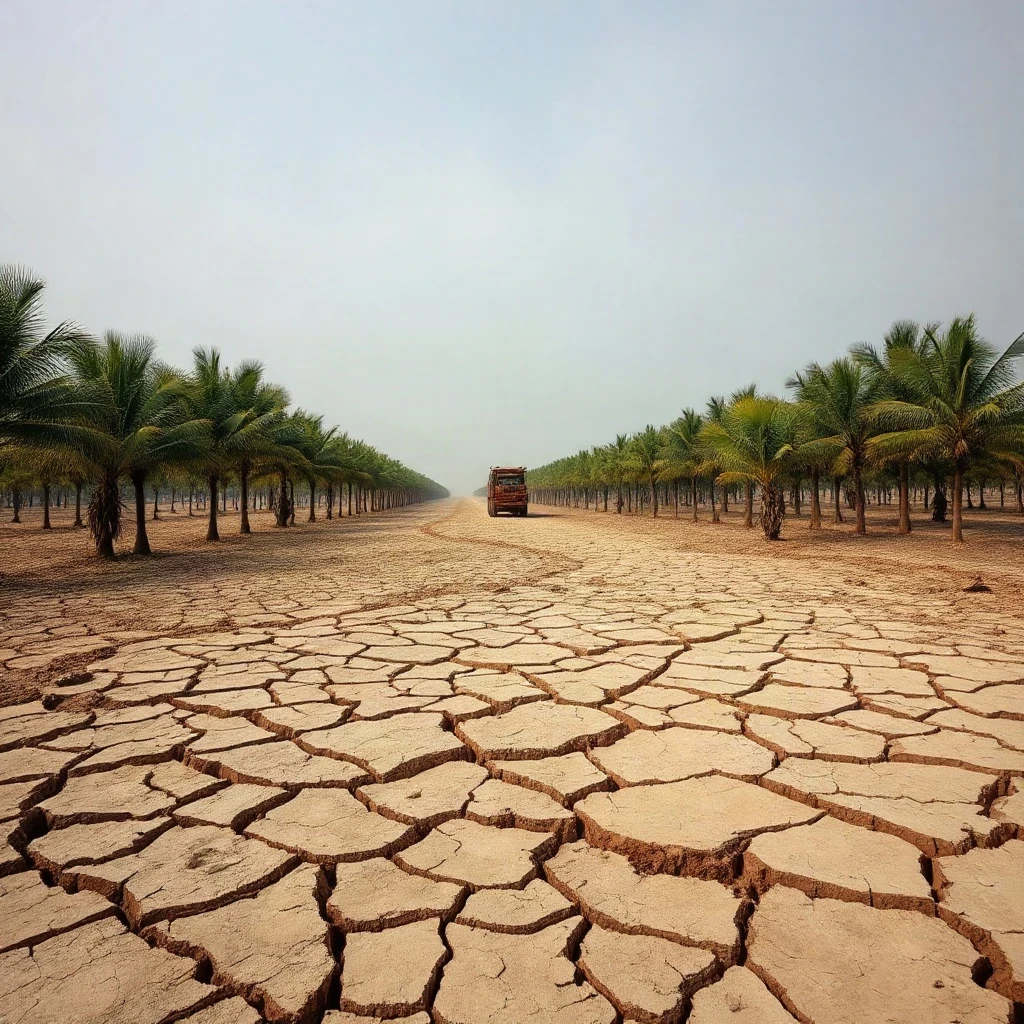
Indonesia is stepping up its B50 biodiesel drive, raising the export levy on palm oil by 73% and increasing replanting assistance to Rp60 million per hectare, according to policy reports published this week. The moves come as the country's biodiesel fund faces pressure from a dry El Nino that has hit Kalimantan and is expected to keep crude palm oil production growth flat.
The higher export levy is designed to replenish the fund that subsidizes the B50 blending program, which requires 50% palm oil in diesel. The levy increase means exporters will pay more per tonne of CPO shipped abroad, effectively transferring more of the cost of the domestic mandate to overseas buyers. In parallel, the government raised replanting grants for smallholders to Rp60 million per hectare, aiming to boost yields and secure long-term feedstock for biodiesel.
The policy push comes against a backdrop of tightening supply. Malaysia's MPOB data for July 2026 showed CPO production up 9.4% month-on-month to 1.79 million tonnes, but closing stocks rose only 7.2% to 1.43 million tonnes as exports jumped 14.5%. Imports fell sharply, down 51.9% month-on-month, reflecting a regional market where demand for palm oil remains robust.
Weather is a key risk. The El Nino event (ONI +1.4) has left Kalimantan notably dry, which could curb Indonesian output in coming months. Analysts cited in the reports warn that B50 stockpiles and the export levy pool are vulnerable to erosion if production stalls. Indonesia's state plantation company is reportedly seeking higher yields to support the biodiesel program, but near-term gains are uncertain.
For compliance-minded buyers, the higher levy raises the cost of Indonesian palm oil exports, potentially widening the discount to Malaysian benchmark CPO. The Malaysian benchmark closed at about $1143/MT, up 1.1%, while Indonesia's reference price is about $997/MT. The gap reflects different pricing mechanisms and the levy burden.
Biodiesel economics are also influenced by crude oil. Brent at about $94/bbl, up 0.3%, provides some support for blending margins, but the higher levy and potential supply tightness could push palm oil prices higher, squeezing blenders.
Our model outlook holds flat at $1148/MT as of the 2026-08-20 close, with no directional signal available for this run.
Indonesia's B50 policy is intensifying, with higher export levies and replanting subsidies aimed at securing feedstock. But El Nino-induced dryness and flat production forecasts pose risks to both the biodiesel fund and export availability. Buyers should monitor levy adjustments and weather developments closely, as these will shape palm oil supply and pricing in the months ahead.
Sources: Validnews; Suara.com; Bloomberg Technoz; Bloomberg Technoz; Quantum Commodity Intelligence
From fruit to frond, the oil palm yields a surprising range of products—here's what buyers should know.
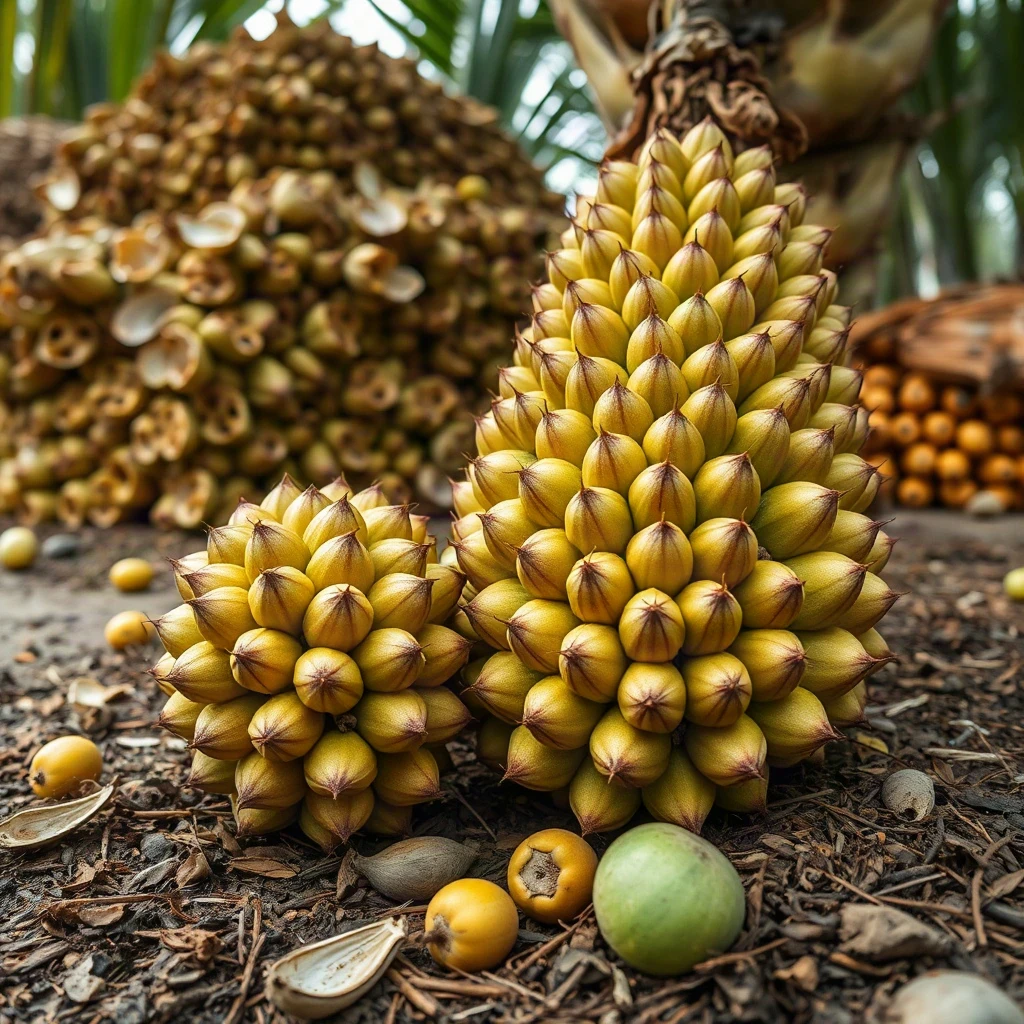
For procurement managers new to palm products, the oil palm is often reduced to just one output: crude palm oil. In practice, the tree is a multi-output crop where nearly every component finds a commercial use. Understanding this helps buyers identify supply opportunities and appreciate why the crop is so widely cultivated.
The fruit itself yields two distinct oils. The fleshy outer mesocarp produces crude palm oil (CPO), used in food, cosmetics, and biodiesel. Inside the hard kernel is palm kernel oil (PKO), with a different fatty-acid profile, prized for confectionery, margarine, and specialty fats. After pressing, the remaining kernel cake becomes a high-protein animal feed ingredient.
Once the fruit is stripped, the empty fruit bunch (EFB) remains. Rather than discarding it, many mills return EFB to plantations as mulch, returning nutrients to the soil. Some facilities also process EFB into biomass fuel, used to generate steam and electricity for the mill itself—often making mills energy self-sufficient.
Palm kernel shells (PKS) are a hard, dry biomass with a high calorific value. They are increasingly traded as a renewable fuel for industrial boilers, particularly in Japan and South Korea. The mesocarp fiber, left after oil extraction, is also burned for energy, with the ash sometimes used as a potassium-rich fertilizer.
When a palm is replanted after a 25- to 30-year cycle, the felled trunk yields a large volume of wood. Though soft and moist, it can be processed into plywood, furniture boards, or further into pulp and paper. Fronds, pruned regularly, are a source of fodder for livestock and also act as ground cover to prevent erosion.
Palm oil mill effluent (POME)—the liquid waste from processing—is rich in organic matter. Treated properly, it can be captured for biogas, reducing methane emissions, and the treated water is often reused for irrigation or land application. This closes the loop on the mill's water cycle.
In short, the oil palm is a model of circular use. For buyers, this means a broader palette of raw materials—and a chance to align procurement with waste-reduction goals.
Our market desk connects serious buyers with vetted origin suppliers across Southeast Asia. Indicative pricing, specifications and shipment guidance — free of charge.
Get connected →Malaysian CPO near RM4,619, July stocks rise but El Niño and biodiesel demand keep the market supported.
Full story — Page 2 ▸Malaysian CPO benchmark rises 1.1% to $1,143/MT; MPOB data shows output up but stocks still lean; El Niño and biodiesel policy keep market supported.
Full story — Page 2 ▸Indonesia’s B50 mandate, higher export levies, replanting support and El Niño risk shape a tighter palm oil supply-demand balance for buyers.
Full story — Page 2 ▸Jakarta raises palm oil export levy and replanting grants to fund B50 biodiesel as El Nino dries Kalimantan and stocks draw down.
Full story — Page 2 ▸From fruit to frond, the oil palm yields a surprising range of products—here's what buyers should know.
Full story — Page 2 ▸Malaysian benchmark climbs to ~$1,130/MT as MPOC and BMI see prices holding above RM4,600.

Malaysian crude palm oil futures climbed to their highest level since 2024 on Wednesday, with the benchmark contract trading at about $1,130 per tonne (RM4,596), up 0.6% from the previous session. The rally extends a short-term uptrend driven by tightening supply expectations, robust biodiesel demand, and El Niño-related weather concerns.
Market sentiment is supported by forecasts from industry bodies. The Malaysian Palm Oil Council (MPOC) expects prices to remain above RM4,600 in September, citing tightening supply and geopolitical disruptions. BMI, a research unit, raised its 2026 average CPO price forecast to RM4,453, also on tight supply.
July data from the Malaysian Palm Oil Board (MPOB) showed production at 1,792,979 tonnes, up 9.4% month-on-month, while closing stocks rose 7.2% to 1,429,316 tonnes. Exports jumped 14.5% to 1,392,178 tonnes, outpacing the production gain and underpinning the price strength. Imports fell sharply to 49,566 tonnes, down 51.9%.
The current El Niño episode (ONI +1.4) is heightening supply concerns, with notably dry conditions in Kalimantan, a key Indonesian growing region. Dry weather can curb yields and tighten global availability.
At the same time, biodiesel blending mandates—B40 in Indonesia and B50 in Malaysia—are boosting palm oil demand for fuel. Higher crude oil prices, with Brent at about $94 per barrel (+2.9%), improve the economics of palm-based biodiesel.
Our model outlook indicates that CPO remains in a short-term uptrend, supported by a wide $417 per tonne discount to gasoil (BOPO), El Niño supply fears, and bullish commentary from MPOC and BMI. However, overbought technicals and ample July stocks may limit the pace of gains. The model's base case is modest gains over the next seven days, with occasional profit-taking, and a published path of +0.1% over seven sessions.
Uncertainty remains from missing cargo-surveyor export data and the palm-oil/gasoil spread (POGO), which could affect price direction. Buyers and traders should monitor these indicators closely.
Global benchmarks show palm oil at about $1,101 per tonne (World Bank), while Indonesia's reference price stands at about $997 per tonne. The ringgit trades at 4.04 per dollar, and the rupiah at 17,802 per dollar.
Industry voices remain constructive. MPOC and BMI both point to sustained strength, with the latter's RM4,453 average forecast for 2026 suggesting prices will stay elevated through the year.
Sources: BernamaBiz; The Star; The Edge Malaysia; Bernama; NST Online
Research house revises average forecast upward as supply concerns persist; Malaysian benchmark trades near RM4,600.

BMI, a major research house, has raised its 2026 average crude palm oil (CPO) price forecast to RM4,453 per tonne, citing tight supply conditions. The revision, reported by multiple outlets, comes as the Malaysian benchmark hovers near RM4,596 per tonne, with the global benchmark at about $1,101 per tonne and Indonesia's reference price around $997 per tonne.
For traders and buyers, the move signals that supply constraints are expected to persist through the year, underpinning price levels well above earlier projections. BMI's forecast aligns with the current market tone, where CPO futures have recently touched multi-month highs.
Malaysia's July data from the Malaysian Palm Oil Board showed production at 1,792,979 tonnes, up 9.4% month-on-month, while closing stocks rose 7.2% to 1,429,316 tonnes. Exports jumped 14.5% to 1,392,178 tonnes, a sign of robust demand despite ample supply. Imports fell sharply to 49,566 tonnes.
Meanwhile, the El Niño weather pattern (ONI +1.4) has brought dry conditions to parts of Kalimantan, raising concerns about future output in Indonesia, the world's top producer. Headlines about a potential "El Niño Godzilla" threatening Indonesian CPO production in 2027 have added to the bullish narrative.
Our model outlook sees CPO entering the next seven days in a short-term uptrend after breaking above the upper Bollinger Band. Bullish El Niño headlines and a wide BOPO spread are offsetting ample July stocks and peak production. The base case points to modest consolidation-to-firmer trade with daily moves around ±0.2%.
Key downside risk is profit-taking from crowded soyoil longs, while upside risk is a B50/El Niño-driven breakout. Missing cargo-surveyor export data widens uncertainty. Our published path is +0.1% over seven sessions.
BMI's revision adds to the growing consensus that supply tightness will keep prices elevated, even as production ramps up seasonally. Traders will watch upcoming export data and weather developments for further direction.
Sources: NST Online; The Edge Malaysia; Agricom.id; investor.id; Informasi.com; The Edge Malaysia
Malaysian CPO at RM4,595; MPOB July stocks ample but El Niño, B50, and firm energy underpin forward prices.
Malaysian benchmark CPO settled near $1,130 per tonne, or RM4,595 per tonne, up 0.6% on the session. That puts it just below the RM4,600 mark that several Malaysian trade sources see as a near-term floor for September, and nearby futures have touched their highest since April. Further out, the February 2027 contract was reported above RM5,071 per tonne. BMI lifted its 2026 average CPO forecast to RM4,453 per tonne, while global reference prices remain layered: the World Bank palm oil benchmark is near $1,101 per tonne and Indonesia's reference near $997 per tonne.
El Niño conditions, with ONI at +1.4 and dry weather in Kalimantan, are feeding concern about future Indonesian output, and some reports warn of an El Niño 'Godzilla' effect on production. Indonesia's B50 biodiesel ramp and heavy export levies could further tighten the volume of palm oil available globally, while firm Brent crude near $92 per barrel supports blending economics.
Sources: Agricom.id; NST Online; BusinessToday Malaysia; The Edge Malaysia; investor.id; Informasi.com
Malaysian CPO edges up to $1,130/MT; bullish supply-side drivers hold the upper hand, but overbought technicals point to consolidation with mild upside.
Malaysian CPO benchmark is at about $1,130/MT, up 0.6% from the previous session and around RM4,595/MT in ringgit terms. That leaves it near the top of its 52-week range after a strong two-day rally. The World Bank global palm oil benchmark is about $1,101/MT, while Indonesia's August reference price is about $997/MT. Our model outlook characterizes the market as having reached the top of its range on bullish sentiment, with technicals turning overbought.
El Niño is the most visible bullish driver. The current ONI is +1.4 for MJJ 2026, and headlines warning of severe 2027 yield damage are anchoring forward tightness expectations. Palm is a perennial crop, so the yield effect of El Niño dryness typically appears many months later. Even with ample current stocks, buyers are willing to pay up now for expected tighter supply in late 2026 and 2027.
Indonesia's B50 biodiesel mandate, active since July 2026, is the single largest demand variable. The step up from B40 to B50 absorbs roughly 3–4 million tonnes per year of additional palm oil demand. Headlines confirming the start of the B50 era reinforce a structural demand shift that lifts the medium-term price floor.
The wide palm-to-soybean oil spread adds demand-switching support. Palm is heavily discounted versus CBOT soybean oil, with the BOPO spread at about $412/MT. When palm is this cheap relative to soyoil, importers and biodiesel buyers shift toward palm, tightening physical demand and supporting Malaysian CPO.
Indonesia's export policy costs are also working in Malaysia's favor. The August reference price of $997/MT carries an export levy of $125 and an export duty of $148, about $273/MT in total. If CPO continues to rise, the next reference price will be set higher, making Indonesian exports more expensive and encouraging buyers toward Malaysian supply. This is a self-reinforcing bullish loop while prices rise.
Brent crude near $92/bbl improves biodiesel blending economics. Higher crude prices make palm-based biodiesel more competitive as a feedstock and support the broader vegetable oil complex. On a 7-day basis Brent is roughly flat to slightly lower, which is mildly supportive rather than a drag.
Technical momentum remains bullish. The 5-day and 20-day SMAs have formed a golden cross, MACD is positive, and price is above all key moving averages. However, price is sitting at the upper Bollinger Band around $1,125, which signals resistance and near-term pullback risk.
India's festival demand is building, though not immediate for this 7-day window. Diwali is roughly 80 days away and the buying window opens in about 31 days. July imports were already at a 10-month high, and festival restocking is expected to support demand into the fourth quarter.
The most concrete bearish fundamental is the July MPOB stock report. Closing stocks rose 7.2% month-on-month to 1,429,316 tonnes, about 61% above the five-year average, with a stocks-to-use ratio of 12.5%. July production rose 9.4% to 1,792,979 tonnes. This is a comfortable supply cushion, although the data is about 49 days old and the market has largely looked through it.
Peak production season runs from July through October. The seasonal production path shows a further 7.0% increase next month. Output is likely to remain high and stocks may continue to build near term, which caps immediate upside even as the medium-term story stays bullish.
CFTC positioning adds a neutral-to-overbought risk rather than fresh ammunition. Managed money in soyoil is at the 80th percentile net long, with +80,922 contracts and a +0.70 sigma reading. That reflects bullish complex-wide sentiment, but it is crowded and vulnerable to long-liquidation if momentum stalls.
Our model's factor balance is 7 bullish versus 2 bearish, so the upside currently has the upper hand. That is consistent with the price action: CPO is near the top of its 52-week range and the front end is being supported by El Niño forward tightness, B50 demand, the wide palm discount, Indonesian export cost increases, firm crude, and building festival demand. The bearish side is real but narrower: ample current stocks and peak-season production.
Even with bullish factors dominating, the overbought technical picture argues for consolidation rather than a vertical extension. Our model's base case is consolidation with mild upside over the next 7 days, with a published path of about +0.1% over 7 sessions. To flip the balance, the market would likely need to see a much larger-than-expected build in August stocks, a stall in B50 implementation, a rapid weakening of El Niño, or long-liquidation in the crowded soyoil complex that spills into palm.
Indonesia's B50 biodiesel push and dry Kalimantan weather sharpen supply risk for palm buyers.
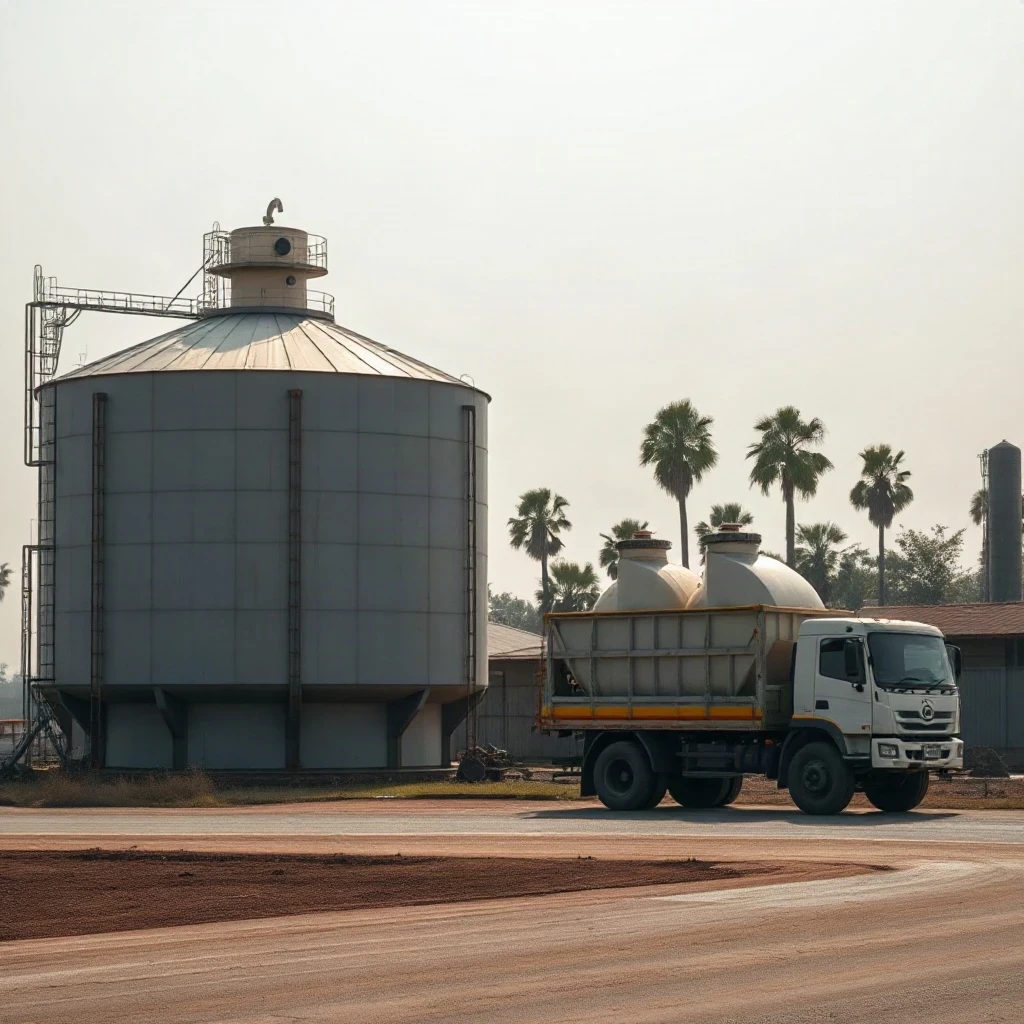
Indonesia's move to a B50 biodiesel mandate is emerging as a key swing factor for palm oil markets, with policy headlines this week pointing to tighter domestic supply and higher compliance costs for exporters. The mandate, which extends palm-based blending beyond biosolar to include Dexlite and Pertamina Dex grades, expands the pool of palm oil absorbed by the domestic fuel program. That raises the stakes for CPO availability, especially as El Niño conditions persist and Kalimantan faces notably dry weather.
Industry reports cited by regional media warn that B50 blending could erode Indonesia's CPO stocks and put pressure on the country's export levy fund, which finances the biodiesel subsidy program. With production growth seen as flat, the additional domestic offtake may leave less palm oil for export markets. For compliance-minded buyers, this means monitoring Indonesian export levy rates and any policy adjustments becomes more urgent.
Malaysian data for July 2026, released by MPOB, showed CPO production at 1,792,979 tonnes, up 9.4% month-on-month, while closing stocks rose 7.2% to 1,429,316 tonnes. Exports jumped 14.5% to 1,392,178 tonnes, but imports fell sharply by 51.9% to 49,566 tonnes. These figures point to ample near-term supply in Malaysia, yet the market's focus has shifted to Indonesia's policy-driven demand.
Malaysian benchmark CPO futures traded around $1,130 per tonne, up 0.6% on the session, equivalent to RM 4,595 per tonne. The global World Bank benchmark stood at about $1,101 per tonne, while Indonesia's reference price was around $997 per tonne. Brent crude rose 1.1% to about $93 per barrel, supporting biodiesel blend economics and reinforcing the competitiveness of palm-based fuel.
Our model outlook sees CPO entering the next seven days in a short-term uptrend after breaking above the upper Bollinger Band. Bullish B50 and El Niño headlines, along with a wide BOPO spread, are offsetting ample July MPOB stocks and peak production. The base case is for modest consolidation-to-firmer trade with daily moves around ±0.2%. Key downside risk is profit-taking from crowded soyoil longs, while upside risk is a B50/El Niño-driven breakout. Missing cargo-surveyor export data widens uncertainty. The published path is +0.1% over seven sessions.
For buyers, the immediate watch items are Indonesia's export levy adjustments, any changes to B50 implementation timelines, and weather updates for Kalimantan. A sustained dry spell could curb production and tighten global supply, while a smooth B50 rollout could increase domestic absorption, potentially lifting export premiums. The widening gap between Malaysian and Indonesian price benchmarks suggests regional supply dynamics are diverging, with Indonesia's policy choices likely to set the tone for the broader market.
Sources: BusinessToday Malaysia; Oils & Fats International; Bloomberg Technoz; Bloomberg Technoz; sawitsetara.co
Indonesia's B50 transition, soft output forecasts and export levy strains signal higher palm oil costs and fewer uncommitted volumes for global buyers.
BMI has lifted its Malaysian crude palm oil futures outlook to around RM4,453, citing biodiesel consumption and El Niño-related supply risks. That higher price anchor reflects a market where policy-driven demand is meeting weather uncertainty.
El Niño conditions can lower fresh fruit bunch yields and tighten crude palm oil output. Indonesian production forecasts point to sluggish growth, and the same weather pattern may reduce exportable volumes. When output is soft, less crude palm oil is available for both export markets and domestic biodiesel blending, which tends to support prices and raise procurement costs. Weather-related output losses can amplify the effect of blending mandates because feedstock becomes scarcer at the same time demand rises.
Indonesia’s transition to the B50 biodiesel mandate is projected to deepen domestic palm oil absorption. A higher blend rate means more CPO is diverted into fuel, leaving fewer barrels for food, oleochemical and export buyers. The discussion of B50 and B100 in policy circles signals that the demand pull from energy could become structural rather than temporary. Malaysia’s biodiesel program adds a second source of energy-linked CPO demand, tightening the global balance further when both countries compete for similar supply.
Export levies on CPO are a key funding source for Indonesia’s biodiesel subsidy. If El Niño reduces production, levy collections can weaken, making it harder to finance B50 incentives. Reports highlight the vulnerability of B50 stocks and export levy receipts to El Niño disruption. At the same time, subsidy reviews are drawing attention to the fiscal durability of the program. A slower mandate rollout or a change in levy settings could alter both domestic consumption and the volume of CPO entering world trade. Buyers often see higher export levies passed through into pricing, which affects landed costs even when futures are stable.
Buyers with traceability, sustainability or regulatory commitments may face tighter physical supply and greater competition for certified volumes. Policy signals matter as much as weather because mandate pace, subsidy design and export levy levels influence how much CPO is available and at what cost. Monitoring these developments can help procurement teams anticipate shifts in origin availability and price risk without changing investment strategy.
Sources: BusinessToday Malaysia; Bloomberg Technoz; Oils & Fats International; Bloomberg Technoz; Kantor Berita Sawit
Our market desk connects serious buyers with vetted origin suppliers across Southeast Asia. Indicative pricing, specifications and shipment guidance — free of charge.
Get connected →Research house revises average forecast upward as supply concerns persist; Malaysian benchmark trades near RM4,600.
Full story — Page 2 ▸Malaysian CPO at RM4,595; MPOB July stocks ample but El Niño, B50, and firm energy underpin forward prices.
Full story — Page 2 ▸Malaysian CPO edges up to $1,130/MT; bullish supply-side drivers hold the upper hand, but overbought technicals point to consolidation with mild upside.
Full story — Page 2 ▸Indonesia's B50 biodiesel push and dry Kalimantan weather sharpen supply risk for palm buyers.
Full story — Page 2 ▸Indonesia's B50 transition, soft output forecasts and export levy strains signal higher palm oil costs and fewer uncommitted volumes for global buyers.
Full story — Page 2 ▸Malaysian benchmark climbs to ~$1,130/MT as MPOC and BMI see prices holding above RM4,600.
Malaysian crude palm oil futures climbed to their highest level since 2024 on Wednesday, with the benchmark contract trading at about $1,130 per tonne (RM4,596), up 0.6% from the previous session. The rally extends a short-term uptrend driven by tightening supply expectations, robust biodiesel demand, and El Niño-related weather concerns.
Market sentiment is supported by forecasts from industry bodies. The Malaysian Palm Oil Council (MPOC) expects prices to remain above RM4,600 in September, citing tightening supply and geopolitical disruptions. BMI, a research unit, raised its 2026 average CPO price forecast to RM4,453, also on tight supply.
July data from the Malaysian Palm Oil Board (MPOB) showed production at 1,792,979 tonnes, up 9.4% month-on-month, while closing stocks rose 7.2% to 1,429,316 tonnes. Exports jumped 14.5% to 1,392,178 tonnes, outpacing the production gain and underpinning the price strength. Imports fell sharply to 49,566 tonnes, down 51.9%.
The current El Niño episode (ONI +1.4) is heightening supply concerns, with notably dry conditions in Kalimantan, a key Indonesian growing region. Dry weather can curb yields and tighten global availability.
At the same time, biodiesel blending mandates—B40 in Indonesia and B50 in Malaysia—are boosting palm oil demand for fuel. Higher crude oil prices, with Brent at about $94 per barrel (+2.9%), improve the economics of palm-based biodiesel.
Our model outlook indicates that CPO remains in a short-term uptrend, supported by a wide $417 per tonne discount to gasoil (BOPO), El Niño supply fears, and bullish commentary from MPOC and BMI. However, overbought technicals and ample July stocks may limit the pace of gains. The model's base case is modest gains over the next seven days, with occasional profit-taking, and a published path of +0.1% over seven sessions.
Uncertainty remains from missing cargo-surveyor export data and the palm-oil/gasoil spread (POGO), which could affect price direction. Buyers and traders should monitor these indicators closely.
Global benchmarks show palm oil at about $1,101 per tonne (World Bank), while Indonesia's reference price stands at about $997 per tonne. The ringgit trades at 4.04 per dollar, and the rupiah at 17,802 per dollar.
Industry voices remain constructive. MPOC and BMI both point to sustained strength, with the latter's RM4,453 average forecast for 2026 suggesting prices will stay elevated through the year.
CPO near $1,122/MT after a technical breakout; six bullish factors outweigh three bearish ones, but stale stock data and crowded soyoil longs remain risks.
Malaysian CPO benchmark is about $1,122/MT, up 1.2% from the previous session and equivalent to RM4,544/MT. The World Bank palm oil benchmark is about $1,101/MT and Indonesia’s reference price is near $997/MT. Our model outlook has CPO closing at $1,124/MT, up 1.4% over seven days, with price above the upper Bollinger Band and MACD positive.
Technical breakout momentum is the first bullish force. The contract has closed above the upper Bollinger Band near $1,121, with MACD positive, a golden cross and RSI around 64. The close is the highest since April, which attracts trend-following and momentum buying, though the move is extended and could invite profit-taking.
El Niño and dry Indonesian palm belts are the second bullish force. ONI is +1.4°C, consistent with El Niño, and the next seven days are dry in Sumatra/Riau (15mm) and Kalimantan (0mm). Palm yields respond to moisture stress with a lag, so current dryness is being priced as future supply cuts, keeping buyers active now.
Brent crude strength is the third bullish force. Brent is about $92/bbl and up 3.5% over seven days. Higher fuel prices improve the economics of biodiesel blending. Because CPO is a feedstock for biodiesel, stronger biofuel demand pulls the vegetable oil complex higher, including palm.
Currency and the wide BOPO spread are the fourth and fifth bullish forces. The ringgit is firm around 4.05 per dollar, which lifts the dollar-quoted CPO price for a given ringgit price. Soybean oil is about $1,590/MT, leaving CPO at a $466/MT discount; this heavy discount encourages demand switching from soybean oil to palm.
Indonesia policy and B50 are the sixth bullish force. Indonesia’s reference price is $997/MT, with a $125 levy and $148 duty, a total policy burden of $273/MT. The B40 to B50 blending mandate absorbs domestic palm supply, and corruption probes plus a one-door export policy could disrupt Indonesian flows, making Malaysian CPO more competitive.
The MPOB July stock build is bearish but stale. Malaysia’s closing stocks rose 7.2% month-on-month to 1,429,316 tonnes, 61% above the five-year average with a stocks-to-use ratio of 12.5%. A conflicting headline citing 2.63m tonnes adds uncertainty; if accurate, the stock picture would be even more bearish. These data lag current dry weather and may not capture the latest export or weather shift.
Seasonal production peak is the second bearish force. July through October is the peak production window. The seasonal path shows production rising 7.0% one month ahead, which adds near-term supply pressure.
Crowded soyoil net long is the third bearish force. CFTC managed-money net soyoil position is +80,922 contracts, in the 80th percentile and +0.70σ. That extreme long is vulnerable to liquidation. If soyoil speculators unwind, the vegetable oil complex, including palm, could fall.
Festival demand timing is neutral, not bearish. Diwali buying window opens in about 32 days; Indian imports rose in July, but the pre-festival effect is statistically unreliable, so it does not shift the immediate balance.
Our model counts six bullish factors against three bearish ones, so the upside currently has the upper hand. The base case is consolidation with mild gains. To flip bearish, we would need credible confirmation of much higher stocks, such as the 2.63m-tonne figure, a decisive seasonal supply wave, and/or an unwind in soyoil longs that breaks CPO back below the Bollinger band. A reversal in Brent or in Indonesian policy support would also matter. Missing cargo surveyors and live Bursa quotes widen uncertainty, and our published path is only +0.1% over seven sessions, so the bullish edge is real but narrow.
Benchmark palm oil gains 1.2% to $1,122/MT; MPOB July stocks rise 7.2%, but El Niño dryness and biodiesel demand keep September outlook firm.
Malaysian benchmark crude palm oil closed around $1,122/MT (RM4,544/MT), up 1.2% from the previous session, marking the highest level since April. The World Bank global palm oil benchmark sat near $1,101/MT, while Indonesia's Kemendag reference was about $997/MT. Brent crude at $92/bbl (+0.2%) and USD/MYR at 4.05 keep biodiesel blend economics and ringgit-linked export competitiveness in focus.
Malaysia's July MPOB data showed CPO production rose 9.4% month-on-month to 1,792,979 tonnes, closing stocks climbed 7.2% to 1,429,316 tonnes, and palm oil exports jumped 14.5% to 1,392,178 tonnes; imports fell 51.9% to 49,566 tonnes. The stocks-to-use ratio was 12.5%, and the FFB reference price rose 1.2% to RM49.50. While the monthly stock build is seasonally normal, weather remains the larger risk. El Niño is confirmed with an ONI of +1.4, and rainfall reports show dry conditions in Sumatra/Riau and Kalimantan, with some projections placing the worst Indonesian production impact in 2027.
Indonesia's B50 mandate is advancing, with reports that Dexlite and Pertamina Dex now contain palm oil. Production is forecast to slow, and some reports warn that the B50 fund and export levies could erode. Stronger Brent and a wide BOPO spread support blending economics, but El Niño supply fears raise questions about feedstock availability and biodiesel fund resilience. India's festival-driven edible oil demand is providing support, although July import data are mixed—one source reports a 10-month high while another shows an 8% decline. Malaysia has lowered its September CPO reference price while keeping export duty at 10%, which may affect landed cost calculations.
Several market commentators expect CPO to hold above RM4,600 in September, with one projection as high as RM4,819 due to El Niño and geopolitical disruptions. Bernama reported futures are likely to stay firm on tighter supply expectations. Our model outlook puts CPO at $1,124/MT (+1.4% over seven days), with a breakout above the upper Bollinger Band and positive MACD. Bullish factors include El Niño supply fears, dry Indonesian palm belts, Brent strength, USD/MYR strength, and the wide BOPO spread. Bearish factors include still-elevated MPOB stocks, seasonal production peak, and a crowded soyoil net long. Base case is consolidation with mild gains. Missing cargo surveyor data and live Bursa quotes widen uncertainty.
Watch ENSO updates and rainfall across Sumatra and Kalimantan, August export estimates from cargo surveyors, Indonesia's B50 funding and export levy mechanisms, Malaysia's September reference price and duty, and any shift in India's festival buying. Legal cases around Indonesian CPO exports—including reports of 25 parties and alleged trillion-rupiah gains—add policy uncertainty that could influence trade flows. Indonesian stakeholders are also debating single-door export policy and price guarantees.
Sources: InfoSAWIT; Agricom.id; informasi.com; Berita Harian; The Edge Malaysia; NST Online
Indonesia's B50 mandate extends to more fuel grades as feedstock and levy pressures build; Malaysia trims September CPO reference price with duty at 10%.
Indonesia’s B50 mandate is no longer confined to a single biodiesel grade. Reports say Dexlite and Pertamina Dex are now also formulated with palm-based material, extending the policy’s footprint across more diesel products. Trade reports characterise the transition as a projected demand shift, not a one-off marketing change. That structural change increases the volume of palm oil absorbed into domestic fuel blending and raises the baseline demand outlook for CPO. For fuel distributors and industrial consumers, the inclusion of higher-spec diesel grades means the compliance obligation now touches more procurement decisions, not just bulk biodiesel purchases.
El Niño-related coverage points to vulnerability in B50 stockpiles and export-levy receipts. If dry conditions cut yields, the same feedstock needed for higher blends becomes scarcer, while the levies that help fund the programme could weaken. Projections for CPO production are described as flat or soft, which reinforces that concern. The combination of rising mandated blending and uncertain feedstock availability is the key tension for the market. A narrower CPO surplus in Indonesia would not only elevate domestic feedstock competition but also affect the levy base that regulators rely on to compensate blenders. This circular dependency is what makes El Niño a policy variable as much as a weather event.
The biodiesel subsidy programme is under scrutiny in policy commentary. Compliance-minded buyers should monitor how levy inflows, subsidy disbursement and blending targets interact. A tighter feedstock balance can raise compliance costs, slow delivery schedules or increase the risk of forced exports to keep domestic commitments intact. These are operational risk factors rather than price predictions. Buyers with sustainability or traceability commitments may also need to verify whether palm feedstock used in B50 meets their sourcing criteria, especially if supply tightness encourages alternative feedstock sourcing or draws on older stockpiles.
Malaysia has reduced its September reference price for crude palm oil while keeping the export duty at 10 percent. A lower reference price without a change in the duty rate narrows the tax burden per tonne and may make Malaysian shipments more competitive on paper. For buyers comparing origins, this adds another variable to landed-cost calculations at a time when Indonesian policy is pushing domestic palm use higher.
Overall, the policy-energy picture is one of rising structural demand for palm oil in fuel against a backdrop of supply uncertainty and fiscal pressure. Market participants will be watching Indonesian production data and levy collection reports for signs of strain in the B50 rollout.
Sources: Bloomberg Technoz; Oils & Fats International; Bloomberg Technoz; sawitsetara.co; Mongabay.co.id
A practical overview of the four RSPO supply chain options for procurement teams and first-time buyers of sustainable palm products.
The Roundtable on Sustainable Palm Oil (RSPO) certifies palm oil produced according to environmental and social criteria. However, certification alone does not determine how that oil moves through the supply chain. RSPO recognises four supply chain models, each with a different balance of physical traceability, administrative effort and cost. Procurement managers and first-time buyers should understand these options before setting sourcing requirements.
Identity Preserved keeps certified palm oil from a single identified source, such as one plantation or one group of smallholders, separate from all other oil at every stage. The oil never mixes with conventional or other certified oil. This model provides the highest level of traceability and allows a buyer to claim that the product contains palm oil from that specific certified origin. IP supply is typically limited and carries a premium, so it is used mainly when a brand wants to highlight a particular producing region or support a named producer.
Segregated allows certified palm oil from multiple certified sources to be mixed together, but it remains physically separated from conventional palm oil throughout storage, transport and processing. The final product contains only certified sustainable palm oil, though it cannot be traced back to a single farm or mill. SG is a common choice for consumer goods where an on-pack claim about certified sustainable content is needed, and it offers more supply flexibility than IP while still guaranteeing physical separation.
Mass Balance permits certified and conventional palm oil to be mixed during transport, storage or processing. The system tracks certified volumes through the supply chain using documented bookkeeping. A company buying a certain volume of MB palm oil can claim that an equivalent amount of certified sustainable palm oil was produced and entered the RSPO system. The physical oil delivered may contain a blend of certified and conventional material. MB is widely used because it matches the reality of bulk commodity logistics and keeps costs lower, while still supporting certified production.
Book & Claim, also known as RSPO Credits, operates entirely outside the physical supply chain. Certified producers generate credits for the certified palm oil they produce. A buyer purchases these credits separately from its physical palm oil purchase. The physical oil used may be fully conventional, but the buyer's purchase of credits provides financial support to certified producers. B&C is often the easiest entry point for companies that cannot source certified physical oil due to complex derivative supply chains or limited availability. It does not allow an on-pack claim about certified content, but it does support sustainable production.
Choosing a model involves trade-offs. IP and SG require physical segregation and therefore more planning and higher logistics costs. MB reduces physical handling constraints but relies on robust administrative tracking. B&C avoids physical supply changes entirely. Buyers can combine models across different product lines or regions.
First-time buyers often start with B&C or MB to gain experience while supporting certified production, then move toward SG or IP if customers demand physically certified ingredients or stronger traceability. The right choice depends on supply availability, internal tracking capability and the claims a company wishes to make.
This space reaches palm oil buyers, traders and industry readers every day. Sponsorship and advertising enquiries are welcome — get in touch:
Benchmark palm oil gains 1.2% to $1,122/MT; MPOB July stocks rise 7.2%, but El Niño dryness and biodiesel demand keep September outlook firm.
Full story — Page 2 ▸Indonesia's B50 mandate extends to more fuel grades as feedstock and levy pressures build; Malaysia trims September CPO reference price with duty at 10%.
Full story — Page 2 ▸A practical overview of the four RSPO supply chain options for procurement teams and first-time buyers of sustainable palm products.
Full story — Page 2 ▸CPO near $1,122/MT after a technical breakout; six bullish factors outweigh three bearish ones, but stale stock data and crowded soyoil longs remain risks.
Malaysian CPO benchmark is about $1,122/MT, up 1.2% from the previous session and equivalent to RM4,544/MT. The World Bank palm oil benchmark is about $1,101/MT and Indonesia’s reference price is near $997/MT. Our model outlook has CPO closing at $1,124/MT, up 1.4% over seven days, with price above the upper Bollinger Band and MACD positive.
Technical breakout momentum is the first bullish force. The contract has closed above the upper Bollinger Band near $1,121, with MACD positive, a golden cross and RSI around 64. The close is the highest since April, which attracts trend-following and momentum buying, though the move is extended and could invite profit-taking.
El Niño and dry Indonesian palm belts are the second bullish force. ONI is +1.4°C, consistent with El Niño, and the next seven days are dry in Sumatra/Riau (15mm) and Kalimantan (0mm). Palm yields respond to moisture stress with a lag, so current dryness is being priced as future supply cuts, keeping buyers active now.
Brent crude strength is the third bullish force. Brent is about $92/bbl and up 3.5% over seven days. Higher fuel prices improve the economics of biodiesel blending. Because CPO is a feedstock for biodiesel, stronger biofuel demand pulls the vegetable oil complex higher, including palm.
Currency and the wide BOPO spread are the fourth and fifth bullish forces. The ringgit is firm around 4.05 per dollar, which lifts the dollar-quoted CPO price for a given ringgit price. Soybean oil is about $1,590/MT, leaving CPO at a $466/MT discount; this heavy discount encourages demand switching from soybean oil to palm.
Indonesia policy and B50 are the sixth bullish force. Indonesia’s reference price is $997/MT, with a $125 levy and $148 duty, a total policy burden of $273/MT. The B40 to B50 blending mandate absorbs domestic palm supply, and corruption probes plus a one-door export policy could disrupt Indonesian flows, making Malaysian CPO more competitive.
The MPOB July stock build is bearish but stale. Malaysia’s closing stocks rose 7.2% month-on-month to 1,429,316 tonnes, 61% above the five-year average with a stocks-to-use ratio of 12.5%. A conflicting headline citing 2.63m tonnes adds uncertainty; if accurate, the stock picture would be even more bearish. These data lag current dry weather and may not capture the latest export or weather shift.
Seasonal production peak is the second bearish force. July through October is the peak production window. The seasonal path shows production rising 7.0% one month ahead, which adds near-term supply pressure.
Crowded soyoil net long is the third bearish force. CFTC managed-money net soyoil position is +80,922 contracts, in the 80th percentile and +0.70σ. That extreme long is vulnerable to liquidation. If soyoil speculators unwind, the vegetable oil complex, including palm, could fall.
Festival demand timing is neutral, not bearish. Diwali buying window opens in about 32 days; Indian imports rose in July, but the pre-festival effect is statistically unreliable, so it does not shift the immediate balance.
Our model counts six bullish factors against three bearish ones, so the upside currently has the upper hand. The base case is consolidation with mild gains. To flip bearish, we would need credible confirmation of much higher stocks, such as the 2.63m-tonne figure, a decisive seasonal supply wave, and/or an unwind in soyoil longs that breaks CPO back below the Bollinger band. A reversal in Brent or in Indonesian policy support would also matter. Missing cargo surveyors and live Bursa quotes widen uncertainty, and our published path is only +0.1% over seven sessions, so the bullish edge is real but narrow.
CPO at $1,109/MT has a modest bullish bias, but MPOB inventory build and stretched speculative longs keep the rally capped.
Malaysian CPO benchmark is about $1,109/MT, or RM4,528/MT, up 0.1% from the previous session. The World Bank palm oil benchmark is about $1,101/MT, while Indonesia’s Kemendag reference is about $1,030/MT. Brent crude is around $92/bbl, up 0.4% on the day but lower over the past seven sessions, and USD/MYR is about 4.08. The market is being pulled in both directions: El Niño supply risk and a wide soybean-oil discount are supporting CPO, while a bearish MPOB stock build and stretched speculative positioning are capping the rally.
First, the technical uptrend is intact. A golden cross, positive MACD, RSI at 53 and price above the 5-, 20- and 50-day moving averages give trend-following buyers a reason to stay long. The upper Bollinger band at $1,117 is the immediate resistance, and our model sees the market drifting toward it rather than breaking down.
Second, El Niño is adding a risk premium. The ONI is +1.4°C and Kalimantan and Sarawak are dry. That matters because El Niño dryness can reduce palm yields with a six- to twelve-month lag. Buyers are therefore paying now for a potential supply shortfall later. Headlines have flagged this risk, and some point to CPO reaching RM4,819 if the dryness deepens.
Third, the soybean-oil-to-CPO spread is very wide. Soybean oil is about $1,590/MT versus CPO at $1,109/MT, a gap of $482/MT. At that spread, food and industrial buyers have a strong incentive to switch demand to palm oil, which supports physical demand and limits downside.
Fourth, Indonesia’s B50 biodiesel mandate is in force since July 2026, moving from B40 to B50. The higher blend absorbs roughly 3-4 million tonnes of palm oil per year. More domestic biodiesel use means less Indonesian palm oil available for export, tightening the global supply picture.
Fifth, Indonesia’s export policy burden is heavy at about $277/MT, split between a $129 levy and a $148 duty. That discourages Indonesian selling and shifts incremental demand toward Malaysia. The caveat is that the reference price is 77 days stale and may have changed, so the actual burden may differ.
Sixth, India’s festival demand is beginning to build. July imports were strong, and the Diwali buying window opens in about 33 days. That can support near-term demand, although the historical festival effect is often neutral and import data are conflicting.
On the bearish side, MPOB July data show a clear stock build. Malaysian closing stocks rose 7.2% month-on-month to 1,429,316 tonnes, a five-month high. Production rose 9.4% to 1,792,979 tonnes, and although exports rose 14.5% to 1,392,178 tonnes, they were not enough to prevent inventory accumulation. The stocks-to-use ratio is 12.5%, which is ample, and the seasonal path points to production up another 7.0% and stocks up 11.2% next month. That supply overhang is the main reason our model keeps the upside limited.
Lower Brent crude is also a drag. Brent is around $92/bbl, up 0.4% today but down 2.3% over seven sessions. Weaker crude reduces the economics of biodiesel blending and the energy-linked demand for vegetable oil, which weighs on sentiment even if the day-to-day move is positive.
Finally, speculative long positioning is stretched. The CFTC soyoil net long is at 80,922 contracts, in the 80th percentile. That is a crowded position vulnerable to liquidation. If soyoil weakens or risk appetite turns, these longs may unwind and drag the broader vegetable-oil complex, including CPO.
Our model’s tally is six bullish drivers against three bearish drivers, so the upside currently has the upper hand. But the lead is modest rather than decisive. Our model outlook is for CPO at $1,109/MT with a modest bullish technical bias, capped by the bearish MPOB July stock build and peak seasonal production. It expects a choppy drift toward the upper Bollinger band at $1,117 over the next seven days, with a published path of +0.1%. Missing cargo-surveyor export pace and live soyoil and Dalian quotes widen uncertainty.
For the balance to flip bearish, the market would need to see more evidence of heavy supply, such as another above-seasonal stock build or a disappointing cargo-surveyor export pace, alongside either lower Brent or a liquidation of stretched speculative longs. FX is a neutral swing factor for now: a stronger ringgit lifts the USD CPO price, while a weak rupiah could encourage Indonesian selling, though extreme rupiah weakness may trigger export curbs.
Biodiesel policy and Indian demand support palm, but July output and inventory gains keep rallies in check.
Price backdrop
Malaysian CPO benchmark traded at about $1,109/MT (RM4,528/MT), up 0.1% on the session, while the World Bank global benchmark was $1,101/MT and Indonesia's reference price was $1,030/MT. Brent crude firmed 0.4% to $92/bbl and the ringgit held near 4.08 per dollar. The contract has been trading near its highest since April, according to market reports, though below the RM4,819 level cited in some El Niño risk coverage.
Supply and demand
MPOB July data showed production at 1,792,979 t (+9.4% month-on-month), closing stocks at 1,429,316 t (+7.2% month-on-month), exports at 1,392,178 t (+14.5%), imports at 49,566 t (-51.9%), FFB reference at RM49.50 (+1.2%), and a stocks-to-use ratio of 12.5%. The inventory build and seasonal production peak are bearish for nearby prices, but strong exports—supported by India's edible oil imports hitting a 10-month high—are absorbing part of the extra supply. El Niño conditions (ONI +1.4) with dryness in Sarawak and Kalimantan threaten future output and keep a risk premium in the market.
Energy and policy
Brent near $92/bbl supports biodiesel blending economics. Indonesian reports highlight efforts to reduce diesel imports through B50 and 100% palm-based fuel, while subsidy discussions continue. The wide BOPO spread noted in our model outlook also cushions CPO against a crude pullback, though a fall in Brent would reduce the biofuel-linked demand floor.
Competing oils and trade
Cheap seasonal supplies of rapeseed and sunflowerseed oil from Russia and Ukraine are expected to pressure vegetable oil prices. Malaysia lowered its September CPO reference price while keeping the export duty at 10%, which could make Malaysian shipments more competitive, but may also signal softer official pricing.
Model outlook
Our model outlook sees CPO near $1,109/MT with a modest bullish technical bias (golden cross, positive MACD), but the MPOB July stock build and peak seasonal production cap upside. We expect a choppy drift toward the upper Bollinger band around $1,117 over the next seven sessions. Support comes from El Niño risk premium and the wide BOPO spread; risks include lower Brent and crowded speculative long positioning. Missing cargo-surveyor export pace and live soyoil/Dalian quotes widen uncertainty. The published path is +0.1% over seven sessions.
Buyer watchpoints
For buyers, key watchpoints are cargo-surveyor export estimates, live soyoil and Dalian price action, El Niño dryness in Sarawak and Kalimantan, and India's import pace. A Brent pullback or faster Malaysian stock build could cap rallies, while biodiesel policy moves and solid export demand tend to limit downside. Confirmation from export pace will be useful in assessing whether a move above $1,117 can be sustained.
Sources: Kantor Berita Sawit; investor.id; KLSE Screener; Bisnis.com; Business Standard; The Edge Malaysia
India's 10-month-high July edible oil imports and inflation warnings shape palm oil offtake, while China's stance remains a key swing factor.
Benchmark Malaysian CPO is holding near $1,109/MT, while the World Bank global palm oil benchmark sits around $1,101/MT and Indonesia’s reference price is about $1,030/MT. Brent crude at roughly $92/bbl matters for biodiesel blend economics, but the demand-side focus this week is on food use in India and China.
India’s edible oil imports hit a 10-month high in July on high demand, according to industry data. That reflects restocking ahead of the approaching festival season, when cooking oil consumption typically rises. At the same time, a WION report warns that edible oil prices are surging as the Black Sea war and El Niño threaten food costs. For Indian importers, this combination of firming global prices and supply uncertainty may encourage continued near-term buying rather than hand-to-mouth purchasing. Because palm oil is a large share of India’s vegetable oil imports, stronger Indian demand directly supports Malaysian and Indonesian offtake.
Indian authorities often adjust import duties on palm and soft oils to manage domestic food inflation. Any tariff change — lowering crude palm oil duties to ease costs or shifting the refined-versus-crude duty spread — would alter palm oil’s competitive position against soybean and sunflower oil. No fresh tariff action is visible in this snapshot, but the inflation warning makes duty policy a key swing factor. Festival-season buying could amplify short-term demand, especially if importers lock in volumes before prices rise further.
China offers fewer fresh cues in this snapshot. Chinese palm oil demand typically responds to the discount of palm olein relative to domestic soybean oil and rapeseed oil, domestic crush margins, and inventory levels. With global vegetable oil prices under upward pressure from Black Sea disruptions and El Niño, Chinese importers may stay selective, buying mainly when palm olein’s price advantage widens. A pick-up in China’s restocking would add a second demand pillar, but without new Beijing data, India remains the main visible driver.
Malaysia’s July industry data show CPO production up 9.4% month-on-month to just under 1.8 million tonnes and closing stocks up 7.2% to about 1.43 million tonnes, while exports jumped 14.5%. The stocks-to-use ratio of 12.5% remains comfortable, and peak seasonal production is a headwind. Our model outlook sees CPO at $1,109/MT with a modest bullish technical bias — a golden cross and positive MACD support — but the bearish July stock build and peak output cap the upside. We expect a choppy drift toward the upper Bollinger band around $1,117 over the next seven sessions. Support comes from El Niño risk premium and a wide BOPO spread, while lower Brent and crowded speculative longs pose downside risks. Missing cargo-surveyor export data and live soyoil or Dalian quotes widen near-term uncertainty. The published path is +0.1% over seven sessions, consistent with strong Indian demand cushioned by ample Malaysian supply.
Sources: WION; Business Standard
A practical comparison of containerised flexitanks, IBC totes, steel drums and ocean bulk for procuring crude or refined palm oil.
Choosing the right packaging for palm oil is less about a single best option and more about matching the format to your order size, receiving infrastructure, product grade, and handling costs. The four main formats each have distinct trade-offs.
Order size and frequency. If you buy less than a container load, drums or IBCs are the natural fit. A single flexitank fills one 20 ft container, which is often the break-even point between containerised and bulk. Bulk vessel becomes relevant only when annual volume is large enough to justify chartering or sharing a parcel.
Product state and temperature. Crude palm oil, palm olein, and palm stearin have different melting behaviour, and most will solidify in cool climates unless heated. Check whether your receiving site can heat drums, IBCs, or flexitanks. Bulk vessels and many flexitank operations assume hot loading and heated discharge infrastructure; drums and IBCs often need a hot room or drum heater.
Infrastructure at both ends. Bulk receipts need tank farms, pipelines, and sampling points. Flexitanks need a loading ramp, compressed air or pump, and a clean container. Drums and IBCs need only standard warehouse handling, though manual drum tipping into process lines is slower and can increase product loss.
Quality and contamination risk. Single-use flexitanks minimise cross-contamination between shipments, provided the food-grade liner is intact. Drums and IBCs require careful cleaning and inspection, especially if reused. With bulk vessels, verify the previous cargo history and tank coating because residual non-edible cargo can affect oil quality.
Cost per tonne and total landed cost. Packaging cost per tonne generally falls as unit size rises: drums are most expensive per tonne, IBCs mid-range, flexitanks lower, and bulk vessel lowest. But total landed cost must include inland freight, heating energy, demurrage or detention, cleaning, disposal or return logistics, and product loss. A lower per-tonne packaging cost can be erased by poor discharge infrastructure or long waiting times.
Practical starting point. Many first-time buyers begin with drums or IBCs to test product quality and supplier performance. Once volumes justify full container loads, flexitanks offer a good balance of cost and simplicity. Bulk vessel shipments are best left until steady demand, storage capacity, and working capital are in place.
Our market desk connects serious buyers with vetted origin suppliers across Southeast Asia. Indicative pricing, specifications and shipment guidance — free of charge.
Get connected →Biodiesel policy and Indian demand support palm, but July output and inventory gains keep rallies in check.
Full story — Page 2 ▸India's 10-month-high July edible oil imports and inflation warnings shape palm oil offtake, while China's stance remains a key swing factor.
Full story — Page 2 ▸A practical comparison of containerised flexitanks, IBC totes, steel drums and ocean bulk for procuring crude or refined palm oil.
Full story — Page 2 ▸CPO at $1,109/MT has a modest bullish bias, but MPOB inventory build and stretched speculative longs keep the rally capped.
Malaysian CPO benchmark is about $1,109/MT, or RM4,528/MT, up 0.1% from the previous session. The World Bank palm oil benchmark is about $1,101/MT, while Indonesia’s Kemendag reference is about $1,030/MT. Brent crude is around $92/bbl, up 0.4% on the day but lower over the past seven sessions, and USD/MYR is about 4.08. The market is being pulled in both directions: El Niño supply risk and a wide soybean-oil discount are supporting CPO, while a bearish MPOB stock build and stretched speculative positioning are capping the rally.
First, the technical uptrend is intact. A golden cross, positive MACD, RSI at 53 and price above the 5-, 20- and 50-day moving averages give trend-following buyers a reason to stay long. The upper Bollinger band at $1,117 is the immediate resistance, and our model sees the market drifting toward it rather than breaking down.
Second, El Niño is adding a risk premium. The ONI is +1.4°C and Kalimantan and Sarawak are dry. That matters because El Niño dryness can reduce palm yields with a six- to twelve-month lag. Buyers are therefore paying now for a potential supply shortfall later. Headlines have flagged this risk, and some point to CPO reaching RM4,819 if the dryness deepens.
Third, the soybean-oil-to-CPO spread is very wide. Soybean oil is about $1,590/MT versus CPO at $1,109/MT, a gap of $482/MT. At that spread, food and industrial buyers have a strong incentive to switch demand to palm oil, which supports physical demand and limits downside.
Fourth, Indonesia’s B50 biodiesel mandate is in force since July 2026, moving from B40 to B50. The higher blend absorbs roughly 3-4 million tonnes of palm oil per year. More domestic biodiesel use means less Indonesian palm oil available for export, tightening the global supply picture.
Fifth, Indonesia’s export policy burden is heavy at about $277/MT, split between a $129 levy and a $148 duty. That discourages Indonesian selling and shifts incremental demand toward Malaysia. The caveat is that the reference price is 77 days stale and may have changed, so the actual burden may differ.
Sixth, India’s festival demand is beginning to build. July imports were strong, and the Diwali buying window opens in about 33 days. That can support near-term demand, although the historical festival effect is often neutral and import data are conflicting.
On the bearish side, MPOB July data show a clear stock build. Malaysian closing stocks rose 7.2% month-on-month to 1,429,316 tonnes, a five-month high. Production rose 9.4% to 1,792,979 tonnes, and although exports rose 14.5% to 1,392,178 tonnes, they were not enough to prevent inventory accumulation. The stocks-to-use ratio is 12.5%, which is ample, and the seasonal path points to production up another 7.0% and stocks up 11.2% next month. That supply overhang is the main reason our model keeps the upside limited.
Lower Brent crude is also a drag. Brent is around $92/bbl, up 0.4% today but down 2.3% over seven sessions. Weaker crude reduces the economics of biodiesel blending and the energy-linked demand for vegetable oil, which weighs on sentiment even if the day-to-day move is positive.
Finally, speculative long positioning is stretched. The CFTC soyoil net long is at 80,922 contracts, in the 80th percentile. That is a crowded position vulnerable to liquidation. If soyoil weakens or risk appetite turns, these longs may unwind and drag the broader vegetable-oil complex, including CPO.
Our model’s tally is six bullish drivers against three bearish drivers, so the upside currently has the upper hand. But the lead is modest rather than decisive. Our model outlook is for CPO at $1,109/MT with a modest bullish technical bias, capped by the bearish MPOB July stock build and peak seasonal production. It expects a choppy drift toward the upper Bollinger band at $1,117 over the next seven days, with a published path of +0.1%. Missing cargo-surveyor export pace and live soyoil and Dalian quotes widen uncertainty.
For the balance to flip bearish, the market would need to see more evidence of heavy supply, such as another above-seasonal stock build or a disappointing cargo-surveyor export pace, alongside either lower Brent or a liquidation of stretched speculative longs. FX is a neutral swing factor for now: a stronger ringgit lifts the USD CPO price, while a weak rupiah could encourage Indonesian selling, though extreme rupiah weakness may trigger export curbs.
Malaysian CPO edges up 0.1% to about $1,107/MT; July MPOB stocks reached a 5-month high, but a $475 BOPO spread, Indonesia B50/B100 push and El Niño supply risks keep the balance t
Malaysian CPO benchmark is about $1,107/MT, up 0.1% from the previous session and equivalent to RM 4,525/MT at USD/MYR 4.08. The global palm oil benchmark is about $1,101/MT, while Indonesia's Kemendag reference is about $1,030/MT. Brent crude is about $89/bbl, down 0.2% on the day. CPO is consolidating after July MPOB data showed production of 1,792,979 tonnes (+9.4% MoM), closing stocks of 1,429,316 tonnes (+7.2% MoM), exports of 1,392,178 tonnes (+14.5% MoM), and a stocks-to-use ratio of 12.5%. Our model outlook describes the market as consolidating around $1107 and expects a modest upward drift over the next seven trading sessions, with daily moves likely muted within the $1093-$1117 Bollinger band.
The wide BOPO spread is a key demand-switching mechanism. With soyoil around $1,581/MT and CPO around $1,107/MT, the $475/MT discount makes palm heavily discounted against soy oil. Price-sensitive importers can shift some demand from soy to palm, supporting palm even when the broader vegoil complex is rangebound.
Indonesia's B50/B100 biodiesel headlines are tightening the medium-term export picture. The government is betting on B50 and palm to cut diesel imports, and moving from B40 to B50 would absorb an additional 3–4 million tonnes per year of domestic palm supplies that would otherwise be exported. That reduces the exportable surplus and helps underpin global CPO prices.
El Niño supply risk is being priced through a 6–12 month yield lag. ENSO ONI is +1.4°C, with dry conditions in Kalimantan and Sarawak adding stress to production areas. Buyers may be positioning now for future shortfalls, even before they show up in crop data, which supports bids during the current harvest.
The short-term technical picture is constructive. RSI is neutral at 52, but MACD is positive and the 5/20-day SMA has crossed bullishly. Price is above its 5, 20 and 50-day SMAs and capped near the Bollinger upper band at $1117, so trend-following buyers see a supportive near-term trend.
India's edible oil import demand remains large. July edible oil imports hit a 10-month high on strong demand, supporting near-term palm offtake. A conflicting report suggests a monthly decline, but the import base is still substantial enough to absorb cargoes.
The MPOB July stock build and peak production season are the main bearish overhang. Production rose 9.4% MoM and closing stocks rose 7.2% to 1,429,316 tonnes, with a 12.5% stocks-to-use ratio. The seasonal path projects production +7% and stocks +11.2% one month ahead, meaning more supply is entering storage during the peak harvest period. That gives buyers less urgency to chase prices.
Brent crude weakness is undermining biodiesel economics. Brent is near $89/bbl, down 0.2% on the session and roughly 4.6% lower over the past week. Lower crude weakens the POGO spread and the price at which palm-based biodiesel remains attractive, reducing the biofuel demand leg for CPO. This was cited in the Aug 13 pressure from lower crude and rival oils.
Soyoil's crowded speculative long adds risk. CFTC managed money is net long +80,922 contracts in soyoil, at the 80th percentile and up 241 weekly. That positioning is vulnerable to liquidation if CBOT or Dalian soyoil falls. A soyoil decline would narrow the $475 BOPO discount and remove a support leg for CPO.
A weak rupiah encourages Indonesian selling. USD/IDR at 17,855 means Indonesian exporters receive more rupiah per dollar, so they can be aggressive in dollar terms while still improving local margins. That adds regional supply pressure and weighs on the market near term.
On balance, our model counts five bullish drivers against four bearish, so the upside currently has the upper hand. The bullish biodiesel and El Niño supply-risk news is doing just enough to offset the seasonal stock-build pressure. Our model outlook expects a modest upward drift over the next seven trading sessions, with daily moves staying muted within the recent $1093-$1117 Bollinger band. The main uncertainty is the missing cargo-survey export pace and live FCPO quotes.
A bearish flip would require sustained Brent weakness, a meaningful narrowing of the BOPO spread through soyoil long liquidation, and continued aggressive Indonesian export sales while MPOB stocks keep building. The upside case would strengthen if Indonesia's B50/B100 policy moves from headlines to binding mandates, India's import demand remains strong, and El Niño damage becomes more visible in production data.
Malaysian stocks hit a five-month high, but El Niño, Indonesia's B50/B100 push and firm India interest keep price risks tilted.
Malaysian crude palm oil is quoted around $1,107 per tonne, up 0.1% from the prior session and equivalent to about RM4,525 per tonne at a USD/MYR rate of 4.08. The World Bank benchmark is near $1,101, while Indonesia's reference sits near $1,030, leaving Malaysian material at a premium that could influence destination choices. Brent crude is around $89 per barrel, down 0.2%, still high enough to keep biodiesel blending economics relevant.
July MPOB figures underline the seasonal build. Production rose 9.4% month on month to 1,792,979 tonnes, while closing stocks climbed 7.2% to 1,429,316 tonnes, the highest in five months. Exports jumped 14.5% to 1,392,178 tonnes, imports fell 51.9% to 49,566 tonnes, and the stocks-to-use ratio reached 12.5%. The FFB reference price edged up 1.2% to RM49.50. Peak production is beginning, but the strong export draw prevented an even larger inventory overhang.
Forward supply risk is the counterweight. El Niño conditions, with an ONI of +1.4, have left Sarawak and Kalimantan dry. Indonesia's push toward B50 and B100 biodiesel, including subsidy discussions and restrictions on diesel imports, channels more palm oil into domestic energy use. The wide $475 BOPO spread cited in our model outlook adds support. Malaysia is also exploring palm oil for data-centre cooling, a potential new demand source. India's July edible oil import data added to demand-side focus, while inflation warnings point to Black Sea supply disruptions and El Niño as threats to vegetable oil costs.
News flow is mixed. Bernama reports expectations of firm CPO on tighter supply, while an earlier session saw declines linked to weaker Dalian and Chicago edible oils and lower crude. Seasonal pressure from cheaper rapeseed and sunflower oil from Ukraine and Russia is also noted. Futures had earlier rallied above RM4,750 before consolidating near current levels. Malaysia's decision to lower the September reference price while keeping duty at 10% may influence near-term export competitiveness.
Our model outlook sees CPO consolidating around $1,107, with a modest upward drift over the next seven trading days. Daily moves are likely to stay within the recent $1,093-$1,117 Bollinger band. Bullish biodiesel and supply-risk news is expected to offset seasonal stock-build pressure. Missing cargo-survey export pace and live FCPO quotes add uncertainty to that path, with a published path of +0.1% over seven sessions.
For buyers, the key watchpoints are cargo-survey export numbers, Indonesia's biodiesel timeline and subsidy rules, rainfall across Sarawak and Kalimantan, and any sharp moves in Dalian/Chicago rival oils or Brent crude.
Sources: Bisnis.com; Kantor Berita Sawit; bernama; Mongabay.co.id; WION; KLSE Screener
Biodiesel blending and export levies are shifting palm oil demand and trade incentives as buyers weigh compliance risks.
Recent policy reporting points to two distinct pressures on palm oil trade: Indonesia's ambitious push to replace diesel imports with palm-based biodiesel, and Malaysia's unchanged export duty despite a lower reference price. Together they frame a market where domestic fuel mandates are likely to absorb more Indonesian supply, while Malaysian export competitiveness is only partly adjusted.
Compliance-minded buyers should treat the mandate trajectory as a supply-side risk. Even if implementation is gradual, procurement teams may need to verify whether their suppliers are selling into a policy-driven domestic market with different pricing or sustainability documentation. The subsidy mechanism is central: reports examining the biodiesel subsidy program highlight that levy-funded support covers the cost gap between palm-based biodiesel and fossil diesel. Any revision to subsidy rates, levy collections or eligible feedstock rules could alter the internal returns to blending and shift how much CPO is diverted from export channels.
In sum, the latest policy watch points to a more fuel-oriented palm oil complex. Buyers with compliance obligations may need to track mandate progress and fiscal support closely, as both can influence short-term price formation and long-term sourcing reliability.
Sources: Bisnis.com; Kantor Berita Sawit; Mongabay.co.id; The Edge Malaysia
Dry conditions under a strengthening El Niño are easing near-term harvest logistics but pointing to lower yields months ahead.
The tropical Pacific is in an El Niño state, with the Oceanic Niño Index at +1.4. This is a meaningful warm phase, and it is being reflected in rainfall patterns across key palm belts. Reports now highlight dry conditions in Sarawak and Kalimantan. These areas are central to Malaysian and Indonesian palm oil production, and the dryness is consistent with El Niño-linked suppression of convection over the western maritime continent.
For the immediate harvest window, dry weather tends to be a double-edged sword. Unlike heavy rain, dry estates allow harvesting crews to move through plantations, collection roads to stay passable, and trucks to reach mills without the delays caused by waterlogged blocks or flooding. With peak production season beginning, the current dry spell in Sarawak and Kalimantan may therefore support a smooth seasonal rise in fresh fruit bunch collections.
But the same dryness is a concern further out. El Niño drought affects oil palm yields with a lag of roughly 6 to 12 months. Moisture stress during bunch initiation, flowering and early fruit development reduces eventual bunch size and oil content. In severe episodes, sex ratios can shift unfavorably and inflorescence abortion can increase. So the dry conditions now are not just a current event; they are a signal for potential output shortfalls well into next year.
Markets often react to heavy rain because it disrupts harvesting and logistics in real time. The current reports, however, emphasize dry rather than wet conditions in Sarawak and Kalimantan. That means the immediate disruption channel from excess water is less active. Instead, the risk is slow-building: sustained moisture deficits during the coming weeks would stress palms and reinforce the lagged yield risk even if near-term output remains seasonally strong.
The overall bias remains cautious but not alarmist. CPO near $1,107/MT can consolidate around current levels as seasonal stock-building pressure offsets bullish El Niño supply concerns. In the very near term, dry conditions may help keep collection activity moving, but the market should not mistake that for a bearish signal on supply; the real yield impact is months away.
A practical walk-through of the three core refining stages that turn crude palm oil into the stable, versatile RBD product most buyers specify.
RBD stands for Refined, Bleached, and Deodorized—the three core processing stages applied to crude palm oil (CPO). For procurement managers and first-time buyers, understanding these stages helps explain the differences among product grades, why RBD palm oil is more stable than crude oil, and which specifications matter in a purchase contract.
RBD palm oil is not a single product but a family of refined, bleached, and deodorized oils with different physical properties. When you see “RBD” on a specification sheet, it confirms that the oil has passed through all three stages and is ready for most industrial applications.
Our market desk connects serious buyers with vetted origin suppliers across Southeast Asia. Indicative pricing, specifications and shipment guidance — free of charge.
Get connected →Malaysian stocks hit a five-month high, but El Niño, Indonesia's B50/B100 push and firm India interest keep price risks tilted.
Full story — Page 2 ▸Biodiesel blending and export levies are shifting palm oil demand and trade incentives as buyers weigh compliance risks.
Full story — Page 2 ▸Dry conditions under a strengthening El Niño are easing near-term harvest logistics but pointing to lower yields months ahead.
Full story — Page 2 ▸A practical walk-through of the three core refining stages that turn crude palm oil into the stable, versatile RBD product most buyers specify.
Full story — Page 2 ▸Malaysian CPO edges up 0.1% to about $1,107/MT; July MPOB stocks reached a 5-month high, but a $475 BOPO spread, Indonesia B50/B100 push and El Niño supply risks keep the balance t
Malaysian CPO benchmark is about $1,107/MT, up 0.1% from the previous session and equivalent to RM 4,525/MT at USD/MYR 4.08. The global palm oil benchmark is about $1,101/MT, while Indonesia's Kemendag reference is about $1,030/MT. Brent crude is about $89/bbl, down 0.2% on the day. CPO is consolidating after July MPOB data showed production of 1,792,979 tonnes (+9.4% MoM), closing stocks of 1,429,316 tonnes (+7.2% MoM), exports of 1,392,178 tonnes (+14.5% MoM), and a stocks-to-use ratio of 12.5%. Our model outlook describes the market as consolidating around $1107 and expects a modest upward drift over the next seven trading sessions, with daily moves likely muted within the $1093-$1117 Bollinger band.
The wide BOPO spread is a key demand-switching mechanism. With soyoil around $1,581/MT and CPO around $1,107/MT, the $475/MT discount makes palm heavily discounted against soy oil. Price-sensitive importers can shift some demand from soy to palm, supporting palm even when the broader vegoil complex is rangebound.
Indonesia's B50/B100 biodiesel headlines are tightening the medium-term export picture. The government is betting on B50 and palm to cut diesel imports, and moving from B40 to B50 would absorb an additional 3–4 million tonnes per year of domestic palm supplies that would otherwise be exported. That reduces the exportable surplus and helps underpin global CPO prices.
El Niño supply risk is being priced through a 6–12 month yield lag. ENSO ONI is +1.4°C, with dry conditions in Kalimantan and Sarawak adding stress to production areas. Buyers may be positioning now for future shortfalls, even before they show up in crop data, which supports bids during the current harvest.
The short-term technical picture is constructive. RSI is neutral at 52, but MACD is positive and the 5/20-day SMA has crossed bullishly. Price is above its 5, 20 and 50-day SMAs and capped near the Bollinger upper band at $1117, so trend-following buyers see a supportive near-term trend.
India's edible oil import demand remains large. July edible oil imports hit a 10-month high on strong demand, supporting near-term palm offtake. A conflicting report suggests a monthly decline, but the import base is still substantial enough to absorb cargoes.
The MPOB July stock build and peak production season are the main bearish overhang. Production rose 9.4% MoM and closing stocks rose 7.2% to 1,429,316 tonnes, with a 12.5% stocks-to-use ratio. The seasonal path projects production +7% and stocks +11.2% one month ahead, meaning more supply is entering storage during the peak harvest period. That gives buyers less urgency to chase prices.
Brent crude weakness is undermining biodiesel economics. Brent is near $89/bbl, down 0.2% on the session and roughly 4.6% lower over the past week. Lower crude weakens the POGO spread and the price at which palm-based biodiesel remains attractive, reducing the biofuel demand leg for CPO. This was cited in the Aug 13 pressure from lower crude and rival oils.
Soyoil's crowded speculative long adds risk. CFTC managed money is net long +80,922 contracts in soyoil, at the 80th percentile and up 241 weekly. That positioning is vulnerable to liquidation if CBOT or Dalian soyoil falls. A soyoil decline would narrow the $475 BOPO discount and remove a support leg for CPO.
A weak rupiah encourages Indonesian selling. USD/IDR at 17,855 means Indonesian exporters receive more rupiah per dollar, so they can be aggressive in dollar terms while still improving local margins. That adds regional supply pressure and weighs on the market near term.
On balance, our model counts five bullish drivers against four bearish, so the upside currently has the upper hand. The bullish biodiesel and El Niño supply-risk news is doing just enough to offset the seasonal stock-build pressure. Our model outlook expects a modest upward drift over the next seven trading sessions, with daily moves staying muted within the recent $1093-$1117 Bollinger band. The main uncertainty is the missing cargo-survey export pace and live FCPO quotes.
A bearish flip would require sustained Brent weakness, a meaningful narrowing of the BOPO spread through soyoil long liquidation, and continued aggressive Indonesian export sales while MPOB stocks keep building. The upside case would strengthen if Indonesia's B50/B100 policy moves from headlines to binding mandates, India's import demand remains strong, and El Niño damage becomes more visible in production data.
Brent strength and a wide BOPO spread support palm oil, but ample MPOB July stocks and peak output keep the market in a modest consolidation.

Malaysian CPO benchmark sits at about $1,106/MT, up 0.1% from the previous session and equivalent to RM4,520/MT. The World Bank global palm oil benchmark is about $1,101/MT, while Indonesia’s reference price is about $1,030/MT. Brent crude is around $89/bbl, little changed on the day but up about 5% over the last seven sessions, and USD/MYR is about 4.09.
The market is holding in a tight band near the SMA cluster at $1,103–1,106. The 0.1% daily gain extends a week in which our model’s published path is essentially flat at +0.1% over seven sessions, so this is consolidation rather than a new trend.
Brent crude strength is a direct support. Higher crude raises diesel and gasoil prices, which improves the competitiveness of palm-based biodiesel and increases discretionary blending demand. With Indonesia’s B40 mandate already in force, a firmer crude price translates into stronger feedstock pull; Brent near $89 and +5% over seven sessions is a steady tailwind for CPO, even if it does not move the vegetable oil complex dollar-for-dollar.
The wide BOPO spread is another important support. Soybean oil at $1,581/MT versus CPO at $1,106/MT leaves palm at a $475 discount. That is a heavy discount by recent standards and encourages price-sensitive buyers to switch demand from soy oil to palm in food and biodiesel channels. This demand-switching mechanism is cushioning CPO even when its own stock picture is heavy.
A developing El Niño is adding a bullish anticipation layer. The Oceanic Niño Index is at +1.4°C for the May–July period. El Niño events tend to reduce Southeast Asian palm yields with a six-to-twelve-month lag, so the market is beginning to price forward supply risk even though current output is strong. It is not an immediate barrel shortage; it is a slow-burn supportive factor.
Indonesia’s export policy is also tilted supportive for global palm. The reference price is stale at $1,030/MT while the market trades around $1,106/MT. Exporters face a $129 levy plus a $148 export duty, which raises the cost of Indonesian supply to the world and discourages aggressive export selling. The B40 domestic biodiesel mandate absorbs feedstock at home, further reducing exportable supply. A high USD/IDR at 17,834 could tempt some exporters to sell for rupiah revenue, but the net policy system remains restrictive and bullish for the global CPO price.
Technical posture remains constructive but not overextended. RSI at 51 and MACD positive, together with a 5/20 golden cross, suggest buyers are defending the $1,103–1,106 zone. Bollinger resistance at $1,116 means the immediate upside is finite, but the technical setup does not signal a bearish breakdown.
Palm-belt rainfall is a near-term mixed wildcard. Peninsular Malaysia at 42mm and Sabah at 38mm over the next seven days may disrupt harvesting and logistics, tightening prompt availability. At the same time, Sarawak and Kalimantan dryness adds lagged yield stress, though the immediate impact is not uniform.
MPOB July stocks built more than expected. Closing stocks rose 7.2% month-on-month to 1,429,316 tonnes, and the stocks-to-use ratio is 12.5%. That is ample inventory relative to use, which means the market can absorb short-term demand surprises without a scramble. Ample stocks reduce the fear premium and weigh on nearby prices.
The seasonal production peak is the main mechanical bear. Malaysian production rose 9.4% month-on-month to 1,792,979 tonnes, about 4% above the five-year average. Historical patterns point to a further 7.0% production increase and an 11.2% stock build over the next month. That pipeline of fresh supply is arriving at a time when demand signals are not clearly strong, capping rallies.
Speculative positioning is stretched on the long side in the soybean oil complex. CFTC soyoil net long is +80,922 contracts, at the 80th percentile of its range, up 241 contracts week-on-week. A crowded long is vulnerable to liquidation. If crude oil wobbles or the India demand picture disappoints, a sharp unwind in soy oil futures can spill into palm and amplify any correction.
Our model’s factor balance is six bullish against three bearish, so the upside currently has the upper hand. The strongest supports are Brent crude strength and the wide BOPO discount, which are working through actual demand channels, plus the anticipatory bid from El Niño and Indonesia’s policy restrictiveness. The strongest caps are the ample July MPOB stocks and the seasonal production peak, which mechanically increase supply. India demand uncertainty remains unresolved: imports are down 7% year-on-year in one headline but up 5% on a nine-month basis in another, and the Diwali window opens in about 35 days without providing a clear directional cue.
This is a modest consolidation, not a new trend. For the balance to flip bearish, we would need to see Brent break lower and the stretched speculative long start to unwind, or confirmation that India demand is weakening into the festival window. For a more convincing break higher, the market would need El Niño to deepen and Indonesian export policy to tighten further, pushing CPO through the $1,116 Bollinger resistance.
Malaysian CPO holds at RM4,520 after July MPOB stocks rose 7.2% and production rose 9.4%; conflicting India import reports and Black Sea risk keep direction uncertain.
Malaysian palm oil is little changed at about $1,106/MT, equivalent to RM4,520/MT at a dollar-ringgit rate of 4.09, after gaining 0.1% from the previous session. The World Bank global palm benchmark sits at about $1,101/MT, while Indonesia's reference is roughly $1,030/MT. Brent crude is steady near $89/bbl, supporting biofuel blending economics.
Malaysia's July MPOB release showed CPO production at 1,792,979 tonnes, up 9.4% month on month, with closing stocks at 1,429,316 tonnes, up 7.2% month on month. The stocks-to-use ratio of 12.5% remains comfortable. Exports rose 14.5% to 1,392,178 tonnes, but imports dropped 51.9% to 49,566 tonnes. The seasonal production peak is underway, and El Niño conditions (ONI +1.4) are drying Sarawak and Kalimantan, potentially trimming future yields.
Headlines on India are mixed: one report says July vegetable oil imports fell 7% while nine-month imports rose 5%, another says imports fell 8%, and a third says edible oil imports hit a 10-month high on high demand. That conflict creates uncertainty about near-term Indian buying. Black Sea developments add to volatility: Russia is targeting Ukraine's land export routes, and one report warns that Black Sea war and El Niño could push edible oil prices higher. Yet cheap seasonal rapeseed and sunflower oil from Ukraine and Russia is expected to pressure prices. Separately, Indian Navy escorts of oil tankers through the Red Sea chokepoint underscore energy supply risk. Earlier in the week, a report noted CPO futures above RM4,750 on stronger crude oil prices, though the benchmark has since been quoted near RM4,520.
Our model outlook sees CPO range-bound near $1,106/MT with a slight upward tilt from stronger Brent crude and a wide BOPO spread, but capped by ample July MPOB stocks and the seasonal peak. The anchor is three days stale, and conflicting India demand headlines raise uncertainty; treat any move as modest consolidation rather than a new trend. The published path is +0.1% over seven sessions.
Buyers should watch how India's import data reconciles, whether Black Sea logistics worsen, and whether El Niño dryness reduces Southeast Asian yields into the fourth quarter; for now, the Malaysian market appears in consolidation near current levels.
Sources: RuralVoice; WION; Business Standard; Rediff MoneyWiz; електронна зернова біржа України; BernamaBiz
Tracing the path from a regional food staple to a cornerstone of global edible-oil supply, with practical pointers for buyers.
Palm oil has a long history that shapes today's supply chain. The oil palm, Elaeis guineensis, is native to West Africa. For thousands of years, communities in that region have used the fruit and its oil for cooking, soap-making, and traditional medicine. The oil is extracted from the fleshy mesocarp of the fruit, while palm kernel oil comes from the seed inside.
During the colonial era, West African palm oil became an important export to Europe, where it was used mainly as an industrial lubricant and later in soap and candle making. The crop's ability to produce oil year-round and its high yield per hectare attracted attention in other tropical regions. In the early twentieth century, oil palm seedlings were introduced to Southeast Asia, first as ornamental plants and then as plantation crops.
Malaysia and Indonesia now dominate global palm oil production. Well-drained soils, consistent rainfall, and a favourable climate allowed large-scale plantations to expand. Over time, processing methods improved: fresh fruit bunches are sterilised, stripped, and pressed, then the crude oil is refined, bleached, and deodorised. Fractionation separates palm oil into liquid olein and solid stearin, giving buyers a range of functional ingredients with different melting profiles.
For a first-time buyer, understanding product categories is essential. Crude palm oil is rarely used directly; most buyers purchase refined, bleached, and deodorised (RBD) palm oil, RBD palm olein, or RBD palm stearin. Palm kernel oil is a separate product with different fatty acid composition and uses. Specifications such as free fatty acid content, moisture, impurities, and iodine value affect performance in food manufacturing, frying, and bakery applications.
Sustainability is a key part of due diligence. Established certification schemes and supplier declarations help buyers verify that oil comes from legally compliant sources with no deforestation, no peatland conversion, and respect for labour rights. Because palm oil is often traded as a bulk commodity, traceability to the mill or plantation may require supplier cooperation.
Palm oil is typically shipped in bulk or in flexitanks, and buyers should plan for storage conditions that maintain quality. It solidifies at room temperature, so handling may require heated tanks. Contract terms often include quality specifications, shipment windows, and sustainability documentation. Neutral market information suggests that buyers compare multiple suppliers and request samples to match product performance with end-use requirements.
The journey from West African forests to global refineries means that today's buyer inherits a mature, well-understood commodity with standardised grades, established trade flows, and a growing set of sustainability tools.
A neutral look at the state of research on palm oil fractionation, what is well established, and where evidence is still evolving.
Palm oil is a semi-solid fat at room temperature, a blend of different triglycerides that melt at different temperatures. Fractionation is the process of separating these components to produce olein (the liquid fraction), stearin (the solid fraction), and, through further processing, mid-fractions with specific melting profiles.
The core technique is dry fractionation, which involves controlled cooling and crystallization of the oil, followed by filtration to separate the solid crystals from the liquid. This is the most widely used method because it is relatively simple and requires no chemical solvents. Other methods, such as solvent fractionation and detergent-based fractionation, exist but are less common due to higher costs and complexity.
Research has firmly established the basic principles of triglyceride crystallization. The process is driven by the differential melting points of triglycerides, which depend on their fatty acid composition and positional distribution. Palmitic acid, for instance, tends to concentrate in the solid stearin, while oleic acid remains in the liquid olein.
Another well-established point is that cooling rate and temperature control are critical. Slow, controlled cooling produces larger, more uniform crystals, which are easier to filter and yield a cleaner separation. Rapid cooling, by contrast, leads to small, irregular crystals that trap liquid oil, reducing efficiency and quality.
The use of additives, such as emulsifiers or crystal modifiers, is also a recognized practice to influence crystallization behavior. However, the specific effects can vary depending on the oil source and processing conditions.
While the fundamentals are solid, several aspects of fractionation science remain under active investigation, and the evidence is not always conclusive.
One area of debate is the precise role of minor components, such as diacylglycerols and free fatty acids, in crystallization. Some studies suggest these compounds can act as nucleation agents or inhibitors, but results are inconsistent. The impact may depend on their concentration and the specific oil composition, making it difficult to generalize.
Another contested point is the optimization of multi-stage fractionation. Producing mid-fractions often requires repeated crystallization and filtration steps, and the ideal parameters—such as temperature gradients, holding times, and filtration pressure—are not universally agreed upon. Different refiners use different protocols, and comparative studies are limited.
There is also ongoing research into improving the efficiency of dry fractionation, particularly in terms of yield and selectivity. Some recent work has explored the use of ultrasonic or shear-induced crystallization to enhance crystal formation, but these techniques are still in the experimental stage and have not been widely adopted commercially. Claims of significant improvements should be treated with caution until replicated in industrial settings.
For producers and refiners, the practical takeaway is that fractionation remains as much an art as a science. While the basic principles are clear, achieving consistent, high-quality separation requires careful control of process variables and a willingness to adapt to the specific characteristics of each batch of crude palm oil.
For buyers, the variability in fractionation outcomes means that product specifications—such as iodine value, cloud point, and melting point—can differ between suppliers. It is prudent to verify these parameters rather than assume uniformity based on the fraction name alone.
In sum, fractionation science provides a solid foundation, but the field is still evolving. Industry professionals should stay informed of new developments but remain skeptical of claims that outpace the evidence, especially those promising dramatic efficiency gains without robust industrial validation. ---
*This article reflects the position as of 12 August 2026. Research moves on, and later work may revise or supersede what is described here. Please verify the current position, and any changes made after this date, before relying on it.*
Our market desk connects serious buyers with vetted origin suppliers across Southeast Asia. Indicative pricing, specifications and shipment guidance — free of charge.
Get connected →Malaysian CPO holds at RM4,520 after July MPOB stocks rose 7.2% and production rose 9.4%; conflicting India import reports and Black Sea risk keep direction uncertain.
Full story — Page 2 ▸Tracing the path from a regional food staple to a cornerstone of global edible-oil supply, with practical pointers for buyers.
Full story — Page 2 ▸A neutral look at the state of research on palm oil fractionation, what is well established, and where evidence is still evolving.
Full story — Page 2 ▸Brent strength and a wide BOPO spread support palm oil, but ample MPOB July stocks and peak output keep the market in a modest consolidation.
Malaysian CPO benchmark sits at about $1,106/MT, up 0.1% from the previous session and equivalent to RM4,520/MT. The World Bank global palm oil benchmark is about $1,101/MT, while Indonesia’s reference price is about $1,030/MT. Brent crude is around $89/bbl, little changed on the day but up about 5% over the last seven sessions, and USD/MYR is about 4.09.
The market is holding in a tight band near the SMA cluster at $1,103–1,106. The 0.1% daily gain extends a week in which our model’s published path is essentially flat at +0.1% over seven sessions, so this is consolidation rather than a new trend.
Brent crude strength is a direct support. Higher crude raises diesel and gasoil prices, which improves the competitiveness of palm-based biodiesel and increases discretionary blending demand. With Indonesia’s B40 mandate already in force, a firmer crude price translates into stronger feedstock pull; Brent near $89 and +5% over seven sessions is a steady tailwind for CPO, even if it does not move the vegetable oil complex dollar-for-dollar.
The wide BOPO spread is another important support. Soybean oil at $1,581/MT versus CPO at $1,106/MT leaves palm at a $475 discount. That is a heavy discount by recent standards and encourages price-sensitive buyers to switch demand from soy oil to palm in food and biodiesel channels. This demand-switching mechanism is cushioning CPO even when its own stock picture is heavy.
A developing El Niño is adding a bullish anticipation layer. The Oceanic Niño Index is at +1.4°C for the May–July period. El Niño events tend to reduce Southeast Asian palm yields with a six-to-twelve-month lag, so the market is beginning to price forward supply risk even though current output is strong. It is not an immediate barrel shortage; it is a slow-burn supportive factor.
Indonesia’s export policy is also tilted supportive for global palm. The reference price is stale at $1,030/MT while the market trades around $1,106/MT. Exporters face a $129 levy plus a $148 export duty, which raises the cost of Indonesian supply to the world and discourages aggressive export selling. The B40 domestic biodiesel mandate absorbs feedstock at home, further reducing exportable supply. A high USD/IDR at 17,834 could tempt some exporters to sell for rupiah revenue, but the net policy system remains restrictive and bullish for the global CPO price.
Technical posture remains constructive but not overextended. RSI at 51 and MACD positive, together with a 5/20 golden cross, suggest buyers are defending the $1,103–1,106 zone. Bollinger resistance at $1,116 means the immediate upside is finite, but the technical setup does not signal a bearish breakdown.
Palm-belt rainfall is a near-term mixed wildcard. Peninsular Malaysia at 42mm and Sabah at 38mm over the next seven days may disrupt harvesting and logistics, tightening prompt availability. At the same time, Sarawak and Kalimantan dryness adds lagged yield stress, though the immediate impact is not uniform.
MPOB July stocks built more than expected. Closing stocks rose 7.2% month-on-month to 1,429,316 tonnes, and the stocks-to-use ratio is 12.5%. That is ample inventory relative to use, which means the market can absorb short-term demand surprises without a scramble. Ample stocks reduce the fear premium and weigh on nearby prices.
The seasonal production peak is the main mechanical bear. Malaysian production rose 9.4% month-on-month to 1,792,979 tonnes, about 4% above the five-year average. Historical patterns point to a further 7.0% production increase and an 11.2% stock build over the next month. That pipeline of fresh supply is arriving at a time when demand signals are not clearly strong, capping rallies.
Speculative positioning is stretched on the long side in the soybean oil complex. CFTC soyoil net long is +80,922 contracts, at the 80th percentile of its range, up 241 contracts week-on-week. A crowded long is vulnerable to liquidation. If crude oil wobbles or the India demand picture disappoints, a sharp unwind in soy oil futures can spill into palm and amplify any correction.
Our model’s factor balance is six bullish against three bearish, so the upside currently has the upper hand. The strongest supports are Brent crude strength and the wide BOPO discount, which are working through actual demand channels, plus the anticipatory bid from El Niño and Indonesia’s policy restrictiveness. The strongest caps are the ample July MPOB stocks and the seasonal production peak, which mechanically increase supply. India demand uncertainty remains unresolved: imports are down 7% year-on-year in one headline but up 5% on a nine-month basis in another, and the Diwali window opens in about 35 days without providing a clear directional cue.
This is a modest consolidation, not a new trend. For the balance to flip bearish, we would need to see Brent break lower and the stretched speculative long start to unwind, or confirmation that India demand is weakening into the festival window. For a more convincing break higher, the market would need El Niño to deepen and Indonesian export policy to tighten further, pushing CPO through the $1,116 Bollinger resistance.
Brent strength, El Niño and a wide soybean-oil spread support CPO, but Malaysia's five-month high stocks and peak output keep gains rangebound.
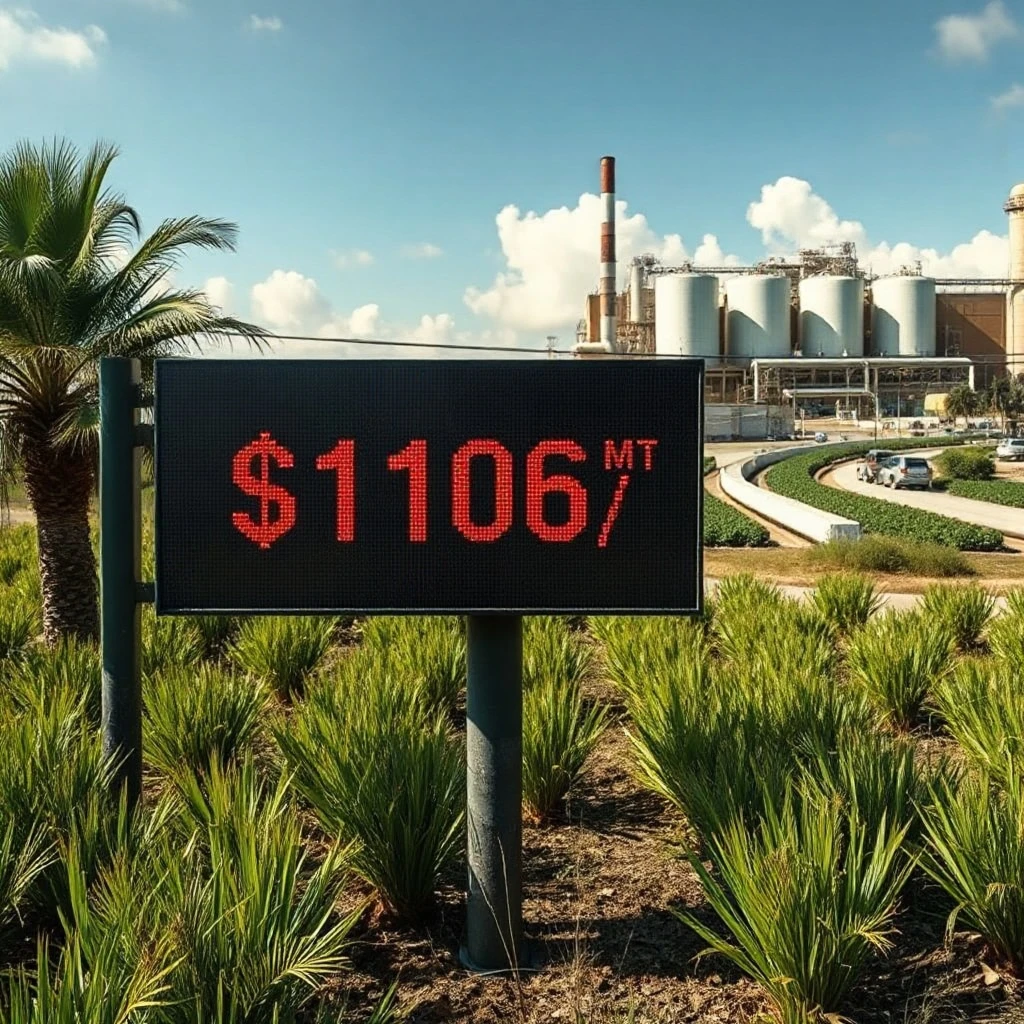
Malaysian CPO benchmark is trading at about $1,106/MT, up 0.1% from the previous session, or RM4,520/MT. The World Bank palm oil benchmark is about $1,101/MT and Indonesia's Kemendag reference is about $1,030/MT. Brent crude is about $89/bbl, down 0.1% on the day, and USD/MYR is about 4.09. CPO has been consolidating after the recent crude-driven push above RM4,750/MT. Our model outlook sees CPO consolidating near $1,106/MT with a mild upward bias; it expects choppy rangebound trade and a modest net gain of about 0.1% over the next seven sessions, with low confidence because of a stale anchor and missing key export data.
Brent crude rally: Brent has gained about 6% over the past seven days to around $88.6/bbl, and CPO futures already rallied above RM4,750/MT on the stronger crude move. Higher Brent raises diesel and biodiesel margins, which improves the economics of blending palm-based biodiesel and increases feedstock demand for palm oil. The wide BOPO spread does similar work on the demand side: soybean oil at $1,581/MT versus CPO at $1,106/MT leaves palm at a $475/MT discount, a large enough gap to encourage substitution toward palm in price-sensitive food and industrial uses. El Niño is strengthening, with ONI at +1.4°C MJJ, and dry conditions are showing up in Sumatra/Riau and Kalimantan. Because El Niño affects yields with a 6-12 month lag, the anticipation is bullish and MPOB preview headlines flag a surging probability of a strong event. Indonesia's B50 biodiesel mandate has been in force since 1 July 2026, raising the blend from B40 to B50. The move is estimated to absorb 3-4 million tonnes per year of new demand, making it the largest single demand variable for palm feedstock. Black Sea supply risk adds another bullish layer: Russia is targeting Ukraine land export routes, and elevated edible-oil prices support the broader veg-oil complex because disruption to sunflower and rapeseed flows pushes buyers toward palm.
MPOB July stock build: Malaysia's closing stocks rose 7.2% month-on-month to 1,429,316 tonnes, a five-month high. Production increased 9.4% MoM to 1,792,979 tonnes, and the resulting stocks-to-use ratio of 12.5% is above the 12% bearish threshold. Even though July exports rose 14.5% MoM to 1,392,178 tonnes, the market is taking the stock build as evidence that supply is currently ample. Seasonality reinforces that pressure: Malaysia's production seasonal path is +7.0% one month ahead, and August-October is normally the peak output window. July output is already about 4% above the five-year average, so further seasonal gains are likely to keep a lid on rallies.
The balance of our model's factors is five bullish against two bearish, so the upside currently has the upper hand. But that does not translate into a strong breakout: ample July stocks and peak-production seasonality are capping the move, leaving the market choppy and rangebound. Among the neutral factors, technicals are mixed: MACD is positive and the 5/20 SMA golden cross is supportive, but RSI is 51 and CFTC soyoil managed money is net long 80,922 contracts at the 80th percentile, which is vulnerable to long-liquidation. India's edible-oil import signals are mixed: July imports fell 7-8% year-on-year but hit a 10-month high in one report, and the Diwali buying window is still about 36 days away. Indonesia's export policy remains a swing risk: the Kemendag reference price of $1,030/MT is 73 days old, and the current policy burden is high at $129 levy plus $148 export duty, with near-term changes unconfirmed. A change there could alter export competitiveness quickly.
For the balance to shift bearish, the bearish factors would need to strengthen materially: a faster-than-expected August-October production build that pushes stocks-to-use further above 12%, or a break in Brent that narrows the BOPO spread and weakens biodiesel demand. A policy change that increases Indonesian export supply, such as lower levies or duties, could also flip the balance. Conversely, confirmation of a strong El Niño yield hit or further Black Sea supply disruption would extend the upside. Our model outlook's published path is +0.1% over seven sessions.
Malaysian benchmark steady at RM4,520; MPOB stocks rise to 1.43m tonnes while dry weather and firm crude keep a floor under prices.
Malaysian crude palm oil is consolidating around $1,106 per tonne (RM4,520) after a marginal 0.1% gain on the previous session. The World Bank global benchmark sits near $1,101, while Indonesia’s Kemendag reference is about $1,030, leaving a notable discount for Indonesian material. Brent crude is holding near $89 per barrel, down 0.1% on the day, which keeps biodiesel blend economics supportive after earlier strength took CPO futures above RM4,750 per tonne.
MPOB’s July data highlight a bearish near-term supply picture. Malaysian production rose 9.4% month on month to 1,792,979 tonnes, while closing stocks climbed 7.2% to 1,429,316 tonnes—a five-month high. Exports grew 14.5% to 1,392,178 tonnes, but imports fell 51.9% to 49,566 tonnes. The stocks-to-use ratio reached 12.5%. This is typical of peak production season, and it is the main reason the benchmark has struggled to extend gains despite bullish weather and energy signals.
El Niño conditions persist, with the ONI at +1.4 and dry conditions reported in Sumatra, Riau, and Kalimantan. That supports longer-term production concerns. Indian import data this week are mixed: one report cites a 7% month-on-month fall in vegetable oil imports for July, another an 8% decline, while a separate trade estimate points to edible oil imports hitting a 10-month high on strong demand. Nine-month cumulative imports are still up 5%. Meanwhile, warnings of higher edible oil prices due to the Black Sea war and El Niño are circulating, and Russia’s targeting of Ukraine’s land export routes adds logistics uncertainty. Indian Navy escorts through the Red Sea chokepoint also reflect elevated freight risk.
Firm crude supports vegetable oil prices, but an expected seasonal increase in cheap rapeseed and sunflower oil supplies from Ukraine and Russia is applying downward pressure. The wide spread between Brent and palm oil remains a mild supportive factor for biodiesel demand. Our model outlook sees CPO consolidating near $1,106 with a mild upward bias from crude strength, El Niño concerns, and the wide crude-palm oil spread, but upside is capped by ample July stocks and peak-production seasonality. We expect choppy rangebound trade with a modest net gain over the next seven sessions; the published path is +0.1%. Confidence is low due to a stale anchor and missing key export data.
For buyers, the key near-term pressure point is how quickly Malaysia’s July stock overhang clears against firm export demand. Watch the Indonesia-Malaysia reference price gap, weekly Malaysian export estimates, and rainfall across key Indonesian regions. Any escalation in Black Sea logistics or renewed strength in Brent could tilt the rangebound market higher, but cheap Black Sea sunflower and rapeseed supplies may check palm premiums.
Sources: RuralVoice; WION; Business Standard; Rediff MoneyWiz; електронна зернова біржа України; BernamaBiz
A practical overview of refining, bleaching, and deodorizing for procurement managers and first-time palm-product buyers.
RBD is an abbreviation for Refined, Bleached, and Deodorized. It describes the standard refining pathway applied to crude palm oil (CPO) after extraction from oil palm fruit. The result is a pale, neutral-flavoured, shelf-stable vegetable oil suitable for food manufacturing and further processing.
Crude palm oil contains phospholipids, trace metals, and other impurities that can reduce clarity and stability. In the degumming step, the oil is treated with a small amount of food-grade acid, typically phosphoric or citric acid, and water. This causes the gums to hydrate and separate. The mixture is then centrifuged or settled, and the water phase containing the gums is removed. Degumming also helps remove some trace metals that would otherwise interfere with later stages.
Despite the name, bleaching is not about whitening with chemicals. It is an adsorption process. The degummed oil is mixed with bleaching earth, a natural clay that has been activated. Under vacuum and moderate heat, the clay binds coloured pigments, residual soaps, oxidation products, and any remaining trace metals. The spent clay is then filtered out. The oil becomes lighter in colour and more stable against oxidation, ready for the final high-temperature step.
Deodorization is a steam-stripping process carried out under high vacuum and elevated temperature. The oil is passed through a deodorizer where steam is injected. The combination of vacuum and heat removes volatile compounds—mainly free fatty acids, ketones, and aldehydes—that contribute to odour, taste, and poor keeping quality. Palm oil is generally physically refined, meaning the free fatty acids are distilled off rather than neutralised with alkali. After cooling and polishing filtration, the result is RBD palm oil.
When purchasing RBD palm oil, common quality parameters include free fatty acid content (often expressed as % palmitic acid), colour (measured on the Lovibond scale), moisture and impurities, peroxide value, and iodine value. RBD palm oil is further fractionated into RBD palm olein (the liquid fraction) and RBD palm stearin (the solid fraction). Olein is used for frying and cooking oils; stearin is used in shortenings, margarines, and bakery fats. Understanding the RBD pathway helps buyers ask suppliers the right questions about processing conditions, filtration, and final specification limits.
A practical timeline of how a regional crop became the world's most traded vegetable oil.
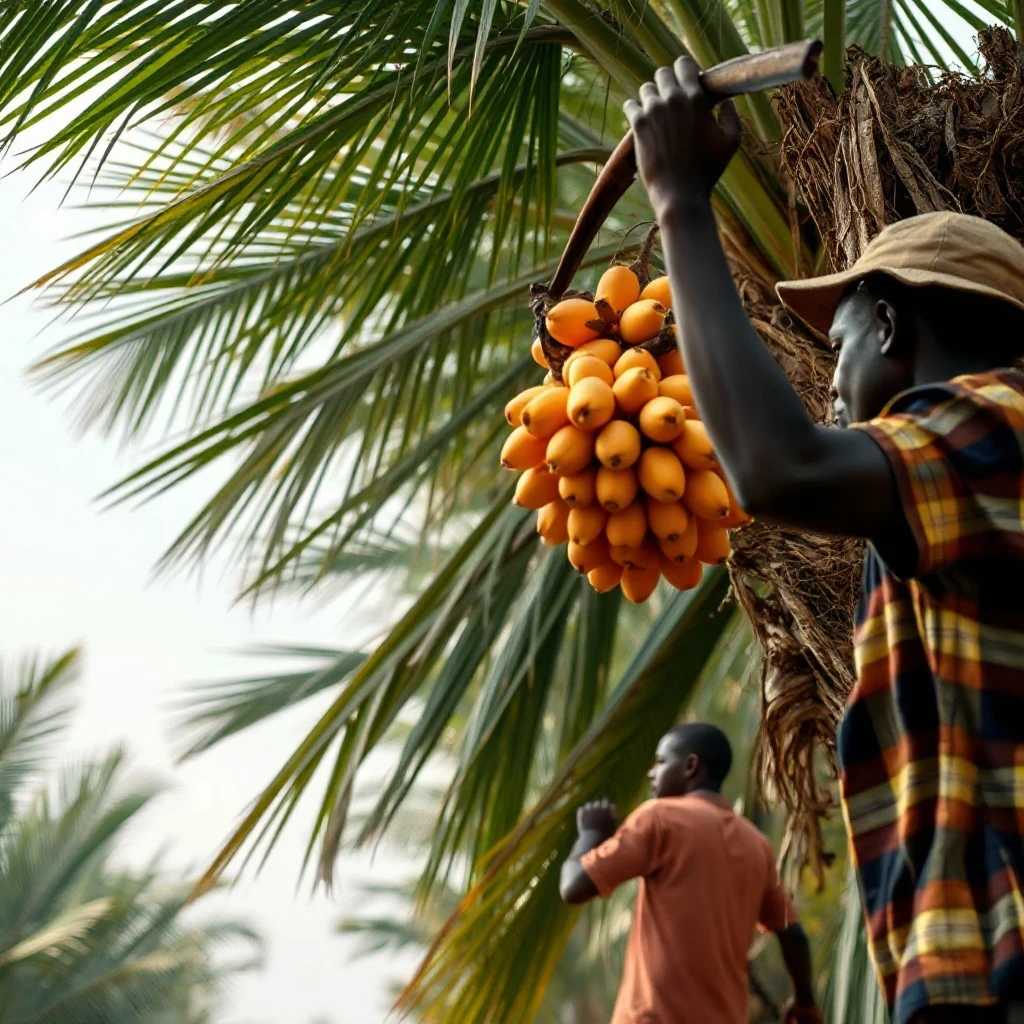
Oil palm (Elaeis guineensis) is native to the tropical forests of West Africa, where it has been used for millennia. Archaeological evidence suggests palm oil was part of local diets and trade as far back as 5,000 years ago. Early uses were practical: cooking oil, soap-making, and a source of illumination. The fruit's high oil content and natural preservative qualities made it a valuable commodity in pre-colonial African economies.
European traders encountered palm oil along the West African coast in the 15th century. By the 18th and 19th centuries, it became a significant export to Europe, primarily for industrial uses such as lubricants and candle-making. The trade was centered on coastal ports, where local producers supplied processed oil to European merchants. This period established the basic supply chain of palm oil as a bulk commodity moving from producer regions to industrial consumers.
In the early 20th century, colonial powers introduced oil palm to Southeast Asia, notably Malaysia and Indonesia. The crop thrived in the equatorial climate and was organized into large-scale plantations, a departure from the smallholder model in Africa. Plantation systems allowed for standardized harvesting, milling, and quality control, which reduced costs and increased output. This shift laid the groundwork for Southeast Asia to become the dominant production region.
Today's palm oil supply chain is highly mechanized. Fresh fruit bunches are harvested, sterilized, and pressed at mills within hours to prevent free fatty acid buildup. The crude oil is then refined, bleached, and deodorized to produce neutral-tasting oil suitable for food manufacturing. Fractionation separates it into olein (liquid) and stearin (solid) fractions, each with distinct uses. This versatility explains why palm oil appears in packaged foods, personal care products, and industrial applications.
For procurement managers, understanding the journey matters practically. First, palm oil's long history of trade means mature logistics networks exist, but supply chains vary by origin and mill. Second, quality parameters such as moisture, impurities, and free fatty acids are set at the mill level and affect shelf life. Third, the distinction between crude and refined products changes storage requirements. Finally, sustainability certification schemes have become standard practice in many markets, so verifying chain-of-custody documentation is a routine part of due diligence.
Palm oil now accounts for a major share of global vegetable oil production, with Indonesia and Malaysia supplying the bulk of exports. West Africa remains a producer but on a smaller scale. The crop's high yield per hectare, relative to other oilseeds, keeps it cost-competitive. For first-time buyers, the key takeaway is that palm oil is a mature, standardized commodity, but each step of its journey—from fruit to fractionated product—affects price, quality, and end-use performance.
This space reaches palm oil buyers, traders and industry readers every day. Sponsorship and advertising enquiries are welcome — get in touch:
Malaysian benchmark steady at RM4,520; MPOB stocks rise to 1.43m tonnes while dry weather and firm crude keep a floor under prices.
Full story — Page 2 ▸A practical overview of refining, bleaching, and deodorizing for procurement managers and first-time palm-product buyers.
Full story — Page 2 ▸A practical timeline of how a regional crop became the world's most traded vegetable oil.
Full story — Page 2 ▸Brent strength, El Niño and a wide soybean-oil spread support CPO, but Malaysia's five-month high stocks and peak output keep gains rangebound.
Malaysian CPO benchmark is trading at about $1,106/MT, up 0.1% from the previous session, or RM4,520/MT. The World Bank palm oil benchmark is about $1,101/MT and Indonesia's Kemendag reference is about $1,030/MT. Brent crude is about $89/bbl, down 0.1% on the day, and USD/MYR is about 4.09. CPO has been consolidating after the recent crude-driven push above RM4,750/MT. Our model outlook sees CPO consolidating near $1,106/MT with a mild upward bias; it expects choppy rangebound trade and a modest net gain of about 0.1% over the next seven sessions, with low confidence because of a stale anchor and missing key export data.
Brent crude rally: Brent has gained about 6% over the past seven days to around $88.6/bbl, and CPO futures already rallied above RM4,750/MT on the stronger crude move. Higher Brent raises diesel and biodiesel margins, which improves the economics of blending palm-based biodiesel and increases feedstock demand for palm oil. The wide BOPO spread does similar work on the demand side: soybean oil at $1,581/MT versus CPO at $1,106/MT leaves palm at a $475/MT discount, a large enough gap to encourage substitution toward palm in price-sensitive food and industrial uses. El Niño is strengthening, with ONI at +1.4°C MJJ, and dry conditions are showing up in Sumatra/Riau and Kalimantan. Because El Niño affects yields with a 6-12 month lag, the anticipation is bullish and MPOB preview headlines flag a surging probability of a strong event. Indonesia's B50 biodiesel mandate has been in force since 1 July 2026, raising the blend from B40 to B50. The move is estimated to absorb 3-4 million tonnes per year of new demand, making it the largest single demand variable for palm feedstock. Black Sea supply risk adds another bullish layer: Russia is targeting Ukraine land export routes, and elevated edible-oil prices support the broader veg-oil complex because disruption to sunflower and rapeseed flows pushes buyers toward palm.
MPOB July stock build: Malaysia's closing stocks rose 7.2% month-on-month to 1,429,316 tonnes, a five-month high. Production increased 9.4% MoM to 1,792,979 tonnes, and the resulting stocks-to-use ratio of 12.5% is above the 12% bearish threshold. Even though July exports rose 14.5% MoM to 1,392,178 tonnes, the market is taking the stock build as evidence that supply is currently ample. Seasonality reinforces that pressure: Malaysia's production seasonal path is +7.0% one month ahead, and August-October is normally the peak output window. July output is already about 4% above the five-year average, so further seasonal gains are likely to keep a lid on rallies.
The balance of our model's factors is five bullish against two bearish, so the upside currently has the upper hand. But that does not translate into a strong breakout: ample July stocks and peak-production seasonality are capping the move, leaving the market choppy and rangebound. Among the neutral factors, technicals are mixed: MACD is positive and the 5/20 SMA golden cross is supportive, but RSI is 51 and CFTC soyoil managed money is net long 80,922 contracts at the 80th percentile, which is vulnerable to long-liquidation. India's edible-oil import signals are mixed: July imports fell 7-8% year-on-year but hit a 10-month high in one report, and the Diwali buying window is still about 36 days away. Indonesia's export policy remains a swing risk: the Kemendag reference price of $1,030/MT is 73 days old, and the current policy burden is high at $129 levy plus $148 export duty, with near-term changes unconfirmed. A change there could alter export competitiveness quickly.
For the balance to shift bearish, the bearish factors would need to strengthen materially: a faster-than-expected August-October production build that pushes stocks-to-use further above 12%, or a break in Brent that narrows the BOPO spread and weakens biodiesel demand. A policy change that increases Indonesian export supply, such as lower levies or duties, could also flip the balance. Conversely, confirmation of a strong El Niño yield hit or further Black Sea supply disruption would extend the upside. Our model outlook's published path is +0.1% over seven sessions.
Malaysian benchmark holds near $1,106/MT despite higher stocks; crude gains and El Niño support, while supply outlook weighs.
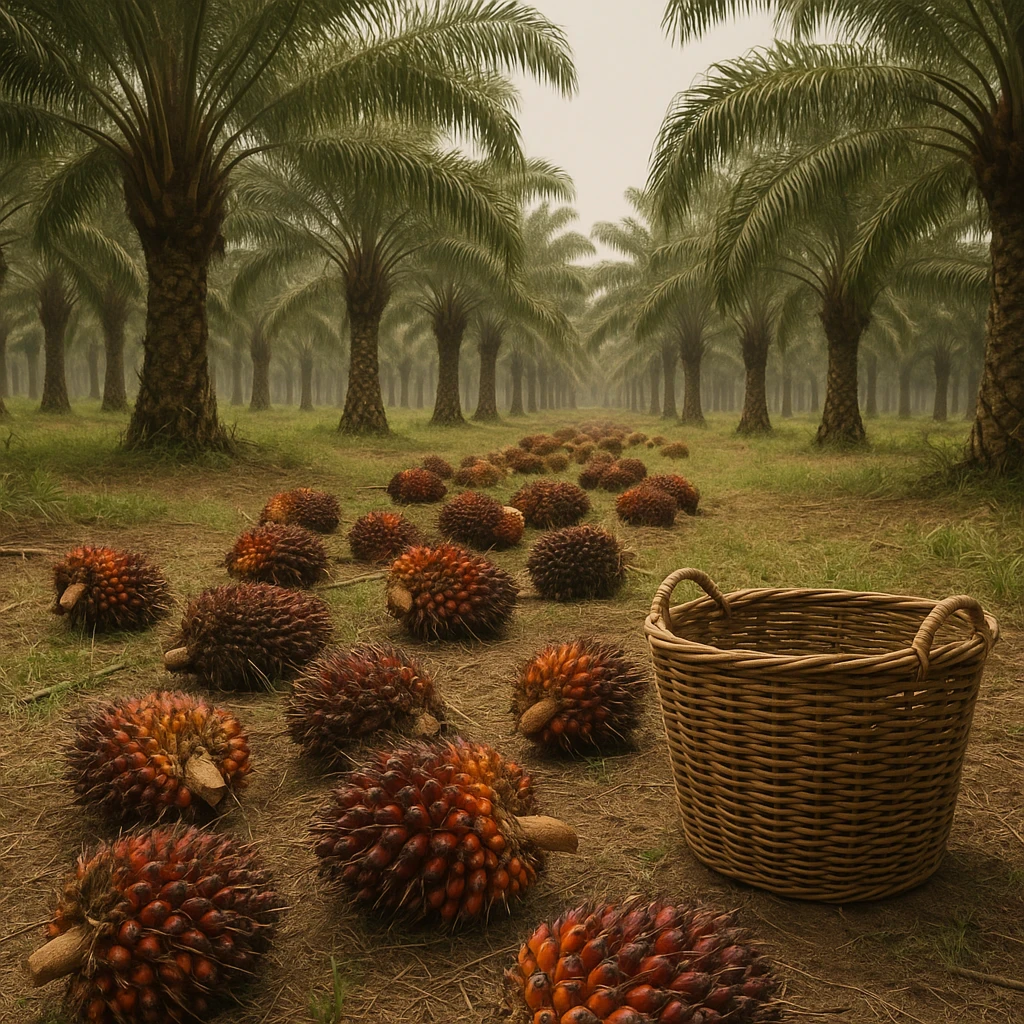
Malaysian crude palm oil futures closed the session nearly flat, with the benchmark hovering around $1,106 per tonne (RM 4,520), up just 0.1% from the previous day. The global World Bank benchmark stood at $1,101, while Indonesia's reference price was about $1,030. The market is consolidating after a week of low volatility, with our model outlook pointing to a mean-reverting drift over the next seven sessions, carrying a neutral technical bias.
Sources: Business Standard; електронна зернова біржа України; BernamaBiz; The Star; UkrAgroConsult; Finimize
Indonesia, Malaysia and Thailand raise 2026 biodiesel mandates, tightening palm oil export availability.

Indonesia, Malaysia and Thailand have all raised their biodiesel mandates for 2026, a policy shift that is set to deepen domestic palm oil consumption across Southeast Asia and potentially tighten export availability. The move, which includes Indonesia's planned B50 rollout, signals a structural increase in demand for palm oil as fuel feedstock, a development that could support benchmark prices over the medium term.
For traders and buyers, the immediate implication is a smaller pool of palm oil available for export, as more of the region's output is diverted to biodiesel blending. This comes at a time when global markets are already watching supply dynamics closely, with Malaysian crude palm oil (CPO) benchmark trading at about $1106 per metric ton (RM 4520/MT), up a marginal 0.1% from the previous session.
The mandate hikes are not isolated. According to industry reports, all three major producers are moving in tandem, a coordinated push that underscores the region's commitment to energy security and lower emissions. Indonesia's B50 program, which would require a 50% palm oil blend in biodiesel, is the most ambitious, and its phased implementation is expected to absorb significant volumes of domestic crude palm oil.
This policy development arrives against a backdrop of mixed fundamentals. Malaysia's July 2026 data from the Malaysian Palm Oil Board (MPOB) showed a 9.4% month-on-month rise in CPO production to 1,792,979 tons, while closing stocks climbed 7.2% to 1,429,316 tons. Exports, however, jumped 14.5% to 1,392,178 tons, suggesting robust overseas demand despite the stock build.
Our model outlook indicates that CPO is consolidating near current levels after a flat week, with low realized volatility and a neutral RSI. The bullish technical crossover and wide BOPO support are offset by bearish signals from the MPOB stock build and peak seasonal output. The next seven sessions are likely to be mean-reverting with a slight upward drift, with key risks including Indonesia's policy execution, crude oil price swings, and speculative long liquidation.
Brent crude's recent strength, up 1.6% to about $88 per barrel, also plays into the biodiesel calculus. Higher crude prices make palm oil-based biodiesel more competitive, reinforcing the economic case for higher mandates. With Indonesia's reference price at about $1030 per metric ton and the global benchmark at $1101, the region's policy choices are becoming a central driver for palm oil pricing.
For now, the market is absorbing the news with relative calm, but the long-term demand signal is clear: Southeast Asia's biodiesel push is set to be a persistent factor in palm oil supply-demand balances, potentially tightening export availability and underpinning prices in the months ahead.
Sources: energynews.pro
MPOB data shows stocks up 7.2% month-on-month as production rises 9.4%, signaling supply pressure.
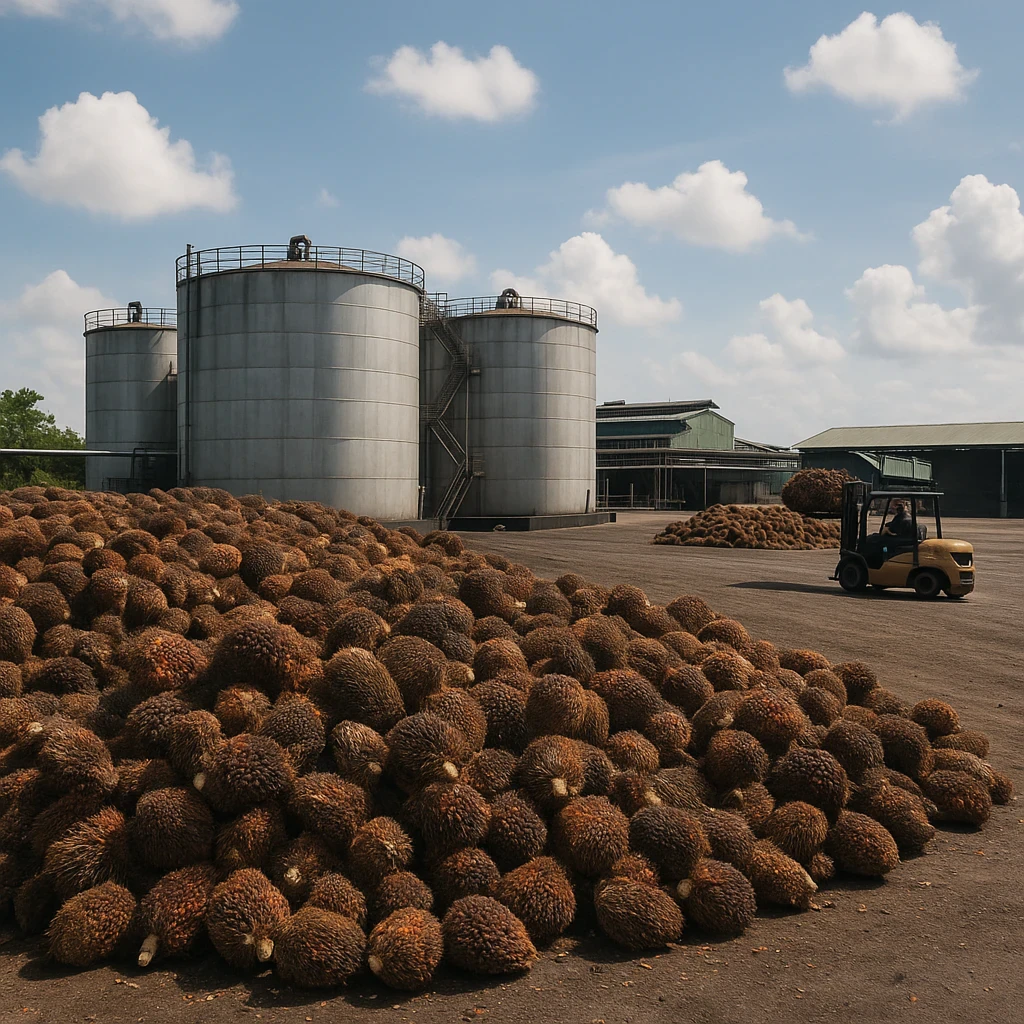
Malaysia's palm oil inventories climbed to a five-month high in July, according to data from the Malaysian Palm Oil Board (MPOB), as production expanded at a faster pace than exports. Closing stocks rose 7.2% month-on-month to 1,429,316 tonnes, while crude palm oil (CPO) output increased 9.4% to 1,792,979 tonnes. Exports grew 14.5% to 1,392,178 tonnes, but the stock build signals that supply is outpacing demand in the near term.
For buyers and traders, the inventory accumulation is a key supply-side indicator. It suggests that the market is well supplied despite recent price rallies, which could temper upside momentum. The stock increase comes as the industry enters the peak production season, typically lasting through the third quarter, adding further potential pressure on prices.
Despite the bearish stock data, CPO futures have shown resilience. The benchmark contract on Bursa Malaysia Derivatives settled around $1,106 per tonne (RM 4,520), up 0.1% from the previous session. This follows a rally to a four-month high earlier in the week, supported by firmer crude oil prices—Brent crude traded near $87 per barrel, up 0.6%—which improves the economics of biodiesel blending and supports vegetable oil demand.
However, the inventory build may limit further gains. Our model outlook suggests CPO is expected to trade rangebound with a slight upward bias near $1,100-$1,120 per tonne over the next seven sessions. The wide BOPO spread (about $476 per tonne) and firm crude oil provide support, while the stock build and peak production cap upside. Crowded speculative long positions also add to the risk of a pullback.
Weather conditions remain a watch point. The current El Niño (ONI +1.4) has brought dry conditions to parts of Kalimantan in Indonesia, which could affect future production. However, no immediate supply disruptions have been reported.
In Indonesia, the government's reference price for CPO is about $1,030 per tonne, and export duty remains at 10% for September, according to a recent announcement. This policy stability provides some predictability for trade flows.
Traders will be watching export data from cargo surveyors to gauge demand momentum. The market also faces uncertainty from delayed Indonesian policy updates and the pace of shipments. While the stock build is a clear signal of ample supply, the interplay with crude oil prices and biodiesel demand will be crucial in the coming weeks.
For now, the market appears balanced between bearish inventory pressure and supportive external factors, with prices likely to remain rangebound in the near term.
Sources: The Star
A $476 soybean-oil discount and El Niño support CPO, while a five-month high in Malaysian stocks and peak production cap gains.
Malaysian CPO benchmark is about $1,106/MT (RM4,520/MT), up 0.1% versus the previous session. Brent crude is about $87/bbl, up 0.2%, while USD/MYR is 4.09. The World Bank palm benchmark is $1,101/MT and Indonesia's reference is $1,030/MT, so the Malaysian contract is near the top of the regional range but moving only marginally.
Wide BOPO spread. Soybean oil at $1,581/MT gives CPO a $476/MT discount. Buyers that can switch between oils will favor palm, and that demand substitution is a direct bid under CPO.
Crude oil and biodiesel. Brent at $87.1/bbl supports biodiesel blending economics. When crude is high, palm-based biodiesel becomes more economical as a feedstock, supporting demand for palm oil.
El Niño developing. ONI +1.4°C shows a strengthening El Niño, and Kalimantan is dry. The mechanism is lagged: moisture stress now reduces bunches and yields six to twelve months later, so forward supply expectations tighten even if today's spot supply is ample.
Indonesia B40 to B50. Phasing in B50 could absorb 3–4 million tonnes per year of new demand. That is a structural bull factor: it changes the longer-run demand curve, but it does not create an immediate spot trigger.
Technicals. MACD histogram is positive and the 5/20 SMA crossover is a golden cross. RSI at 51 is neutral and price is near its SMA cluster, signaling a mild uptrend.
MPOB July stocks build. Closing stocks rose 7.2% MoM to 1,429,316 tonnes, a five-month high. Stocks-to-use of 12.5% means the market has ample cover; higher inventories reduce the urgency for buyers and blunt price spikes.
Peak production season. July production rose 9.4% MoM to 1,792,979 tonnes, about 4% above the five-year average. Seasonality still points to rising output for about another month, adding fresh supply to an already well-stocked market.
Crowded speculative longs. CFTC soyoil net long is at the 80th percentile, although it fell 29,174 contracts. Crowded positioning is vulnerable to long liquidation; if soyoil longs unwind, spillover selling can hit palm.
Competing vegetable oil supplies. A seasonal increase in cheap rapeseed and sunflower oil from Ukraine and Russia was reported on August 12. More alternative oils pressure the entire veg-oil complex and reduce the premium palm can command.
India demand mixed. One report says July edible oil imports hit a 10-month high, another says they fell 8%. Diwali buying opens in about 37 days, so Indian demand is not yet a clear near-term support.
Our model's factor balance is five bullish versus four bearish, so the upside currently has the upper hand. The bullish factors are heavily structural: the $476/MT BOPO discount, El Niño, and the B40-to-B50 path support the case for a firmer market over time. The bearish factors are mostly near-term and supply-side: the five-month high in Malaysian stocks, rising seasonal production, and crowded speculative longs. The result is a market that is not trending cleanly. Our model's published path over seven sessions is -0.0%, essentially flat with a slight downward bias, because several bullish factors are not immediate triggers and the latest macro indicators—no fresh cargo-surveyor export data and an outdated Indonesian reference price—give little new momentum.
What would change the balance: If CFTC data show further long liquidation in soyoil, or if seasonal rapeseed/sunflower supplies accelerate, the near-term balance flips bearish and the downward bias becomes more pronounced. Conversely, fresh export data confirming strong demand or faster movement on Indonesia's B50 mandate would add immediate bullish fuel and extend the upside.
Malaysian CPO edges up to RM4,520; July MPOB stocks rise to 5-month high, India import reports conflict.
Malaysian CPO benchmark was about $1,106 per tonne, up 0.1% from the previous session. At the prevailing USD/MYR rate of 4.09, that is roughly RM4,520 per tonne. Brent crude also firmed about 0.2% to around $87 per barrel, keeping biodiesel blend economics in focus. The World Bank palm oil benchmark was about $1,101 per tonne, while Indonesia's Kemendag reference price was about $1,030 per tonne.
The July MPOB data showed Malaysian production rose 9.4% month on month to 1,792,979 tonnes, pushing closing stocks up 7.2% to 1,429,316 tonnes, the highest in five months. The stocks-to-use ratio reached 12.5%. Exports were a bright spot, up 14.5% month on month to 1,392,178 tonnes, while Malaysia's imports slumped 51.9% to 49,566 tonnes. The FFB reference was RM49.50, up 1.2% month on month. With peak production season underway and El Niño conditions (ONI +1.4) keeping Kalimantan relatively dry, the supply picture is currently ample but carries longer-term weather risk.
News flow adds mixed demand signals. One report suggests India's July edible oil imports hit the strongest monthly level in ten months on high demand, while another says India's edible oil imports fell 8% in July. That conflicting picture leaves near-term Indian palm buying uncertain. The Black Sea seasonal increase in cheap rapeseed and sunflower oil from Ukraine and Russia is also pressuring vegetable oil prices. Earlier in the week, Malaysian CPO futures had traded above RM4,750 per tonne on stronger crude oil prices, but the benchmark has since settled near RM4,520.
Our model outlook sees CPO caught between the bearish July stock build and ample peak-season supply on one side, and demand-switching support from a wide soybean oil-palm oil (BOPO) spread of $476 per tonne plus structurally bullish El Niño/B40 tailwinds on the other. Technicals are mildly supportive, with MACD positive and a golden cross, but speculative soyoil positioning is crowded long, raising liquidation risk. With no fresh cargo-surveyor export data and an outdated Indonesian reference price, the market is likely to trade range-bound with a slight downward bias over the next seven sessions; the published path is -0.0% over that horizon.
For buyers, the key watchpoints are the next cargo surveyor export figures, any update to Indonesia's reference price, clarification of India's July import numbers, and whether the El Niño dryness tightens supply later in the season.
Sources: Business Standard; Rediff MoneyWiz; електронна зернова біржа України; BernamaBiz; The Star
Policy and weather signals support prices as Malaysia trims reference price and B50 rollout advances.

Palm oil markets are drawing support from a combination of policy-driven demand and weather risks, even as supply-side data point to higher output and inventories. The latest Malaysian benchmark for crude palm oil held near $1106 per tonne, with the global benchmark at about $1101 and Indonesia's reference price around $1030. Brent crude's rise to roughly $88 per barrel has improved the economics of biodiesel blending, reinforcing the demand outlook from mandated programs.
Indonesia, Malaysia and Thailand have all raised their biodiesel mandates for 2026, a move that analysts say will divert a larger share of palm oil toward domestic fuel use. Indonesia's rollout of B50 distribution, led by state energy firm Pertamina, is a key driver. While Indonesia's first-half export growth slowed ahead of the B50 launch, the mandate is expected to keep more palm oil at home, tightening availability for the global market.
For compliance-minded buyers, the policy shift means less discretionary supply from the world's largest producer. The higher blend rates also raise the floor under palm oil prices, as fuel demand becomes a structural consumer alongside food and industrial uses.
El Niño conditions, with an ONI of +1.4, continue to hang over the market. Dry weather in Kalimantan, a major production zone, has raised concerns about future yields. Although Malaysian output rose in July—up 9.4% month-on-month to about 1.79 million tonnes—the market is looking past the immediate supply bump to potential stress in coming months.
UkrAgroConsult and other observers have flagged El Niño and biodiesel demand as key price supports, even as stocks build. Malaysia's July closing stocks increased 7.2% to about 1.43 million tonnes, and exports jumped 14.5% to 1.39 million tonnes, suggesting robust demand is absorbing much of the extra supply.
Malaysia lowered its September crude palm oil reference price, though the export duty remains at 10%. The adjustment is modest and does not change the overall cost structure for buyers, but it signals that authorities are mindful of keeping exports competitive.
Our model outlook sees the market consolidating near current levels with a slight upward drift over the next seven sessions. The bullish technical crossover and wide BOPO support are balanced by the bearish stock build and peak seasonal output. Key risks include Indonesian policy shifts, crude price swings and speculative long liquidation.
For buyers, the combination of higher mandates, weather risk and firm energy prices suggests that palm oil will remain well-supported in the near term. The absence of live cargo surveyor data adds uncertainty, but the policy and weather fundamentals point to a market that is unlikely to weaken significantly without a change in the demand picture.
Sources: UkrAgroConsult; TradingView; KLSE Screener; energynews.pro; BioEnergy Times; Biofuels International Magazine
Our market desk connects serious buyers with vetted origin suppliers across Southeast Asia. Indicative pricing, specifications and shipment guidance — free of charge.
Get connected →Indonesia, Malaysia and Thailand raise 2026 biodiesel mandates, tightening palm oil export availability.
Full story — Page 2 ▸MPOB data shows stocks up 7.2% month-on-month as production rises 9.4%, signaling supply pressure.
Full story — Page 2 ▸A $476 soybean-oil discount and El Niño support CPO, while a five-month high in Malaysian stocks and peak production cap gains.
Full story — Page 2 ▸Malaysian CPO edges up to RM4,520; July MPOB stocks rise to 5-month high, India import reports conflict.
Full story — Page 2 ▸Policy and weather signals support prices as Malaysia trims reference price and B50 rollout advances.
Full story — Page 2 ▸Malaysian benchmark holds near $1,106/MT despite higher stocks; crude gains and El Niño support, while supply outlook weighs.
Malaysian crude palm oil futures closed the session nearly flat, with the benchmark hovering around $1,106 per tonne (RM 4,520), up just 0.1% from the previous day. The global World Bank benchmark stood at $1,101, while Indonesia's reference price was about $1,030. The market is consolidating after a week of low volatility, with our model outlook pointing to a mean-reverting drift over the next seven sessions, carrying a neutral technical bias.