Ample July stocks and peak output face off against El Niño, B50 and wide soyoil spreads; our model gives the downside a slight edge.
Palm Oil Holds Near Highs but Downside Risks Accumulate — continued
Malaysian CPO benchmark sits near $1,146/MT, up 0.6% from the previous session and about RM4,623/MT. The global benchmark is around $1,101/MT and Indonesia's reference price is around $997/MT. The day's small gain masks a choppy tape: Brent's slide and crowded positioning are keeping the market near highs but with little sustained momentum.
What is pushing prices up
El Niño remains the main medium-term support. The ONI reading of +1.4 and GAPKI's warning of an 8–10% 2027 output drop feed anticipation buying: because palm output damage shows up with a 6–12 month lag, importers and forward buyers are pricing the risk now rather than waiting for visible tree stress. A wide soyoil premium of $401/MT is also supporting palm demand. At that spread, edible-oil buyers have a strong incentive to switch from soyoil to palm, lifting CPO offtake. Indonesia's B50 mandate adds another demand channel by absorbing an estimated 3–4 million tonnes per year domestically, which would reduce export availability. The export levy of $125 plus duty of $148 raise the cost of Indonesian exports, so a larger share of that policy cost is passed into landed prices. Technically, CPO is above its 5-, 20- and 50-day moving averages with a positive MACD and a golden cross, though it is near the upper Bollinger band at $1,156 and the RSI at 63 is neutral rather than overbought.
What is pushing prices down
The near-term supply picture is ample. Malaysia's July closing stocks rose 7.2% month-on-month to 1,429,316 tonnes, about 61% above the five-year average, and the stocks-to-use ratio of 12.5% signals comfortable cover. The broader stockpile number of 2.63 million tonnes, up 3.32%, reinforces the same point: buyers are not being forced to chase cargoes. Production is also at its seasonal peak, up 9.4% month-on-month to 1,792,979 tonnes, and the seasonal path adds another 7.0% next month; the July-to-October high-output window is weighing on nearby prices. The energy complex is a second drag. Brent crude has fallen about 8.8% over the past seven sessions to around $88.4 a barrel, which weakens biodiesel feedstock demand because palm-based biodiesel becomes less attractive when energy prices slide; our model's energy z-score sits at -1.23. The rupiah is another regional headwind: at USD/IDR 17,689, Indonesian exporters earn more rupiah per dollar of palm sold, which encourages selling and can cap dollar prices. Finally, CFTC soyoil net length is in the 82nd percentile after a 17,000-contract weekly increase, making the complex vulnerable to liquidation if the wider oilseed or energy trade wobbles.
Which side has the upper hand
Our model's balance currently has 4 bullish factors against 5 bearish factors, with the weather signal mixed: Peninsular Malaysia's recent 242mm of rain and another 47mm expected over the next seven days may disrupt harvest, while Kalimantan's 0mm dry phase adds lagged stress. The bearish factors have a slight upper hand. Ample July stocks, peak production, Brent's slide, rupiah weakness and crowded speculative longs are outweighing the bullish El Niño, B50 and wide soyoil-spread story. Our model expects choppy consolidation near highs with a slight downward bias over the next seven days, and its published path is just +0.1% over those seven sessions—implying any pullback is likely modest. The balance would flip further bearish if Brent continues falling, speculative longs unwind, and monthly stocks keep rising while El Niño evidence stays weak. It would flip bullish if Indonesian B50 implementation is confirmed without delay, the soyoil premium widens further, or El Niño stress starts appearing in official production or export data.
Malaysian benchmark rises to $1,146/MT while MPOB data show July output up 9.4% and stocks up 7.2%; weather and biodiesel policy keep medium-term risk premium alive.
Malaysian CPO benchmark firmed to about $1,146 per metric tonne, up 0.6% from the previous session, or RM4,623 per tonne at a dollar-ringgit rate of 4.03. That leaves it above the World Bank global benchmark of around $1,101 and well above Indonesia's reference price near $997, keeping the Malaysian contract at a premium. Brent crude slipped 0.3% to about $88 per barrel, which matters for biodiesel blend economics across the region.
Supply: ample now, but weather risk building
MPOB July data show CPO production of 1,792,979 tonnes, a 9.4% month-on-month rise, while closing CPO stocks increased 7.2% to 1,429,316 tonnes. Exports rose 14.5% to 1,392,178 tonnes, but imports fell 51.9% to 49,566 tonnes. The stocks-to-use ratio of 12.5% and a 1.2% rise in the FFB reference price to RM49.50 point to a well-supplied market near seasonal peak output. At the same time, weather gauges show El Niño conditions with an ONI of +1.4, and reports highlight dry conditions in Sarawak and Kalimantan. Industry warnings, including from Gapki, flag sharp production losses if the dry spell deepens.
Demand: Indonesia exports and B50 support
On the demand side, trade reports put Indonesia's June palm exports around 64% higher than a year earlier, with domestic consumption also rising. That strength has been cited as pressure on national stocks. Indonesia's moves toward B50 biodiesel are framed as more than a blending mandate—they reshape energy and industrial use of palm oil. A weaker Brent price complicates the biodiesel premium, but the policy direction remains supportive for palm oil absorption.
Market tone and model outlook
Futures closed lower earlier in the week on profit-taking, weaker soybean oil and soft crude, while some commentary expects a bullish tone next week. Steady trading recently reflected projections of bigger stockpiles, but the pricing debate between Malaysia and Indonesia continues to influence differentials. Our model outlook sees CPO caught between ample near-term supply—July stocks high, output at peak—and bullish medium-term factors: El Niño, B50 and a wide biodiesel-to-diesel spread. Brent's sharp drop and crowded long positioning tilt risk to a modest pullback over the next seven days, but downside is limited by demand switching and production worries. The published path is a small 0.1% gain over seven sessions.
For buyers
For buyers, the key watch points are whether Indonesian export strength holds and absorbs the large near-term supply, whether dry weather starts to show in production data, and whether Brent stabilizes. Near-term supply is ample, but the medium-term risk premium from weather and biodiesel policy has not disappeared.
Malaysian CPO futures ease on profit-taking, but GAPKI's El Niño output warning reinforces the bullish medium-term outlook.
Malaysian crude palm oil futures closed lower on the session, easing from recent highs as profit-taking set in and weaker soybean and crude oil futures weighed on the vegetable oil complex. The benchmark settled around $1,143/MT (RM 4,613), down from the previous session's close, with the global benchmark near $1,101/MT and Indonesia's reference price at about $997/MT. The ringgit held near 4.03 per dollar, and the rupiah at about 17,759, keeping export competitiveness in focus.
Supply: Stock Builds, But Dry Weather Looms
Malaysia's July data, confirmed by the Malaysian Palm Oil Board, showed stockpiles rose 7.2% month-on-month to 1,429,316 tonnes, with CPO production up 9.4% to 1,792,979 tonnes and exports jumping 14.5% to 1,392,178 tonnes. Imports tumbled 51.9% to just 49,566 tonnes. The stock increase aligns with the seasonal peak-output period, but the medium-term outlook remains tight.
With El Niño conditions firmly in place (ONI +1.4), dryness is spreading across key growing regions—notably Sarawak and Kalimantan. The Indonesian Palm Oil Association (GAPKI) has warned that El Niño could crimp Indonesian palm oil output, with production at risk of decline into 2027. This reinforces the market's existing concern about supply tightness, even as near-term supply remains ample.
Demand: Biodiesel and Exports
Indonesia's push toward B50 biodiesel remains a structural demand pillar. Reports indicate the mandate is not hurting exports, and export levy revenue is projected to rise 31% this year, with total collections seen at Rp 41.22 trillion. This suggests the government can sustain aggressive biodiesel blending without sacrificing export earnings—at least for now.
However, softer crude prices are a headwind for biodiesel economics. Brent slipped about 0.5% to near $88/bbl, narrowing the incentive for blending. Weaker soybean oil futures, partly due to an extended U.S. RFS compliance deadline, also dragged on the vegetable oil complex sentiment. Chinese vegetable oil stocks are reportedly building, adding another bearish factor.
Price Outlook: Choppy Consolidation
Our model outlook sees CPO caught between ample near-term supply (high July stocks, peak output) and bullish medium-term factors (El Niño, B50, wide BOPO). The recent drop in Brent and crowded long positioning tilt risk to a modest pullback over the next seven days, but downside is limited by demand switching and production worries. We expect choppy consolidation near highs with a slight downward bias, and our published path shows +0.4% over the next seven sessions.
Despite the session's decline, traders expect CPO futures to stay bullish next week, supported by lingering El Niño supply risks—now underscored by GAPKI's warning—and steady biodiesel demand. The next MPOB release in about 14 days is a key risk event.
Takeaway for Buyers
Watch the weather in Sarawak and Kalimantan, as any intensification of dryness could quickly shift sentiment from stock-driven to supply-driven. Also monitor Indonesian export levy policy and B50 implementation pace, as well as crude oil's direction—all are key swing factors in the near-term price path.
Policy watch: B50 mandate, export levy revenue gains, and deforestation pledge scrutiny frame palm oil's supply-demand balance.
Indonesia's accelerated push toward the B50 biodiesel mandate continues to reshape the policy landscape for palm oil, with recent reports indicating the program is advancing without curtailing crude palm oil exports. The mandate, which raises the required palm-oil-based biodiesel blend to 50 percent, is expected to increase domestic absorption of palm oil, tightening availability for export markets over time. Industry observers note that the policy's success hinges on sustained feedstock supply and blending infrastructure, while also supporting domestic energy security goals.
Export Levy Revenue on the Rise
Indonesia's trade ministry projects export levy revenue to climb 31 percent, a development attributed to higher palm oil prices and steady export volumes. The levy, which funds biodiesel subsidies and smallholder programs, is seen as a key financing mechanism for the B50 rollout. Higher levy collections could ease fiscal pressure on the biodiesel subsidy scheme, potentially allowing the government to maintain or expand blending targets without straining state budgets. For buyers, this implies continued policy support for domestic palm oil demand, which may keep export supplies tighter than in previous years.
Compliance and Deforestation Scrutiny
A separate report finds that zero-deforestation pledges by major palm oil firms have yielded limited additional forest protection benefits. This raises questions about the effectiveness of voluntary commitments in meeting buyer sustainability requirements. Compliance-minded buyers, particularly those in Europe and North America, face increasing pressure to verify deforestation-free supply chains, yet the study suggests that pledges alone may not suffice. This could accelerate demand for certified sustainable palm oil and drive closer scrutiny of supply chain traceability, potentially adding a premium to compliant volumes.
Market Implications
Our model outlook sees palm oil caught between ample near-term supply—with Malaysian stocks at 1.43 million tonnes in July and production rising—and bullish medium-term factors including El Niño-driven dryness in key growing regions and Indonesia's B50 mandate. Brent's recent decline to around $88 per barrel has narrowed the price advantage of biodiesel over fossil diesel, but strong policy backing in Indonesia keeps domestic demand resilient. The combination of high stocks and peak output may limit upside in the short term, while production concerns and demand switching provide a floor under prices.
For market participants, the policy signals point to a structurally tighter palm oil market over the medium term, even as near-term supply remains comfortable. The rising levy revenue and robust export figures suggest Indonesia's palm oil sector is adapting to the B50 transition without major disruptions, but the deforestation findings may complicate access to premium markets. Traders and end-users should monitor policy announcements and compliance developments closely, as these factors are likely to influence price spreads and supply availability in coming months.
A practical look at palm oil's natural semi-solid state and its advantages for food and oleochemical buyers.
For buyers new to palm oil, its semi-solid consistency at room temperature can be surprising. Unlike liquid vegetable oils such as soybean or rapeseed, palm oil holds a thick, butter-like texture. This is not a defect—it is a natural property rooted in the oil's chemical makeup.
The chemistry behind the texture
Palm oil is roughly balanced between saturated and unsaturated fatty acids. About half of its fatty acids are saturated, primarily palmitic acid. Saturated fatty acids pack tightly together, giving the oil a higher melting point than most other vegetable oils. As a result, palm oil is semi-solid at typical indoor temperatures—around 20–25°C (68–77°F).
This balance is what makes palm oil versatile. It can be fractionated into different components: a liquid olein for frying and a solid stearin for margarine and shortening. The natural semi-solid state means less energy is needed to modify it for various applications.
Practical advantages for manufacturers
For food producers, semi-solid palm oil provides structure and stability. It gives baked goods their flaky texture, keeps spreads spreadable, and resists oxidation better than highly unsaturated oils, extending shelf life. In confectionery, it helps maintain a firm yet melt-in-the-mouth feel.
In the oleochemical industry, palm oil's saturated nature makes it a preferred feedstock for producing fatty acids, soaps, and cosmetics. The solid fraction is ideal for candles and personal-care products that need to hold shape at room temperature.
Storage and handling considerations
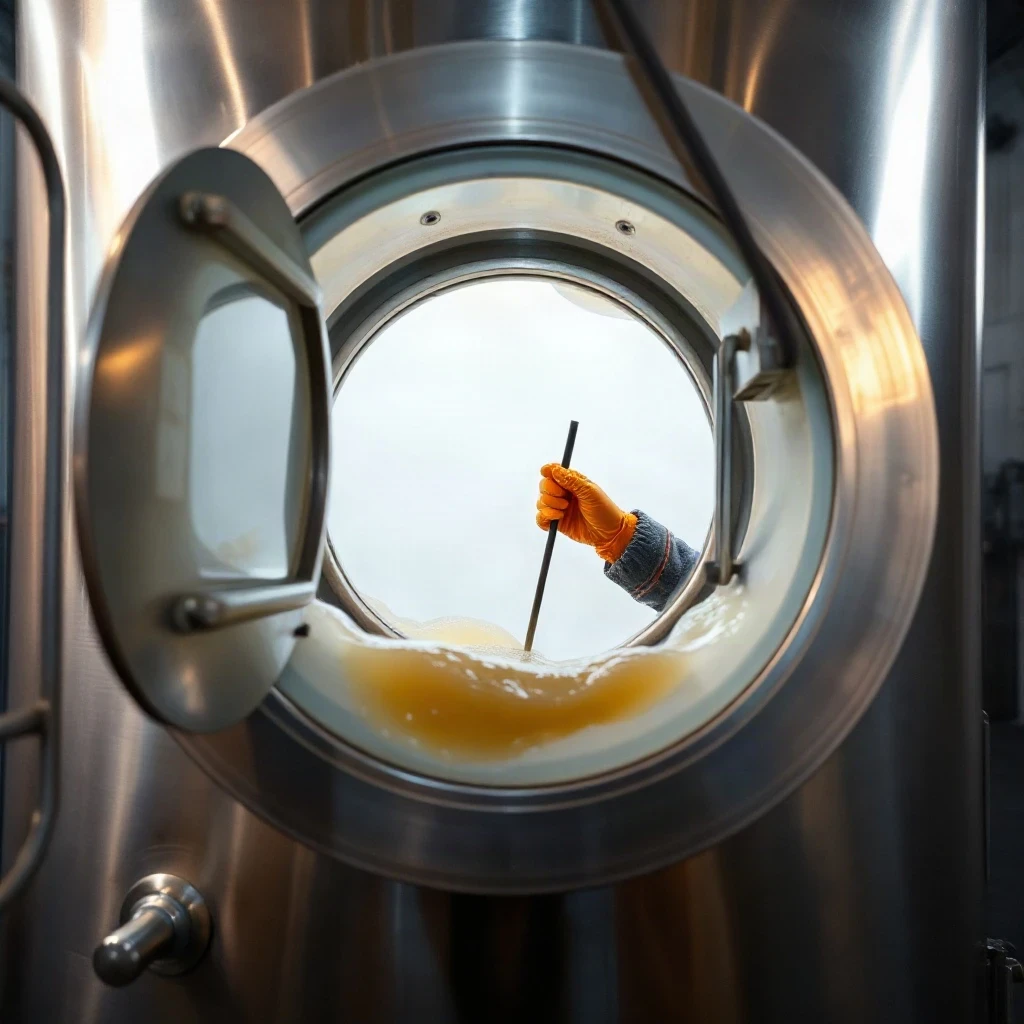
For procurement managers, the semi-solid state has practical implications. Palm oil must be stored in heated tanks—typically around 30–40°C (86–104°F)—to keep it fluid for pumping and transport. Buyers need to ensure their facilities can maintain these temperatures, especially in cooler climates.
When receiving deliveries, it is common to see a cloudy or partially solid appearance. This is normal and does not indicate quality issues. Gentle heating with agitation will restore a uniform liquid state without harming the oil's properties.
The cost-efficiency angle
Palm oil's semi-solid nature also contributes to its cost-effectiveness. Because less processing is required to achieve desired textures compared to fully hydrogenated liquid oils, manufacturers save on energy and equipment. Moreover, the oil's natural stability reduces the need for added antioxidants in many applications.
For first-time buyers, understanding this characteristic helps in planning storage, handling, and formulation. Palm oil's semi-solid state is not a complication—it is a feature that has made it a staple in global food and industrial supply chains.
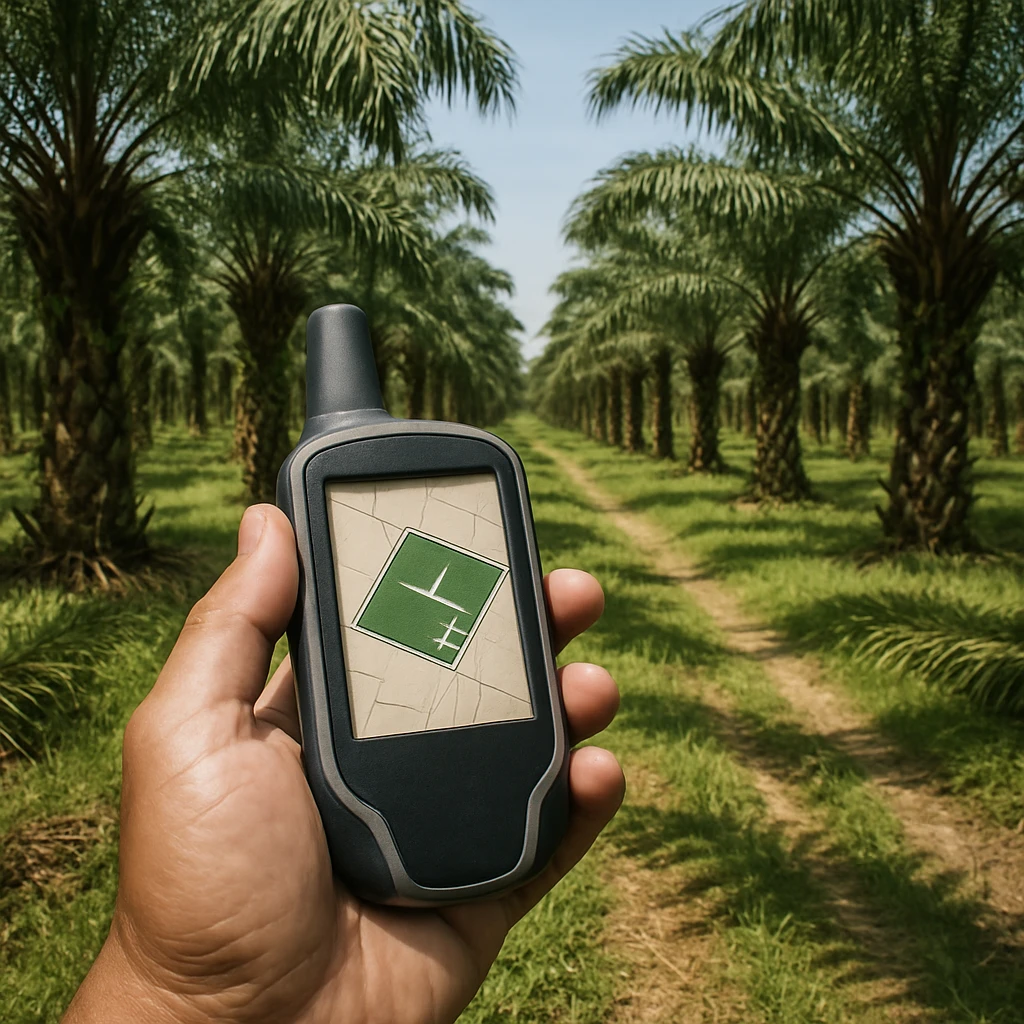
A practical guide to the plot-level coordinates, polygons, and supplier records that EUDR due diligence expects for palm purchases.
The European Union Deforestation Regulation requires businesses placing palm oil on the EU market to collect and submit geolocation data for every plot of land where the palm fruit was grown. This is not the location of the mill, refinery, or supplier head office; it is the plantation plot itself. For procurement teams, this means asking suppliers for plot-level coordinates before or at the time of purchase, and ensuring that this data can be linked to each consignment.
What geolocation data is required
Suppliers should provide coordinate data in a standard geospatial format, typically latitude and longitude. Larger plots require a polygon boundary, which is a set of connected coordinates outlining the perimeter of the plantation. Smaller plots may be identified by a single central point under the regulation's threshold rules. The key point is that the data must identify the land area with enough precision to allow verification against deforestation and legality checks.
For a first-time buyer, the practical request to a supplier is: "Please provide the geolocation file for all plots that contributed to this shipment, including polygon boundaries where applicable." Avoid accepting only a mill address or a supplier name; that will not meet the due diligence requirement.
What traceability records accompany the geodata
Geolocation alone is not enough. The due diligence statement must include contextual records that tie the product to the plot. These include:
Supplier name and contact details
Country of production and subnational region
Quantity of palm oil or palm product per consignment
Plot identifiers or farmer group references
Harvest or production period, if available
Any certification or legality documentation linked to the same plots
The traceability chain should allow a procurer to trace back from the purchased batch, through the mill and intermediary, to the exact plots where the fresh fruit bunches were harvested. If a shipment aggregates palm fruit from many smallholders, the supplier must have a system to collect and pass along geolocation for each contributing plot.
Practical checks for procurement managers
Before accepting a shipment, confirm that the geolocation file is complete and usable. Look for closed polygons, coordinates that fall on land rather than water, and consistent plot identifiers across the invoice, bill of lading, and geodata file. If data is missing for part of a consignment, request a corrected file before completing the purchase.
Because EUDR places the legal obligation on the EU operator or trader, procurement managers should treat geolocation and traceability data as a non-negotiable part of the supplier onboarding process. Building clear data requirements into purchase contracts and supplier questionnaires reduces the risk of shipments being rejected or delayed at the EU border.
FROM THE DESK
Sourcing palm oil or derivatives?
Our market desk connects serious buyers with vetted origin suppliers across Southeast Asia. Indicative pricing, specifications and shipment guidance — free of charge.
Malaysian benchmark rises to $1,146/MT while MPOB data show July output up 9.4% and stocks up 7.2%; weather and biodiesel policy keep medium-term risk premium alive.
Ample July stocks and peak output face off against El Niño, B50 and wide soyoil spreads; our model gives the downside a slight edge.
Malaysian CPO benchmark sits near $1,146/MT, up 0.6% from the previous session and about RM4,623/MT. The global benchmark is around $1,101/MT and Indonesia's reference price is around $997/MT. The day's small gain masks a choppy tape: Brent's slide and crowded positioning are keeping the market near highs but with little sustained momentum.
What is pushing prices up
El Niño remains the main medium-term support. The ONI reading of +1.4 and GAPKI's warning of an 8–10% 2027 output drop feed anticipation buying: because palm output damage shows up with a 6–12 month lag, importers and forward buyers are pricing the risk now rather than waiting for visible tree stress. A wide soyoil premium of $401/MT is also supporting palm demand. At that spread, edible-oil buyers have a strong incentive to switch from soyoil to palm, lifting CPO offtake. Indonesia's B50 mandate adds another demand channel by absorbing an estimated 3–4 million tonnes per year domestically, which would reduce export availability. The export levy of $125 plus duty of $148 raise the cost of Indonesian exports, so a larger share of that policy cost is passed into landed prices. Technically, CPO is above its 5-, 20- and 50-day moving averages with a positive MACD and a golden cross, though it is near the upper Bollinger band at $1,156 and the RSI at 63 is neutral rather than overbought.
What is pushing prices down
The near-term supply picture is ample. Malaysia's July closing stocks rose 7.2% month-on-month to 1,429,316 tonnes, about 61% above the five-year average, and the stocks-to-use ratio of 12.5% signals comfortable cover. The broader stockpile number of 2.63 million tonnes, up 3.32%, reinforces the same point: buyers are not being forced to chase cargoes. Production is also at its seasonal peak, up 9.4% month-on-month to 1,792,979 tonnes, and the seasonal path adds another 7.0% next month; the July-to-October high-output window is weighing on nearby prices. The energy complex is a second drag. Brent crude has fallen about 8.8% over the past seven sessions to around $88.4 a barrel, which weakens biodiesel feedstock demand because palm-based biodiesel becomes less attractive when energy prices slide; our model's energy z-score sits at -1.23. The rupiah is another regional headwind: at USD/IDR 17,689, Indonesian exporters earn more rupiah per dollar of palm sold, which encourages selling and can cap dollar prices. Finally, CFTC soyoil net length is in the 82nd percentile after a 17,000-contract weekly increase, making the complex vulnerable to liquidation if the wider oilseed or energy trade wobbles.
Which side has the upper hand
Our model's balance currently has 4 bullish factors against 5 bearish factors, with the weather signal mixed: Peninsular Malaysia's recent 242mm of rain and another 47mm expected over the next seven days may disrupt harvest, while Kalimantan's 0mm dry phase adds lagged stress. The bearish factors have a slight upper hand. Ample July stocks, peak production, Brent's slide, rupiah weakness and crowded speculative longs are outweighing the bullish El Niño, B50 and wide soyoil-spread story. Our model expects choppy consolidation near highs with a slight downward bias over the next seven days, and its published path is just +0.1% over those seven sessions—implying any pullback is likely modest. The balance would flip further bearish if Brent continues falling, speculative longs unwind, and monthly stocks keep rising while El Niño evidence stays weak. It would flip bullish if Indonesian B50 implementation is confirmed without delay, the soyoil premium widens further, or El Niño stress starts appearing in official production or export data.