CPO rangebound near highs as Malaysia stocks build and B50 support holds
Malaysian benchmark slips to $1,144/MT as July output and stocks climb; biodiesel demand and firm crude limit downside, with traders eyeing August MPOB data.

Four bullish factors—wide BOPO spread, strong crude, Indonesian export costs, El Niño—meet five bearish ones; our model sees the downside with the upper hand near term.
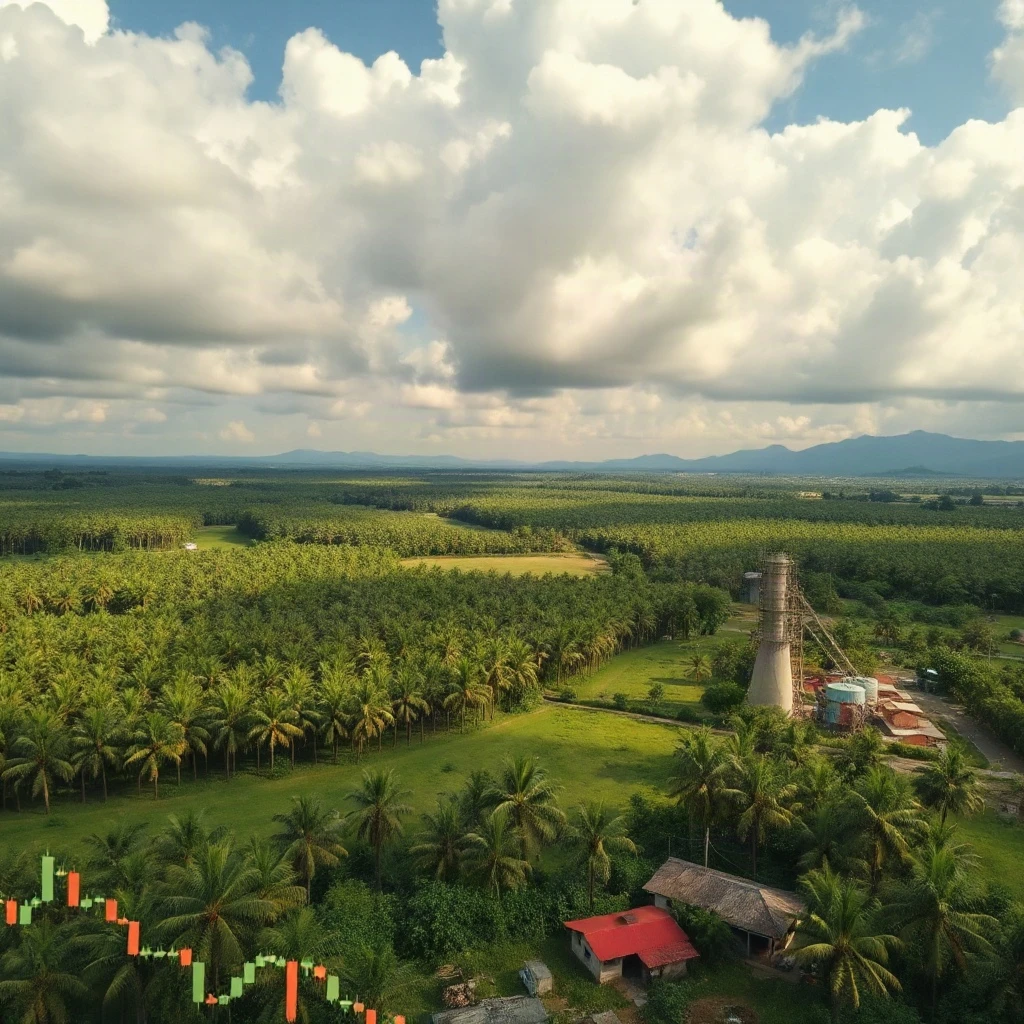
Strong crude and a negative POGO also help. Brent has gained about 5.8% over seven days to $101.4/bbl, while the POGO spread is -$337/t—meaning palm is cheaper than gasoil. That improves biodiesel blend economics: when palm is priced below diesel, blenders have a stronger incentive to use palm-derived feedstock, pulling demand into the vegetable oil complex.
Indonesian export policy is adding a cost burden. With the reference price at $1,008/MT, the export levy is $126/t and the duty $148/t. GAPKI has warned against further increases. High cumulative export charges can curb Indonesian shipments, tightening global palm supply and providing underlying support to CPO benchmarks.
El Niño provides a lagged structural bid. The ONI is +1.8°C for JJA. Historically, El Niño tends to reduce Southeast Asian yields with a 6–12 month lag, so the current event is likely to tighten palm output later, which the market is partly discounting today.
Seasonal production is peaking. Malaysia is in the Jul–Oct high-output window. September historically averages about -0.9% month-on-month, while the seasonal profile one month ahead shows production up 7.0%. More supply from the seasonal peak tends to pressure prices unless demand keeps pace.
Technical and positioning factors are also negative. A MACD bearish crossover has appeared, which our model associates with inflections over the next 1–3 days, and recent headlines cite profit-taking. In addition, managed money holds a net long in soybean oil of 109,912 contracts, near the 85th percentile. Such crowded positioning is vulnerable to long liquidation, and a sharp unwinding in soyoil would drag on palm prices as well.
A weak rupiah is another bearish supply-side signal. USD/IDR is around 17,557. A weaker rupiah lowers the local-currency cost of Indonesian palm exports, encouraging more shipments onto world markets and adding to global supply.
Our model outlook is for CPO to remain rangebound near 52-week highs but face near-term pressure from the expected bearish MPOB August stock build and the seasonal supply peak. The supportive factors cap downside, but the technical and positioning drag points to a slight net decline over the next seven days, with volatility concentrated around the MPOB release.
To flip the balance, a bearish input would need to weaken materially: the MPOB August stock build could come in below previews, or seasonal production could disappoint. Alternatively, the bullish forces would have to strengthen enough to overwhelm positioning and seasonal drag—for example, a materially wider BOPO spread or a further drop in POGO on stronger crude. Until that happens, our model does not see prices as supported near term.
Malaysian benchmark slips to $1,144/MT as July output and stocks climb; biodiesel demand and firm crude limit downside, with traders eyeing August MPOB data.
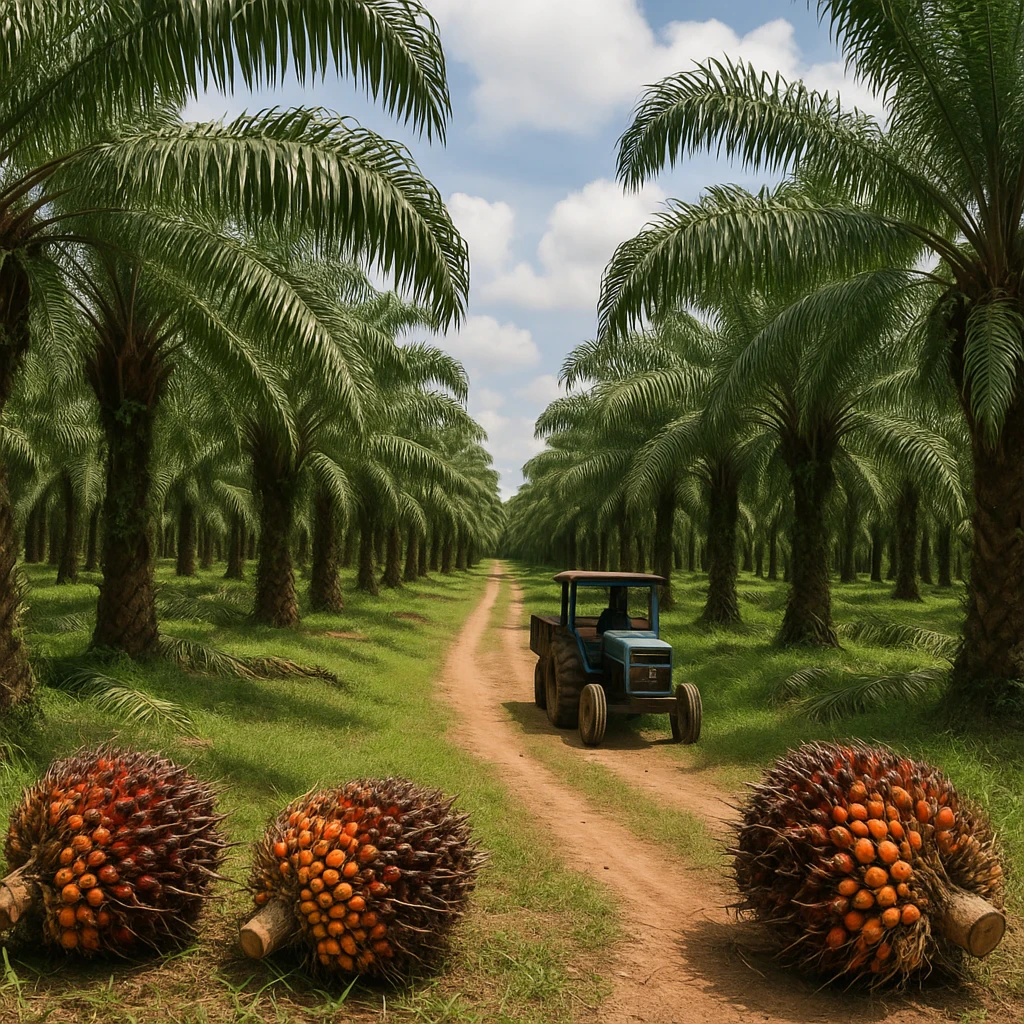
Malaysian crude palm oil softened to about $1,144/MT (RM4,657/MT) on September 10, down 0.6% from the previous session. The World Bank palm oil benchmark stood at $1,117/MT and the Indonesian reference price at $1,008/MT. Brent crude was around $101/bbl, off 0.9%, and the ringgit traded near 4.07 per dollar. The wider weather pattern remains El Niño (ONI +1.8), but rainfall is broadly normal across producing belts.
Malaysia's July MPOB data showed production rising 9.4% month-on-month to 1,792,979 tonnes and closing stocks up 7.2% at 1,429,316 tonnes, the highest in eight months. Exports jumped 15.1% to 1,399,579 tonnes, while imports fell 51.9% to 49,566 tonnes. The stocks-to-use ratio was 12.5% and the FFB reference was RM49.50 per tonne, up 1.2%. Reports indicate second-half 2026 palm output should remain firm, and a seasonal increase in supply is weighing on vegetable oil prices. The upcoming August MPOB report is expected to show another stock build, potentially a seven-month high, making the release a key near-term catalyst.
Indonesia's B50 biodiesel mandate continues to anchor demand. Distribution has reportedly reached 94%, and the energy ministry is preparing administrative sanctions without fines for violators. The policy is framed not just as biodiesel blending but as a broader energy security and industrialization strategy. Meanwhile, Indonesia's CPO exports grew 5.49% year-on-year and officials are urging downstream processing. Domestic food demand is also expected to require around 10 million tonnes of CPO amid rising biodiesel use. Strong crude near $101/bbl helps biodiesel economics, while the Indonesian reference price remains below Malaysian levels, keeping export competitiveness.
Futures ended lower on profit-taking after earlier support from firmer rival oils and crude, with occasional haze concerns in Indonesia. Our model outlook sees CPO rangebound near 52-week highs but facing near-term pressure from the expected bearish August stock build and seasonal supply peak. The wide biodiesel-palm oil (BOPO) spread, strong crude, and negative palm oil-gas oil (POGO) spread are limiting downside, but a MACD bearish crossover and crowded soyoil longs add downside risk. We expect a slight net decline over the next seven days, with volatility around the MPOB release, compared with a published path of +0.1% over the same sessions.
Key items: the MPOB August report for confirmation of stock builds, B50 implementation and any export levy or export governance changes under PP 24/2026, and how BOPO/POGO spreads react to crude and soyoil. A sustained seasonal supply rise could pressure prices, but policy-related biodiesel demand and firm energy may provide a floor.
Sources: vibizmedia.com; Majalah Sawit Indonesia; Finimize; HaiSawit; електронна зернова біржа України; BernamaBiz
MPOB confirms Malaysian inventories rose 7.48% to 2.82 million tonnes in August, with the November contract steady as supply peaks.
Malaysian crude palm oil futures held firm, with the November contract around RM 4,967 per tonne in the 9 September session, even as the benchmark eased about 0.6% to roughly $1,144 per tonne, equivalent to near RM 4,658 at a ringgit around 4.07 to the dollar. The steadier tone suggests traders have largely absorbed the seasonal supply peak and are now watching demand for the next signal.
The market's focus has shifted from expectation to confirmation on Malaysian inventories. MPOB data show total palm oil stocks rose 7.48% to 2.82 million tonnes in August, validating the build traders had anticipated. The July figures had already pointed the way: crude palm oil production at 1,792,979 tonnes, up 9.4% month on month, with closing stocks at 1,429,316 tonnes, a 7.2% rise. Exports rose 15.1% to 1,399,579 tonnes, while imports fell 51.9% to 49,566 tonnes. The fresh fruit bunch reference price was set at RM 49.50, up 1.2% month on month.
The reaction was telling. Futures ended lower on profit-taking even as crude oil firmed, suggesting the market had largely priced the build and is now looking for the next catalyst. Industry commentary also flags that production in the second half of 2026 is set to remain firm, reinforcing the peak-supply overhang into the final months of the year.
Offsetting the bearish supply picture, demand signals remain supportive. Indonesia's food sector is projected to need around 10 million tonnes of CPO as biodiesel blending expands, and the country is positioning itself as a global reference for B50 development. GAPKI has cautioned against moving to B60 too quickly, arguing that B50 should be bedded in first, while noting that a B60 mandate could absorb as much as 23 million tonnes of CPO and raise questions over export availability.
Indonesia's CPO exports grew 5.49%, and officials continue to push downstreaming. A new export governance regulation, PP 24/2026, is also in focus, alongside industry calls to keep the CPO export levy unchanged so that farmer FFB prices are not squeezed.
Elsewhere, China's oilseed demand is seen supporting the vegetable oil price outlook, though rising global supply is applying pressure. On the policy front, EUDR scrutiny continues.
Brent crude around $101 per barrel, down 1.2%, remains high enough to keep biodiesel blending economics attractive, a factor that has repeatedly capped palm losses this month. ENSO is in an El Niño state with an ONI of +1.8, but rainfall has been broadly normal across the belts, offering little immediate threat to yields.
Our model outlook sees CPO rangebound near 52-week highs but facing near-term pressure from the confirmed bearish MPOB August stock build and the seasonal supply peak. A wide BOPO spread, strong crude and negative POGO limit downside, while a bearish MACD crossover and crowded soyoil longs add risk. We expect a slight net decline over the next seven days, with volatility around the MPOB release.
Watch the pace of Malaysian exports for signs of whether the seasonal build is being absorbed. Keep an eye on Indonesian levy and B50/B60 policy signals, which shape future export availability, and on crude oil, which underpins blending demand. Expect choppy trade around the report.
Sources: HaiSawit; sawitsetara.co; Gabungan Pengusaha Kelapa Sawit Indonesia (GAPKI); sawitsetara.co; nst.com.my; електронна зернова біржа України
Indonesia's B50 rollout is tightening domestic feedstock use, while EU deforestation-rule pushback adds traceability uncertainty for buyers.
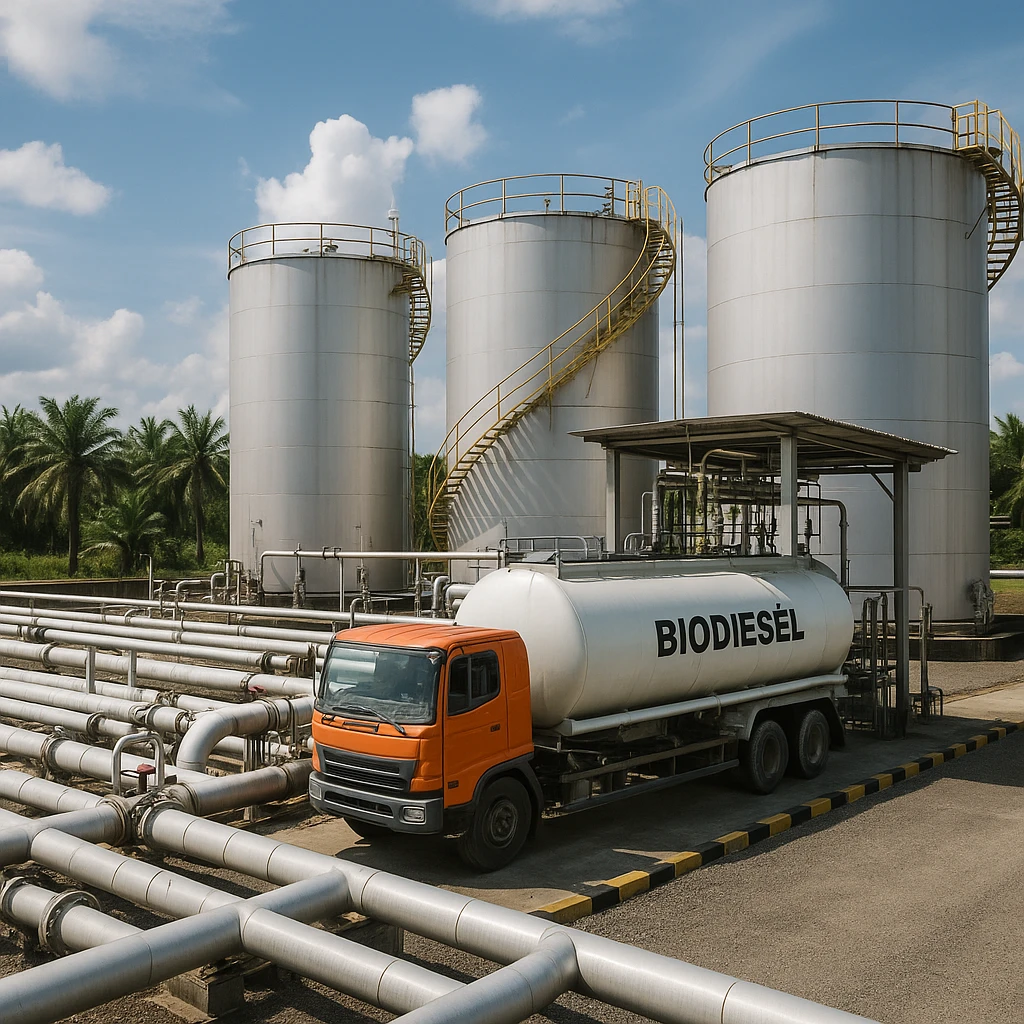
Indonesia's B50 programme is being framed as more than a biodiesel expansion; it is described as a strategy for energy resilience and industrialisation. That positioning signals a structural pull on domestic palm oil use, not a one-off demand spike.
The energy ministry is preparing administrative sanctions without fines for B50 mandate violators, while national distribution is reported at 94 percent. The absence of fines may reduce short-term compliance pressure, but a high distribution rate indicates that the blend is already moving through the supply chain. For palm oil markets, this means a larger share of output is being absorbed into the domestic fuel pool.
Reports that the food sector requires 10 million tons of CPO amid the biodiesel surge underline direct competition between energy and edible uses. Mandated fuel demand is likely to compete with food manufacturers, oleochemical producers and exporters for the same feedstock. That can tighten export availability and may push up premiums for food-grade or certified sustainable volumes.
Global Witness reports that Mondelez is making a last-ditch attempt to weaken the EU deforestation regulation. If EUDR requirements are diluted, demand for traceable, low-risk palm oil in the EU could soften. However, buyers that have already built due-diligence systems may continue to require deforestation-free supply because investor and consumer expectations do not automatically follow regulatory rollback. A divergence between EU rules and Indonesia's domestic policy could also create two-tier traceability and pricing obligations.
Sources: vibizmedia.com; Majalah Sawit Indonesia; HaiSawit; Global Witness
Jakarta's biodiesel escalation meets EU deforestation-law lobbying, with food demand and export compliance in the balance.

Indonesia's biodiesel programme is again the dominant policy signal for palm oil, with officials positioning the country as a global reference point for B50 development and preparing for a B60 mandate in 2027. Industry association GAPKI has cautioned against moving too quickly, arguing that B50 should be bedded in properly before the blend level is raised again.
The economics support the policy push. Brent crude near $101/bbl keeps biodiesel blending attractive relative to diesel, and a wide palm-oil-to-gas-oil spread reinforces the incentive. At the same time, the food-versus-fuel tension is not theoretical: domestic cooking-oil availability and price stability are politically sensitive, and any mandate acceleration has to be squared with that.
The EU deforestation regulation remains a second, slower-moving pressure point. Reporting on confectionery major Mondelez's lobbying against EUDR points to continued industry attempts to weaken or delay the rules. For compliance-minded buyers, the practical implication is unchanged: traceability and due-diligence documentation remain the gate to European market access, regardless of how the political argument resolves.
Malaysian crude palm oil futures traded around $1,144/MT, or RM 4,657/MT, down 0.6% on the session, against a World Bank palm oil benchmark near $1,117/MT and an Indonesian reference of about $1,008/MT. Brent was near $101/bbl, off 1.1%. The ringgit sat around 4.07 per dollar and the rupiah near 17,557.
MPOB July data showed production at 1,792,979 tonnes, up 9.4% month on month, with closing stocks at 1,429,316 tonnes, up 7.2%. Exports rose 15.1% to 1,399,579 tonnes while imports fell 51.9% to 49,566 tonnes. The fresh fruit bunch reference was RM 49.50, up 1.2%.
Our model outlook sees CPO rangebound near 52-week highs, with near-term pressure from an expected bearish August stock build and the seasonal supply peak, partly offset by the wide BOPO spread, firm crude and negative POGO. A bearish MACD crossover and crowded soyoil longs add downside risk. We expect a slight net decline over the next seven sessions, with volatility around the MPOB release; the published path is +0.1% over seven sessions.
Sources: HaiSawit; sawitsetara.co; Gabungan Pengusaha Kelapa Sawit Indonesia (GAPKI); Global Witness; BioEnergy Times
Current ENSO state points to a delayed yield risk, while near-term supply hinges on harvest weather and the coming MPOB stock build.
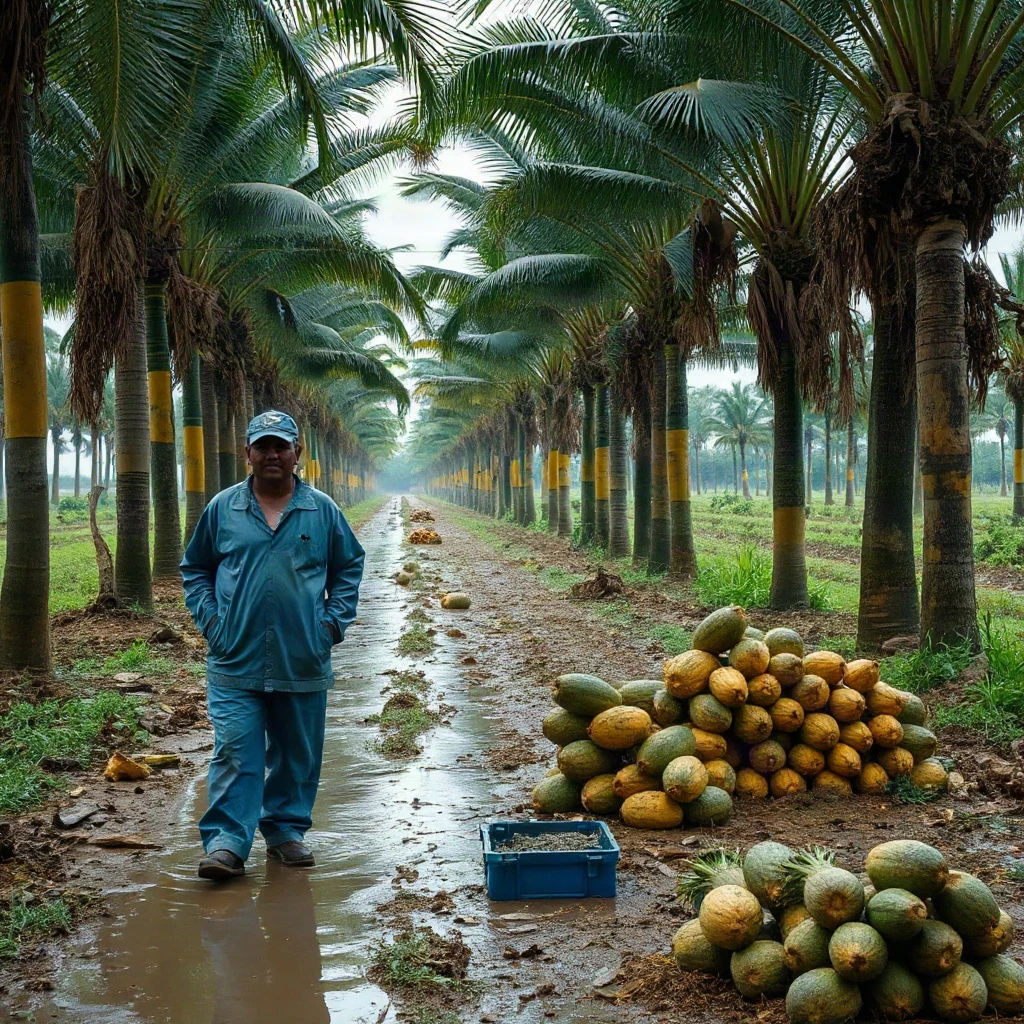
The Pacific remains in an El Niño state, with the ONI reading at +1.8. That is a firm, established event rather than a marginal one, and it matters for the palm belts chiefly through timing rather than through this month's weather.
Rainfall across the Malaysian and Indonesian palm belts is currently reported as broadly normal. For an El Niño of this magnitude, that is the key near-term fact: the tap has not been turned off across the growing regions.
El Niño's classic damage to oil palm is not instantaneous. The mechanism is well established: a moisture deficit stresses the palm, and the effect shows up in fruit bunch development and bunch weight roughly six to twelve months later. On that lag, any drought signal from the current event would land in the 2027 output profile, not in the next few months of production.
What matters now is whether the rainfall pattern actually deteriorates. Normal belt rainfall means that stress is not yet being transmitted into the palms.
Near-term output is driven by harvest conditions rather than by ENSO. Two opposite risks apply:
The July MPOB set showed Malaysian CPO production at 1,792,979 tonnes, up 9.4% month on month, with closing stocks at 1,429,316 tonnes, up 7.2%. Exports rose 15.1% to 1,399,579 tonnes. That combination is consistent with a belt running near its seasonal peak.
Our model outlook sees CPO rangebound near 52-week highs but facing near-term pressure from an expected bearish MPOB August stock build and the seasonal supply peak. Wide BOPO spread, strong crude and negative POGO limit the downside. MACD has crossed bearish and crowded soyoil longs add risk. We expect a slight net decline over the next seven days, with volatility around the MPOB release; the published path is +0.1% over seven sessions.
The benchmark sits near $1,144/MT, with Brent near $101/bbl. Rain, not ENSO, is the variable to watch in the coming week.
Our market desk connects serious buyers with vetted origin suppliers across Southeast Asia. Indicative pricing, specifications and shipment guidance — free of charge.
Get connected →Malaysian benchmark slips to $1,144/MT as July output and stocks climb; biodiesel demand and firm crude limit downside, with traders eyeing August MPOB data.
MPOB confirms Malaysian inventories rose 7.48% to 2.82 million tonnes in August, with the November contract steady as supply peaks.
Indonesia's B50 rollout is tightening domestic feedstock use, while EU deforestation-rule pushback adds traceability uncertainty for buyers.
Jakarta's biodiesel escalation meets EU deforestation-law lobbying, with food demand and export compliance in the balance.
Current ENSO state points to a delayed yield risk, while near-term supply hinges on harvest weather and the coming MPOB stock build.
Four bullish factors—wide BOPO spread, strong crude, Indonesian export costs, El Niño—meet five bearish ones; our model sees the downside with the upper hand near term.
Strong crude and a negative POGO also help. Brent has gained about 5.8% over seven days to $101.4/bbl, while the POGO spread is -$337/t—meaning palm is cheaper than gasoil. That improves biodiesel blend economics: when palm is priced below diesel, blenders have a stronger incentive to use palm-derived feedstock, pulling demand into the vegetable oil complex.
Indonesian export policy is adding a cost burden. With the reference price at $1,008/MT, the export levy is $126/t and the duty $148/t. GAPKI has warned against further increases. High cumulative export charges can curb Indonesian shipments, tightening global palm supply and providing underlying support to CPO benchmarks.
El Niño provides a lagged structural bid. The ONI is +1.8°C for JJA. Historically, El Niño tends to reduce Southeast Asian yields with a 6–12 month lag, so the current event is likely to tighten palm output later, which the market is partly discounting today.
Seasonal production is peaking. Malaysia is in the Jul–Oct high-output window. September historically averages about -0.9% month-on-month, while the seasonal profile one month ahead shows production up 7.0%. More supply from the seasonal peak tends to pressure prices unless demand keeps pace.
Technical and positioning factors are also negative. A MACD bearish crossover has appeared, which our model associates with inflections over the next 1–3 days, and recent headlines cite profit-taking. In addition, managed money holds a net long in soybean oil of 109,912 contracts, near the 85th percentile. Such crowded positioning is vulnerable to long liquidation, and a sharp unwinding in soyoil would drag on palm prices as well.
A weak rupiah is another bearish supply-side signal. USD/IDR is around 17,557. A weaker rupiah lowers the local-currency cost of Indonesian palm exports, encouraging more shipments onto world markets and adding to global supply.
Our model outlook is for CPO to remain rangebound near 52-week highs but face near-term pressure from the expected bearish MPOB August stock build and the seasonal supply peak. The supportive factors cap downside, but the technical and positioning drag points to a slight net decline over the next seven days, with volatility concentrated around the MPOB release.
To flip the balance, a bearish input would need to weaken materially: the MPOB August stock build could come in below previews, or seasonal production could disappoint. Alternatively, the bullish forces would have to strengthen enough to overwhelm positioning and seasonal drag—for example, a materially wider BOPO spread or a further drop in POGO on stronger crude. Until that happens, our model does not see prices as supported near term.