BMI lifts 2026 CPO price forecast to RM4,453 on tight supply
Research house revises average forecast upward as supply concerns persist; Malaysian benchmark trades near RM4,600.

Malaysian benchmark climbs to ~$1,130/MT as MPOC and BMI see prices holding above RM4,600.

Malaysian crude palm oil futures climbed to their highest level since 2024 on Wednesday, with the benchmark contract trading at about $1,130 per tonne (RM4,596), up 0.6% from the previous session. The rally extends a short-term uptrend driven by tightening supply expectations, robust biodiesel demand, and El Niño-related weather concerns.
Market sentiment is supported by forecasts from industry bodies. The Malaysian Palm Oil Council (MPOC) expects prices to remain above RM4,600 in September, citing tightening supply and geopolitical disruptions. BMI, a research unit, raised its 2026 average CPO price forecast to RM4,453, also on tight supply.
July data from the Malaysian Palm Oil Board (MPOB) showed production at 1,792,979 tonnes, up 9.4% month-on-month, while closing stocks rose 7.2% to 1,429,316 tonnes. Exports jumped 14.5% to 1,392,178 tonnes, outpacing the production gain and underpinning the price strength. Imports fell sharply to 49,566 tonnes, down 51.9%.
The current El Niño episode (ONI +1.4) is heightening supply concerns, with notably dry conditions in Kalimantan, a key Indonesian growing region. Dry weather can curb yields and tighten global availability.
At the same time, biodiesel blending mandates—B40 in Indonesia and B50 in Malaysia—are boosting palm oil demand for fuel. Higher crude oil prices, with Brent at about $94 per barrel (+2.9%), improve the economics of palm-based biodiesel.
Our model outlook indicates that CPO remains in a short-term uptrend, supported by a wide $417 per tonne discount to gasoil (BOPO), El Niño supply fears, and bullish commentary from MPOC and BMI. However, overbought technicals and ample July stocks may limit the pace of gains. The model's base case is modest gains over the next seven days, with occasional profit-taking, and a published path of +0.1% over seven sessions.
Uncertainty remains from missing cargo-surveyor export data and the palm-oil/gasoil spread (POGO), which could affect price direction. Buyers and traders should monitor these indicators closely.
Global benchmarks show palm oil at about $1,101 per tonne (World Bank), while Indonesia's reference price stands at about $997 per tonne. The ringgit trades at 4.04 per dollar, and the rupiah at 17,802 per dollar.
Industry voices remain constructive. MPOC and BMI both point to sustained strength, with the latter's RM4,453 average forecast for 2026 suggesting prices will stay elevated through the year.
Sources: BernamaBiz; The Star; The Edge Malaysia; Bernama; NST Online
Research house revises average forecast upward as supply concerns persist; Malaysian benchmark trades near RM4,600.

BMI, a major research house, has raised its 2026 average crude palm oil (CPO) price forecast to RM4,453 per tonne, citing tight supply conditions. The revision, reported by multiple outlets, comes as the Malaysian benchmark hovers near RM4,596 per tonne, with the global benchmark at about $1,101 per tonne and Indonesia's reference price around $997 per tonne.
For traders and buyers, the move signals that supply constraints are expected to persist through the year, underpinning price levels well above earlier projections. BMI's forecast aligns with the current market tone, where CPO futures have recently touched multi-month highs.
Malaysia's July data from the Malaysian Palm Oil Board showed production at 1,792,979 tonnes, up 9.4% month-on-month, while closing stocks rose 7.2% to 1,429,316 tonnes. Exports jumped 14.5% to 1,392,178 tonnes, a sign of robust demand despite ample supply. Imports fell sharply to 49,566 tonnes.
Meanwhile, the El Niño weather pattern (ONI +1.4) has brought dry conditions to parts of Kalimantan, raising concerns about future output in Indonesia, the world's top producer. Headlines about a potential "El Niño Godzilla" threatening Indonesian CPO production in 2027 have added to the bullish narrative.
Our model outlook sees CPO entering the next seven days in a short-term uptrend after breaking above the upper Bollinger Band. Bullish El Niño headlines and a wide BOPO spread are offsetting ample July stocks and peak production. The base case points to modest consolidation-to-firmer trade with daily moves around ±0.2%.
Key downside risk is profit-taking from crowded soyoil longs, while upside risk is a B50/El Niño-driven breakout. Missing cargo-surveyor export data widens uncertainty. Our published path is +0.1% over seven sessions.
BMI's revision adds to the growing consensus that supply tightness will keep prices elevated, even as production ramps up seasonally. Traders will watch upcoming export data and weather developments for further direction.
Malaysian CPO at RM4,595; MPOB July stocks ample but El Niño, B50, and firm energy underpin forward prices.
Malaysian benchmark CPO settled near $1,130 per tonne, or RM4,595 per tonne, up 0.6% on the session. That puts it just below the RM4,600 mark that several Malaysian trade sources see as a near-term floor for September, and nearby futures have touched their highest since April. Further out, the February 2027 contract was reported above RM5,071 per tonne. BMI lifted its 2026 average CPO forecast to RM4,453 per tonne, while global reference prices remain layered: the World Bank palm oil benchmark is near $1,101 per tonne and Indonesia's reference near $997 per tonne.
El Niño conditions, with ONI at +1.4 and dry weather in Kalimantan, are feeding concern about future Indonesian output, and some reports warn of an El Niño 'Godzilla' effect on production. Indonesia's B50 biodiesel ramp and heavy export levies could further tighten the volume of palm oil available globally, while firm Brent crude near $92 per barrel supports blending economics.
Sources: Agricom.id; NST Online; BusinessToday Malaysia; The Edge Malaysia; investor.id; Informasi.com
Malaysian CPO edges up to $1,130/MT; bullish supply-side drivers hold the upper hand, but overbought technicals point to consolidation with mild upside.
Malaysian CPO benchmark is at about $1,130/MT, up 0.6% from the previous session and around RM4,595/MT in ringgit terms. That leaves it near the top of its 52-week range after a strong two-day rally. The World Bank global palm oil benchmark is about $1,101/MT, while Indonesia's August reference price is about $997/MT. Our model outlook characterizes the market as having reached the top of its range on bullish sentiment, with technicals turning overbought.
El Niño is the most visible bullish driver. The current ONI is +1.4 for MJJ 2026, and headlines warning of severe 2027 yield damage are anchoring forward tightness expectations. Palm is a perennial crop, so the yield effect of El Niño dryness typically appears many months later. Even with ample current stocks, buyers are willing to pay up now for expected tighter supply in late 2026 and 2027.
Indonesia's B50 biodiesel mandate, active since July 2026, is the single largest demand variable. The step up from B40 to B50 absorbs roughly 3–4 million tonnes per year of additional palm oil demand. Headlines confirming the start of the B50 era reinforce a structural demand shift that lifts the medium-term price floor.
The wide palm-to-soybean oil spread adds demand-switching support. Palm is heavily discounted versus CBOT soybean oil, with the BOPO spread at about $412/MT. When palm is this cheap relative to soyoil, importers and biodiesel buyers shift toward palm, tightening physical demand and supporting Malaysian CPO.
Indonesia's export policy costs are also working in Malaysia's favor. The August reference price of $997/MT carries an export levy of $125 and an export duty of $148, about $273/MT in total. If CPO continues to rise, the next reference price will be set higher, making Indonesian exports more expensive and encouraging buyers toward Malaysian supply. This is a self-reinforcing bullish loop while prices rise.
Brent crude near $92/bbl improves biodiesel blending economics. Higher crude prices make palm-based biodiesel more competitive as a feedstock and support the broader vegetable oil complex. On a 7-day basis Brent is roughly flat to slightly lower, which is mildly supportive rather than a drag.
Technical momentum remains bullish. The 5-day and 20-day SMAs have formed a golden cross, MACD is positive, and price is above all key moving averages. However, price is sitting at the upper Bollinger Band around $1,125, which signals resistance and near-term pullback risk.
India's festival demand is building, though not immediate for this 7-day window. Diwali is roughly 80 days away and the buying window opens in about 31 days. July imports were already at a 10-month high, and festival restocking is expected to support demand into the fourth quarter.
The most concrete bearish fundamental is the July MPOB stock report. Closing stocks rose 7.2% month-on-month to 1,429,316 tonnes, about 61% above the five-year average, with a stocks-to-use ratio of 12.5%. July production rose 9.4% to 1,792,979 tonnes. This is a comfortable supply cushion, although the data is about 49 days old and the market has largely looked through it.
Peak production season runs from July through October. The seasonal production path shows a further 7.0% increase next month. Output is likely to remain high and stocks may continue to build near term, which caps immediate upside even as the medium-term story stays bullish.
CFTC positioning adds a neutral-to-overbought risk rather than fresh ammunition. Managed money in soyoil is at the 80th percentile net long, with +80,922 contracts and a +0.70 sigma reading. That reflects bullish complex-wide sentiment, but it is crowded and vulnerable to long-liquidation if momentum stalls.
Our model's factor balance is 7 bullish versus 2 bearish, so the upside currently has the upper hand. That is consistent with the price action: CPO is near the top of its 52-week range and the front end is being supported by El Niño forward tightness, B50 demand, the wide palm discount, Indonesian export cost increases, firm crude, and building festival demand. The bearish side is real but narrower: ample current stocks and peak-season production.
Even with bullish factors dominating, the overbought technical picture argues for consolidation rather than a vertical extension. Our model's base case is consolidation with mild upside over the next 7 days, with a published path of about +0.1% over 7 sessions. To flip the balance, the market would likely need to see a much larger-than-expected build in August stocks, a stall in B50 implementation, a rapid weakening of El Niño, or long-liquidation in the crowded soyoil complex that spills into palm.
Indonesia's B50 biodiesel push and dry Kalimantan weather sharpen supply risk for palm buyers.
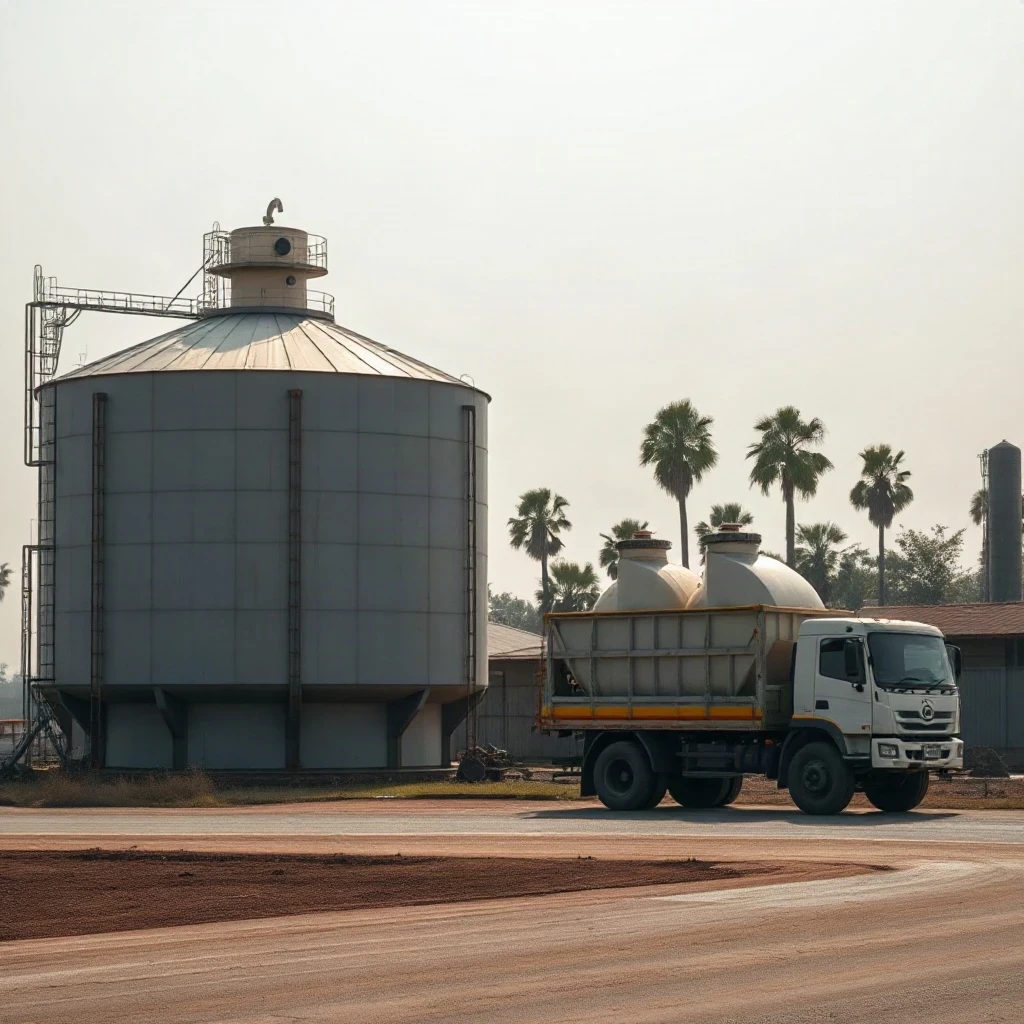
Indonesia's move to a B50 biodiesel mandate is emerging as a key swing factor for palm oil markets, with policy headlines this week pointing to tighter domestic supply and higher compliance costs for exporters. The mandate, which extends palm-based blending beyond biosolar to include Dexlite and Pertamina Dex grades, expands the pool of palm oil absorbed by the domestic fuel program. That raises the stakes for CPO availability, especially as El Niño conditions persist and Kalimantan faces notably dry weather.
Industry reports cited by regional media warn that B50 blending could erode Indonesia's CPO stocks and put pressure on the country's export levy fund, which finances the biodiesel subsidy program. With production growth seen as flat, the additional domestic offtake may leave less palm oil for export markets. For compliance-minded buyers, this means monitoring Indonesian export levy rates and any policy adjustments becomes more urgent.
Malaysian data for July 2026, released by MPOB, showed CPO production at 1,792,979 tonnes, up 9.4% month-on-month, while closing stocks rose 7.2% to 1,429,316 tonnes. Exports jumped 14.5% to 1,392,178 tonnes, but imports fell sharply by 51.9% to 49,566 tonnes. These figures point to ample near-term supply in Malaysia, yet the market's focus has shifted to Indonesia's policy-driven demand.
Malaysian benchmark CPO futures traded around $1,130 per tonne, up 0.6% on the session, equivalent to RM 4,595 per tonne. The global World Bank benchmark stood at about $1,101 per tonne, while Indonesia's reference price was around $997 per tonne. Brent crude rose 1.1% to about $93 per barrel, supporting biodiesel blend economics and reinforcing the competitiveness of palm-based fuel.
Our model outlook sees CPO entering the next seven days in a short-term uptrend after breaking above the upper Bollinger Band. Bullish B50 and El Niño headlines, along with a wide BOPO spread, are offsetting ample July MPOB stocks and peak production. The base case is for modest consolidation-to-firmer trade with daily moves around ±0.2%. Key downside risk is profit-taking from crowded soyoil longs, while upside risk is a B50/El Niño-driven breakout. Missing cargo-surveyor export data widens uncertainty. The published path is +0.1% over seven sessions.
For buyers, the immediate watch items are Indonesia's export levy adjustments, any changes to B50 implementation timelines, and weather updates for Kalimantan. A sustained dry spell could curb production and tighten global supply, while a smooth B50 rollout could increase domestic absorption, potentially lifting export premiums. The widening gap between Malaysian and Indonesian price benchmarks suggests regional supply dynamics are diverging, with Indonesia's policy choices likely to set the tone for the broader market.
Sources: BusinessToday Malaysia; Oils & Fats International; Bloomberg Technoz; Bloomberg Technoz; sawitsetara.co
Indonesia's B50 transition, soft output forecasts and export levy strains signal higher palm oil costs and fewer uncommitted volumes for global buyers.
BMI has lifted its Malaysian crude palm oil futures outlook to around RM4,453, citing biodiesel consumption and El Niño-related supply risks. That higher price anchor reflects a market where policy-driven demand is meeting weather uncertainty.
El Niño conditions can lower fresh fruit bunch yields and tighten crude palm oil output. Indonesian production forecasts point to sluggish growth, and the same weather pattern may reduce exportable volumes. When output is soft, less crude palm oil is available for both export markets and domestic biodiesel blending, which tends to support prices and raise procurement costs. Weather-related output losses can amplify the effect of blending mandates because feedstock becomes scarcer at the same time demand rises.
Indonesia’s transition to the B50 biodiesel mandate is projected to deepen domestic palm oil absorption. A higher blend rate means more CPO is diverted into fuel, leaving fewer barrels for food, oleochemical and export buyers. The discussion of B50 and B100 in policy circles signals that the demand pull from energy could become structural rather than temporary. Malaysia’s biodiesel program adds a second source of energy-linked CPO demand, tightening the global balance further when both countries compete for similar supply.
Export levies on CPO are a key funding source for Indonesia’s biodiesel subsidy. If El Niño reduces production, levy collections can weaken, making it harder to finance B50 incentives. Reports highlight the vulnerability of B50 stocks and export levy receipts to El Niño disruption. At the same time, subsidy reviews are drawing attention to the fiscal durability of the program. A slower mandate rollout or a change in levy settings could alter both domestic consumption and the volume of CPO entering world trade. Buyers often see higher export levies passed through into pricing, which affects landed costs even when futures are stable.
Buyers with traceability, sustainability or regulatory commitments may face tighter physical supply and greater competition for certified volumes. Policy signals matter as much as weather because mandate pace, subsidy design and export levy levels influence how much CPO is available and at what cost. Monitoring these developments can help procurement teams anticipate shifts in origin availability and price risk without changing investment strategy.
Sources: BusinessToday Malaysia; Bloomberg Technoz; Oils & Fats International; Bloomberg Technoz; Kantor Berita Sawit
Our market desk connects serious buyers with vetted origin suppliers across Southeast Asia. Indicative pricing, specifications and shipment guidance — free of charge.
Get connected →Research house revises average forecast upward as supply concerns persist; Malaysian benchmark trades near RM4,600.
Malaysian CPO at RM4,595; MPOB July stocks ample but El Niño, B50, and firm energy underpin forward prices.
Malaysian CPO edges up to $1,130/MT; bullish supply-side drivers hold the upper hand, but overbought technicals point to consolidation with mild upside.
Indonesia's B50 biodiesel push and dry Kalimantan weather sharpen supply risk for palm buyers.
Indonesia's B50 transition, soft output forecasts and export levy strains signal higher palm oil costs and fewer uncommitted volumes for global buyers.
Malaysian benchmark climbs to ~$1,130/MT as MPOC and BMI see prices holding above RM4,600.
Malaysian crude palm oil futures climbed to their highest level since 2024 on Wednesday, with the benchmark contract trading at about $1,130 per tonne (RM4,596), up 0.6% from the previous session. The rally extends a short-term uptrend driven by tightening supply expectations, robust biodiesel demand, and El Niño-related weather concerns.
Market sentiment is supported by forecasts from industry bodies. The Malaysian Palm Oil Council (MPOC) expects prices to remain above RM4,600 in September, citing tightening supply and geopolitical disruptions. BMI, a research unit, raised its 2026 average CPO price forecast to RM4,453, also on tight supply.
July data from the Malaysian Palm Oil Board (MPOB) showed production at 1,792,979 tonnes, up 9.4% month-on-month, while closing stocks rose 7.2% to 1,429,316 tonnes. Exports jumped 14.5% to 1,392,178 tonnes, outpacing the production gain and underpinning the price strength. Imports fell sharply to 49,566 tonnes, down 51.9%.
The current El Niño episode (ONI +1.4) is heightening supply concerns, with notably dry conditions in Kalimantan, a key Indonesian growing region. Dry weather can curb yields and tighten global availability.
At the same time, biodiesel blending mandates—B40 in Indonesia and B50 in Malaysia—are boosting palm oil demand for fuel. Higher crude oil prices, with Brent at about $94 per barrel (+2.9%), improve the economics of palm-based biodiesel.
Our model outlook indicates that CPO remains in a short-term uptrend, supported by a wide $417 per tonne discount to gasoil (BOPO), El Niño supply fears, and bullish commentary from MPOC and BMI. However, overbought technicals and ample July stocks may limit the pace of gains. The model's base case is modest gains over the next seven days, with occasional profit-taking, and a published path of +0.1% over seven sessions.
Uncertainty remains from missing cargo-surveyor export data and the palm-oil/gasoil spread (POGO), which could affect price direction. Buyers and traders should monitor these indicators closely.
Global benchmarks show palm oil at about $1,101 per tonne (World Bank), while Indonesia's reference price stands at about $997 per tonne. The ringgit trades at 4.04 per dollar, and the rupiah at 17,802 per dollar.
Industry voices remain constructive. MPOC and BMI both point to sustained strength, with the latter's RM4,453 average forecast for 2026 suggesting prices will stay elevated through the year.