Brent strength and a wide BOPO spread support palm oil, but ample MPOB July stocks and peak output keep the market in a modest consolidation.
CPO Holds Near $1,106 as Crude and Discount Step Up Against July Stocks Build — continued
Price snapshot
Malaysian CPO benchmark sits at about $1,106/MT, up 0.1% from the previous session and equivalent to RM4,520/MT. The World Bank global palm oil benchmark is about $1,101/MT, while Indonesia’s reference price is about $1,030/MT. Brent crude is around $89/bbl, little changed on the day but up about 5% over the last seven sessions, and USD/MYR is about 4.09.
The market is holding in a tight band near the SMA cluster at $1,103–1,106. The 0.1% daily gain extends a week in which our model’s published path is essentially flat at +0.1% over seven sessions, so this is consolidation rather than a new trend.
What is pushing CPO higher
Brent crude strength is a direct support. Higher crude raises diesel and gasoil prices, which improves the competitiveness of palm-based biodiesel and increases discretionary blending demand. With Indonesia’s B40 mandate already in force, a firmer crude price translates into stronger feedstock pull; Brent near $89 and +5% over seven sessions is a steady tailwind for CPO, even if it does not move the vegetable oil complex dollar-for-dollar.
The wide BOPO spread is another important support. Soybean oil at $1,581/MT versus CPO at $1,106/MT leaves palm at a $475 discount. That is a heavy discount by recent standards and encourages price-sensitive buyers to switch demand from soy oil to palm in food and biodiesel channels. This demand-switching mechanism is cushioning CPO even when its own stock picture is heavy.
A developing El Niño is adding a bullish anticipation layer. The Oceanic Niño Index is at +1.4°C for the May–July period. El Niño events tend to reduce Southeast Asian palm yields with a six-to-twelve-month lag, so the market is beginning to price forward supply risk even though current output is strong. It is not an immediate barrel shortage; it is a slow-burn supportive factor.
Indonesia’s export policy is also tilted supportive for global palm. The reference price is stale at $1,030/MT while the market trades around $1,106/MT. Exporters face a $129 levy plus a $148 export duty, which raises the cost of Indonesian supply to the world and discourages aggressive export selling. The B40 domestic biodiesel mandate absorbs feedstock at home, further reducing exportable supply. A high USD/IDR at 17,834 could tempt some exporters to sell for rupiah revenue, but the net policy system remains restrictive and bullish for the global CPO price.
Technical posture remains constructive but not overextended. RSI at 51 and MACD positive, together with a 5/20 golden cross, suggest buyers are defending the $1,103–1,106 zone. Bollinger resistance at $1,116 means the immediate upside is finite, but the technical setup does not signal a bearish breakdown.
Palm-belt rainfall is a near-term mixed wildcard. Peninsular Malaysia at 42mm and Sabah at 38mm over the next seven days may disrupt harvesting and logistics, tightening prompt availability. At the same time, Sarawak and Kalimantan dryness adds lagged yield stress, though the immediate impact is not uniform.
What is pushing CPO down
MPOB July stocks built more than expected. Closing stocks rose 7.2% month-on-month to 1,429,316 tonnes, and the stocks-to-use ratio is 12.5%. That is ample inventory relative to use, which means the market can absorb short-term demand surprises without a scramble. Ample stocks reduce the fear premium and weigh on nearby prices.
The seasonal production peak is the main mechanical bear. Malaysian production rose 9.4% month-on-month to 1,792,979 tonnes, about 4% above the five-year average. Historical patterns point to a further 7.0% production increase and an 11.2% stock build over the next month. That pipeline of fresh supply is arriving at a time when demand signals are not clearly strong, capping rallies.
Speculative positioning is stretched on the long side in the soybean oil complex. CFTC soyoil net long is +80,922 contracts, at the 80th percentile of its range, up 241 contracts week-on-week. A crowded long is vulnerable to liquidation. If crude oil wobbles or the India demand picture disappoints, a sharp unwind in soy oil futures can spill into palm and amplify any correction.
Net read: the upside has the upper hand for now
Our model’s factor balance is six bullish against three bearish, so the upside currently has the upper hand. The strongest supports are Brent crude strength and the wide BOPO discount, which are working through actual demand channels, plus the anticipatory bid from El Niño and Indonesia’s policy restrictiveness. The strongest caps are the ample July MPOB stocks and the seasonal production peak, which mechanically increase supply. India demand uncertainty remains unresolved: imports are down 7% year-on-year in one headline but up 5% on a nine-month basis in another, and the Diwali window opens in about 35 days without providing a clear directional cue.
This is a modest consolidation, not a new trend. For the balance to flip bearish, we would need to see Brent break lower and the stretched speculative long start to unwind, or confirmation that India demand is weakening into the festival window. For a more convincing break higher, the market would need El Niño to deepen and Indonesian export policy to tighten further, pushing CPO through the $1,116 Bollinger resistance.
Malaysian CPO holds at RM4,520 after July MPOB stocks rose 7.2% and production rose 9.4%; conflicting India import reports and Black Sea risk keep direction uncertain.
Malaysian palm oil is little changed at about $1,106/MT, equivalent to RM4,520/MT at a dollar-ringgit rate of 4.09, after gaining 0.1% from the previous session. The World Bank global palm benchmark sits at about $1,101/MT, while Indonesia's reference is roughly $1,030/MT. Brent crude is steady near $89/bbl, supporting biofuel blending economics.
Supply backdrop
Malaysia's July MPOB release showed CPO production at 1,792,979 tonnes, up 9.4% month on month, with closing stocks at 1,429,316 tonnes, up 7.2% month on month. The stocks-to-use ratio of 12.5% remains comfortable. Exports rose 14.5% to 1,392,178 tonnes, but imports dropped 51.9% to 49,566 tonnes. The seasonal production peak is underway, and El Niño conditions (ONI +1.4) are drying Sarawak and Kalimantan, potentially trimming future yields.
Demand and news flow
Headlines on India are mixed: one report says July vegetable oil imports fell 7% while nine-month imports rose 5%, another says imports fell 8%, and a third says edible oil imports hit a 10-month high on high demand. That conflict creates uncertainty about near-term Indian buying. Black Sea developments add to volatility: Russia is targeting Ukraine's land export routes, and one report warns that Black Sea war and El Niño could push edible oil prices higher. Yet cheap seasonal rapeseed and sunflower oil from Ukraine and Russia is expected to pressure prices. Separately, Indian Navy escorts of oil tankers through the Red Sea chokepoint underscore energy supply risk. Earlier in the week, a report noted CPO futures above RM4,750 on stronger crude oil prices, though the benchmark has since been quoted near RM4,520.
Model outlook
Our model outlook sees CPO range-bound near $1,106/MT with a slight upward tilt from stronger Brent crude and a wide BOPO spread, but capped by ample July MPOB stocks and the seasonal peak. The anchor is three days stale, and conflicting India demand headlines raise uncertainty; treat any move as modest consolidation rather than a new trend. The published path is +0.1% over seven sessions.
What to watch
Buyers should watch how India's import data reconciles, whether Black Sea logistics worsen, and whether El Niño dryness reduces Southeast Asian yields into the fourth quarter; for now, the Malaysian market appears in consolidation near current levels.
Tracing the path from a regional food staple to a cornerstone of global edible-oil supply, with practical pointers for buyers.
Palm oil has a long history that shapes today's supply chain. The oil palm, Elaeis guineensis, is native to West Africa. For thousands of years, communities in that region have used the fruit and its oil for cooking, soap-making, and traditional medicine. The oil is extracted from the fleshy mesocarp of the fruit, while palm kernel oil comes from the seed inside.
From local staple to traded commodity
During the colonial era, West African palm oil became an important export to Europe, where it was used mainly as an industrial lubricant and later in soap and candle making. The crop's ability to produce oil year-round and its high yield per hectare attracted attention in other tropical regions. In the early twentieth century, oil palm seedlings were introduced to Southeast Asia, first as ornamental plants and then as plantation crops.
The shift to Southeast Asia
Malaysia and Indonesia now dominate global palm oil production. Well-drained soils, consistent rainfall, and a favourable climate allowed large-scale plantations to expand. Over time, processing methods improved: fresh fruit bunches are sterilised, stripped, and pressed, then the crude oil is refined, bleached, and deodorised. Fractionation separates palm oil into liquid olein and solid stearin, giving buyers a range of functional ingredients with different melting profiles.
What procurement teams should know
For a first-time buyer, understanding product categories is essential. Crude palm oil is rarely used directly; most buyers purchase refined, bleached, and deodorised (RBD) palm oil, RBD palm olein, or RBD palm stearin. Palm kernel oil is a separate product with different fatty acid composition and uses. Specifications such as free fatty acid content, moisture, impurities, and iodine value affect performance in food manufacturing, frying, and bakery applications.
Sustainability is a key part of due diligence. Established certification schemes and supplier declarations help buyers verify that oil comes from legally compliant sources with no deforestation, no peatland conversion, and respect for labour rights. Because palm oil is often traded as a bulk commodity, traceability to the mill or plantation may require supplier cooperation.
Supply chain considerations
Palm oil is typically shipped in bulk or in flexitanks, and buyers should plan for storage conditions that maintain quality. It solidifies at room temperature, so handling may require heated tanks. Contract terms often include quality specifications, shipment windows, and sustainability documentation. Neutral market information suggests that buyers compare multiple suppliers and request samples to match product performance with end-use requirements.
The journey from West African forests to global refineries means that today's buyer inherits a mature, well-understood commodity with standardised grades, established trade flows, and a growing set of sustainability tools.
A neutral look at the state of research on palm oil fractionation, what is well established, and where evidence is still evolving.
The Basics of Fractionation
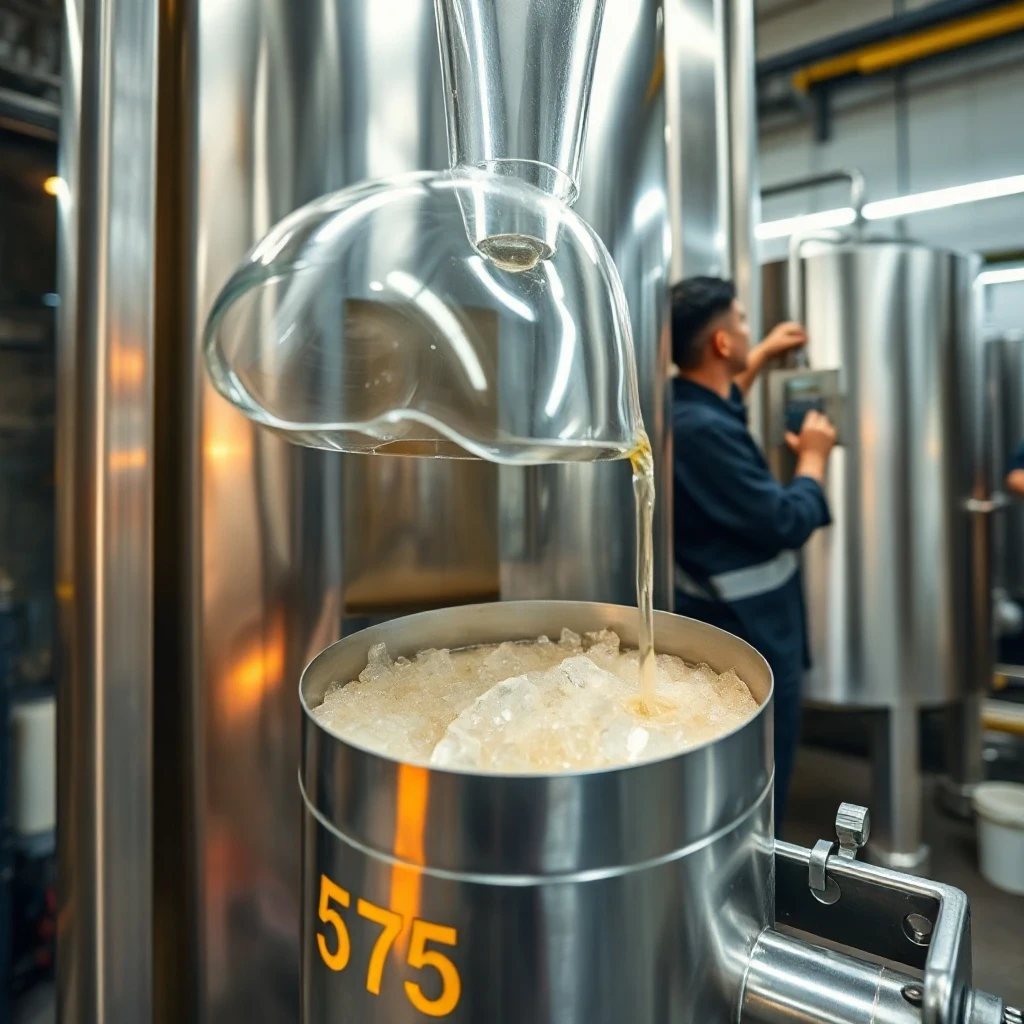
Palm oil is a semi-solid fat at room temperature, a blend of different triglycerides that melt at different temperatures. Fractionation is the process of separating these components to produce olein (the liquid fraction), stearin (the solid fraction), and, through further processing, mid-fractions with specific melting profiles.
The core technique is dry fractionation, which involves controlled cooling and crystallization of the oil, followed by filtration to separate the solid crystals from the liquid. This is the most widely used method because it is relatively simple and requires no chemical solvents. Other methods, such as solvent fractionation and detergent-based fractionation, exist but are less common due to higher costs and complexity.
What Is Well Established
Research has firmly established the basic principles of triglyceride crystallization. The process is driven by the differential melting points of triglycerides, which depend on their fatty acid composition and positional distribution. Palmitic acid, for instance, tends to concentrate in the solid stearin, while oleic acid remains in the liquid olein.
Another well-established point is that cooling rate and temperature control are critical. Slow, controlled cooling produces larger, more uniform crystals, which are easier to filter and yield a cleaner separation. Rapid cooling, by contrast, leads to small, irregular crystals that trap liquid oil, reducing efficiency and quality.
The use of additives, such as emulsifiers or crystal modifiers, is also a recognized practice to influence crystallization behavior. However, the specific effects can vary depending on the oil source and processing conditions.
Where Evidence Is Mixed or Evolving
While the fundamentals are solid, several aspects of fractionation science remain under active investigation, and the evidence is not always conclusive.
One area of debate is the precise role of minor components, such as diacylglycerols and free fatty acids, in crystallization. Some studies suggest these compounds can act as nucleation agents or inhibitors, but results are inconsistent. The impact may depend on their concentration and the specific oil composition, making it difficult to generalize.
Another contested point is the optimization of multi-stage fractionation. Producing mid-fractions often requires repeated crystallization and filtration steps, and the ideal parameters—such as temperature gradients, holding times, and filtration pressure—are not universally agreed upon. Different refiners use different protocols, and comparative studies are limited.
There is also ongoing research into improving the efficiency of dry fractionation, particularly in terms of yield and selectivity. Some recent work has explored the use of ultrasonic or shear-induced crystallization to enhance crystal formation, but these techniques are still in the experimental stage and have not been widely adopted commercially. Claims of significant improvements should be treated with caution until replicated in industrial settings.
What It Means for Producers, Refiners, and Buyers
For producers and refiners, the practical takeaway is that fractionation remains as much an art as a science. While the basic principles are clear, achieving consistent, high-quality separation requires careful control of process variables and a willingness to adapt to the specific characteristics of each batch of crude palm oil.
For buyers, the variability in fractionation outcomes means that product specifications—such as iodine value, cloud point, and melting point—can differ between suppliers. It is prudent to verify these parameters rather than assume uniformity based on the fraction name alone.
In sum, fractionation science provides a solid foundation, but the field is still evolving. Industry professionals should stay informed of new developments but remain skeptical of claims that outpace the evidence, especially those promising dramatic efficiency gains without robust industrial validation. ---
*This article reflects the position as of 12 August 2026. Research moves on, and later work may revise or supersede what is described here. Please verify the current position, and any changes made after this date, before relying on it.*
FROM THE DESK
Sourcing palm oil or derivatives?
Our market desk connects serious buyers with vetted origin suppliers across Southeast Asia. Indicative pricing, specifications and shipment guidance — free of charge.
Malaysian CPO holds at RM4,520 after July MPOB stocks rose 7.2% and production rose 9.4%; conflicting India import reports and Black Sea risk keep direction uncertain.
Brent strength and a wide BOPO spread support palm oil, but ample MPOB July stocks and peak output keep the market in a modest consolidation.
Price snapshot
Malaysian CPO benchmark sits at about $1,106/MT, up 0.1% from the previous session and equivalent to RM4,520/MT. The World Bank global palm oil benchmark is about $1,101/MT, while Indonesia’s reference price is about $1,030/MT. Brent crude is around $89/bbl, little changed on the day but up about 5% over the last seven sessions, and USD/MYR is about 4.09.
The market is holding in a tight band near the SMA cluster at $1,103–1,106. The 0.1% daily gain extends a week in which our model’s published path is essentially flat at +0.1% over seven sessions, so this is consolidation rather than a new trend.
What is pushing CPO higher
Brent crude strength is a direct support. Higher crude raises diesel and gasoil prices, which improves the competitiveness of palm-based biodiesel and increases discretionary blending demand. With Indonesia’s B40 mandate already in force, a firmer crude price translates into stronger feedstock pull; Brent near $89 and +5% over seven sessions is a steady tailwind for CPO, even if it does not move the vegetable oil complex dollar-for-dollar.
The wide BOPO spread is another important support. Soybean oil at $1,581/MT versus CPO at $1,106/MT leaves palm at a $475 discount. That is a heavy discount by recent standards and encourages price-sensitive buyers to switch demand from soy oil to palm in food and biodiesel channels. This demand-switching mechanism is cushioning CPO even when its own stock picture is heavy.
A developing El Niño is adding a bullish anticipation layer. The Oceanic Niño Index is at +1.4°C for the May–July period. El Niño events tend to reduce Southeast Asian palm yields with a six-to-twelve-month lag, so the market is beginning to price forward supply risk even though current output is strong. It is not an immediate barrel shortage; it is a slow-burn supportive factor.
Indonesia’s export policy is also tilted supportive for global palm. The reference price is stale at $1,030/MT while the market trades around $1,106/MT. Exporters face a $129 levy plus a $148 export duty, which raises the cost of Indonesian supply to the world and discourages aggressive export selling. The B40 domestic biodiesel mandate absorbs feedstock at home, further reducing exportable supply. A high USD/IDR at 17,834 could tempt some exporters to sell for rupiah revenue, but the net policy system remains restrictive and bullish for the global CPO price.
Technical posture remains constructive but not overextended. RSI at 51 and MACD positive, together with a 5/20 golden cross, suggest buyers are defending the $1,103–1,106 zone. Bollinger resistance at $1,116 means the immediate upside is finite, but the technical setup does not signal a bearish breakdown.
Palm-belt rainfall is a near-term mixed wildcard. Peninsular Malaysia at 42mm and Sabah at 38mm over the next seven days may disrupt harvesting and logistics, tightening prompt availability. At the same time, Sarawak and Kalimantan dryness adds lagged yield stress, though the immediate impact is not uniform.
What is pushing CPO down
MPOB July stocks built more than expected. Closing stocks rose 7.2% month-on-month to 1,429,316 tonnes, and the stocks-to-use ratio is 12.5%. That is ample inventory relative to use, which means the market can absorb short-term demand surprises without a scramble. Ample stocks reduce the fear premium and weigh on nearby prices.
The seasonal production peak is the main mechanical bear. Malaysian production rose 9.4% month-on-month to 1,792,979 tonnes, about 4% above the five-year average. Historical patterns point to a further 7.0% production increase and an 11.2% stock build over the next month. That pipeline of fresh supply is arriving at a time when demand signals are not clearly strong, capping rallies.
Speculative positioning is stretched on the long side in the soybean oil complex. CFTC soyoil net long is +80,922 contracts, at the 80th percentile of its range, up 241 contracts week-on-week. A crowded long is vulnerable to liquidation. If crude oil wobbles or the India demand picture disappoints, a sharp unwind in soy oil futures can spill into palm and amplify any correction.
Net read: the upside has the upper hand for now
Our model’s factor balance is six bullish against three bearish, so the upside currently has the upper hand. The strongest supports are Brent crude strength and the wide BOPO discount, which are working through actual demand channels, plus the anticipatory bid from El Niño and Indonesia’s policy restrictiveness. The strongest caps are the ample July MPOB stocks and the seasonal production peak, which mechanically increase supply. India demand uncertainty remains unresolved: imports are down 7% year-on-year in one headline but up 5% on a nine-month basis in another, and the Diwali window opens in about 35 days without providing a clear directional cue.
This is a modest consolidation, not a new trend. For the balance to flip bearish, we would need to see Brent break lower and the stretched speculative long start to unwind, or confirmation that India demand is weakening into the festival window. For a more convincing break higher, the market would need El Niño to deepen and Indonesian export policy to tighten further, pushing CPO through the $1,116 Bollinger resistance.