Palm oil consolidates near $1,106 as ample July stocks offset El Niño support
Malaysian benchmark steady at RM4,520; MPOB stocks rise to 1.43m tonnes while dry weather and firm crude keep a floor under prices.

Brent strength, El Niño and a wide soybean-oil spread support CPO, but Malaysia's five-month high stocks and peak output keep gains rangebound.
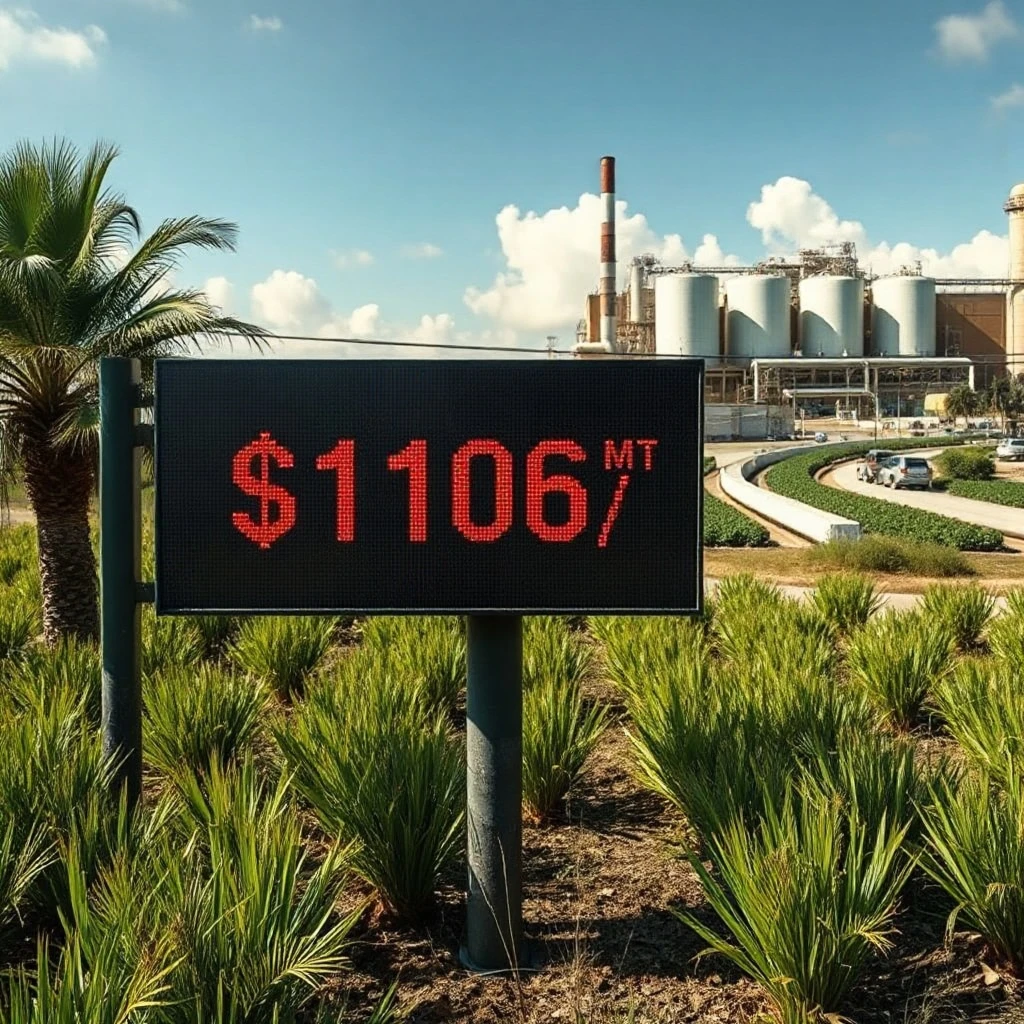
Malaysian CPO benchmark is trading at about $1,106/MT, up 0.1% from the previous session, or RM4,520/MT. The World Bank palm oil benchmark is about $1,101/MT and Indonesia's Kemendag reference is about $1,030/MT. Brent crude is about $89/bbl, down 0.1% on the day, and USD/MYR is about 4.09. CPO has been consolidating after the recent crude-driven push above RM4,750/MT. Our model outlook sees CPO consolidating near $1,106/MT with a mild upward bias; it expects choppy rangebound trade and a modest net gain of about 0.1% over the next seven sessions, with low confidence because of a stale anchor and missing key export data.
Brent crude rally: Brent has gained about 6% over the past seven days to around $88.6/bbl, and CPO futures already rallied above RM4,750/MT on the stronger crude move. Higher Brent raises diesel and biodiesel margins, which improves the economics of blending palm-based biodiesel and increases feedstock demand for palm oil. The wide BOPO spread does similar work on the demand side: soybean oil at $1,581/MT versus CPO at $1,106/MT leaves palm at a $475/MT discount, a large enough gap to encourage substitution toward palm in price-sensitive food and industrial uses. El Niño is strengthening, with ONI at +1.4°C MJJ, and dry conditions are showing up in Sumatra/Riau and Kalimantan. Because El Niño affects yields with a 6-12 month lag, the anticipation is bullish and MPOB preview headlines flag a surging probability of a strong event. Indonesia's B50 biodiesel mandate has been in force since 1 July 2026, raising the blend from B40 to B50. The move is estimated to absorb 3-4 million tonnes per year of new demand, making it the largest single demand variable for palm feedstock. Black Sea supply risk adds another bullish layer: Russia is targeting Ukraine land export routes, and elevated edible-oil prices support the broader veg-oil complex because disruption to sunflower and rapeseed flows pushes buyers toward palm.
MPOB July stock build: Malaysia's closing stocks rose 7.2% month-on-month to 1,429,316 tonnes, a five-month high. Production increased 9.4% MoM to 1,792,979 tonnes, and the resulting stocks-to-use ratio of 12.5% is above the 12% bearish threshold. Even though July exports rose 14.5% MoM to 1,392,178 tonnes, the market is taking the stock build as evidence that supply is currently ample. Seasonality reinforces that pressure: Malaysia's production seasonal path is +7.0% one month ahead, and August-October is normally the peak output window. July output is already about 4% above the five-year average, so further seasonal gains are likely to keep a lid on rallies.
The balance of our model's factors is five bullish against two bearish, so the upside currently has the upper hand. But that does not translate into a strong breakout: ample July stocks and peak-production seasonality are capping the move, leaving the market choppy and rangebound. Among the neutral factors, technicals are mixed: MACD is positive and the 5/20 SMA golden cross is supportive, but RSI is 51 and CFTC soyoil managed money is net long 80,922 contracts at the 80th percentile, which is vulnerable to long-liquidation. India's edible-oil import signals are mixed: July imports fell 7-8% year-on-year but hit a 10-month high in one report, and the Diwali buying window is still about 36 days away. Indonesia's export policy remains a swing risk: the Kemendag reference price of $1,030/MT is 73 days old, and the current policy burden is high at $129 levy plus $148 export duty, with near-term changes unconfirmed. A change there could alter export competitiveness quickly.
For the balance to shift bearish, the bearish factors would need to strengthen materially: a faster-than-expected August-October production build that pushes stocks-to-use further above 12%, or a break in Brent that narrows the BOPO spread and weakens biodiesel demand. A policy change that increases Indonesian export supply, such as lower levies or duties, could also flip the balance. Conversely, confirmation of a strong El Niño yield hit or further Black Sea supply disruption would extend the upside. Our model outlook's published path is +0.1% over seven sessions.
Malaysian benchmark steady at RM4,520; MPOB stocks rise to 1.43m tonnes while dry weather and firm crude keep a floor under prices.
Malaysian crude palm oil is consolidating around $1,106 per tonne (RM4,520) after a marginal 0.1% gain on the previous session. The World Bank global benchmark sits near $1,101, while Indonesia’s Kemendag reference is about $1,030, leaving a notable discount for Indonesian material. Brent crude is holding near $89 per barrel, down 0.1% on the day, which keeps biodiesel blend economics supportive after earlier strength took CPO futures above RM4,750 per tonne.
MPOB’s July data highlight a bearish near-term supply picture. Malaysian production rose 9.4% month on month to 1,792,979 tonnes, while closing stocks climbed 7.2% to 1,429,316 tonnes—a five-month high. Exports grew 14.5% to 1,392,178 tonnes, but imports fell 51.9% to 49,566 tonnes. The stocks-to-use ratio reached 12.5%. This is typical of peak production season, and it is the main reason the benchmark has struggled to extend gains despite bullish weather and energy signals.
El Niño conditions persist, with the ONI at +1.4 and dry conditions reported in Sumatra, Riau, and Kalimantan. That supports longer-term production concerns. Indian import data this week are mixed: one report cites a 7% month-on-month fall in vegetable oil imports for July, another an 8% decline, while a separate trade estimate points to edible oil imports hitting a 10-month high on strong demand. Nine-month cumulative imports are still up 5%. Meanwhile, warnings of higher edible oil prices due to the Black Sea war and El Niño are circulating, and Russia’s targeting of Ukraine’s land export routes adds logistics uncertainty. Indian Navy escorts through the Red Sea chokepoint also reflect elevated freight risk.
Firm crude supports vegetable oil prices, but an expected seasonal increase in cheap rapeseed and sunflower oil supplies from Ukraine and Russia is applying downward pressure. The wide spread between Brent and palm oil remains a mild supportive factor for biodiesel demand. Our model outlook sees CPO consolidating near $1,106 with a mild upward bias from crude strength, El Niño concerns, and the wide crude-palm oil spread, but upside is capped by ample July stocks and peak-production seasonality. We expect choppy rangebound trade with a modest net gain over the next seven sessions; the published path is +0.1%. Confidence is low due to a stale anchor and missing key export data.
For buyers, the key near-term pressure point is how quickly Malaysia’s July stock overhang clears against firm export demand. Watch the Indonesia-Malaysia reference price gap, weekly Malaysian export estimates, and rainfall across key Indonesian regions. Any escalation in Black Sea logistics or renewed strength in Brent could tilt the rangebound market higher, but cheap Black Sea sunflower and rapeseed supplies may check palm premiums.
Sources: RuralVoice; WION; Business Standard; Rediff MoneyWiz; електронна зернова біржа України; BernamaBiz
A practical overview of refining, bleaching, and deodorizing for procurement managers and first-time palm-product buyers.
RBD is an abbreviation for Refined, Bleached, and Deodorized. It describes the standard refining pathway applied to crude palm oil (CPO) after extraction from oil palm fruit. The result is a pale, neutral-flavoured, shelf-stable vegetable oil suitable for food manufacturing and further processing.
Crude palm oil contains phospholipids, trace metals, and other impurities that can reduce clarity and stability. In the degumming step, the oil is treated with a small amount of food-grade acid, typically phosphoric or citric acid, and water. This causes the gums to hydrate and separate. The mixture is then centrifuged or settled, and the water phase containing the gums is removed. Degumming also helps remove some trace metals that would otherwise interfere with later stages.
Despite the name, bleaching is not about whitening with chemicals. It is an adsorption process. The degummed oil is mixed with bleaching earth, a natural clay that has been activated. Under vacuum and moderate heat, the clay binds coloured pigments, residual soaps, oxidation products, and any remaining trace metals. The spent clay is then filtered out. The oil becomes lighter in colour and more stable against oxidation, ready for the final high-temperature step.
Deodorization is a steam-stripping process carried out under high vacuum and elevated temperature. The oil is passed through a deodorizer where steam is injected. The combination of vacuum and heat removes volatile compounds—mainly free fatty acids, ketones, and aldehydes—that contribute to odour, taste, and poor keeping quality. Palm oil is generally physically refined, meaning the free fatty acids are distilled off rather than neutralised with alkali. After cooling and polishing filtration, the result is RBD palm oil.
When purchasing RBD palm oil, common quality parameters include free fatty acid content (often expressed as % palmitic acid), colour (measured on the Lovibond scale), moisture and impurities, peroxide value, and iodine value. RBD palm oil is further fractionated into RBD palm olein (the liquid fraction) and RBD palm stearin (the solid fraction). Olein is used for frying and cooking oils; stearin is used in shortenings, margarines, and bakery fats. Understanding the RBD pathway helps buyers ask suppliers the right questions about processing conditions, filtration, and final specification limits.
A practical timeline of how a regional crop became the world's most traded vegetable oil.
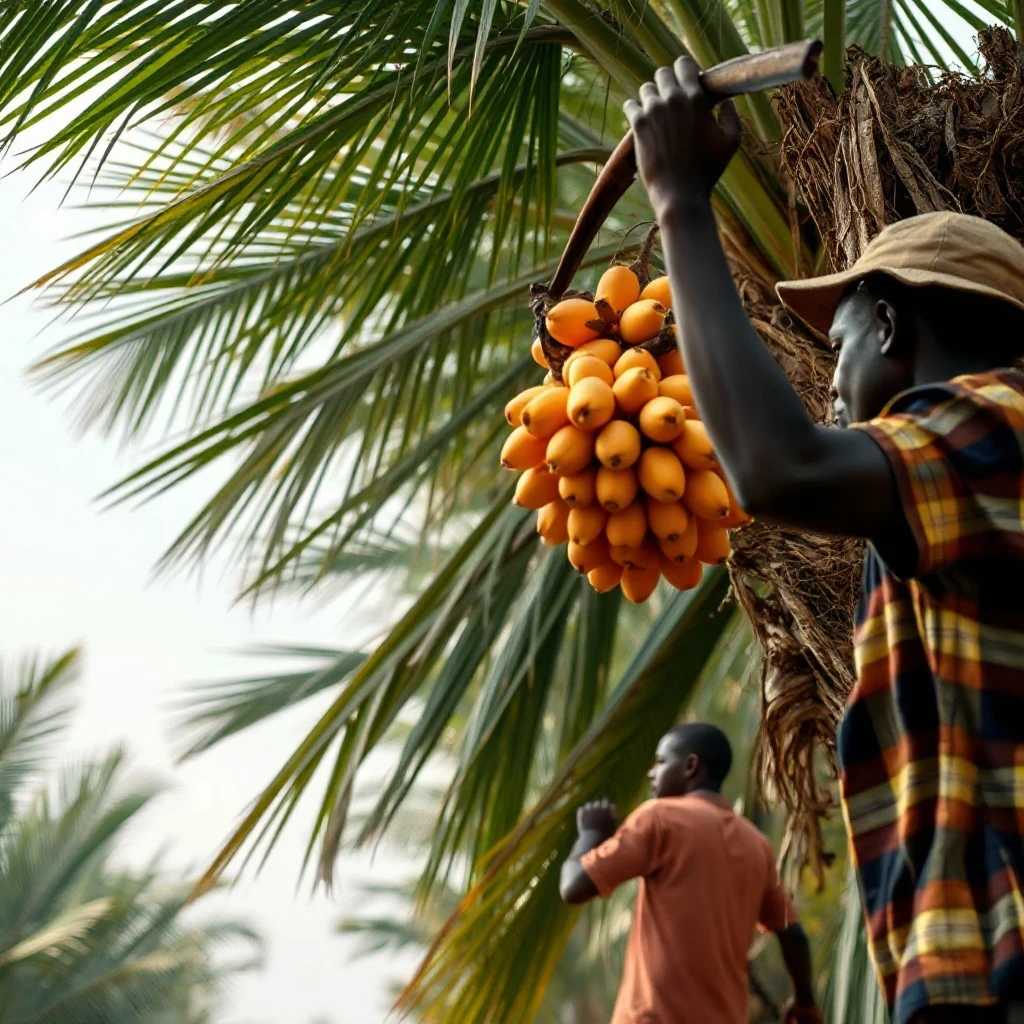
Oil palm (Elaeis guineensis) is native to the tropical forests of West Africa, where it has been used for millennia. Archaeological evidence suggests palm oil was part of local diets and trade as far back as 5,000 years ago. Early uses were practical: cooking oil, soap-making, and a source of illumination. The fruit's high oil content and natural preservative qualities made it a valuable commodity in pre-colonial African economies.
European traders encountered palm oil along the West African coast in the 15th century. By the 18th and 19th centuries, it became a significant export to Europe, primarily for industrial uses such as lubricants and candle-making. The trade was centered on coastal ports, where local producers supplied processed oil to European merchants. This period established the basic supply chain of palm oil as a bulk commodity moving from producer regions to industrial consumers.
In the early 20th century, colonial powers introduced oil palm to Southeast Asia, notably Malaysia and Indonesia. The crop thrived in the equatorial climate and was organized into large-scale plantations, a departure from the smallholder model in Africa. Plantation systems allowed for standardized harvesting, milling, and quality control, which reduced costs and increased output. This shift laid the groundwork for Southeast Asia to become the dominant production region.
Today's palm oil supply chain is highly mechanized. Fresh fruit bunches are harvested, sterilized, and pressed at mills within hours to prevent free fatty acid buildup. The crude oil is then refined, bleached, and deodorized to produce neutral-tasting oil suitable for food manufacturing. Fractionation separates it into olein (liquid) and stearin (solid) fractions, each with distinct uses. This versatility explains why palm oil appears in packaged foods, personal care products, and industrial applications.
For procurement managers, understanding the journey matters practically. First, palm oil's long history of trade means mature logistics networks exist, but supply chains vary by origin and mill. Second, quality parameters such as moisture, impurities, and free fatty acids are set at the mill level and affect shelf life. Third, the distinction between crude and refined products changes storage requirements. Finally, sustainability certification schemes have become standard practice in many markets, so verifying chain-of-custody documentation is a routine part of due diligence.
Palm oil now accounts for a major share of global vegetable oil production, with Indonesia and Malaysia supplying the bulk of exports. West Africa remains a producer but on a smaller scale. The crop's high yield per hectare, relative to other oilseeds, keeps it cost-competitive. For first-time buyers, the key takeaway is that palm oil is a mature, standardized commodity, but each step of its journey—from fruit to fractionated product—affects price, quality, and end-use performance.
This space reaches palm oil buyers, traders and industry readers every day. Sponsorship and advertising enquiries are welcome — get in touch:
[email protected]Malaysian benchmark steady at RM4,520; MPOB stocks rise to 1.43m tonnes while dry weather and firm crude keep a floor under prices.
A practical overview of refining, bleaching, and deodorizing for procurement managers and first-time palm-product buyers.
A practical timeline of how a regional crop became the world's most traded vegetable oil.
Brent strength, El Niño and a wide soybean-oil spread support CPO, but Malaysia's five-month high stocks and peak output keep gains rangebound.
Malaysian CPO benchmark is trading at about $1,106/MT, up 0.1% from the previous session, or RM4,520/MT. The World Bank palm oil benchmark is about $1,101/MT and Indonesia's Kemendag reference is about $1,030/MT. Brent crude is about $89/bbl, down 0.1% on the day, and USD/MYR is about 4.09. CPO has been consolidating after the recent crude-driven push above RM4,750/MT. Our model outlook sees CPO consolidating near $1,106/MT with a mild upward bias; it expects choppy rangebound trade and a modest net gain of about 0.1% over the next seven sessions, with low confidence because of a stale anchor and missing key export data.
Brent crude rally: Brent has gained about 6% over the past seven days to around $88.6/bbl, and CPO futures already rallied above RM4,750/MT on the stronger crude move. Higher Brent raises diesel and biodiesel margins, which improves the economics of blending palm-based biodiesel and increases feedstock demand for palm oil. The wide BOPO spread does similar work on the demand side: soybean oil at $1,581/MT versus CPO at $1,106/MT leaves palm at a $475/MT discount, a large enough gap to encourage substitution toward palm in price-sensitive food and industrial uses. El Niño is strengthening, with ONI at +1.4°C MJJ, and dry conditions are showing up in Sumatra/Riau and Kalimantan. Because El Niño affects yields with a 6-12 month lag, the anticipation is bullish and MPOB preview headlines flag a surging probability of a strong event. Indonesia's B50 biodiesel mandate has been in force since 1 July 2026, raising the blend from B40 to B50. The move is estimated to absorb 3-4 million tonnes per year of new demand, making it the largest single demand variable for palm feedstock. Black Sea supply risk adds another bullish layer: Russia is targeting Ukraine land export routes, and elevated edible-oil prices support the broader veg-oil complex because disruption to sunflower and rapeseed flows pushes buyers toward palm.
MPOB July stock build: Malaysia's closing stocks rose 7.2% month-on-month to 1,429,316 tonnes, a five-month high. Production increased 9.4% MoM to 1,792,979 tonnes, and the resulting stocks-to-use ratio of 12.5% is above the 12% bearish threshold. Even though July exports rose 14.5% MoM to 1,392,178 tonnes, the market is taking the stock build as evidence that supply is currently ample. Seasonality reinforces that pressure: Malaysia's production seasonal path is +7.0% one month ahead, and August-October is normally the peak output window. July output is already about 4% above the five-year average, so further seasonal gains are likely to keep a lid on rallies.
The balance of our model's factors is five bullish against two bearish, so the upside currently has the upper hand. But that does not translate into a strong breakout: ample July stocks and peak-production seasonality are capping the move, leaving the market choppy and rangebound. Among the neutral factors, technicals are mixed: MACD is positive and the 5/20 SMA golden cross is supportive, but RSI is 51 and CFTC soyoil managed money is net long 80,922 contracts at the 80th percentile, which is vulnerable to long-liquidation. India's edible-oil import signals are mixed: July imports fell 7-8% year-on-year but hit a 10-month high in one report, and the Diwali buying window is still about 36 days away. Indonesia's export policy remains a swing risk: the Kemendag reference price of $1,030/MT is 73 days old, and the current policy burden is high at $129 levy plus $148 export duty, with near-term changes unconfirmed. A change there could alter export competitiveness quickly.
For the balance to shift bearish, the bearish factors would need to strengthen materially: a faster-than-expected August-October production build that pushes stocks-to-use further above 12%, or a break in Brent that narrows the BOPO spread and weakens biodiesel demand. A policy change that increases Indonesian export supply, such as lower levies or duties, could also flip the balance. Conversely, confirmation of a strong El Niño yield hit or further Black Sea supply disruption would extend the upside. Our model outlook's published path is +0.1% over seven sessions.