BMI lifts 2026 CPO price forecast to RM4,453 on tight supply outlook
Analyst revises average Malaysian palm oil price forecast higher for 2026, citing tightening global supply conditions.

Malaysian CPO benchmark edges up 1.2% to $1,144/MT; MPOB July stocks rise but El Niño and biodiesel demand underpin bullish view.

Malaysian crude palm oil futures extended their winning streak, with the benchmark contract closing about 1.2% higher at $1,144/MT (RM 4,626). This marks the fifth consecutive weekly gain, according to Bernama, pushing prices to levels not seen since 2024. The global benchmark, as tracked by the World Bank, stands at $1,101/MT, while Indonesia's reference price is set at $997/MT. Brent crude's 0.6% rise to $94/bbl adds further support, improving the economics of palm-based biodiesel blends.
MPOB data for July shows Malaysian CPO production rose 9.4% month-on-month to 1,792,979 tonnes, while exports jumped 14.5% to 1,392,178 tonnes. Closing stocks increased 7.2% to 1,429,316 tonnes, still ample but below market expectations. Notably, imports plunged 51.9% to 49,566 tonnes, reflecting tight regional supply. The FFB reference price edged up 1.2% to RM 49.50.
However, the supply outlook is clouded by a strengthening El Niño (ONI +1.4), with Kalimantan experiencing dry conditions. Indonesian producers are bracing for potential output losses, with some projections pointing to severe impacts in 2027. The Malaysian Palm Oil Council (MPOC) expects prices to stay above RM 4,600/tonne in September, citing tightening supply and geopolitical disruptions.
Indonesia's push for B50 biodiesel remains a key demand driver. The country's export levy collections are projected to reach Rp 41.22 trillion this year, a 73% increase, as the government funds the mandate. BPDP claims B50 is not hurting export volumes, while plantation companies are seeking higher yields to meet feedstock needs. The campaign to educate stakeholders, including scouts, underscores the policy's strategic importance.
Global vegetable oil demand stays robust, with India's imports rising ahead of the festival season and the FAO vegetable oil price index hitting its highest since June 2022. However, competition from record South American soybean oil exports and rising rapeseed prices could temper gains.
Our model outlook indicates a strong uptrend driven by B50, a wide BOPO spread, and El Niño risk premium. However, technicals are overbought (RSI 73, above upper Bollinger), and July stocks are ample. The near-term base case is a mild pullback or consolidation followed by renewed buying, with net modest gains over 7 days. The published path is +1.1% over seven sessions, but uncertainty is elevated due to stale anchor data and lack of cargo surveyor figures.
Watch for consolidation in the near term, but keep an eye on El Niño developments in Kalimantan and Indonesia's biodiesel policy execution. Any supply disruption could reignite the uptrend, while a correction may offer buying opportunities.
Sources: investor.id; kontan.co.id; Validnews; bernama; NST Online; BernamaBiz
Analyst revises average Malaysian palm oil price forecast higher for 2026, citing tightening global supply conditions.

BMI, a unit of Fitch Solutions, has raised its 2026 average crude palm oil (CPO) price forecast to RM4,453 per tonne, up from a prior estimate, on expectations of tighter global supply. The revision, reported today, marks a fresh analyst outlook that diverges from the more bullish near-term calls circulating in the market.
The new forecast sits below the current Malaysian benchmark, which closed around RM4,626 per tonne (about $1,144/MT), up 1.2% on the session. The gap between the analyst's full-year average and spot prices suggests BMI sees room for prices to moderate from current levels over the remainder of the year, even as supply concerns persist.
BMI attributed the upgrade to tightening supply dynamics, a theme echoed across recent market commentary. Malaysia's July output data from MPOB showed production at 1.79 million tonnes, up 9.4% month-on-month, while closing stocks rose 7.2% to 1.43 million tonnes. Despite the monthly build, stocks remain below year-ago levels, and export demand has been robust, with July palm oil exports jumping 14.5% month-on-month to 1.39 million tonnes.
Weather remains a key risk factor. The current El Niño episode (ONI +1.4) has brought dry conditions to parts of Kalimantan, raising concerns about Indonesian production into 2027. BMI's revised forecast appears to factor in some of this weather-related supply risk, though the house view remains below the most bullish market projections.
Other forecasters have been more aggressive. The Malaysian Palm Oil Council (MPOC) has said prices should stay above RM4,600 in September on tightening supply and geopolitical disruptions. BMI's RM4,453 average implies a softer trajectory for the rest of 2026.
Global benchmarks tell a similar story of elevated prices. The World Bank's palm oil reference stands at about $1,101/MT, while Indonesia's Kemendag reference price is around $997/MT. The wide spread between Malaysian and Indonesian benchmarks reflects differing export tax regimes and supply conditions.
Our model outlook notes that CPO is near 20-month highs, with bullish momentum from recent headlines and strong biodiesel demand expectations. However, technical indicators are stretched: the RSI sits at 73, above the overbought threshold, and prices are trading above the upper Bollinger Band. This suggests a possible near-term pullback after the recent run.
MPOB's ample July stocks and historically soft September seasonality could weigh on prices in the coming weeks. Our base case sees modest upside with a likely 3-5 day technical correction, though missing Bursa quotes and a stale anchor widen the uncertainty around this path.
For buyers and traders, BMI's revision adds to a mixed picture: supply concerns support prices structurally, but technical overbought conditions and ample near-term stocks argue for caution in chasing the rally.
Sources: NST Online; BernamaBiz; The Edge Malaysia
Malaysian CPO rises to $1,144/MT after five straight sessions, but RSI 73, upper Bollinger Band and ample July stocks signal a likely 3-5 day technical pullback before any extensio
Malaysian CPO benchmark is trading around $1,144/MT, up 1.2% from the previous session and equivalent to RM4,626/MT at a USD/MYR rate of 4.04. The benchmark sits near 20-month highs after five straight up sessions, while the World Bank palm benchmark is at $1,101/MT and Indonesia's Kemendag reference is at $997/MT. Brent crude is around $94/bbl, up 0.6% on the session and about 6% higher over seven days.
Wide BOPO spread supports demand switching. Soyoil at $1,533/MT versus CPO at $1,144/MT leaves palm trading at a $390/MT discount. That discount makes palm the cheaper vegetable oil for price-sensitive buyers, drawing demand away from soyoil and supporting CPO.
Indonesia's B50 biodiesel mandate is the structural anchor. The move from B40 to B50, in force since July 2026, absorbs roughly 3-4 million tonnes of palm oil per year. That domestic absorption reduces the export surplus available to global buyers and is structurally bullish for Malaysian CPO.
Brent crude is reinforcing biodiesel economics. With Brent around $94/bbl, higher fossil fuel prices improve the blending economics for biodiesel and make palm-based feedstock more competitive, supporting demand.
El Niño keeps a supply risk premium in the market. ONI is at +1.4°C, with Kalimantan dry. The El Niño state supports lagged supply fears for Southeast Asia; headlines warning of an 'El Niño Godzilla' impact on 2027 production keep buyers nervous.
Indonesia's export policy is adding friction. The high levy of $125 plus export duty of $148, with export revenue up 73%, may slow Indonesian exports. Higher export costs can shift demand toward Malaysian CPO and tighten the global exportable supply.
A bullish post-anchor news flow is also supporting sentiment, though our model treats these headlines as a sentiment factor rather than new fundamental data.
Technical overbought signals are flashing. RSI is at 73 and the price is above the upper Bollinger Band after five straight up sessions. These conditions have historically raised the risk of a reversal or consolidation within three to five days as short-term buyers take profit.
MPOB July stocks are ample. Closing stocks of 1,429,316 tonnes rose 7.2% month on month and are 61% above the five-year average, with a stocks-to-use ratio of 12.5%. Production of 1,792,979 tonnes rose 9.4% month on month, and exports of 1,392,178 tonnes rose 14.5%, but the build in stocks caps near-term upside.
Seasonality is soft. Late August into September has historically been a softer period for CPO, with September averaging -0.9% month on month. Production is in its seasonal peak, which adds to supply pressure.
Speculative positioning is crowded. CFTC soyoil net long is 98,237 contracts at the 82nd percentile. That crowded long is vulnerable to liquidation, and a sharp unwind in soyoil can spill over into the palm complex.
The Diwali demand calendar is not a directional signal. The buying window opens in roughly 29 days, but there is no reliable pre-festival run-up. Our model treats this as news flow rather than a bullish driver.
Our model counts five bullish factors against four bearish factors: the upside currently has the upper hand. The B50 mandate, the BOPO discount, Brent strength, El Niño supply risk and Indonesia's export friction outweigh the overbought technicals, ample July stocks, soft seasonality and crowded speculative positioning.
The balance would flip if the technical overbought signal resolves into a deeper pullback, if MPOB August stocks rise again or speculative long liquidation accelerates. Conversely, if the BOPO spread narrows sharply or Indonesian export policy loosens, the bullish support would weaken. Our model outlook is for modest near-term upside with a likely 3-5 day technical pullback, and a published path of +0.9% over seven sessions. Missing Bursa quotes and a stale anchor widen the uncertainty around that path.
Malaysian CPO benchmark is RM4,626/MT, Brent crude $94/bbl, and Kalimantan dry; ample July stocks of 1.43m tonnes temper the bullish supply story.
Malaysian CPO settled around $1,144/MT (RM4,626/MT), up 1.2 percent from the previous session. The World Bank benchmark for palm oil is about $1,101/MT, while Indonesia's reference price is roughly $997/MT. Brent crude rose 0.6 percent to about $94/bbl, supporting biodiesel blending economics. The ringgit is around 4.04 per dollar. CPO futures ended the week higher for a fifth straight session.
MPOB data for July show Malaysian CPO production at 1,792,979 tonnes, up 9.4 percent month on month. Closing stocks rose 7.2 percent to 1,429,316 tonnes, while exports climbed 14.5 percent to 1,392,178 tonnes. Imports dropped 51.9 percent to 49,566 tonnes. The FFB reference price increased 1.2 percent to RM49.50, and the stocks-to-use ratio stands at 12.5 percent. Ample inventories are a counterweight to the tightness narrative.
News flow remains tilted bullish. B50 and El Niño are cited as key catalysts. Indonesia's transition to the B50 mandate is expected to lift CPO demand, with government efforts to accelerate smallholder replanting. Indonesian export levy collections are projected to reach Rp41.22 trillion this year, and the palm oil fund agency says B50 has not suppressed exports while levies rose 73 percent. Weather remains a concern: ENSO is El Niño with an ONI of +1.4, and Kalimantan is dry. Analysts warn the El Niño could threaten Indonesian CPO output, while B50 stocks and export levies are vulnerable.
BMI has raised its 2026 average CPO price forecast to RM4,453 on tight supply. MPOC expects CPO to stay above RM4,600 in September on tightening supply and geopolitical disruptions. Our model outlook sees CPO near 20-month highs with bullish post-anchor headlines, B50 demand and a wide BOPO spread. But RSI at 73 and price above the upper Bollinger Band flag overbought risk; MPOB July stocks are ample and September seasonality is soft. The base case is modest near-term upside with a likely 3-5 day technical pullback. Missing Bursa quotes and a stale anchor widen uncertainty, with a published path of +0.9 percent over seven sessions.
Watch whether Malaysian CPO can hold above RM4,600 against overbought momentum, how quickly Indonesia's B50 procurement translates into physical offtake, and any confirmation of El Niño dryness in Kalimantan. Ample July stocks and soft September seasonality could cushion sudden upside, but a close above current levels would test the model's 3-5 day pullback base case.
Sources: investor.id; Kompas.com; kontan.co.id; Validnews; bernama; NST Online
Indonesia’s higher biodiesel blend and weather risks tighten CPO balances, while levy changes and outreach add compliance signals.
As Indonesia advances its B50 biodiesel mandate, palm oil markets are absorbing a mix of supply constraints, demand-side targets and outreach efforts. Reports point to rising CPO prices with B50 and El Niño cited as catalysts. These overlapping signals matter for buyers that need to track both feedstock availability and policy implementation.
In short, B50 is tightening the structural pull on Indonesian CPO, while weather and plantation renewal create uncertainty around supply. Buyers monitoring these developments may need to weigh stronger domestic demand against official assurances that export volumes will remain sufficient.
Sources: investor.id; Kompas.com; Validnews; achmadnurhidayat.id; investor.id
Policy watch: B50 mandate, El Nino dry spell and rising export levies shape palm oil supply, demand and compliance.
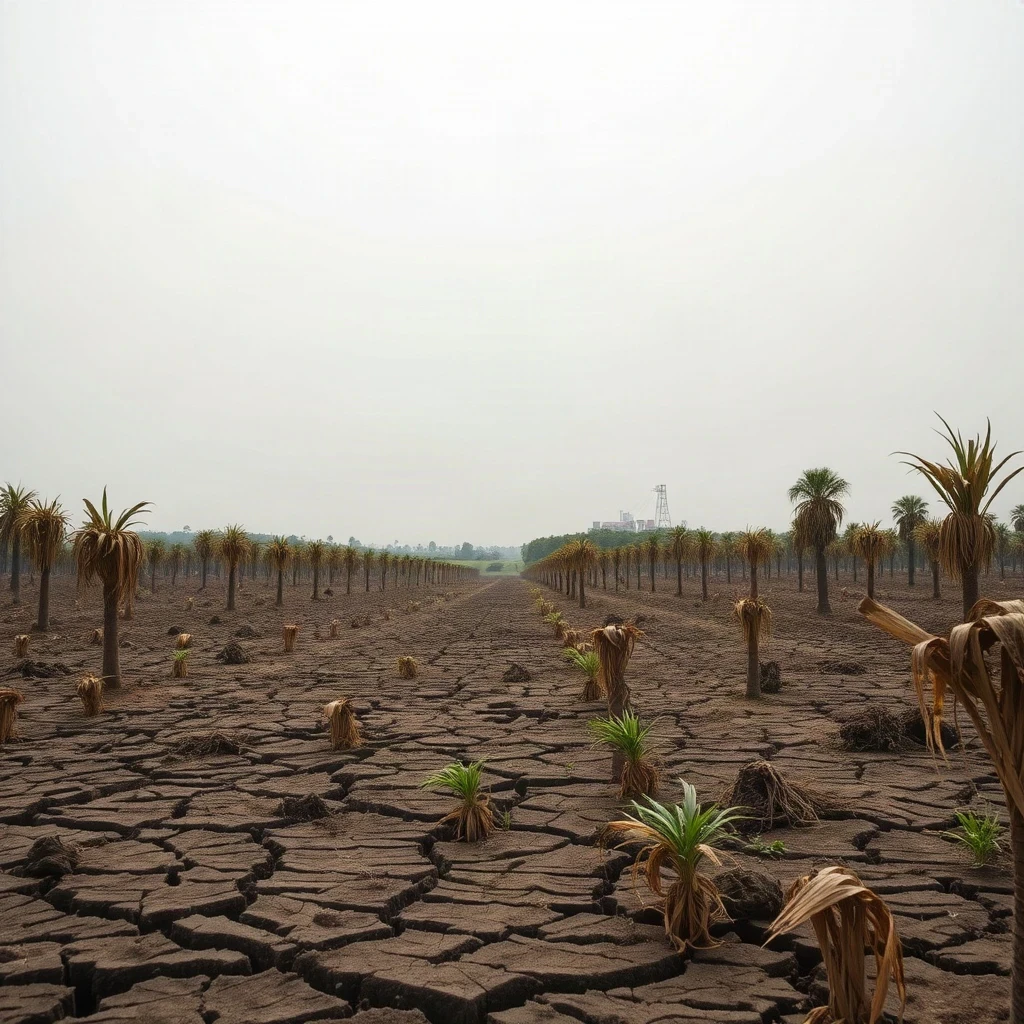
Indonesia's push to expand the B50 biodiesel mandate is colliding with El Nino-driven dry weather, tightening feedstock availability and reshaping export levy dynamics. The policy drive, backed by industry bodies and state plantation efforts to lift yields, signals sustained domestic demand for crude palm oil (CPO) at a time when global benchmarks hover near 20-month highs.
The B50 program, which requires 50% palm oil blending in biodiesel, remains a central pillar of Indonesia's energy policy. Recent campaigns by the Indonesian Biofuel Producers Association (Aprobi) and the Oil Palm Plantation Fund Management Agency (BPDP) aim to educate thousands of Scouts about the mandate, underscoring the government's commitment to socialize the program. State plantation companies are also focusing on higher yields to support feedstock needs, according to state media.
These efforts come as the mandate's implementation is projected to significantly increase domestic CPO consumption. While the exact figures are not specified here, the policy direction is clear: more palm oil will be diverted to fuel, potentially reducing export availability.
El Nino conditions, with an ONI of +1.4, have brought notably dry weather to Kalimantan, a key production region. This raises concerns about palm fruit yields in the coming months, potentially tightening supply. The market is already reacting: Malaysian CPO futures rose 1.2% to about $1144/MT, while Indonesia's reference price stands at about $997/MT.
Despite a strong July production report from MPOB—showing a 9.4% month-on-month increase in CPO output and a 7.2% rise in stocks—the market's focus is on forward supply risks from El Nino. The potential for reduced yields could offset current ample inventories.
The government has raised export levies by 73%, and expects collection to jump about 31% this year, according to reports. This levy is used to fund biodiesel subsidies, but higher rates may discourage exports, especially if global prices soften. The BPDP claims that B50 does not hurt palm oil exports, but analysts note that the levy increase adds to the cost burden for shippers.
With Brent crude steady at $94/bbl, biodiesel blending remains economically viable, but any drop in crude prices could widen the gap between diesel and biodiesel costs, pressuring the levy fund.
Our model outlook suggests modest near-term upside for CPO prices, with a possible technical pullback given overbought conditions. For compliance-minded buyers, the key watchpoints are: the pace of B50 implementation, El Nino's impact on yields, and levy adjustments. Buyers should monitor Indonesian export availability and policy announcements, as these will directly affect supply contracts and pricing.
In summary, the B50 mandate is a structural demand driver, but El Nino and levy hikes introduce supply and cost uncertainties. The market remains sensitive to policy shifts and weather updates.
Sources: investor.id; jurnas.com; Validnews; achmadnurhidayat.id; investor.id; Oils & Fats International
Our market desk connects serious buyers with vetted origin suppliers across Southeast Asia. Indicative pricing, specifications and shipment guidance — free of charge.
Get connected →Analyst revises average Malaysian palm oil price forecast higher for 2026, citing tightening global supply conditions.
Malaysian CPO rises to $1,144/MT after five straight sessions, but RSI 73, upper Bollinger Band and ample July stocks signal a likely 3-5 day technical pullback before any extensio
Malaysian CPO benchmark is RM4,626/MT, Brent crude $94/bbl, and Kalimantan dry; ample July stocks of 1.43m tonnes temper the bullish supply story.
Indonesia’s higher biodiesel blend and weather risks tighten CPO balances, while levy changes and outreach add compliance signals.
Policy watch: B50 mandate, El Nino dry spell and rising export levies shape palm oil supply, demand and compliance.
Malaysian CPO benchmark edges up 1.2% to $1,144/MT; MPOB July stocks rise but El Niño and biodiesel demand underpin bullish view.
Malaysian crude palm oil futures extended their winning streak, with the benchmark contract closing about 1.2% higher at $1,144/MT (RM 4,626). This marks the fifth consecutive weekly gain, according to Bernama, pushing prices to levels not seen since 2024. The global benchmark, as tracked by the World Bank, stands at $1,101/MT, while Indonesia's reference price is set at $997/MT. Brent crude's 0.6% rise to $94/bbl adds further support, improving the economics of palm-based biodiesel blends.
MPOB data for July shows Malaysian CPO production rose 9.4% month-on-month to 1,792,979 tonnes, while exports jumped 14.5% to 1,392,178 tonnes. Closing stocks increased 7.2% to 1,429,316 tonnes, still ample but below market expectations. Notably, imports plunged 51.9% to 49,566 tonnes, reflecting tight regional supply. The FFB reference price edged up 1.2% to RM 49.50.
However, the supply outlook is clouded by a strengthening El Niño (ONI +1.4), with Kalimantan experiencing dry conditions. Indonesian producers are bracing for potential output losses, with some projections pointing to severe impacts in 2027. The Malaysian Palm Oil Council (MPOC) expects prices to stay above RM 4,600/tonne in September, citing tightening supply and geopolitical disruptions.
Indonesia's push for B50 biodiesel remains a key demand driver. The country's export levy collections are projected to reach Rp 41.22 trillion this year, a 73% increase, as the government funds the mandate. BPDP claims B50 is not hurting export volumes, while plantation companies are seeking higher yields to meet feedstock needs. The campaign to educate stakeholders, including scouts, underscores the policy's strategic importance.
Global vegetable oil demand stays robust, with India's imports rising ahead of the festival season and the FAO vegetable oil price index hitting its highest since June 2022. However, competition from record South American soybean oil exports and rising rapeseed prices could temper gains.
Our model outlook indicates a strong uptrend driven by B50, a wide BOPO spread, and El Niño risk premium. However, technicals are overbought (RSI 73, above upper Bollinger), and July stocks are ample. The near-term base case is a mild pullback or consolidation followed by renewed buying, with net modest gains over 7 days. The published path is +1.1% over seven sessions, but uncertainty is elevated due to stale anchor data and lack of cargo surveyor figures.
Watch for consolidation in the near term, but keep an eye on El Niño developments in Kalimantan and Indonesia's biodiesel policy execution. Any supply disruption could reignite the uptrend, while a correction may offer buying opportunities.