CPO consolidates near RM4,600 as stocks build but B50 and energy lend support
August MPOB data show rising inventories and slower exports, while B50 rollout, firm crude and softer ringgit cushion downside.

Malaysian CPO falls 0.8% to $1,128/MT after MPOB reports a 15.2% jump in stocks, yet wide BOPO spread, Indonesia B50 ramp-up, high Brent and a weaker ringgit leave the balance tilt
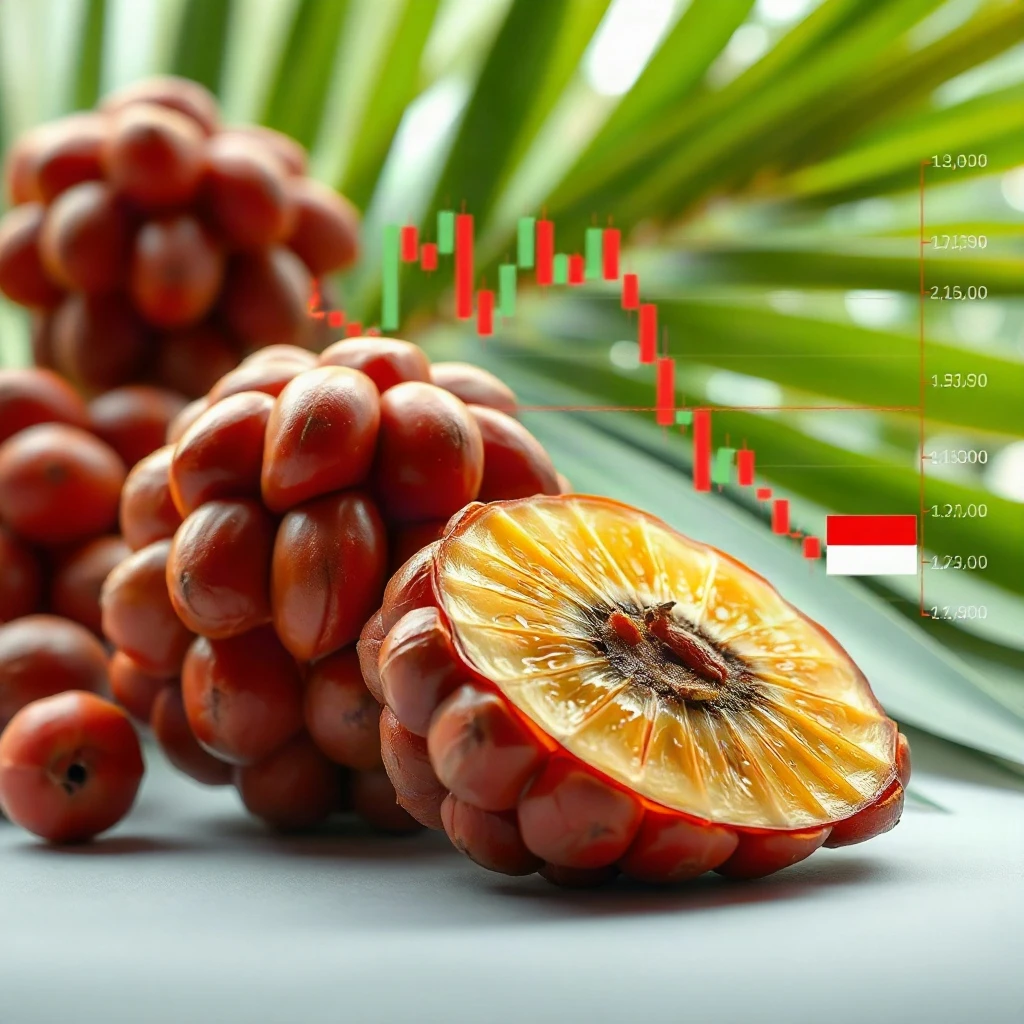
Malaysian CPO benchmark traded at about $1,128 per tonne on 2026-09-14, down 0.8% from the previous session and equivalent to RM4,596 per tonne. The World Bank palm oil benchmark was around $1,117/MT, and Indonesia's Kemendag reference price was $1,008/MT. Brent crude slipped 0.3% on the day, with Brent around $107/bbl, while USD/MYR stood near 4.07 ringgit per dollar.
Indonesia B50 biodiesel ramp-up: Pertamina reports B50 distribution at 95% and is targeting 100% by end-September. This absorbs roughly 3-4 Mt/yr of palm oil into domestic biodiesel, diverting supplies away from export markets and underpinning global CPO.
Brent crude rally: Brent is around $107.7/bbl, up 3.1% over seven sessions. Higher crude raises the energy-linked value of biodiesel, improving discretionary blending economics for palm-based biodiesel and increasing demand for palm feedstock.
Indonesia export policy burden: The reference price of $1,008/t carries a $126/t levy plus a $148/t export duty. That heavy export cost slows Indonesian selling because exporters must clear high fees before cargoes leave; it pushes global buyers toward Malaysian CPO, supporting Malaysian prices.
Weaker ringgit: USD/MYR at 4.07 means the ringgit has eased against the dollar. A weaker ringgit lowers the cost of Malaysian palm in importing countries' currencies, supporting Malaysian export competitiveness and demand.
El Niño lagged supply risk: ENSO is El Niño with ONI +1.8 and notable dry conditions in Kalimantan. Historically, El Niño cuts Southeast Asian yields 6-12 months later. The market is already pricing that lagged supply risk, adding bullish anticipation even while current stocks are ample.
Seasonal peak production: July-to-October is the peak output window. August production rose 1.4% MoM to 1,817,499 tonnes, and September historically sees only a small -0.9% MoM dip. Strong current supply reinforces the bearish seasonal flow.
Technical momentum: Short-term momentum is bearish. The MACD histogram is negative, price is below the 5-day and 20-day moving averages, and RSI is at 50. Although the 5/20 golden cross remains intact, traders may sell rallies until price reclaims those moving averages.
To flip the balance to bearish, the market would need to see repeated large stock builds, a sharp compression in the soy oil premium, a meaningful drop in Brent, a firmer ringgit, or a setback in Indonesia's B50 rollout. Without those changes, the balance of drivers supports prices.
August MPOB data show rising inventories and slower exports, while B50 rollout, firm crude and softer ringgit cushion downside.
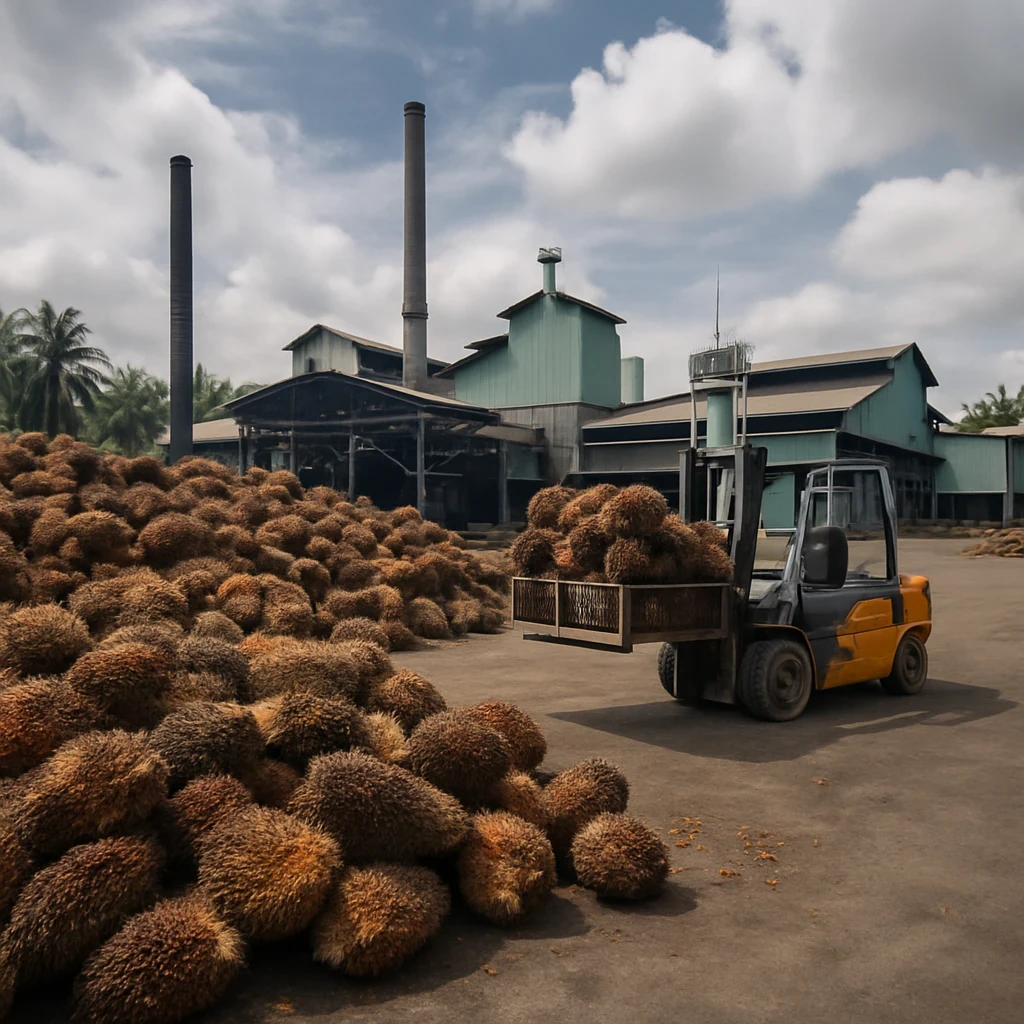
On 14 September, Malaysian CPO benchmark closed around $1,128/MT (RM4,596/MT), down 0.8% from the previous session, with the World Bank benchmark at $1,117/MT and Indonesia’s reference at $1,008/MT. Brent crude edged down 0.3% to about $107/bbl, keeping biodiesel blend economics relatively strong; the ringgit was at about 4.07 per dollar.
Latest MPOB August figures show Malaysian CPO production rose 1.4% month-on-month to 1,817,499 tonnes. Closing stocks jumped 15.2% month-on-month to 1,645,570 tonnes, while exports fell 7.5% to 1,294,664 tonnes and imports were nearly flat. The stocks-to-use ratio reached 14.1%, a bearish supply signal near seasonal peak output.
El Niño conditions persist (ONI +1.8) and Kalimantan rainfall is noted as dry, which could tighten future output if moisture stress extends. Indonesia, projected to produce 47.5 million tonnes of CPO in 2026/2027, may keep more palm oil at home as B50 biodiesel distribution is targeted to reach full coverage by end-September. State energy firm Pertamina has indicated the 100% distribution goal, and Indonesia says the shift will cut diesel imports and save about IDR 170 trillion.
Buyers should watch next export estimates, any confirmation of B50 distribution hitting full coverage, and weather updates from Kalimantan. The market’s downside appears cushioned but not eliminated; inventory builds could pressure nearby contracts if export demand does not recover.
Sources: Majalah Sawit Indonesia; sawitsetara.co; Berita Harian; アラブニュース; elaeis.co; ANTARA News Sultra
Malaysian inventories jump 15.2% MoM while Brent holds near $108 and Indonesia's B50 mandate edges toward full distribution.
Malaysian crude palm oil futures traded around $1,128/MT, down 0.8% on the session and equivalent to RM4,596/MT, with the World Bank global palm benchmark near $1,117/MT and Indonesia's Kemendag reference at about $1,008/MT. The ringgit sat near 4.07 to the dollar, a level that keeps Malaysian export offers relatively competitive even as dollar-denominated values soften. The softer close came alongside weaker export estimates, which weighed on sentiment through the session.
MPOB's August data showed crude palm oil production at 1,817,499 tonnes, up 1.4% month on month, while closing stocks rose 15.2% to 1,645,570 tonnes. Exports slipped 7.5% to 1,294,664 tonnes and imports were essentially flat at 49,524 tonnes. The fresh fruit bunch reference price edged up 0.5% to RM49.76. The stock build, arriving in the seasonal peak production window, is the clearest near-term bearish input, and it broadly matches the tone of Malaysian coverage reporting higher August inventories. Separately, MPOB reported that total Malaysian palm oil stocks, a broader measure that includes processed and crude categories, rose 7.48% to 2.82 million tonnes in August, reinforcing the stocks-build thesis. Coverage of that figure was carried widely across Malaysian business media.
Offsetting that on the supply side, ENSO remains in El Niño territory with an ONI of +1.8, and Kalimantan is notably dry. Persistent dryness in parts of Indonesian Borneo can trim forward yields, though the effect typically lags several months.
Brent near $108/bbl keeps biodiesel blending economics supportive, and the B50 programme is the main structural demand story. Indonesian reporting points to Pertamina's B50 distribution reaching roughly 95%, with a target of full distribution by end-September, and estimates of large diesel-import savings as the mandate scales. Trade coverage also frames B50 as a price support through 2027, with Indonesian analysis projecting CPO prices holding in an RM4,400–RM4,600 per tonne range on the mandate and global supply risks. That outlook is helping offset the bearish stock build. Elsewhere, an importer in Malaysia's regional neighbourhood has reiterated a commitment to buy Malaysian palm oil, and Indonesian industry bodies continue to press for confidentiality around commercial export data under the planned exchange scheme.
Our model outlook flags the RM4,598 anchor close of 2026-09-11 as stale by three days. The August stock build and seasonal peak production argue for a near-term bearish tilt, but a wide BOPO spread, the B50 ramp, high Brent and a softer ringgit cap the downside. We expect choppy consolidation with a slight downward bias, and we note high uncertainty given missing cargo surveyor, Bursa FCPO and Dalian inputs. The published path is -0.8% over seven sessions.
Sources: sawitsetara.co; Majalah Sawit Indonesia; Berita Harian; ANTARA News Sultra; BernamaBiz; The Star
Indonesia’s B50 biodiesel distribution targets full coverage by end-September, lifting domestic palm demand and reinforcing CPO price projections.

Indonesia’s push to raise the palm oil blend in biodiesel to 50 percent is entering a decisive phase. Pertamina has stated its distribution target is 100 percent B50 by the end of September. That milestone, if reached, would consolidate B50 as the national standard and lock in a structurally higher level of palm oil consumption for energy use.
Those savings reflect reduced fossil diesel demand, but they also signal that palm-based biodiesel is absorbing a meaningful share of the domestic fuel market.
For compliance-minded buyers, the policy direction matters on several levels. First, domestic biodiesel consumption competes directly with export supply. As B50 reaches full distribution, industrial users outside Indonesia may face tighter soybean oil and palm oil alternatives, reinforcing price floors even if demand from other regions is muted.
Second, documentation and traceability expectations may evolve. Indonesia’s position as a global reference for B50 development, as reported by sawitsetara.co, could encourage other tropical producers to study the blend. Buyers with sustainability commitments may need to watch whether expanded biodiesel use changes feedstock sourcing patterns, plantation expansion dynamics, or certification requirements.
In the near term, the full B50 rollout could tighten domestic palm oil stocks. If global supply risks materialize, the RM4,400–RM4,600 range may act as a floor rather than a ceiling. Buyers who rely on palm oil for food or oleochemicals may want to assess their exposure to Indonesian export volumes, because energy policy is increasingly setting the marginal price for vegetable oils. Compliance teams should also track official distribution updates and verify supplier claims about feedstock origin as the mandate reaches full coverage.
Pertamina reports 95% distribution as Jakarta targets full B50 rollout by end-September, reshaping palm oil demand balances.

Indonesia's biodiesel programme is moving toward full implementation, with state energy company Pertamina reporting that B50 distribution has reached 95% of its targeted volumes and aiming for complete coverage by the end of September. The mandate, which raises the palm-oil-derived biodiesel blend from B40 to B50, represents a structural shift in domestic consumption of palm oil in the world's largest producer.
The scale of the programme matters for global balances. Indonesian authorities have indicated the B50 rollout is expected to cut diesel imports substantially, with reported savings of around IDR 170 trillion. That figure reflects the substitution of imported fossil diesel with domestically produced fatty acid methyl ester, the bulk of which is derived from palm oil.
For the palm oil market, the key mechanic is straightforward: higher domestic blending obligations absorb CPO volumes that would otherwise be available for export. When a producer country of Indonesia's size lifts its blend rate, the effect is a reduction in exportable surplus, which tightens the pool available to price-sensitive buyers in India, China, the EU and elsewhere.
Industry commentary has framed the B50 mandate as a factor likely to support palm oil prices through 2027, and the policy has drawn attention as a template for other producing nations considering higher biofuel blending. For compliance-minded buyers, the practical considerations are twofold.
The Malaysian crude palm oil benchmark traded at about $1,128 per tonne, while the World Bank global palm oil benchmark stood near $1,117 per tonne and Indonesia's Kemendag reference was about $1,008 per tonne. Brent crude at about $108 per barrel underpins biodiesel blending economics, keeping the spread between palm oil and gasoil attractive for mandate-driven demand.
Malaysian Palm Oil Board data for August showed closing stocks rising 15.2% month-on-month to 1,645,570 tonnes, with production up 1.4% at 1,817,499 tonnes and exports down 7.5% at 1,294,664 tonnes. That stock build and seasonal peak output are near-term bearish factors, though the B50 ramp-up, wide biodiesel spread and a weaker ringgit at about 4.07 per dollar cap the downside.
Our model outlook expects choppy consolidation with a slight downward bias, with high uncertainty given missing cargo surveyor, Bursa FCPO and Dalian data.
Sources: Majalah Sawit Indonesia; ANTARA News Sultra; Quantum Commodity Intelligence; sawitsetara.co; bioenergytimes.com; Quantum Commodity Intelligence
ONI at +1.8 signals yield risk into 2027, but near-term output still runs at seasonal peak with Malaysian stocks up 15.2% MoM.
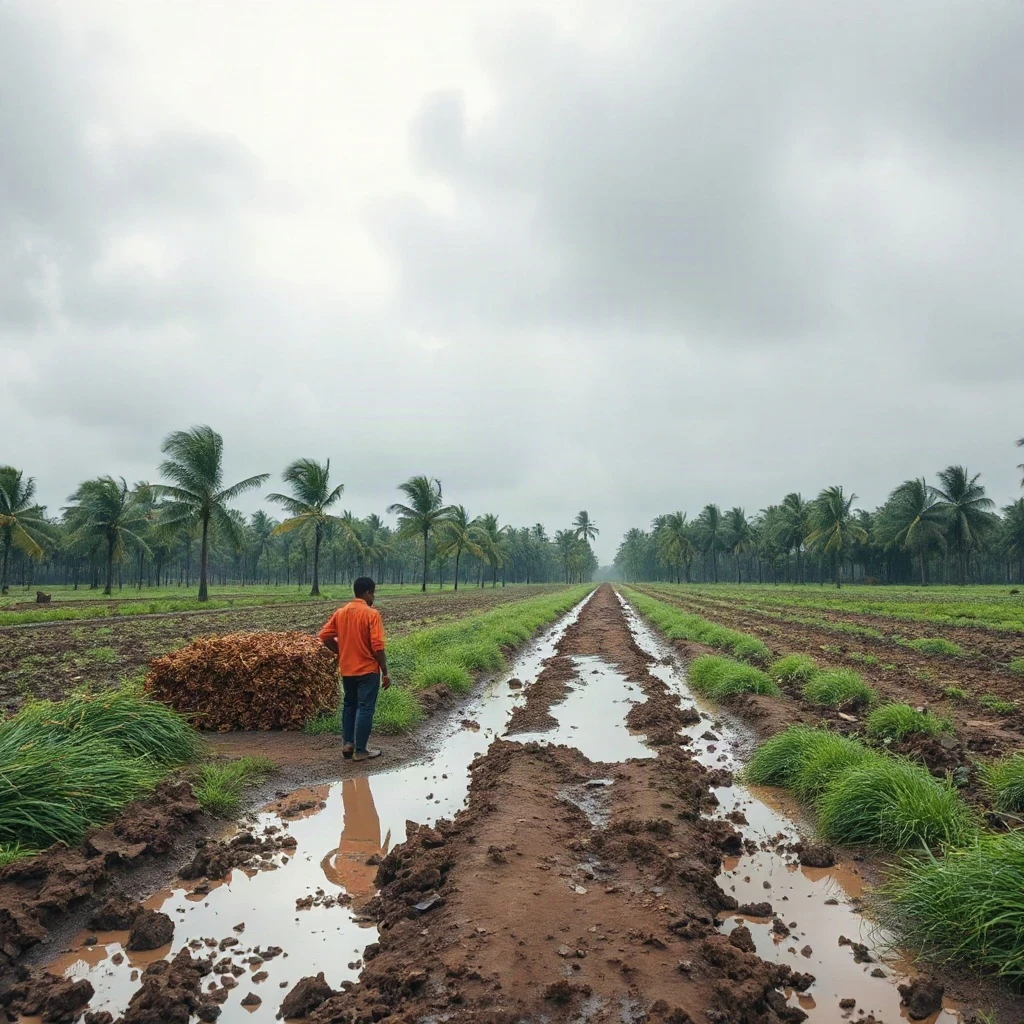
The current ENSO state is El Niño, with the ONI reading at +1.8. That is a firm event, not a marginal one, and it carries a well-established implication for the Southeast Asian palm belt: rainfall deficits tend to build across Indonesia first, and Kalimantan is already flagged as dry.
For the market, the important distinction is timing. El Niño does not remove oil from the market this month. It works through the tree, and the tree works slowly.
Palm responds to moisture stress with a lag. During a dry spell, the palm still carries existing bunches to maturity, so harvested volumes can hold up or even look normal. The damage shows up later, in reduced female flower formation and lighter fruit bunches, typically six to twelve months after the dry window.
That places the current Kalimantan dryness in the 2027 production window rather than the current quarter. It is a forward risk to yields, not a present supply loss.
Near-term output is still governed by seasonal mechanics and by rain that is too heavy rather than too light. Where showers are intense, the immediate disruptions are practical:
This is the paradox of a dry ENSO headline: the belt can still post strong monthly production while specific districts lose days to flooding.
Malaysian crude palm oil production came in at 1,817,499 tonnes in August, up 1.4% month on month, consistent with the seasonal climb toward the peak. Closing stocks rose 15.2% month on month to 1,645,570 tonnes, while exports fell 7.5% to 1,294,664 tonnes. The fresh fruit bunch reference edged up 0.5% to RM 49.76.
That combination, rising output against softer offtake, is the near-term bearish weight on the market. Indonesia's belt faces the same seasonal peak, with the added overlay of dry conditions in Kalimantan.
Over the next week, the rainfall outlook matters more for logistics than for yield. Any heavy falls across estates and mill catchments will slow collection and haulage, while continued dryness in Kalimantan adds to the moisture deficit that will feed into next year's bunch weights.
La Niña, by contrast, typically brings wetter conditions to Southeast Asia. Should the ENSO state shift in that direction, the yield risk would ease, but the near-term disruption risk would rise.
Our model outlook expects choppy consolidation with a slight downward bias, with high uncertainty given missing cargo surveyor, Bursa FCPO and Dalian data.
This space reaches palm oil buyers, traders and industry readers every day. Sponsorship and advertising enquiries are welcome — get in touch:
[email protected]August MPOB data show rising inventories and slower exports, while B50 rollout, firm crude and softer ringgit cushion downside.
Malaysian inventories jump 15.2% MoM while Brent holds near $108 and Indonesia's B50 mandate edges toward full distribution.
Indonesia’s B50 biodiesel distribution targets full coverage by end-September, lifting domestic palm demand and reinforcing CPO price projections.
Pertamina reports 95% distribution as Jakarta targets full B50 rollout by end-September, reshaping palm oil demand balances.
ONI at +1.8 signals yield risk into 2027, but near-term output still runs at seasonal peak with Malaysian stocks up 15.2% MoM.
Malaysian CPO falls 0.8% to $1,128/MT after MPOB reports a 15.2% jump in stocks, yet wide BOPO spread, Indonesia B50 ramp-up, high Brent and a weaker ringgit leave the balance tilt
Malaysian CPO benchmark traded at about $1,128 per tonne on 2026-09-14, down 0.8% from the previous session and equivalent to RM4,596 per tonne. The World Bank palm oil benchmark was around $1,117/MT, and Indonesia's Kemendag reference price was $1,008/MT. Brent crude slipped 0.3% on the day, with Brent around $107/bbl, while USD/MYR stood near 4.07 ringgit per dollar.
Indonesia B50 biodiesel ramp-up: Pertamina reports B50 distribution at 95% and is targeting 100% by end-September. This absorbs roughly 3-4 Mt/yr of palm oil into domestic biodiesel, diverting supplies away from export markets and underpinning global CPO.
Brent crude rally: Brent is around $107.7/bbl, up 3.1% over seven sessions. Higher crude raises the energy-linked value of biodiesel, improving discretionary blending economics for palm-based biodiesel and increasing demand for palm feedstock.
Indonesia export policy burden: The reference price of $1,008/t carries a $126/t levy plus a $148/t export duty. That heavy export cost slows Indonesian selling because exporters must clear high fees before cargoes leave; it pushes global buyers toward Malaysian CPO, supporting Malaysian prices.
Weaker ringgit: USD/MYR at 4.07 means the ringgit has eased against the dollar. A weaker ringgit lowers the cost of Malaysian palm in importing countries' currencies, supporting Malaysian export competitiveness and demand.
El Niño lagged supply risk: ENSO is El Niño with ONI +1.8 and notable dry conditions in Kalimantan. Historically, El Niño cuts Southeast Asian yields 6-12 months later. The market is already pricing that lagged supply risk, adding bullish anticipation even while current stocks are ample.
Seasonal peak production: July-to-October is the peak output window. August production rose 1.4% MoM to 1,817,499 tonnes, and September historically sees only a small -0.9% MoM dip. Strong current supply reinforces the bearish seasonal flow.
Technical momentum: Short-term momentum is bearish. The MACD histogram is negative, price is below the 5-day and 20-day moving averages, and RSI is at 50. Although the 5/20 golden cross remains intact, traders may sell rallies until price reclaims those moving averages.
To flip the balance to bearish, the market would need to see repeated large stock builds, a sharp compression in the soy oil premium, a meaningful drop in Brent, a firmer ringgit, or a setback in Indonesia's B50 rollout. Without those changes, the balance of drivers supports prices.