
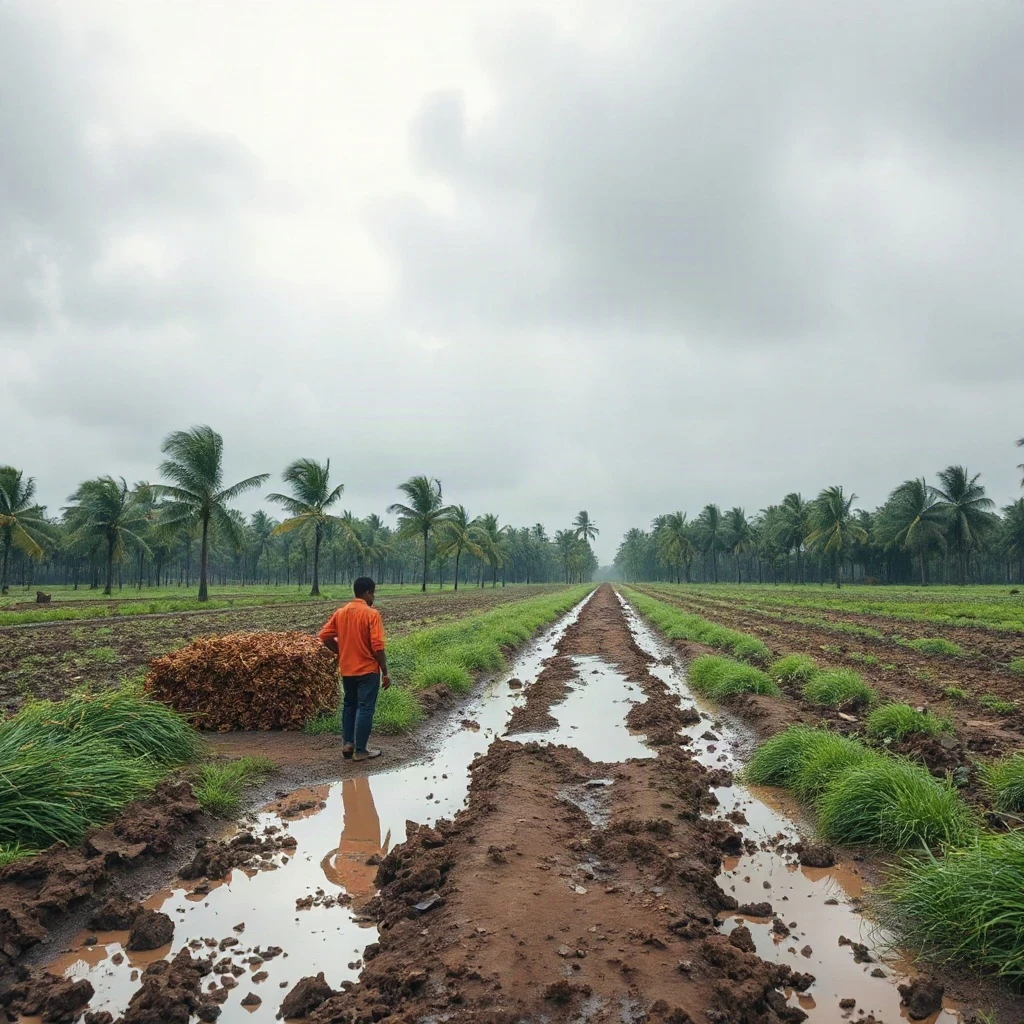
Dry Signal in the East
The current ENSO state is El Niño, with the ONI reading at +1.8. That is a firm event, not a marginal one, and it carries a well-established implication for the Southeast Asian palm belt: rainfall deficits tend to build across Indonesia first, and Kalimantan is already flagged as dry.
For the market, the important distinction is timing. El Niño does not remove oil from the market this month. It works through the tree, and the tree works slowly.
Why the Yield Hit Arrives Late
Palm responds to moisture stress with a lag. During a dry spell, the palm still carries existing bunches to maturity, so harvested volumes can hold up or even look normal. The damage shows up later, in reduced female flower formation and lighter fruit bunches, typically six to twelve months after the dry window.
That places the current Kalimantan dryness in the 2027 production window rather than the current quarter. It is a forward risk to yields, not a present supply loss.
What Matters Right Now
Near-term output is still governed by seasonal mechanics and by rain that is too heavy rather than too light. Where showers are intense, the immediate disruptions are practical:
- Harvesting rounds are delayed when fields are waterlogged.
- Fresh fruit bunches are harder to evacuate from estates.
- Mill intake and transport schedules slip, tightening the daily flow to refineries.
This is the paradox of a dry ENSO headline: the belt can still post strong monthly production while specific districts lose days to flooding.
Malaysia and Indonesia
Malaysian crude palm oil production came in at 1,817,499 tonnes in August, up 1.4% month on month, consistent with the seasonal climb toward the peak. Closing stocks rose 15.2% month on month to 1,645,570 tonnes, while exports fell 7.5% to 1,294,664 tonnes. The fresh fruit bunch reference edged up 0.5% to RM 49.76.
That combination, rising output against softer offtake, is the near-term bearish weight on the market. Indonesia's belt faces the same seasonal peak, with the added overlay of dry conditions in Kalimantan.
The Seven-Day View
Over the next week, the rainfall outlook matters more for logistics than for yield. Any heavy falls across estates and mill catchments will slow collection and haulage, while continued dryness in Kalimantan adds to the moisture deficit that will feed into next year's bunch weights.
La Niña, by contrast, typically brings wetter conditions to Southeast Asia. Should the ENSO state shift in that direction, the yield risk would ease, but the near-term disruption risk would rise.
Our model outlook expects choppy consolidation with a slight downward bias, with high uncertainty given missing cargo surveyor, Bursa FCPO and Dalian data.