Malaysian CPO Slips as August Stock Build Meets B50 Support
CPO near RM4,617/MT after MPOB shows higher stocks and weaker exports; Indonesia’s B50 ramp and firm Brent limit downside.

Malaysian CPO benchmarks fall to about $1,137/MT after a bearish August stock report, yet a wide soy premium, Indonesia's B50 ramp-up and firm Brent keep the balance tilted upward.
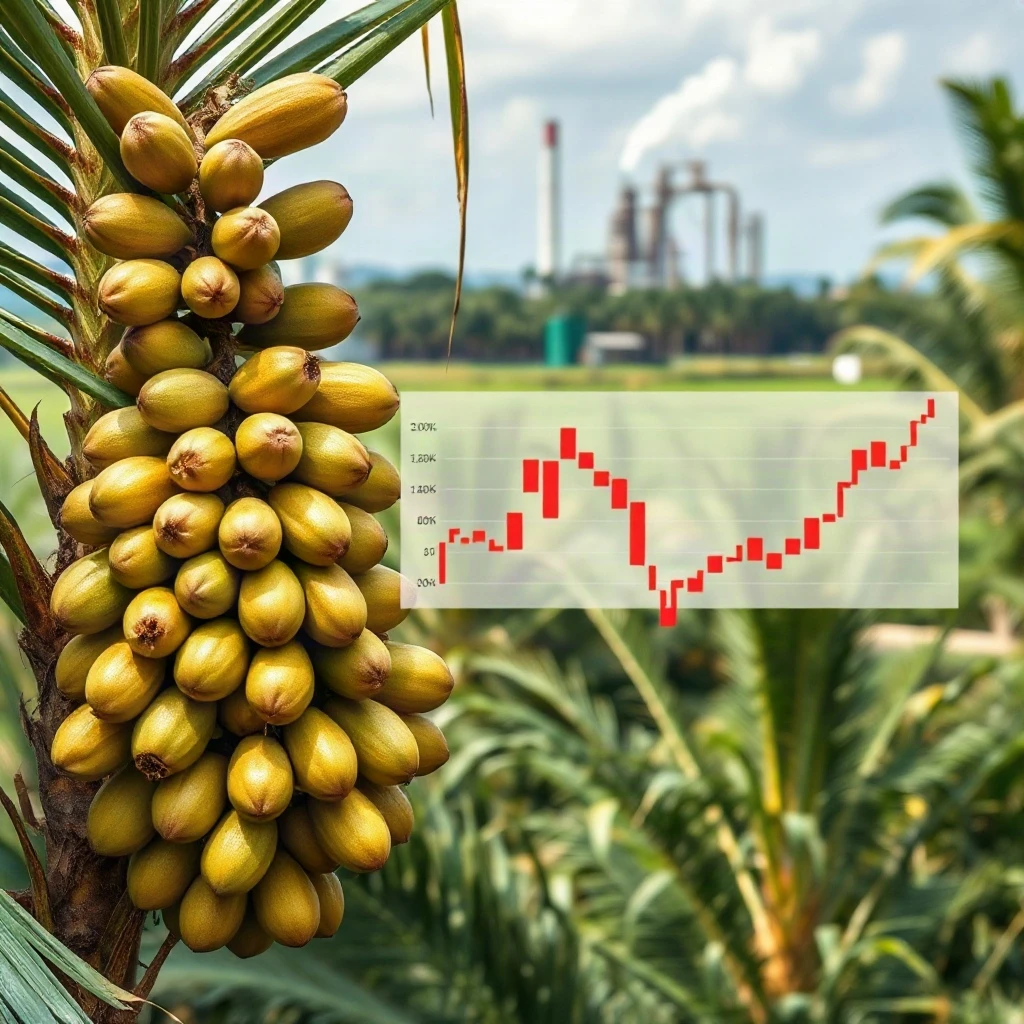
Malaysian CPO benchmark is trading near $1,137 per tonne, down 0.7% against the previous session and quoted around RM4,617 per tonne. The World Bank global palm benchmark is about $1,117 per tonne, while Indonesia's Kemendag reference is about $1,008 per tonne. Brent crude is about $105 per barrel, little changed, and the ringgit is about 4.07 to the dollar.
The widest visible support is the soybean oil premium over palm. At a spread of about $400 per tonne, palm is heavily discounted relative to soybean oil. Price-sensitive buyers and food manufacturers have a direct incentive to substitute palm for soy oil, switching demand away from the more expensive oil and supporting palm's underlying consumption.
Indonesia's B50 biodiesel mandate is another structural bid. The B50 programme becomes fully effective in October 2026, with Pertamina targeting 100% distribution coverage by the end of September. The ramp-up is expected to absorb 3-4 million tonnes of palm annually into domestic biodiesel, removing that oil from export markets and tightening the global supply available to buyers.
Brent crude strength reinforces the biodiesel story. Brent is about $105 a barrel, up 8.7% over seven days. The negative POGO spread of about -$375 per tonne means palm is cheap relative to diesel, which improves the economics of blending palm-based biodiesel and adds demand-side support.
A weak ringgit is helping export competitiveness. USD/MYR is about 4.07, near the 94th percentile on our model's scale. A weaker ringgit lowers the USD price of Malaysian CPO for foreign buyers, which can support export volume and tends to underpin local-currency CPO prices.
Finally, the El Niño state remains a lagged supply risk. The ONI is +1.8°C, and Kalimantan rainfall over the next seven days is only 1 millimetre, indicating early dry stress. Past El Niño episodes tend to reduce palm yields with a six-to-twelve-month lag, so the market is pricing in a possible production shortfall later in the crop cycle.
The immediate bearish anchor is the MPOB August stock build. Malaysian total palm oil stocks rose 7.48% to 2.82 million tonnes, while CPO stocks rose 15.2% month-on-month to 1.65 million tonnes. The stocks-to-use ratio is 14.1%. This is ample supply: producers hold more inventory, buyers face less urgency, and near-term physical balances are comfortable.
Profit-taking and technical signals are also weighing on prices. The MACD has a bearish crossover while RSI is 53, neutral, and the price is near a 52-week high. A Bernama headline expects profit-taking to push prices toward RM4,400-4,500 next week, which would be a pullback from current levels.
Seasonal September softness adds to the near-term headwind. Historically September has averaged a -0.9% month-on-month change, and this is a peak production season. Higher output combined with the recent stock build makes it easier for buyers to press for lower prices in the short term.
Speculative positioning creates liquidation risk. CFTC data show soybean oil managed-money net longs at 101,768 contracts, the 81st percentile, but the weekly change was -8,144. Crowded long positions are vulnerable to long-liquidation; a further unwind in the broader vegetable oil complex could spill over into palm selling.
Our model's factor balance is five bullish versus four bearish, so the upside currently has the upper hand. The bearish drivers are concentrated in the immediate session and next week: the August stock overhang, technical profit-taking, and seasonal supply pressure. Those are real but mostly transient.
The bullish drivers are more structural: the wide soybean-oil premium, Indonesia's B50 ramp-up, strong Brent, weak MYR, and the delayed El Niño yield risk. Those have longer policy and demand cycles and are not easily reversed by a single weekly data point. Our published model outlook notes that profit-taking is expected to push prices toward RM4,400-4,500 next week, consistent with a -2.6% path over seven sessions, but it does not argue that the broader support has broken.
For the balance to flip to bearish, one or more of these would need to change: Indonesia's B50 implementation would need to be delayed or scaled back, Brent would need to fall sharply, the ringgit would need to strengthen, the soybean premium would need to collapse, or speculative long-liquidation would need to broaden and be confirmed by weak export data. Missing cargo-surveyor export figures, Bursa FCPO quotes, Dalian prices, and palm-specific positioning currently widen uncertainty; those data could be decisive in confirming which side takes control.
CPO near RM4,617/MT after MPOB shows higher stocks and weaker exports; Indonesia’s B50 ramp and firm Brent limit downside.
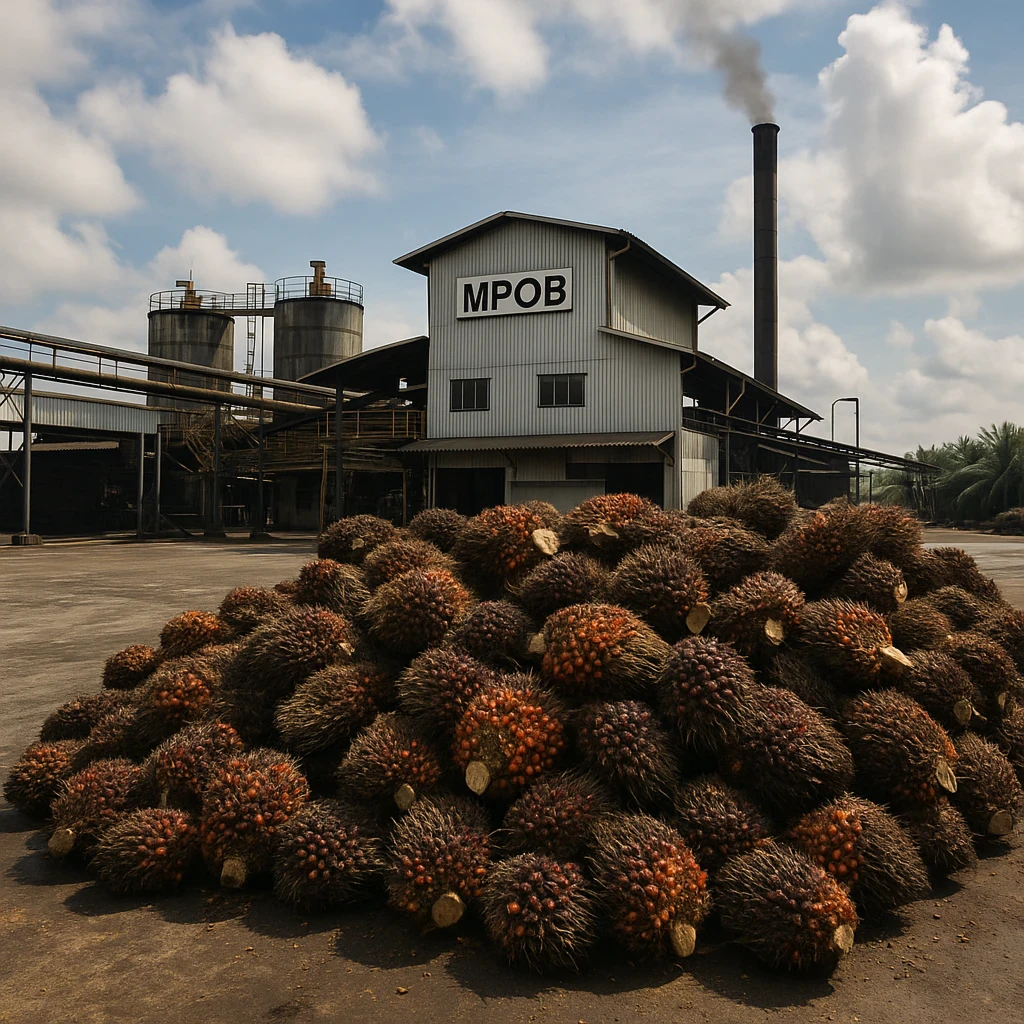
Malaysian crude palm oil traded near RM4,617 per tonne, equivalent to about $1,137 per tonne, down 0.7% from the previous session. The World Bank palm oil benchmark was around $1,117 per tonne, while Indonesia’s Kemendag reference price was near $1,008 per tonne. Brent crude held at $105 per barrel and the ringgit traded at about 4.07 to the US dollar. The price softness follows the release of August supply data and reports that CPO futures fell on 11 September, with weaker rival oils adding pressure.
MPOB reported August CPO production of 1,817,499 tonnes, up 1.4% month on month. CPO closing stocks jumped 15.2% to 1,645,570 tonnes, while total palm oil stocks reached 2.82 million tonnes. Palm oil exports fell 7.5% to 1,294,664 tonnes and imports were little changed at 49,524 tonnes. The stocks-to-use ratio stood at 14.1%. El Niño conditions (ONI +1.8) and notably dry weather in Kalimantan are a watch item for later supply, but near-term pressure comes from the seasonal increase in output and the bearish stock build.
On demand, Indonesia’s B50 biodiesel rollout remains a key offset. Pertamina targets 100% distribution of B50 by the end of September, and Indonesia has said the programme will cut diesel imports and save IDR 170 trillion. A wide BOPO premium, firm Brent crude and a weak ringgit also cushion prices. Reports that Malaysia and Russia have agreed to increase palm oil exports, along with an import commitment from AWL, add outlet potential. Heightened threats to Saudi oil exports after pipeline attacks and Hormuz Strait shipping risks could keep energy markets supported.
Our model outlook suggests the anchor is stale by three days. The bearish MPOB stock build and seasonal September softness dominate near-term direction, but the B50 ramp-up, high Brent and weak ringgit limit downside. Missing cargo surveyor export data and palm-specific positioning data widen uncertainty. The published path points to a 2.6% decline over seven sessions, with profit-taking expected to push prices toward RM4,400–4,500 next week.
For buyers, the immediate triggers are cargo surveyor export figures, September production indications, B50 implementation progress and crude oil geopolitics. A move toward RM4,400–4,500 may find support from biodiesel economics, but further stock builds or weak exports could extend the decline.
Sources: Agricom.id; Utusan Malaysia; The New York Times; sultra.antaranews.com; BernamaBiz; TradingView
MPOB confirms August inventories up 7.48% to 2.82 million tonnes, a 2026 peak, keeping futures near two-week lows.

Malaysian crude palm oil futures remain on the back foot, with the benchmark contract around $1,137/MT (RM4,617/MT), down about 0.7% on the session. Prices have been pinned near two-week lows as the market digests a heavy August supply picture and softer rival vegetable oil values.
MPOB's August report, now confirmed across the trade press, put total Malaysian palm oil stocks at 2.82 million tonnes, up 7.48% month-on-month — the highest level of the year. Closing crude palm oil stocks were reported at 1,645,570 tonnes, up 15.2%, while CPO production edged up 1.4% to 1,817,499 tonnes and palm oil exports fell 7.5% to 1,294,664 tonnes. Imports were broadly flat at 49,524 tonnes.
The combination of rising output and slower offtake is the classic seasonal squeeze that weighs on nearby prices. Fresh fruit bunch values held up, with the FFB reference at RM49.76, up 0.5% on the month, suggesting estate-level economics remain workable even as refined product values soften.
Offsetting the stock overhang is Indonesia's biodiesel programme. The B50 mandate is being targeted for full implementation around October, with Pertamina aiming for 100% distribution by end-September. Industry estimates cited in the news flow put the eventual B60 mandate's CPO requirement as high as 23 million tonnes, a structural demand pillar that underpins the medium-term outlook. Indonesia's reference price sits at about $1,008/MT, well below Malaysia's benchmark, keeping the export tax and levy structure in focus.
Brent crude around $105/bbl remains supportive for blend economics, and a weaker ringgit near 4.07 versus the dollar makes Malaysian cargoes more competitive in dollar terms. The rupiah, near 17,595, similarly aids Indonesian export competitiveness.
ENSO remains in El Niño territory with an ONI of +1.8, and notably dry conditions are reported in Kalimantan. That dryness is worth monitoring for Q4 production risk, though it has not yet shown up in Malaysian output. On trade, Malaysia and Russia agreed to step up palm oil exports, and an importer signalled fresh commitment to Malaysian supply while exploring branded consumer goods exports. Indonesian CPO export volumes were also reported higher.
Our model outlook flags the anchor as stale by three days, with headlines pointing to profit-taking that could push prices toward RM4,400–4,500 next week. Missing cargo surveyor export data and palm-specific positioning widen uncertainty, and the published path shows a -2.6% move over seven sessions.
Near-term direction hinges on whether September export demand can absorb the August stock build, and on confirmation of B50 distribution progress in Indonesia. Crude oil, the ringgit and any further Kalimantan dryness headlines are the other variables likely to shape pricing into October.
Sources: Agricom.id; Majalah Sawit Indonesia; Utusan Malaysia; ANTARA News Sultra; BernamaBiz; TradingView
Domestic blending shift toward 50% palm biodiesel could absorb more CPO, drawing compliance scrutiny from Japan and Europe.
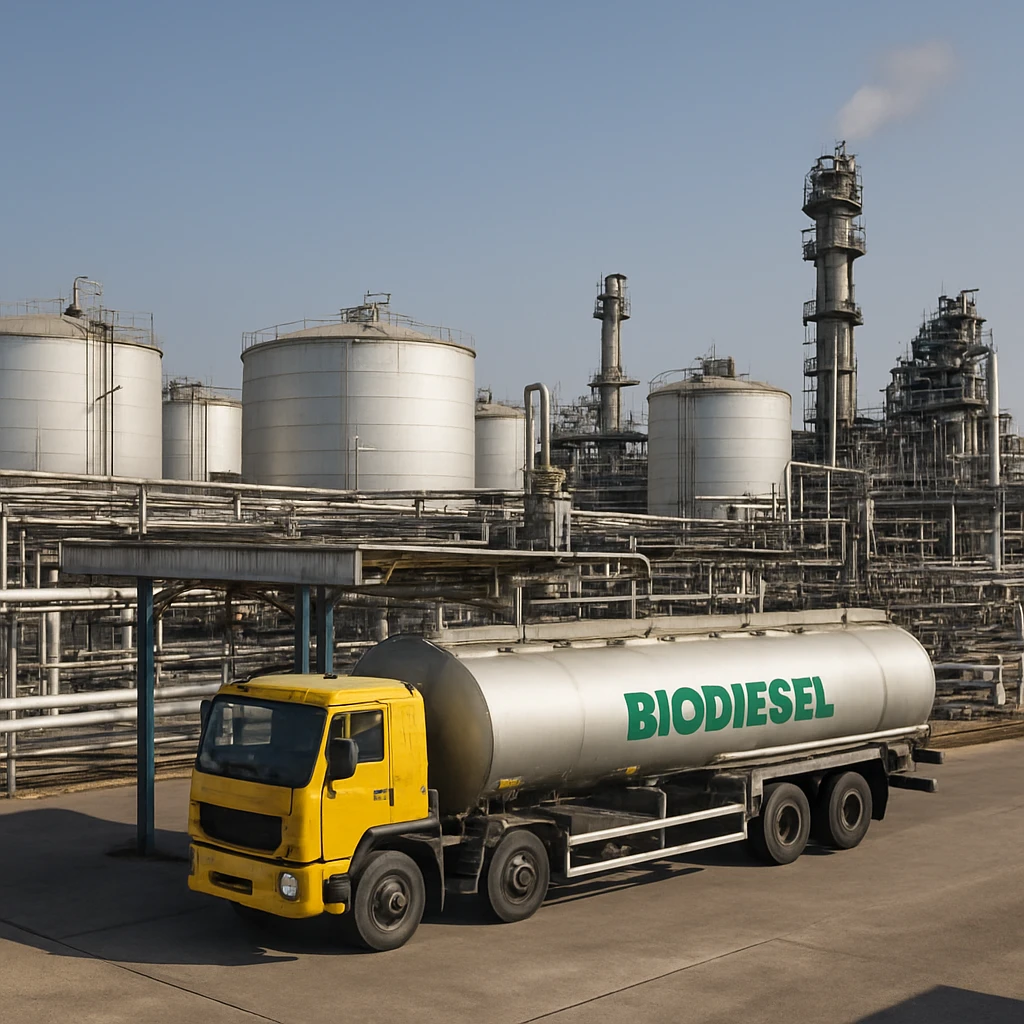
Indonesia’s biodiesel mandate is moving into a new operational phase. State energy firm Pertamina has set a target for B50 distribution to reach 100 percent by the end of September, according to local reports. This signals that a 50 percent palm-based biodiesel blend is becoming the usual standard rather than a pilot project. The timing matters for palm oil balances because fuel blending competes directly with food and oleochemical demand for the same feedstock.
The domestic energy sector is set to absorb a larger share of crude palm oil. As B50 distribution expands, the volume of palm oil diverted into biodiesel rises. That can reduce the exportable surplus of Indonesian palm oil and tighten feedstock availability for refiners and oleochemical producers outside the fuel sector. Reported fiscal savings of around IDR 170 trillion from lower diesel imports give policymakers a strong incentive to keep the mandate on track, and possibly push for deeper blending later.
Indonesia is also presenting itself as a world reference for B50 development, and the program is being described as a global first. Interest from Japanese and European stakeholders is being highlighted, which suggests that the implementation lessons, feedstock logistics, and engine compatibility are being studied beyond Southeast Asia. That external attention raises the bar for documentation and sustainability assurance.
For palm oil buyers outside Indonesia, the key question is how much feedstock remains available for food and industrial uses. If domestic biodiesel consumption continues to climb, Indonesian export volumes will face more competition from the energy sector. This can support prices but also introduces policy-driven volatility. Buyers need to monitor monthly blending realization, not just announced targets.
Compliance-minded buyers, particularly in Europe and Japan, face additional layers. B50 increases the visibility of palm-derived fuel, so questions about deforestation-free sourcing, traceability, and greenhouse gas savings become more prominent. Even if the fuel itself is consumed domestically, the policy affects global palm oil flows and may intensify scrutiny along the supply chain. Buyers should expect more requests for verified sustainable sourcing and clearer carbon footprints as the B50 experience informs international biofuel discussions.
The overall direction points to tighter palm oil supply in export markets and a stronger energy-policy pull on Indonesian feedstock. Neutral observers should treat the end-September target as a near-term check on implementation, while the broader policy signal is that palm oil’s role in domestic fuel remains a structural fixture, not a temporary measure.
Sources: sultra.antaranews.com; sawitsetara.co; Majalah Sawit Indonesia; Quantum Commodity Intelligence
Smallholder partnerships underpin Indonesia's biodiesel rollout, reinforcing the tightening demand outlook for palm oil.

Indonesia's biodiesel programme is moving from policy ambition toward physical delivery, and the latest milestone puts the rollout near completion.
Pertamina's B50 distribution has reached 95% completion, confirming the mandate is being executed at scale rather than remaining an announced target. The full B50 rollout is targeted for October 2026, with Pertamina aiming for complete distribution by the end of September.
Officials have framed the higher blend as a structural demand driver, with one report citing CPO requirements of up to 23 million tonnes under a B60 scenario and another projecting support for palm oil prices through 2027. The government has also positioned the programme as a reference point for other producers considering higher blends, and has linked it to reduced diesel imports and stated savings of IDR 170 trillion.
The rollout is being supported by smallholder partnership arrangements, with PTPN IV PalmCo drawing recognition across two provinces for its role in anchoring the supply base. These partnerships matter because they tie independent growers into the formal feedstock chain, helping bridge the gap between refinery demand and farm-level supply as the blend rate rises.
Higher blending mandates convert palm oil from a food-and-export commodity into a strategic domestic energy input. Each incremental blend step lifts domestic Indonesian consumption, which in practice competes with export availability.
The near-term market backdrop, however, is not one of scarcity. MPOB August data showed Malaysian CPO production at 1,817,499 tonnes, up 1.4% month on month, while closing stocks rose 15.2% to 1,645,570 tonnes and palm oil exports fell 7.5%. The Malaysian benchmark sat near $1,137/MT, with the World Bank global reference around $1,117/MT and Indonesia's Kemendag reference near $1,008/MT.
Our model outlook frames the near term as bearish on that stock build and seasonal September softness, with futures easing and profit-taking potentially pushing prices toward RM4,400-4,500 next week. Against that, the wide BOPO premium, the B50 ramp-up, Brent near $105/bbl and a weak ringgit at about 4.07 limit downside.
For buyers with sustainability commitments, a larger share of Indonesian palm oil flowing into domestic biodiesel changes the compliance map. Traceability expectations, certification coverage and the mix of export-grade versus energy-grade volumes all become live questions as the mandate scales.
Missing cargo surveyor export and palm-specific positioning data widen uncertainty around how quickly the demand shift shows up in trade flows.
Sources: Majalah Sawit Indonesia; ANTARA News Sultra; Quantum Commodity Intelligence; sawitsetara.co; BioEnergy Times
A side-by-side look at yield, cost, functionality and sourcing risk in the two oils importers most often swap.

Palm oil and sunflower oil sit at opposite ends of the vegetable oil spectrum. One is a tropical tree crop traded in enormous physical volumes; the other is a temperate seed oil with a smaller, more segmented market. Importers rarely treat them as pure substitutes, but switching does happen when price spreads, supply shocks or formulation needs force a rethink.
Palm is the highest-yielding major oilseed crop by a wide margin, producing far more oil per hectare than sunflower. That structural advantage keeps palm volumes large and continuous, with origins concentrated in Southeast Asia. Sunflower is grown more widely across the Black Sea region, the EU and Argentina, and its supply is more exposed to weather and logistics disruption in those areas. For buyers, palm offers depth and predictability; sunflower offers diversity of origin but thinner liquidity.
Palm is usually the cheaper of the two on a per-tonne basis, which is why it anchors many food and industrial formulations. Sunflower oil typically trades at a premium, though the gap narrows or inverts during Black Sea supply stress. Importers watch the spread closely: when sunflower becomes expensive or hard to secure, demand rotates toward palm and other soft oils.
Palm is semi-solid at room temperature and naturally high in saturated fat, giving it stability and a long shelf life without heavy hydrogenation. It is fractionated into olein and stearin for different applications. Sunflower oil is liquid, light in colour and flavour, and rich in polyunsaturates, but it oxidises faster and is less stable for frying at high temperatures unless high-oleic grades are used.
Palm dominates frying, bakery, confectionery and oleochemicals, and appears in a vast range of packaged goods. Sunflower is favoured in bottled cooking oil, dressings and premium retail segments, and commands stronger consumer acceptance in some markets. Sustainability pressure weighs more heavily on palm because of deforestation concerns, while sunflower faces its own questions around land use and transport.
Neither oil is universally better. The right choice depends on the buyer's application, risk tolerance and market.
Our market desk connects serious buyers with vetted origin suppliers across Southeast Asia. Indicative pricing, specifications and shipment guidance — free of charge.
Get connected →CPO near RM4,617/MT after MPOB shows higher stocks and weaker exports; Indonesia’s B50 ramp and firm Brent limit downside.
MPOB confirms August inventories up 7.48% to 2.82 million tonnes, a 2026 peak, keeping futures near two-week lows.
Domestic blending shift toward 50% palm biodiesel could absorb more CPO, drawing compliance scrutiny from Japan and Europe.
Smallholder partnerships underpin Indonesia's biodiesel rollout, reinforcing the tightening demand outlook for palm oil.
A side-by-side look at yield, cost, functionality and sourcing risk in the two oils importers most often swap.
Malaysian CPO benchmarks fall to about $1,137/MT after a bearish August stock report, yet a wide soy premium, Indonesia's B50 ramp-up and firm Brent keep the balance tilted upward.
Malaysian CPO benchmark is trading near $1,137 per tonne, down 0.7% against the previous session and quoted around RM4,617 per tonne. The World Bank global palm benchmark is about $1,117 per tonne, while Indonesia's Kemendag reference is about $1,008 per tonne. Brent crude is about $105 per barrel, little changed, and the ringgit is about 4.07 to the dollar.
The widest visible support is the soybean oil premium over palm. At a spread of about $400 per tonne, palm is heavily discounted relative to soybean oil. Price-sensitive buyers and food manufacturers have a direct incentive to substitute palm for soy oil, switching demand away from the more expensive oil and supporting palm's underlying consumption.
Indonesia's B50 biodiesel mandate is another structural bid. The B50 programme becomes fully effective in October 2026, with Pertamina targeting 100% distribution coverage by the end of September. The ramp-up is expected to absorb 3-4 million tonnes of palm annually into domestic biodiesel, removing that oil from export markets and tightening the global supply available to buyers.
Brent crude strength reinforces the biodiesel story. Brent is about $105 a barrel, up 8.7% over seven days. The negative POGO spread of about -$375 per tonne means palm is cheap relative to diesel, which improves the economics of blending palm-based biodiesel and adds demand-side support.
A weak ringgit is helping export competitiveness. USD/MYR is about 4.07, near the 94th percentile on our model's scale. A weaker ringgit lowers the USD price of Malaysian CPO for foreign buyers, which can support export volume and tends to underpin local-currency CPO prices.
Finally, the El Niño state remains a lagged supply risk. The ONI is +1.8°C, and Kalimantan rainfall over the next seven days is only 1 millimetre, indicating early dry stress. Past El Niño episodes tend to reduce palm yields with a six-to-twelve-month lag, so the market is pricing in a possible production shortfall later in the crop cycle.
The immediate bearish anchor is the MPOB August stock build. Malaysian total palm oil stocks rose 7.48% to 2.82 million tonnes, while CPO stocks rose 15.2% month-on-month to 1.65 million tonnes. The stocks-to-use ratio is 14.1%. This is ample supply: producers hold more inventory, buyers face less urgency, and near-term physical balances are comfortable.
Profit-taking and technical signals are also weighing on prices. The MACD has a bearish crossover while RSI is 53, neutral, and the price is near a 52-week high. A Bernama headline expects profit-taking to push prices toward RM4,400-4,500 next week, which would be a pullback from current levels.
Seasonal September softness adds to the near-term headwind. Historically September has averaged a -0.9% month-on-month change, and this is a peak production season. Higher output combined with the recent stock build makes it easier for buyers to press for lower prices in the short term.
Speculative positioning creates liquidation risk. CFTC data show soybean oil managed-money net longs at 101,768 contracts, the 81st percentile, but the weekly change was -8,144. Crowded long positions are vulnerable to long-liquidation; a further unwind in the broader vegetable oil complex could spill over into palm selling.
Our model's factor balance is five bullish versus four bearish, so the upside currently has the upper hand. The bearish drivers are concentrated in the immediate session and next week: the August stock overhang, technical profit-taking, and seasonal supply pressure. Those are real but mostly transient.
The bullish drivers are more structural: the wide soybean-oil premium, Indonesia's B50 ramp-up, strong Brent, weak MYR, and the delayed El Niño yield risk. Those have longer policy and demand cycles and are not easily reversed by a single weekly data point. Our published model outlook notes that profit-taking is expected to push prices toward RM4,400-4,500 next week, consistent with a -2.6% path over seven sessions, but it does not argue that the broader support has broken.
For the balance to flip to bearish, one or more of these would need to change: Indonesia's B50 implementation would need to be delayed or scaled back, Brent would need to fall sharply, the ringgit would need to strengthen, the soybean premium would need to collapse, or speculative long-liquidation would need to broaden and be confirmed by weak export data. Missing cargo-surveyor export figures, Bursa FCPO quotes, Dalian prices, and palm-specific positioning currently widen uncertainty; those data could be decisive in confirming which side takes control.