
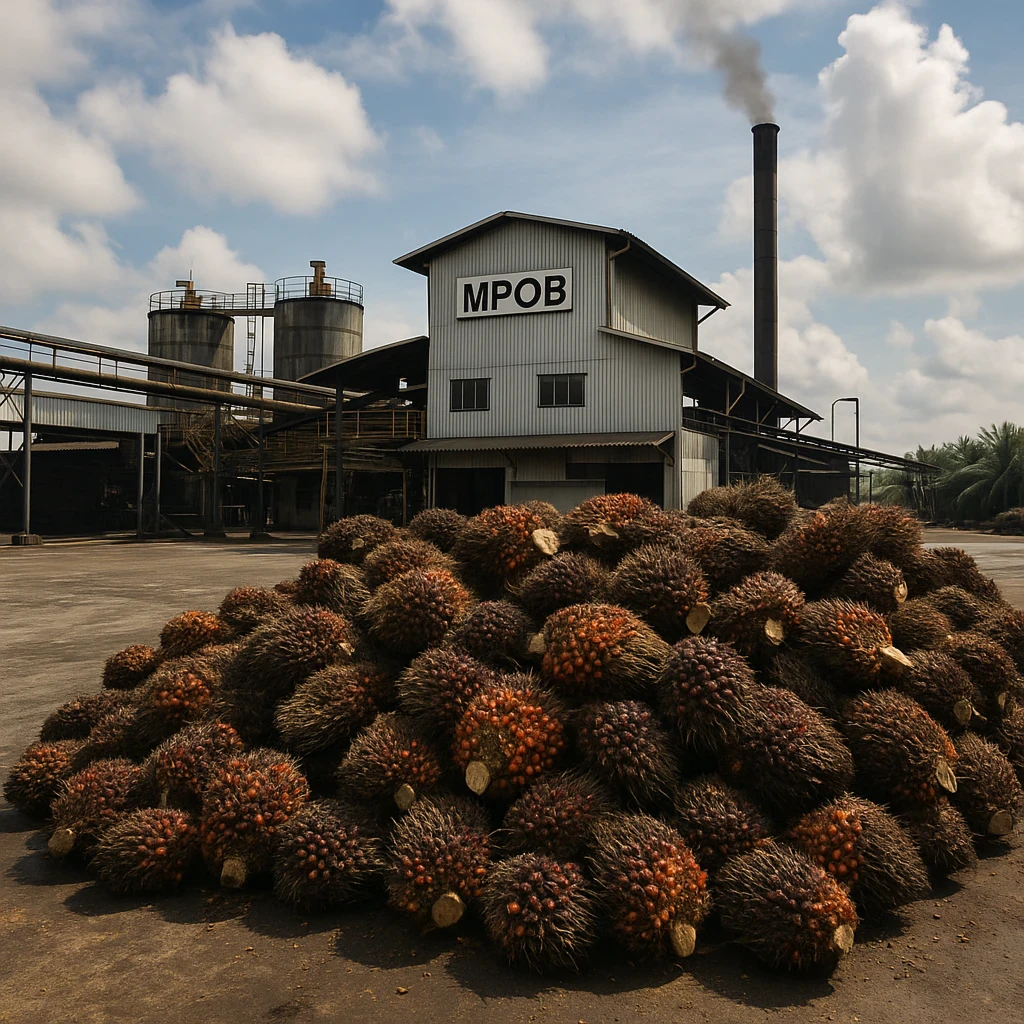
Malaysian crude palm oil traded near RM4,617 per tonne, equivalent to about $1,137 per tonne, down 0.7% from the previous session. The World Bank palm oil benchmark was around $1,117 per tonne, while Indonesia’s Kemendag reference price was near $1,008 per tonne. Brent crude held at $105 per barrel and the ringgit traded at about 4.07 to the US dollar. The price softness follows the release of August supply data and reports that CPO futures fell on 11 September, with weaker rival oils adding pressure.
MPOB reported August CPO production of 1,817,499 tonnes, up 1.4% month on month. CPO closing stocks jumped 15.2% to 1,645,570 tonnes, while total palm oil stocks reached 2.82 million tonnes. Palm oil exports fell 7.5% to 1,294,664 tonnes and imports were little changed at 49,524 tonnes. The stocks-to-use ratio stood at 14.1%. El Niño conditions (ONI +1.8) and notably dry weather in Kalimantan are a watch item for later supply, but near-term pressure comes from the seasonal increase in output and the bearish stock build.
On demand, Indonesia’s B50 biodiesel rollout remains a key offset. Pertamina targets 100% distribution of B50 by the end of September, and Indonesia has said the programme will cut diesel imports and save IDR 170 trillion. A wide BOPO premium, firm Brent crude and a weak ringgit also cushion prices. Reports that Malaysia and Russia have agreed to increase palm oil exports, along with an import commitment from AWL, add outlet potential. Heightened threats to Saudi oil exports after pipeline attacks and Hormuz Strait shipping risks could keep energy markets supported.
Our model outlook suggests the anchor is stale by three days. The bearish MPOB stock build and seasonal September softness dominate near-term direction, but the B50 ramp-up, high Brent and weak ringgit limit downside. Missing cargo surveyor export data and palm-specific positioning data widen uncertainty. The published path points to a 2.6% decline over seven sessions, with profit-taking expected to push prices toward RM4,400–4,500 next week.
For buyers, the immediate triggers are cargo surveyor export figures, September production indications, B50 implementation progress and crude oil geopolitics. A move toward RM4,400–4,500 may find support from biodiesel economics, but further stock builds or weak exports could extend the decline.