
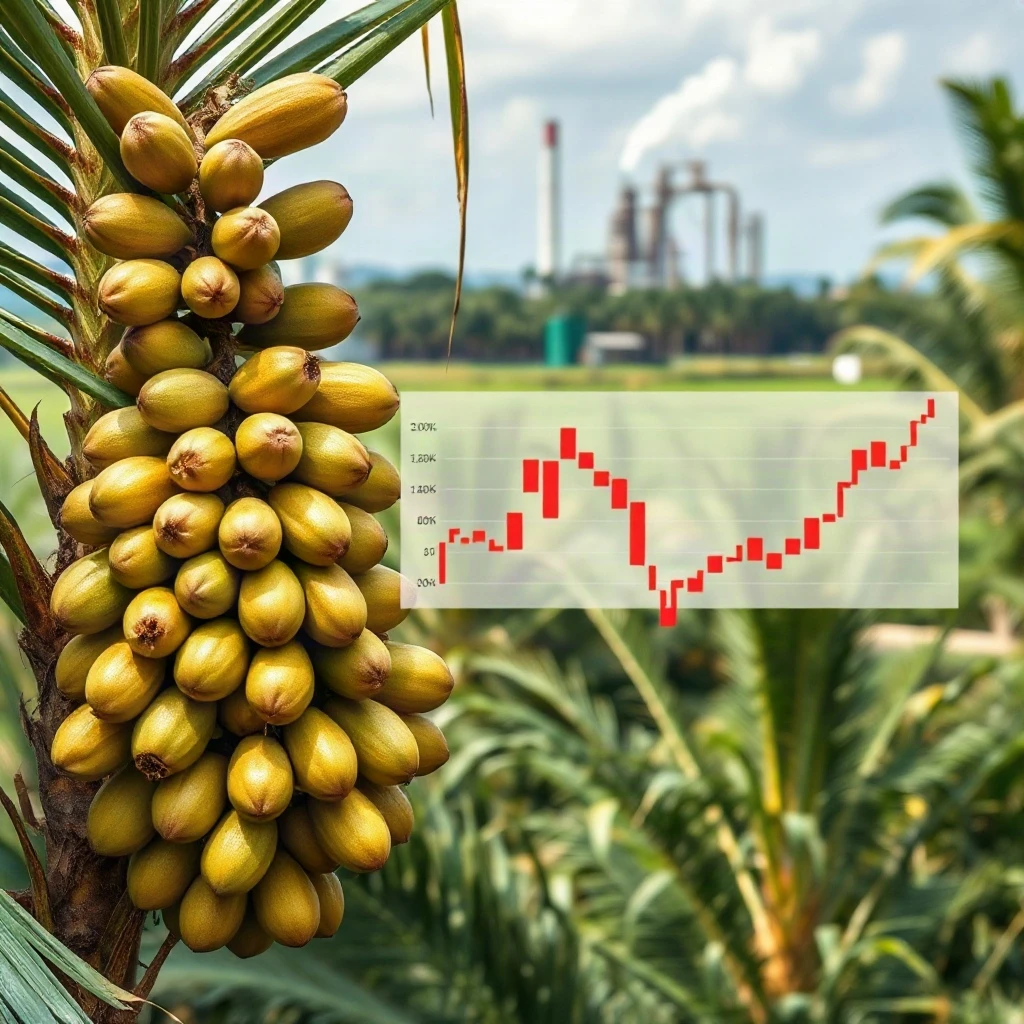
Malaysian CPO benchmark is trading near $1,137 per tonne, down 0.7% against the previous session and quoted around RM4,617 per tonne. The World Bank global palm benchmark is about $1,117 per tonne, while Indonesia's Kemendag reference is about $1,008 per tonne. Brent crude is about $105 per barrel, little changed, and the ringgit is about 4.07 to the dollar.
What is pushing palm oil up
The widest visible support is the soybean oil premium over palm. At a spread of about $400 per tonne, palm is heavily discounted relative to soybean oil. Price-sensitive buyers and food manufacturers have a direct incentive to substitute palm for soy oil, switching demand away from the more expensive oil and supporting palm's underlying consumption.
Indonesia's B50 biodiesel mandate is another structural bid. The B50 programme becomes fully effective in October 2026, with Pertamina targeting 100% distribution coverage by the end of September. The ramp-up is expected to absorb 3-4 million tonnes of palm annually into domestic biodiesel, removing that oil from export markets and tightening the global supply available to buyers.
Brent crude strength reinforces the biodiesel story. Brent is about $105 a barrel, up 8.7% over seven days. The negative POGO spread of about -$375 per tonne means palm is cheap relative to diesel, which improves the economics of blending palm-based biodiesel and adds demand-side support.
A weak ringgit is helping export competitiveness. USD/MYR is about 4.07, near the 94th percentile on our model's scale. A weaker ringgit lowers the USD price of Malaysian CPO for foreign buyers, which can support export volume and tends to underpin local-currency CPO prices.
Finally, the El Niño state remains a lagged supply risk. The ONI is +1.8°C, and Kalimantan rainfall over the next seven days is only 1 millimetre, indicating early dry stress. Past El Niño episodes tend to reduce palm yields with a six-to-twelve-month lag, so the market is pricing in a possible production shortfall later in the crop cycle.
What is pushing palm oil down
The immediate bearish anchor is the MPOB August stock build. Malaysian total palm oil stocks rose 7.48% to 2.82 million tonnes, while CPO stocks rose 15.2% month-on-month to 1.65 million tonnes. The stocks-to-use ratio is 14.1%. This is ample supply: producers hold more inventory, buyers face less urgency, and near-term physical balances are comfortable.
Profit-taking and technical signals are also weighing on prices. The MACD has a bearish crossover while RSI is 53, neutral, and the price is near a 52-week high. A Bernama headline expects profit-taking to push prices toward RM4,400-4,500 next week, which would be a pullback from current levels.
Seasonal September softness adds to the near-term headwind. Historically September has averaged a -0.9% month-on-month change, and this is a peak production season. Higher output combined with the recent stock build makes it easier for buyers to press for lower prices in the short term.
Speculative positioning creates liquidation risk. CFTC data show soybean oil managed-money net longs at 101,768 contracts, the 81st percentile, but the weekly change was -8,144. Crowded long positions are vulnerable to long-liquidation; a further unwind in the broader vegetable oil complex could spill over into palm selling.
Where the balance sits
Our model's factor balance is five bullish versus four bearish, so the upside currently has the upper hand. The bearish drivers are concentrated in the immediate session and next week: the August stock overhang, technical profit-taking, and seasonal supply pressure. Those are real but mostly transient.
The bullish drivers are more structural: the wide soybean-oil premium, Indonesia's B50 ramp-up, strong Brent, weak MYR, and the delayed El Niño yield risk. Those have longer policy and demand cycles and are not easily reversed by a single weekly data point. Our published model outlook notes that profit-taking is expected to push prices toward RM4,400-4,500 next week, consistent with a -2.6% path over seven sessions, but it does not argue that the broader support has broken.
For the balance to flip to bearish, one or more of these would need to change: Indonesia's B50 implementation would need to be delayed or scaled back, Brent would need to fall sharply, the ringgit would need to strengthen, the soybean premium would need to collapse, or speculative long-liquidation would need to broaden and be confirmed by weak export data. Missing cargo-surveyor export figures, Bursa FCPO quotes, Dalian prices, and palm-specific positioning currently widen uncertainty; those data could be decisive in confirming which side takes control.