
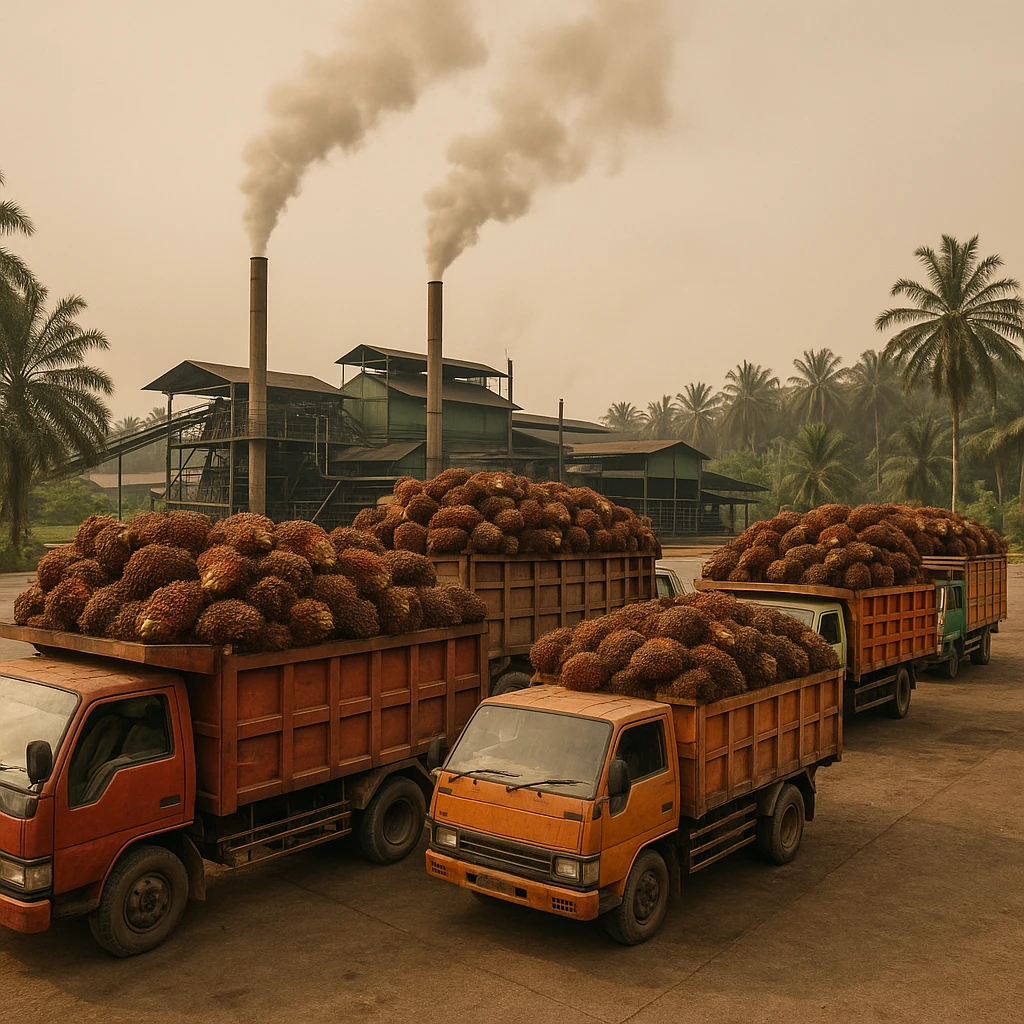
Malaysian CPO benchmark firmed to about $1,146 per metric tonne, up 0.6% from the previous session, or RM4,623 per tonne at a dollar-ringgit rate of 4.03. That leaves it above the World Bank global benchmark of around $1,101 and well above Indonesia's reference price near $997, keeping the Malaysian contract at a premium. Brent crude slipped 0.3% to about $88 per barrel, which matters for biodiesel blend economics across the region.
Supply: ample now, but weather risk building
MPOB July data show CPO production of 1,792,979 tonnes, a 9.4% month-on-month rise, while closing CPO stocks increased 7.2% to 1,429,316 tonnes. Exports rose 14.5% to 1,392,178 tonnes, but imports fell 51.9% to 49,566 tonnes. The stocks-to-use ratio of 12.5% and a 1.2% rise in the FFB reference price to RM49.50 point to a well-supplied market near seasonal peak output. At the same time, weather gauges show El Niño conditions with an ONI of +1.4, and reports highlight dry conditions in Sarawak and Kalimantan. Industry warnings, including from Gapki, flag sharp production losses if the dry spell deepens.
Demand: Indonesia exports and B50 support
On the demand side, trade reports put Indonesia's June palm exports around 64% higher than a year earlier, with domestic consumption also rising. That strength has been cited as pressure on national stocks. Indonesia's moves toward B50 biodiesel are framed as more than a blending mandate—they reshape energy and industrial use of palm oil. A weaker Brent price complicates the biodiesel premium, but the policy direction remains supportive for palm oil absorption.
Market tone and model outlook
Futures closed lower earlier in the week on profit-taking, weaker soybean oil and soft crude, while some commentary expects a bullish tone next week. Steady trading recently reflected projections of bigger stockpiles, but the pricing debate between Malaysia and Indonesia continues to influence differentials. Our model outlook sees CPO caught between ample near-term supply—July stocks high, output at peak—and bullish medium-term factors: El Niño, B50 and a wide biodiesel-to-diesel spread. Brent's sharp drop and crowded long positioning tilt risk to a modest pullback over the next seven days, but downside is limited by demand switching and production worries. The published path is a small 0.1% gain over seven sessions.
For buyers
For buyers, the key watch points are whether Indonesian export strength holds and absorbs the large near-term supply, whether dry weather starts to show in production data, and whether Brent stabilizes. Near-term supply is ample, but the medium-term risk premium from weather and biodiesel policy has not disappeared.