Indonesia Launches B50 Mandate, Tightening Palm Oil Supply Outlook
New biodiesel blend targets fuel-import cuts but threatens export availability and price stability.

Biodiesel mandate launch supports prices, but allocation uncertainty and export cut risks keep market on edge.
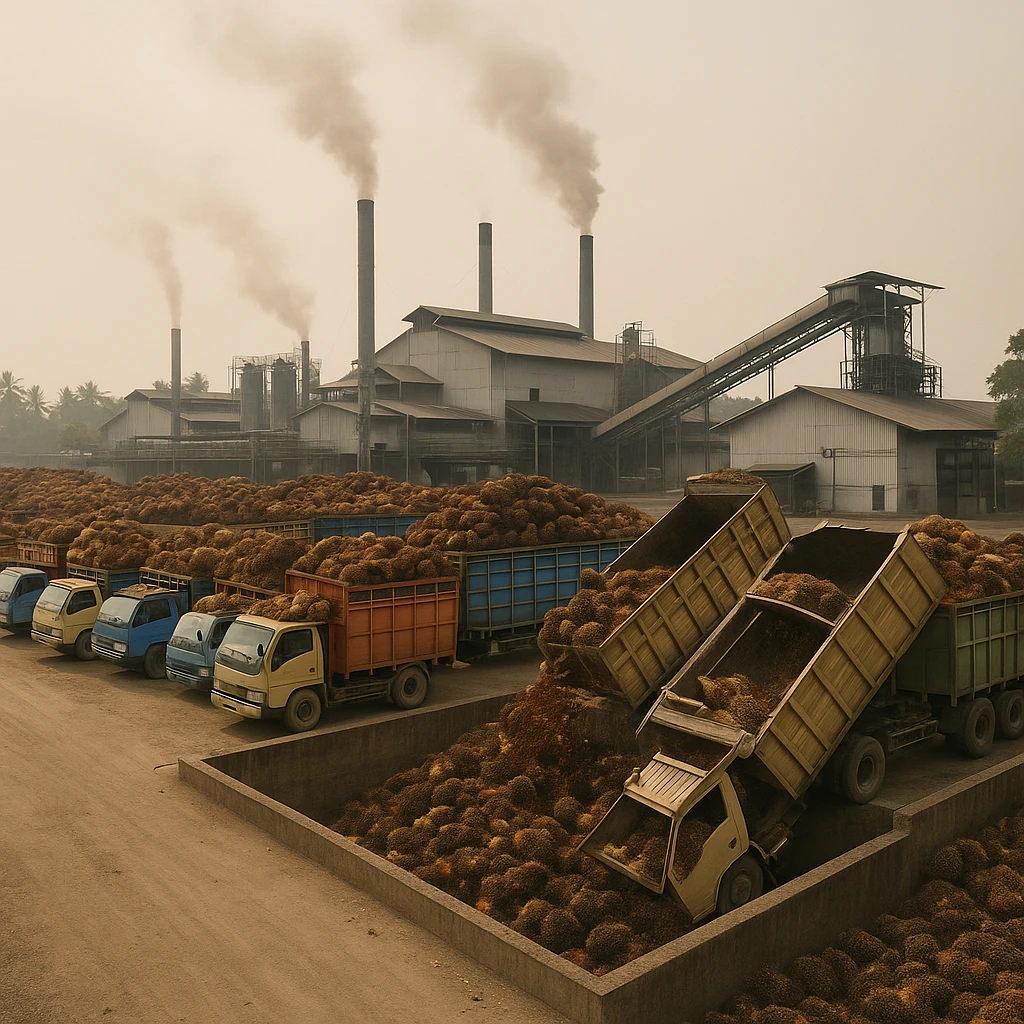
Palm oil futures rallied to a two-week high on Wednesday, buoyed by Indonesia's formal launch of its B50 biodiesel mandate and strength in rival vegetable oils and crude oil.
Indonesia officially rolled out the B50 biodiesel blend on July 9, a policy aimed at curbing fuel imports and bolstering energy security amid rising global oil prices. The mandate mandates a 50% palm oil-based biodiesel blend, which analysts estimate could divert up to 2.7 billion dollars worth of palm oil from export markets annually, according to a Jakarta Globe report.
However, market enthusiasm was tempered by ongoing uncertainty over allocation details. Business Recorder noted that palm futures slipped earlier in the session as traders awaited clarity on how the mandate will be implemented and what volumes will be absorbed domestically.
Beyond biodiesel, supply-side concerns are mounting. El Niño weather patterns are threatening yields in key producing regions, with HLIB raising its price forecasts for 2026-27 on expectations of tighter supply. ChemAnalyst reported that palm oil surged on a combination of El Niño fears and the biodiesel boom.
Thailand has also tightened palm oil export controls, reshaping regional supply dynamics, according to the Indonesia Business Post. Meanwhile, EU imports of Malaysian palm oil rose year-on-year, signaling steady demand from the bloc despite sustainability scrutiny.
Soybean oil hit a three-week high amid US-Iran tensions that lifted crude oil prices and biofuel demand. Reuters noted palm rose over 1% on July 8, supported by strength in rival oils and crude. The positive cross-commodity sentiment has provided a tailwind for palm, which competes for share in the global vegetable oil pool.
Palm oil prices are now trading near the upper end of MPOC's forecast range of RM4,400 to RM4,650 for July, as supply outlook tightens. The combination of Indonesia's B50 mandate, El Niño risks, and export restrictions from Thailand is reshaping the supply-demand balance.
Buyers should monitor Indonesia's final allocation rules for B50 and any updates on El Niño's impact on yields. Any clarity on domestic absorption volumes could either ease or amplify export supply fears, directly influencing price direction in the weeks ahead.
Sources: The Globe and Mail; Nikkei Asia; Business Recorder; Devdiscourse; Bloomberg.com; UkrAgroConsult
New biodiesel blend targets fuel-import cuts but threatens export availability and price stability.

Indonesia’s formal launch of the B50 biodiesel mandate marks a major escalation in the country’s biofuel policy, with immediate implications for global palm oil supply and demand. The 50% palm-oil-based blend requirement, confirmed by multiple reports in early July 2026, is designed to curb fuel imports and strengthen energy security. However, the policy is already creating uncertainty in palm oil markets, as traders assess how much crude palm oil will be diverted from exports to meet domestic biodiesel obligations.
Industry analysts estimate that the B50 program could reduce palm oil export availability by up to $2.7 billion in value, according to trade projections. This diversion comes at a time when global supply is already under pressure from El Niño-related weather concerns in key growing regions. The combination of rising biodiesel demand and potential production shortfalls has prompted several research houses to raise their price forecasts for 2026 and 2027. Higher crude oil prices have also improved the economic case for biodiesel blending, encouraging broader adoption among Indonesian consumers.
Despite the official launch, market participants remain cautious. Reports indicate ongoing uncertainty over the allocation mechanism for biodiesel volumes, which has contributed to recent price slips in palm oil futures. The policy’s success depends on consistent enforcement and adequate infrastructure, both of which have faced challenges in previous mandate rollouts. A sharp decline in global oil prices, as seen in late June, could undermine the blending economics and test the mandate’s resilience.
For compliance-minded buyers, the B50 mandate signals a structural shift in Indonesia’s palm oil supply chain. Export volumes are likely to tighten further if domestic biodiesel consumption rises as planned. Buyers should monitor allocation quotas and any adjustments to the mandate’s implementation timeline. The interplay between energy policy, weather risks and global crude prices will remain key drivers of palm oil price volatility in the coming months. Market intelligence on Indonesian biodiesel uptake and export clearance rates will be essential for managing procurement risk.
Sources: Nikkei Asia; Business Recorder; Devdiscourse; Bloomberg.com; Jakarta Globe
A practical primer for buyers on how hydrogenation alters palm oil’s properties and end-use applications.
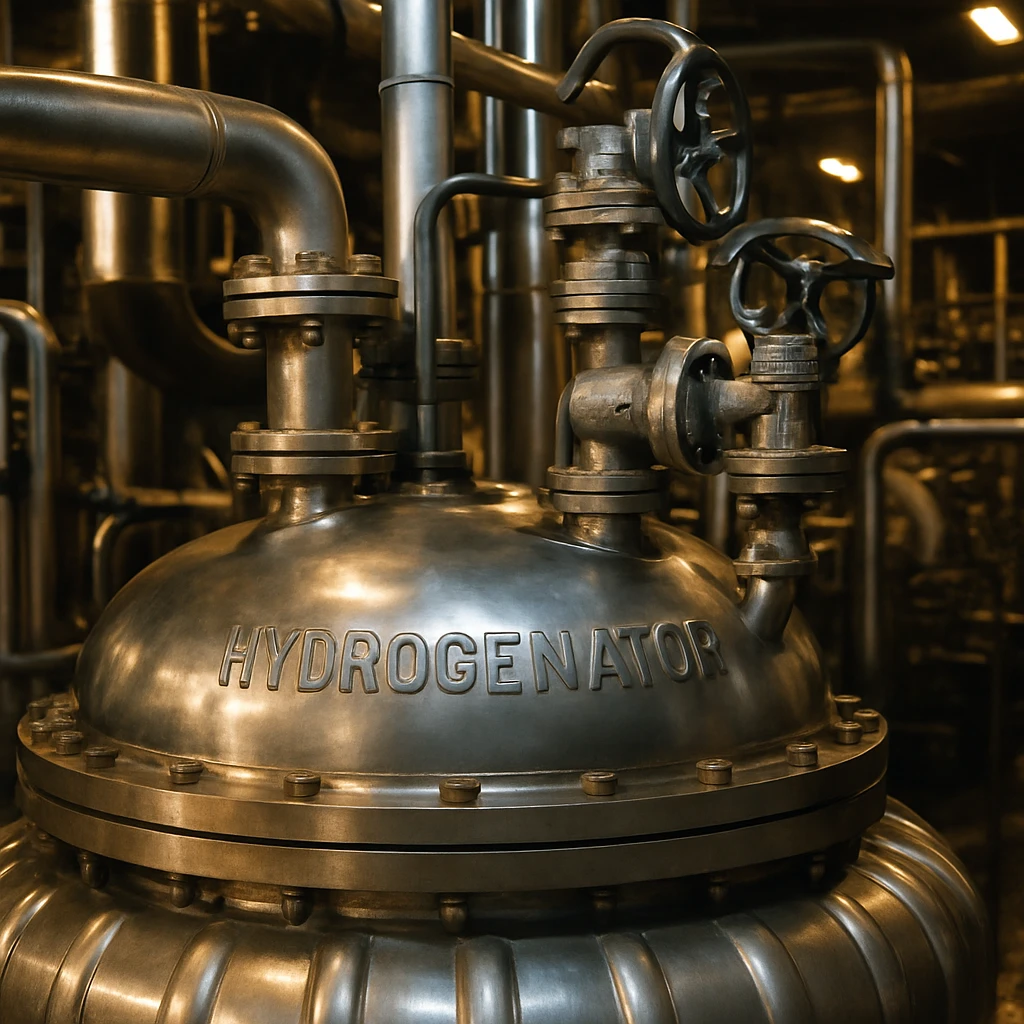
Hydrogenation is a chemical process that adds hydrogen atoms to unsaturated fatty acid chains in palm oil. This converts liquid oil into semi-solid or solid fat by raising its melting point. The reaction typically uses a nickel catalyst at elevated temperature and pressure.
Palm oil naturally contains about 50% saturated fat, giving it a semi-solid consistency at room temperature. Hydrogenation increases saturation further, creating fats with specific melting profiles for margarine, shortening, confectionery coatings, and frying fats. It also improves oxidative stability, extending shelf life.
During hydrogenation, hydrogen gas is bubbled through heated palm oil in the presence of a catalyst. Unsaturated double bonds in fatty acids (such as oleic and linoleic acids) are converted to single bonds. The process is not fully selective; some double bonds may shift position or change from cis to trans configuration, forming trans fatty acids.
Full hydrogenation saturates all double bonds, yielding a very hard fat with a melting point above 60°C. Partial hydrogenation stops the reaction at an intermediate stage, producing fats with a range of melting points and textures. The degree of hydrogenation is controlled by reaction time, temperature, hydrogen pressure, and catalyst concentration.
Partial hydrogenation inevitably generates trans fatty acids, which have been linked to health concerns. Industry practice now often avoids partial hydrogenation in favor of interesterification or blending with fully hydrogenated fat. Fully hydrogenated palm oil contains negligible trans fats but is very hard and requires blending for practical use.
Buyers should specify the desired melting point, solid fat content (SFC) profile, and trans fat limits. Hydrogenated palm products may require careful storage to avoid oxidation. Requesting a certificate of analysis from suppliers ensures the product meets your processing needs.
Hydrogenation remains a fundamental tool in palm oil processing, allowing precise tailoring of fat properties. Understanding its chemistry helps procurement managers select the right product for their application while navigating health and regulatory trends.
Our market desk connects serious buyers with vetted origin suppliers across Southeast Asia. Indicative pricing, specifications and shipment guidance — free of charge.
Get connected →New biodiesel blend targets fuel-import cuts but threatens export availability and price stability.
A practical primer for buyers on how hydrogenation alters palm oil’s properties and end-use applications.
Biodiesel mandate launch supports prices, but allocation uncertainty and export cut risks keep market on edge.
Palm oil futures rallied to a two-week high on Wednesday, buoyed by Indonesia's formal launch of its B50 biodiesel mandate and strength in rival vegetable oils and crude oil.
Indonesia officially rolled out the B50 biodiesel blend on July 9, a policy aimed at curbing fuel imports and bolstering energy security amid rising global oil prices. The mandate mandates a 50% palm oil-based biodiesel blend, which analysts estimate could divert up to 2.7 billion dollars worth of palm oil from export markets annually, according to a Jakarta Globe report.
However, market enthusiasm was tempered by ongoing uncertainty over allocation details. Business Recorder noted that palm futures slipped earlier in the session as traders awaited clarity on how the mandate will be implemented and what volumes will be absorbed domestically.
Beyond biodiesel, supply-side concerns are mounting. El Niño weather patterns are threatening yields in key producing regions, with HLIB raising its price forecasts for 2026-27 on expectations of tighter supply. ChemAnalyst reported that palm oil surged on a combination of El Niño fears and the biodiesel boom.
Thailand has also tightened palm oil export controls, reshaping regional supply dynamics, according to the Indonesia Business Post. Meanwhile, EU imports of Malaysian palm oil rose year-on-year, signaling steady demand from the bloc despite sustainability scrutiny.
Soybean oil hit a three-week high amid US-Iran tensions that lifted crude oil prices and biofuel demand. Reuters noted palm rose over 1% on July 8, supported by strength in rival oils and crude. The positive cross-commodity sentiment has provided a tailwind for palm, which competes for share in the global vegetable oil pool.
Palm oil prices are now trading near the upper end of MPOC's forecast range of RM4,400 to RM4,650 for July, as supply outlook tightens. The combination of Indonesia's B50 mandate, El Niño risks, and export restrictions from Thailand is reshaping the supply-demand balance.
Buyers should monitor Indonesia's final allocation rules for B50 and any updates on El Niño's impact on yields. Any clarity on domestic absorption volumes could either ease or amplify export supply fears, directly influencing price direction in the weeks ahead.