
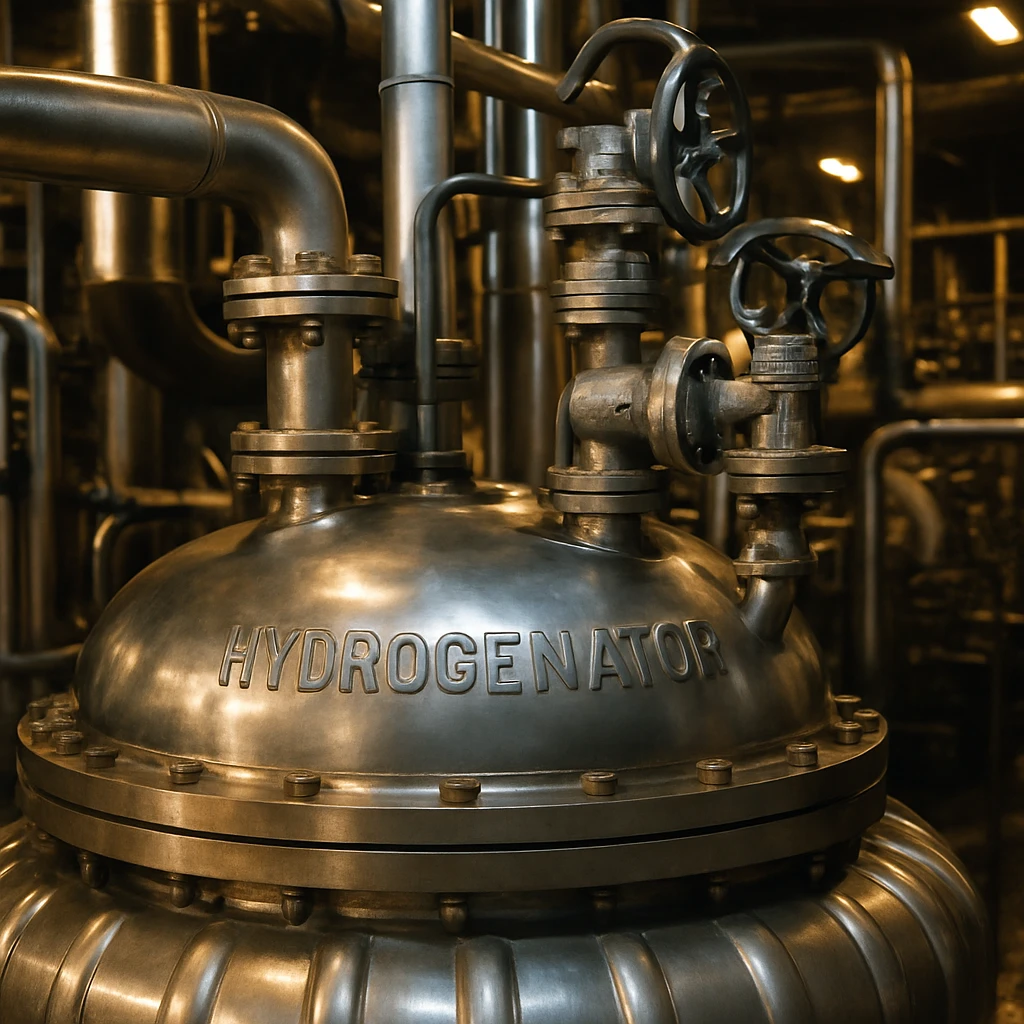
What Is Hydrogenation?
Hydrogenation is a chemical process that adds hydrogen atoms to unsaturated fatty acid chains in palm oil. This converts liquid oil into semi-solid or solid fat by raising its melting point. The reaction typically uses a nickel catalyst at elevated temperature and pressure.
Why Hydrogenate Palm Oil?
Palm oil naturally contains about 50% saturated fat, giving it a semi-solid consistency at room temperature. Hydrogenation increases saturation further, creating fats with specific melting profiles for margarine, shortening, confectionery coatings, and frying fats. It also improves oxidative stability, extending shelf life.
The Reaction Mechanism
During hydrogenation, hydrogen gas is bubbled through heated palm oil in the presence of a catalyst. Unsaturated double bonds in fatty acids (such as oleic and linoleic acids) are converted to single bonds. The process is not fully selective; some double bonds may shift position or change from cis to trans configuration, forming trans fatty acids.
Degree of Hydrogenation
Full hydrogenation saturates all double bonds, yielding a very hard fat with a melting point above 60°C. Partial hydrogenation stops the reaction at an intermediate stage, producing fats with a range of melting points and textures. The degree of hydrogenation is controlled by reaction time, temperature, hydrogen pressure, and catalyst concentration.
Trans Fat Formation
Partial hydrogenation inevitably generates trans fatty acids, which have been linked to health concerns. Industry practice now often avoids partial hydrogenation in favor of interesterification or blending with fully hydrogenated fat. Fully hydrogenated palm oil contains negligible trans fats but is very hard and requires blending for practical use.
Practical Implications for Buyers
- Fully hydrogenated palm oil is used as a hardstock in shortenings and margarine blends, often combined with liquid oils.
- Partially hydrogenated palm oil provides specific melting points for confectionery and bakery applications, but regulatory trends discourage its use.
- Non-hydrogenated palm oil (palm olein, palm stearin) offers natural solid-fat content without trans fats, suitable for many applications.
Quality Considerations
Buyers should specify the desired melting point, solid fat content (SFC) profile, and trans fat limits. Hydrogenated palm products may require careful storage to avoid oxidation. Requesting a certificate of analysis from suppliers ensures the product meets your processing needs.
Conclusion
Hydrogenation remains a fundamental tool in palm oil processing, allowing precise tailoring of fat properties. Understanding its chemistry helps procurement managers select the right product for their application while navigating health and regulatory trends.