Palm Oil Steady as El Niño, Biodiesel, and Stocks Build Shape Market
CPO holds near $1,104/MT as peak production meets firm demand; MPOB report and weather in focus.

Malaysian CPO edges lower ahead of MPOB July data, with a 4-to-5 bearish tilt in our model's factor balance keeping the downside in control.
Malaysian crude palm oil futures edged lower on Friday, with the benchmark contract slipping 0.3% to $1,104 per metric ton (RM4,515/MT), as bearish macro and technical signals outweighed bullish weather and demand-support narratives. Global palm oil, as tracked by the World Bank, stood at $1,101/MT, while Indonesia’s reference price was $1,030/MT.
CPO holds near $1,104/MT as peak production meets firm demand; MPOB report and weather in focus.
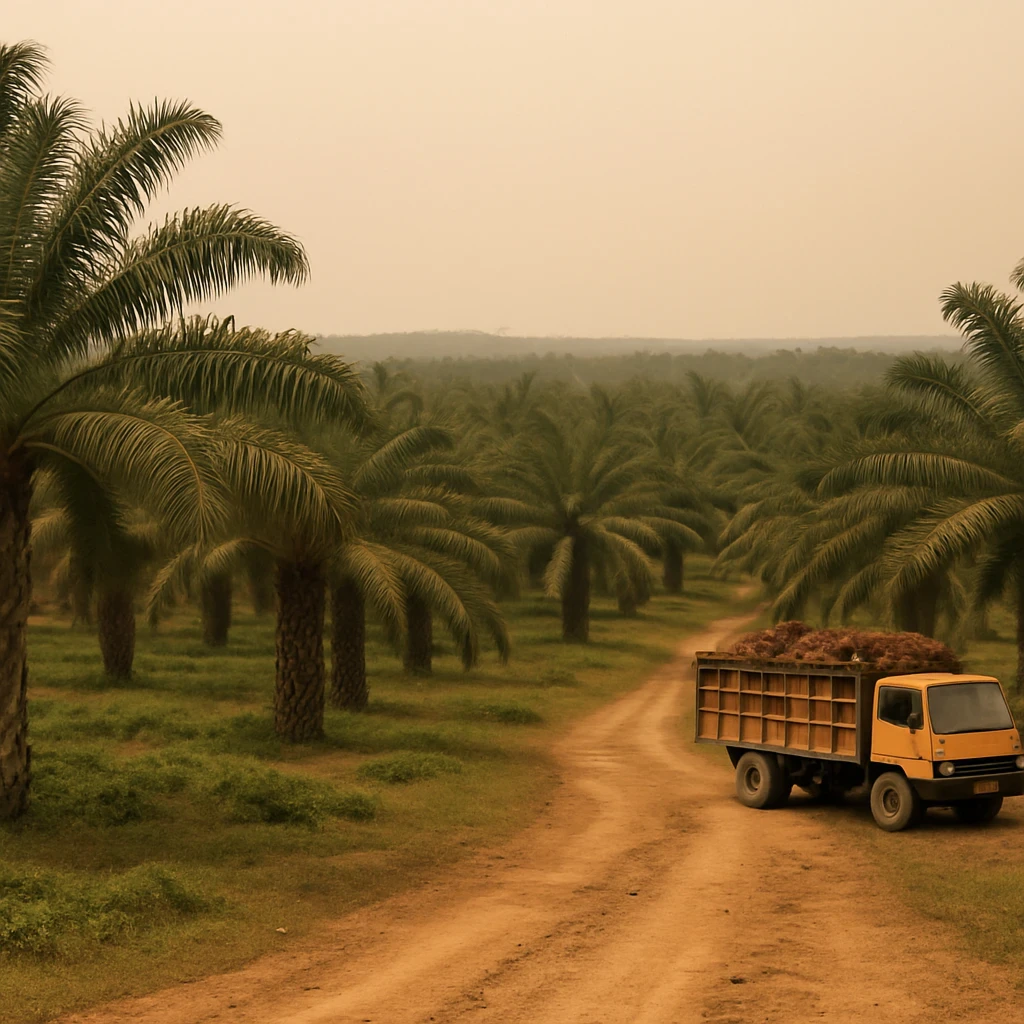
Malaysian crude palm oil futures settled around $1,104 per metric ton (RM 4,515), down 0.3% from the previous session, as the market weighed peak production against supportive demand signals. The global benchmark hovered near $1,101/MT, while Indonesia's reference price stood at about $1,030/MT. Brent crude held at $82 per barrel, offering little direction to biodiesel-linked palm oil values.
Malaysia's June MPOB data showed CPO production at 1,638,777 tonnes, up 8.1% month-on-month, while closing stocks rose 3.7% to 1,332,697 tonnes. Exports climbed 5.7% to 1,198,567 tonnes, but imports surged 135.3% to 103,113 tonnes, reflecting arbitrage opportunities and regional logistics. The FFB reference price slipped 1.3% to RM 48.90.
Our model outlook suggests prices are likely to drift lower over the next seven trading days, pressured by the seasonal production peak, a soft energy complex, and positioning ahead of the MPOB July report, which is expected to show further inventory accumulation. However, the downside is cushioned by firm Indian demand and the wide BOPO spread, while El Niño concerns limit aggressive selling.
ENSO conditions are firmly in El Niño territory (ONI +1.4), with notably dry weather across Sabah, Sarawak, and Kalimantan. This raises the risk of an earlier-than-expected production downturn, which could flip the market narrative from surplus to scarcity. The upcoming MPOB release, due in about four days, is the key event risk—a larger-than-expected inventory build could trigger short-term selling, while any signs of production stress could spark a rebound.
India's July edible oil imports hit a 10-month peak on higher palm oil buying, reinforcing the demand-side strength. The country is also seeking sunflower oil alternatives amid Black Sea disruptions, which could further support palm oil uptake. Meanwhile, Indonesia, Malaysia, and Thailand have raised their biodiesel mandates for 2026, and Pertamina has launched nationwide B50 distribution in Indonesia. These policy moves underpin structural demand for palm oil as a fuel feedstock, even as they contribute to global edible oil price pressures flagged by the RBI.
CPO futures have seen profit-taking and losses on weaker soybean and crude oil prices, but rising crude has limited the damage. The market is on track for a weekly gain, supported by a strong export outlook. The Malaysian Palm Oil Council sees CPO prices stuck in a RM 4,400–4,650 range for August, aligning with current levels. Global food prices edged up in July, with edible oils among the contributors, per the FAO.
Watch the MPOB July report for inventory direction—a bigger build could pressure prices, but any El Niño-driven production slowdown could quickly reverse sentiment. Also monitor Indian import pace and biodiesel policy updates, as these are the key demand-side variables shaping the near-term balance.
Sources: 富途牛牛; Business Standard; Bernama; energynews.pro; ANI News; Finimize
Indonesia, Malaysia and Thailand raise blend mandates; B50 rollout and India's import concerns shape market.
Palm oil policy across Southeast Asia is tightening in 2026, with Indonesia, Malaysia and Thailand all raising their biodiesel mandates. The moves, reported on August 7, are set to increase domestic palm oil consumption in the region, potentially limiting export availability and supporting prices during a period of peak production.
Indonesia has been the most aggressive, with state energy firm Pertamina launching nationwide B50 biodiesel distribution on July 27. The higher blend—50% palm oil-based biodiesel—is expected to absorb a significant portion of the country's palm oil output, reducing the volume available for export. This comes as Indonesia's reference price stands at about $1030/MT, below the global benchmark of $1101/MT, reflecting a policy-driven domestic market.
The ripple effects are being felt in India, the world's largest vegetable oil importer. The Reserve Bank of India has linked the broad-based rise in edible oil prices to biofuel use, specifically citing Indonesia's B50 mandate. This has raised concerns about supply security and price stability in India, which relies heavily on imports to meet domestic demand.
In a related development, Indian industry body IVPA has sought curbs on duty-free edible oil imports from Nepal, which have been growing and are seen as a way to bypass import duties. This adds another layer of complexity for buyers navigating a market already under pressure from higher global prices and tighter supply.
For compliance-minded buyers, the policy shift means several things. First, the higher mandates in producing countries could tighten global supply, especially if El Niño-related dry weather in Kalimantan and Sarawak affects production later in the year. Second, the spread between biodiesel and diesel—currently wide—makes blending economically attractive, but any change in crude oil prices (Brent at about $82/bbl) could alter that calculus. Third, buyers should monitor the MPOB July report, due in about four days, for signs of inventory builds that could ease prices.
Our model outlook suggests CPO prices will drift lower over the next seven trading days, pressured by peak production and a weak energy complex. However, firm Indian demand and the wide BOPO spread provide a floor. The key risk is the MPOB report: a larger-than-expected stock build could trigger selling, while any hint of an early production downturn due to El Niño could spark a rebound.
In this environment, buyers should stay agile, watching both policy announcements and weather patterns, as the interplay between mandates, supply and demand will define price direction in the coming weeks.
Malaysian CPO benchmark holds around $1,104/MT; MPOB June shows output, stocks up; market awaits July report.
The Malaysian crude palm oil (CPO) benchmark settled the week at approximately $1,104 per metric ton, or RM 4,515, down 0.3% from the previous session. The global World Bank benchmark stood at about $1,101/MT, while Indonesia's reference price was set near $1,030/MT. Prices have held in a narrow band, with the market digesting a fresh round of supply data and awaiting the next official inventory read.
Brent crude traded at roughly $82 per barrel, flat on the session, keeping biodiesel blend economics broadly unchanged. The ringgit was quoted near 4.09 per dollar, while the rupiah hovered around 17,941 per dollar. Currency moves were modest, offering little directional impetus for exporters or importers.
The Malaysian Palm Oil Board's June release showed CPO production at 1,638,777 tonnes, up 8.1% month-on-month, while closing stocks rose 3.7% to 1,332,697 tonnes. Exports increased 5.7% to 1,198,567 tonnes, and imports jumped 135.3% to 103,113 tonnes. The FFB reference price slipped 1.3% to RM 48.90. The data confirms a seasonal uptick in output, though stock accumulation was slightly softer than some had expected.
The ENSO remains in El Niño territory, with the ONI at +1.4. Notable dryness persists across Sabah, Sarawak, and Kalimantan, raising questions about the durability of the current production recovery. So far, yields have held up, but the market is watching for any signs of earlier-than-usual stress in the second half of the year.
Our model outlook points to a drift lower in CPO prices over the next seven trading days. Pressures include peak production season, a weak energy complex, and positioning ahead of the MPOB July report, which is likely to show a further build in stocks. Downside is cushioned by firm Indian demand, the wide BOPO spread, and lingering El Niño concerns that keep sellers cautious. The key event risk is the MPOB release due in about four days: a larger-than-expected inventory build could trigger short-term selling, while any hints of an earlier production downturn could spark a rebound.
Attention turns to the MPOB July supply-demand report, due within days, as the primary catalyst. Traders will also monitor Indonesian reference price announcements and any policy signals around biodiesel mandates. Seasonal patterns suggest continued high output, but weather developments across the dry regions will be closely watched for any shift in production expectations.
Remote sensing, drones and yield mapping are moving from pilot to practice. Here is the state of the evidence.

Precision agriculture in oil palm is often promoted as a leap forward in estate management. The core idea is straightforward: use satellite imagery, drone surveys and yield mapping to see variability within a plantation, then target inputs and interventions where they are needed. The technology is real, but the evidence of its impact is still maturing.
Remote sensing has proven reliable for mapping canopy health and vigour. Satellite and drone imagery can detect differences in leaf colour, canopy density and stress indicators across large areas. This is widely used to spot nutrient deficiencies, water stress and early signs of disease or pest damage. The accuracy of these maps is generally good, especially when ground-checked.
Drone surveys have become a practical tool for counting palms and assessing stand density. High-resolution imagery can identify gaps, senescent palms and replanting needs. This is now a routine operation on many estates, replacing slow and costly manual counting.
Yield mapping is more developed in other crops, but oil palm trials have shown that harvest records, when georeferenced, can be used to build yield variability maps. These maps help managers understand which blocks are underperforming and why. The technology to do this is commercially available and has been demonstrated on working estates.
The biggest gap is whether precision agriculture consistently improves yield or profit. Some trials report modest gains in yield or fertiliser efficiency, but others find no significant difference compared with conventional uniform management. The response depends heavily on the scale of variability in the field, the quality of the agronomy, and the cost of the technology.
Claims that precision agriculture can reduce fertiliser use by a fixed percentage are not supported by a consistent body of evidence. Savings appear to be site-specific. In fields with high variability, targeted application can cut waste. In uniform fields, the benefit is small.
Another contested area is predictive analytics – using sensors and models to forecast yield or disease outbreaks. While promising, these tools are still being validated. Their accuracy varies with climate, soil and management practices, and they have not yet been proven across the full range of growing conditions.
Some vendors and proponents suggest that precision agriculture can replace ground-based agronomy. That is not supported by the research. Ground truthing – checking what the sensors see – remains essential. The technology is a complement to, not a substitute for, experienced field staff.
Similarly, claims of rapid, large-scale yield gains from drone surveys alone are overstated. Drones provide excellent data, but data alone does not improve yield. The gains come from the management decisions that follow, and those decisions still require agronomic judgement.
For producers, the evidence supports using remote sensing and drones for monitoring and diagnostics – spotting problems early and targeting scouting. Yield mapping is useful for block-level benchmarking and for guiding replanting or soil-sampling programmes. But the business case depends on estate size, labour costs and existing data quality. A smallholder with a few hectares is unlikely to see a return; a large estate with high input costs might.
For refiners and buyers, precision agriculture is not yet a reliable indicator of sustainable or higher-quality supply. It is a management tool, not a certification. Until the yield and profit evidence is stronger, it should be viewed as a promising innovation, not a proven standard. ---
*This article reflects the position as of 8 August 2026. Research moves on, and later work may revise or supersede what is described here. Please verify the current position, and any changes made after this date, before relying on it.*
A practical guide for buyers on how palm oil fractions are blended into bakery shortenings.
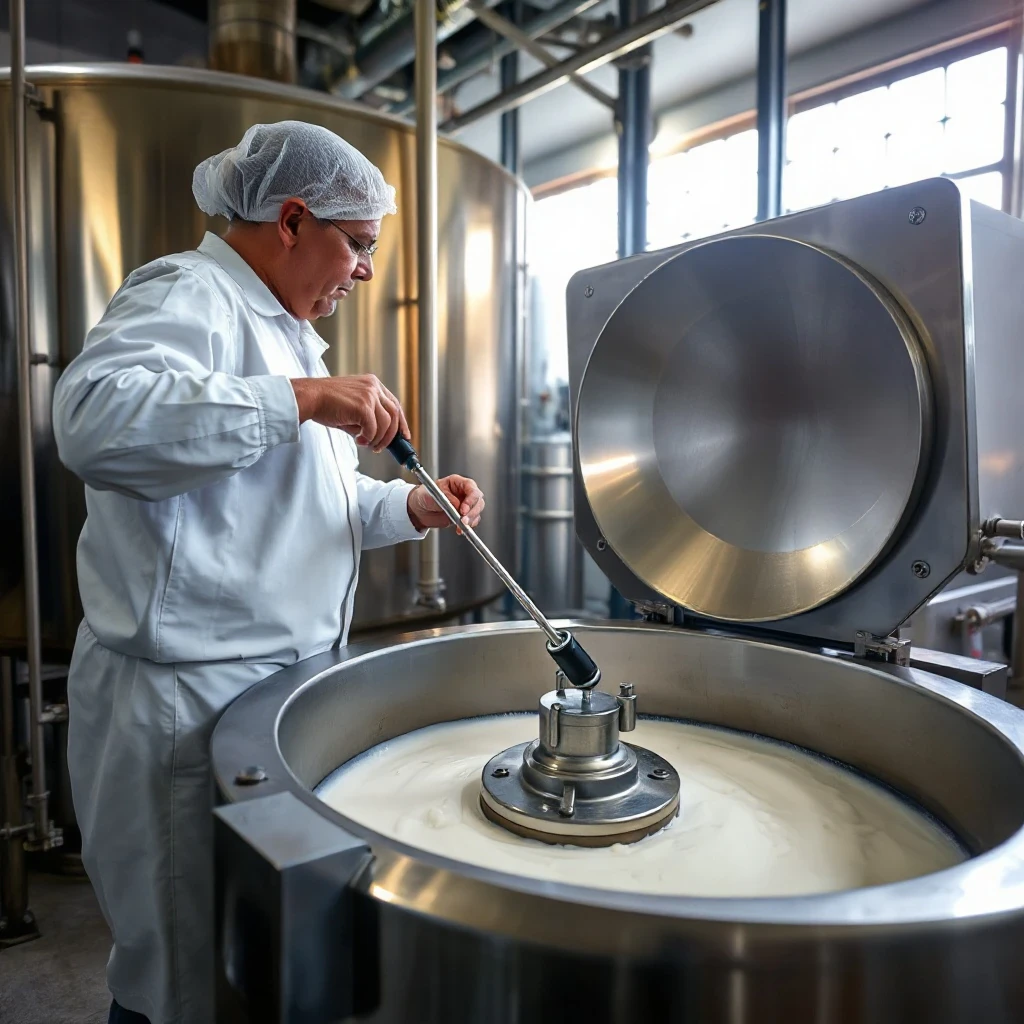
For procurement managers new to palm products, shortenings are among the most common yet least understood purchases. A shortening is simply a solid or semi-solid fat used to give baked goods their tender crumb, flaky texture, and stable structure. Palm oil is a preferred raw material because it is naturally semi-solid at room temperature, requires little modification, and is cost-effective.
Palm oil is fractionated to separate it into components with different melting points. The two main fractions are:
By blending these fractions in different ratios, refiners can tailor a shortening to a specific application. A pie crust needs a firm, flaky fat; a cake icing needs a creamy, spreadable one. The blend ratio is the key lever.
Straight palm fractions may not always match the exact performance of traditional hydrogenated fats. Two processes adjust their functionality:
These processes allow producers to create shortenings with a sharp melting profile – solid at room temperature but melting quickly in the mouth, a quality prized in confectionery.
When specifying a shortening, focus on these parameters:
Always request a technical data sheet and a sample for a bench-top test before committing to a full order.
These are starting points; your supplier can adjust the blend to meet your exact needs.
Understand your application, communicate your temperature and texture requirements, and ask for a tailored sample. Palm fractions are versatile, but the right shortening is a precise blend. With a clear specification, you can source a product that performs consistently and economically.
Our market desk connects serious buyers with vetted origin suppliers across Southeast Asia. Indicative pricing, specifications and shipment guidance — free of charge.
Get connected →CPO holds near $1,104/MT as peak production meets firm demand; MPOB report and weather in focus.
Indonesia, Malaysia and Thailand raise blend mandates; B50 rollout and India's import concerns shape market.
Malaysian CPO benchmark holds around $1,104/MT; MPOB June shows output, stocks up; market awaits July report.
Remote sensing, drones and yield mapping are moving from pilot to practice. Here is the state of the evidence.
A practical guide for buyers on how palm oil fractions are blended into bakery shortenings.
Malaysian CPO edges lower ahead of MPOB July data, with a 4-to-5 bearish tilt in our model's factor balance keeping the downside in control.
Malaysian crude palm oil futures edged lower on Friday, with the benchmark contract slipping 0.3% to $1,104 per metric ton (RM4,515/MT), as bearish macro and technical signals outweighed bullish weather and demand-support narratives. Global palm oil, as tracked by the World Bank, stood at $1,101/MT, while Indonesia’s reference price was $1,030/MT.