Policy & Energy Watch: B50, Nepal Imports, and Oil Price Slump Reshape Palm Oil Outlook
Indonesia's B50 mandate, Nepal tariff scrutiny, and crude oil weakness alter palm oil supply-demand dynamics.

Malaysian benchmark holds above $1,100/MT despite peak output and crude slide; market weighs El Niño dryness against demand signals.
Malaysian crude palm oil futures settled around $1,101/MT (RM 4,498), down 0.3% from the previous session, as the market absorbed a mixed supply-demand picture. The global World Bank benchmark was near $1,105/MT, while Indonesia’s reference price stood at about $1,030/MT. Currency moves were muted, with the ringgit at 4.09 per dollar and the rupiah at 18,069 per dollar.
MPOB data for June 2026 showed Malaysian CPO production at 1,638,777 tonnes, up 8.1% month-on-month, in line with seasonal trends. Closing stocks rose 3.7% to 1,332,697 tonnes, while exports increased 5.7% to 1,198,567 tonnes. Notably, imports surged 135.3% to 103,113 tonnes, reflecting arbitrage opportunities from Indonesia. The FFB reference price slipped 1.3% to RM 48.90.
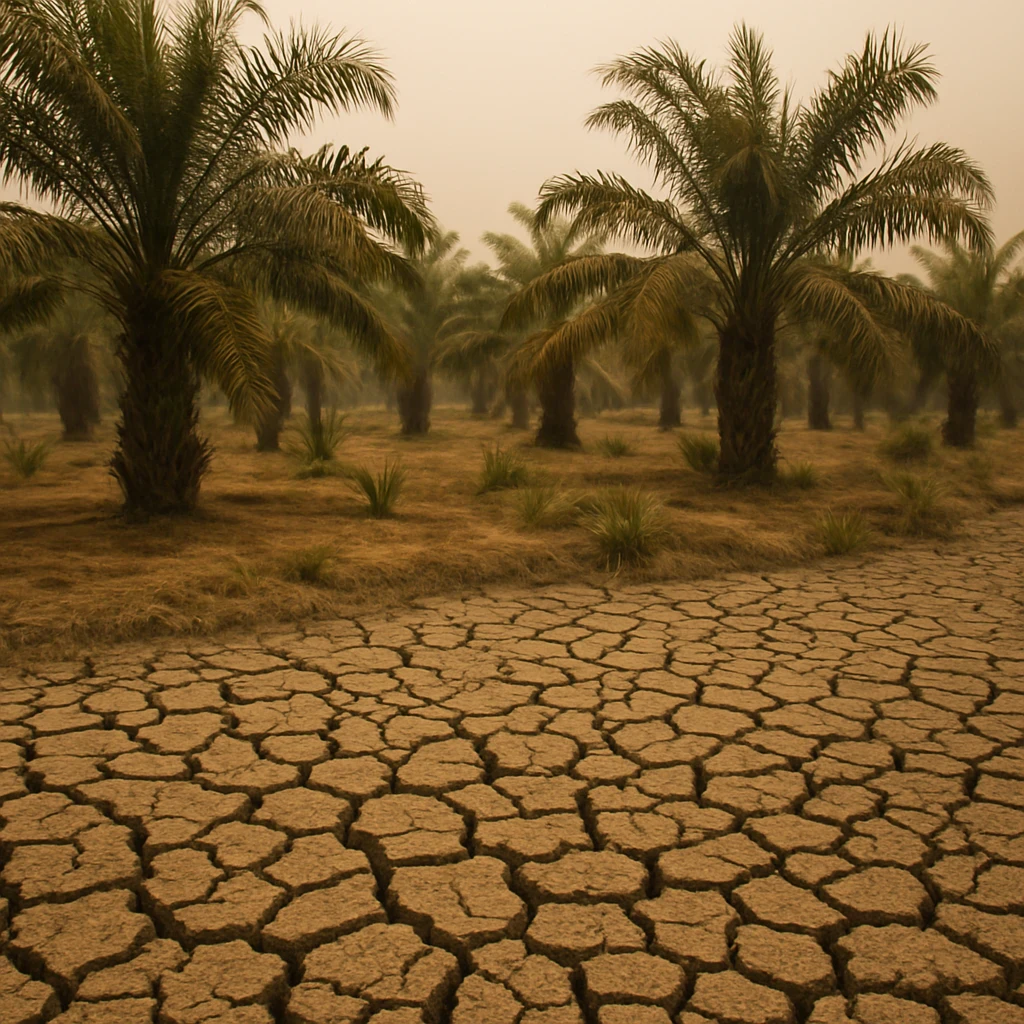
Weather remains a key watch point. The El Niño episode (ONI +1.0) has brought notably dry conditions to Kalimantan, raising concerns about future production in Indonesia. Our model outlook notes that while peak production is currently pressuring prices, El Niño dryness could tighten supply later in the year.
India, the world’s largest edible oil importer, saw a 30% drop in June imports, partly due to reduced palm and soybean shipments. However, reports suggest imports could surge from July to October ahead of festivals. India is also seeking sunflower oil alternatives amid Black Sea disruptions, which could support palm demand. Separately, Nepal’s duty-free edible oil exports to India are under scrutiny, potentially affecting trade flows.
Biofuel policy remains a wildcard. Indonesia’s B50 programme is expected to boost domestic palm consumption, but a sharp 6.9% slide in Brent crude over seven days to about $90/bbl has raised questions about biodiesel economics. The RBI has linked biofuel mandates to higher edible oil prices, adding to the policy debate.
Our model outlook suggests a mild bearish bias in the near term, with volatile daily moves. Pressures include the crude oil slump, peak production, and rupiah weakness. Support comes from the wide BOPO spread and El Niño dryness concerns. The market’s stale anchor and mixed demand signals keep confidence low.
Buyers should monitor crude oil price direction, any updates on India’s import policy, and weather developments in Kalimantan. Also watch for monthly export data and any shifts in Indonesia’s biodiesel mandate implementation.
Indonesia's B50 mandate, Nepal tariff scrutiny, and crude oil weakness alter palm oil supply-demand dynamics.

Palm oil markets are navigating a complex policy and energy landscape this week, with developments ranging from Indonesia's aggressive biodiesel push to renewed scrutiny of regional trade flows. These factors are reshaping supply-demand balances and compliance considerations for buyers.
Indonesia's launch of its B50 biodiesel programme marks a significant escalation in the country's commitment to palm oil-based fuels. The mandate, which requires a 50% blend of palm oil in biodiesel, is expected to absorb a substantial portion of domestic palm oil supply, potentially tightening export availability. This move has drawn attention from central banks and analysts globally, with India's central bank citing Indonesia's B50 as a key factor in broader edible oil price increases. For compliance-minded buyers, this signals a need to monitor Indonesian export policies closely, as reduced export volumes could support global prices.
The recent sharp decline in Brent crude prices, which fell below $70 per barrel, has upended the biodiesel story. Lower crude oil prices make biodiesel less competitive against fossil fuels, potentially dampening demand for palm oil in energy markets. This has already pressured palm oil prices, with the Malaysian benchmark CPO easing to about $1101/MT. The market is repricing the viability of biodiesel mandates, especially in regions where blending economics are sensitive to crude prices. For buyers, this could mean softer near-term prices, but also increased volatility as markets reassess demand projections.
India's edible oil industry is raising concerns over duty-free imports from Nepal, which have surged to Rs146 billion, allegedly exploiting tariff advantages. Industry bodies like IVPA are seeking curbs on these imports, arguing they undermine domestic producers and distort trade. This issue highlights the complexities of regional trade agreements and their impact on palm oil demand. If India restricts these imports, it could alter demand patterns for refined oils, potentially affecting palm oil import volumes. Compliance-minded buyers should watch for policy changes that could shift trade flows in South Asia.
Our model outlook suggests a mild bearish bias for near-term CPO prices, driven by peak production season, a sharp Brent crude slide, and Indonesian rupiah weakness. However, support comes from a wide BOPO spread and concerns over El Niño-induced dryness in key growing regions like Kalimantan. With mixed demand signals and a stale anchor, daily moves are likely to be volatile. For buyers, this environment underscores the importance of flexible procurement strategies and close monitoring of policy developments in Indonesia, India, and global energy markets.
As the policy landscape evolves, palm oil's role in both food and fuel markets will remain a critical focus. The interplay between biodiesel mandates, crude oil prices, and trade policies will continue to influence supply-demand dynamics, making adaptability key for market participants.
Sources: The Kathmandu Post; AgroSpectrum India; livemint.com; livemint.com; Business Standard; Oils & Fats International
Malaysian CPO holds around $1,101/MT; MPOB June shows rising output and stocks; El Niño dryness and crude slide weigh.
Malaysian crude palm oil futures settled the week near $1,101 per metric ton (RM 4,498), down 0.3% from the previous session. The global benchmark, as tracked by the World Bank, stood at about $1,105/MT, while Indonesia's reference price was set near $1,030/MT. Prices have been rangebound, with gains capped by seasonal supply pressure and losses cushioned by weather concerns.
Brent crude traded at about $90 per barrel, unchanged on the session, but our model outlook notes a sharp 6.9% slide over the past seven days. That drop undermines biodiesel blending economics, reducing the incentive for palm-oil-based fuel demand. In currencies, the ringgit held at 4.09 per dollar, while the rupiah weakened to 18,069 per dollar, adding pressure on Indonesian exporters' margins but potentially boosting competitiveness.
The Malaysian Palm Oil Board released June figures showing CPO production at 1,638,777 tonnes, up 8.1% from May, reflecting the seasonal peak. Closing stocks rose 3.7% to 1,332,697 tonnes, while exports increased 5.7% to 1,198,567 tonnes. Imports jumped 135.3% to 103,113 tonnes, likely due to arbitrage opportunities. The FFB reference price slipped 1.3% to RM 48.90. The stock build, though modest, aligns with the peak production narrative.
ENSO conditions are in El Niño territory, with the ONI at +1.0. Notable dryness in Kalimantan, a key Indonesian producing region, raises concerns about future yields. Our model outlook flags this as a supportive factor, though the full impact may take months to materialize.
Our model outlook sees near-term pressure from the crude slide, peak production, and rupiah weakness, but support from a wide BOPO spread and El Niño dryness. Stale anchoring and mixed demand signals keep confidence low; we expect a mild bearish bias with volatile daily moves.
Market participants will watch for any updates on Indonesian export levies or biodiesel mandates, as well as weekly export data from cargo surveyors. Seasonal patterns suggest continued high output, but weather developments in Kalimantan and crude price direction remain key swing factors. The ringgit's path and any shifts in China or India demand will also be monitored.
A practical guide for buyers to the hydrolysis process that turns palm stearin into oleochemical building blocks.

For procurement managers new to oleochemicals, the journey from a palm oil refinery to a fatty acid plant can seem opaque. One of the most common routes is fat splitting, a hydrolysis process that breaks triglycerides into their constituent parts. Understanding this step helps buyers specify products correctly and anticipate quality variations.
Palm stearin, the harder fraction of palm oil, is a common feedstock for splitting. The process uses water under high temperature and pressure to cleave the triglyceride molecule. The result is a mixture of free fatty acids and glycerine. No catalyst is required in the classic continuous high-pressure method, though some batch processes use a catalyst.
The output is then separated. The fatty acid layer is further distilled and fractionated to yield specific cuts, such as stearic acid. The glycerine-rich water phase is concentrated and purified to produce crude or refined glycerine.
Stearic acid from palm stearin is a waxy solid at room temperature. It is used in rubber processing, candles, cosmetics, and as a release agent. The C16/C18 ratio varies with the feedstock and fractionation, affecting melting point and hardness.
Glycerine from splitting is a clear, viscous liquid. It can be sold as crude (about 80% purity) or refined to USP grade. The refining route—distillation, bleaching, deodorization—determines the final quality and price.
Fat splitting is a mature, reliable technology. For buyers, the key is to align specifications with your end-use requirements and to understand how feedstock choices and process conditions shape the final product. With this foundation, you can negotiate more effectively and avoid costly mismatches.
Palm Oil Economics provides independent market intelligence to help buyers navigate these decisions with confidence.
A technical primer for buyers on how palm wax is made, why it matters commercially, and what to check when sourcing.
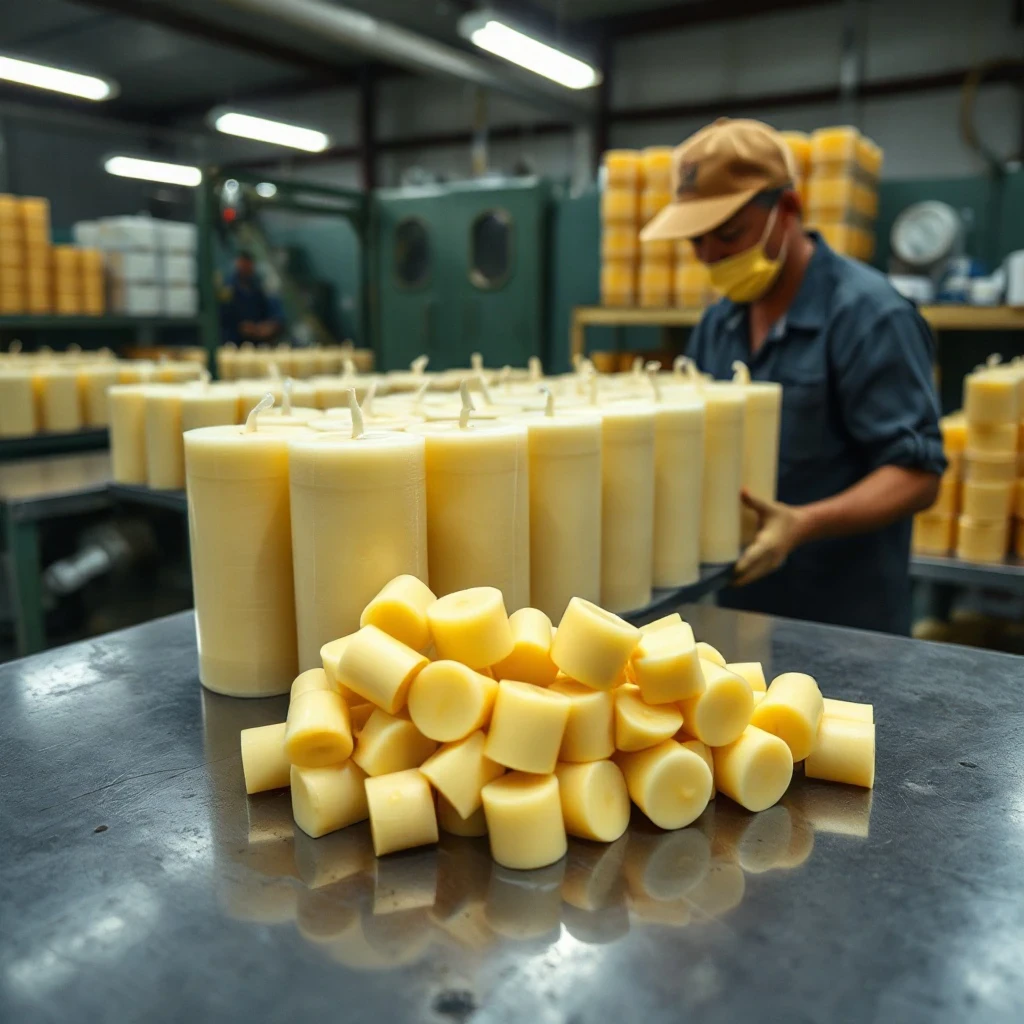
Palm wax is a fully hydrogenated palm oil product, distinct from the semi-solid palm stearin used in food. Through complete hydrogenation, the oil's unsaturated fatty acids are saturated, yielding a hard, brittle, high-melting-point fat. This base material is then fractionated or blended to achieve specific melting profiles, typically between 55°C and 62°C, which is the key to its candle-making utility.
The production route begins with refined, bleached, and deodorized palm oil. Full hydrogenation converts the oil into a fully saturated fat with an iodine value near zero. The resulting hard fat is then processed through one of two main paths: either it is gently fractionated to isolate a higher-melting stearin fraction, or it is blended with softer oils and additives. The final wax is often formed into flakes, pastilles, or slabs for ease of handling.
For candle use, the wax is typically blended with a small percentage of additives—such as stearic acid or a polymer—to improve fragrance retention, mold release, and burn characteristics. The melting point is tuned by blending with softer fractions or with vegetable oils like coconut or soy, allowing manufacturers to produce container candles, pillar candles, or tealights from the same base material.
Palm wax is prized for its hardness and high melting point, which give candles excellent dimensional stability in warm climates. It burns with a bright, steady flame and has a neutral scent profile, making it a strong carrier for fragrance oils. Compared to paraffin, palm wax is renewable and biodegradable, which appeals to buyers under pressure to meet sustainability targets. It is also typically less expensive than soy wax on a per-kilogram basis, though price varies with crude palm oil markets.
A key commercial advantage is its compatibility with existing candle-making equipment. Most paraffin or soy wax production lines can run palm wax with minimal adjustment, reducing switching costs for manufacturers. However, palm wax has a tendency to bloom—a white, powdery surface deposit—which some buyers may find undesirable. This can be mitigated with proper cooling rates and additives, but it remains a specification point.
When evaluating palm wax suppliers, focus on the melting point specification and the iodine value, as these determine performance. Ask for a certificate of analysis showing the drop point, penetration hardness, and color (typically a low Gardner number). Confirm the wax's origin and certification under the Roundtable on Sustainable Palm Oil (RSPO) or equivalent schemes, as this is increasingly a non-negotiable procurement requirement.
Check the wax's oil content—excess oil can cause smoking or poor fragrance throw. Request a small trial batch to test burn characteristics, including flame height, soot production, and fragrance release, under your specific wick and container conditions. Finally, verify the supplier's consistency across batches; palm wax can vary seasonally with crude palm oil quality, so a stable supply agreement with clear tolerances is essential for industrial buyers.
This space reaches palm oil buyers, traders and industry readers every day. Sponsorship and advertising enquiries are welcome — get in touch:
[email protected]Indonesia's B50 mandate, Nepal tariff scrutiny, and crude oil weakness alter palm oil supply-demand dynamics.
Malaysian CPO holds around $1,101/MT; MPOB June shows rising output and stocks; El Niño dryness and crude slide weigh.
A practical guide for buyers to the hydrolysis process that turns palm stearin into oleochemical building blocks.
A technical primer for buyers on how palm wax is made, why it matters commercially, and what to check when sourcing.
Malaysian benchmark holds above $1,100/MT despite peak output and crude slide; market weighs El Niño dryness against demand signals.
Malaysian crude palm oil futures settled around $1,101/MT (RM 4,498), down 0.3% from the previous session, as the market absorbed a mixed supply-demand picture. The global World Bank benchmark was near $1,105/MT, while Indonesia’s reference price stood at about $1,030/MT. Currency moves were muted, with the ringgit at 4.09 per dollar and the rupiah at 18,069 per dollar.
MPOB data for June 2026 showed Malaysian CPO production at 1,638,777 tonnes, up 8.1% month-on-month, in line with seasonal trends. Closing stocks rose 3.7% to 1,332,697 tonnes, while exports increased 5.7% to 1,198,567 tonnes. Notably, imports surged 135.3% to 103,113 tonnes, reflecting arbitrage opportunities from Indonesia. The FFB reference price slipped 1.3% to RM 48.90.
Weather remains a key watch point. The El Niño episode (ONI +1.0) has brought notably dry conditions to Kalimantan, raising concerns about future production in Indonesia. Our model outlook notes that while peak production is currently pressuring prices, El Niño dryness could tighten supply later in the year.
India, the world’s largest edible oil importer, saw a 30% drop in June imports, partly due to reduced palm and soybean shipments. However, reports suggest imports could surge from July to October ahead of festivals. India is also seeking sunflower oil alternatives amid Black Sea disruptions, which could support palm demand. Separately, Nepal’s duty-free edible oil exports to India are under scrutiny, potentially affecting trade flows.
Biofuel policy remains a wildcard. Indonesia’s B50 programme is expected to boost domestic palm consumption, but a sharp 6.9% slide in Brent crude over seven days to about $90/bbl has raised questions about biodiesel economics. The RBI has linked biofuel mandates to higher edible oil prices, adding to the policy debate.
Our model outlook suggests a mild bearish bias in the near term, with volatile daily moves. Pressures include the crude oil slump, peak production, and rupiah weakness. Support comes from the wide BOPO spread and El Niño dryness concerns. The market’s stale anchor and mixed demand signals keep confidence low.
Buyers should monitor crude oil price direction, any updates on India’s import policy, and weather developments in Kalimantan. Also watch for monthly export data and any shifts in Indonesia’s biodiesel mandate implementation.