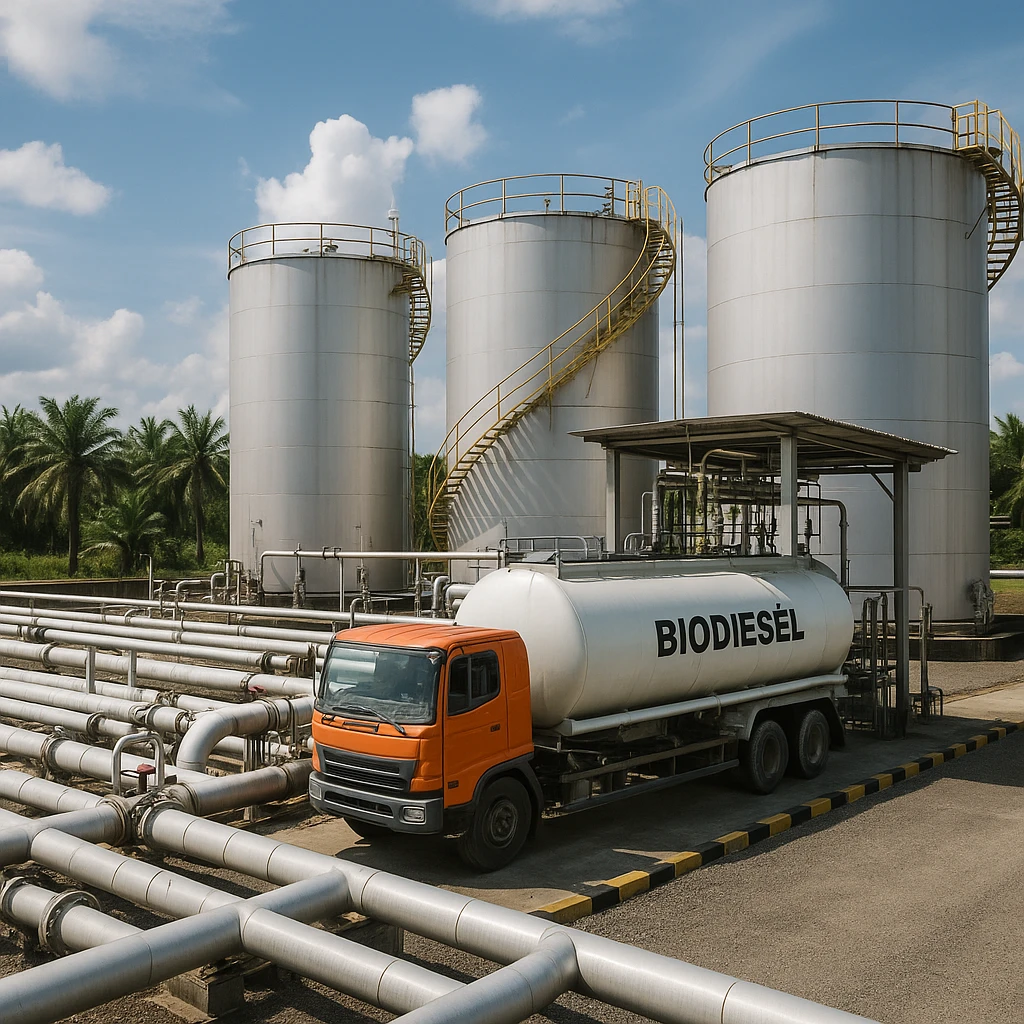
Indonesia's B50 programme is being framed as more than a biodiesel expansion; it is described as a strategy for energy resilience and industrialisation. That positioning signals a structural pull on domestic palm oil use, not a one-off demand spike.
Enforcement and distribution
The energy ministry is preparing administrative sanctions without fines for B50 mandate violators, while national distribution is reported at 94 percent. The absence of fines may reduce short-term compliance pressure, but a high distribution rate indicates that the blend is already moving through the supply chain. For palm oil markets, this means a larger share of output is being absorbed into the domestic fuel pool.
Food versus fuel
Reports that the food sector requires 10 million tons of CPO amid the biodiesel surge underline direct competition between energy and edible uses. Mandated fuel demand is likely to compete with food manufacturers, oleochemical producers and exporters for the same feedstock. That can tighten export availability and may push up premiums for food-grade or certified sustainable volumes.
EUDR and compliance-minded buyers
Global Witness reports that Mondelez is making a last-ditch attempt to weaken the EU deforestation regulation. If EUDR requirements are diluted, demand for traceable, low-risk palm oil in the EU could soften. However, buyers that have already built due-diligence systems may continue to require deforestation-free supply because investor and consumer expectations do not automatically follow regulatory rollback. A divergence between EU rules and Indonesia's domestic policy could also create two-tier traceability and pricing obligations.
- B50 shifts more palm oil into domestic energy use.
- Food-sector demand competes directly with the biodiesel mandate.
- EUDR uncertainty may narrow traceability premiums but is unlikely to erase them.