
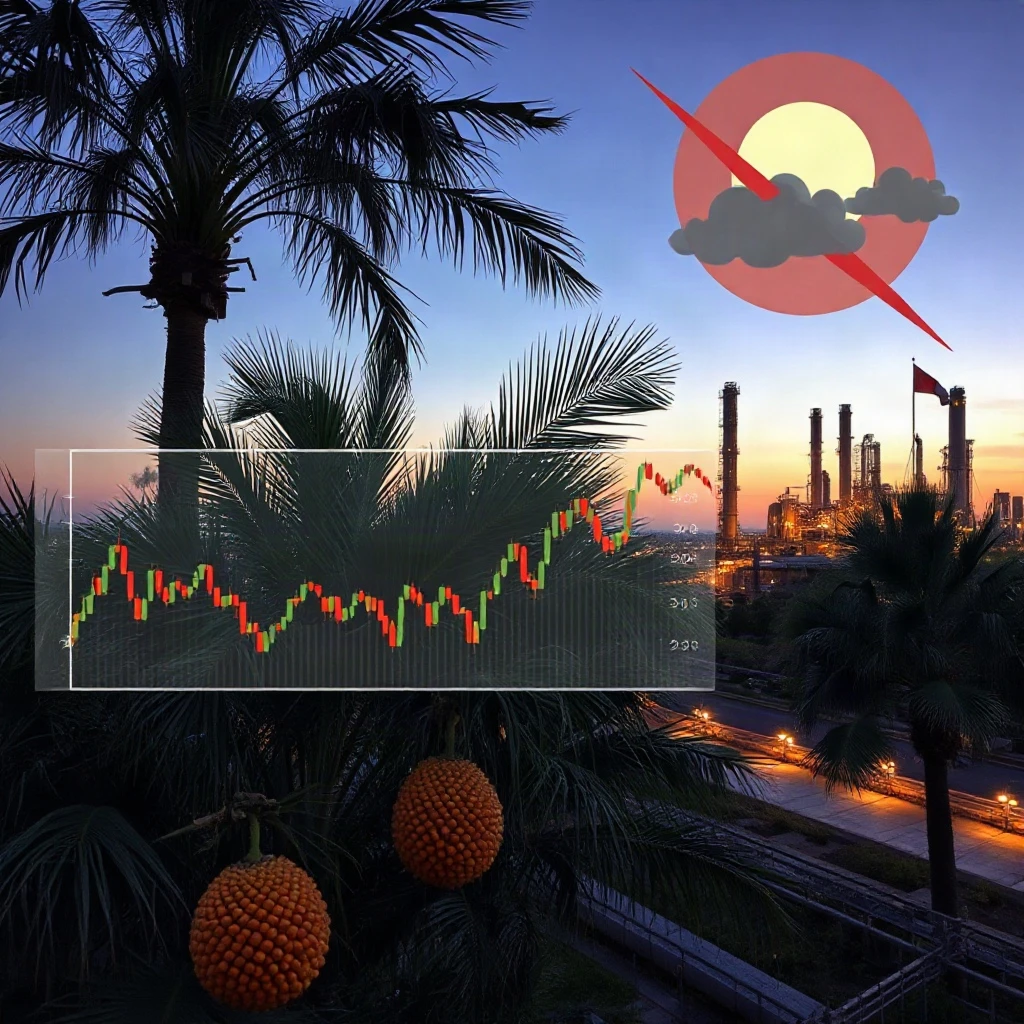
Malaysian CPO benchmark is consolidating near $1,144/MT, up 0.2% from the previous session and equivalent to about RM4,613/MT. The global World Bank palm oil benchmark sits near $1,101/MT, while Indonesia's reference price is around $997/MT. Brent crude is about $89/bbl, up 0.6%, which matters for biodiesel blend economics. The market is digesting a late-August pullback—Indonesian CPO fell 1.9% in the last week of August—but has not broken down.
What is pushing CPO higher
El Niño remains the main supply-side support. With ONI at +1.4 and dry conditions reported in Sarawak, Sumatra/Riau and Kalimantan, the market is pricing an eventual 6-12 month yield lag. Repeated GAPKI/MPOC warnings of lower Indonesian output reinforce this, and futures rebounded on El Niño headlines on Aug 28. The demand-side cushion is also real. A soy-palm spread of $454/MT keeps palm heavily discounted to soy oil, encouraging price-sensitive buyers to switch into palm. Indonesia's export policy adds further friction: the August reference price near $997/MT implies a $125/MT levy plus $148/MT progressive duty, and any further rise would curb Indonesian export margins and tighten Malaysian CPO availability. Meanwhile, Brent crude near $89/bbl and POGO at -$175/t, around the 6th percentile, make palm-based biodiesel blending highly economic before mandates, supporting discretionary demand with B40 in force. Technicals have not rolled over: MACD histogram is positive, the 5/20 SMA golden cross is intact, price is above the SMA-5/20/50, and RSI at 63 is not yet overbought.
What is pushing CPO lower
The most direct weight is Malaysia's July stock build. Closing stocks rose 7.2% MoM to 1,429,316 tonnes, about 61% above the five-year average, while stocks-to-use at 12.5% signals ample cover. July CPO production also rose 9.4% MoM to 1,792,979 tonnes against a 14.5% MoM rise in exports and a 51.9% MoM drop in imports. That build comes as the market enters the Jul-Oct seasonal production peak, and the next MPOB release in roughly 14 days could confirm further inventory accumulation. September is historically a softer month, averaging -0.9% MoM. Speculative positioning adds vulnerability: CFTC soyoil managed-money net long remains elevated at +88,442 contracts but fell 9,795 contracts week-on-week, so crowded long liquidation can ripple through the complex. Finally, the late-August correction—Indonesian CPO down 1.9% in the final week of August—could carry into early September before stabilizing.
Which side has the upper hand
Our model's factor balance currently has five bullish factors against four bearish factors, so the upside has the upper hand, but only modestly. The bullish supply threat from El Niño and the wide soy-palm discount are offset by ample Malaysian stocks, peak production, and seasonally soft September. Currency cross-currents are broadly neutral: a weak rupiah around 17,748 per dollar could encourage aggressive Indonesian export selling, while a stronger ringgit near 4.04 lifts USD-quoted CPO but is not a direct input for MYR-denominated physical. Our model outlook expects choppy trade with a slight net gain of about +1.1% over the next seven sessions, but the stale anchor and missing cargo-survey/palm futures data keep confidence low. The balance would flip more clearly bearish if the next cargo survey or MPOB release confirms faster stock accumulation, or if speculative long liquidation extends the late-August correction. It would flip more clearly bullish if Indonesian export policy tightens further or El Niño damage becomes more concrete.