
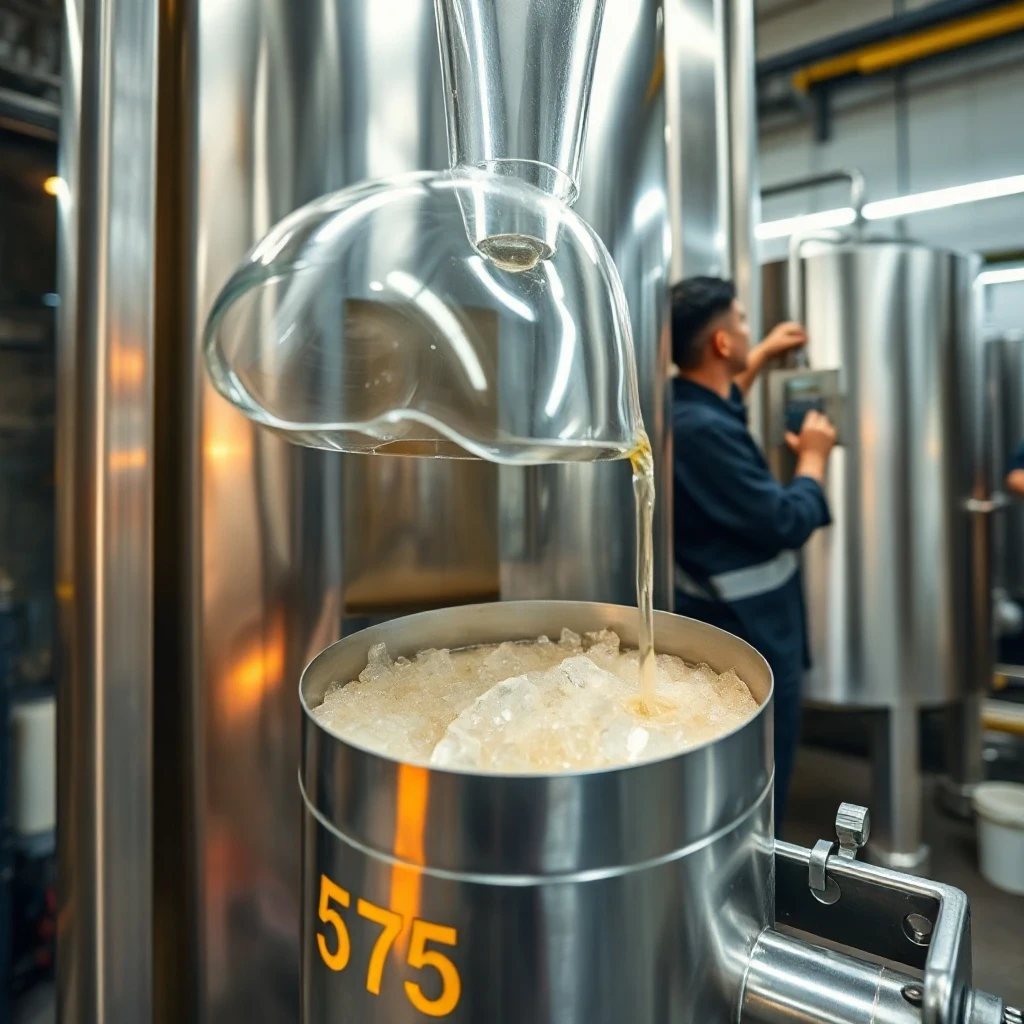
The Basics of Fractionation
Palm oil is a semi-solid fat at room temperature, a blend of different triglycerides that melt at different temperatures. Fractionation is the process of separating these components to produce olein (the liquid fraction), stearin (the solid fraction), and, through further processing, mid-fractions with specific melting profiles.
The core technique is dry fractionation, which involves controlled cooling and crystallization of the oil, followed by filtration to separate the solid crystals from the liquid. This is the most widely used method because it is relatively simple and requires no chemical solvents. Other methods, such as solvent fractionation and detergent-based fractionation, exist but are less common due to higher costs and complexity.
What Is Well Established
Research has firmly established the basic principles of triglyceride crystallization. The process is driven by the differential melting points of triglycerides, which depend on their fatty acid composition and positional distribution. Palmitic acid, for instance, tends to concentrate in the solid stearin, while oleic acid remains in the liquid olein.
Another well-established point is that cooling rate and temperature control are critical. Slow, controlled cooling produces larger, more uniform crystals, which are easier to filter and yield a cleaner separation. Rapid cooling, by contrast, leads to small, irregular crystals that trap liquid oil, reducing efficiency and quality.
The use of additives, such as emulsifiers or crystal modifiers, is also a recognized practice to influence crystallization behavior. However, the specific effects can vary depending on the oil source and processing conditions.
Where Evidence Is Mixed or Evolving
While the fundamentals are solid, several aspects of fractionation science remain under active investigation, and the evidence is not always conclusive.
One area of debate is the precise role of minor components, such as diacylglycerols and free fatty acids, in crystallization. Some studies suggest these compounds can act as nucleation agents or inhibitors, but results are inconsistent. The impact may depend on their concentration and the specific oil composition, making it difficult to generalize.
Another contested point is the optimization of multi-stage fractionation. Producing mid-fractions often requires repeated crystallization and filtration steps, and the ideal parameters—such as temperature gradients, holding times, and filtration pressure—are not universally agreed upon. Different refiners use different protocols, and comparative studies are limited.
There is also ongoing research into improving the efficiency of dry fractionation, particularly in terms of yield and selectivity. Some recent work has explored the use of ultrasonic or shear-induced crystallization to enhance crystal formation, but these techniques are still in the experimental stage and have not been widely adopted commercially. Claims of significant improvements should be treated with caution until replicated in industrial settings.
What It Means for Producers, Refiners, and Buyers
For producers and refiners, the practical takeaway is that fractionation remains as much an art as a science. While the basic principles are clear, achieving consistent, high-quality separation requires careful control of process variables and a willingness to adapt to the specific characteristics of each batch of crude palm oil.
For buyers, the variability in fractionation outcomes means that product specifications—such as iodine value, cloud point, and melting point—can differ between suppliers. It is prudent to verify these parameters rather than assume uniformity based on the fraction name alone.
In sum, fractionation science provides a solid foundation, but the field is still evolving. Industry professionals should stay informed of new developments but remain skeptical of claims that outpace the evidence, especially those promising dramatic efficiency gains without robust industrial validation. ---
*This article reflects the position as of 12 August 2026. Research moves on, and later work may revise or supersede what is described here. Please verify the current position, and any changes made after this date, before relying on it.*