Palm Oil Steadies Near $1,102 as India Imports Surge, El Niño Risk Builds
Malaysian CPO holds at $1,102/MT; India's buying hits 10-month peak, but July MPOB data shows rising stocks and Indonesia sets a lower August reference price.

The Malaysian benchmark holds near $1,102/MT ahead of a key supply report, with a bullish inventory inflection expected to test the bearish pressure from crude oil and China.
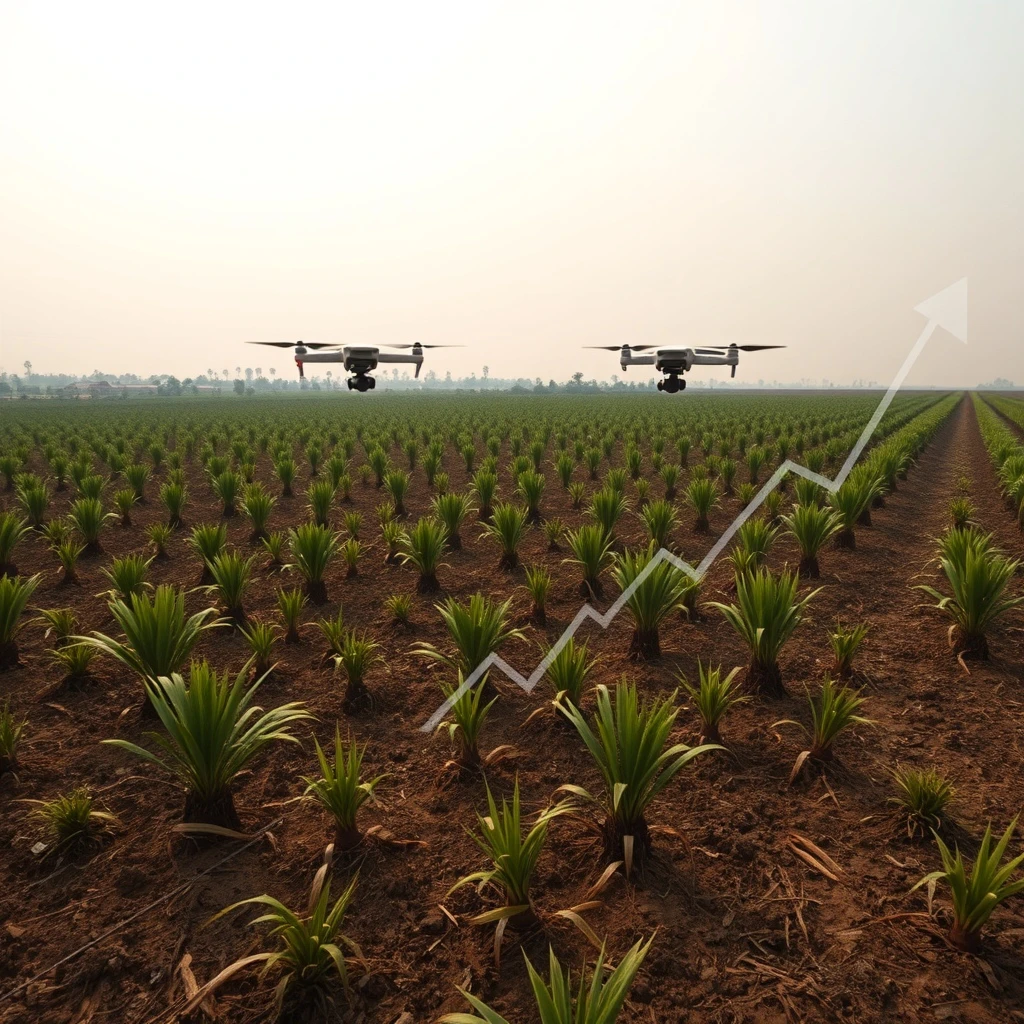
Malaysian crude palm oil (CPO) futures are trading around $1,102 per metric ton (RM4,510/MT), little changed from the previous session. The market remains in a tight holding pattern ahead of the MPOB July supply-and-demand report, which our model outlook suggests could reveal an El Niño-driven inventory inflection. The World Bank benchmark is at $1,101/MT, while Indonesia’s reference price stands at $1,030/MT. Brent crude softened 0.4% to $84/bbl, and the ringgit held at 4.09 to the dollar.
An imminent inventory drawdown. The upcoming MPOB July report is the focal point. Our model preview indicates that El Niño’s lagged impact is starting to bite, with early signals pointing to lower production and a possible draw in Malaysian stocks. With market participants already leaning bullish, even a modest decline in inventories could trigger a breakout.
El Niño intensifies supply fears. The Oceanic Niño Index (ONI) has climbed to +1.4, confirming a strong El Niño event. Historically, such conditions reduce rainfall in key growing regions—Sarawak and Kalimantan are already notably dry—and suppress fresh fruit bunch yields after a lag of 6–9 months. This forward-looking supply tightness is providing a persistent tailwind for prices.
Indonesia’s B50 mandate absorbs feedstocks. State-owned Pertamina has begun nationwide distribution of B50 biodiesel, significantly increasing domestic palm oil consumption. As the world’s largest producer, this pull of feedstock into the local fuel market reduces the volume available for export, tightening global supply.
Palm’s discount to soyoil widens. With palm oil trading at a $479/MT discount to soybean oil, the BOPO spread remains exceptionally wide. This price advantage is steering price-sensitive buyers—particularly in India—toward palm, elevating physical demand.
Indian import substitution gains momentum. Disruptions in Black Sea sunflower oil shipments are prompting Indian refiners to switch to palm. Although June imports were subdued, purchasing activity is now recovering, offering a fresh demand channel that should help absorb regional production.
Brent crude weakness saps biodiesel economics. A 5.5% slump in Brent crude over the past seven days has narrowed the diesel-to-palm-oil (POGO) spread, eroding the blending incentive for palm-based biodiesel. With industrial demand sensitive to this margin, the sell-off in crude acts as a direct headwind for CPO.
Managed money reduces exposure. Speculative net long positions in CPO, while still elevated, have been trending lower. This reduction in bullish bets leaves the market vulnerable to further liquidation if a bearish catalyst—such as a negative MPOB surprise or deeper crude losses—materializes.
A weaker rupiah encourages Indonesian exports. The Indonesian rupiah’s depreciation makes the country’s palm oil more competitively priced on the world market, incentivizing exporters to ship more. This adds to regional supply pressure, though the impact is partially dampened by the domestic B50 mandate that ties up stocks.
China’s import appetite fades. The world’s top vegetable oil importer saw a decline in total inflows during the first half of the year. A sustained pullback in Chinese buying removes a crucial pillar of global demand, setting a softer tone for the near-term outlook.
With five bullish factors squaring off against four bearish ones, the upside currently holds the upper hand. The near-term direction hinges almost entirely on the MPOB report. A stock draw—and especially one larger than the cautious consensus—would likely amplify the bullish narrative, overpowering headwinds from energy markets and fund positioning. Conversely, if the report confounds expectations by showing a build, the balance would immediately tilt bearish as speculative longs bail out and the focus shifts back to sluggish Chinese demand and cheap Indonesian exports. For now, the weight of El Niño supply risks and policy-driven demand keeps buyers in control.
Malaysian CPO holds at $1,102/MT; India's buying hits 10-month peak, but July MPOB data shows rising stocks and Indonesia sets a lower August reference price.

Malaysian crude palm oil futures were little changed, with the benchmark hovering near $1,102 per metric ton, down 0.2% from the prior session. The ringgit traded at 4.09 per dollar, while the Indonesian reference price for August was set at $996.52 per ton, below the previous month's level. Global benchmarks, as tracked by the World Bank, were near $1,101/MT, keeping the market tightly ranged.
The latest MPOB data for July showed Malaysian CPO production at 1,792,979 tons, up 9.4% month-on-month, while closing stocks rose 7.2% to 1,429,316 tons. Exports climbed 14.5% to 1,392,178 tons, and imports fell sharply by 51.9% to 49,566 tons. The FFB reference price edged up 1.2% to RM 49.50.
Despite the near-term stock build, the market is increasingly focused on the strengthening El Niño, with the ONI index at +1.4. Dry conditions in Sarawak and Kalimantan are raising concerns about future yields. Market previews of the upcoming MPOB report highlight a rising probability of a strong El Niño, and traders are watching for a potential 'inventory inflection point' that could shift the balance from surplus to deficit. Our model outlook suggests that while the anchor price of $1,102/MT is already three days stale, the anticipation of such an inflection may lend some support.
Demand-side news remains supportive. India's July edible oil imports hit a 10-month peak, driven by higher palm oil buying, as the world's largest vegetable oil importer accelerates purchases ahead of festivals. This bolsters the demand picture even as global food prices have risen to their highest level since 2023, with edible oils a notable contributor.
Indonesia, Malaysia, and Thailand have all raised their biodiesel mandates for 2026, with Indonesia's B50 rollout now nationwide via Pertamina. This policy-driven demand is a key pillar under prices, even as Brent crude held at $85 per barrel, up 0.7%, which limits the fuel-blending incentive. The wide BOPO spread remains a medium-term bullish factor, though the rupiah's weakness at 17,817 per dollar spurs Indonesian selling.
Our model outlook sees near-term pressure from bearish fundamentals: July MPOB data showed rising stocks, peak production season is ongoing, and technicals are turning bearish. The market is likely to edge lower over the next 7 days, with positioning ahead of the next MPOB release. However, El Niño supply concerns and biodiesel demand provide a floor.
Indonesia's August reference price of $996.52 per ton acts as a policy anchor, potentially influencing export levies and competitiveness. Malaysian Palm Oil Council guidance suggests CPO prices will stay within the RM 4,400–4,650 range for August, which aligns with current levels.
Watch the MPOB report for inventory inflection, and monitor El Niño developments in Sarawak and Kalimantan. Also keep an eye on India's import pace, biodiesel policy implementation, and crude oil price moves, as they will determine whether the current modest range holds or breaks.
Sources: 富途牛牛; AgroSpectrum India; energynews.pro; ANI News; Business Recorder; UkrAgroConsult
Indonesia, Malaysia and Thailand raise 2026 biodiesel mandates; B50 rollout and El Niño tighten supply.
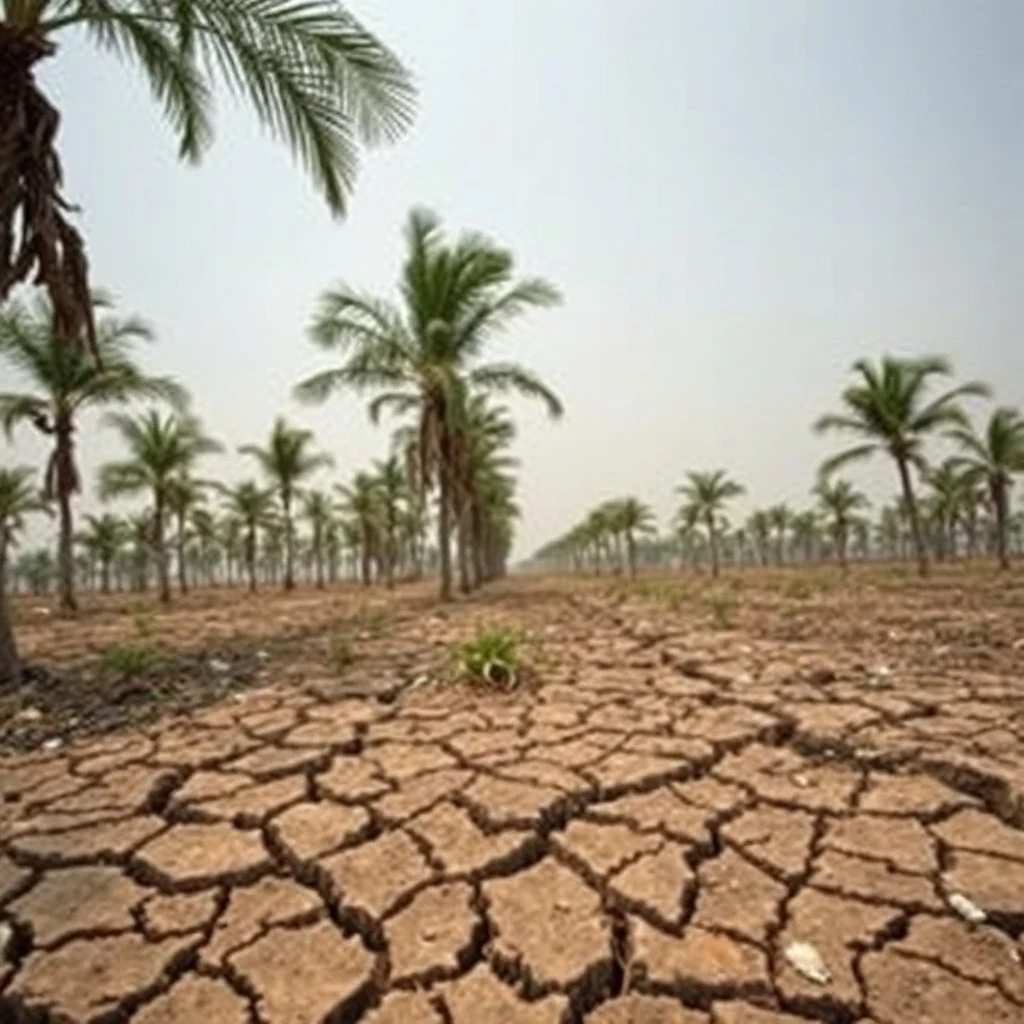
Southeast Asian policymakers are tightening biodiesel mandates through 2026, a move that is reshaping the demand side of the palm oil market. Indonesia, Malaysia and Thailand have all announced higher blending requirements, with Indonesia's state energy firm Pertamina launching nationwide distribution of B50 biodiesel. The policy push comes at a time when palm oil supply is already under pressure from a strengthening El Niño, which has brought dry conditions to key growing regions in Sarawak and Kalimantan.
The higher mandates, particularly Indonesia's B50, are expected to absorb a larger share of domestic palm oil supply, reducing the volume available for export. Industry observers note that broad-based edible oil price rises have been linked to biofuel use, with India's central bank citing Indonesia's B50 mandate as a contributing factor. For compliance-minded buyers, this means tighter availability of Indonesian palm oil on the global market and potentially higher premiums for certified sustainable volumes.
Malaysia's higher blend targets add to the regional demand picture, though its export-oriented industry may balance domestic use with overseas sales. Thailand's mandate increase, while smaller in absolute terms, signals a regional trend toward greater palm oil consumption in energy markets.
On the supply side, the latest MPOB data for June 2026 shows Malaysian crude palm oil production at 1,638,777 tonnes, up 8.1% month-on-month, while closing stocks rose to 1,332,697 tonnes. Exports increased 7.2% to 1,215,850 tonnes, and imports surged 135.3% to 103,113 tonnes, reflecting the need to supplement domestic supply. However, the El Niño-driven dry weather in key growing areas raises concerns about future production, particularly as the current peak season may be followed by a sharper-than-usual decline in output.
Our model outlook suggests that the current benchmark price of about $1102 per tonne, which is three days stale, may have already edged up slightly. With anticipation of a bullish MPOB July report and supportive biodiesel-oil price spreads, prices could continue modest gains over the next seven days, potentially rising about 1% from the anchor. However, upside is capped by peak production season, a sharp decline in Brent crude prices, and vulnerability to long liquidation. Low confidence is warranted given missing data and stale prices.
For buyers, the combination of higher biodiesel mandates and weather-related supply risks points to a firmer price environment. Compliance with sustainability criteria may become more important as competition for available volumes intensifies.
Dry conditions persist across key belts while heavy rain hits logistics; output outlook mixed
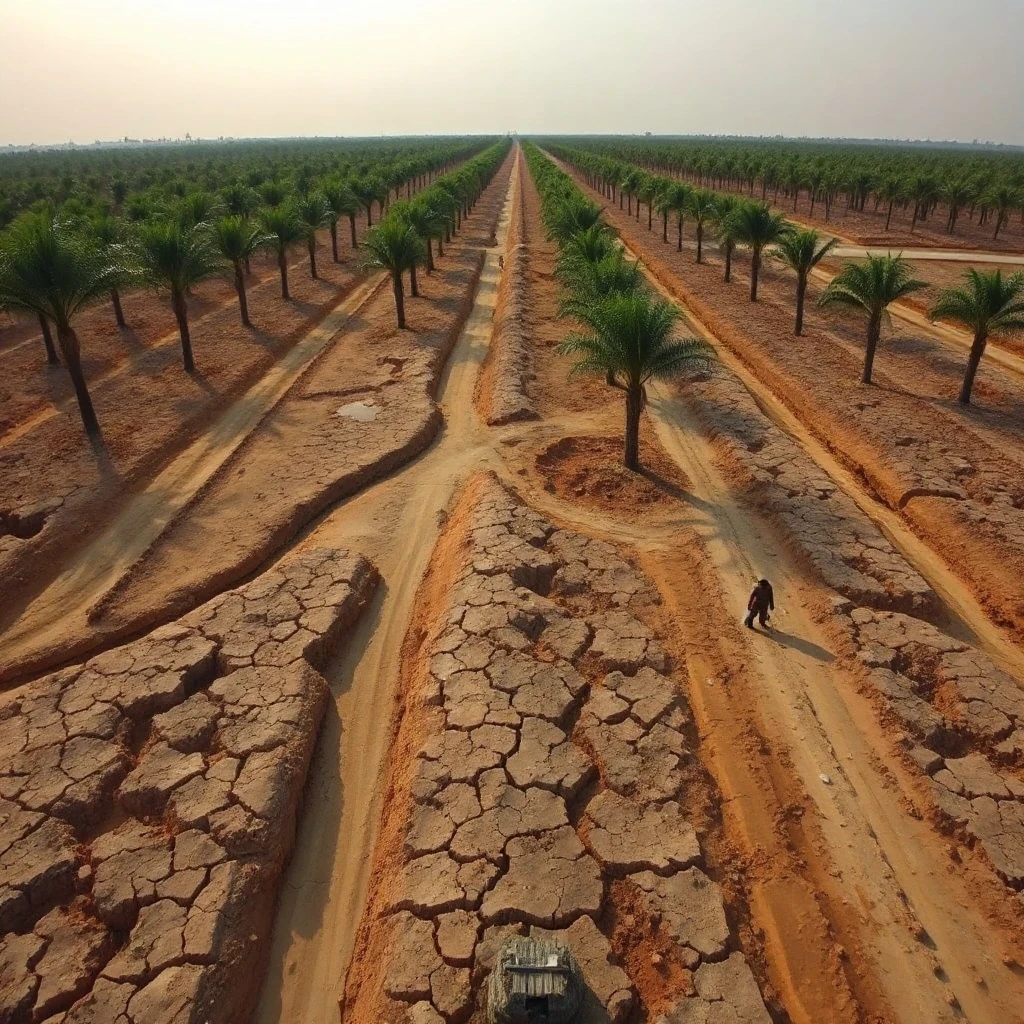
The palm oil market enters the week with the ENSO state firmly in El Niño territory, the Oceanic Niño Index at +1.4. That signal matters less for today's harvest than for what it implies about fruit development over the coming months, but the immediate weather picture is already complicated by a split across the two main producing countries.
In Malaysia, Sarawak stands out as notably dry, a condition that typically trims fruit bunch weight with a lag of six to twelve months. Growers there may be dealing with smaller bunches well into the next crop cycle even if rains return soon. The same applies to Kalimantan in Indonesia, where dry soils during the current El Niño phase can suppress flowering and fruit set for the mid-2027 crop.
At the same time, heavy recent rainfall across parts of the region is not a straightforward positive. Wet weather disrupts harvesting and transport now, slowing the flow of fresh fruit bunches to mills and adding to logistical friction at a time when peak production season is already testing infrastructure. The net effect is a market that must weigh the prospect of weaker future yields against immediate supply chain delays.
Malaysian official data for June showed CPO production at 1,638,777 tonnes, up 8.1% month-on-month, with closing stocks at 1,332,697 tonnes, a 3.7% rise. Exports climbed 7.2% to 1,215,850 tonnes, while imports surged 135.3% to 103,113 tonnes, a sign that local supply is being supplemented from abroad. The FFB reference price eased 1.3% to RM 48.90.
Those figures reflect conditions before the latest weather stress fully materialized. The July report, due soon, is expected by many participants to be bullish, which has helped underpin prices at the benchmark level of about $1102 per tonne, down just 0.2% on the session.
Our model outlook, anchored on that $1102 price, is now three days stale. Given the strengthening El Niño, recent heavy rains, anticipation of a supportive July MPOB report, and a favorable biodiesel blend spread, CPO likely edged up slightly since the anchor and may continue modest gains over the next week. We see a gradual uptrend of about 1% from the anchor as the base case.
That optimism is tempered by real constraints. Peak production season means supply is still rising, a sharp decline in Brent crude to around $84 per barrel weakens biodiesel demand economics, and the market remains vulnerable to long liquidation. Confidence in the near-term path is low, largely due to missing data and the stale price anchor.
For the broader crop outlook, the key variable is whether El Niño fades quickly or persists. A transition toward La Niña would typically bring wetter conditions to Southeast Asia, easing drought stress in Sarawak and Kalimantan but raising the risk of excessive rain and flooding in the months ahead. For now, the region is caught between dry soils that will curb future yields and wet weather that is slowing today's harvest.
MPOB data shows production rose 9.4% on-month, pushing inventories 7.2% higher despite a 14.5% export rebound. FFB prices edged up, but near-term CPO outlook remains pressured.
Malaysia’s crude palm oil production jumped 9.4% month-on-month to 1,792,979 tonnes in July 2026, according to MPOB’s latest data. The increase reflects the seasonal peak and available harvesting labour, although El Niño conditions—with an ONI of +1.4 and dryness in Sarawak and Kalimantan—could temper output in coming months. Closing stocks rose 7.2% to 1,429,316 tonnes, pushing the stocks-to-use ratio to 12.5%. This build signals a well-supplied market and adds to bearish sentiment, as it exceeded some industry estimates.
Exports climbed 14.5% on-month to 1,392,178 tonnes, a solid rebound likely tied to restocking by key buyers ahead of festivals and competitive Malaysian pricing relative to Indonesia’s reference of $1,030/MT. However, imports plunged 51.9% to just 49,566 tonnes, suggesting weak domestic uptake for foreign oils or ample local supply. The net trade balance improved, but the stock increase underscores that overseas demand was not strong enough to absorb the production surge fully.
Fresh fruit bunch reference prices rose 1.2% to RM 49.50 per tonne, offering marginal relief to growers despite a slightly softer CPO benchmark at RM 4,511/MT (about $1,102/MT). This divergence may reflect localised processing margins or quality differentials. For plantation operators, the modest uptick helps buffer against rising input costs, but the broader price trend remains cautious.
The July MPOB figures present a bearish near-term picture. The combination of a production-led stock build, a 0.4% drop in Brent crude, and tepid buying interest from Asia’s largest importers outweighs the supportive factors such as the wide BOPO spread and El Niño jitters. Our model outlook points to downward pressure on CPO prices, with the benchmark RM 4,511/MT potentially testing lower levels. However, uncertainty is high: the upcoming MPOB release in about three days and further energy market moves will be decisive in setting the short-term trajectory.
How process contaminants arise in refined palm oil, what mitigation can and cannot do, and where the science remains unsettled.

Refined palm oil has faced persistent scrutiny over two process contaminants: 3-monochloropropane-1,2-diol (3-MCPD) esters and glycidyl esters. These compounds form during high-temperature deodorization, a standard step in physical refining. The chemistry is well established: glycidyl esters arise mainly from diglycerides reacting at extreme heat, while 3-MCPD esters form through a more complex pathway involving chlorinated precursors. What is less certain is the precise impact of every variable, and how far mitigation can go without compromising oil quality.
Researchers agree that the formation of both contaminants is driven by temperature and time. Deodorization above roughly 230°C for extended periods increases glycidyl ester levels sharply. 3-MCPD esters also rise with heat, but their formation is influenced by the presence of chlorine-containing compounds, which may come from the soil, fertilizers, or processing aids. The type of refining matters: physical refining, common for palm oil due to its high free fatty acid content, is more prone to generating these contaminants than chemical refining, which uses alkali neutralization and operates at lower deodorization temperatures.
Mitigation techniques have advanced significantly. The most effective approach is to remove precursors before deodorization. Washing crude or degummed oil with water or acid, using adsorbents like bleaching earth, and adding certain additives during refining can reduce precursor levels. Adjusting deodorization conditions—lowering temperature, shortening time, or using a different stripping medium—also lowers formation. Post-treatment, such as passing the oil through a short-path distillation or using enzymatic degumming, can further reduce glycidyl esters. These methods are now widely deployed in commercial refining, and their efficacy is generally accepted.
Despite progress, several questions are unresolved. The relative contribution of different chlorine sources is not fully quantified. Some studies suggest that naturally occurring chlorinated compounds in the palm fruit are the main driver, while others point to external contamination. The effectiveness of specific additives, such as certain bleaching earths or synthetic adsorbents, varies by feedstock and processing conditions, and results are not always reproducible across mills. There is also debate over whether mitigation steps that reduce one contaminant might increase the other. Some evidence indicates that certain treatments lower glycidyl esters but have little effect on 3-MCPD esters, or vice versa. The industry has claimed that optimized refining can bring levels below regulatory limits, but the evidence base for universal applicability is thin. What works in one refinery may not work in another due to differences in crude oil quality, equipment, and process design.
For producers, the key takeaway is that contamination is manageable but not eliminable. Refiners should focus on precursor removal early in the process, monitor chlorine content in incoming crude oil, and consider investing in equipment that allows lower-temperature deodorization. Buyers should recognize that while mitigation has improved, residual levels can still vary. Regulatory limits are tightening, and compliance requires consistent testing and process control. The science is still evolving, and claims of complete elimination should be treated with caution. A pragmatic approach is to treat mitigation as a continuous improvement effort, not a one-time fix, and to stay alert to new evidence as it emerges. ---
*This article reflects the position as of 10 August 2026. Research moves on, and later work may revise or supersede what is described here. Please verify the current position, and any changes made after this date, before relying on it.*
Our market desk connects serious buyers with vetted origin suppliers across Southeast Asia. Indicative pricing, specifications and shipment guidance — free of charge.
Get connected →Malaysian CPO holds at $1,102/MT; India's buying hits 10-month peak, but July MPOB data shows rising stocks and Indonesia sets a lower August reference price.
Indonesia, Malaysia and Thailand raise 2026 biodiesel mandates; B50 rollout and El Niño tighten supply.
Dry conditions persist across key belts while heavy rain hits logistics; output outlook mixed
MPOB data shows production rose 9.4% on-month, pushing inventories 7.2% higher despite a 14.5% export rebound. FFB prices edged up, but near-term CPO outlook remains pressured.
How process contaminants arise in refined palm oil, what mitigation can and cannot do, and where the science remains unsettled.
The Malaysian benchmark holds near $1,102/MT ahead of a key supply report, with a bullish inventory inflection expected to test the bearish pressure from crude oil and China.
Malaysian crude palm oil (CPO) futures are trading around $1,102 per metric ton (RM4,510/MT), little changed from the previous session. The market remains in a tight holding pattern ahead of the MPOB July supply-and-demand report, which our model outlook suggests could reveal an El Niño-driven inventory inflection. The World Bank benchmark is at $1,101/MT, while Indonesia’s reference price stands at $1,030/MT. Brent crude softened 0.4% to $84/bbl, and the ringgit held at 4.09 to the dollar.
An imminent inventory drawdown. The upcoming MPOB July report is the focal point. Our model preview indicates that El Niño’s lagged impact is starting to bite, with early signals pointing to lower production and a possible draw in Malaysian stocks. With market participants already leaning bullish, even a modest decline in inventories could trigger a breakout.
El Niño intensifies supply fears. The Oceanic Niño Index (ONI) has climbed to +1.4, confirming a strong El Niño event. Historically, such conditions reduce rainfall in key growing regions—Sarawak and Kalimantan are already notably dry—and suppress fresh fruit bunch yields after a lag of 6–9 months. This forward-looking supply tightness is providing a persistent tailwind for prices.
Indonesia’s B50 mandate absorbs feedstocks. State-owned Pertamina has begun nationwide distribution of B50 biodiesel, significantly increasing domestic palm oil consumption. As the world’s largest producer, this pull of feedstock into the local fuel market reduces the volume available for export, tightening global supply.
Palm’s discount to soyoil widens. With palm oil trading at a $479/MT discount to soybean oil, the BOPO spread remains exceptionally wide. This price advantage is steering price-sensitive buyers—particularly in India—toward palm, elevating physical demand.
Indian import substitution gains momentum. Disruptions in Black Sea sunflower oil shipments are prompting Indian refiners to switch to palm. Although June imports were subdued, purchasing activity is now recovering, offering a fresh demand channel that should help absorb regional production.
Brent crude weakness saps biodiesel economics. A 5.5% slump in Brent crude over the past seven days has narrowed the diesel-to-palm-oil (POGO) spread, eroding the blending incentive for palm-based biodiesel. With industrial demand sensitive to this margin, the sell-off in crude acts as a direct headwind for CPO.
Managed money reduces exposure. Speculative net long positions in CPO, while still elevated, have been trending lower. This reduction in bullish bets leaves the market vulnerable to further liquidation if a bearish catalyst—such as a negative MPOB surprise or deeper crude losses—materializes.
A weaker rupiah encourages Indonesian exports. The Indonesian rupiah’s depreciation makes the country’s palm oil more competitively priced on the world market, incentivizing exporters to ship more. This adds to regional supply pressure, though the impact is partially dampened by the domestic B50 mandate that ties up stocks.
China’s import appetite fades. The world’s top vegetable oil importer saw a decline in total inflows during the first half of the year. A sustained pullback in Chinese buying removes a crucial pillar of global demand, setting a softer tone for the near-term outlook.
With five bullish factors squaring off against four bearish ones, the upside currently holds the upper hand. The near-term direction hinges almost entirely on the MPOB report. A stock draw—and especially one larger than the cautious consensus—would likely amplify the bullish narrative, overpowering headwinds from energy markets and fund positioning. Conversely, if the report confounds expectations by showing a build, the balance would immediately tilt bearish as speculative longs bail out and the focus shifts back to sluggish Chinese demand and cheap Indonesian exports. For now, the weight of El Niño supply risks and policy-driven demand keeps buyers in control.