Palm Oil Extends Losses on Weak Rivals, Still Set for Weekly Gain
CPO slips on profit-taking and softer soybean, crude; Indonesia's August reference price set lower at $996.52/MT.

CPO benchmark slips 0.3% as peak output, weak Indian demand, and a crude oil rout overshadow a wide soy oil spread cushion.
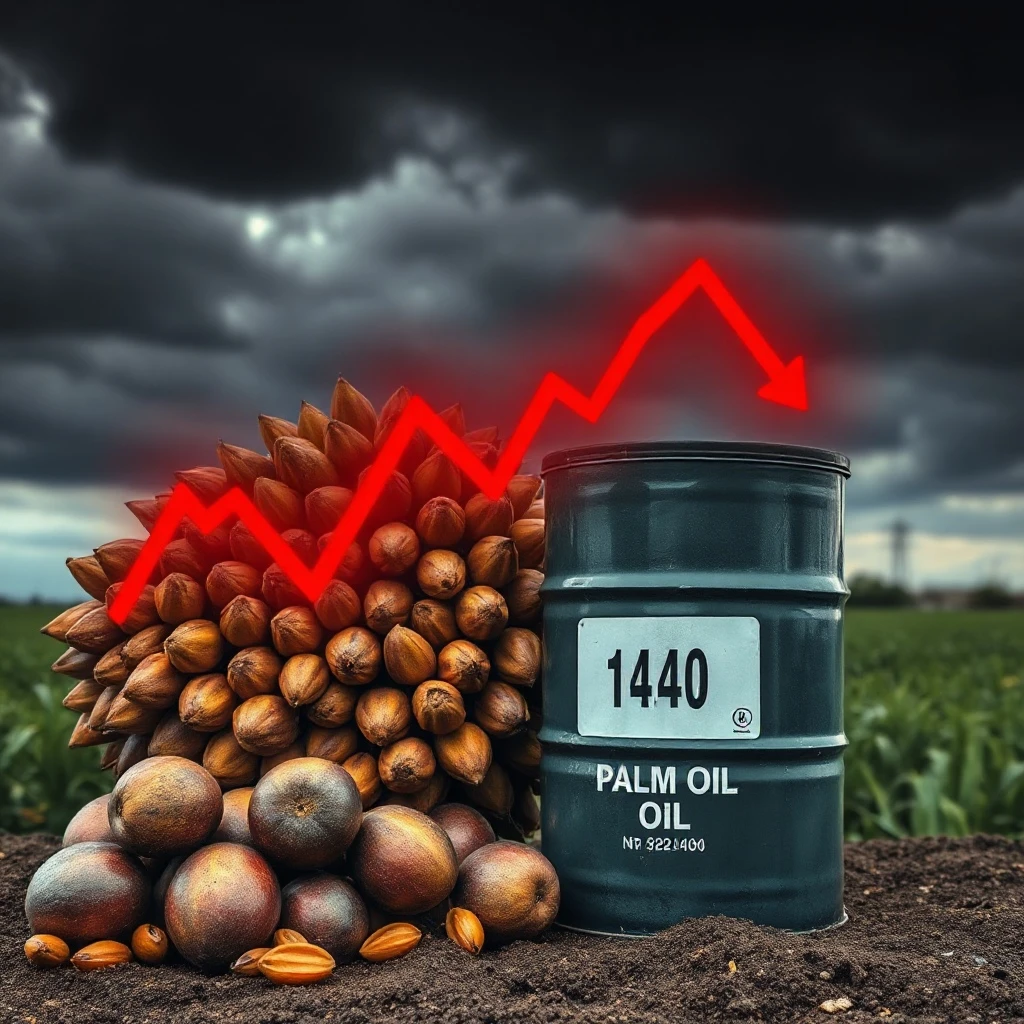
The Malaysian crude palm oil (CPO) benchmark dipped 0.3% on Friday to $1,105 per metric tonne (RM4,516), extending a cautious drift as the market positions ahead of next week’s MPOB supply report. The modest decline reflects a weight of bearish forces that continue to dominate, even as a deep discount to soy oil provides some underlying support.
Buoyant BOPO spread underpins demand The premium of soybean oil over palm oil, known as the BOPO spread, has widened to $477 per metric tonne. This heavy discount makes palm exceptionally attractive to price-sensitive buyers, encouraging switching from soyoil in food and industrial uses. The spread acts as a crucial floor, blunting sharper price falls. Our model outlook flags this as the primary bullish current keeping CPO from a steeper slide.
El Niño builds, but its bite is months away The Oceanic Niño Index sits at +1.4°C, confirming an El Niño event that historically curbs palm yields with a 6–12 month lag. While this does not directly tighten supply in the coming week, it keeps medium-term supply risk on traders’ radars, providing a faint bid to deferred positions. For now, it does not alter the immediate physical balance.
Storm clouds from the upcoming MPOB release The Malaysian Palm Oil Board is set to publish July data in roughly four days, and the market expects a seasonal production increase and a further build in inventories from June’s already ample 1.33 million tonnes (+3.7% month-on-month). Traders are trimming risk ahead of what is likely to be a bearish stockprint, adding pre-emptive selling pressure.
Peak output season swells supplies July through October is the high-production window in Southeast Asia. Trees are naturally more productive, swelling crushed volumes and pushing aggregated supply above demand during this stretch. This mechanical rise in supplies routinely exerts downward price pressure, and this year is no exception.
Indian demand falters Indian edible oil imports slumped 30% in June, as reported in late July, signaling a step-back from the world’s top palm buyer. Lower offtake mean less aggressive procurement, leaving Malaysian exporters to chase a thinner order book and forcing price concessions to move cargoes.
Crude oil rout hammers biodiesel economics Brent crude has tumbled 13.6% over the past seven days to $84 a barrel. When crude oil is cheaper, straight diesel becomes more competitive against palm-based biodiesel, eroding the blending mandate premium that keeps a floor under veg-oil demand. This direct energy-link decline saps a key demand driver.
Weak rupiah unleashes aggressive Indonesian selling The Indonesian rupiah has depreciated to 17,913 per US dollar, making the country’s palm oil exports cheaper in dollar terms. Indonesian producers, facing lower local input costs in dollar-adjusted terms, are incentivized to push volumes onto global markets, piling additional regional supply onto Malaysian prices.
Speculative positioning adds fragility Managed money holds a net long position in CBOT soy oil near the 85th percentile of its historical range. With this crowded bullish stance, any bearish shock—like a high MPOB stock figure—could trigger a wave of liquidation, spilling over into palm sentiment and amplifying down moves.
Technical tide turns bearish A death cross has formed with the five-day simple moving average falling below the 20-day, a classic signal of a short-term downtrend. While the RSI around 50 and the price near the Bollinger Band midpoint suggest a mean-reverting pause, the cross tips the immediate directional bias lower.
With only two bullish pillars against seven bearish headwinds, the downside clearly holds the upper hand. Our model outlook describes a cautious, mildly negative bias as the market navigates the last few sessions before the MPOB release. For the picture to shift, the data would need to deliver a bullish surprise—perhaps a production miss or a unexpected stock draw. A sharp rebound in Brent or a sudden revival in Indian buying could also challenge the bearish script. Until then, the weight of evidence keeps the CPO benchmark pinned in a defensive posture.
CPO slips on profit-taking and softer soybean, crude; Indonesia's August reference price set lower at $996.52/MT.
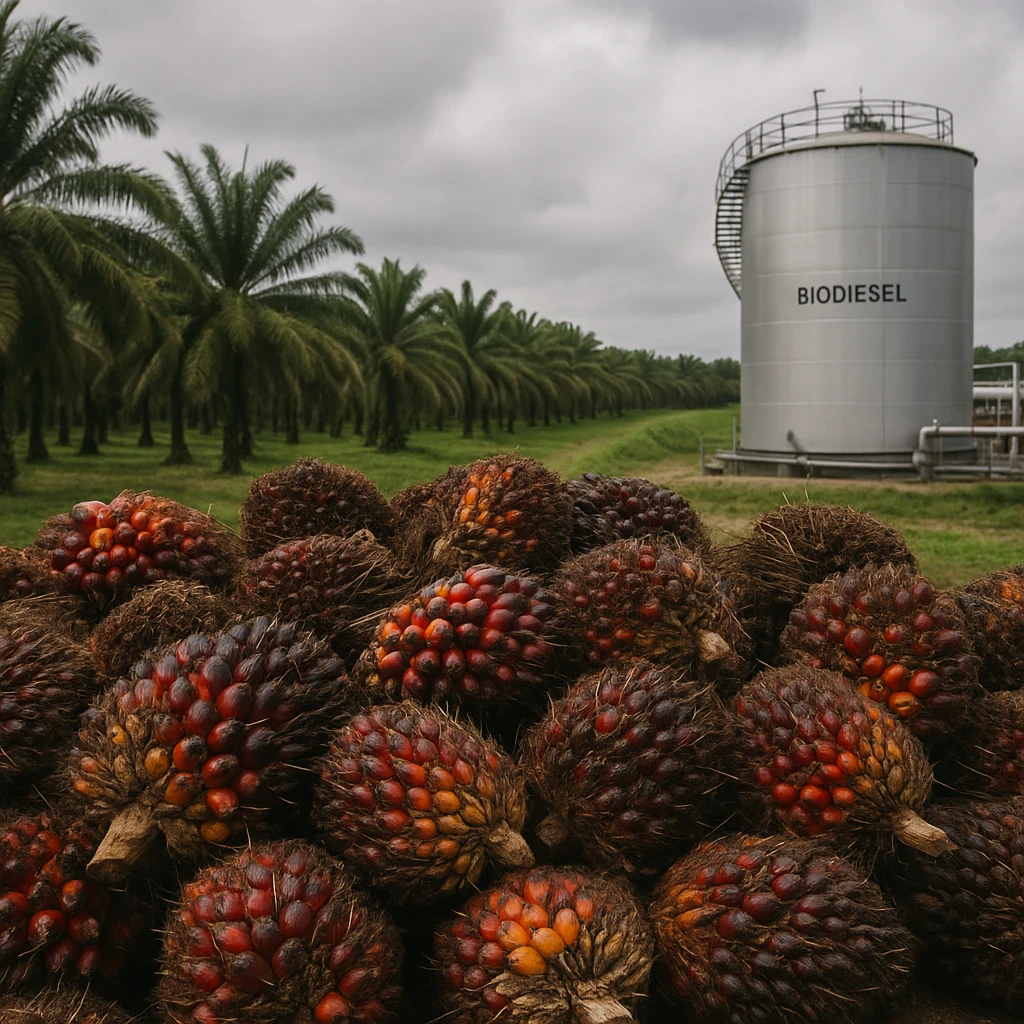
Malaysian crude palm oil futures extended losses on August 7, easing 0.3% to about $1,104/MT (RM 4,515/MT), as traders took profits and tracked weaker soybean and crude oil markets. Despite the session's decline, contracts remain on track for a weekly gain, supported by lingering El Niño concerns and firm biodiesel demand expectations.
The global benchmark stood at about $1,101/MT, while Indonesia's August reference price was set at $996.52 per tonne, down from the previous month's level. The lower reference price is expected to trim export tax expectations for Indonesian shipments, potentially encouraging greater export flows.
Malaysia's June MPOB data showed CPO production at 1,638,777 tonnes, up 8.1% month-on-month, with closing stocks rising 3.7% to 1,332,697 tonnes. Exports grew 5.7% to 1,198,567 tonnes, while imports surged 135.3% to 103,113 tonnes, reflecting tight domestic supply earlier in the year.
With the industry entering peak production season, inventories are likely to expand further. Our model outlook suggests CPO prices are poised near a tipping point as the approaching MPOB July report meets a surge in El Niño probability, a nascent B50 rollout, and a sharp Brent crude sell-off. Near-term, expect consolidation around $1,100–$1,120, with a slight bias to the upside from preseasonal restocking, but high uncertainty.
El Niño conditions persist (ONI +1.4), with dry weather reported in Sabah, Sarawak, and Kalimantan. While current rainfall deficits have not yet hit yields, the market is wary of potential stress on trees in the coming months. This is a key factor limiting downside, as any prolonged dryness could tighten supply later in the year.
Crude oil slipped 0.6% to about $83/bbl, trimming support for biodiesel blending economics. However, Indonesia's nationwide B50 biodiesel rollout and India's robust buying—July edible oil imports hit a 10-month peak—underpin demand. A wide soy-palm spread also makes palm oil attractive for price-sensitive buyers, though weaker soybean oil futures added pressure to the complex.
The upcoming MPOB July report is pivotal. A further stock build could extend losses, but any weather-related supply concerns or changes in Indonesian export policy could quickly reverse sentiment. The lower Indonesian reference price and the rupiah's direction (USD/IDR at about 17,941) will shape export tax expectations. Buyers should monitor crude oil prices and next week's MPOB data for near-term cues.
Sources: 富途牛牛; NST Online; Finimize; Business Recorder; UkrAgroConsult; UkrAgroConsult
A step-by-step look at the mechanism behind Indonesia's rising biodiesel blend rates, who pays for it, and how each increase locks more crude palm oil out of the export market.

For procurement managers and traders, Indonesia's biodiesel mandate is not just a domestic fuel policy—it is a structural shift in global palm oil supply. Every time the mandated blend rate rises, a larger share of the country's crude palm oil (CPO) is diverted from export markets into domestic fuel production. Understanding how this mechanism works is essential for reading landed costs and anticipating supply tightness.
Indonesia's biodiesel mandate requires fuel suppliers to blend a minimum share of palm oil-based biodiesel into diesel fuel sold domestically. The blend rate is expressed as a percentage—B30 means 30% palm oil biodiesel mixed with 70% conventional diesel. The rate is set by government regulation and has been raised in steps over time, from B30 to B35 and then to B40. Each step represents a deliberate policy choice to absorb more CPO domestically.
The mandate is not a one-time target; it is an ongoing requirement that applies to all diesel sold for transportation and industry. As the blend rate increases, the volume of CPO needed for biodiesel rises proportionally, assuming diesel consumption remains steady. This is the core mechanism: a higher blend rate directly translates into more CPO that never reaches the export market.
The key to making the mandate work is the subsidy mechanism. Biodiesel produced from palm oil is often more expensive than conventional diesel, so fuel suppliers would face a cost penalty if forced to blend at high rates. To compensate, the government uses a levy on CPO exports to fund the price difference. This levy is collected from exporters of crude palm oil and its derivatives, creating a direct link between export volumes and domestic biodiesel support.
When export prices are high, the levy generates more revenue, making it easier to fund the subsidy. When prices fall, the levy revenue shrinks, and the government may adjust the levy rate or the subsidy allocation to keep the mandate viable. This funding mechanism means that the cost of the mandate is ultimately borne by the palm oil supply chain itself, not by taxpayers or fuel consumers directly.
Each increase in the blend rate—from B30 to B35, and then to B40—removes a quantifiable volume of CPO from the export pool. For example, if Indonesia produces a certain amount of biodiesel annually, a 5-percentage-point rise in the blend rate could divert an additional several million tonnes of CPO away from exports. The exact figure depends on diesel consumption and yield assumptions, but the direction is clear: every step up tightens global supply.
For buyers, this means that even if export taxes or levies change, the underlying volume reduction is the real driver of price. When the mandate expands, less CPO is available for international buyers, which can support global prices and increase landed costs for importers. Traders should monitor not just the announced blend rate, but also the actual implementation and enforcement, as delays or waivers can alter the effective impact.
Procurement professionals should track three things: the official blend rate announcements, the levy rate adjustments, and the actual biodiesel production volumes. A higher blend rate is bullish for CPO prices because it reduces export supply. A lower levy or a waiver could signal that the government is easing the burden on exporters, but it does not change the underlying demand for CPO in biodiesel.
Commercial relevance is direct: if Indonesia raises its blend rate, expect tighter export availability and higher prices for CPO and its derivatives. Conversely, if the mandate is relaxed or enforcement weakens, more CPO could flow to export markets, putting downward pressure on prices. By understanding the mechanism, buyers can better anticipate supply shifts and adjust their sourcing strategies accordingly. ---
*This article reflects the position as of 7 August 2026. Duty structures, levies and mandates change often, sometimes at short notice. Please verify the current position, and any changes made after this date, before relying on it.*
Biodiesel mandate lifts Indonesian palm demand; India mulls Nepal duty-free curbs as prices firm.
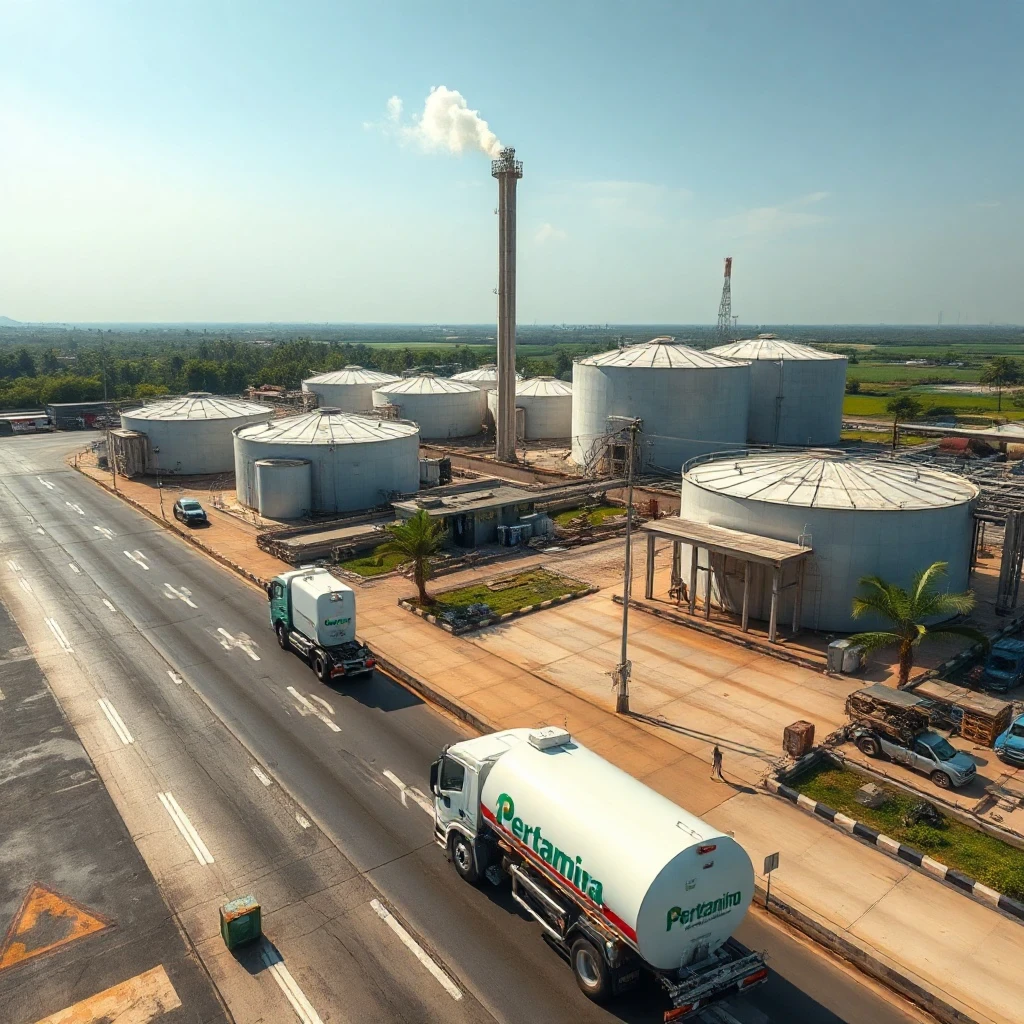
Indonesia's nationwide B50 biodiesel distribution, launched by state energy firm Pertamina in late July, is the most consequential policy shift for palm oil markets this month. The higher blend — up from B35 — will absorb a larger share of domestic crude palm oil output, tightening export availability and supporting benchmark prices. For compliance-minded buyers, the mandate reinforces the need to track Indonesian export permit allocations and domestic market obligations, which may be adjusted to secure feedstock for the expanded program.
India's edible oil trade is also in focus. Domestic producers, via the Indian Vegetable Oil Producers' Association, are pressing for curbs on duty-free imports from Nepal, arguing that the route is being used to bypass tariffs on refined palm oil. A policy response could redirect some Indian import demand toward Malaysia and Indonesia, with near-term implications for regional price spreads. Buyers sourcing into India should monitor any tariff or quota changes closely, as they could alter the competitiveness of refined versus crude palm oil.
Malaysian crude palm oil futures settled near $1,105 per metric ton on the benchmark Bursa Malaysia exchange, down 0.3% on the day, with the ringgit at 4.09 per dollar. The global benchmark was around $1,101, while Indonesia's reference price stood near $1,030. Brent crude slipped 0.2% to about $83 per barrel, narrowing the energy-value support for biodiesel blending economics.
MPOB data for June showed Malaysian production rising 8.1% month-on-month to 1.64 million tons, with stocks up 3.7% to 1.33 million tons. Exports grew 5.7% to 1.20 million tons, while imports surged 135% to 103,000 tons, reflecting tight domestic supply earlier in the year.
Our model outlook sees CPO prices edging lower over the next week, pressured by the crude oil drop, peak-season inventory builds, and a weak rupiah (around 17,913 per dollar) that encourages Indonesian export flows. However, a wide soy-palm spread and lingering El Niño concerns — with dry conditions in Sabah, Sarawak and Kalimantan — should limit downside. The upcoming MPOB July report will be pivotal; a further stock build could extend losses, while any weather-driven production surprise would reverse the trend.
For buyers, the policy landscape is now a two-sided risk: Indonesian biodiesel demand and Indian import restrictions could tighten supply, while ample regional stocks and soft energy prices argue for cautious purchasing. Monitoring both regulatory fronts will be key to navigating the next few weeks.
Sources: Our World in Data; Biofuels International Magazine; livemint.com; livemint.com; Business Standard
What research shows about enzyme-catalyzed fat modification, where the evidence is solid, and where industry claims outrun the science.

For decades, partial hydrogenation was the workhorse for turning liquid oils into semi-solid fats with the right melting profile for margarines, shortenings and confectionery. But the process generates trans fatty acids, which are now widely recognized as a cardiovascular risk. Regulatory pressure and consumer demand have pushed the industry toward alternatives, and enzymatic interesterification has emerged as a leading replacement.
Unlike hydrogenation, interesterification does not add hydrogen or create trans fats. Instead, it rearranges the fatty acids already present on the glycerol backbone of the triglyceride molecule. Enzymatic interesterification uses a lipase enzyme to catalyze this rearrangement, typically in a continuous or batch reactor. The result is a fat with altered melting behavior, but with the same overall fatty acid composition as the starting blend.
The scientific literature is consistent on several key points. First, enzymatic interesterification produces fats with negligible trans content, provided the starting oils are fully refined and not partially hydrogenated. Second, the process is more specific than chemical interesterification, which uses a random catalyst and can produce more byproducts. Enzymatic routes also operate under milder conditions, reducing energy use and preserving heat-sensitive minor components.
Studies comparing enzymatic interesterification to partial hydrogenation have repeatedly shown that the resulting fats can match the functional properties—such as solid fat content and plasticity—needed for many applications. For example, blends of fully hydrogenated palm stearin with liquid oils, when interesterified enzymatically, yield fats with steep melting curves that are useful in bakery shortenings and confectionery coatings.
However, several areas remain contested or under-researched. One is the impact on micronutrients and minor components. Some research suggests that enzymatic interesterification can degrade tocopherols or phytosterols more than chemical methods, but other studies find no significant difference. The evidence is mixed, and outcomes likely depend on specific conditions and feedstock quality.
Another open question is the long-term oxidative stability of interesterified fats. Some trials report higher susceptibility to oxidation compared to hydrogenated counterparts, while others show comparable stability. This variability may stem from differences in starting oil composition, enzyme carrier, and post-treatment refining. Industry claims that enzymatic interesterification produces uniformly more stable fats are not fully supported by the data.
There is also debate about the nutritional effects of the triacylglycerol structures created. Interesterification randomizes fatty acid positions, which can alter absorption and postprandial lipid metabolism. Some human studies have shown higher fasting lipid levels with interesterified fats versus unmodified blends, but the clinical relevance remains unclear. This is an active area of investigation, and definitive conclusions are not yet available.
For producers, the evidence supports enzymatic interesterification as a viable, trans-free solution for many fat applications. It offers process advantages—lower energy input, fewer byproducts—and can produce tailored functional fats from palm oil fractions and other feedstocks.
But the research also cautions against over-optimism. Oxidative stability and micronutrient retention need to be assessed on a case-by-case basis. Process parameters, feedstock selection, and post-treatment steps all matter. Buyers should request stability and nutritional data from suppliers rather than assuming equivalence to hydrogenated products.
As the evidence base evolves, the industry should expect more refined guidance on optimal enzyme carriers, reactor designs, and quality control. For now, enzymatic interesterification is a proven technology, but it is not a magic bullet—it requires careful engineering and honest communication about its trade-offs. ---
*This article reflects the position as of 7 August 2026. Research moves on, and later work may revise or supersede what is described here. Please verify the current position, and any changes made after this date, before relying on it.*
From margarine bans to label mandates, the 1990s-2000s trans-fat fight reshaped edible oils, pushing palm to the fore.

The modern palm oil trade is, in large part, a product of a public-health campaign that began in the 1990s. For decades, partially hydrogenated vegetable oils (PHOs) had been the workhorse of the food industry, prized for their solidity, stability, and low cost. But as evidence mounted linking trans fats to coronary heart disease, regulators and consumers turned against them—and the industry was left searching for a replacement that could mimic PHO functionality without the health stigma.
Hydrogenation, developed in the early 20th century, allowed liquid oils to be turned into semi-solid fats, enabling the production of margarine, shortening, and a host of baked and fried goods. By the 1980s, PHOs were ubiquitous. But a growing body of epidemiological and biochemical research, most notably the landmark 1990s studies that tied trans fat intake to increased LDL cholesterol and decreased HDL cholesterol, began to shift the consensus. The first regulatory steps came in the mid-1990s, when some countries introduced mandatory trans-fat labeling, and by the early 2000s, Denmark had imposed strict limits on trans fats in food. The United States followed with a labeling requirement in 2006, and later moved to ban PHOs entirely, a process completed in 2018.
Food manufacturers faced a dilemma: they needed a fat that was solid at room temperature, resistant to oxidation, and neutral in taste. Options included tropical oils—palm, palm kernel, and coconut—as well as fully hydrogenated oils (which contain no trans fats but are very hard) and interesterified blends. Palm oil emerged as the most practical choice. Its natural semi-solid consistency, high oxidative stability, and relatively low cost made it a direct functional substitute in many applications. Palm kernel oil, with its sharper melting profile, found use in confectionery and coatings. The shift was not immediate, nor universal, but by the late 2000s, palm oil had become the default replacement fat in a wide range of processed foods, from cookies and crackers to frying oils and non-dairy creamers.
The trans-fat turn reshaped global supply chains. As demand for palm oil grew, so did its production, particularly in Southeast Asia. This expansion brought its own controversies, including deforestation, peatland conversion, and labor issues—concerns that later gave rise to sustainability certification schemes. For the palm trade, the health campaign was a double-edged sword: it opened vast new markets, but it also invited scrutiny of palm oil's own nutritional profile, particularly its saturated fat content. The industry responded with fractionation and blending to produce more tailored products, and with a sustained effort to position palm as a natural, trans-fat-free alternative.
Today, the trans-fat battle is largely won, with most jurisdictions having banned or strictly limited PHOs. Palm oil's dominance in the edible-oils complex is a direct inheritance of that era. The infrastructure, logistics, and product specifications that now define the trade were built around the need to supply a world that had turned away from hydrogenation. Even as newer concerns—about sustainability, health, and competing oils—emerge, the industry's structure remains shaped by the decisions made in the 1990s and 2000s. Understanding that history is essential for anyone navigating the palm market today, because the forces that made palm the default fat are still embedded in the way the trade operates.
Our market desk connects serious buyers with vetted origin suppliers across Southeast Asia. Indicative pricing, specifications and shipment guidance — free of charge.
Get connected →CPO slips on profit-taking and softer soybean, crude; Indonesia's August reference price set lower at $996.52/MT.
A step-by-step look at the mechanism behind Indonesia's rising biodiesel blend rates, who pays for it, and how each increase locks more crude palm oil out of the export market.
Biodiesel mandate lifts Indonesian palm demand; India mulls Nepal duty-free curbs as prices firm.
What research shows about enzyme-catalyzed fat modification, where the evidence is solid, and where industry claims outrun the science.
From margarine bans to label mandates, the 1990s-2000s trans-fat fight reshaped edible oils, pushing palm to the fore.
CPO benchmark slips 0.3% as peak output, weak Indian demand, and a crude oil rout overshadow a wide soy oil spread cushion.
The Malaysian crude palm oil (CPO) benchmark dipped 0.3% on Friday to $1,105 per metric tonne (RM4,516), extending a cautious drift as the market positions ahead of next week’s MPOB supply report. The modest decline reflects a weight of bearish forces that continue to dominate, even as a deep discount to soy oil provides some underlying support.
Buoyant BOPO spread underpins demand The premium of soybean oil over palm oil, known as the BOPO spread, has widened to $477 per metric tonne. This heavy discount makes palm exceptionally attractive to price-sensitive buyers, encouraging switching from soyoil in food and industrial uses. The spread acts as a crucial floor, blunting sharper price falls. Our model outlook flags this as the primary bullish current keeping CPO from a steeper slide.
El Niño builds, but its bite is months away The Oceanic Niño Index sits at +1.4°C, confirming an El Niño event that historically curbs palm yields with a 6–12 month lag. While this does not directly tighten supply in the coming week, it keeps medium-term supply risk on traders’ radars, providing a faint bid to deferred positions. For now, it does not alter the immediate physical balance.
Storm clouds from the upcoming MPOB release The Malaysian Palm Oil Board is set to publish July data in roughly four days, and the market expects a seasonal production increase and a further build in inventories from June’s already ample 1.33 million tonnes (+3.7% month-on-month). Traders are trimming risk ahead of what is likely to be a bearish stockprint, adding pre-emptive selling pressure.
Peak output season swells supplies July through October is the high-production window in Southeast Asia. Trees are naturally more productive, swelling crushed volumes and pushing aggregated supply above demand during this stretch. This mechanical rise in supplies routinely exerts downward price pressure, and this year is no exception.
Indian demand falters Indian edible oil imports slumped 30% in June, as reported in late July, signaling a step-back from the world’s top palm buyer. Lower offtake mean less aggressive procurement, leaving Malaysian exporters to chase a thinner order book and forcing price concessions to move cargoes.
Crude oil rout hammers biodiesel economics Brent crude has tumbled 13.6% over the past seven days to $84 a barrel. When crude oil is cheaper, straight diesel becomes more competitive against palm-based biodiesel, eroding the blending mandate premium that keeps a floor under veg-oil demand. This direct energy-link decline saps a key demand driver.
Weak rupiah unleashes aggressive Indonesian selling The Indonesian rupiah has depreciated to 17,913 per US dollar, making the country’s palm oil exports cheaper in dollar terms. Indonesian producers, facing lower local input costs in dollar-adjusted terms, are incentivized to push volumes onto global markets, piling additional regional supply onto Malaysian prices.
Speculative positioning adds fragility Managed money holds a net long position in CBOT soy oil near the 85th percentile of its historical range. With this crowded bullish stance, any bearish shock—like a high MPOB stock figure—could trigger a wave of liquidation, spilling over into palm sentiment and amplifying down moves.
Technical tide turns bearish A death cross has formed with the five-day simple moving average falling below the 20-day, a classic signal of a short-term downtrend. While the RSI around 50 and the price near the Bollinger Band midpoint suggest a mean-reverting pause, the cross tips the immediate directional bias lower.
With only two bullish pillars against seven bearish headwinds, the downside clearly holds the upper hand. Our model outlook describes a cautious, mildly negative bias as the market navigates the last few sessions before the MPOB release. For the picture to shift, the data would need to deliver a bullish surprise—perhaps a production miss or a unexpected stock draw. A sharp rebound in Brent or a sudden revival in Indian buying could also challenge the bearish script. Until then, the weight of evidence keeps the CPO benchmark pinned in a defensive posture.