
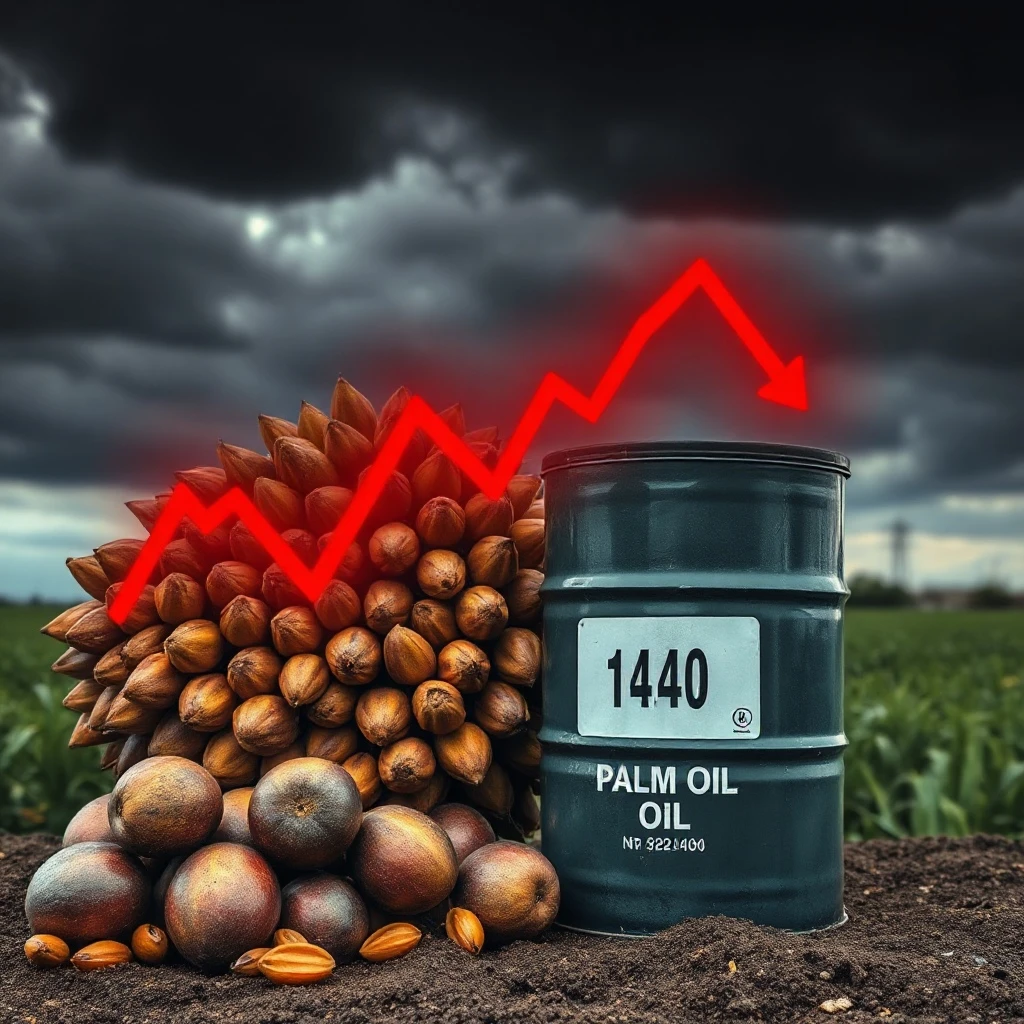
The Malaysian crude palm oil (CPO) benchmark dipped 0.3% on Friday to $1,105 per metric tonne (RM4,516), extending a cautious drift as the market positions ahead of next week’s MPOB supply report. The modest decline reflects a weight of bearish forces that continue to dominate, even as a deep discount to soy oil provides some underlying support.
What’s Lifting Prices
Buoyant BOPO spread underpins demand The premium of soybean oil over palm oil, known as the BOPO spread, has widened to $477 per metric tonne. This heavy discount makes palm exceptionally attractive to price-sensitive buyers, encouraging switching from soyoil in food and industrial uses. The spread acts as a crucial floor, blunting sharper price falls. Our model outlook flags this as the primary bullish current keeping CPO from a steeper slide.
El Niño builds, but its bite is months away The Oceanic Niño Index sits at +1.4°C, confirming an El Niño event that historically curbs palm yields with a 6–12 month lag. While this does not directly tighten supply in the coming week, it keeps medium-term supply risk on traders’ radars, providing a faint bid to deferred positions. For now, it does not alter the immediate physical balance.
What’s Weighing on Prices
Storm clouds from the upcoming MPOB release The Malaysian Palm Oil Board is set to publish July data in roughly four days, and the market expects a seasonal production increase and a further build in inventories from June’s already ample 1.33 million tonnes (+3.7% month-on-month). Traders are trimming risk ahead of what is likely to be a bearish stockprint, adding pre-emptive selling pressure.
Peak output season swells supplies July through October is the high-production window in Southeast Asia. Trees are naturally more productive, swelling crushed volumes and pushing aggregated supply above demand during this stretch. This mechanical rise in supplies routinely exerts downward price pressure, and this year is no exception.
Indian demand falters Indian edible oil imports slumped 30% in June, as reported in late July, signaling a step-back from the world’s top palm buyer. Lower offtake mean less aggressive procurement, leaving Malaysian exporters to chase a thinner order book and forcing price concessions to move cargoes.
Crude oil rout hammers biodiesel economics Brent crude has tumbled 13.6% over the past seven days to $84 a barrel. When crude oil is cheaper, straight diesel becomes more competitive against palm-based biodiesel, eroding the blending mandate premium that keeps a floor under veg-oil demand. This direct energy-link decline saps a key demand driver.
Weak rupiah unleashes aggressive Indonesian selling The Indonesian rupiah has depreciated to 17,913 per US dollar, making the country’s palm oil exports cheaper in dollar terms. Indonesian producers, facing lower local input costs in dollar-adjusted terms, are incentivized to push volumes onto global markets, piling additional regional supply onto Malaysian prices.
Speculative positioning adds fragility Managed money holds a net long position in CBOT soy oil near the 85th percentile of its historical range. With this crowded bullish stance, any bearish shock—like a high MPOB stock figure—could trigger a wave of liquidation, spilling over into palm sentiment and amplifying down moves.
Technical tide turns bearish A death cross has formed with the five-day simple moving average falling below the 20-day, a classic signal of a short-term downtrend. While the RSI around 50 and the price near the Bollinger Band midpoint suggest a mean-reverting pause, the cross tips the immediate directional bias lower.
Where the Balance Sits
With only two bullish pillars against seven bearish headwinds, the downside clearly holds the upper hand. Our model outlook describes a cautious, mildly negative bias as the market navigates the last few sessions before the MPOB release. For the picture to shift, the data would need to deliver a bullish surprise—perhaps a production miss or a unexpected stock draw. A sharp rebound in Brent or a sudden revival in Indian buying could also challenge the bearish script. Until then, the weight of evidence keeps the CPO benchmark pinned in a defensive posture.