Palm oil prices steady as balanced forces vie for direction
Benchmark Malaysian CPO holds at $1,100/MT, with bullish BOPO spread and El Niño signals offset by rising stocks and crude oil weakness.

New reference price for August set at $996.52 per ton; level influences export taxes and trade flows for palm oil buyers.
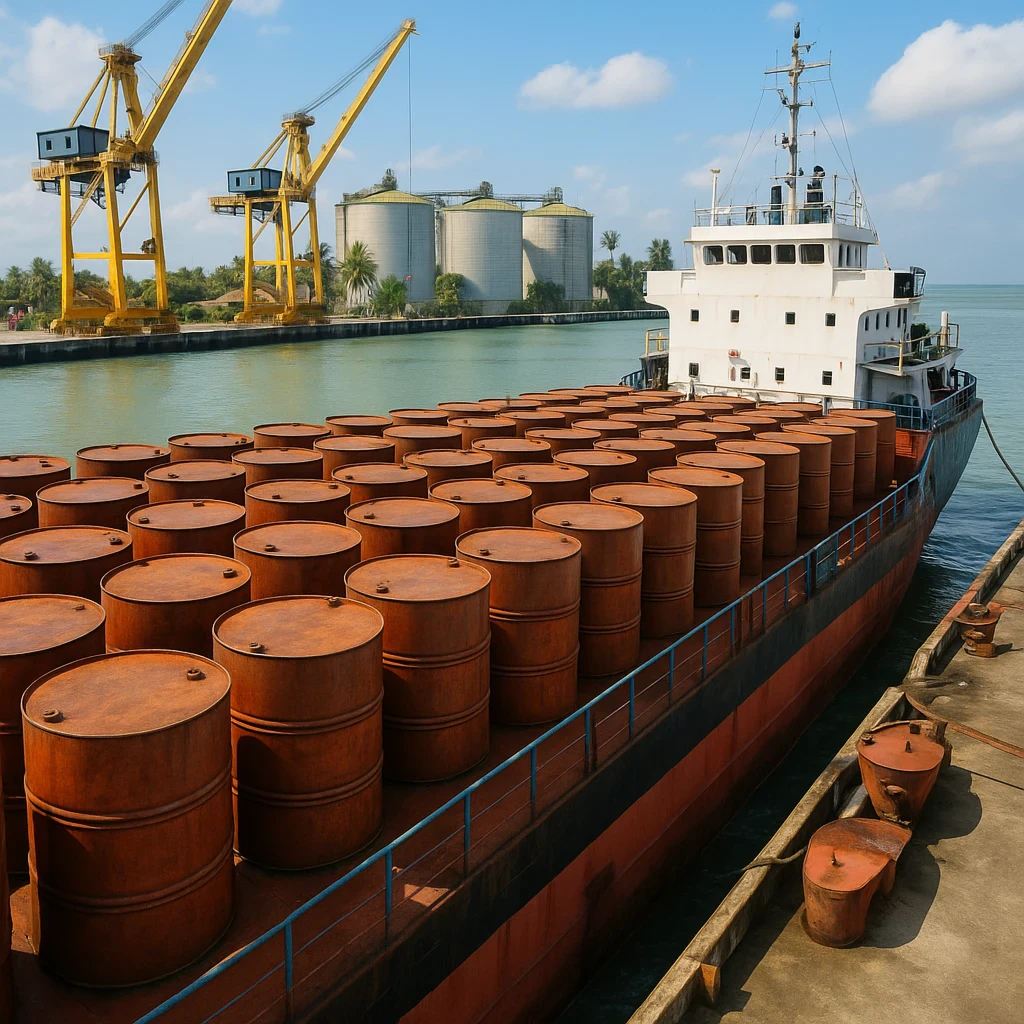
Indonesia has set its August crude palm oil (CPO) reference price at $996.52 per metric ton, a level that directly determines the export levy structure applied to shipments from the world's top palm oil producer. The official reference price, issued by the trade ministry, will be in effect for the full month and is a key input for traders calculating the cost of Indonesian palm oil in global markets.
The reference price is not a transaction price but a government-set benchmark used to calculate export levies and taxes on palm oil shipments. A lower reference price typically translates into a reduced levy burden for exporters, potentially making Indonesian CPO more competitive relative to Malaysian supply. The new August figure compares with the broader Indonesian reference price of about $1030/MT seen in recent market data, though the official August level has now been fixed at $996.52.
For buyers, the reference price feeds directly into the landed cost of Indonesian palm oil. Traders tracking the spread between Indonesian and Malaysian offers will adjust their sourcing decisions based on this levy impact. The new level comes as the global palm oil complex shows mixed signals, with the Malaysian benchmark CPO futures trading around $1100/MT, roughly flat on the session, while Brent crude fell 2.4% to about $82 per barrel, pressuring biodiesel blend economics.
Indonesia's reference price is set monthly and is closely watched by the market because it influences the export tax progression. At the current level, the levy rate is applied according to a sliding scale that the trade ministry adjusts periodically. The August figure is lower than the global World Bank benchmark of about $1105/MT and the Malaysian CPO price of $1100/MT, reflecting the discount typically seen for Indonesian reference pricing.
The announcement comes amid active trade flows. India's July edible oil imports hit a 10-month peak on higher palm oil buying, according to Business Standard, supporting demand for Southeast Asian supply. Malaysian MPOB data for June showed CPO production rising 8.1% month-on-month to 1.64 million tons, with closing stocks up 3.7% to 1.33 million tons, indicating ample supply in the near term.
Our model outlook suggests CPO faces mixed signals, with near-term pressure from peak production and weaker crude oil offset by bullish Indian demand and a wide spread between palm and soybean oil. The upcoming MPOB July data, expected to show a stock build, may trigger a dip below $1090 support before recovering. Medium-term El Niño conditions—with dry weather in Sumatra, Kalimantan, and Sarawak—and Indonesia's B50 biodiesel mandate provide structural support, though these factors are lagged in their effect on prices.
Traders will now watch how the August reference price influences export volumes from Indonesia and whether the levy adjustment shifts market share toward Malaysian supply in the coming weeks.
Sources: Business Standard; Jakarta Globe
Benchmark Malaysian CPO holds at $1,100/MT, with bullish BOPO spread and El Niño signals offset by rising stocks and crude oil weakness.
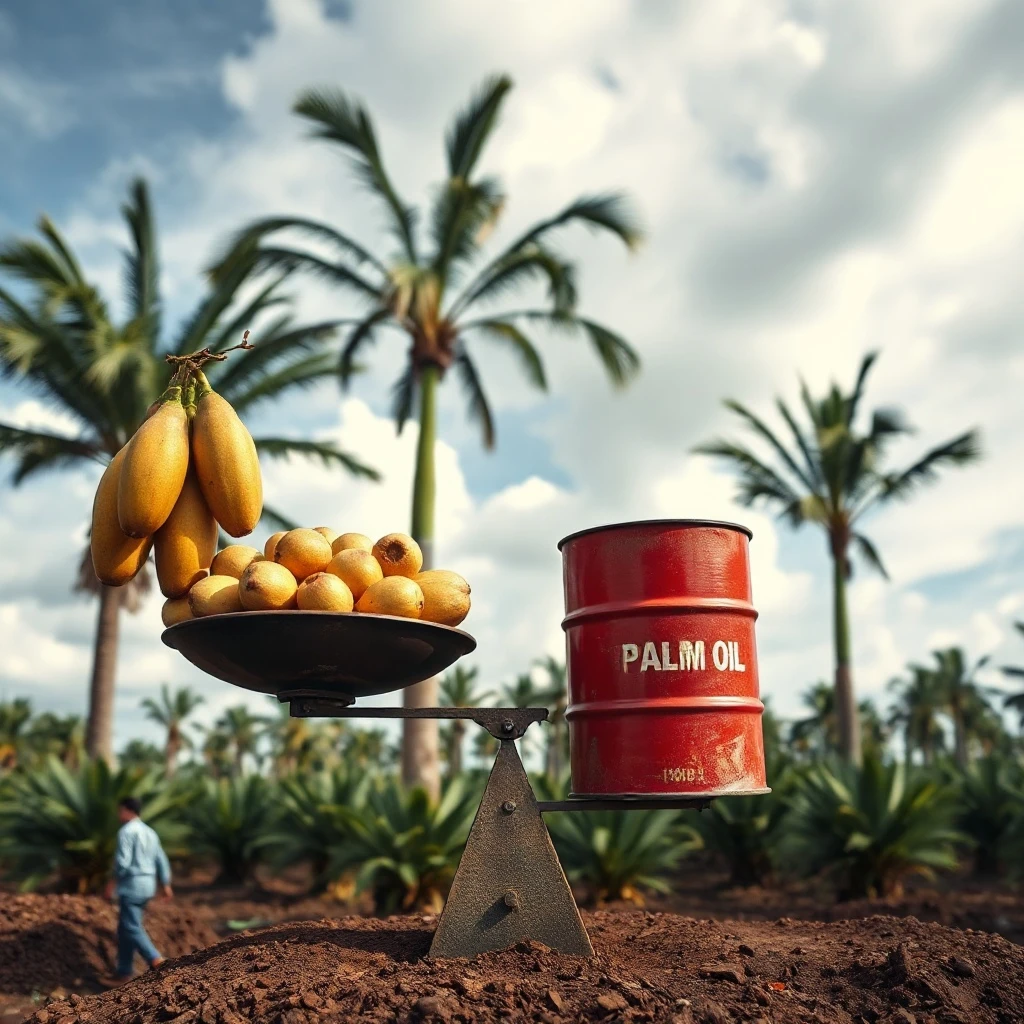
Malaysian crude palm oil (CPO) futures held steady near $1,100 per metric tonne (RM4,502) on Tuesday, unchanged from the previous session. The global palm oil benchmark tracked by the World Bank was quoted around $1,105/MT, while Indonesia’s Kemendag reference price stood about $1,030/MT. Brent crude, a key driver of biodiesel blending economics, rose 1.6% on the day to $85/bbl but has lost 3% over the past week.
The most immediate support comes from the wide soybean-to-palm oil price spread (BOPO). Soybean oil now commands a $481/MT premium over palm, a level that makes palm the cheaper option for global buyers. This spread incentivises demand switching, as importers in price-sensitive markets like India and Africa increasingly favour palm over soy oil. While the effect filters through slowly – soy oil values are a monthly average – it provides a floor under palm prices.
Longer-term, a strengthening El Niño event is raising eyebrows. The Oceanic Niño Index (ONI) has climbed to +1.4°C, signalling a moderate-to-strong event. Historically, such conditions lead to moisture stress in key Asian palm belts after a six- to twelve-month lag, curbing yields and tightening supply. Though the near-term impact on output is limited, the market is beginning to price in potential production challenges for late 2026 and early 2027.
Technical signals paint a mildly constructive short-term picture. The MACD histogram remains positive, and a golden cross of the 5- and 20-day simple moving averages suggests that an uptrend may be in play. With the relative strength index (RSI) at 47 – not yet overbought – there is room for further technical buying. The Malaysian ringgit’s marginal strengthening against the US dollar also lifts ringgit-denominated CPO in dollar terms, though the move was small.
On the bearish side, the seasonal surge in production is in full swing. MPOB data for June showed Malaysian CPO output rising 8.1% month-on-month to 1.64 million tonnes, pushing closing stocks 3.7% higher to 1.33 million tonnes. The stocks-to-use ratio eased to 13.0%, indicating ample supply. With peak output typically running from July to October, further inventory builds are likely, capping upside.
Crude oil’s 3% slide over the past week to $85/bbl has sapped biodiesel enthusiasm. Palm-based biodiesel margins shrink when crude falls, making it harder for palm to compete as a feedstock. While Brent bounced 1.6% on the day, the weekly loss still weighs on sentiment and the economics of discretionary blending mandates.
Speculative positioning in the broader vegetable-oil complex adds a layer of fragility. Managed money net long positions in CBOT soybean oil have retreated by 15,000 contracts from an 85th percentile high. Crowded long bets raise the risk of a disorderly unwind, which would spill over into palm oil markets given their interconnectedness. Traders appear cautious, and any catalyst – such as a disappointing export figure – could trigger selling.
Indonesia, the world’s largest palm oil exporter, continues to add supply to global channels. A weak rupiah (USD/IDR at 17,989) makes Indonesian shipments more competitive, encouraging aggressive exports. This regional supply pressure limits Malaysia’s pricing power, even as Jakarta’s official levy and reference price mechanisms remain opaque.
Our model outlook, which synthesises these factors, gives a genuinely balanced picture – four bullish and four bearish signals are in play. For the next seven days, however, the scales tilt slightly to the downside. Peak production, rising stocks, and recent crude oil softness are likely to drag CPO somewhat lower, with a wide BOPO spread and supportive technicals merely cushioning the decline. Market positioning ahead of the next MPOB report (expected in about a week) and the risk of speculative long liquidation inject further uncertainty. To flip the balance decisively bullishly would require a clear disruption to the seasonal production uptrend – for instance, a sharp dry spell in Malaysia – or a sudden surge in crude oil above $90/bbl. Conversely, a break below $1,050/MT could open the door if stocks build faster than expected or if US soy oil futures extend their decline.
A trader's guide to Malaysia's palm oil regulator: what it controls, how licensing works, and why its monthly stats move global prices.

For procurement managers and traders, the Malaysian Palm Oil Board (MPOB) is more than a government agency—it's a market force. Understanding its dual role as regulator and statistician is key to anticipating supply shocks and price swings that hit your landed cost.
MPOB oversees the entire Malaysian palm oil supply chain, from plantation to export. Its mandate covers:
Licensing is not just a formality—it's a control mechanism. MPOB can suspend or revoke licenses for non-compliance, which directly affects supply. For example, if a mill loses its license, its crude palm oil (CPO) output may be halted, tightening availability.
Key structural features:
For traders, the practical implication is that any news of license suspensions or regulatory crackdowns can signal near-term supply tightness. Conversely, streamlined licensing may ease export flows.
MPOB's monthly statistical report is arguably its most market-moving output. Released around the 10th of each month, it provides critical data on:
These figures are closely watched because Malaysia accounts for a significant share of global palm oil exports. Any surprise—higher stocks than expected, or a production drop—can shift prices on the Bursa Malaysia derivatives exchange and ripple into global vegetable oil markets.
For example, if the report shows stocks falling sharply due to lower production, traders may bid up CPO futures, raising your cost for refined products. Conversely, a bearish stock build can pressure prices down.
To stay ahead, monitor these MPOB-related signals:
Commercially, the takeaway is simple: MPOB is not just a regulator; it's a primary source of market intelligence. By understanding its mechanisms, you can better anticipate price movements and negotiate contracts with more confidence. In a commodity as globally traded as palm oil, knowledge of the producer's institutional framework is a competitive advantage.
*Note: Figures cited in this explainer are illustrative only. Always refer to current MPOB releases for actual data.* ---
*This article reflects the position as of 4 August 2026. Duty structures, levies and mandates change often, sometimes at short notice. Please verify the current position, and any changes made after this date, before relying on it.*
Indonesia's B50 mandate and India's duty-free import concerns frame demand and trade flows.

The policy and energy landscape for palm oil shifted this week, with Indonesia's nationwide B50 biodiesel distribution and India's scrutiny of duty-free edible oil imports emerging as the key market-moving developments.
Pertamina's nationwide launch of B50 biodiesel distribution, reported on July 27, marks a significant step in Indonesia's push to raise palm oil-based fuel blending. The programme, initially flagged in mid-July, aims to absorb more domestic crude palm oil into the energy sector, tightening export availability and underpinning global price floors.
For compliance-minded buyers, the mandate signals sustained structural demand from Indonesia's fuel pool, even as near-term CPO benchmarks remain under pressure from peak production. The wider BOPO spread—the gap between biodiesel and gasoil prices—currently supports blending economics, though softer crude oil at around $85 per barrel could narrow that cushion.
Separately, Indian industry bodies are pressing for curbs on duty-free edible oil imports from Nepal, citing a broad-based rise in edible oil prices linked partly to biofuel mandates. Reports from late July highlight concerns that Nepalese-origin oils, routed through preferential trade agreements, are undercutting domestic producers and complicating India's import management.
If India tightens these import channels, it could redirect trade flows and alter regional supply balances. For buyers, this adds another layer of uncertainty to an already complex sourcing environment, with potential implications for palm oil demand in one of the world's largest importing markets.
Malaysian CPO futures hover near $1100 per tonne, with the ringgit at 4.09 per dollar. MPOB June data showed production up 8.1% month-on-month to 1.64 million tonnes, while stocks rose 3.7% to 1.33 million tonnes—a bearish signal for near-term prices. Exports grew 5.7%, but imports surged 135.3%, reflecting regional supply shifts.
Our model outlook sees CPO drifting lower over the next seven trading days, pressured by peak production, softening crude, and pre-MPOB positioning. However, the B50 mandate's structural demand and a wide BOPO spread should limit downside.
For compliance-focused buyers, the policy watch is clear: Indonesia's biodiesel push tightens supply fundamentals, while India's import policy could reshape demand patterns. Both warrant close monitoring in the weeks ahead.
Dry conditions in Sarawak, Sumatra and Kalimantan raise yield concerns despite peak-season output gains.

The palm oil complex is navigating a weather landscape defined by a lingering El Niño, with the ONI index at +1.4 and notable dryness across several core production zones. For the crop-weather desk, the immediate focus is on how these conditions translate into yield trends and near-term output across Malaysia and Indonesia.
Seven-day rainfall outlooks point to dry conditions in Sarawak, Sumatra's Riau province, and Kalimantan. These are among the heaviest-producing areas in the world's two largest palm oil exporters. The lack of rain in these belts is a double-edged sword: it supports harvesting and logistics today, but it raises questions about fruit bunch development in the months ahead.
El Niño-driven drought typically hits palm yields with a 6-12 month lag, primarily through reduced fruit bunch weight. The current ONI reading of +1.4 indicates a moderate-to-strong event, and the dryness now being observed in the field is consistent with that signal. For trees that experienced moisture stress several months ago, the impact is now showing up in lower fresh fruit bunch (FFB) yields at the mill gate.
In Malaysia, the MPOB June data already reflected a mixed picture. CPO production rose 8.1% month-on-month to 1,638,777 tonnes, and closing stocks climbed 3.7% to 1,332,697 tonnes. However, the FFB reference price slipped 1.3% to RM 48.90, a sign that underlying yield quality may be softening even as seasonal output peaks.
Across the Strait, Sumatra's Riau and Kalimantan are the key watch areas. These regions are critical to Indonesia's export pipeline, and sustained dryness there could tighten supplies later in the year. The Indonesian reference price, set by the trade ministry, stands at about $1030/MT, reflecting current market fundamentals.
Our model outlook suggests CPO futures are likely to drift lower over the next seven trading days, pressured by peak production season and softer crude oil prices. Brent crude is up 1.4% to about $85/bbl, which supports biodiesel blend economics, but the immediate weather signal is not price-supportive.
Heavy rain, when it does arrive, disrupts harvesting and logistics now. For the moment, the dry spell is a logistical positive but a biological negative. The market is watching whether the El Niño footprint expands or fades in the coming weeks, as that will set the tone for yield revisions into the fourth quarter.
For now, the palm belt is in a weather-driven holding pattern, with dryness in the west and south offsetting the seasonal production swell. The next rainfall data will be crucial in determining whether the current output peak is sustained or begins to fade earlier than usual.
Peak supply meets softer crude, but structural biofuel mandates keep a floor under palm prices.

The global palm oil market is being pulled in two directions this week. On one side, peak seasonal production and dry weather across key growing regions are shaping a cautious demand outlook. On the other, structural biodiesel mandates are carving out a growing share of palm oil supply for fuel, tightening the wedge between what goes to food and what goes to the tank.
Malaysian crude palm oil futures are trading at roughly $1,100 per tonne, essentially flat on the session, with the global benchmark near $1,105. Indonesia's reference price stands at about $1,030 per tonne. The flat tone masks a more dynamic underlying picture.
Malaysia's June production data shows the seasonal ramp-up is firmly underway. CPO output rose 8.1% month-on-month to 1.64 million tonnes, while closing stocks climbed 3.7% to 1.33 million tonnes. Exports grew 5.7% to 1.20 million tonnes, but imports jumped 135% to 103,113 tonnes, a sign that some buyers are pulling in supply ahead of expected price moves.
The weather backdrop is mixed. El Niño conditions persist, with an ONI of +1.4, and dryness is evident across Sarawak, Sumatra, Riau, and Kalimantan. That could curb yields in the months ahead, but for now, the immediate supply picture is ample.
Biodiesel is no longer a marginal outlet for palm oil. In Indonesia, the world's largest producer, mandated blending rates have risen steadily, and the government's reference price mechanism ties domestic supply obligations to export volumes. Malaysia has its own blending programme, and both countries are exploring higher blend rates.
On a global scale, palm oil now supplies a significant share of biodiesel feedstock, on the order of a fifth to a quarter of total consumption, depending on the year. The exact split between food and fuel shifts with crude oil prices, policy, and palm's price relative to other vegetable oils.
Crude oil at about $85 per barrel, up 1.4% on the session, supports biodiesel economics. When crude is strong, fuel blenders can absorb higher vegetable oil costs without squeezing margins. When crude falls, the incentive to blend weakens, and more palm oil flows back to food markets, pressuring prices.
The currency backdrop adds another layer. The ringgit is at about 4.09 per dollar, and the rupiah at about 17,989 per dollar. A stronger ringgit makes Malaysian exports less competitive, while a stable rupiah helps Indonesian domestic pricing.
Our model outlook sees CPO futures drifting lower over the next seven trading days, pressured by peak production, softening crude oil, and positioning ahead of potentially bearish MPOB data. But the downside is limited by a wide BOPO spread, a stronger ringgit, and structural biodiesel mandates.
For the picture to change materially, three things would need to happen. First, crude oil would need to break decisively below current levels, weakening blend economics. Second, any new mandate announcements, especially from Indonesia, would need to disappoint. Third, the dry weather in Kalimantan and Sumatra would need to translate into visible crop stress, tightening supply faster than expected.
Buyers should monitor the next MPOB release for stock builds, any policy signals on blend rates from Jakarta or Kuala Lumpur, and the crude oil complex. The fuel-vs-food wedge is the single most important structural factor in palm pricing this year, and it is not going away.
Our market desk connects serious buyers with vetted origin suppliers across Southeast Asia. Indicative pricing, specifications and shipment guidance — free of charge.
Get connected →Benchmark Malaysian CPO holds at $1,100/MT, with bullish BOPO spread and El Niño signals offset by rising stocks and crude oil weakness.
A trader's guide to Malaysia's palm oil regulator: what it controls, how licensing works, and why its monthly stats move global prices.
Indonesia's B50 mandate and India's duty-free import concerns frame demand and trade flows.
Dry conditions in Sarawak, Sumatra and Kalimantan raise yield concerns despite peak-season output gains.
Peak supply meets softer crude, but structural biofuel mandates keep a floor under palm prices.
New reference price for August set at $996.52 per ton; level influences export taxes and trade flows for palm oil buyers.
Indonesia has set its August crude palm oil (CPO) reference price at $996.52 per metric ton, a level that directly determines the export levy structure applied to shipments from the world's top palm oil producer. The official reference price, issued by the trade ministry, will be in effect for the full month and is a key input for traders calculating the cost of Indonesian palm oil in global markets.
The reference price is not a transaction price but a government-set benchmark used to calculate export levies and taxes on palm oil shipments. A lower reference price typically translates into a reduced levy burden for exporters, potentially making Indonesian CPO more competitive relative to Malaysian supply. The new August figure compares with the broader Indonesian reference price of about $1030/MT seen in recent market data, though the official August level has now been fixed at $996.52.
For buyers, the reference price feeds directly into the landed cost of Indonesian palm oil. Traders tracking the spread between Indonesian and Malaysian offers will adjust their sourcing decisions based on this levy impact. The new level comes as the global palm oil complex shows mixed signals, with the Malaysian benchmark CPO futures trading around $1100/MT, roughly flat on the session, while Brent crude fell 2.4% to about $82 per barrel, pressuring biodiesel blend economics.
Indonesia's reference price is set monthly and is closely watched by the market because it influences the export tax progression. At the current level, the levy rate is applied according to a sliding scale that the trade ministry adjusts periodically. The August figure is lower than the global World Bank benchmark of about $1105/MT and the Malaysian CPO price of $1100/MT, reflecting the discount typically seen for Indonesian reference pricing.
The announcement comes amid active trade flows. India's July edible oil imports hit a 10-month peak on higher palm oil buying, according to Business Standard, supporting demand for Southeast Asian supply. Malaysian MPOB data for June showed CPO production rising 8.1% month-on-month to 1.64 million tons, with closing stocks up 3.7% to 1.33 million tons, indicating ample supply in the near term.
Our model outlook suggests CPO faces mixed signals, with near-term pressure from peak production and weaker crude oil offset by bullish Indian demand and a wide spread between palm and soybean oil. The upcoming MPOB July data, expected to show a stock build, may trigger a dip below $1090 support before recovering. Medium-term El Niño conditions—with dry weather in Sumatra, Kalimantan, and Sarawak—and Indonesia's B50 biodiesel mandate provide structural support, though these factors are lagged in their effect on prices.
Traders will now watch how the August reference price influences export volumes from Indonesia and whether the levy adjustment shifts market share toward Malaysian supply in the coming weeks.