
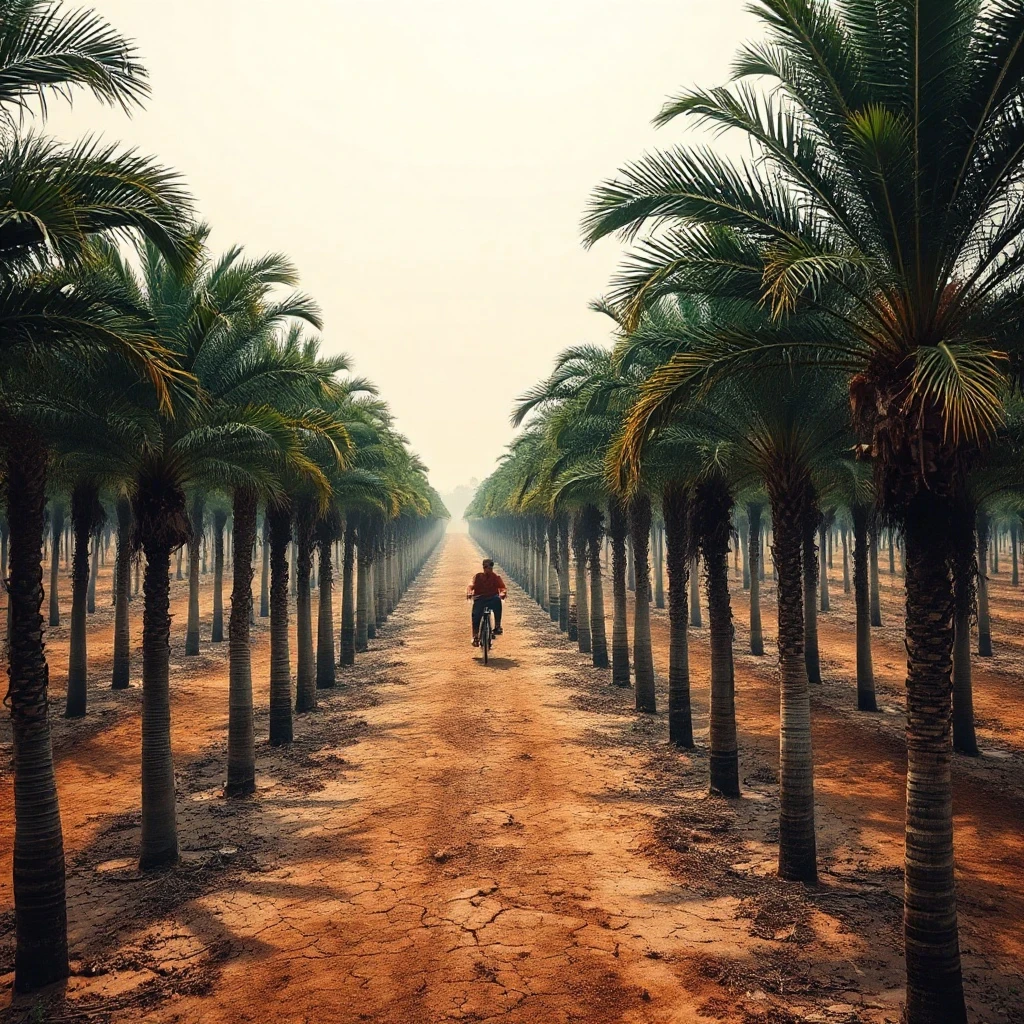
The palm oil complex is navigating a weather landscape defined by a lingering El Niño, with the ONI index at +1.4 and notable dryness across several core production zones. For the crop-weather desk, the immediate focus is on how these conditions translate into yield trends and near-term output across Malaysia and Indonesia.
Current Rainfall Patterns
Seven-day rainfall outlooks point to dry conditions in Sarawak, Sumatra's Riau province, and Kalimantan. These are among the heaviest-producing areas in the world's two largest palm oil exporters. The lack of rain in these belts is a double-edged sword: it supports harvesting and logistics today, but it raises questions about fruit bunch development in the months ahead.
The El Niño Lag Effect
El Niño-driven drought typically hits palm yields with a 6-12 month lag, primarily through reduced fruit bunch weight. The current ONI reading of +1.4 indicates a moderate-to-strong event, and the dryness now being observed in the field is consistent with that signal. For trees that experienced moisture stress several months ago, the impact is now showing up in lower fresh fruit bunch (FFB) yields at the mill gate.
In Malaysia, the MPOB June data already reflected a mixed picture. CPO production rose 8.1% month-on-month to 1,638,777 tonnes, and closing stocks climbed 3.7% to 1,332,697 tonnes. However, the FFB reference price slipped 1.3% to RM 48.90, a sign that underlying yield quality may be softening even as seasonal output peaks.
Indonesia's Dry Belts
Across the Strait, Sumatra's Riau and Kalimantan are the key watch areas. These regions are critical to Indonesia's export pipeline, and sustained dryness there could tighten supplies later in the year. The Indonesian reference price, set by the trade ministry, stands at about $1030/MT, reflecting current market fundamentals.
Near-Term Outlook
Our model outlook suggests CPO futures are likely to drift lower over the next seven trading days, pressured by peak production season and softer crude oil prices. Brent crude is up 1.4% to about $85/bbl, which supports biodiesel blend economics, but the immediate weather signal is not price-supportive.
Heavy rain, when it does arrive, disrupts harvesting and logistics now. For the moment, the dry spell is a logistical positive but a biological negative. The market is watching whether the El Niño footprint expands or fades in the coming weeks, as that will set the tone for yield revisions into the fourth quarter.
For now, the palm belt is in a weather-driven holding pattern, with dryness in the west and south offsetting the seasonal production swell. The next rainfall data will be crucial in determining whether the current output peak is sustained or begins to fade earlier than usual.