
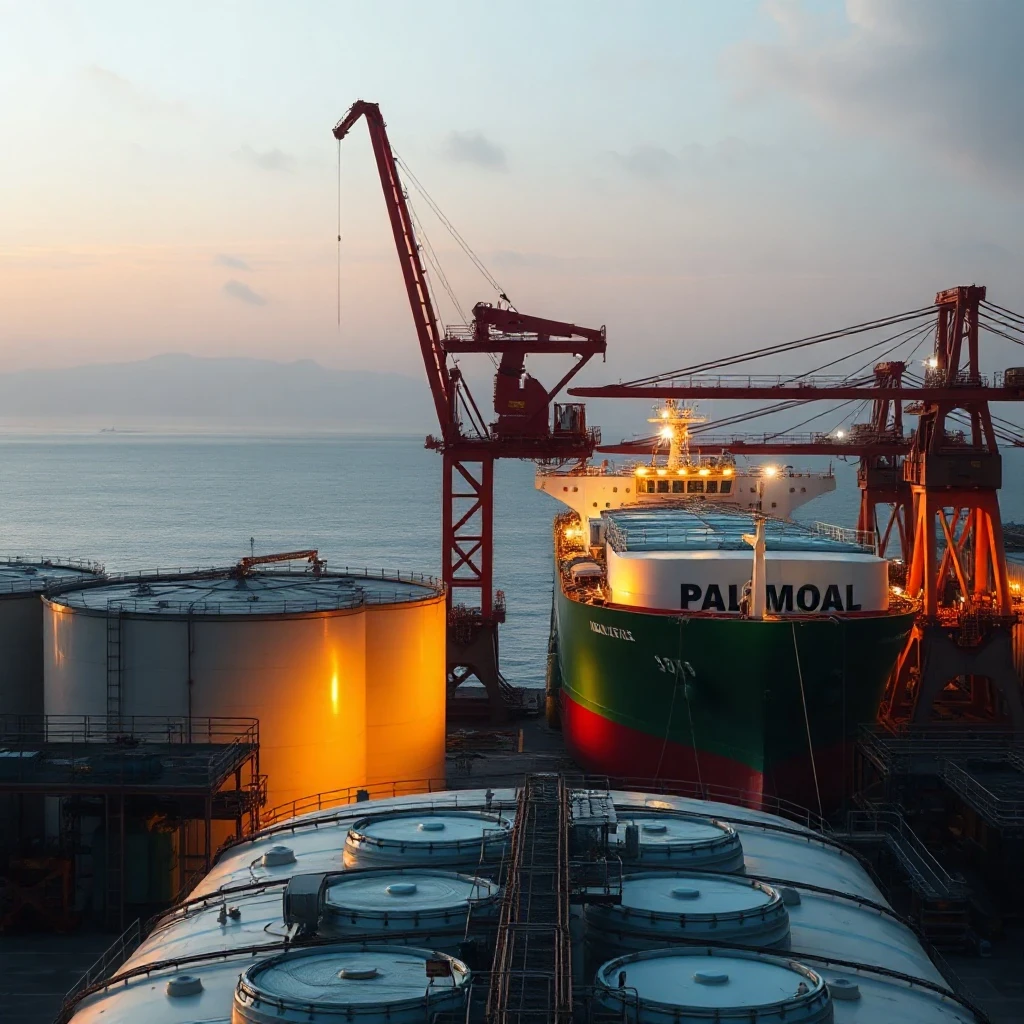
The global palm oil market is being pulled in two directions this week. On one side, peak seasonal production and dry weather across key growing regions are shaping a cautious demand outlook. On the other, structural biodiesel mandates are carving out a growing share of palm oil supply for fuel, tightening the wedge between what goes to food and what goes to the tank.
Prices and supply
Malaysian crude palm oil futures are trading at roughly $1,100 per tonne, essentially flat on the session, with the global benchmark near $1,105. Indonesia's reference price stands at about $1,030 per tonne. The flat tone masks a more dynamic underlying picture.
Malaysia's June production data shows the seasonal ramp-up is firmly underway. CPO output rose 8.1% month-on-month to 1.64 million tonnes, while closing stocks climbed 3.7% to 1.33 million tonnes. Exports grew 5.7% to 1.20 million tonnes, but imports jumped 135% to 103,113 tonnes, a sign that some buyers are pulling in supply ahead of expected price moves.
The weather backdrop is mixed. El Niño conditions persist, with an ONI of +1.4, and dryness is evident across Sarawak, Sumatra, Riau, and Kalimantan. That could curb yields in the months ahead, but for now, the immediate supply picture is ample.
The fuel demand wedge
Biodiesel is no longer a marginal outlet for palm oil. In Indonesia, the world's largest producer, mandated blending rates have risen steadily, and the government's reference price mechanism ties domestic supply obligations to export volumes. Malaysia has its own blending programme, and both countries are exploring higher blend rates.
On a global scale, palm oil now supplies a significant share of biodiesel feedstock, on the order of a fifth to a quarter of total consumption, depending on the year. The exact split between food and fuel shifts with crude oil prices, policy, and palm's price relative to other vegetable oils.
Crude oil at about $85 per barrel, up 1.4% on the session, supports biodiesel economics. When crude is strong, fuel blenders can absorb higher vegetable oil costs without squeezing margins. When crude falls, the incentive to blend weakens, and more palm oil flows back to food markets, pressuring prices.
The currency backdrop adds another layer. The ringgit is at about 4.09 per dollar, and the rupiah at about 17,989 per dollar. A stronger ringgit makes Malaysian exports less competitive, while a stable rupiah helps Indonesian domestic pricing.
What could shift the picture
Our model outlook sees CPO futures drifting lower over the next seven trading days, pressured by peak production, softening crude oil, and positioning ahead of potentially bearish MPOB data. But the downside is limited by a wide BOPO spread, a stronger ringgit, and structural biodiesel mandates.
For the picture to change materially, three things would need to happen. First, crude oil would need to break decisively below current levels, weakening blend economics. Second, any new mandate announcements, especially from Indonesia, would need to disappoint. Third, the dry weather in Kalimantan and Sumatra would need to translate into visible crop stress, tightening supply faster than expected.
What buyers should watch
Buyers should monitor the next MPOB release for stock builds, any policy signals on blend rates from Jakarta or Kuala Lumpur, and the crude oil complex. The fuel-vs-food wedge is the single most important structural factor in palm pricing this year, and it is not going away.