RBI flags biofuel-driven edible oil inflation as Indonesia’s B50 mandate tightens supply
Central bank links price rise to palm-based biodiesel; Jakarta’s 50% blend deepens demand-supply squeeze.

CPO prices hover near forecast band as Indonesia’s B50 rollout and India’s import surge face off against weak rival oils.
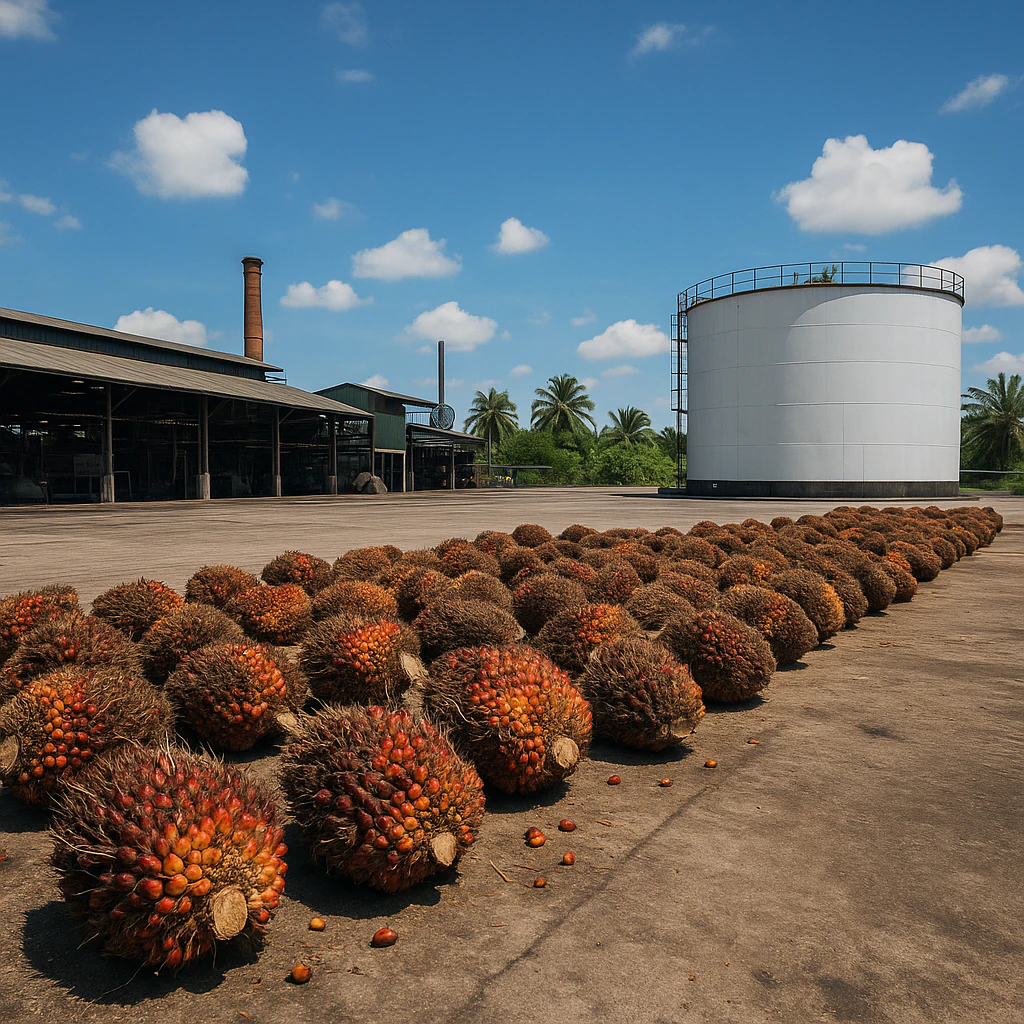
Palm oil futures held within a tight corridor this week as the market digested competing signals from Indonesia’s aggressive biofuel mandate and softening rival edible oil markets.
Indonesia’s launch of the B50 biodiesel programme, confirmed by multiple sources in early July, continues to provide a structural floor for crude palm oil prices. The mandate, which requires 50% palm-based biodiesel blending, is expected to lift domestic palm oil consumption significantly and reduce the country’s fuel import bill. The Reserve Bank of India recently flagged biofuel expansion as a driver of elevated edible oil prices globally, citing Indonesia’s policy specifically.
The Malaysian Palm Oil Council has projected CPO prices will remain stuck in a RM4,400–RM4,650 per tonne range for August, a view echoed by UkrAgroConsult, which also sees a narrow trading band for the month. This consolidation comes after a period of volatility driven by crude oil strength and gains in the broader vegetable oil complex. On 22 July, palm oil eased on weak edible oil prices, but the downside appears limited given the biofuel demand boost.
India’s edible oil imports are expected to surge from July to October as supplies tighten ahead of the festive season. This follows a 29% year-on-year drop in June imports, reported by Business Standard. The government is under pressure to make import duties more flexible, with experts urging a more responsive tariff regime. Meanwhile, duty-free imports from Nepal have surged 548%, raising concerns among domestic producers about unfair competition.
A CME Group analysis highlights that geopolitical risks underscore India’s heavy reliance on imported edible oils, a vulnerability that could amplify price swings. The combination of strong domestic demand, limited local production, and external policy shifts in Indonesia and Malaysia keeps the market sensitive to any supply disruption.
With CPO prices locked in a narrow range and biofuel demand providing a floor, the key variable to watch is the pace of India’s import recovery and any further policy moves on duties. A break above RM4,650 would require a fresh catalyst, while a sustained drop below RM4,400 seems unlikely given the structural support from Indonesia’s B50 mandate.
Sources: Deccan Chronicle; Finimize; livemint.com; finance.biggo.com; UkrAgroConsult; The Economic Times
Central bank links price rise to palm-based biodiesel; Jakarta’s 50% blend deepens demand-supply squeeze.

The Reserve Bank of India has pointed to the expanding use of edible oils in biofuels as a structural driver of price inflation, specifically citing Indonesia’s B50 biodiesel mandate. The observation, published in the central bank’s latest bulletin, adds a regulatory dimension to the supply narrative that compliance buyers must now factor into procurement strategies.
Indonesia formally launched its 50% palm-oil biodiesel blend in July 2026, a policy that had been flagged since early in the month. The mandate is expected to divert an additional 5-7 million tonnes of crude palm oil annually from food and industrial markets into fuel blending. For global buyers, this represents a permanent upward shift in the demand floor, reducing the volume available for export at any given price level.
The Indonesian government has framed B50 as a tool to cut fuel imports and support domestic palm oil prices. For import-dependent markets, however, the policy tightens the supply cushion that once absorbed production gluts. The Jakarta Post and Reuters both noted the immediate lift in palm oil demand that followed the rollout.
The RBI’s explicit linkage between biofuel mandates and broad-based edible oil inflation is significant. It signals that Indian policymakers are monitoring the spillover effects of Indonesia’s energy policy on domestic food costs. With India being the world’s largest vegetable oil importer, any sustained price rise in palm oil feeds directly into consumer inflation for cooking oils and processed foods.
This may accelerate discussions around India’s own biofuel blending targets and their interaction with edible oil imports. The central bank’s commentary also puts pressure on the government to consider tariff adjustments or alternative sourcing strategies to mitigate price risks.
A separate but related development is the growing concern over duty-free edible oil imports from Nepal. While not directly linked to biofuels, the issue compounds the supply-demand picture for Indian refiners. Low-cost imports from Nepal under preferential trade terms undercut domestic processors, potentially discouraging local crushing and refining capacity expansion at a time when global supply is constrained by Indonesia’s mandate.
For traders and procurement desks, the convergence of these signals points to a structurally tighter palm oil market. The B50 mandate is not a temporary disruption but a policy-driven demand shift. Buyers may need to secure longer-term contracts, diversify origin sources, and hedge against policy-induced price spikes. The RBI’s inflation alert could also prompt Indian regulatory responses—such as changes in import duties or stockholding limits—that would ripple through regional trade flows.
Indonesia’s energy pivot and India’s inflation concerns are now interlinked. Market participants should treat the B50 mandate as a baseline assumption for demand, not a risk scenario.
A neutral comparison of two major vegetable oils on yield, cost, properties, applications and market positioning.
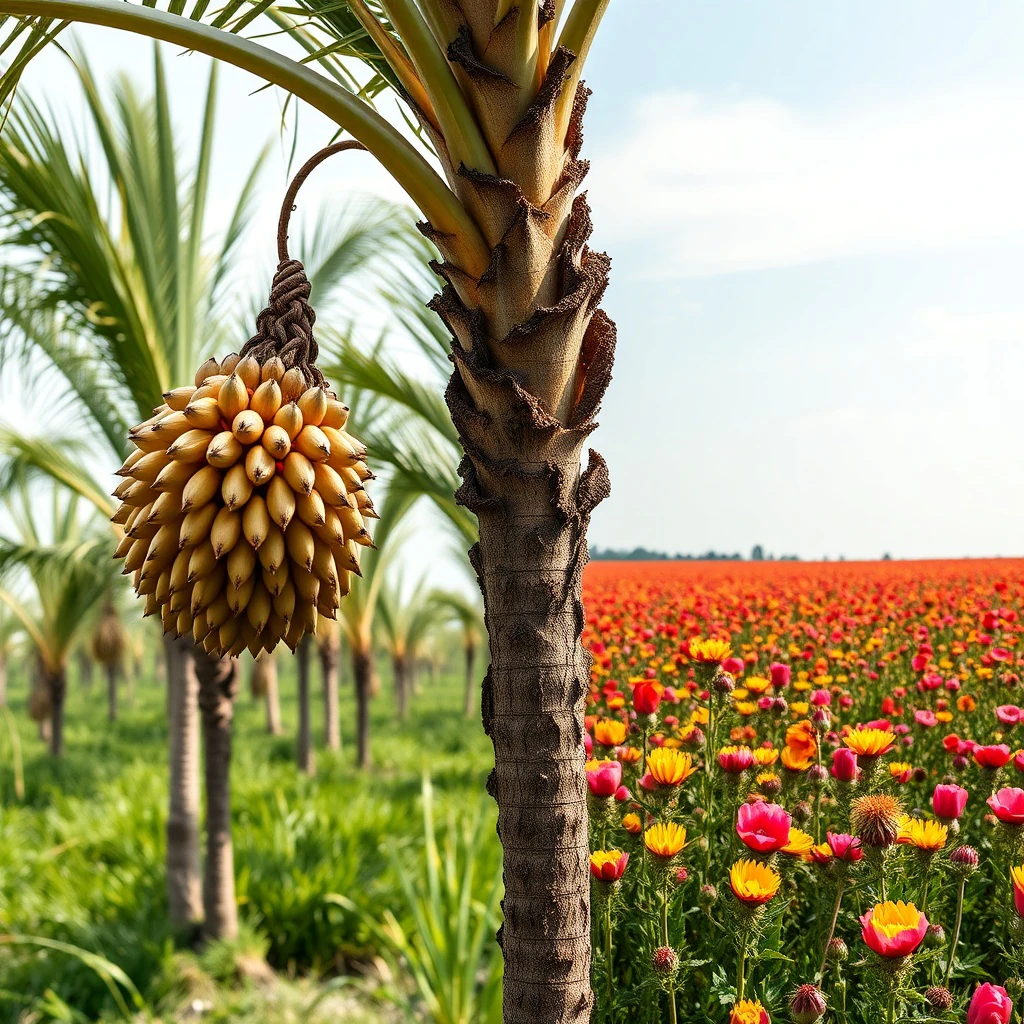
Palm oil and rapeseed (canola) oil are two of the world's most widely traded vegetable oils, each with distinct production geographies, physical properties and end-use profiles. Palm oil is derived from the fruit of the oil palm, grown primarily in tropical Southeast Asia and West Africa. Rapeseed oil is pressed from rapeseed, a temperate oilseed crop cultivated mainly in the European Union, Canada, China and India.
Oil palm is by far the highest-yielding oil crop, producing roughly 3.5 to 4 tonnes of oil per hectare per year under good management. Rapeseed yields approximately 0.7 to 1 tonne of oil per hectare annually. This yield advantage gives palm oil a structural cost edge in production: crude palm oil typically trades at a discount to rapeseed oil on global markets, though freight and refining costs can narrow the gap depending on destination.
Palm oil is semi-solid at room temperature due to its high saturated fat content (about 50% saturated), making it naturally suitable for solid fat applications such as margarine, shortenings and frying fats. Rapeseed oil is liquid at room temperature, with a low saturated fat content (around 7%) and high levels of monounsaturated and omega-3 fatty acids, positioning it as a heart-healthy cooking oil and salad oil. Palm oil's high content of natural antioxidants (tocopherols and tocotrienols) gives it good oxidative stability for deep frying; rapeseed oil requires more careful handling to avoid rancidity at high temperatures.
Palm oil dominates the global edible oils market for industrial frying, bakery fats, confectionery and as a feedstock for biodiesel, especially in Southeast Asia and increasingly in the European Union. Rapeseed oil is the preferred cooking oil in many temperate markets (Canada, Europe, China) and is widely used in salad dressings, mayonnaise and as a biodiesel feedstock in Europe under the Renewable Energy Directive. In oleochemicals, both oils serve as feedstocks for soaps, detergents and lubricants, though palm oil's higher stearin content gives it advantages in certain solid derivatives.
Palm oil faces persistent scrutiny over deforestation, peatland conversion and social conflicts in producing regions. Certification schemes such as RSPO aim to address these issues, but uptake remains partial. Rapeseed cultivation is less associated with tropical deforestation but raises concerns about nitrogen runoff, pesticide use and land-use competition with food crops in temperate zones. Both oils have carbon-footprint profiles that vary significantly by production method and land-use history.
For buyers, palm oil offers cost efficiency and solid-fat functionality ideal for large-scale industrial frying, bakery and confectionery applications. Rapeseed oil suits liquid-oil applications, health-positioned retail products and markets where cold-pressed or non-GMO attributes command a premium. The choice depends on target application, regulatory environment, sustainability commitments and price tolerance.
Our market desk connects serious buyers with vetted origin suppliers across Southeast Asia. Indicative pricing, specifications and shipment guidance — free of charge.
Get connected →Central bank links price rise to palm-based biodiesel; Jakarta’s 50% blend deepens demand-supply squeeze.
A neutral comparison of two major vegetable oils on yield, cost, properties, applications and market positioning.
CPO prices hover near forecast band as Indonesia’s B50 rollout and India’s import surge face off against weak rival oils.
Palm oil futures held within a tight corridor this week as the market digested competing signals from Indonesia’s aggressive biofuel mandate and softening rival edible oil markets.
Indonesia’s launch of the B50 biodiesel programme, confirmed by multiple sources in early July, continues to provide a structural floor for crude palm oil prices. The mandate, which requires 50% palm-based biodiesel blending, is expected to lift domestic palm oil consumption significantly and reduce the country’s fuel import bill. The Reserve Bank of India recently flagged biofuel expansion as a driver of elevated edible oil prices globally, citing Indonesia’s policy specifically.
The Malaysian Palm Oil Council has projected CPO prices will remain stuck in a RM4,400–RM4,650 per tonne range for August, a view echoed by UkrAgroConsult, which also sees a narrow trading band for the month. This consolidation comes after a period of volatility driven by crude oil strength and gains in the broader vegetable oil complex. On 22 July, palm oil eased on weak edible oil prices, but the downside appears limited given the biofuel demand boost.
India’s edible oil imports are expected to surge from July to October as supplies tighten ahead of the festive season. This follows a 29% year-on-year drop in June imports, reported by Business Standard. The government is under pressure to make import duties more flexible, with experts urging a more responsive tariff regime. Meanwhile, duty-free imports from Nepal have surged 548%, raising concerns among domestic producers about unfair competition.
A CME Group analysis highlights that geopolitical risks underscore India’s heavy reliance on imported edible oils, a vulnerability that could amplify price swings. The combination of strong domestic demand, limited local production, and external policy shifts in Indonesia and Malaysia keeps the market sensitive to any supply disruption.
With CPO prices locked in a narrow range and biofuel demand providing a floor, the key variable to watch is the pace of India’s import recovery and any further policy moves on duties. A break above RM4,650 would require a fresh catalyst, while a sustained drop below RM4,400 seems unlikely given the structural support from Indonesia’s B50 mandate.