
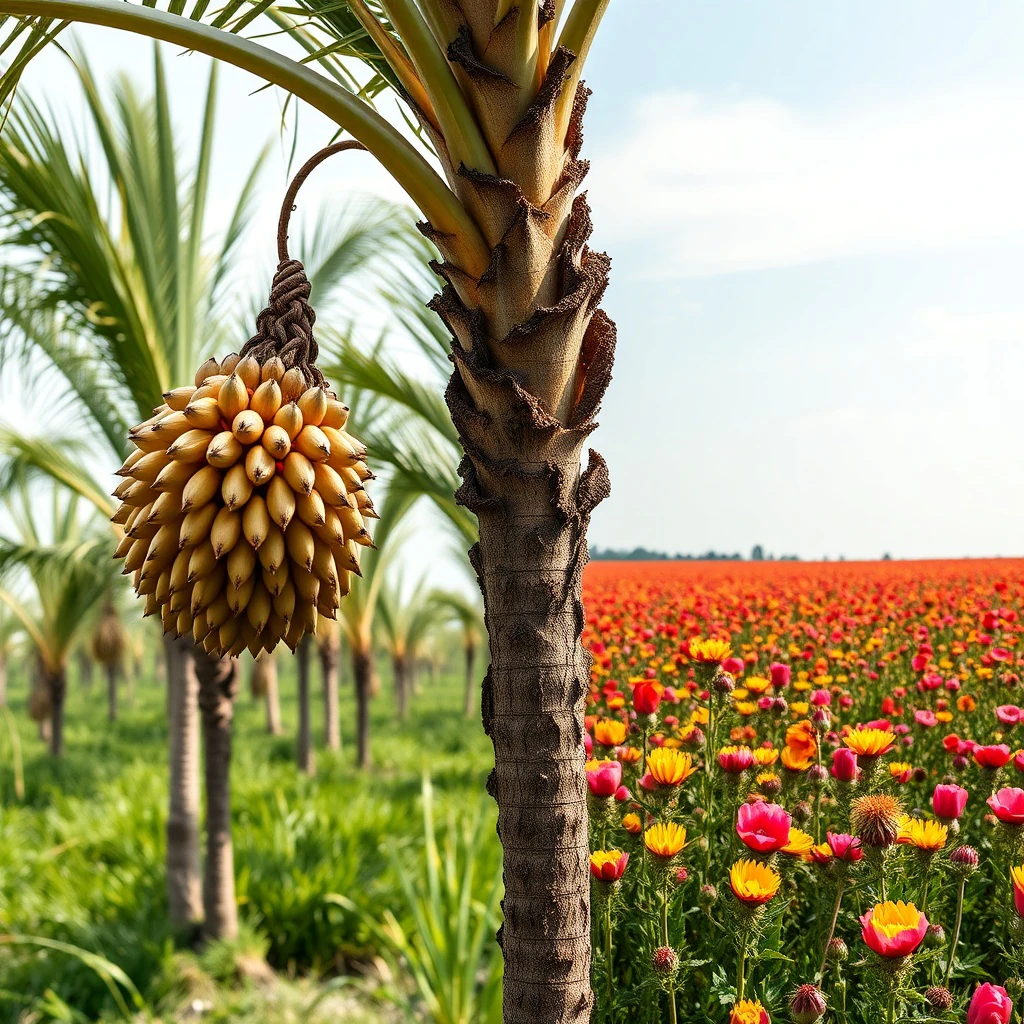
Palm oil and rapeseed (canola) oil are two of the world's most widely traded vegetable oils, each with distinct production geographies, physical properties and end-use profiles. Palm oil is derived from the fruit of the oil palm, grown primarily in tropical Southeast Asia and West Africa. Rapeseed oil is pressed from rapeseed, a temperate oilseed crop cultivated mainly in the European Union, Canada, China and India.
Yield and Cost
Oil palm is by far the highest-yielding oil crop, producing roughly 3.5 to 4 tonnes of oil per hectare per year under good management. Rapeseed yields approximately 0.7 to 1 tonne of oil per hectare annually. This yield advantage gives palm oil a structural cost edge in production: crude palm oil typically trades at a discount to rapeseed oil on global markets, though freight and refining costs can narrow the gap depending on destination.
Physical Properties
Palm oil is semi-solid at room temperature due to its high saturated fat content (about 50% saturated), making it naturally suitable for solid fat applications such as margarine, shortenings and frying fats. Rapeseed oil is liquid at room temperature, with a low saturated fat content (around 7%) and high levels of monounsaturated and omega-3 fatty acids, positioning it as a heart-healthy cooking oil and salad oil. Palm oil's high content of natural antioxidants (tocopherols and tocotrienols) gives it good oxidative stability for deep frying; rapeseed oil requires more careful handling to avoid rancidity at high temperatures.
Applications and Market Positioning
Palm oil dominates the global edible oils market for industrial frying, bakery fats, confectionery and as a feedstock for biodiesel, especially in Southeast Asia and increasingly in the European Union. Rapeseed oil is the preferred cooking oil in many temperate markets (Canada, Europe, China) and is widely used in salad dressings, mayonnaise and as a biodiesel feedstock in Europe under the Renewable Energy Directive. In oleochemicals, both oils serve as feedstocks for soaps, detergents and lubricants, though palm oil's higher stearin content gives it advantages in certain solid derivatives.
Sustainability Considerations
Palm oil faces persistent scrutiny over deforestation, peatland conversion and social conflicts in producing regions. Certification schemes such as RSPO aim to address these issues, but uptake remains partial. Rapeseed cultivation is less associated with tropical deforestation but raises concerns about nitrogen runoff, pesticide use and land-use competition with food crops in temperate zones. Both oils have carbon-footprint profiles that vary significantly by production method and land-use history.
Practical Note for Buyers
For buyers, palm oil offers cost efficiency and solid-fat functionality ideal for large-scale industrial frying, bakery and confectionery applications. Rapeseed oil suits liquid-oil applications, health-positioned retail products and markets where cold-pressed or non-GMO attributes command a premium. The choice depends on target application, regulatory environment, sustainability commitments and price tolerance.