Palm Oil Steady Near $1,104 as Surging Crude and B50 Buzz Offset Weak Indian Demand
Malaysian CPO flat; MPOB data shows rising stocks and production; El Niño and biodiesel policy lend support, but Kalimantan dryness and seasonal weakness cap gains.

CPO futures slip as competing edible oils weaken, while Indonesia’s B50 program and a Middle East crude link reshape the outlook.

Palm oil futures edged lower on Thursday, tracking losses in rival edible oils, as market attention shifts back to supply-demand fundamentals after a period of geopolitical volatility.
Malaysian crude palm oil futures slipped again on July 16, following a decline in soybean and other vegetable oil markets. The pullback comes after a brief rebound earlier in the week, when stronger crude oil and soybean oil prices had lifted the complex. The seesaw movement underscores palm oil’s continued sensitivity to external vegetable oil markets and energy prices.
Analysts at UkrAgroConsult note that the Middle East conflict has reinforced the link between vegetable oil prices and crude oil, a dynamic that has added an extra layer of volatility. Meanwhile, StoneX observes that markets are now returning to fundamental drivers after a period dominated by macro and geopolitical noise. The shift suggests that supply-demand balances and policy developments will carry more weight in the near term.
Indonesia’s B50 biodiesel mandate, officially launched this week, is set to consume an estimated 23.3 million tonnes of crude palm oil annually, according to Jakarta Globe. While the government insists current supply can support the programme this year, industry sources warn that higher output will be needed in the future. The mandate could divert significant volumes away from export markets, potentially tightening global availability. Some analysts estimate the policy risks $2.7 billion in lost palm oil export revenue, though Jakarta expects savings of IDR 177 trillion from reduced fuel imports.
Malaysian producers may benefit from any shortfall in Indonesian exports, with local officials noting that the B50 programme could boost demand for Malaysian palm oil in key markets.
Indonesia is also considering sanctions against buyers who purchase palm oil at artificially low prices, a move aimed at protecting domestic margins. Separately, the country’s palm oil association has signed an MoU with Russia to expand trade cooperation, potentially opening new export channels.
Thailand has tightened its palm oil export controls, reshaping regional supply flows. Malaysia, for its part, has raised the August crude palm oil reference price while keeping the export duty unchanged at 10%.
India’s edible oil imports fell 30% in June from the previous year, driven by lower purchases of both palm and soybean oils. Despite the monthly drop, imports over the past eight months are up 7%, with palm oil’s share rising to 48%. The decline in June may reflect inventory adjustments and price sensitivity, but the longer-term trend points to steady demand.
Watch Indonesia’s B50 implementation pace and any enforcement of export restrictions; these could tighten palm oil supply faster than expected. Also monitor crude oil moves and soybean oil spreads, as palm’s price direction remains tied to the broader vegetable oil complex.
Sources: UkrAgroConsult; ChemAnalyst; Jakarta Globe; Finimize; Fastmarkets; BioEnergy Times
Malaysian CPO flat; MPOB data shows rising stocks and production; El Niño and biodiesel policy lend support, but Kalimantan dryness and seasonal weakness cap gains.
Malaysian crude palm oil futures closed little changed around $1,104 per tonne today, as conflicting signals keep the market in a tight range. The flat session comes despite a 9.8% surge in Brent crude oil to $82/bbl, which bolsters biodiesel blending economics and strengthens the demand outlook for palm-based fuels.
The latest MPOB data for June 2026 shows Malaysian CPO production rose 8.1% month-on-month to 1.638 million tonnes, while closing stocks increased 3.7% to 1.332 million tonnes. The stock build is in line with seasonal patterns and contributed to the market's capped upside. Exports managed a 6.2% monthly gain to 1.204 million tonnes, but that was overshadowed by a sharp 135% surge in imports—a sign of inter-market arbitrage flows. The FFB reference price eased 1.3% to RM 48.90.
India's June vegetable oil imports plunged 29% year-on-year as the once-generous palm oil discount over soft oils has narrowed sharply. This is a major bearish factor for palm oil exports, as India remains the world's top buyer. Buyers should note that any further erosion in palm's price advantage will keep Indian demand subdued.
On the policy front, Indonesia's launch of the B50 biodiesel programme—requiring 23.3 million tonnes of CPO annually—provides a solid medium-term demand floor. This was reinforced by Jakarta Globe's report highlighting the massive feedstock needs. Combined with the spike in crude oil, biodiesel blending margins improve, making the mandate more attractive for obligated parties.
Malaysia's decision to keep the August CPO reference price elevated while maintaining the 10% export duty offers no immediate relief for buyers seeking lower-priced supply.
The ongoing El Niño (ONI +1.0) is bringing dry conditions to Kalimantan, a key production region in Indonesia. Dry weather could curb yields in the coming months, adding a supply risk premium that may support prices into the second half of the year. However, our model outlook also flags seasonal July weakness, which typically sees lower demand as buyers wait for new-crop arrivals.
The European Commission has finalised the product scope for the EU Deforestation Regulation, excluding leather but retaining palm oil. This removes some uncertainty for exporters, but compliance costs remain a factor.
Sources: Jakarta Globe; UkrAgroConsult; Oils & Fats International; The Economic Times; The Star; environment.ec.europa.eu
Higher production and weaker demand keep palm oil prices capped despite biodiesel support.
Malaysia's crude palm oil production rose sharply in June, up 8.1% from the previous month to 1.638 million tonnes, according to MPOB data. This lifted closing stocks to 1.332 million tonnes, a 3.7% month-on-month increase, as inventory accumulation outpaced export growth.
Palm oil exports rose 6.2% month-on-month to 1.204 million tonnes during the same period. However, imports surged 135.3% to 103,113 tonnes, likely as local processors bought cheaper Indonesian supply. The net effect was a supply build-up, which typically exerts downward pressure on prices.
Despite the bearish stock data, the benchmark CPO futures held steady around $1,104/tonne, with a slight 0.1% gain. This stability can be attributed to soaring crude oil prices—Brent jumped 9.8% to about $82/bbl—which improves biodiesel blending economics. Additionally, Indonesia's push for a B50 biodiesel mandate supports overall demand for palm-based fuel.
El Niño conditions (ONI +1.0) continue to raise concerns about future output, though current rainfall patterns show dryness in Kalimantan. The FFB reference price slipped 1.3% to RM 48.90, indicating some weakness in upstream margins. Seasonal July trends often bring weaker demand, which may cap price gains.
Our model outlook suggests CPO prices will see modest gains but remain volatile. Support from surging Brent crude, biodiesel mandates, and El Niño worries is countered by soft Indian demand, dry weather in key growing areas, and the typical seasonal slowdown. The market remains finely balanced between supply concerns and near-term stock pressure.
Overall, the June data points to a loosening supply-demand balance in Malaysia, with rising production and stocks outpacing export recovery. The market's resilience hinges on external energy prices and policy-driven demand, which may keep prices from falling sharply.
Jakarta’s 35% biodiesel blend target locks in 23.3 Mt of domestic CPO, raising export risk and opening arbitrage for Malaysia.

Indonesia’s formal launch of the B50 biodiesel programme on 14 July 2026 marks the most aggressive biofuel mandate in the palm oil sector’s history. Under the new policy, the country will require 23.3 million tons of crude palm oil annually to meet blending targets, according to official estimates. The figure represents roughly a third of Indonesia’s total CPO output, effectively locking a large share of supply into the domestic energy market.
Industry analysts point out that diverting such a volume of CPO to biodiesel production will inevitably reduce the amount available for export. Several reports have flagged that the mandate could cost Indonesia up to $2.7 billion in lost palm oil export revenue. Compliance-minded buyers in India, China and the EU are now watching for any tightening of FOB offers out of Belawan and Dumai as domestic absorption rises.
The neighbouring producer Malaysia has already signalled that its palm oil sector could benefit from Indonesia’s domestic pull. On 15 July, Kuala Lumpur set the August crude palm oil reference price higher while keeping the export duty unchanged at 10%. This pricing structure may encourage Malaysian sellers to step in where Indonesian supply tightens, particularly for refined products. The spread between RBD palm olein from the two origins is expected to narrow as Indonesian sellers prioritise local biodiesel mandates.
While Indonesian officials have stated that current CPO supply can support B50 this year, they acknowledge that higher output will be needed in the medium term. The mandate comes at a time when global crude oil prices have tumbled, potentially undermining the economics of biodiesel blending. A Reuters report from late June noted that the biofuel programme faces a serious test if petroleum prices stay low, as the subsidy burden on the state budget could rise sharply.
For palm oil procurement desks, the key takeaway is that Indonesia’s domestic CPO absorption is structurally rising. Compliance-driven buyers—especially those sourcing for EU Renewable Energy Directive obligations—should monitor Indonesian export availability closely and consider diversifying origin to Malaysia. The B50 programme’s hidden costs, including potential land-use pressure and higher domestic CPO prices, will shape the market’s supply-demand balance for the rest of 2026 and beyond.
Biodiesel push requires 23.3M tonnes CPO yearly; Malaysia keeps duty at 10%; EU updates deforestation compliance tools.
Indonesia has officially launched its B50 biodiesel programme, requiring an estimated 23.3 million tonnes of crude palm oil annually to meet the mandate. This represents a significant increase in domestic CPO consumption, tightening supply availability for export markets. The B50 blend, up from previous B35, underscores Indonesia’s commitment to expanding palm oil-based fuel use amid rising global energy prices.
Malaysia has raised its August crude palm oil reference price but kept the export duty unchanged at 10%. This stability supports export competitiveness for Malaysian CPO producers, though the reference price adjustment may influence pricing dynamics. The policy contrast with Indonesia’s growing domestic absorption could shift trade flows.
The European Commission has updated the product scope and digital tools for implementing the EU Deforestation Regulation (EUDR). Compliance-minded buyers now face refined due diligence requirements, with enhanced digital systems for tracking deforestation-free supply chains. This adds urgency for exporters to ensure traceability, particularly as EUDR enforcement approaches.
Indonesia’s B50 mandate is poised to tighten global palm oil supplies, as a larger share of production is diverted to biodiesel. This supports palm oil prices but pressures buyers who rely on Indonesian exports. Meanwhile, Malaysia’s steady duty offers an alternative supply source, though its output is more limited. The EUDR updates increase compliance costs and risk for buyers without robust traceability systems, potentially widening price premiums for certified sustainable palm oil.
Buyers should prepare for sustained tightness from Indonesia and higher due diligence costs from EUDR compliance. Malaysian palm oil may see increased demand as a substitute, but overall supply constraints are likely to persist. Prices could remain elevated, with volatility driven by biodiesel policy and regulatory shifts.
Sources: Jakarta Globe; UkrAgroConsult; Oils & Fats International
A neutral, step-by-step guide to glycerine recovery during fat splitting for procurement and new buyers.
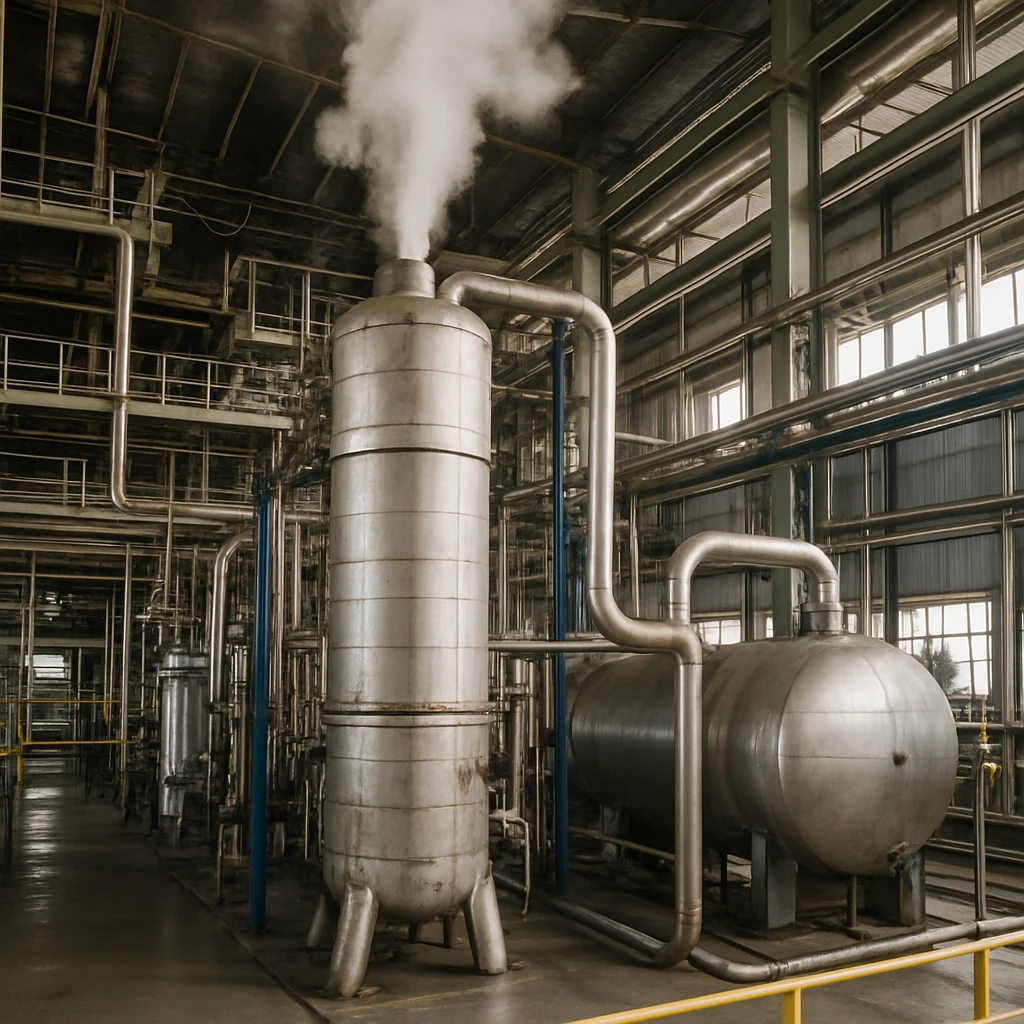
Glycerine is a co-product of the oleochemical splitting process, in which natural fats and oils are hydrolyzed into fatty acids and glycerol. This explainer covers the recovery steps for palm-based glycerine.
In oleochemical splitting, palm oil or palm kernel oil is reacted with high-pressure steam at temperatures around 250°C. This breaks the triglyceride molecules into free fatty acids and crude glycerine. The reaction is typically carried out in a continuous countercurrent column.
The output stream contains two phases: a fatty acid phase and a sweetwater phase. The sweetwater is a dilute solution of glycerine in water, typically containing 10–20% glycerol by weight.
Buyers should be aware of common specifications: - Glycerol content: Typically 99.5% minimum for refined grades. - Moisture content: Usually below 0.5%. - Color: Measured on the APHA scale; below 20 is typical for premium grades. - Ash and MONG: Material other than glycerine (MONG) and ash content are controlled.
Glycerine from palm oil splitting is a major source of global supply. It competes with glycerine from biodiesel production (a by-product of transesterification). Oleochemical glycerine tends to be higher purity and more consistent in quality.
For first-time buyers, understanding the recovery process helps in evaluating supplier quality claims and negotiating specifications.
What procurement managers and buyers need to know about the EU Deforestation Regulation's data demands.
Our market desk connects serious buyers with vetted origin suppliers across Southeast Asia. Indicative pricing, specifications and shipment guidance — free of charge.
Get connected →Malaysian CPO flat; MPOB data shows rising stocks and production; El Niño and biodiesel policy lend support, but Kalimantan dryness and seasonal weakness cap gains.
Higher production and weaker demand keep palm oil prices capped despite biodiesel support.
Jakarta’s 35% biodiesel blend target locks in 23.3 Mt of domestic CPO, raising export risk and opening arbitrage for Malaysia.
Biodiesel push requires 23.3M tonnes CPO yearly; Malaysia keeps duty at 10%; EU updates deforestation compliance tools.
A neutral, step-by-step guide to glycerine recovery during fat splitting for procurement and new buyers.
What procurement managers and buyers need to know about the EU Deforestation Regulation's data demands.
CPO futures slip as competing edible oils weaken, while Indonesia’s B50 program and a Middle East crude link reshape the outlook.
Palm oil futures edged lower on Thursday, tracking losses in rival edible oils, as market attention shifts back to supply-demand fundamentals after a period of geopolitical volatility.
Malaysian crude palm oil futures slipped again on July 16, following a decline in soybean and other vegetable oil markets. The pullback comes after a brief rebound earlier in the week, when stronger crude oil and soybean oil prices had lifted the complex. The seesaw movement underscores palm oil’s continued sensitivity to external vegetable oil markets and energy prices.
Analysts at UkrAgroConsult note that the Middle East conflict has reinforced the link between vegetable oil prices and crude oil, a dynamic that has added an extra layer of volatility. Meanwhile, StoneX observes that markets are now returning to fundamental drivers after a period dominated by macro and geopolitical noise. The shift suggests that supply-demand balances and policy developments will carry more weight in the near term.
Indonesia’s B50 biodiesel mandate, officially launched this week, is set to consume an estimated 23.3 million tonnes of crude palm oil annually, according to Jakarta Globe. While the government insists current supply can support the programme this year, industry sources warn that higher output will be needed in the future. The mandate could divert significant volumes away from export markets, potentially tightening global availability. Some analysts estimate the policy risks $2.7 billion in lost palm oil export revenue, though Jakarta expects savings of IDR 177 trillion from reduced fuel imports.
Malaysian producers may benefit from any shortfall in Indonesian exports, with local officials noting that the B50 programme could boost demand for Malaysian palm oil in key markets.
Indonesia is also considering sanctions against buyers who purchase palm oil at artificially low prices, a move aimed at protecting domestic margins. Separately, the country’s palm oil association has signed an MoU with Russia to expand trade cooperation, potentially opening new export channels.
Thailand has tightened its palm oil export controls, reshaping regional supply flows. Malaysia, for its part, has raised the August crude palm oil reference price while keeping the export duty unchanged at 10%.
India’s edible oil imports fell 30% in June from the previous year, driven by lower purchases of both palm and soybean oils. Despite the monthly drop, imports over the past eight months are up 7%, with palm oil’s share rising to 48%. The decline in June may reflect inventory adjustments and price sensitivity, but the longer-term trend points to steady demand.
Watch Indonesia’s B50 implementation pace and any enforcement of export restrictions; these could tighten palm oil supply faster than expected. Also monitor crude oil moves and soybean oil spreads, as palm’s price direction remains tied to the broader vegetable oil complex.