
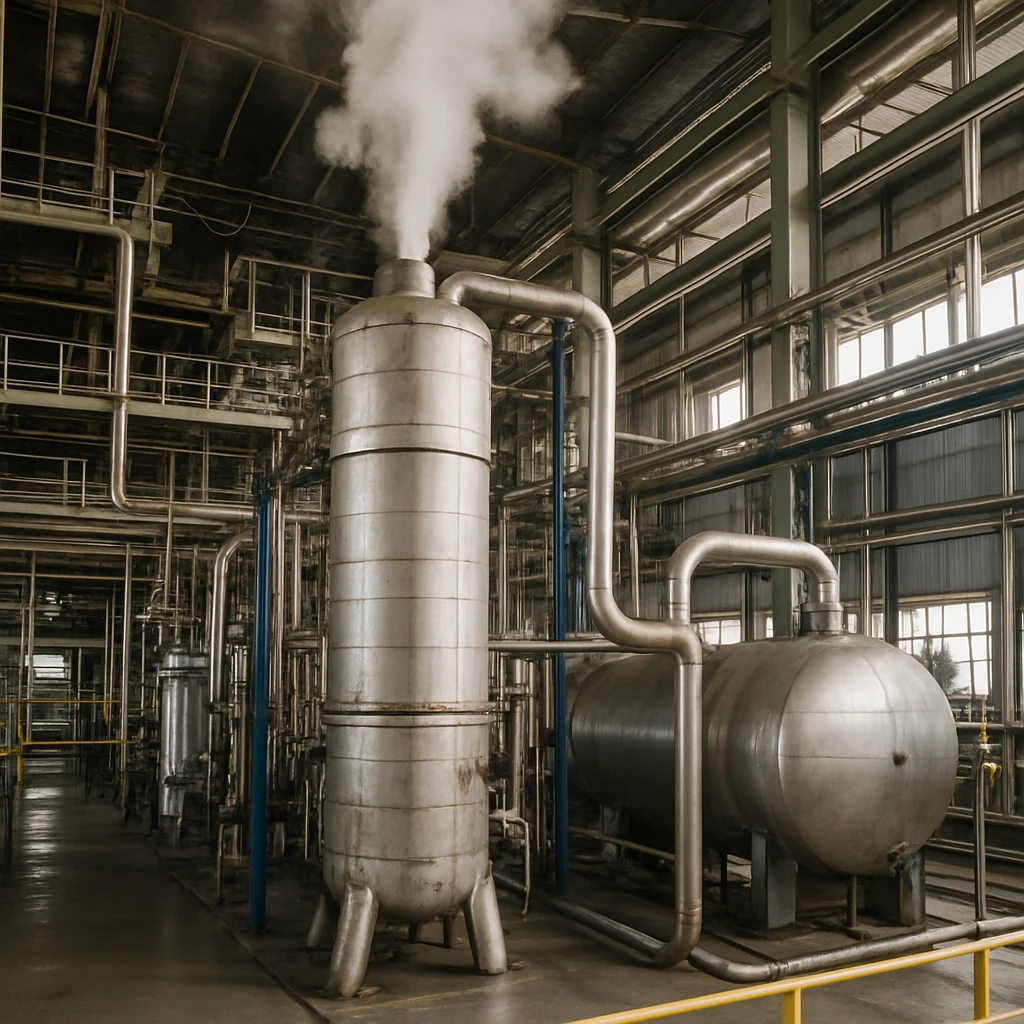
Glycerine is a co-product of the oleochemical splitting process, in which natural fats and oils are hydrolyzed into fatty acids and glycerol. This explainer covers the recovery steps for palm-based glycerine.
The Splitting Process
In oleochemical splitting, palm oil or palm kernel oil is reacted with high-pressure steam at temperatures around 250°C. This breaks the triglyceride molecules into free fatty acids and crude glycerine. The reaction is typically carried out in a continuous countercurrent column.
The output stream contains two phases: a fatty acid phase and a sweetwater phase. The sweetwater is a dilute solution of glycerine in water, typically containing 10–20% glycerol by weight.
Glycerine Recovery Steps
- Evaporation: The sweetwater is concentrated through multiple-effect evaporators, raising the glycerine content to about 80–88%.
- Distillation: The concentrated glycerine is distilled under vacuum to remove impurities such as fatty acids, salts, and color bodies. This yields refined glycerine of 99.5% or higher purity.
- Bleaching and Deodorization: For pharmaceutical or food-grade glycerine, additional bleaching with activated carbon and deodorization are applied.
- Ion Exchange: Some producers use ion-exchange resins to remove trace metals and salts, producing high-purity USP-grade glycerine.
Key Quality Parameters
Buyers should be aware of common specifications: - Glycerol content: Typically 99.5% minimum for refined grades. - Moisture content: Usually below 0.5%. - Color: Measured on the APHA scale; below 20 is typical for premium grades. - Ash and MONG: Material other than glycerine (MONG) and ash content are controlled.
Market Context
Glycerine from palm oil splitting is a major source of global supply. It competes with glycerine from biodiesel production (a by-product of transesterification). Oleochemical glycerine tends to be higher purity and more consistent in quality.
Practical Considerations for Buyers
- Source verification: Ensure the glycerine is derived from splitting, not biodiesel, if purity is critical.
- Logistics: Glycerine is hygroscopic and may require stainless steel or lined storage.
- Pricing: Glycerine prices are influenced by fatty acid demand and biodiesel markets, but this explainer does not cover current prices.
For first-time buyers, understanding the recovery process helps in evaluating supplier quality claims and negotiating specifications.