Indonesia B50 Mandate Tightens Palm Oil Supply, Risks $2.7B Export Revenue Loss
Higher domestic biodiesel demand squeezes exportable volumes, raising compliance costs for buyers.

Indonesia's B50 rollout boosts demand outlook, but falling soy and crude oil weigh on prices.

Palm oil markets ended the week on a mixed note, with Malaysian crude palm oil futures drifting lower on July 11 amid weakness in rival vegetable oils and crude oil. The decline followed a brief rally that had pushed prices to a two-week high earlier in the session, underscoring the tug-of-war between supportive domestic policy and bearish external signals.
The most significant structural development this week was Indonesia's formal rollout of the B50 biodiesel mandate, which requires a 50% palm oil-based biodiesel blend. Multiple reports confirm the policy is now in effect, with the government framing it as a tool to boost domestic palm oil consumption and cut fuel imports. Analysts estimate the mandate could divert up to $2.7 billion worth of palm oil from export markets annually, tightening global supply availability.
This domestic demand boost comes at a time when El Niño-related production concerns are already underpinning price forecasts. Hong Leong Investment Bank raised its palm oil price outlook for 2026-27, citing the combination of El Niño risks and Indonesia's biodiesel expansion. The policy shift is expected to structurally reduce exportable surplus from the world's largest producer.
Despite the bullish demand narrative, palm oil prices came under pressure on July 10 as soybean oil and crude oil both declined. The correlation with crude oil remains critical for biodiesel feedstock values, while soybean oil's slide reflected easing concerns over US-Iran tensions that had earlier lifted soybean oil to a three-week high. The interplay between geopolitical risk and vegetable oil markets continues to inject volatility.
Thailand's recent tightening of palm oil exports is reshaping regional supply flows, potentially redirecting buyers toward Malaysian and Indonesian origins. Meanwhile, EU imports of Malaysian palm oil have risen year-on-year, indicating steady demand from the bloc despite sustainability scrutiny. On the demand side, India and China recently signed an edible oil trade pact that could increase soybean oil imports, potentially capping palm oil's premium in the world's largest vegetable oil market.
Monitor the pace of Indonesia's B50 implementation and any adjustments to export levies, as these will determine how much supply is diverted from the global market. External cues from crude oil and soybean oil remain the primary near-term price drivers, but the structural demand shift from biodiesel is building a long-term floor under prices.
Sources: Business Recorder; energynews.pro; The Jakarta Post; Moomoo; Reuters; Nikkei Asia
Higher domestic biodiesel demand squeezes exportable volumes, raising compliance costs for buyers.
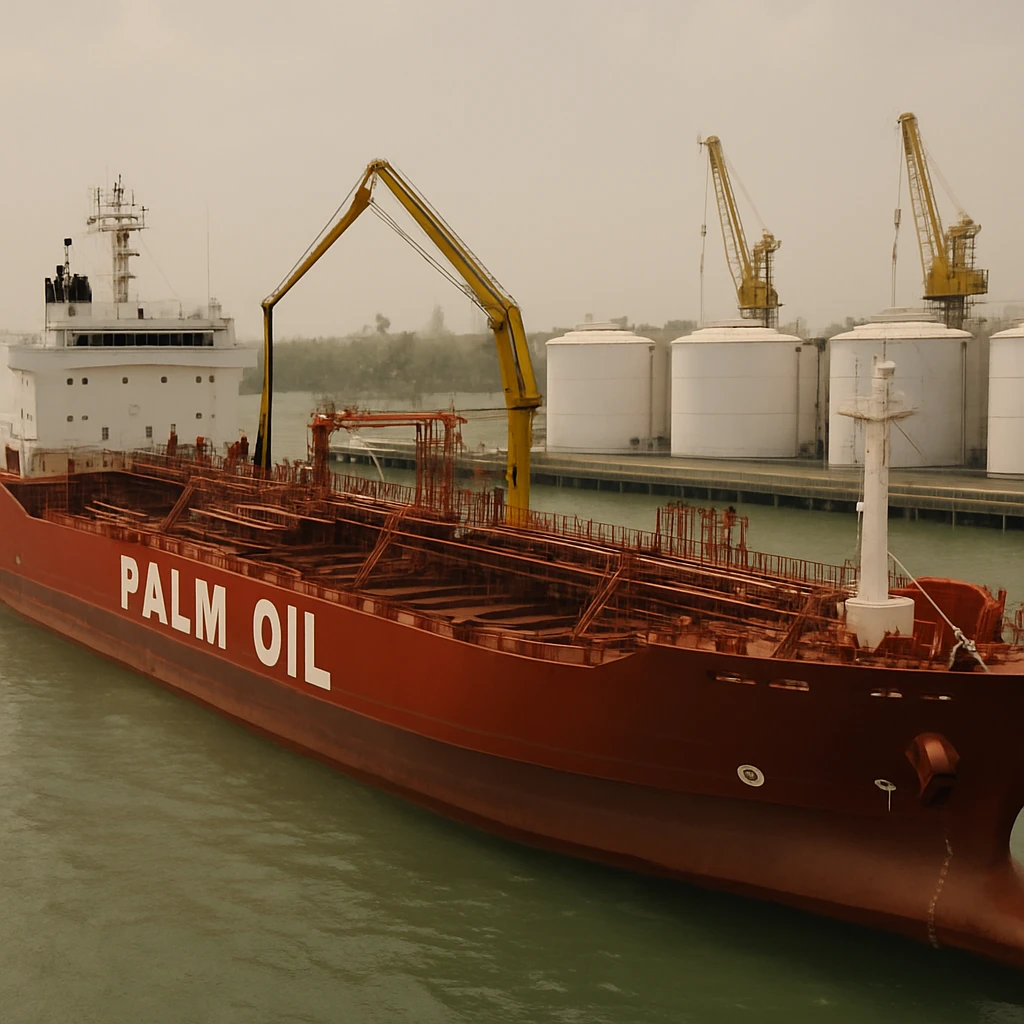
Indonesia’s rollout of the B50 biodiesel mandate—requiring 50% palm oil-based fuel blend—is reshaping global palm oil supply dynamics. The policy, confirmed in early July 2026, aims to cut fuel imports and boost domestic palm oil consumption, but analysts warn it could divert up to $2.7 billion worth of export-grade crude palm oil (CPO) into the energy sector.
With B50 absorbing a significantly larger share of domestic CPO output, exportable surplus is shrinking. This comes at a time when El Niño concerns are already pressuring yields across Southeast Asia. The combination of weather risk and mandated biodiesel demand is creating a structural tightening in available export volumes.
Industry estimates suggest Indonesia’s biodiesel program could absorb an additional 3-4 million tonnes of CPO annually compared to the previous B35 blend. For international buyers, this means thinner spot availability and higher premiums for certified sustainable palm oil (CSPO) that meets European and North American compliance standards.
Palm oil futures have already rallied on the news, with analysts raising price forecasts for 2026-27. The dual shock—biodiesel demand growth and El Niño supply risk—is likely to keep benchmark prices elevated. For compliance-minded buyers, the squeeze on Indonesian exports may force greater reliance on Malaysian and Thai origins, though those markets also face weather-related output constraints.
European Union importers, already navigating deforestation regulation (EUDR) requirements, will face additional cost pressure as Indonesian CPO becomes scarcer and more expensive. The B50 mandate may also accelerate demand for alternative feedstocks like used cooking oil (UCO) and animal fats in the EU biodiesel sector.
Indonesia’s energy security push is now a dominant driver of global palm oil balances. While the policy supports domestic crude palm oil prices and reduces diesel import bills, it effectively transfers supply risk from the energy sector to the edible oils and oleochemicals markets. Buyers should expect continued volatility and are advised to secure longer-term contracts with flexible origin clauses.
The B50 mandate is not expected to be reversed, given its strategic importance for Indonesia’s energy independence. Market participants will watch for any adjustments to the blending rate or export levy mechanisms that could ease the supply squeeze.
Sources: energynews.pro; The Jakarta Post; Reuters; Nikkei Asia; Bloomberg.com
How hydrogenation alters palm oil’s physical properties and shelf life, and what it means for procurement decisions.

Hydrogenation is a chemical process that adds hydrogen atoms to the unsaturated fatty-acid chains in vegetable oils. In palm-based fats, this reaction converts liquid oil into semi-solid or solid fat by raising the melting point. The process is widely used in the edible-oil industry to tailor texture, stability and performance for specific food applications.
Palm oil naturally contains about 50% saturated fat and 50% unsaturated fat (mainly oleic and linoleic acids). During hydrogenation, hydrogen gas is bubbled through heated oil in the presence of a metal catalyst — typically nickel. The catalyst speeds up the addition of hydrogen at the double bonds of unsaturated molecules. As double bonds are saturated, the oil becomes more solid at room temperature.
Partial hydrogenation stops the reaction before all double bonds are saturated. This produces a semi-solid fat with a controlled melting profile, ideal for margarines, shortenings and confectionery coatings. However, partial hydrogenation also creates trans-fatty acids — unsaturated fats with a different molecular shape that are linked to health concerns.
Full hydrogenation saturates all double bonds, yielding a very hard, waxy fat with a melting point above 50°C. This fully saturated fat contains no trans fats, but it is too brittle for most direct food uses and is often blended with liquid oils.
Hydrogenated palm fats have several properties important for buyers:
Hydrogenation is not the only way to modify palm oil. Many buyers will encounter interesterification, a chemical or enzymatic rearrangement of fatty acids on the glycerol backbone. This process can achieve similar solid-fat profiles without generating trans fats. Blending hydrogenated palm stearin with liquid oils is also common.
When sourcing hydrogenated palm products, procurement managers should:
Hydrogenation remains a fundamental tool for modifying palm oil’s functional properties. For buyers, the key trade-off is between achieving precise melting and stability characteristics versus managing trans-fat content and processing costs. Neutral knowledge of this chemistry helps in specifying the right product for each application.
Our market desk connects serious buyers with vetted origin suppliers across Southeast Asia. Indicative pricing, specifications and shipment guidance — free of charge.
Get connected →Higher domestic biodiesel demand squeezes exportable volumes, raising compliance costs for buyers.
How hydrogenation alters palm oil’s physical properties and shelf life, and what it means for procurement decisions.
Indonesia's B50 rollout boosts demand outlook, but falling soy and crude oil weigh on prices.
Palm oil markets ended the week on a mixed note, with Malaysian crude palm oil futures drifting lower on July 11 amid weakness in rival vegetable oils and crude oil. The decline followed a brief rally that had pushed prices to a two-week high earlier in the session, underscoring the tug-of-war between supportive domestic policy and bearish external signals.
The most significant structural development this week was Indonesia's formal rollout of the B50 biodiesel mandate, which requires a 50% palm oil-based biodiesel blend. Multiple reports confirm the policy is now in effect, with the government framing it as a tool to boost domestic palm oil consumption and cut fuel imports. Analysts estimate the mandate could divert up to $2.7 billion worth of palm oil from export markets annually, tightening global supply availability.
This domestic demand boost comes at a time when El Niño-related production concerns are already underpinning price forecasts. Hong Leong Investment Bank raised its palm oil price outlook for 2026-27, citing the combination of El Niño risks and Indonesia's biodiesel expansion. The policy shift is expected to structurally reduce exportable surplus from the world's largest producer.
Despite the bullish demand narrative, palm oil prices came under pressure on July 10 as soybean oil and crude oil both declined. The correlation with crude oil remains critical for biodiesel feedstock values, while soybean oil's slide reflected easing concerns over US-Iran tensions that had earlier lifted soybean oil to a three-week high. The interplay between geopolitical risk and vegetable oil markets continues to inject volatility.
Thailand's recent tightening of palm oil exports is reshaping regional supply flows, potentially redirecting buyers toward Malaysian and Indonesian origins. Meanwhile, EU imports of Malaysian palm oil have risen year-on-year, indicating steady demand from the bloc despite sustainability scrutiny. On the demand side, India and China recently signed an edible oil trade pact that could increase soybean oil imports, potentially capping palm oil's premium in the world's largest vegetable oil market.
Monitor the pace of Indonesia's B50 implementation and any adjustments to export levies, as these will determine how much supply is diverted from the global market. External cues from crude oil and soybean oil remain the primary near-term price drivers, but the structural demand shift from biodiesel is building a long-term floor under prices.