
What Is Hydrogenation?
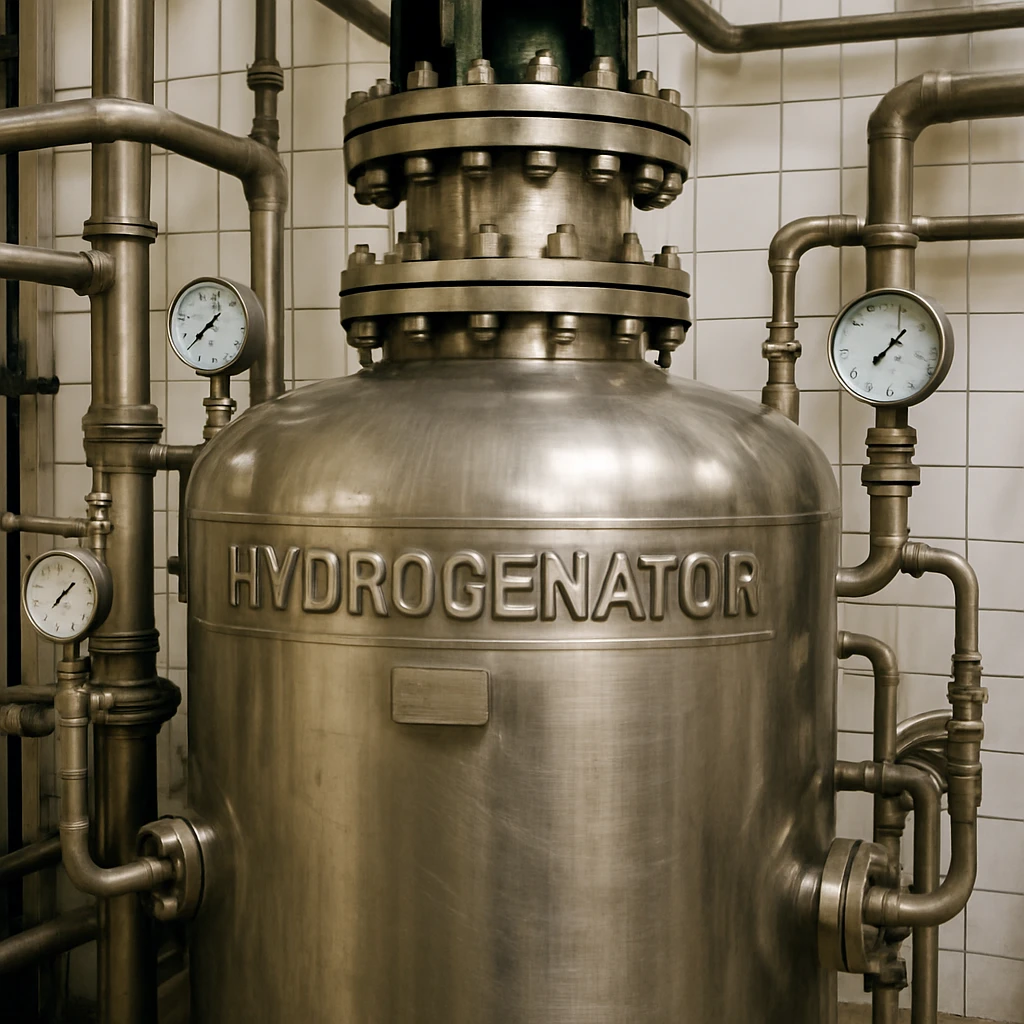
Hydrogenation is a chemical process that adds hydrogen atoms to the unsaturated fatty-acid chains in vegetable oils. In palm-based fats, this reaction converts liquid oil into semi-solid or solid fat by raising the melting point. The process is widely used in the edible-oil industry to tailor texture, stability and performance for specific food applications.
The Basic Reaction
Palm oil naturally contains about 50% saturated fat and 50% unsaturated fat (mainly oleic and linoleic acids). During hydrogenation, hydrogen gas is bubbled through heated oil in the presence of a metal catalyst — typically nickel. The catalyst speeds up the addition of hydrogen at the double bonds of unsaturated molecules. As double bonds are saturated, the oil becomes more solid at room temperature.
Partial vs. Full Hydrogenation
Partial hydrogenation stops the reaction before all double bonds are saturated. This produces a semi-solid fat with a controlled melting profile, ideal for margarines, shortenings and confectionery coatings. However, partial hydrogenation also creates trans-fatty acids — unsaturated fats with a different molecular shape that are linked to health concerns.
Full hydrogenation saturates all double bonds, yielding a very hard, waxy fat with a melting point above 50°C. This fully saturated fat contains no trans fats, but it is too brittle for most direct food uses and is often blended with liquid oils.
Practical Effects on Palm Products
Hydrogenated palm fats have several properties important for buyers:
- Higher melting point — The fat remains solid at higher ambient temperatures, improving heat resistance in baked goods and fried products.
- Oxidative stability — Saturated fats resist rancidity longer, extending shelf life.
- Texture control — Manufacturers can create fats that melt sharply at mouth temperature, giving a pleasant mouthfeel.
Blending and Interesterification
Hydrogenation is not the only way to modify palm oil. Many buyers will encounter interesterification, a chemical or enzymatic rearrangement of fatty acids on the glycerol backbone. This process can achieve similar solid-fat profiles without generating trans fats. Blending hydrogenated palm stearin with liquid oils is also common.
Considerations for Procurement
When sourcing hydrogenated palm products, procurement managers should:
- Specify the desired slip melting point (SMP) or solid-fat content (SFC) curve.
- Request trans-fat content declarations, as regulations increasingly limit trans fats.
- Understand that fully hydrogenated palm oil is often labeled as "hydrogenated palm oil" while partially hydrogenated versions may carry specific health disclaimers.
- Verify the catalyst residue (nickel) is removed to within regulatory limits.
Summing Up
Hydrogenation remains a fundamental tool for modifying palm oil’s functional properties. For buyers, the key trade-off is between achieving precise melting and stability characteristics versus managing trans-fat content and processing costs. Neutral knowledge of this chemistry helps in specifying the right product for each application.