Palm Oil Jumps to Four-Month High Above RM4,750 on Crude, Rival Oils
Malaysian CPO futures rally past RM4,750/MT, a four-month high, as stronger crude oil and gains in rival vegetable oils outweigh supply pressures.

Malaysian CPO is around $1,104/MT as the model sees four bullish and four bearish factors, with a mild drift to ~$1,101 in the seven-session outlook.
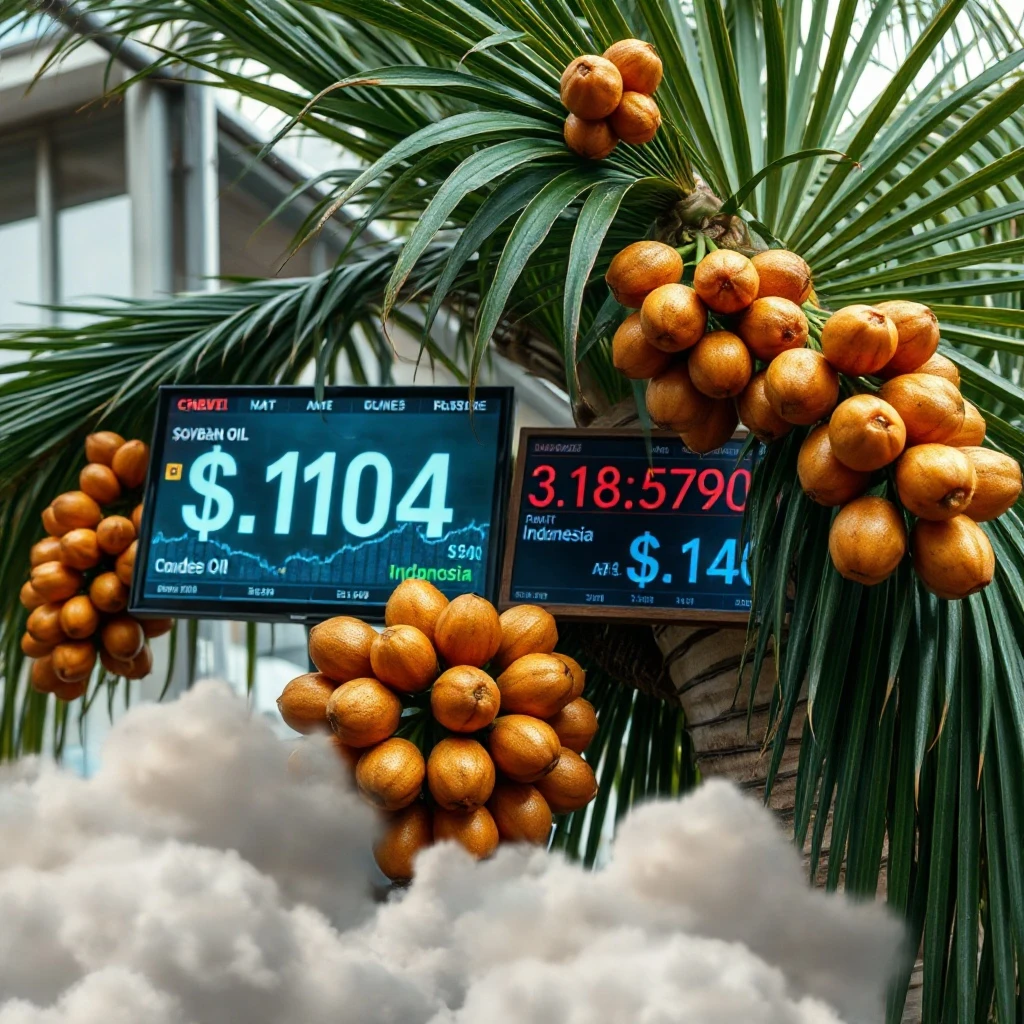
Malaysian CPO benchmark is about $1,104/MT, or RM 4,520/MT, down 0.4% from the previous session. The World Bank benchmark sits near $1,101/MT and Indonesia’s reference price is about $1,030/MT. Brent crude is $89/bbl, up 0.5% on the day; USD/MYR is 4.09. The tone is one of rangebound balancing, with buyers pointing to palm’s discount to soy oil and positive technicals, while sellers point to a July stock build and peak production.
The strongest underpinning is the BOPO spread. With soybean oil at $1,581/MT and Malaysian CPO at $1,104/MT, palm is trading $477/MT below soy oil. That discount is wide enough to encourage demand substitution, especially in price-sensitive food and biodiesel users, and it supports the case that buyers will switch into palm when soy oil is expensive. This does not force an immediate rally, but it reduces the downside risk and creates demand elasticity.
Technicals are also mildly supportive. The MACD histogram is positive, the 5/20 simple moving average is in a golden cross, and RSI sits at 50, neither overbought nor oversold. That says the near-term uptrend is intact but losing momentum; it invites dip-buying rather than breakout-chasing.
Longer-horizon buyers are also pricing some El Niño risk. The ONI is +1.4C, consistent with a developing strong El Niño. Sarawak and Kalimantan are dry, with Kalimantan forecast at only 2mm over the next seven days. This is a lagged driver: drought stress now can lower yields months later, so it supports anticipation of a tighter 2027 supply rather than changing spot supply today. Seven-day rainfall is 39mm in Peninsular Malaysia, 28mm in Sabah, 17mm in Sarawak and 30mm in Sumatra; no extreme flooding, so rainfall is neutral, though dry Kalimantan is a lagged stress.
Finally, the Diwali demand calendar is supportive. Diwali is 87 days away and the buying window opens in about 38 days. Festival restocking underpins demand for edible oils, giving importers a reason to maintain or increase near-term coverage even if it is not immediate.
The biggest bearish input is the July MPOB data. Malaysia’s July closing stocks rose 7.2% month-on-month to 1,429,316 tonnes, a five-month high, and the stocks-to-use ratio is 12.5%, above the threshold where the market starts to worry about ample supply. Production rose 9.4% month-on-month to 1,792,979 tonnes; that is a strong seasonal build and leaves the market well supplied for now. High visible stocks reduce the urgency to bid for cargoes.
Peak production season adds to that supply pressure. Our model’s seasonal path shows production rising about 7.0% one month ahead, and August through October is the usual peak output window. As long as output is rising and stocks are building, any demand-driven rally has to absorb additional supply first.
Indonesia is another source of downward pressure. The rupiah is weak at about 17,884 per dollar. A weak rupiah means Indonesian exporters receive more domestic currency for dollar-denominated sales, which encourages them to sell more palm oil into the export market, adding to global availability. The large levy plus duty policy burden could eventually slow exports, but the current 72-day-old reference price clouds that signal, and near-term the incentive structure favors more Indonesian selling.
Speculative positioning also poses downside risk. CFTC soyoil net length is +80,681 contracts, at the 80th percentile of its range, but the weekly change was -29,174. A crowded long position that has begun to unwind is vulnerable to accelerated liquidation; if soyoil falls, palm can be dragged down through cross-commodity flows. Brent is not a clear offset: at $88.9/bbl, Brent is down 0.9% over seven days, though the Aug 11 headline noted CPO rallied on stronger crude. That mixed crude signal leaves the energy linkage neutral.
According to our model outlook, the factor count is 4 bullish and 4 bearish, so neither side has a decisive upper hand. The market is rangebound near $1,104/MT, with a base case drift to about $1,101 over the next seven sessions. Support is $1,093 and resistance is $1,116; the published path is -0.1% over the same window. Missing cargo-surveyor export pace and live Bursa quotes widen uncertainty, so the model is trading a range rather than a clear directional call.
What would have to change for the balance to shift? If cargo-surveyor data show export demand running above the seasonal pace, or if Indonesia’s levy/duty policy materially slows export sales, the bullish side would strengthen and the market could test $1,116. On the other side, if speculative long liquidation accelerates, or if August production and closing stocks continue to exceed expectations, the bearish side would dominate and the market could break $1,093. For now, the wide BOPO spread and positive technicals are holding the downside in check, while the five-month Malaysian stock build and peak-season supply keep a lid on upside.
Malaysian CPO futures rally past RM4,750/MT, a four-month high, as stronger crude oil and gains in rival vegetable oils outweigh supply pressures.

Malaysian crude palm oil futures rallied above RM4,750 per tonne on Wednesday, reaching a four-month high, as firmer crude oil prices and gains in rival vegetable oils lifted the market. The benchmark contract climbed despite earlier pressure from rising production and inventories, with the catalyst shifting to energy and competing oilseed markets.
The rally comes after a period of consolidation near $1,104/MT (RM 4,519), where the market had digested a mixed supply-demand picture. Malaysia's July MPOB data showed CPO production at 1,792,979 tonnes, up 9.4% month-on-month, while closing stocks rose 7.2% to 1,429,316 tonnes—a five-month high. Exports jumped 14.5% to 1,392,178 tonnes, but imports plunged 51.9% to 49,566 tonnes. The FFB reference price edged up 1.2% to RM 49.50.
These supply-side factors had previously pressured prices, but the market has now turned bullish on external cues. The global benchmark hovered near $1,101/MT, while Indonesia's reference price stood at about $1,030/MT. Brent crude held firm near $87 a barrel, down 1.3% on the day but still supportive of biodiesel blend economics.
Stronger crude oil prices have improved the economics of palm oil-based biodiesel, underpinning demand. At the same time, gains in rival vegetable oils—soyoil and sunflower oil—have made palm oil relatively more attractive. Reports from China indicate palm oil prices rising amidst volatility, while Dalian and Chicago oils have shown strength in recent sessions.
Traders note that the rally above RM4,750 marks a breakout from the recent rangebound trading, with bullish momentum building. The move aligns with a four-month high, reflecting renewed confidence in the demand outlook.
El Niño conditions (ONI +1.4) continue to raise concerns about future yields, with dry weather reported in key regions such as Kalimantan. This risk premium remains an underlying support, even as seasonal production peaks. The market is also watching Black Sea oilseed supplies, which have been cheap, but disruptions could shift demand toward palm oil.
Our model outlook sees CPO facing mixed forces: near-term supply pressures from peak production and ample stocks, countered by a wide BOPO spread, El Niño anticipation, and firm crude oil. The recent rally suggests upside momentum, but volatility remains low. The expected path over the next seven sessions is a slight drift lower before stabilization, with uncertainty hinging on export pace and crude oil movements.
Key factors to watch include Malaysian export data for early August, China's vegetable oil demand, weather updates from producing regions, and any shifts in biodiesel policy. India's import pace and Black Sea supply dynamics will also be critical in shaping the balance.
Sources: The Star; Finimize; Business Recorder; CNBC TV18; AgroSpectrum India; energynews.pro
Regional biodiesel mandates lift demand; Malaysia's reference price cut keeps export duty at 10%.

Policy signals from Southeast Asia's top palm oil producers are firming the demand outlook for the rest of 2026, even as production peaks and stocks build. For compliance-minded buyers, the key developments are Indonesia's nationwide B50 biodiesel distribution and Malaysia's September reference price adjustment, which keeps the export duty unchanged at 10%.
Indonesia's state energy firm has launched nationwide B50 biodiesel distribution, a step that raises the mandatory blend to 50% palm oil-based fuel. This is part of a coordinated move by Indonesia, Malaysia and Thailand to raise their 2026 biodiesel mandates. For the palm oil market, the immediate effect is a structural increase in domestic absorption, reducing the volume available for export from the world's largest producer.
Indonesia's reference price for palm oil stands at about $1030 per tonne, well below the Malaysian benchmark of $1104 and the global benchmark of $1101. The gap reflects different pricing mechanisms and export tax structures. With B50 in place, Indonesia's domestic consumption could rise by several million tonnes annually, tightening the global supply-demand balance just as Malaysia's output climbs.
Malaysia's July data show production at 1.79 million tonnes, up 9.4% month-on-month, while stocks rose 7.2% to 1.43 million tonnes. Exports jumped 14.5% to 1.39 million tonnes, suggesting strong overseas demand despite the higher output. The September reference price cut, though, signals that the government is trying to keep exports competitive while maintaining the 10% duty—a balancing act that will influence trade flows into the fourth quarter.
For buyers, the policy mix points to a market that is well supplied in the near term but faces a tighter outlook as biodiesel mandates absorb more palm oil. The wide BOPO spread—about $477 per tonne—makes palm oil attractive for biodiesel blending, but it also means more palm oil is diverted to fuel, not food. This is a key reason why edible oil prices have been under upward pressure, as noted by India's central bank in a recent assessment.
Our model outlook sees CPO consolidating within a $1093–$1116 band over the next seven trading days, with a mild bearish tilt from peak production and ample stocks. But the policy tailwinds from biodiesel mandates, combined with firm crude at $88 per barrel, could limit downside. The El Niño weather pattern, with dry conditions in Sarawak and Kalimantan, adds a medium-term supply risk that may support prices later in the year.
Compliance-minded buyers should monitor mandate implementation in Indonesia and Malaysia, as any shortfall in feedstock could force higher palm oil use or accelerate imports. The September duty decision in Malaysia is a signal that export competitiveness remains a priority, but the structural demand from biofuels is a growing factor in price formation. For now, the market is balanced, but the policy direction is clear: more palm oil will be burned, not eaten.
July output jumps 9.4% MoM, but dry weather in key regions points to a delayed yield drag

Malaysian palm oil futures settled around $1104/MT on Wednesday, down 0.4% from the prior session, as traders weighed a robust July production report against a weather backdrop that is turning drier across two of the region's key growing areas. The benchmark's mild pullback came despite a firm Brent crude market near $88/bbl, which keeps biodiesel blend economics supportive for vegetable oil demand.
Malaysia's MPOB data for July showed crude palm oil production at 1,792,979 tonnes, up 9.4% month-on-month, while closing stocks rose 7.2% to 1,429,316 tonnes. Exports climbed 14.5% to 1,392,178 tonnes, a stronger-than-seasonal outflow that partially absorbed the extra supply. Imports fell sharply, down 51.9% month-on-month to 49,566 tonnes, indicating less need for foreign fruit to feed local mills.
The production increase is consistent with the seasonal peak that typically runs through the third quarter. But the market's focus is shifting to what comes after that peak, and the weather signals are not uniformly benign.
The current El Niño episode, with an ONI of +1.4, remains firmly in place. For palm oil, the critical issue is not the immediate heat but the lagged effect on yields. El Niño-driven moisture stress typically reduces fruit bunch weight and slows flowering with a 6-12 month delay. That means trees that experienced dry conditions earlier in this event are only now beginning to show up in lower fresh fruit bunch yields.
Over the next seven days, rainfall is expected to be notably dry in Sarawak and Kalimantan, the two largest production states on each side of the border. Dry weather in these belts is a double-edged signal: it supports harvesting and logistics in the short term, allowing mills to process more fruit, but it also accelerates soil moisture depletion, which can feed into the lagged yield drag later in the year and into early 2027.
In Malaysia, Sarawak's dry spell comes at a time when the national crop is still expanding month-on-month. The risk is that a sustained dry period in the state's coastal and inland plantations trims bunch weights just as the seasonal peak flattens. Peninsular Malaysia, by contrast, has seen more balanced rainfall, which should help maintain output there in the near term.
Indonesia's Kalimantan, the country's largest producing island, is facing a similar dry pattern. The reference price set by Indonesia's trade ministry is around $1030/MT, below the global benchmark, reflecting the country's export levy structure and domestic market obligations. A dry Kalimantan could tighten Indonesian supply faster than expected if the dryness persists beyond the weekly window.
Our model outlook sees CPO consolidating within a $1093-$1116 Bollinger band over the next seven trading days, with a mild bearish tilt from peak production and ample July stocks. That bearishness is cushioned by a wide BOPO spread of $477/MT, which makes palm oil attractive relative to other vegetable oils, and by firm crude prices that underpin biodiesel blending.
The main uncertainty is the pace of export demand, which the market is tracking through cargo surveyor data that has not yet been fully incorporated into prices. Live soyoil quotes and Dalian futures are also missing from the current assessment, widening the range of possible outcomes.
For now, the weather story is one of near-term operational ease and medium-term yield risk. Dry conditions in Sarawak and Kalimantan are not yet severe enough to disrupt harvesting, but they are a reminder that El Niño's effects are still working through the crop cycle. The published path points to a modest 0.2% decline over the next seven sessions, but that assumes no sudden shift in the rainfall outlook or export demand. A wetter-than-forecast week in either belt would quickly change the tone.
Malaysia's July data show peak output and rising stocks, while El Niño and biodiesel economics frame the global balance.
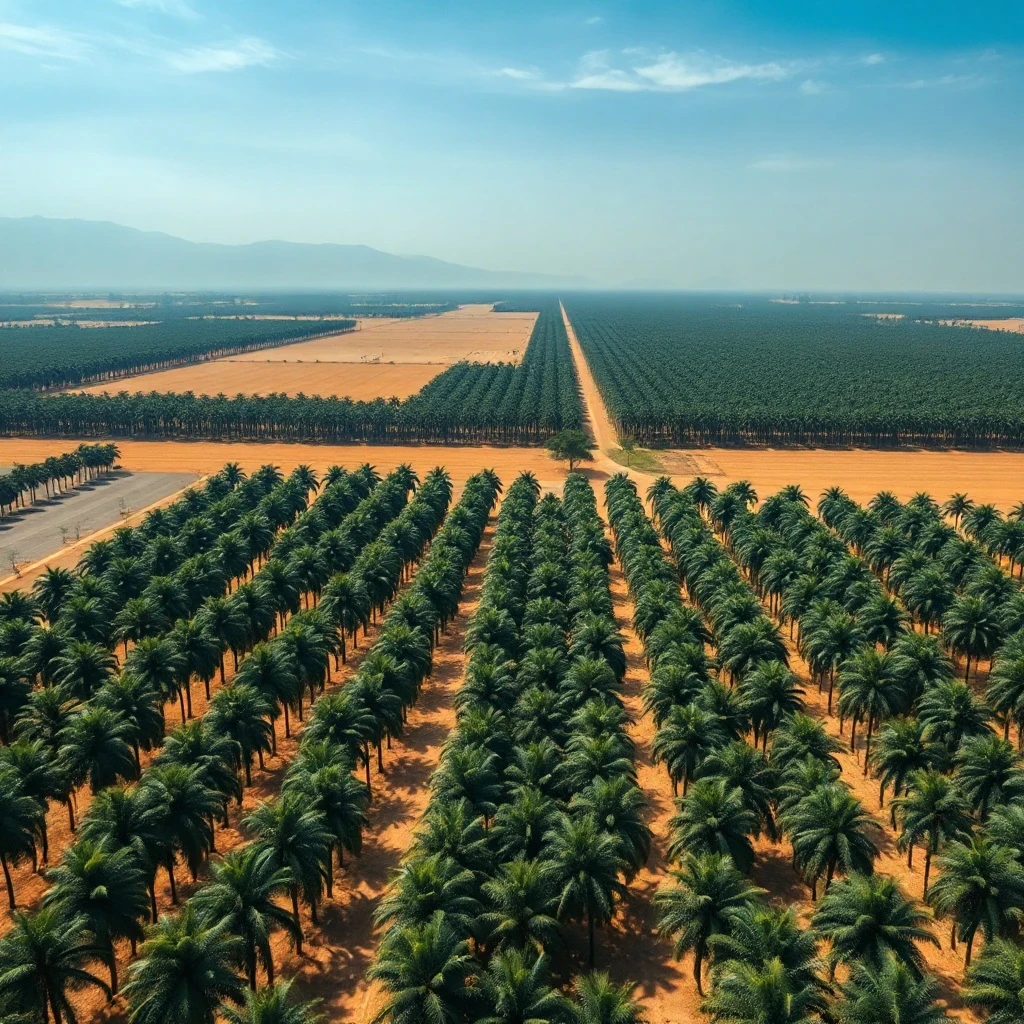
The global palm oil balance sheet is a four-line equation: production, consumption, stocks and trade. Each line matters, but not equally. In the current cycle, the stock line is doing the heavy lifting for price direction, with production growth the main driver behind it.
Malaysia's July 2026 MPOB data confirm the seasonal peak is underway. Crude palm oil production rose 9.4% month-on-month to 1,792,979 tonnes, the strongest monthly gain of the year. Closing stocks climbed 7.2% to 1,429,316 tonnes, the third consecutive monthly build. The market's benchmark Malaysian CPO futures eased 0.4% to about $1104 per tonne, or RM 4520, as the supply overhang weighed on sentiment.
Indonesia, the larger producer, is also in its high-output window. Global reference prices sit just below Malaysia's, with the World Bank benchmark at about $1101 per tonne and Indonesia's Kemendag reference at about $1030 per tonne. The discount reflects export-tax structures and destination mix rather than a fundamental supply gap.
The wildcard is climate. ENSO is in El Niño territory with an ONI of +1.4, and rainfall anomalies are already visible: Sarawak and Kalimantan are both dry. That dryness, if it persists into the fourth quarter, would hit the next crop cycle more than the current one. For now, production is ample, but the market is paying a premium for the risk that 2027 output underperforms.
Consumption growth is steady but not explosive. Food use rises with population and income, but the marginal demand driver is biodiesel. Brent crude at about $88 per barrel, down 0.5% on the session, keeps the palm-oil-to-gasoil spread wide at roughly $477 per tonne. That margin makes palm-based biodiesel commercially attractive without mandates alone, cushioning demand even as supply builds.
Trade flows reflect the supply push. Malaysian palm oil exports jumped 14.5% month-on-month to 1,392,178 tonnes in July, while imports collapsed 51.9% to 49,566 tonnes. The export surge is consistent with buyers restocking ahead of any El Niño-driven price strength later in the year.
In this environment, the stock line moves prices most. Production is known, consumption is predictable, and trade is a function of the first two. Stocks are the residual, and the market reads them as the clearest signal of tightness or surplus. July's build points to a mild surplus, yet the market has not broken down, because the weather premium and biodiesel economics are holding a floor.
Our model outlook sees CPO consolidating within a $1093-$1116 Bollinger band over the next seven trading days, with a mild bearish tilt from peak output and ample stocks, cushioned by the wide BOPO spread, El Niño anticipation and firm crude. The published path is -0.2% over that window.
For the balance to tighten, three things would need to happen: sustained dry weather in Sarawak and Kalimantan into September, a sharper rise in crude oil that widens the biodiesel incentive further, or a pickup in import demand from major buyers that draws down Malaysian stocks faster than seasonal norms. Any one of those would shift the stock line and with it the price.
Buyers should watch three indicators: the weekly cargo-surveyor export data from Malaysia, live soyoil quotes as the cross-commodity anchor, and Dalian palm prices for China's demand pulse. Missing those, the market is trading on weather forecasts and crude oil alone, which is a thinner information set than the balance sheet deserves.
A practical guide to choosing the right palm oil packaging for your supply chain.
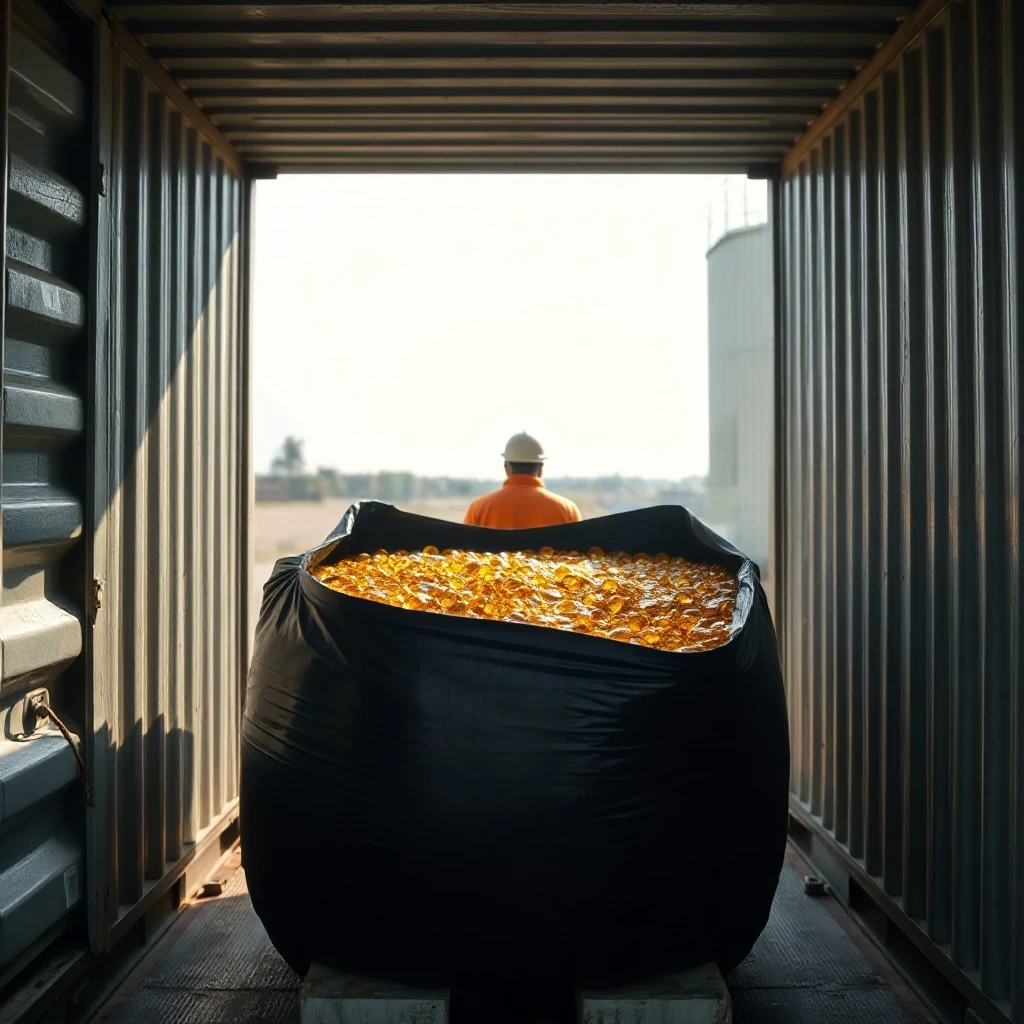
Procurement managers and first-time buyers of palm oil face a critical early decision: how to transport and receive the product. The choice of packaging—flexitank, intermediate bulk container (IBC), drum, or bulk vessel—affects cost, logistics, shelf life, and handling complexity. There is no single best option; the right choice depends on volume, infrastructure, and end-use.
Volume and Frequency – Regular, large-volume purchases favor bulk or flexitanks. Occasional or small-batch needs favor IBCs or drums. Matching packaging to consumption avoids waste and storage issues.
Receiving Infrastructure – Bulk vessel discharge requires shore tanks and pipelines. Flexitanks need a pump and a suitable storage tank. IBCs and drums only need a forklift and a dry, ventilated warehouse. Assess your facility’s capabilities before committing.
Product Quality and Shelf Life – Palm oil is prone to oxidation and contamination. Flexitanks and bulk vessels offer sealed environments, but once opened, the oil must be used or transferred promptly. IBCs and drums, if properly sealed, can preserve quality for longer periods, but each opening exposes the oil to air.
Logistics and Cost – Bulk is cheapest per ton but requires long-term contracts and large minimums. Flexitanks reduce freight cost compared to drums or IBCs, but the single-use bag adds a disposal cost. IBCs and drums have higher per-liter packaging costs but lower entry barriers.
Regulatory and Compliance – Food-grade palm oil must be transported in containers that meet food-safety standards. Ensure any packaging—flexitank liner, IBC, or drum—is food-grade certified and cleaned to required specifications. Bulk vessels must have prior cargo history to avoid contamination.
If you are a small food manufacturer using a few tons monthly, IBCs or drums are practical. A mid-sized processor with storage tanks can use flexitanks for regular container shipments. A large refiner or biodiesel plant with port access will likely rely on bulk vessels.
Begin by mapping your monthly volume, storage capacity, and budget. Consult with logistics providers and your palm oil supplier to align packaging with your operational reality. Test with a smaller packaging type before scaling up, and always verify the quality upon receipt. The right packaging is not just about moving oil—it is about protecting your product and your bottom line.
Our market desk connects serious buyers with vetted origin suppliers across Southeast Asia. Indicative pricing, specifications and shipment guidance — free of charge.
Get connected →Malaysian CPO futures rally past RM4,750/MT, a four-month high, as stronger crude oil and gains in rival vegetable oils outweigh supply pressures.
Regional biodiesel mandates lift demand; Malaysia's reference price cut keeps export duty at 10%.
July output jumps 9.4% MoM, but dry weather in key regions points to a delayed yield drag
Malaysia's July data show peak output and rising stocks, while El Niño and biodiesel economics frame the global balance.
A practical guide to choosing the right palm oil packaging for your supply chain.
Malaysian CPO is around $1,104/MT as the model sees four bullish and four bearish factors, with a mild drift to ~$1,101 in the seven-session outlook.
Malaysian CPO benchmark is about $1,104/MT, or RM 4,520/MT, down 0.4% from the previous session. The World Bank benchmark sits near $1,101/MT and Indonesia’s reference price is about $1,030/MT. Brent crude is $89/bbl, up 0.5% on the day; USD/MYR is 4.09. The tone is one of rangebound balancing, with buyers pointing to palm’s discount to soy oil and positive technicals, while sellers point to a July stock build and peak production.
The strongest underpinning is the BOPO spread. With soybean oil at $1,581/MT and Malaysian CPO at $1,104/MT, palm is trading $477/MT below soy oil. That discount is wide enough to encourage demand substitution, especially in price-sensitive food and biodiesel users, and it supports the case that buyers will switch into palm when soy oil is expensive. This does not force an immediate rally, but it reduces the downside risk and creates demand elasticity.
Technicals are also mildly supportive. The MACD histogram is positive, the 5/20 simple moving average is in a golden cross, and RSI sits at 50, neither overbought nor oversold. That says the near-term uptrend is intact but losing momentum; it invites dip-buying rather than breakout-chasing.
Longer-horizon buyers are also pricing some El Niño risk. The ONI is +1.4C, consistent with a developing strong El Niño. Sarawak and Kalimantan are dry, with Kalimantan forecast at only 2mm over the next seven days. This is a lagged driver: drought stress now can lower yields months later, so it supports anticipation of a tighter 2027 supply rather than changing spot supply today. Seven-day rainfall is 39mm in Peninsular Malaysia, 28mm in Sabah, 17mm in Sarawak and 30mm in Sumatra; no extreme flooding, so rainfall is neutral, though dry Kalimantan is a lagged stress.
Finally, the Diwali demand calendar is supportive. Diwali is 87 days away and the buying window opens in about 38 days. Festival restocking underpins demand for edible oils, giving importers a reason to maintain or increase near-term coverage even if it is not immediate.
The biggest bearish input is the July MPOB data. Malaysia’s July closing stocks rose 7.2% month-on-month to 1,429,316 tonnes, a five-month high, and the stocks-to-use ratio is 12.5%, above the threshold where the market starts to worry about ample supply. Production rose 9.4% month-on-month to 1,792,979 tonnes; that is a strong seasonal build and leaves the market well supplied for now. High visible stocks reduce the urgency to bid for cargoes.
Peak production season adds to that supply pressure. Our model’s seasonal path shows production rising about 7.0% one month ahead, and August through October is the usual peak output window. As long as output is rising and stocks are building, any demand-driven rally has to absorb additional supply first.
Indonesia is another source of downward pressure. The rupiah is weak at about 17,884 per dollar. A weak rupiah means Indonesian exporters receive more domestic currency for dollar-denominated sales, which encourages them to sell more palm oil into the export market, adding to global availability. The large levy plus duty policy burden could eventually slow exports, but the current 72-day-old reference price clouds that signal, and near-term the incentive structure favors more Indonesian selling.
Speculative positioning also poses downside risk. CFTC soyoil net length is +80,681 contracts, at the 80th percentile of its range, but the weekly change was -29,174. A crowded long position that has begun to unwind is vulnerable to accelerated liquidation; if soyoil falls, palm can be dragged down through cross-commodity flows. Brent is not a clear offset: at $88.9/bbl, Brent is down 0.9% over seven days, though the Aug 11 headline noted CPO rallied on stronger crude. That mixed crude signal leaves the energy linkage neutral.
According to our model outlook, the factor count is 4 bullish and 4 bearish, so neither side has a decisive upper hand. The market is rangebound near $1,104/MT, with a base case drift to about $1,101 over the next seven sessions. Support is $1,093 and resistance is $1,116; the published path is -0.1% over the same window. Missing cargo-surveyor export pace and live Bursa quotes widen uncertainty, so the model is trading a range rather than a clear directional call.
What would have to change for the balance to shift? If cargo-surveyor data show export demand running above the seasonal pace, or if Indonesia’s levy/duty policy materially slows export sales, the bullish side would strengthen and the market could test $1,116. On the other side, if speculative long liquidation accelerates, or if August production and closing stocks continue to exceed expectations, the bearish side would dominate and the market could break $1,093. For now, the wide BOPO spread and positive technicals are holding the downside in check, while the five-month Malaysian stock build and peak-season supply keep a lid on upside.