
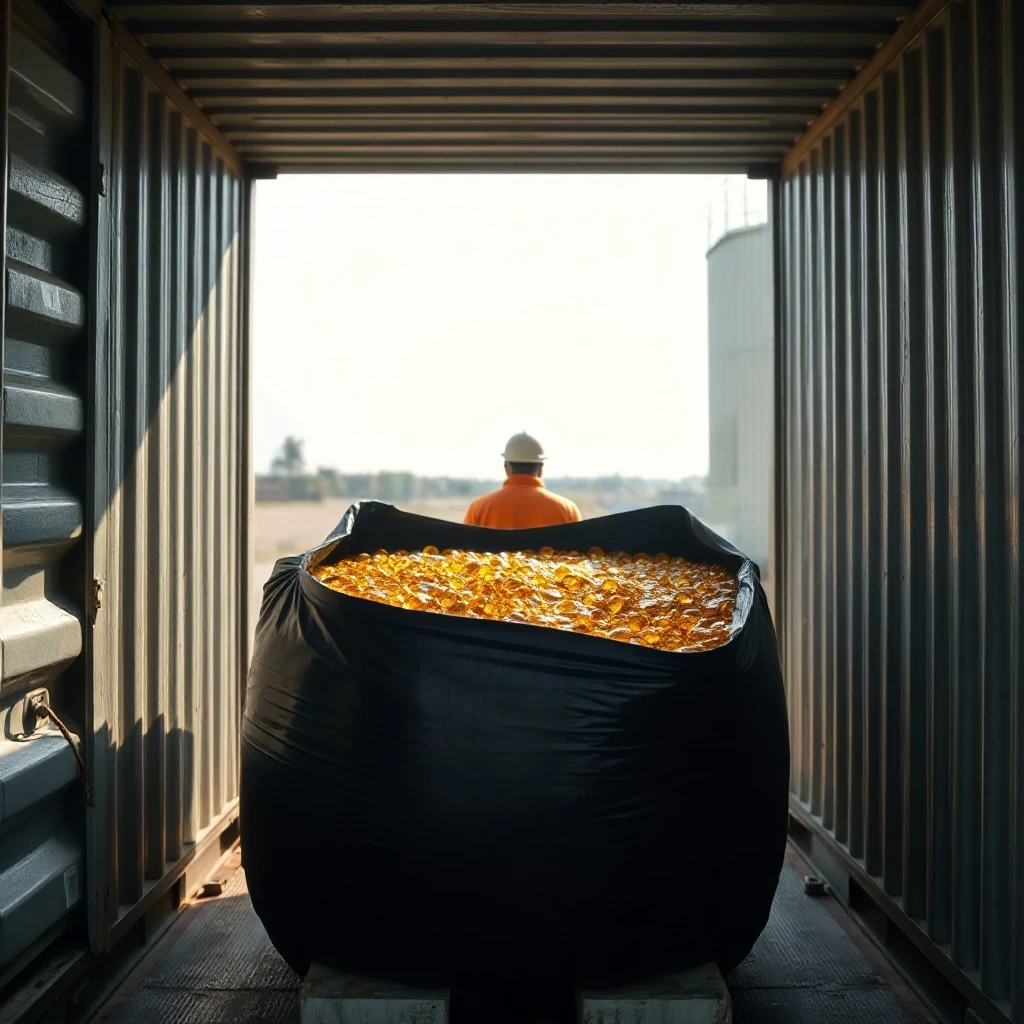
Procurement managers and first-time buyers of palm oil face a critical early decision: how to transport and receive the product. The choice of packaging—flexitank, intermediate bulk container (IBC), drum, or bulk vessel—affects cost, logistics, shelf life, and handling complexity. There is no single best option; the right choice depends on volume, infrastructure, and end-use.
The Four Main Options
- Flexitanks are large, single-use bags fitted inside standard 20-foot containers. They hold about 20,000 to 24,000 liters. Ideal for medium volumes (one to a few containers) without dedicated storage tanks.
- IBC totes are reusable, pallet-sized containers, typically holding about 1,000 liters. They offer flexibility for smaller, frequent deliveries and easy handling with standard forklifts.
- Drums (typically 200 liters) are the most traditional option. They suit very small volumes, sample shipments, or specialized products requiring careful segregation.
- Bulk vessel transport uses dedicated tanker ships for large volumes, often from origin to major ports. It is the most economical per ton but demands substantial receiving infrastructure.
Key Considerations
Volume and Frequency – Regular, large-volume purchases favor bulk or flexitanks. Occasional or small-batch needs favor IBCs or drums. Matching packaging to consumption avoids waste and storage issues.
Receiving Infrastructure – Bulk vessel discharge requires shore tanks and pipelines. Flexitanks need a pump and a suitable storage tank. IBCs and drums only need a forklift and a dry, ventilated warehouse. Assess your facility’s capabilities before committing.
Product Quality and Shelf Life – Palm oil is prone to oxidation and contamination. Flexitanks and bulk vessels offer sealed environments, but once opened, the oil must be used or transferred promptly. IBCs and drums, if properly sealed, can preserve quality for longer periods, but each opening exposes the oil to air.
Logistics and Cost – Bulk is cheapest per ton but requires long-term contracts and large minimums. Flexitanks reduce freight cost compared to drums or IBCs, but the single-use bag adds a disposal cost. IBCs and drums have higher per-liter packaging costs but lower entry barriers.
Regulatory and Compliance – Food-grade palm oil must be transported in containers that meet food-safety standards. Ensure any packaging—flexitank liner, IBC, or drum—is food-grade certified and cleaned to required specifications. Bulk vessels must have prior cargo history to avoid contamination.
Matching Packaging to Use
If you are a small food manufacturer using a few tons monthly, IBCs or drums are practical. A mid-sized processor with storage tanks can use flexitanks for regular container shipments. A large refiner or biodiesel plant with port access will likely rely on bulk vessels.
Final Advice
Begin by mapping your monthly volume, storage capacity, and budget. Consult with logistics providers and your palm oil supplier to align packaging with your operational reality. Test with a smaller packaging type before scaling up, and always verify the quality upon receipt. The right packaging is not just about moving oil—it is about protecting your product and your bottom line.