Palm Oil Steady as Crude Surge Offsets Rising Stocks
Bullish biodiesel demand and El Niño concerns counter bearish supply dynamics, keeping palm oil in a narrow consolidation range.

Strong El Niño probability mounts, raising supply concerns despite ample Malaysian inventories and peak output.

The probability of a strong El Niño is rising sharply, a development that is refocusing attention on palm oil supply risks even as near-term inventories remain comfortable. The latest MPOB July report preview highlights this growing weather threat and asks how far off the long-awaited inventory inflection point may be. For traders and buyers, the combination of a firming weather risk premium and currently ample stocks is creating a delicate balancing act in the market.
Malaysian crude palm oil (CPO) futures were trading at about $1,109 per tonne (RM 4,539) on Wednesday, up a marginal 0.1% from the previous session. The global benchmark stood at roughly $1,101 per tonne, while Indonesia's reference price was set near $1,030 per tonne. These price levels reflect a market that is steady but cautious, with gains capped by technical resistance and a well-supplied near-term outlook.
Malaysia's MPOB data for July showed CPO production rose 9.4% month-on-month to 1,792,979 tonnes, while closing stocks increased 7.2% to 1,429,316 tonnes. Exports were stronger, up 14.5% to 1,392,178 tonnes, but imports fell sharply by 51.9% to 49,566 tonnes. The fresh fruit bunch reference price edged up 1.2% to RM 49.50. The build in stocks, though expected during the peak production season, has kept a lid on bullish sentiment.
The El Niño event, currently measured at ONI +1.4, is already contributing to dry conditions in key growing regions, notably Kalimantan. The rising probability of a strong El Niño adds a longer-term supply concern that could tighten inventories later in the season. While near-term peak output and ample July stocks temper immediate bullishness, the weather risk is increasingly being priced into the market's outlook.
Our model outlook points to modest further gains in CPO prices over the next seven trading days, driven by the sharp rally in Brent crude oil, which is hovering near $89 per barrel, and a wide palm-soyoil discount that encourages demand switching. However, upside is capped by technical resistance near the upper Bollinger Band at $1,116 and recent speculative long liquidation in soyoil futures. The expected path is a gently rising but choppy market, with a projected gain of 0.2% over the next seven sessions.
Traders are monitoring the interplay between weather-driven supply risks and the current stock surplus. A stronger El Niño could accelerate the drawdown of inventories in the months ahead, potentially shifting the market from a comfortable surplus to a tighter balance. For now, the immediate data points to ample supply, but the weather risk is a factor that cannot be ignored in positioning for the coming quarters.
Sources: news.futunn.com; UkrAgroConsult
Bullish biodiesel demand and El Niño concerns counter bearish supply dynamics, keeping palm oil in a narrow consolidation range.
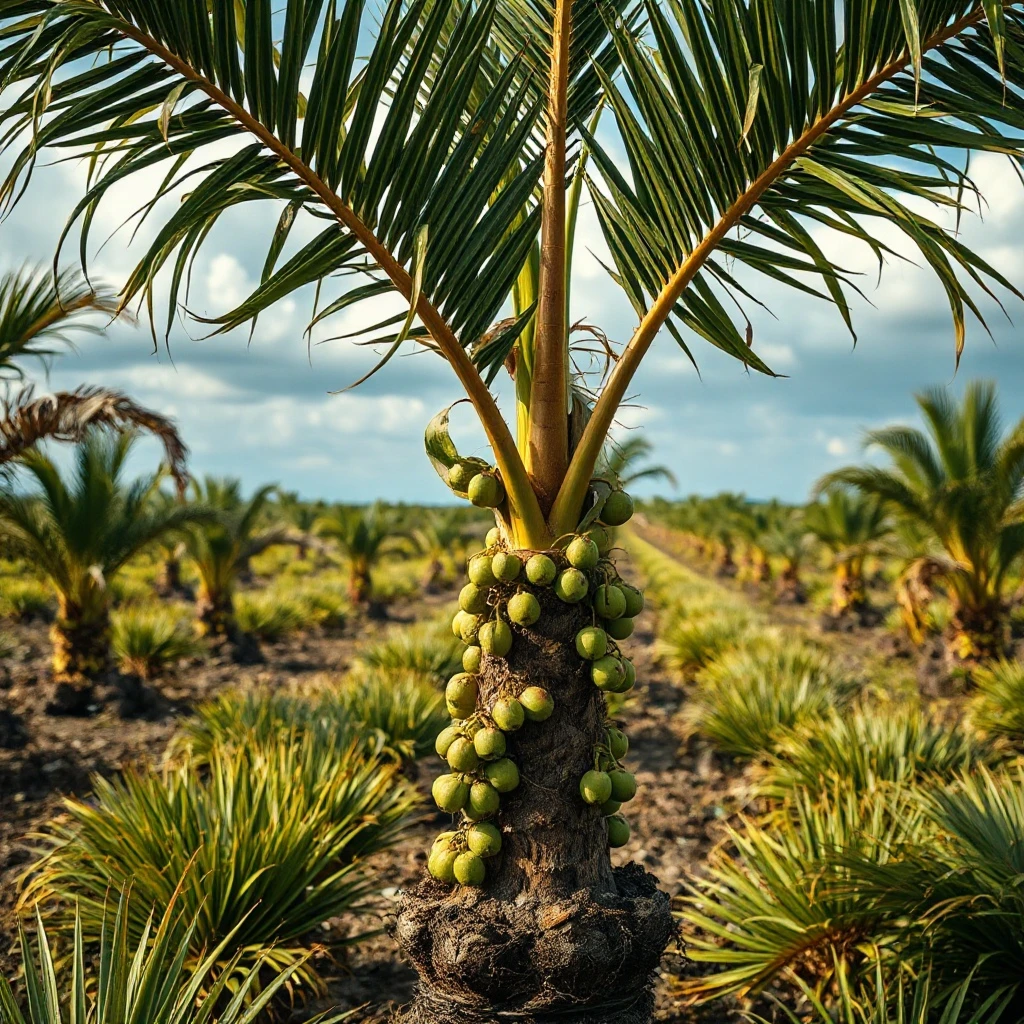
Malaysian crude palm oil (CPO) was little changed on Wednesday, with the benchmark contract edging down 0.2% to $1,106 per metric ton (RM4,529) as traders weighed conflicting signals. Prices remain in a tight range near the upper end of their recent channel, consolidating after a period of mild gains driven by a surge in energy markets.
The strongest bullish impulse is coming from a sharp rally in Brent crude, which has jumped 12.7% over the past week to near $89.50 a barrel. Higher oil prices improve the economics of biodiesel blending, making palm oil more attractive as a feedstock and supportive of CPO’s relative value. The palm–soyoil discount, currently averaging $475 per metric ton, is also lending support by incentivizing demand switching from soybean oil to cheaper palm, putting a floor under the market.
Fears of a developing El Niño are adding a speculative bid. With sea‑surface temperatures in the equatorial Pacific running +1.4°C above normal, traders are pricing in the risk of yield declines across Southeast Asia later in the season, prompting early buying despite currently comfortable stock levels. Technically, a golden cross of the 5‑day and 20‑day moving averages and a positive MACD histogram signal short‑term upward momentum, though the RSI remains neutral.
On the supply side, Malaysian inventory data for July showed a 7.2% month‑on‑month rise to 1.43 million tonnes, with the stocks‑to‑use ratio climbing to a comfortable 12.5%. Seasonal patterns suggest a further build of around 11.2% in August, capping upside pressure. The weak Indonesian rupiah, trading near 17,797 to the US dollar, is encouraging aggressive export selling out of Indonesia, increasing global supply and keeping a lid on prices.
Positioning adds another layer of vulnerability. Speculative net long positions in soybean oil remain at the 80th percentile of recent history, despite a reduction of 29,000 contracts last week. This crowded trade could exacerbate a sell‑off if sentiment shifts, with the potential to spill over into related palm oil markets.
With four bullish and four bearish factors in play, neither side has a clear upper hand. Our model outlook suggests a mild upward bias over the next seven sessions, but the path is narrow—just a projected 0.4% gain—and upside is firmly capped by rising stocks and Indonesian exports. The market is likely to remain range‑bound unless one of these forces breaks decisively. A further surge in crude oil or a confirmed strong El Niño could tip the scales to the upside, while a larger‑than‑expected Malaysian stock build or a sharp ramp‑up in exports out of Indonesia could flip the balance bearish. For now, consolidation near the top of the recent range is the most probable scenario.
Malaysian benchmark holds near four-month highs; MPOB stocks rise, but crude strength and El Niño lend support.
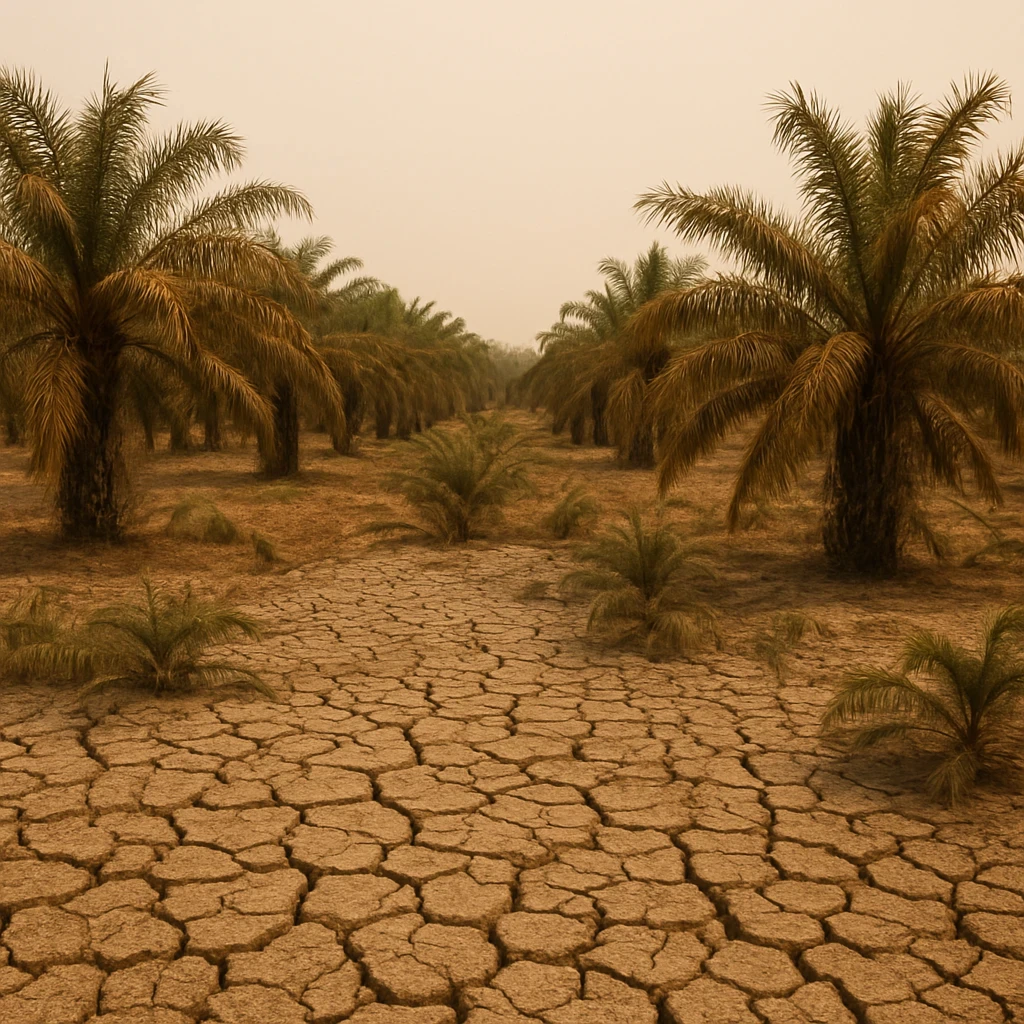
Malaysian crude palm oil futures closed near $1106 per tonne (RM 4529), down 0.2% on the session, after touching four-month highs earlier in the week. The global benchmark sits at about $1101, while Indonesia's reference price is around $1030. The market is consolidating after a crude-led rally, with Brent up 0.5% to about $90 per barrel.
The latest MPOB data for July show Malaysian CPO production at 1,792,979 tonnes, up 9.4% month-on-month, while closing stocks rose 7.2% to 1,429,316 tonnes. Exports jumped 14.5% to 1,392,178 tonnes, reflecting strong demand, but imports fell sharply by 51.9% to 49,566 tonnes. The higher stocks and peak production season are capping price gains, even as the export surge points to robust buying.
ENSO conditions are in El Niño territory, with ONI at +1.4. Kalimantan is notably dry, raising concerns about future output. Our model outlook notes that a developing El Niño offers lagged bullish support, but the immediate impact is muted by current high stocks. Market watchers are debating when the 'inventory inflection point' will arrive, as highlighted in recent previews.
Firm crude oil prices are underpinning biodiesel economics, with Indonesia, Malaysia, and Thailand having raised mandates for 2026. Indonesia's B50 program, rolled out by Pertamina, is a key driver. India's vegetable oil imports surged 13% in July, with palm oil demand accelerating, and imports are expected to stay strong ahead of festivals. However, rival oils in China are weakening, pressuring palm oil sentiment.
Our model outlook expects modest upward drift over the next seven sessions, with crude as the primary driver. Position squaring and technical resistance near recent highs are likely to limit gains. The published path is +0.2% over the week.
Buyers should monitor crude oil movements, as they directly influence biodiesel demand and palm oil's competitive position. Also watch for any further dryness in Kalimantan, which could tighten supply expectations. The balance between strong exports and rising stocks will be key in the near term.
Sources: Business Daily; Finimize; Business Recorder; Borneo Post; UkrAgroConsult; ChemAnalyst
A practical guide to Nigeria's import restrictions and forex measures, and what they mean for procurement managers.
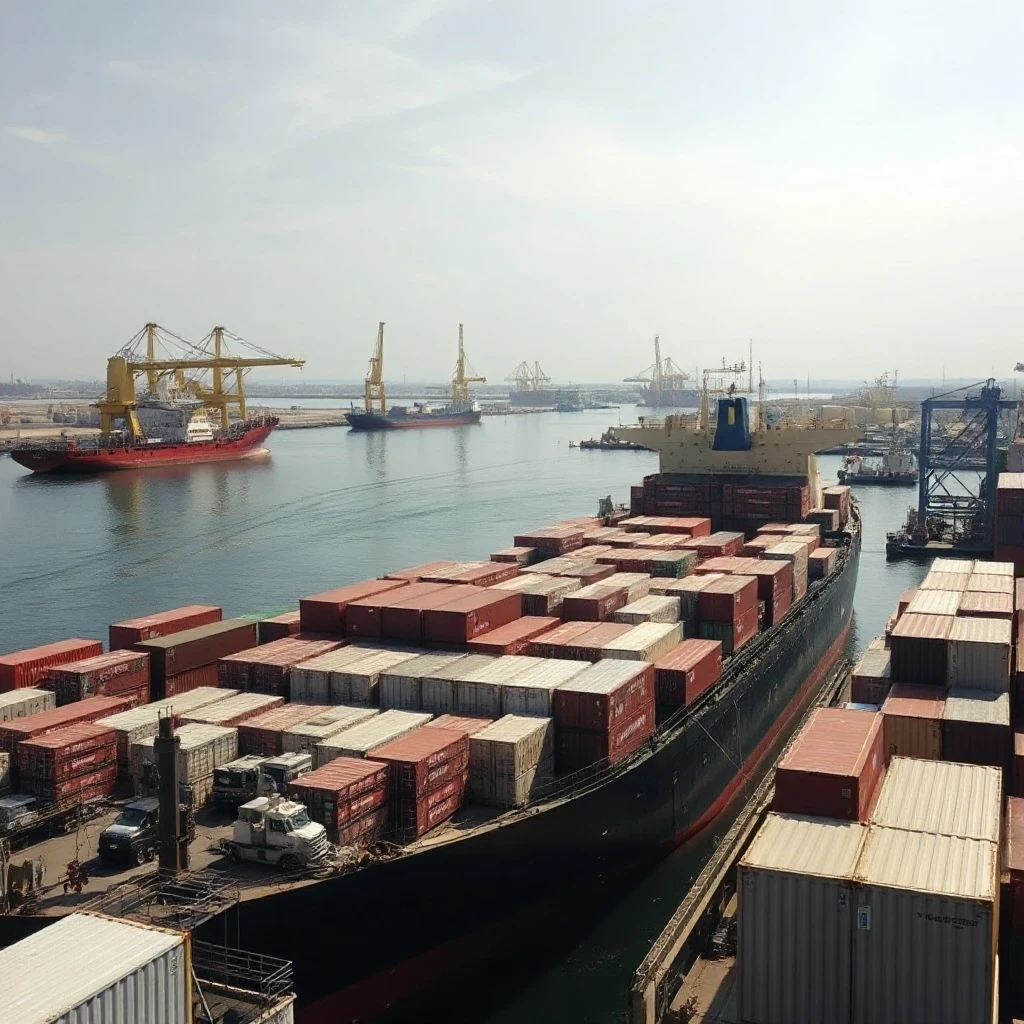
For buyers of palm oil, the policy environment in producing countries is as influential as global supply and demand. In West Africa, and particularly Nigeria, government measures to boost domestic production and conserve foreign exchange have a direct and often underestimated impact on the cost of palm oil delivered to your port.
This explainer breaks down the mechanics of these policies, how they interact, and what to watch as you plan your procurement strategy.
Nigeria, like several West African nations, has long pursued a policy of import substitution for agricultural commodities, including palm oil. The primary tool is a combination of tariffs and non-tariff barriers.
The commercial effect is straightforward: every layer of restriction adds to the landed cost, pushing the final price above the international market benchmark. For a buyer, this means Nigerian palm oil is rarely the cheapest option on a pure price basis, but it is often the only option if you need to source locally to meet contractual or regulatory obligations.
A second, and often more volatile, policy lever is foreign exchange (forex) management. Nigeria has, at various times, maintained a managed currency regime, with the central bank controlling access to dollars and other hard currencies.
For a procurement manager, understanding this mechanism is critical. A sudden tightening of forex availability can make an otherwise viable import deal uneconomical overnight, or it can signal a shift in government policy that will affect pricing for months.
The rationale behind these policies is the long-term goal of self-sufficiency. By making imports expensive and difficult, the government aims to incentivize local production and processing. This has led to significant investment in plantations and mills, but the transition is neither quick nor smooth.
For those sourcing from West Africa, the key is to track policy signals, not just market prices. Here are the indicators that matter:
In practice, a buyer who monitors these signals can anticipate price movements and adjust sourcing strategies. For example, if forex restrictions are expected to tighten, it may be prudent to lock in longer-term contracts or secure forex early. Conversely, if domestic production is ramping up, the premium for local product may narrow, offering negotiating leverage.
The bottom line: West African palm oil policy is not a static backdrop but a dynamic force that directly shapes your landed cost. By understanding the mechanics of import restrictions and forex measures, you can better navigate the market and protect your supply chain from policy-driven volatility. ---
*This article reflects the position as of 12 August 2026. Duty structures, levies and mandates change often, sometimes at short notice. Please verify the current position, and any changes made after this date, before relying on it.*
A step-by-step explainer of Indonesia's domestic market obligation and how it periodically reduces export availability.

Indonesia's Domestic Market Obligation (DMO) and Domestic Price Obligation (DPO) are policy tools designed to keep cooking oil affordable at home. For buyers abroad, they are a recurring source of supply tightness. Understanding how they are structured helps traders anticipate when export volumes may shrink and why landed costs can spike.
The DMO is activated when domestic cooking oil prices exceed a government-set ceiling. The DPO is the price cap that triggers the obligation. When the reference price for bulk cooking oil breaches that ceiling, the government requires palm oil exporters to sell a portion of their output domestically at a capped price.
The trigger is not a fixed date but a price condition. When domestic prices stay above the ceiling for a sustained period, the obligation is enforced. When prices fall back, the policy may be relaxed or suspended. The structure is designed to respond to local market stress, not to global demand.
Exporters must prove they have fulfilled their DMO before they receive export permits. The ratio is set by the government and determines how much domestic sales are required to earn a given volume of export rights. For example, if the ratio is 1:5, a trader who sells one tonne domestically may be allowed to export five tonnes. This ratio can be adjusted to tighten or loosen the export flow.
The ratio is a key lever. When domestic prices stay high, the government may raise the required domestic share, effectively reducing the exportable surplus. When prices ease, the ratio may be lowered to encourage exports and support farmer incomes.
Because Indonesia is the world's largest palm oil exporter, any DMO enforcement removes a significant volume from the global market. The domestic share is sold at the capped price, which is often below the international price. That creates an implicit tax on exporters, who must absorb the margin loss.
When the DMO is active, exporters may also delay shipments while they secure permits, adding logistical bottlenecks. The combined effect is a sudden drop in available export volumes, which pushes up global prices. The impact is most pronounced when the policy is introduced or tightened, as traders scramble to secure cargoes.
Procurement managers should monitor Indonesian domestic cooking oil prices and any government statements about the DPO ceiling. A sustained rise in domestic prices is the first signal that the DMO may be triggered or tightened.
Also watch the export-permit ratio announcements. Changes in the ratio directly alter the flow of export permits. A higher ratio means more domestic sales required per tonne of exports, which reduces the supply available to the international market.
Finally, track the pace of permit issuance. Even when the policy is stable, slow administrative processing can create short-term supply gaps. Understanding these mechanics allows buyers to anticipate price spikes and adjust their sourcing strategies before the market reacts.
In short, Indonesia's DMO/DPO is a domestic price-control mechanism with global consequences. Its triggers are local price conditions, and its tools are the domestic sales ratio and export permits. For international buyers, the key is to watch domestic price signals and policy announcements, not just global demand and stocks. ---
*This article reflects the position as of 12 August 2026. Duty structures, levies and mandates change often, sometimes at short notice. Please verify the current position, and any changes made after this date, before relying on it.*
Higher blend mandates in top producers lift crude palm demand; EU deforestation rules test Africa's export competitiveness.

Policy shifts across major palm oil producing and consuming economies are tightening the demand picture for crude palm oil (CPO) even as supply fundamentals remain ample. For compliance-minded buyers, the interplay between energy policy and deforestation regulation is becoming the central price driver beyond weather and stocks.
Indonesia, Malaysia and Thailand have all raised their biodiesel mandates for 2026, with Indonesia's state energy firm Pertamina now running nationwide B50 distribution. The higher blend rate directly increases domestic CPO consumption, diverting a larger share of output away from export markets. India's central bank has linked the broad-based rise in edible oil prices to this biofuel-driven demand, citing Indonesia's B50 mandate as a key factor.
With Brent crude trading near $90 per barrel, the economics of palm-based biodiesel remain favourable relative to fossil diesel, supporting the viability of higher mandates. Our model outlook sees firmer crude as the primary near-term driver for CPO, with prices stabilizing around $1106 per tonne after a crude-led rally. However, the demand boost from biodiesel is partially offset by high Malaysian stocks and peak seasonal production.
The European Union's deforestation regulation is set to redefine export competitiveness for African producers, according to recent analysis. For buyers sourcing from Africa, compliance with EU traceability requirements will become a decisive factor in supply chain decisions. Producers that can demonstrate deforestation-free supply chains may gain preferential access, while those unable to meet documentation standards face exclusion from the EU market.
This regulatory pressure comes alongside duty-free edible oil imports from Nepal into India, which are emerging as a concern for domestic Indian producers. The combination of EU compliance costs and regional trade distortions is reshaping traditional palm oil trade routes, favouring suppliers with robust sustainability infrastructure.
Malaysian July data showed CPO production at 1.79 million tonnes, up 9.4% month-on-month, with closing stocks rising 7.2% to 1.43 million tonnes. Exports grew a stronger 14.5% to 1.39 million tonnes, while imports fell sharply. The build-up in stocks, together with peak production, limits upside despite biodiesel-driven domestic absorption.
A developing El Niño, with ONI at +1.4 and notably dry conditions in Kalimantan, offers lagged bullish support for prices, though the effect typically materializes over several months. Our model outlook expects modest upward drift over the next seven sessions, with crude oil as the main catalyst while position squaring and technical resistance cap gains.
For buyers, the key watch points are the pace of Indonesia's B50 rollout, EU enforcement timelines on deforestation compliance, and whether African suppliers can adapt quickly enough to retain European market access.
Our market desk connects serious buyers with vetted origin suppliers across Southeast Asia. Indicative pricing, specifications and shipment guidance — free of charge.
Get connected →Bullish biodiesel demand and El Niño concerns counter bearish supply dynamics, keeping palm oil in a narrow consolidation range.
Malaysian benchmark holds near four-month highs; MPOB stocks rise, but crude strength and El Niño lend support.
A practical guide to Nigeria's import restrictions and forex measures, and what they mean for procurement managers.
A step-by-step explainer of Indonesia's domestic market obligation and how it periodically reduces export availability.
Higher blend mandates in top producers lift crude palm demand; EU deforestation rules test Africa's export competitiveness.
Strong El Niño probability mounts, raising supply concerns despite ample Malaysian inventories and peak output.
The probability of a strong El Niño is rising sharply, a development that is refocusing attention on palm oil supply risks even as near-term inventories remain comfortable. The latest MPOB July report preview highlights this growing weather threat and asks how far off the long-awaited inventory inflection point may be. For traders and buyers, the combination of a firming weather risk premium and currently ample stocks is creating a delicate balancing act in the market.
Malaysian crude palm oil (CPO) futures were trading at about $1,109 per tonne (RM 4,539) on Wednesday, up a marginal 0.1% from the previous session. The global benchmark stood at roughly $1,101 per tonne, while Indonesia's reference price was set near $1,030 per tonne. These price levels reflect a market that is steady but cautious, with gains capped by technical resistance and a well-supplied near-term outlook.
Malaysia's MPOB data for July showed CPO production rose 9.4% month-on-month to 1,792,979 tonnes, while closing stocks increased 7.2% to 1,429,316 tonnes. Exports were stronger, up 14.5% to 1,392,178 tonnes, but imports fell sharply by 51.9% to 49,566 tonnes. The fresh fruit bunch reference price edged up 1.2% to RM 49.50. The build in stocks, though expected during the peak production season, has kept a lid on bullish sentiment.
The El Niño event, currently measured at ONI +1.4, is already contributing to dry conditions in key growing regions, notably Kalimantan. The rising probability of a strong El Niño adds a longer-term supply concern that could tighten inventories later in the season. While near-term peak output and ample July stocks temper immediate bullishness, the weather risk is increasingly being priced into the market's outlook.
Our model outlook points to modest further gains in CPO prices over the next seven trading days, driven by the sharp rally in Brent crude oil, which is hovering near $89 per barrel, and a wide palm-soyoil discount that encourages demand switching. However, upside is capped by technical resistance near the upper Bollinger Band at $1,116 and recent speculative long liquidation in soyoil futures. The expected path is a gently rising but choppy market, with a projected gain of 0.2% over the next seven sessions.
Traders are monitoring the interplay between weather-driven supply risks and the current stock surplus. A stronger El Niño could accelerate the drawdown of inventories in the months ahead, potentially shifting the market from a comfortable surplus to a tighter balance. For now, the immediate data points to ample supply, but the weather risk is a factor that cannot be ignored in positioning for the coming quarters.