Palm Oil Steady Near $1,108 After Four-Month High; Stocks, El Niño in Focus
Malaysian CPO holds near $1,108 as exports jump 14.5% but stocks rise; Dalian and crude strength underpin, while Indonesia sets August reference at $996.52.

Malaysian CPO benchmark holds above $1,100/MT, supported by strong BOPO discount and Brent rally, though ample stocks cap gains.

El Niño intensifies, tightening medium-term supply outlook. The ONI has reached +1.4°C, indicating a strong El Niño event. Historically, such conditions reduce Southeast Asian palm yields with a 6–12 month lag. The market is pricing in future production losses, adding a bullish bias to deferred contracts and sentiment.
Brent crude surge lifts biodiesel blending economics. Brent surged 11.3% over the last seven days to about $88/bbl. With higher crude prices, the relative attractiveness of biodiesel increases, raising the demand floor for palm oil as a feedstock in Indonesia and Malaysia. This drives speculative buying and commercial hedging.
Technical momentum confirms an uptrend. The MACD histogram is positive, and the 5/20 SMA golden cross signals short-term momentum. Prices are hovering near the upper Bollinger Band ($1,116), suggesting the uptrend remains intact, attracting technical traders.
August seasonality adds counter-seasonal support. Despite the peak production cycle, August historically averages a +0.7% MoM gain, often linked to pre-stocking ahead of festival demand. This seasonal pattern provides an additional layer of bullish sentiment.
Crowded soy oil longs face liquidation risk. CFTC data shows net long soybean oil positions remain in the 80th percentile historically, but they fell by 29,174 contracts last week. Such positioning leaves the complex vulnerable to a sharp sell-off if bullish catalysts fade, indirectly dragging on palm oil via the vegetable oil complex.
China’s import pullback may curb demand. Mainland China’s edible oil imports declined year-on-year in the first half of 2026. As the world’s largest palm oil importer, any sustained weakness in Chinese buying could erode price support, especially given high stocks in destination markets.
Malaysian CPO holds near $1,108 as exports jump 14.5% but stocks rise; Dalian and crude strength underpin, while Indonesia sets August reference at $996.52.
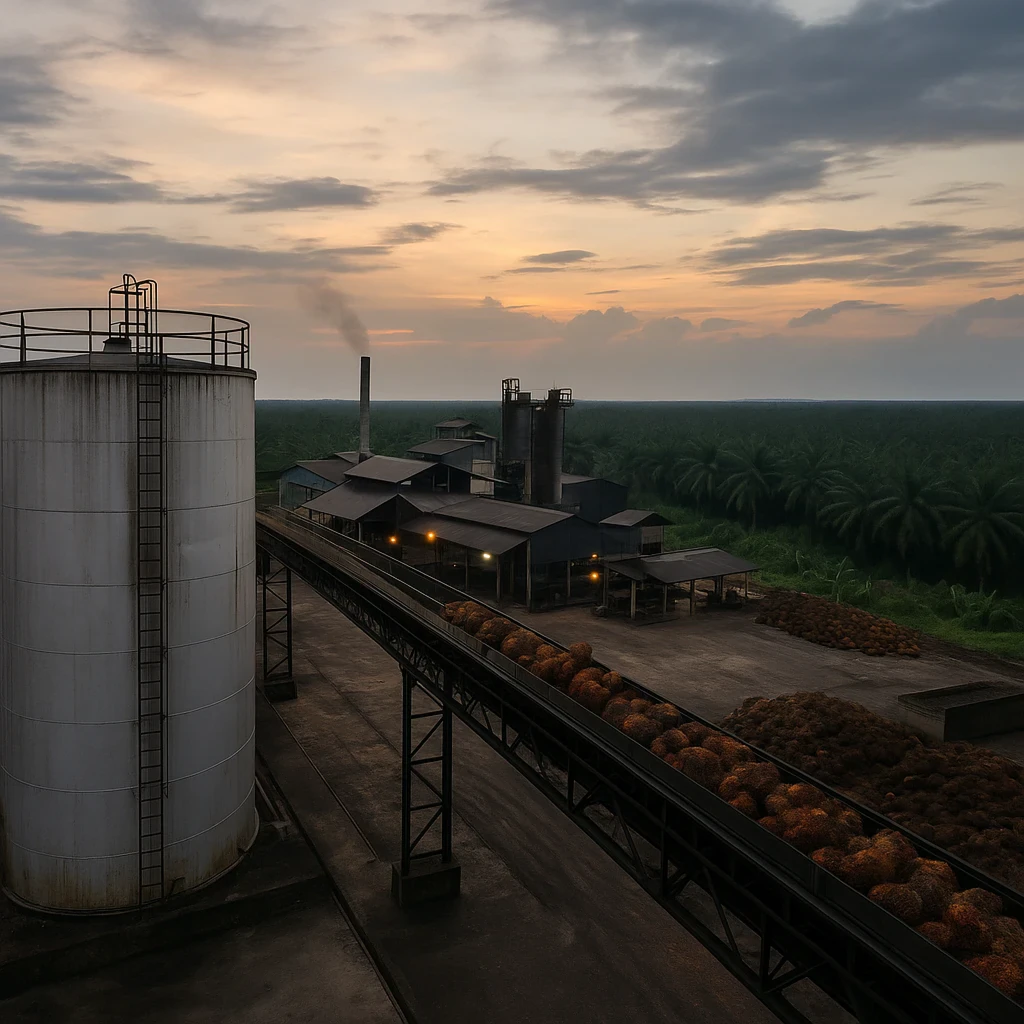
Malaysian crude palm oil futures held firm on Tuesday, with the benchmark contract trading around $1,108 per tonne (RM 4,530), up 0.4% from the previous session. The market is consolidating after hitting a four-month high on Monday, supported by strength in Dalian vegetable oil markets and firm crude oil prices, even as supply-side signals remain bearish.
The Malaysian Palm Oil Board reported July output at 1,792,979 tonnes, up 9.4% month-on-month, while closing stocks rose 7.2% to 1,429,316 tonnes. Exports, however, jumped 14.5% to 1,392,178 tonnes — a stronger-than-expected performance that cushioned the impact of rising inventories. Imports fell sharply to 49,566 tonnes (-51.9% MoM), reflecting ample domestic supply.
Despite the stock build, market participants took comfort from the export rebound. As one headline noted, palm oil closed at its highest in four months on Monday, tracking rival oils and expectations ahead of the MPOB release. The data, released Monday, confirmed the inventory increase but also highlighted resilient demand, particularly from India and China.
The market is closely watching weather developments. ENSO conditions are in El Niño territory (ONI +1.4), with notable dryness in Kalimantan, a key Indonesian production region. This has raised concerns about future output, even as current production peaks. Malaysia’s SD Guthrie has flagged potential El Niño impacts on 2027-28 output, adding a longer-term supply worry.
Indonesia, Malaysia, and Thailand have all raised their biodiesel mandates in 2026, with Indonesia's B50 program now rolling out nationwide. This structural demand boost, combined with Brent crude at $87 per barrel (-0.2%), keeps the biodiesel blending economics attractive. A wide BOPO spread means higher crude prices make palm-based biodiesel more competitive, underpinning the vegetable oil complex.
The Indonesian trade ministry (Kemendag) has set the August CPO reference price at $996.52 per tonne, a level below the Malaysian benchmark. This acts as a policy anchor, influencing export levies and potentially encouraging more Indonesian supply. The reference price is revised monthly and is closely watched by traders for signals on export policy.
India's vegetable oil imports surged 13% in recent months as palm oil demand accelerates ahead of festivals. China, however, reported a year-on-year decline in edible vegetable oil imports for the first half of the year, though the market is watching for any shift in buying patterns.
Global food prices are at their highest since 2023, according to the UN food agency, with edible oils contributing to the uptick. This macro backdrop supports the broader oils complex, even as palm oil faces its own supply overhang.
Our model outlook suggests CPO will trade range-bound with a mild downside bias over the next seven days. Ample stocks and peak production season are likely to cap gains, while supportive biodiesel demand and the wide BOPO spread provide a floor. Heavy Indonesian selling and speculative long liquidation remain risks to watch.
Key levels to monitor: the Malaysian benchmark's ability to hold above $1,100, and any weather-related headlines from Kalimantan. With El Niño firmly in place, the market will be sensitive to any signs of dryness spreading to other regions.
Keep an eye on Indonesian export policy and the monthly reference price, which currently stands at $996.52 per tonne, below the Malaysian benchmark. Also watch for weekly export data from Malaysia and any shifts in the USD/MYR exchange rate (currently around 4.09), as these will influence near-term price direction.
Sources: Mysteel; Sunsirs; 富途牛牛; KLSE Screener; Moomoo; Business Recorder
Understand how Indonesia's mandatory palm oil certification works, its phased smallholder rollout, and how it interacts with global standards.

Indonesia's ISPO (Indonesian Sustainable Palm Oil) certification is the country's national framework for ensuring palm oil production meets legal, environmental, and social standards. Unlike voluntary schemes, ISPO is mandatory for all oil palm growers and mills operating in Indonesia. Its scope covers plantation management, environmental impact, labor practices, and traceability, with the aim of aligning national production with global sustainability expectations.
The standard is structured around principles that address legal compliance, plantation management, environmental management, and community relations. For producers, ISPO certification is a legal requirement, and its enforcement is tied to government oversight. For buyers, ISPO represents a baseline of compliance that is distinct from voluntary certification schemes.
A key component of ISPO is its phased approach to including smallholders. Recognizing that independent smallholders often lack the resources to comply quickly, the government has set a timeline that gradually brings them into the certification system. This timeline is structured to allow for capacity building, technical assistance, and financial support, ensuring that smallholders can meet the standards without being excluded from the supply chain.
For procurement managers, this timeline matters because it affects the availability of certified supply. As smallholders become certified, the pool of ISPO-compliant crude palm oil expands, potentially influencing pricing and supply security. The timeline is not static; it can be adjusted based on progress and external factors, so buyers should monitor its evolution.
ISPO operates alongside international standards like the RSPO (Roundtable on Sustainable Palm Oil) and the EUDR (EU Deforestation Regulation). While RSPO is a voluntary, multi-stakeholder certification, and EUDR is a regulatory requirement for market access to the EU, ISPO is the domestic legal baseline. These systems are not mutually exclusive; producers often hold both ISPO and RSPO certifications to serve different markets.
For buyers, the key is to understand how these standards complement each other. ISPO provides a national benchmark, RSPO offers a globally recognized voluntary label, and EUDR demands traceability and deforestation-free evidence. A producer that is ISPO-certified may still need to demonstrate EUDR compliance for EU-bound shipments. The overlap lies in data and traceability: ISPO's requirements can support the due diligence needed for EUDR, but they do not automatically guarantee EUDR compliance.
For procurement managers and traders, the commercial implications are direct. ISPO certification can affect the cost of supply, as producers invest in compliance. The smallholder timeline influences the pace at which certified supply grows, impacting price differentials between certified and non-certified crude palm oil.
Buyers should monitor the implementation of ISPO, especially its smallholder rollout, as delays or accelerations can shift supply dynamics. They should also track how ISPO aligns with RSPO and EUDR, as this affects the ability to meet customer requirements without duplicating efforts. A producer that is ISPO-certified but not yet EUDR-ready may require additional due diligence, adding to landed cost.
In practice, understanding ISPO's structure and timeline helps buyers anticipate certification costs and supply availability. It is not a static regulation but a living framework that evolves with policy and market pressures. Staying informed on its progress is essential for managing risk and cost in palm oil procurement. ---
*This article reflects the position as of 11 August 2026. Duty structures, levies and mandates change often, sometimes at short notice. Please verify the current position, and any changes made after this date, before relying on it.*
Higher blends in top producers support demand, but El Nino and ample stocks temper price gains.

Palm oil policy and energy developments in Southeast Asia are tightening the demand picture even as supply fundamentals remain comfortable. Indonesia, Malaysia and Thailand have all raised their biodiesel mandates for 2026, a move that locks in a larger structural share of palm oil for fuel use and reduces the volume available for conventional edible-oil trade. Indonesia's nationwide rollout of B50 distribution, led by state energy firm Pertamina, is the most significant step, effectively doubling the mandated biodiesel content from the previous B35 level in the world's largest palm oil producer.
For compliance-minded buyers, the mandate escalation carries a clear signal: a growing portion of Indonesian supply is now reserved for domestic fuel blending, narrowing the exportable surplus over time. The wide gap between palm oil prices and Brent crude — currently around $88 per barrel — keeps blending economics attractive for fuel suppliers, which in turn supports the viability of higher mandates. This price spread is a key reason the market is treating the policy push as more than symbolic.
Meanwhile, the El Niño event (ONI +1.4) continues to influence production expectations. Dry conditions in Kalimantan, a core growing region, raise the risk of stress on young fruit bunches and could weigh on output in the coming months. However, the latest Malaysian data for July shows peak-season production is still delivering: CPO output rose 9.4% month-on-month to 1.79 million tonnes, while closing stocks climbed 7.2% to 1.43 million tonnes. Exports also strengthened, up 14.5% month-on-month, reflecting robust buying ahead of any weather-driven tightening.
Our model outlook sees Malaysian CPO trading range-bound with a mild downside bias over the next seven days. Ample stocks and peak-season output are likely to offset the supportive demand from biodiesel mandates and the wide blending spread. Heavy Indonesian selling and speculative long liquidation remain the key risks to watch on the downside, while crude strength and weather headlines could provide intermittent support. For buyers, the near-term window favors hand-to-mouth purchasing rather than building large forward positions, given the uncertain balance between policy-driven demand and supply-side pressure.
ENSO remains in El Niño with ONI +1.4; Kalimantan dry, while Malaysia sees rain. Lagged yield impact and current logistics disruptions weigh on output.
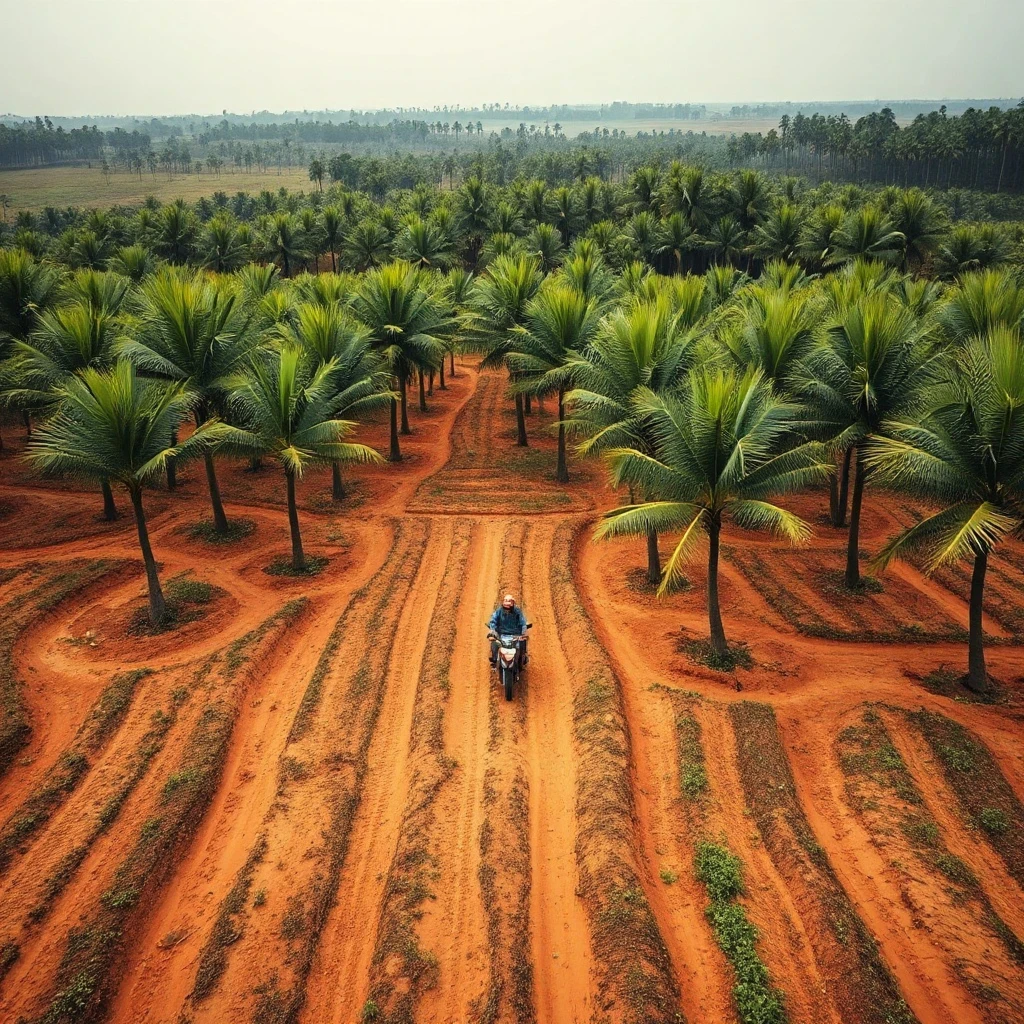
The palm oil complex continues to operate under an El Niño regime, with the Oceanic Niño Index at +1.4. This is a moderate-to-strong event, and its effects are now visible across the Malaysian and Indonesian palm belts. While the market focuses on immediate supply and demand data, the weather signal is layered: a lagged impact on yields from earlier drought, and immediate disruptions from current rainfall patterns.
Satellite and ground observations point to notably dry conditions in Kalimantan, a key production region in Indonesia. Dry weather there is generally favorable for harvesting and logistics, allowing for steady fruit intake at mills. However, prolonged dryness can stress trees, especially if it persists into the coming months.
In contrast, parts of Malaysia have seen wetter conditions. Heavy rain disrupts harvesting and transport now, as workers may face muddy field conditions and rivers can impede fruit collection. This can cause short-term supply hiccups, even as the broader production trend is upward.
El Niño's signature impact on palm oil is a reduction in fruit bunch weight, which typically manifests 6 to 12 months after the drought stress. The current ONI of +1.4 suggests that drought conditions have been in place for some time. This means that the trees in affected areas may be producing lighter bunches, a factor that could temper the expected peak-season output.
The Malaysian Palm Oil Board's July data already showed a 9.4% month-on-month rise in CPO production to 1,792,979 tonnes, but this is partly a seasonal recovery. The lagged effect of El Niño could mean that the growth in yields is less robust than in a neutral year, with smaller bunch weights offsetting the increase in harvested area.
Indonesia's reference price is set at about $1030 per tonne, and the country is a major exporter. Dry conditions in Kalimantan are a double-edged sword: they ease current logistics, but if they persist, they could exacerbate the lagged yield impact. Growers in the region may be hoping for a transition to La Niña, which typically brings wetter conditions to Southeast Asia, but that shift is not yet evident.
Our model outlook suggests that CPO prices will trade range-bound with a mild downside bias over the next seven days. Ample stocks—Malaysia's closing stocks rose 7.2% month-on-month to 1,429,316 tonnes—and peak production season are weighing on sentiment. However, supportive biodiesel demand, underpinned by a wide BOPO spread and Brent crude at about $88 per barrel, provides a floor.
Weather remains a wildcard. Any intensification of dry conditions in Kalimantan or unexpected heavy rains in Malaysia could tighten supply expectations. For now, the market is balancing these weather factors against a well-supplied physical market. Traders will watch the 7-day rainfall forecasts closely, as any deviation from the current pattern could shift the balance.
Malaysian stocks build and El Niño dries Kalimantan, but a wide gasoil spread keeps palm competitive in biodiesel.
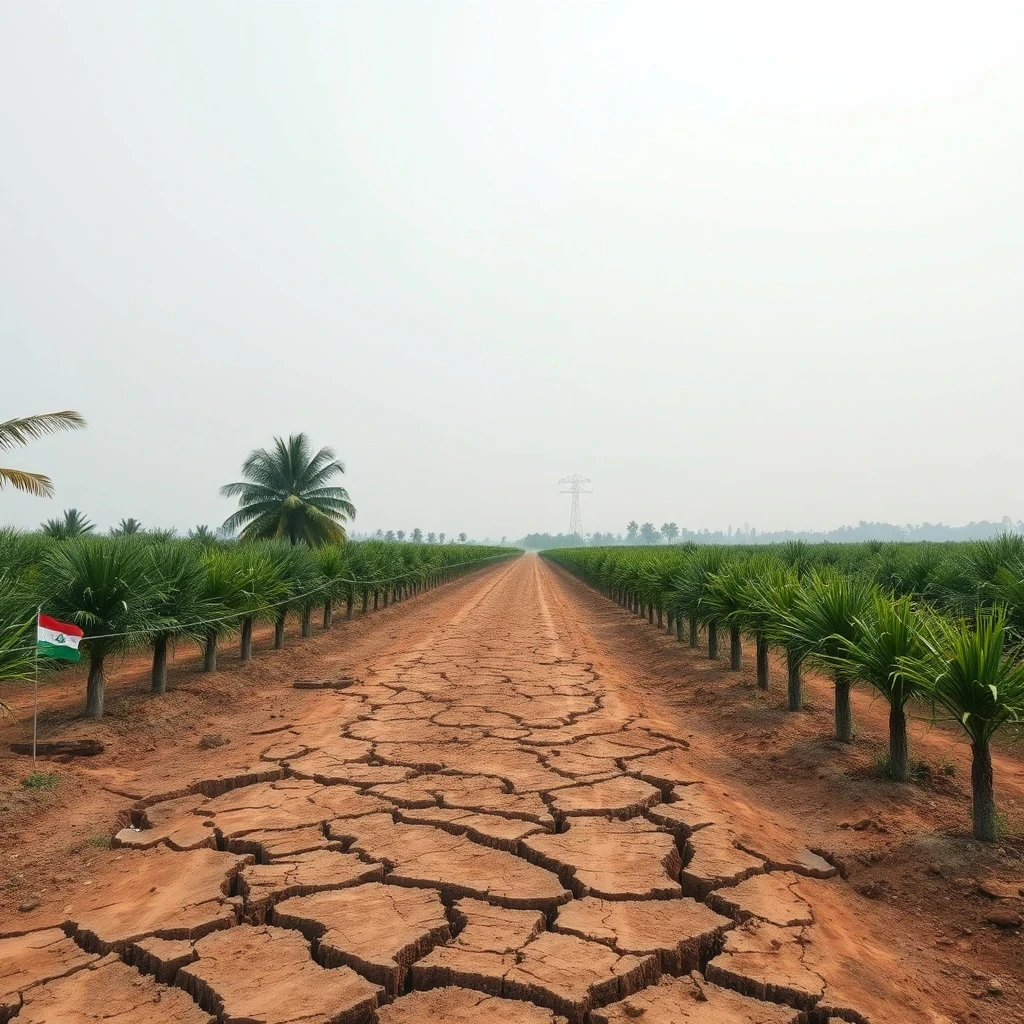
Malaysian crude palm oil futures settled around $1,109 per tonne on August 11, up 0.6% on the session, tracking a firmer Brent crude market. The global benchmark, as measured by the World Bank, stood near $1,101, while Indonesia's reference price was about $1,030. The narrow gap between Malaysian and Indonesian prices reflects ample supply in the region, even as weather risks linger.
The Malaysian Palm Oil Board's July data showed production climbing 9.4% month-on-month to 1.79 million tonnes, while closing stocks rose 7.2% to 1.43 million tonnes. Exports jumped 14.5% to 1.39 million tonnes, but imports fell sharply. The production surge is typical for the seasonal peak, and it has kept a lid on price rallies despite firm demand.
Weather remains a wildcard. The El Niño event, with an ONI of +1.4, has brought notably dry conditions to Kalimantan, a key Indonesian growing region. Dry weather can stress trees and trim yields, but the impact is not yet visible in Malaysian output. The market is watching for any signs of a slowdown in Indonesian production, which would tighten global availability.
Palm oil competes directly with soybean, rapeseed, and sunflower oils in both food and industrial uses. The current price structure favors palm: it trades at a discount to most soft oils, making it the cheapest major vegetable oil. That discount has widened in recent weeks as palm supply has grown, while soy and rapeseed markets have been supported by their own weather and demand stories.
Substitution is most active in food manufacturing, where buyers can switch between palm and liquid oils based on price. In biodiesel, the economics depend on the spread between palm oil and diesel. With Brent crude near $88 per barrel, the gasoil-palm spread remains wide, supporting palm-based biodiesel blending, particularly in Indonesia. That demand provides a floor under prices, but it has not been enough to offset the bearish pressure from rising stocks.
Our model outlook sees palm trading range-bound with a mild downside bias over the next seven days. Ample stocks and peak production are the main bearish factors, while biodiesel demand and a wide gasoil spread offer support. Heavy Indonesian selling and speculative long liquidation could cap any upside.
For the picture to shift, the market would need a sustained drop in Indonesian output—possibly from the Kalimantan dryness—or a sharp rise in crude oil that makes biodiesel blending even more attractive. A sudden pickup in Chinese or Indian buying would also tighten the balance.
Buyers should monitor weekly export data from Indonesia and Malaysia, weather forecasts for Kalimantan, and the diesel-palm spread. Any sign of supply tightening or a crude rally could quickly flip the price direction.
This space reaches palm oil buyers, traders and industry readers every day. Sponsorship and advertising enquiries are welcome — get in touch:
[email protected]Malaysian CPO holds near $1,108 as exports jump 14.5% but stocks rise; Dalian and crude strength underpin, while Indonesia sets August reference at $996.52.
Understand how Indonesia's mandatory palm oil certification works, its phased smallholder rollout, and how it interacts with global standards.
Higher blends in top producers support demand, but El Nino and ample stocks temper price gains.
ENSO remains in El Niño with ONI +1.4; Kalimantan dry, while Malaysia sees rain. Lagged yield impact and current logistics disruptions weigh on output.
Malaysian stocks build and El Niño dries Kalimantan, but a wide gasoil spread keeps palm competitive in biodiesel.
Malaysian CPO benchmark holds above $1,100/MT, supported by strong BOPO discount and Brent rally, though ample stocks cap gains.
El Niño intensifies, tightening medium-term supply outlook. The ONI has reached +1.4°C, indicating a strong El Niño event. Historically, such conditions reduce Southeast Asian palm yields with a 6–12 month lag. The market is pricing in future production losses, adding a bullish bias to deferred contracts and sentiment.
Brent crude surge lifts biodiesel blending economics. Brent surged 11.3% over the last seven days to about $88/bbl. With higher crude prices, the relative attractiveness of biodiesel increases, raising the demand floor for palm oil as a feedstock in Indonesia and Malaysia. This drives speculative buying and commercial hedging.
Technical momentum confirms an uptrend. The MACD histogram is positive, and the 5/20 SMA golden cross signals short-term momentum. Prices are hovering near the upper Bollinger Band ($1,116), suggesting the uptrend remains intact, attracting technical traders.
August seasonality adds counter-seasonal support. Despite the peak production cycle, August historically averages a +0.7% MoM gain, often linked to pre-stocking ahead of festival demand. This seasonal pattern provides an additional layer of bullish sentiment.
Crowded soy oil longs face liquidation risk. CFTC data shows net long soybean oil positions remain in the 80th percentile historically, but they fell by 29,174 contracts last week. Such positioning leaves the complex vulnerable to a sharp sell-off if bullish catalysts fade, indirectly dragging on palm oil via the vegetable oil complex.
China’s import pullback may curb demand. Mainland China’s edible oil imports declined year-on-year in the first half of 2026. As the world’s largest palm oil importer, any sustained weakness in Chinese buying could erode price support, especially given high stocks in destination markets.