Asia’s B50 mandates squeeze discretionary biodiesel blend, RBI flags edible oil inflation
Indonesia’s B50 rollout and rising Asian biofuel targets tighten palm oil supply, while Nepal’s tariff-arbitrage exports to India face scrutiny.

Malaysian CPO benchmark edges up 1.7% on stronger crude and soybean oil, while MPOB data shows rising stocks and production.
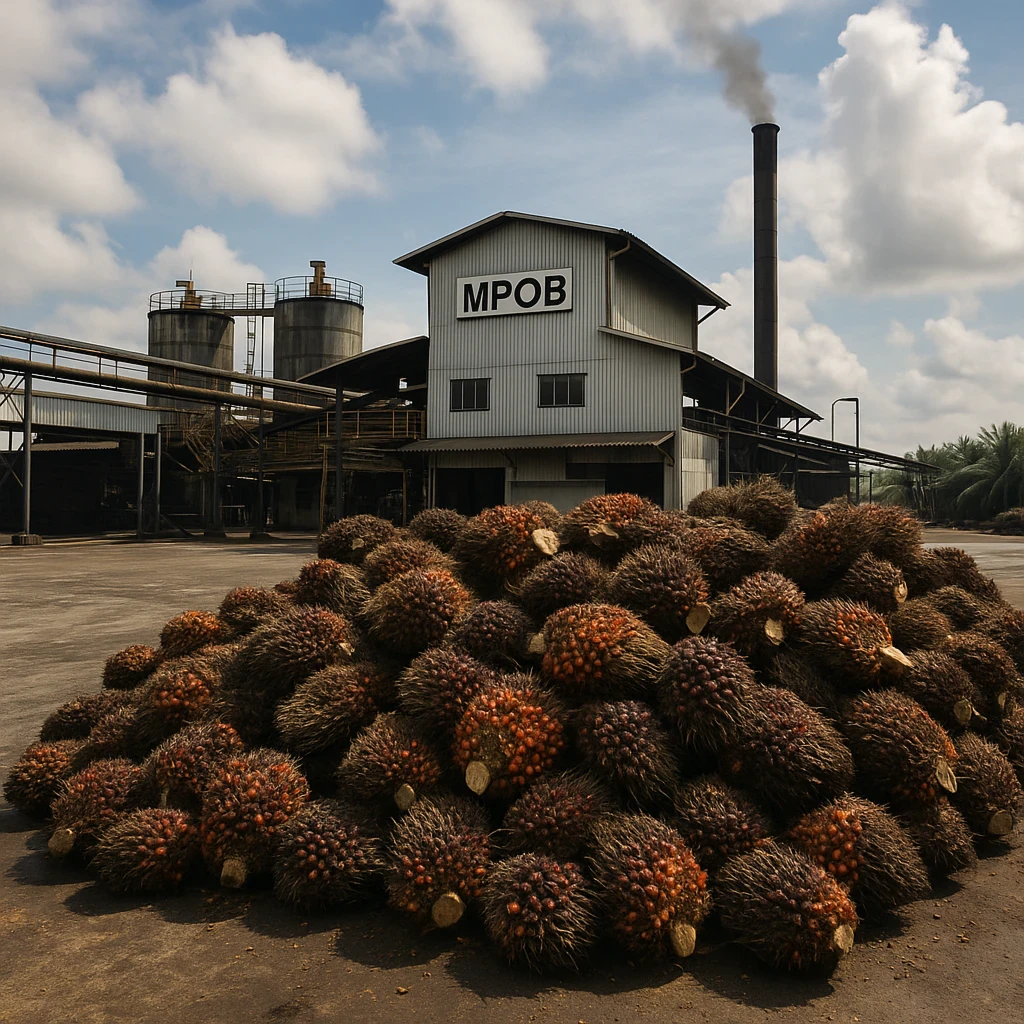
Malaysian crude palm oil futures settled around $1,124 per tonne (RM 4,598) on Monday, up 1.7% from the previous session, supported by firmer crude oil and soybean oil prices. Brent crude rose 0.9% to about $93 per barrel, reinforcing the biodiesel blend economics that underpin palm oil demand.
The latest MPOB data for June 2026 showed Malaysian CPO production at 1,638,777 tonnes, up 8.1% month-on-month, while closing stocks rose 3.7% to 1,332,697 tonnes. Exports increased 6.2% to 1,204,013 tonnes, but imports surged 135.3% to 103,113 tonnes, reflecting active arbitrage flows. The fresh fruit bunch reference price eased 1.3% to RM 48.90.
ENSO conditions remain in El Niño territory (ONI +1.0), but rainfall across the palm belts is broadly normal for now. Our model outlook sees a mildly firm 7-day trajectory, extending the recent upward drift within normal volatility, though seasonal headwinds may cap gains.
Indonesia’s rollout of the B50 biodiesel programme continues to shape global palm oil balances. The mandate, which boosts domestic palm oil consumption, is seen reducing exportable surplus and supporting prices. India’s edible oil imports are expected to surge from July through October as supplies tighten ahead of festivals, according to Reuters. The Reserve Bank of India has flagged biofuel production as a factor behind elevated edible oil prices, citing Indonesia’s B50 mandate.
Soybean oil and crude oil strength provided a tailwind for palm oil last week, with CPO futures hitting a two-week high. However, profit-taking may emerge after the recent rally, as noted by NST Online. Nepal’s edible oil exports to India, which benefit from a tariff advantage, have come under scrutiny, adding a layer of trade policy risk. Meanwhile, the EUDR exemption for palm oil waste highlights niche demand streams.
Watch for further direction from crude oil and soybean oil markets, as well as any updates on Indonesia’s B50 implementation pace. The combination of rising production, firm biodiesel demand, and pre-festival buying from India suggests a balanced but price-supportive environment in the near term.
Sources: NST Online; bernama; Reuters; Finimize; Quantum Commodity Intelligence; livemint.com
Indonesia’s B50 rollout and rising Asian biofuel targets tighten palm oil supply, while Nepal’s tariff-arbitrage exports to India face scrutiny.
Indonesia’s launch of the B50 biodiesel programme in July 2026 is reshaping global palm oil demand. The mandatory 50% palm oil-based blend, reported by Oils & Fats International and The Jakarta Post, lifts domestic consumption and reduces the volume available for export. The RBI has linked broad-based edible oil price rises to biofuel use, specifically citing Indonesia’s B50 mandate. Market sources quoted by Quantum Commodity Intelligence note that rising Asian mandates are curtailing the discretionary biodiesel blend opportunity, as obligated volumes absorb a larger share of supply.
India’s duty-free edible oil imports from Nepal have surged to Rs146 billion, drawing concern from domestic producers. The Kathmandu Post and livemint report that Nepalese refiners are exploiting a tariff advantage to ship palm oil products into India, undercutting local processors. This trade flow adds to India’s import pressure and complicates the price outlook for palm oil buyers in the subcontinent.
The EU Deforestation Regulation explicitly excludes palm oil waste from its scope, as detailed by FoodNavigator. This exemption allows agricultural use of palm oil by-products without the compliance burden faced by virgin palm oil. For European buyers, this could shift some demand toward waste-derived products, but the overall impact on CPO demand remains marginal.
Our model outlook points to a mildly firm 7-day price trajectory, extending the recent upward drift. Malaysian CPO benchmark settled at $1124/MT, up 1.7% session-on-session, supported by tighter supply expectations from mandate-driven demand and normal rainfall across the belt. Buyers should monitor policy developments in Jakarta and New Delhi, as both hold near-term price implications.
Sources: Quantum Commodity Intelligence; livemint.com; Oils & Fats International; The Jakarta Post; Reuters; The Kathmandu Post
ENSO neutral-positive state with ONI +1.0 keeps historical drought lag in focus, but near-term rainfall outlook supports harvesting pace.
The equatorial Pacific remains in a weak El Niño phase, with the Oceanic Niño Index (ONI) at +1.0 for the latest reading. While sea-surface temperature anomalies have moderated from their mid-2025 peak, the atmospheric pattern typical of El Niño — drier-than-normal conditions over parts of maritime Southeast Asia — has not fully dissipated.
For palm oil, the critical concern is the lagged effect of moisture stress on oil palm yields. El Niño-driven rainfall deficits typically reduce fruit bunch weight and oil extraction rates 6–12 months after the dry spell peaks. The current ONI reading implies that the most acute stress period occurred in late 2025 to early 2026, meaning yield suppression may still be working through the current production cycle.
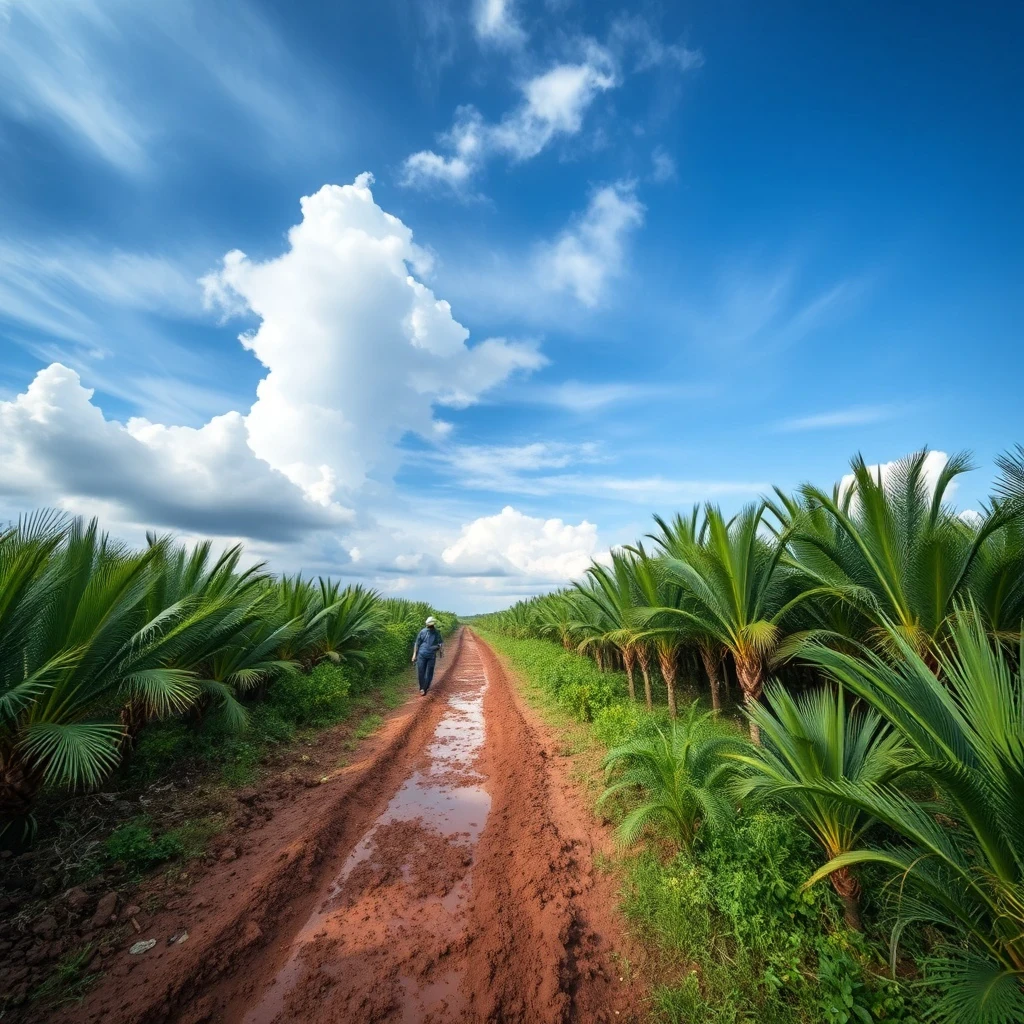
Despite the lingering ENSO signal, rainfall across the Malaysian and Indonesian palm belts over the past four weeks has been broadly normal. Our model outlook projects a mildly firm 7-day rainfall pattern, with no extreme dry or wet anomalies expected. This supports uninterrupted harvesting and milling operations, which is particularly relevant for the immediate supply chain.
Heavy rain events can disrupt fresh fruit bunch (FFB) collection and reduce mill throughput due to logistical bottlenecks. The absence of such disruptions in the near term should allow the current seasonal uptick in production to proceed without major hiccups.
MPOB June data showed Malaysian CPO production at 1.64 million tonnes, up 8.1% month-on-month, while closing stocks rose 3.7% to 1.33 million tonnes. The production increase is consistent with the seasonal high-cycle, but the lagged El Niño effect may cap the magnitude of the peak. Exports rose 6.2% month-on-month, indicating steady demand, though imports surged 135% — partly a reflection of price arbitrage and stock-building by local refiners.
Indonesia’s Kemendag reference price for July stands at about $1,030/MT, below the global benchmark, which supports competitive export pricing. The broadly normal rainfall across Sumatra and Kalimantan — the main producing islands — is positive for near-term yields, though the lagged El Niño impact may still be felt in regions that experienced acute dryness in early 2026.
Brent crude at $93/bbl, up 0.9% on the session, continues to support palm oil’s competitiveness in biodiesel blending. Higher crude prices improve the economics of mandatory blend programs in both Malaysia and Indonesia, providing a floor under CPO demand even as supply fundamentals remain mixed.
Our model outlook points to a mildly firm 7-day price trajectory, extending the recent upward drift. The absence of disruptive weather in the immediate forecast, combined with steady export demand and supportive crude values, suggests the market can absorb the seasonal production increase without a sharp price correction. However, the lagged El Niño risk remains a latent factor that could emerge in late 2026 output data if the current normal rains do not persist into the next cycle.
Our market desk connects serious buyers with vetted origin suppliers across Southeast Asia. Indicative pricing, specifications and shipment guidance — free of charge.
Get connected →Indonesia’s B50 rollout and rising Asian biofuel targets tighten palm oil supply, while Nepal’s tariff-arbitrage exports to India face scrutiny.
ENSO neutral-positive state with ONI +1.0 keeps historical drought lag in focus, but near-term rainfall outlook supports harvesting pace.
Malaysian CPO benchmark edges up 1.7% on stronger crude and soybean oil, while MPOB data shows rising stocks and production.
Malaysian crude palm oil futures settled around $1,124 per tonne (RM 4,598) on Monday, up 1.7% from the previous session, supported by firmer crude oil and soybean oil prices. Brent crude rose 0.9% to about $93 per barrel, reinforcing the biodiesel blend economics that underpin palm oil demand.
The latest MPOB data for June 2026 showed Malaysian CPO production at 1,638,777 tonnes, up 8.1% month-on-month, while closing stocks rose 3.7% to 1,332,697 tonnes. Exports increased 6.2% to 1,204,013 tonnes, but imports surged 135.3% to 103,113 tonnes, reflecting active arbitrage flows. The fresh fruit bunch reference price eased 1.3% to RM 48.90.
ENSO conditions remain in El Niño territory (ONI +1.0), but rainfall across the palm belts is broadly normal for now. Our model outlook sees a mildly firm 7-day trajectory, extending the recent upward drift within normal volatility, though seasonal headwinds may cap gains.
Indonesia’s rollout of the B50 biodiesel programme continues to shape global palm oil balances. The mandate, which boosts domestic palm oil consumption, is seen reducing exportable surplus and supporting prices. India’s edible oil imports are expected to surge from July through October as supplies tighten ahead of festivals, according to Reuters. The Reserve Bank of India has flagged biofuel production as a factor behind elevated edible oil prices, citing Indonesia’s B50 mandate.
Soybean oil and crude oil strength provided a tailwind for palm oil last week, with CPO futures hitting a two-week high. However, profit-taking may emerge after the recent rally, as noted by NST Online. Nepal’s edible oil exports to India, which benefit from a tariff advantage, have come under scrutiny, adding a layer of trade policy risk. Meanwhile, the EUDR exemption for palm oil waste highlights niche demand streams.
Watch for further direction from crude oil and soybean oil markets, as well as any updates on Indonesia’s B50 implementation pace. The combination of rising production, firm biodiesel demand, and pre-festival buying from India suggests a balanced but price-supportive environment in the near term.