
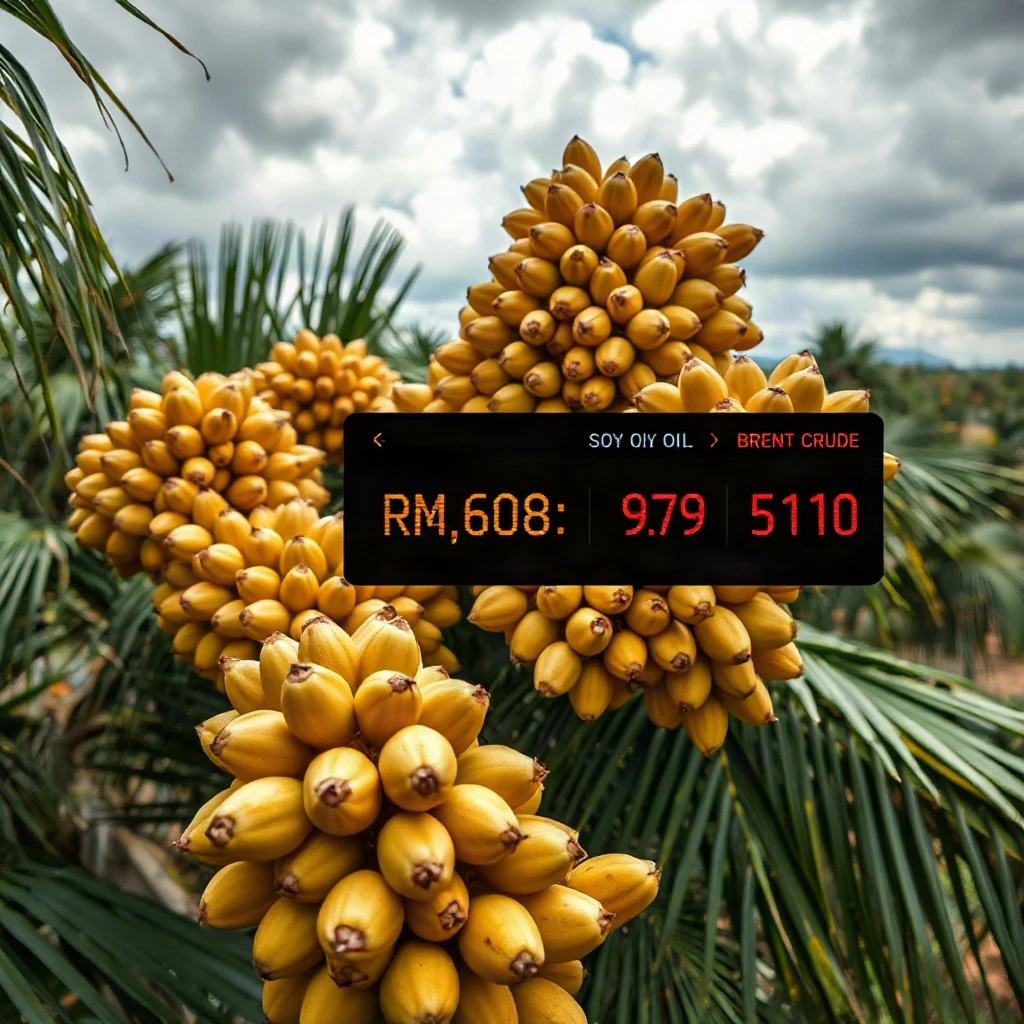
Malaysian CPO benchmark is trading around $1,133 per tonne, up 0.4% from the previous session, or about RM4,608 at a ringgit rate of 4.07 per dollar. That leaves the market consolidating near RM4,606 after a three-session slide, according to our model outlook. The World Bank global palm oil benchmark sits at $1,117 per tonne, while Indonesia's Kemendag reference price is about $1,008. Brent crude is around $107 per barrel, up 0.9% on the session, reinforcing the energy link for vegetable oils.
Bullish levers: from BOPO to B50 and biodiesel
The strongest support comes from the wide BOPO spread. Soybean oil is around $1,544 per tonne against CPO at $1,133, leaving palm oil at a $411 discount. That is a demand-switching signal: food, feed and oleochemical buyers that can substitute palm for soybean oil have a strong incentive to switch, which tightens effective palm supply even when crude palm oil inventories look comfortable.
Indonesian export policy and the B50 mandate are also pulling supply off the world market. The Kemendag reference price of $1,008 per tonne carries a $126 levy and a $148 duty, a total export burden of $274 per tonne. That tax wedge discourages raw CPO exports and funnels palm into domestic biodiesel; with B50 targeted for 100% distribution by end-September, domestic absorption is rising and export availability is tightening. The mechanism is not a demand surge from Indonesia but a supply reduction for the global market.
Brent crude at $106.9 per barrel, up 0.7% over seven days, strengthens the biodiesel economics channel. The POGO spread of -$379 per tonne sits at the 0th percentile, meaning palm oil is historically cheap relative to gasoil. That makes discretionary blending more attractive, adding another demand leg for palm-based biodiesel.
A weaker ringgit also helps. At USD/MYR 4.067, the ringgit is easing against the dollar, which makes Malaysian CPO cheaper in dollar terms and supports export competitiveness. Climate and festival timing add near-term upside optionality. An El Niño state with ONI at +1.8 is a lagged bullish signal for tree stress and yields, and heavy Sabah rainfall of about 89mm over the next seven days could disrupt harvesting and tighten short-term availability. Finally, Diwali is 54 days away, with the restocking window roughly five days from now, which could bring Indian festival buying into the market.
Bearish weights: stocks, peak production and positioning
The August MPOB report is the core bearish data point. Malaysian closing stocks rose 15.2% month-on-month to 1,645,570 tonnes, about 58% above the five-year average, while the stocks-to-use ratio climbed to 14.1%, above the 12% threshold our model treats as bearish. The build was reinforced by exports falling 7.5% month-on-month to 1,294,664 tonnes. When stocks are ample, buyers can delay purchases and wait for lower offers, which caps rallies.
Peak production season is adding to that pressure. August output rose 1.4% month-on-month to 1,817,499 tonnes, near the five-year average for the month, and the seasonal path from July to October implies a further increase of roughly 4.5% over the next two months. More fresh supply is entering warehouses at a time when demand is already digesting the stock overhang.
Technical momentum is negative. The MACD histogram is below zero, and the price is below the five-day simple moving average at RM4,629 after three declining sessions, even though the 5/20 golden cross is still intact. That puts momentum traders on the defensive. Speculative positioning adds vulnerability: CFTC managed money in soybean oil is net long 101,768 contracts, at the 81st percentile, but fell by 8,144 contracts last week. Such crowded longs are prone to liquidation on bearish triggers, which can amplify downside in palm oil through the vegetable-oil complex.
Balance: upside has the upper hand, but near-term chop remains
Our model's factor balance currently counts six bullish drivers against four bearish ones, so the upside has the upper hand. The bearish August stock report and rising seasonal output explain the recent slide, but the wider BOPO discount, Indonesian B50-driven supply absorption, cheap POGO, softer ringgit and upcoming festival demand are stronger supporting forces right now. That said, our model outlook is not a straight line higher: it flags a near-term soft patch, with the next seven sessions likely to see modest weakness in a RM4,550-4,650 range and a published path of -0.8%, as ample stocks and crowded long positioning are worked off against those bullish demand levers.
For the balance to flip back to bearish, the bullish levers would need to fade. A sharp narrowing of the BOPO spread, a delay in Indonesia's B50 rollout or a reduction in its export tax burden, a meaningful drop in Brent that erases the negative POGO spread, and a stronger ringgit would all remove support. Conversely, if Malaysian stocks keep climbing and production beats the seasonal path while those demand-side supports remain intact, the market would likely stay in a choppy consolidation rather than a clean directional break.