
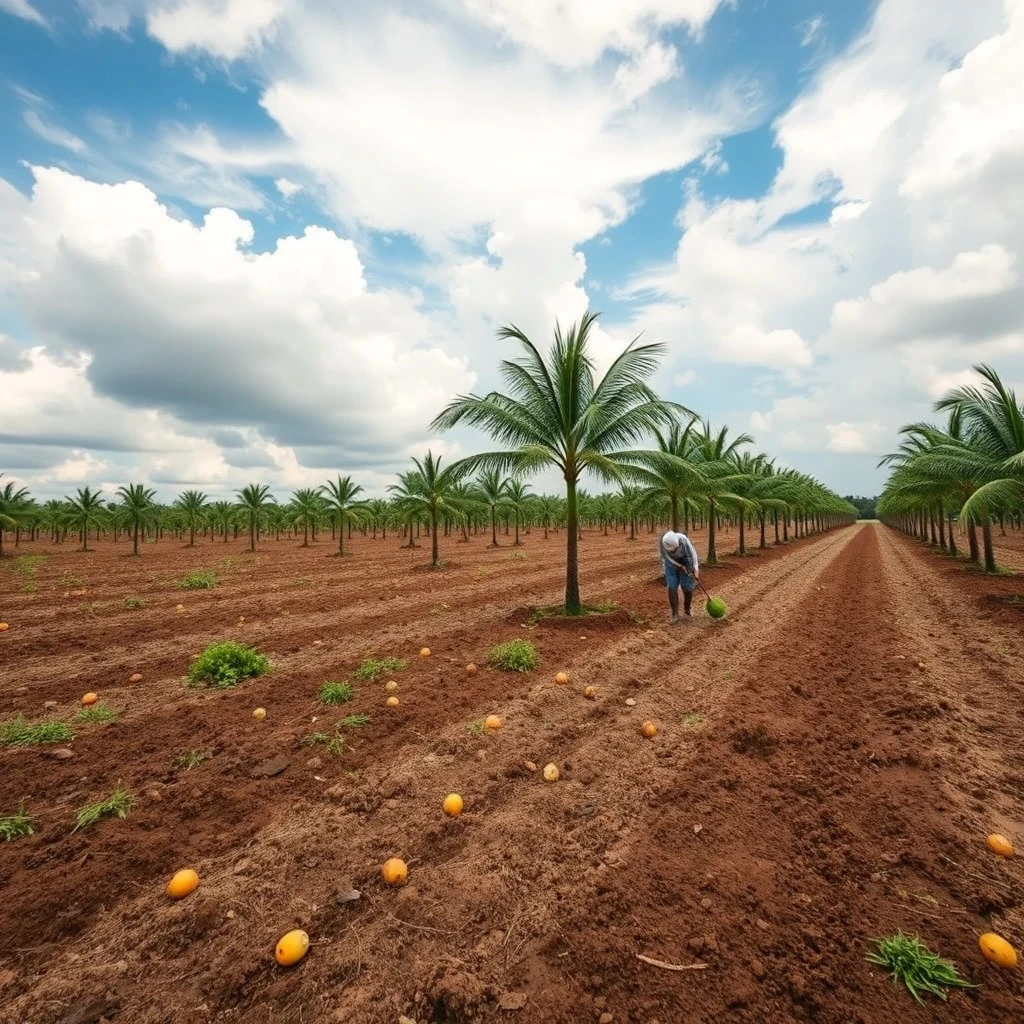
The equatorial palm belts enter mid-September with a mature El Niño event: the Oceanic Niño Index is +1.8, and Kalimantan is flagged as notably dry. For Malaysian and Indonesian oil palm areas, the key distinction is timing. Drought stress does not typically reduce output immediately; it shows up in yields six to twelve months later through lower bunch formation and reduced fruit set. At the same time, excessively heavy rain would disrupt harvesting and transport now, but the current weather snapshot does not highlight broad heavy-rain disruption. The immediate watchpoint is therefore dry Kalimantan, not harvest-halting downpours.
Dry weather's split effect Short-term dry conditions can be double-edged. Where it is dry enough to keep roads and tracks passable but not yet severe enough to shut down field access, harvesting can proceed at a faster clip—one reason a dry spell can coincide with seasonally strong production prints. The latest MPOB August data show Malaysian CPO production at 1,817,499 tonnes, up 1.4% month on month, while closing stocks jumped 15.2% to 1,645,570 tonnes and the stocks-to-use ratio reached 14.1%. Exports fell 7.5% month on month. That stock build is consistent with ongoing peak production, helped by workable weather in many areas, even as the wider Indonesian side is in an El Niño dryness pattern.
But the lagged risk matters more: ONI +1.8 indicates a robust El Niño. If Kalimantan's dryness persists, the tree stress already being accumulated could translate into lower yields toward late 2026 and early 2027. Seven-day rainfall developments matter mostly for whether the soil moisture deficit widens. With Kalimantan already dry, any continuation of below-normal rainfall over the coming days would reinforce that later yield concern.