India's push for self-sufficiency
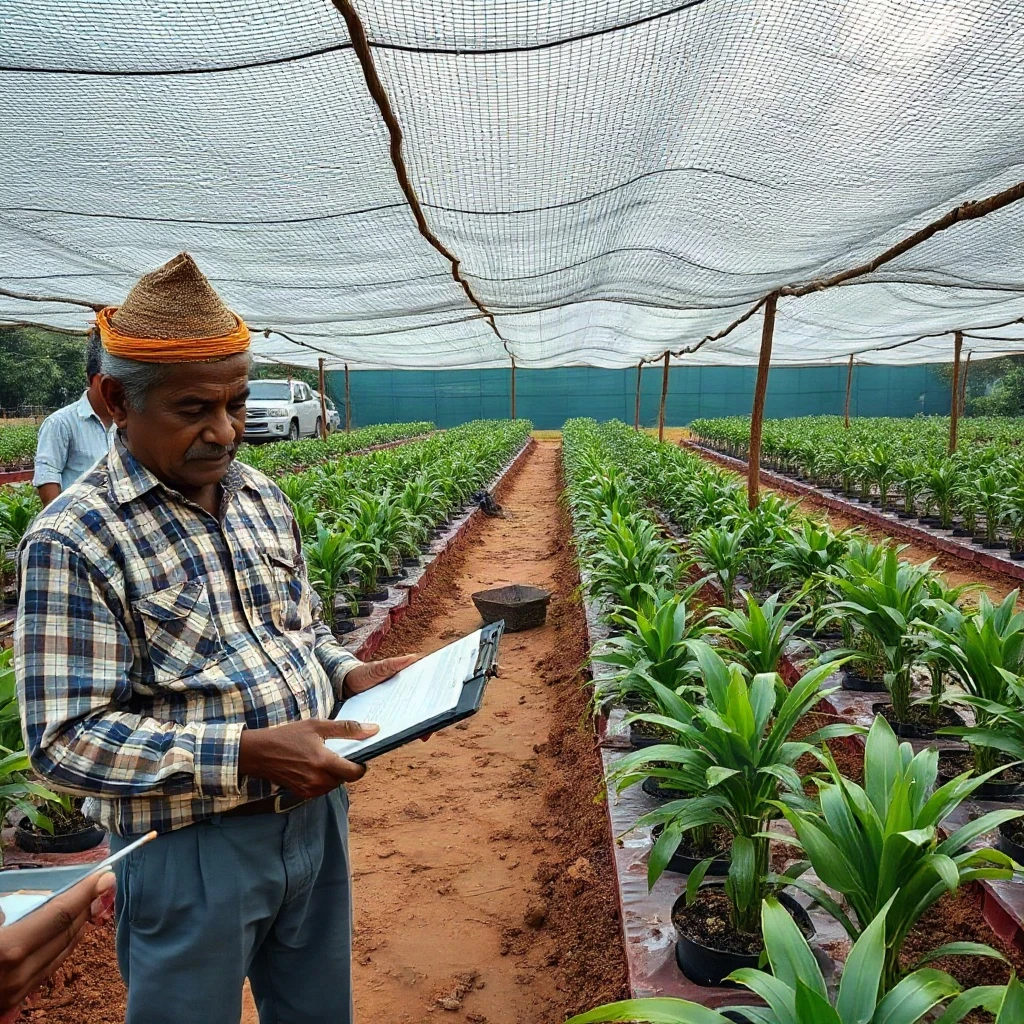
India is one of the world's largest importers of edible oils, with palm oil accounting for a major share. To reduce this dependence, the government launched the National Mission on Edible Oils (NMEO), targeting a significant expansion of oil palm acreage. The mission provides subsidies for planting material, maintenance, and processing infrastructure, aiming to boost domestic production over the long term.
How the mission is structured
The NMEO operates through a combination of central and state government support. Key components include:
- Area expansion: Financial assistance for new oil palm plantations, particularly in the north-east and eastern states.
- Price support: A mechanism to ensure farmers receive a minimum price for fresh fruit bunches, linked to international crude palm oil prices.
- Processing capacity: Support for setting up mills and refineries to handle increased output.
The mission's success hinges on several factors: availability of suitable land, farmer adoption rates, and the time lag between planting and fruit production—typically 3-4 years for oil palm.
Comparing with Indonesia's experience
The nearest equivalent is Indonesia's own oil palm expansion, which began in the 1980s and turned the country into the world's largest palm oil producer. Indonesia's approach relied heavily on large-scale estates and smallholder schemes, with strong government coordination and private sector investment.
Where the two diverge:
- Land availability: Indonesia had vast tracts of forested land, while India's arable land is more fragmented and already under competing crops.
- Climate and yield: Indonesia's equatorial climate is ideal for oil palm; India's growing regions are less optimal, potentially leading to lower yields.
- Speed of implementation: Indonesia's expansion was rapid and export-oriented; India's mission is slower, focused on import substitution.
What success would mean for import demand
If India's mission succeeds, it could gradually reduce palm oil imports, particularly from Indonesia and Malaysia. However, given the long gestation period and structural constraints, any significant impact on import volumes would likely take a decade or more. Even under optimistic scenarios, India would still need substantial imports to meet its growing edible oil demand.
Practical consequences for exporters and traders
For exporters, the key takeaway is that India's import demand will remain robust in the near to medium term. However, as domestic production increases, the composition of imports may shift—for example, a greater share of refined products versus crude. Documentation and specifications should remain aligned with Indian standards, and traders should monitor policy changes such as import duties and quality norms. The mission's progress will be a crucial indicator of future import trends, but it is not an immediate threat to existing trade flows. ---
*This article reflects the position as of 14 September 2026. Duty structures, levies and mandates change often, sometimes at short notice. Please verify the current position, and any changes made after this date, before relying on it.*