
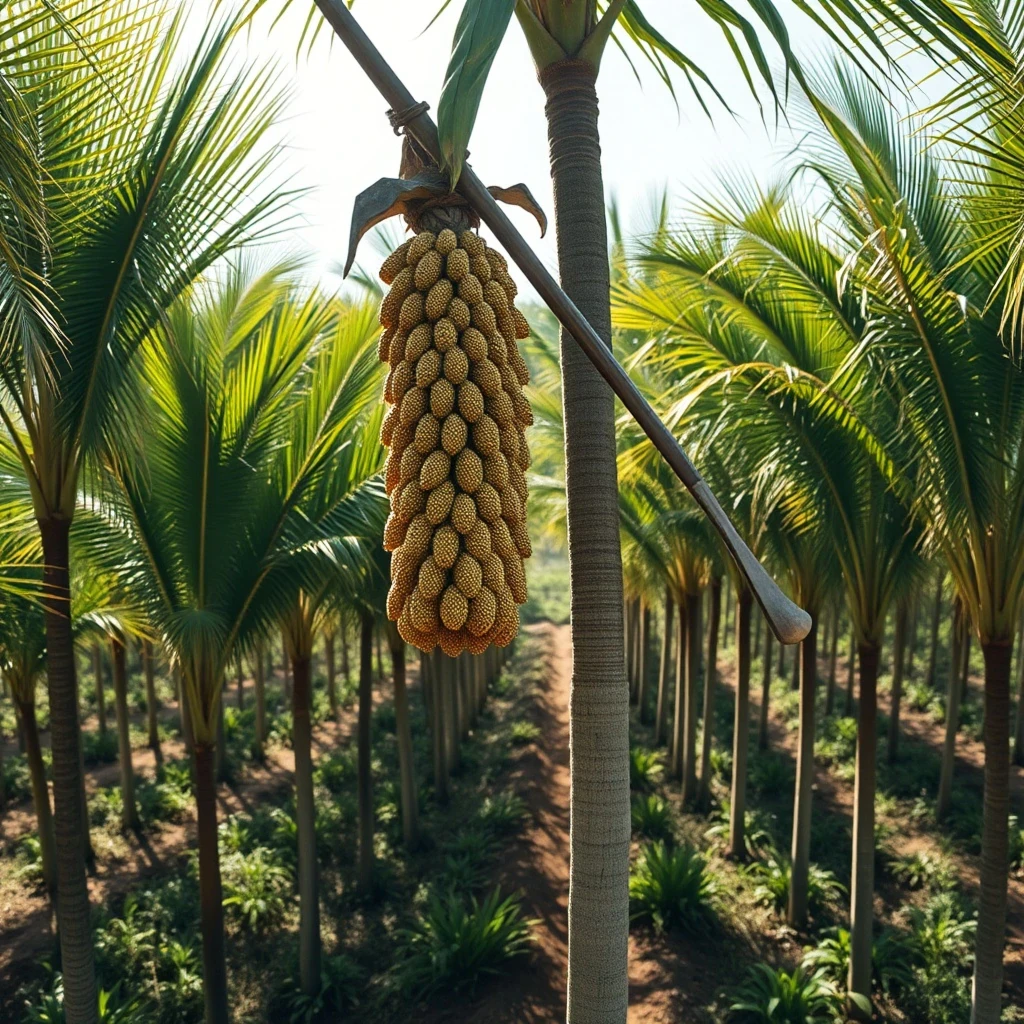
The oil palm fruit yields two distinct vegetable oils from different parts of the same fruit. They are not interchangeable, and confusing them in a specification can lead to the wrong melting behavior, color, or functional performance.
Where each oil comes from
Palm oil, also called crude palm oil, is pressed from the fleshy mesocarp, the orange-red outer layer of the fruit. Palm kernel oil is extracted from the kernel or seed inside the hard shell. After the mesocarp is removed for palm oil, the remaining nuts are cracked and the kernels are crushed or solvent-extracted to produce palm kernel oil.
Composition and physical properties
- Palm oil is semi-solid at room temperature in temperate climates, with a roughly balanced profile of saturated and unsaturated fatty acids. Unrefined palm oil has a deep orange-red color from carotenes and contains vitamin E tocotrienols.
- Palm kernel oil is more saturated and typically solid at room temperature. It is light in color and high in lauric acid, which gives it a sharper melting profile closer to coconut oil.
- Palm oil can be fractionated into liquid palm olein and solid palm stearin. Palm kernel oil can be further processed into lauric stearins or specialty confectionery fats.
Functional differences in use
- Palm oil is widely used for frying, baking fats, margarine, shortenings, processed foods, and soap. Its stability at high temperature and natural antioxidant content make it a common choice for deep frying.
- Palm kernel oil is often used in confectionery coatings, non-dairy creamers, whipped toppings, and personal care products. Its lauric character gives a quick melt and a cool mouthfeel.
- The two oils are not direct substitutes. A buyer who specifies palm oil but receives palm kernel oil will see different hardness, color, and crystallization behavior.
Practical buying considerations
- State and handling: Palm oil may require heated storage tanks in cooler climates; palm kernel oil may need gentle warming before pumping. Check the slip melting point and solid fat content at your operating temperature.
- Specifications: Confirm the exact product name and quality parameters such as free fatty acids, moisture, impurities, iodine value, and color. Refined, bleached, and deodorized (RBD) forms are common for both oils.
- Sustainability documentation: Both palm oil and palm kernel oil can be certified under schemes like RSPO, but they are tracked separately in supply chains. Ask whether a certificate covers the oil you are actually buying.
- Supply relationship: Both oils come from the same fruit, so kernel availability depends on palm oil processing. Prices can move differently, but supply is physically linked.
In practice, a clear purchase order should state whether the requirement is palm oil, palm kernel oil, or a specific fraction. This avoids costly rework and keeps formulation consistent.