
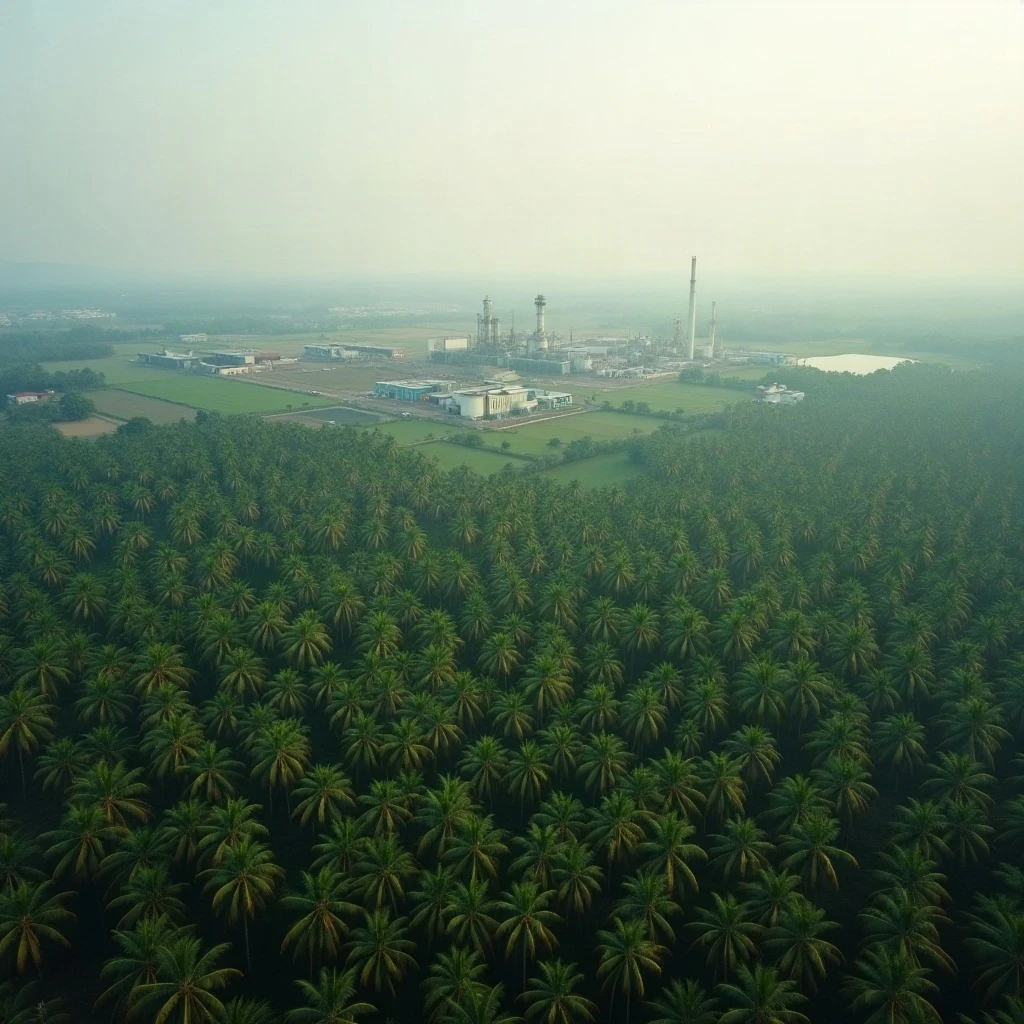
Indonesia's push toward a B60 biodiesel blend by 2027 could absorb up to 23 million tonnes of crude palm oil annually, according to industry reports, a development that raises fresh questions about export availability and global pricing dynamics.
The projection, reported by sawitsetara.co, comes as Jakarta already implements B50 blending and prepares to expand domestic consumption further. If realized, the B60 mandate would represent a significant share of Indonesia's total CPO output, potentially reducing the volume available for export and reinforcing upward pressure on global benchmark prices.
Market Context
Malaysian crude palm oil futures hovered near $1,151 per tonne (RM 4,670) on Tuesday, up 0.2% from the previous session, while the World Bank's global benchmark stood at about $1,117 per tonne. Indonesia's domestic reference price was set at approximately $1,008 per tonne, reflecting a wide gap between export and domestic values—a spread that already incentivizes producers to prioritize local biodiesel demand.
Brent crude climbed 1.9% to around $101 per barrel, improving the economics of biodiesel blending and supporting the case for higher mandatory palm oil use. The Indonesian rupiah traded near 17,608 per dollar, while the ringgit strengthened to 4.06 per dollar.
Supply and Demand Dynamics
Malaysia's July production rose 9.4% month-on-month to 1.79 million tonnes, while exports jumped 15.1% to 1.40 million tonnes, according to MPOB data. Closing stocks increased 7.2% to 1.43 million tonnes, suggesting ample near-term supply. However, the market remains wary of weather risks—El Niño conditions persist with an ONI of +1.8, and parts of Kalimantan are notably dry, which could curb future output.
Our model outlook points to consolidation near current levels with a modest downside bias into the upcoming MPOB August data release. Ample stocks, peak production season, and historically weak September prices argue for selling pressure, but the wide BOPO spread, firm crude, and Indonesia's aggressive biodiesel mandates provide strong support. Expect choppy, range-bound action, with a selloff risk if stocks build as previewed, followed by stabilization from demand switching and biodiesel economics.
Policy Implications
The B60 plan underscores Indonesia's strategic shift toward domestic absorption of its palm oil output. If 23 million tonnes are diverted to biodiesel, export availability could tighten significantly, potentially reshaping global trade flows. Buyers may need to compete more aggressively for Malaysian and other origins' supply, while Indonesian producers face a delicate balance between meeting domestic mandates and maintaining export revenues.
Industry observers note that the policy's success hinges on infrastructure readiness, feedstock sustainability, and the evolution of crude prices. For now, the market appears to be pricing in a gradual transition rather than an immediate shock, but the long-term trajectory points to tighter global palm oil supplies as Indonesia prioritizes energy security over export volumes.
This development adds another layer of complexity to an already intricate market, where weather, policy, and energy prices intersect to determine price direction. Traders will be watching for further details on B60 implementation timelines and any adjustments to export levies that might accompany the mandate.