
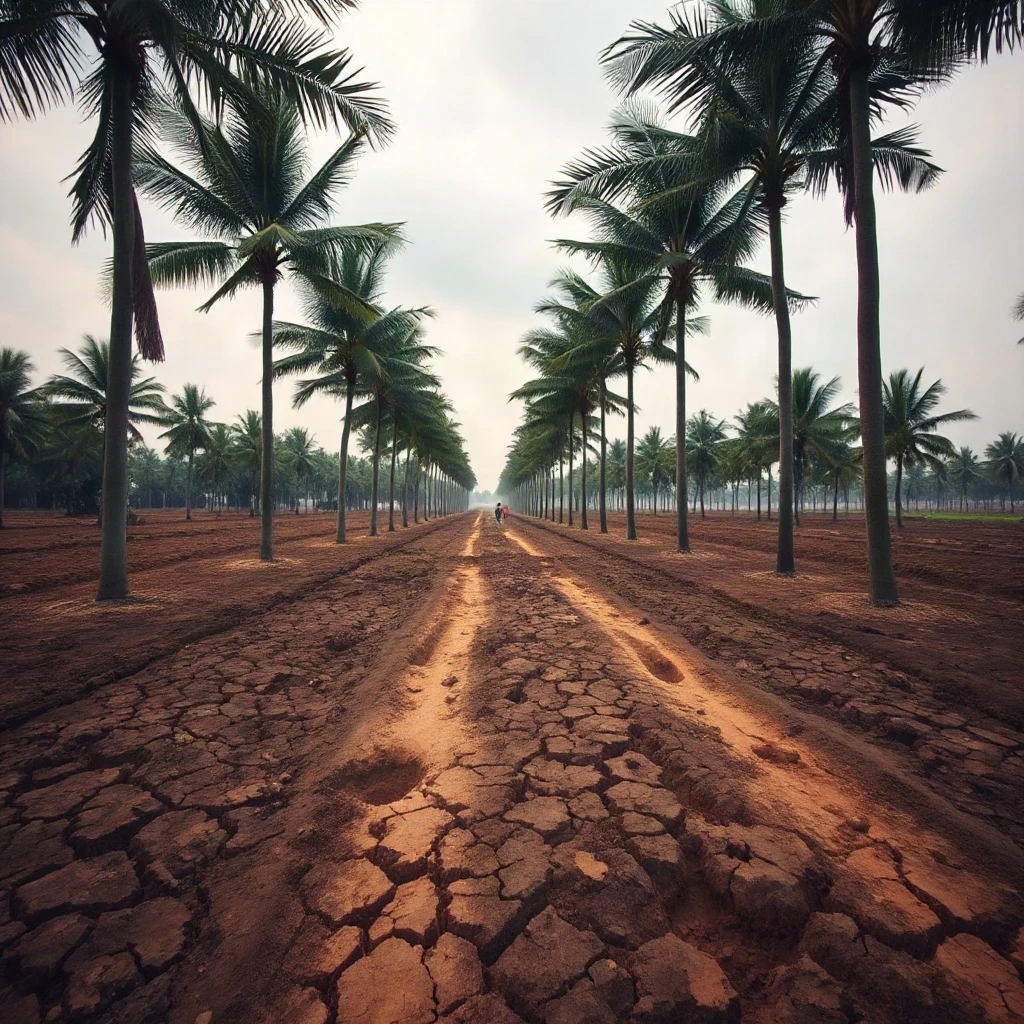
The palm oil complex enters the final quarter of 2026 with the ENSO state firmly in El Nino territory, as the ONI index holds at +1.8. For the crop-weather desk, the immediate concern is not the current dryness alone but the lagged effect on yields that typically emerges six to twelve months after the peak of the anomaly. Reduced fruit bunch weights, rather than a collapse in bunch counts, are the hallmark of this lagged stress, and the current dry spell in Indonesia's Kalimantan region is the most visible manifestation of that pattern.
Kalimantan Dry Spell
Rainfall over the past seven days has been notably below normal across large parts of Kalimantan, the heart of Indonesia's palm production. This is not yet a crisis for the trees, but it is a yellow flag. Soil moisture deficits in the region can translate into lower pollination success and smaller average bunch weights in the first half of 2027, even if the wet season returns on schedule. Our model outlook incorporates this risk, though it remains secondary to the more immediate logistics issues.
Wet Season Disruptions Elsewhere
While Kalimantan dries, other parts of the Malaysian and Indonesian belts are seeing the opposite problem. Seasonal convection is bringing heavy rain to parts of Sabah, Sarawak and Sumatra, where downpours are disrupting harvesting schedules and slowing the movement of fruit to mills. Wet ground conditions also raise the risk of crop loss from bunch rot and make field access for fertiliser application more difficult. These are now-crop effects, not lagged ones, and they are a key reason why the market is bracing for a possible dip in the upcoming MPOB August data release.
Production Data Context
Malaysia's July MPOB figures showed production at 1.79 million tonnes, up 9.4% month-on-month, with exports rising 14.5%. That strong output is consistent with the seasonal peak that typically runs through the third quarter. However, the output is still being supported by trees that were pollinated before the El Nino's full force was felt. The August data, due shortly, is expected to show stocks at a seven-month high, a reflection of the current peak production cycle rather than a sign that the weather risk has passed.
Biodiesel and Crude Support
The weather story is also intersecting with the energy complex. Brent crude is hovering near $97 per barrel, which keeps biodiesel blending economics attractive and supports demand for palm oil as a feedstock. This demand-side cushion is one reason our model outlook sees only a modest, choppy drift higher over the next seven sessions, with a likely data-driven dip when the August MPOB numbers land. The El Nino risk, however, remains a structural overhang for the 2027 crop.
Bottom Line
For now, the market is caught between the seasonal peak in output and the lingering threat of El Nino's lagged impact. The dry Kalimantan weather is the clearest signal that the current ENSO state is not merely a historical footnote. Producers in the region will be watching the weekly rainfall anomalies closely, as any extension of the dry spell would harden the case for tighter supply later in 2027.