
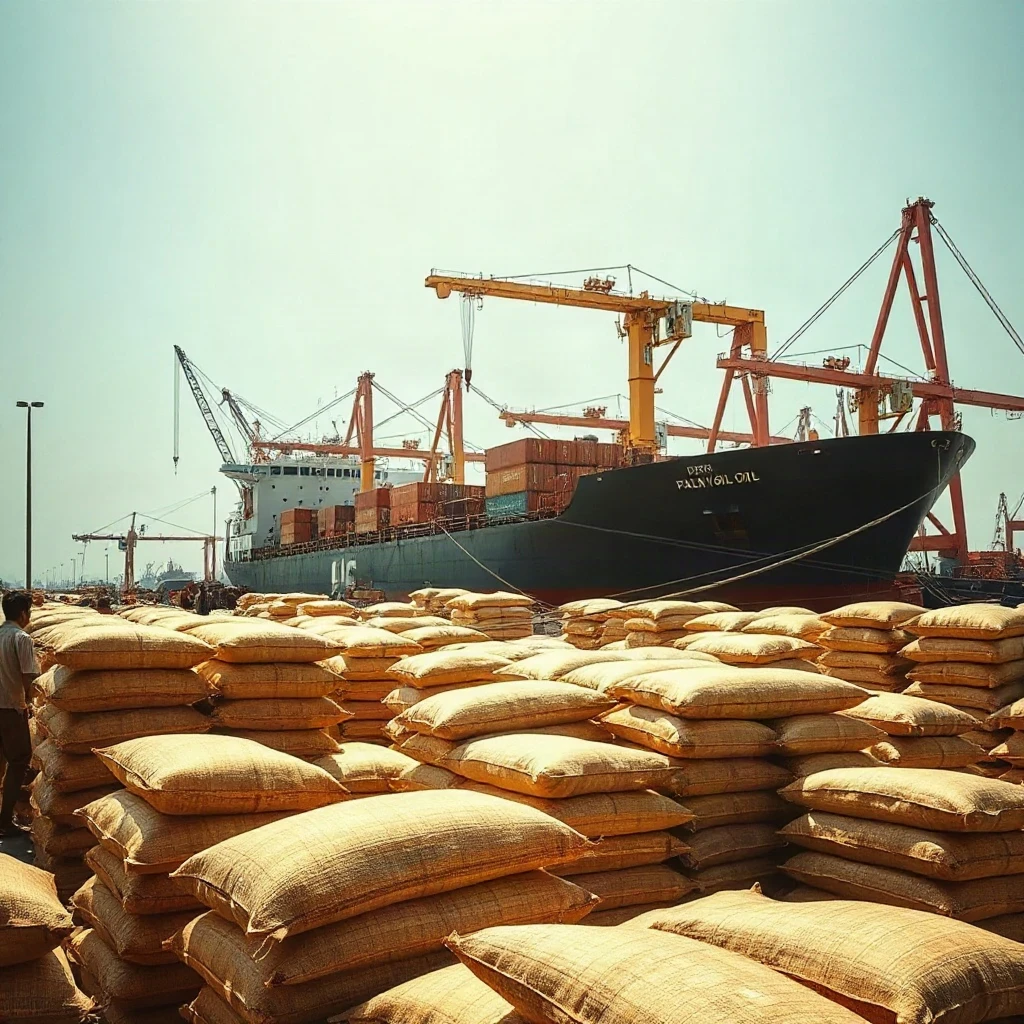
India, the world's largest palm oil importer, remains the key swing factor for a Malaysian benchmark that is consolidating around USD 1,143 per tonne (MYR 4,626) after pulling back from a recent high of USD 1,162. With the global palm oil benchmark near USD 1,117 and Indonesia's reference price around USD 1,008, Indian buyers are watching the spread between crude palm oil and other soft oils closely.
Import appetite and recent data
Trade patterns point to steady Indian offtake through the third quarter, supported by firm demand for both crude and refined palm oil. Malaysia's July export figures showed a strong monthly rebound, with palm oil exports up 14.5% month-on-month to 1.39 million tonnes, a signal that top destinations, led by India, are absorbing supply ahead of the festival season.
India's reliance on palm oil is structural: domestic mustard and soybean oil production cover only part of annual edible oil needs, leaving the country dependent on imports from Indonesia and Malaysia. The wide spread between palm oil and other vegetable oils continues to favor palm for price-sensitive buyers, particularly in the food-service and industrial segments.
Duty and policy watch
Import duties remain a central variable for Indian demand. Any change in the duty structure for crude versus refined palm oil can quickly shift the mix of what Indian refiners and traders buy. Market participants are also tracking government stock-building programs, which can add a layer of state-driven demand beyond normal commercial flows.
Policy signals from Jakarta on export levies and domestic market obligations also feed into the price Indian buyers pay, as Indonesia supplies a large share of India's crude palm oil. Firm crude oil prices near USD 96 per barrel support biodiesel blending economics, which in turn underpins overall palm oil demand in the region.
Seasonal and currency factors
Festival demand, particularly ahead of Diwali, typically lifts Indian edible oil purchases in the third and fourth quarters. Ramadan-related buying adds another seasonal pulse later in the year. The rupee's movement against the dollar and the ringgit affects landed costs for Indian importers, making currency swings a near-term demand lever.
Our model outlook sees choppy trade with a mild downside bias over the next seven days as the market digests likely bearish August MPOB data, with a published path of +0.3% over seven sessions. El Niño conditions (ONI +1.8) remain a background supply risk, though rainfall across major growing belts is broadly normal.
Bottom line
For the demand desk, India's import appetite is the single biggest source of upside surprise potential. If festival buying accelerates and duties stay unchanged, Indian purchases could help absorb rising Malaysian stocks. Conversely, any duty hike or a sharp rupee depreciation would quickly cool buying interest and cap price gains.
Palm Oil Economics will continue to track Indian import data, duty announcements, and festival-season buying patterns as the market heads into the final quarter.