
Crop Weather Desk
Weather patterns across the key palm belts of Malaysia and Indonesia remain broadly neutral for the week ahead, with rainfall near seasonal norms. However, the lingering El Nino state continues to cast a shadow over yield recovery, even as current conditions support harvesting and logistics.
ENSO State and Lag Effects
The current El Nino, with an ONI of +1.8, remains firmly in place. While this event is not producing the acute dryness seen in prior strong episodes, its legacy is still being felt in the groves. Palm fruit development responds to water stress with a pronounced lag of six to twelve months. This means that the reduced fruit bunch weights now appearing in field reports are a direct consequence of moisture deficits from earlier in the season.
For Malaysia, the July 2026 MPOB data showed a solid month-on-month production increase of 9.4%, but this is a seasonal upswing. The more telling metric is the quality of the harvest: bunch weights are still under pressure from the earlier dry spell. Estate managers note that while fresh fruit bunch yields are adequate, the average bunch size remains below the five-year trend, a classic signature of El Nino's delayed impact.
Rainfall Outlook and Immediate Operations
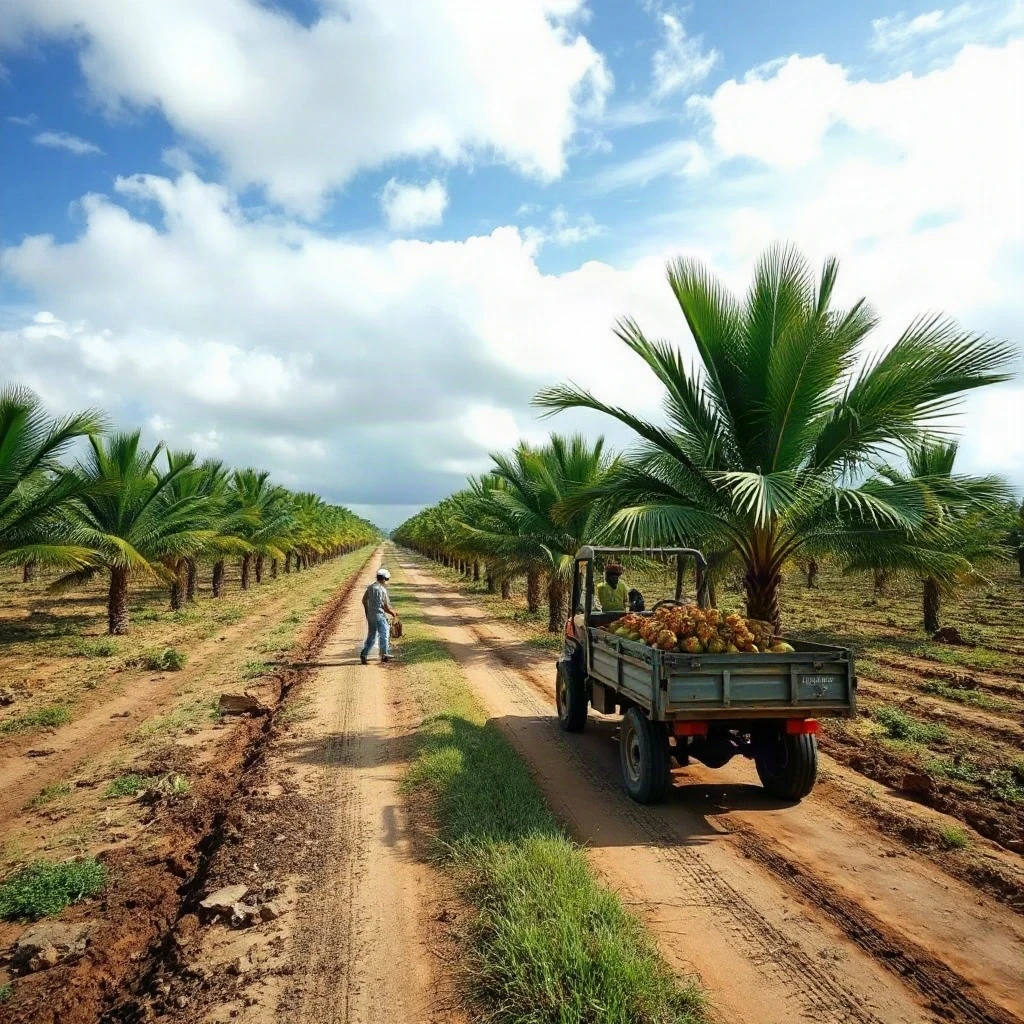
Over the next seven days, rainfall is expected to be broadly normal across both the Malaysian peninsula and Indonesian Sumatra and Kalimantan. This is a welcome development for field operations. Unlike the intense convective storms of the inter-monsoon periods, the current moderate showers are unlikely to cause widespread flooding or prolonged harvesting stoppages.
Logistics chains from inland estates to mills and ports should remain fluid. Normal rain patterns allow for consistent FFB collection schedules, which is critical during the peak production months. Mills are running at healthy utilization rates, and there are no reports of weather-related congestion at key export hubs.
Indonesia: Policy and Climate Interplay
In Indonesia, the reference price for CPO stands at about $1008 per metric ton, and the policy environment continues to shape export flows. The weather, for now, is cooperating. The normal rainfall across Sumatra and Kalimantan supports ongoing harvests, though the same El Nino lag applies here as it does in Malaysia. Producers in Indonesia are also watching the pace of the government's biodiesel blending program, which remains a key demand pillar.
Market Context and Near-Term Outlook
The Malaysian benchmark is consolidating around $1143 per metric ton, or RM 4626, after pulling back from recent highs. Our model outlook suggests choppy trade with a mild downside bias over the next seven sessions, as the market digests expectations of a bearish August MPOB stock build. The wide spread between palm oil and gasoil, coupled with firm crude prices near $96 per barrel, continues to underpin biodiesel demand and offers a price floor.
For the physical crop, the near-term weather is not a constraint. The risk is more structural: if the current El Nino persists into the next wet season, the 2027 crop cycle could face another round of suppressed bunch weights. For now, the market is trading the immediate data flow, but the weather desk will keep a close watch on any shift in the ENSO envelope over the coming weeks.